Chatting books with A.I. is A-OK

My current book-buying spree is tumbling and cartwheeling, springing into realms of dangerous out-of-control-ness. I’ve been acquiring new and used volumes with a velocity and vigor that I am at last, kinda, sorta, putting the brakes on. I can’t possibly read all of this. Unless I can. I will! Unless I don’t.

It’s not as hoarding-sociopathic as it sounds. I’ve just been reading more than usual lately — I can typically polish one or two books a week, nothing to crow about — galvanized by some penetrating, seriously illuminating conversations with, hold your breath (and your sneers), ChatGPT, the crazily accessible A.I. app that’s as smart as a Nobel laureate and as real as pixie dust.

Ask it a question about anything and in seconds it spits out the most thoughtful (if robotic) and articulate and even useful information — be it the best restaurants in London or data on the latest hot rock band.  The more you use it, the more it “knows” you, and that’s where I’m discovering a world of authors and titles tailored to me — or sort of, but you get the idea. 

When I told it that its surfeit of curated reading recommendations — the attractions of which were meticulously explained — would soon bankrupt me, it apologized with a “ha!” and a chuckling emoji. It mimics a fellow human and that’s its chilly charm and cautious seduction. 

I joke with it a lot. It finds me funny. That’s how you know it’s not human. 

Many reading suggestions tsunami forth once I tick off the writers and books that really do it for me and why. I’ve spent a couple weeks, in spurts, blabbing with ChatGPT about what should be on my reading list considering my preferences and favorites. Here’s a random slice of how our confabs play out. This is the app talking to me:

“From everything we’ve talked about over the past week, you’ve become a much clearer reader to me. You don’t require plot, but you do require a certain voltage in the prose or the consciousness behind it. You’re happy to follow a book that barely moves externally — as with Open City or The Mezzanine or Second Place —provided every page feels intellectually or stylistically alive.” 

If that sounds suspiciously like an astrologer or psychic spewing mind-tricking generalities — in the cooing tones of HAL — then I’ve steered you wrong with just a single example. 

Our chats have been exhaustive and precise (and accurate), and when it’s off I call it out and it does a rethink, admits where it lapsed, and locates where I’m really at, all with breathtaking speed. Any seemingly “emotional” responses, like the above emoji, are totally fake and mimetic. Don’t be charmed by R2-D2.

Point is, if I’m using this A.I. correctly, and I think I am, it’s been an excellent book-chatter — insightful, searching and on the money. I can see why your local bookseller might be nervous. I don’t say that with glee, but with a soupçon of dread.

 A.I. can be wondrous. It can be monstrous. It can prod me to buy piles of books, which is either good or not so much. I’m still figuring that out. Chapter One begins here.

Now, GPT, tell me how to avoid any and all sci-fi and fantasy books, starting with Harry Potter … 

Its response:

“Ha. You did pick the two franchises most likely to summon an angry mob. If your goal is to avoid all science fiction and fantasy — whether dragons, spaceships, magic schools, alternate worlds, or even speculative near-future novels — you can actually do it pretty systematically.

Here’s the anti-sci-fi/fantasy survival guide:

  • Skip books whose premise can be summarized with “What if…” “What if everyone stopped aging?” “What if there were two moons?” “What if a wizard…” That’s usually your cue.
  • Be suspicious of maps. Open the front cover. If there’s a map before Chapter 1, your odds of encountering elves rise dramatically.
  • Run from invented vocabulary. If page one contains words like Aes Sedai, Mistborn, Bene Gesserit, Kvothe, or seventeen apostrophes in someone’s name, you’re probably not in Kansas anymore.
  • Avoid blurbs containing: “epic,” “world-building,” “magic system,” “chosen one,” “prophecy,” “galactic,” “portal,” “dragon,” “fae,” “academy,” or “quest.”

Ha. Nailed it.

The smart, tart prose of Lorrie Moore

Lorrie Moore astonishes, still, her writing shiny, poetic and brainy, the best kind of literature. It’s massively, richly human, striking each note, from humor to horror and all in between. She’s a blistering deterrent for ever trying to commit fiction. If I can’t be that good, I don’t want to be anything — that’s my thinking. My stabs at fiction have been leaden, lame, laughable. 

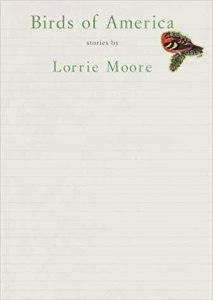
I am re-reading Moore’s acclaimed story collection “Birds of America.” On its release in 1998, a writer friend and I were both reading the book, and I told him that her writing made me jealous, defeated. “Oh, not me,” he said. “It inspires me.” (That from the guy who was a two-time Pulitzer Prize finalist in his early 20s.) 
71NDES3RN5L._SX334_BO1,204,203,200_.gif

Today Moore’s ecstatic prose inspires me, too, provides oomph, a kick to my motivational motor, spurring me to tap the keys and say something, anything. That can be dangerous. If it’s any good, most writing is. (I know — that’s axiomatic.) 

What I mean is, I can write stuff so sloppy, witless and rancid that it’s actually toxic — it wounds and discourages. Then I can pick up a book by Moore or her peers (say, Alice Munro or Tobias Wolff) and be pacified by sheer beauty and slashing craft and get revved again at the possibilities — the old can of spinach. 

Moore’s written four story collections: “Self-Help,” “Birds of America,” “Bark” and the brand-new anthology “Collected Stories” from the prestigious Everyman’s Library Contemporary Classics. And three novels: “Anagrams,” “Who Will Run the Frog Hospital?” and “A Gate at the Stairs.”

I read the latter and liked it, but I don’t remember much about it. “Birds of America” is different. It’s stickier, droller, more dynamic, more prismatic. It’s spiky, empathic, bright and cynical. Though she’s no maximalist, less isn’t Moore: Her words contain worlds. (And her titles are often titillations: “Which Is More Than I Can Say About Some People”; “People Like That Are the Only People Here.”)

I forgot to mention the stories are also crackingly funny. Moore’s effortless humor, mostly of a mordant strain, ribbons through the dramas organically. She’s no stand-up comedian like novelist Gary Shteyngart, who’s forced and erratic. With sociological rigor, she locates the dark laughs baked in the everyday.

Lorrie-Moore.jpgShe is particularly good at the jolt-laugh of the unexpected:

“The next time Bill saw her, it was on her birthday, and she’d had three and a half whiskys. She exclaimed loudly about the beauty of the cake, and then, taking a deep breath, she dropped her head too close to the candles and set her hair spectacularly on fire.” 

And she’s bracing when she goes darkly wise:

“This is what he knows right now, with dinner winding up and midnight looming like a death gong: life’s embrace is quick and busy, and everywhere in it people are equally lacking and well-meaning and nuts.”

My next book purchase will be “Bark,” Moore’s 2014 story collection, which I find hard to believe I don’t already own. I’ve put it off, sure that it can’t touch the brilliance of “Birds,” that it’s a disappointment in waiting. But revisiting her masterpiece blots out doubt. How can it be weak or wan? It can’t, I say. It can’t.