The daunting and taunting of the bulging bookshelf

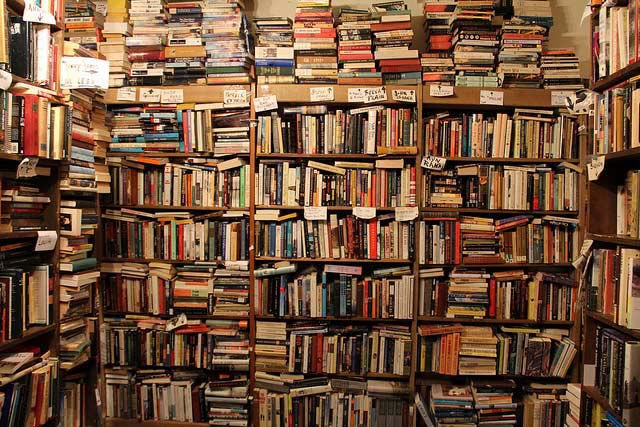
Nothing in a home excites me more than bookshelves crammed and jammed with actual books, as opposed to knickknacks, tchotchkes and corny picture frames. Filled right, they are towering works of art, swirls of graphics and oceans of colors.

I love engorged, groaning bookshelves, whose heaving pulp cargo functions as stylish and classy decor, the jostling spines stringing rainbow rows of erudition, edification and entertainment. So gorgeous and seductive is a grand, brimming bookshelf, it’s almost erotic.

8536d681f28f66caa54226bbccc05e6b--bookstores-libraries.jpg

At minimum, it takes hundreds of volumes to stock an amply, aptly impressive bookshelf. It takes a collector’s fervor, an obsessive appetite for those bound squares of facts, fiction and, so often, beauty.  

But there’s this: Do we actually read all the books in these sprawling collections? Or do they act largely as pretentious decor, literary plumage that flatters the owner?

That depends, but I know I rigorously try to read every title on my shelves, as nearly impossible and as crazily aspirational that proposition is. Still, I don’t see them as frills and frippery. I simply think walls of books look amazing. (Bookshops and libraries: Platonic ideals of aesthetic glory.)

I confess I don’t read all the books I acquire. One, the quantity is too great, especially when new books keep crashing my bulging bookosphere. Two, not every book is worth reading — too many just aren’t good enough. 

So, as I’ve mused here before, I frequently dispense with books that aren’t thrilling me. The rate that I put books down at the 50-, 80- or 100-page mark is deplorable. It’s also necessary. I show no quarter.

“I own far more books than I could possibly read over the course of my remaining life, yet every month I add a few dozen more to my shelves,” writes Kevin Mims in this essay in the New York Times.

That is a sickness I know well. But mostly I’ve stopped this hoardish habit. I realize now that not every well-reviewed book or immortal classic is worth picking up.   

I used to work in a corporate bookstore — the biggest bookstore in San Francisco at the time — and, like that ravenous kid in the candy store, the one with chocolate smeared all over his mouth, I couldn’t help but accrue a gigantic book collection. It fast became overwhelming, so I kept a list on a lined yellow notepad of all the books I hadn’t yet read, planning to cross titles off as I went. Sheer folly, that.

I have since evolved and have become the prince of the partially read book. Though my shelves boast more tomes that I have actually completed, the rejects are copious. 

And then there are the books I haven’t even cracked yet, and may never get to. In his essay, Mims locates a term for this: “tsundoku, a Japanese word for a stack of books that you have purchased but not yet read. My personal library is about one-tenth books I have read and nine-tenths tsundoku.”

That doesn’t mean your fabulous bookshelves are mere pretty repositories, ceiling-scraping storage bins. They are libraries and all that that word implies: knowledge, art, stories, journeys, lives, cracking your head open with the world.  

Says Mims:

A person’s library is often a symbolic representation of his or her mind. A man who has quit expanding his personal library may have reached the point where he thinks he knows all he needs to and that what he doesn’t know can’t hurt him. He has no desire to keep growing intellectually. The man with an ever-expanding library understands the importance of remaining curious, open to new ideas and voices.”
bb42752b8ffbeacfca9b8d5d6918ecdd.jpg

* Late postscript: I stumbled upon this nifty quote in my readings later today. It’s from “The Bookish Life,” an article by Joseph Epstein:

So many books are there in the world that no one can get round to even all the best among them, and hence no one can claim to be truly well-read. Some people are merely better-read than others. Nobody has read, or can read, everything, and by everything I include only the good, the beautiful, the important books.”

Eight books I’ll never read

Call me a masochist, a philistine, willfully depriving myself of some of world literature’s masterworks. 

I beg to differ. I’ve read wads of wonderful books and have countless more to go, including those which I call my hope-to books, meaning I hope to get around to them in this lifetime: “Don Quixote,” “Middlemarch,” “War and Peace,” “The Portrait of a Lady,” and to finally finish “The Brothers Karamazov” and Don DeLillo’s “Underworld.”

The following eight novels are books I’ve either attempted to read and put down with disappointment or volumes I simply know I won’t find the time for because I’m pretty sure I’ll banish them, deflated, demanding my many reading hours back. In no order:

“Remembrance of Things Past” (1913-1927). And so our hero launches a legendary journey through his past with one bite of a tea-soaked madeleine, a journey that seems, for thousands of pages, unstoppable. Marcel Proust’s seven-volume novel puts the “ick” in epic, warding off the casual reader who’d rather not commit eons to a single novel. I wish I could do it. I started volume one, “Swann’s Way,” but its famed vortex didn’t suck me in. I took a bite of a milk-soaked Oreo, but it didn’t have the same effect.

51e2K0ZM4aL._SX316_BO1,204,203,200_.jpg

“Ulysses” (1922). The most obvious book avoided by literary wussies, the Everest of difficult fiction, which has scuttled so many foolish takers. I’ve dipped into its brambled pages and got instantly lost and tangled in the impregnable modernist foliage. More trouble than it’s worth. While we’re at it, let’s add Joyce’s indecipherable “Finnegans Wake” (1939), another provocation for brawny brains and paragons of patience I will never read.

5117M1qFk9L._SX326_BO1,204,203,200_.jpg

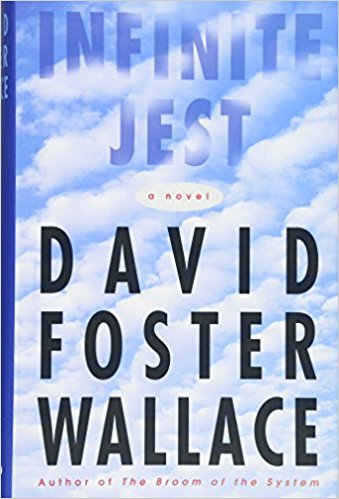
“Infinite Jest” (1996). 1,088 pages of post-modern tomfoolery and intellectual acrobatics, David Foster Wallace’s cult classic daunts and taunts. Not many conquer Wallace’s brilliant, monster challenge to hip, erudite readers, with its formal elasticity, cerebral satire, and devastating commentaries on everything from television to tennis. Another behemoth that I’m afraid I can’t swallow. (Though I relish his non-fiction. Does that count?) 

516Ymv7D7TL._SX337_BO1,204,203,200_.jpg

 “The Goldfinch” (2015). Adult fiction that reads like children’s literature, Donna Tartt’s old-fashioned opus is clammily contrived and wears a twee Dickensian frilliness. (It also, mystifyingly, won a Pulitzer.) I read almost half of its 976 pages, waiting for the story to grow muscle, to grow up. It’s a squishy coming-of-age tale so banal it’s hard to believe. If it was a movie, Chris Columbus would direct. (Actually, John Crowley, of “Brooklyn” fame, is directing the film. What are you going to do?)

41p4amaYISL._SX317_BO1,204,203,200_.jpg

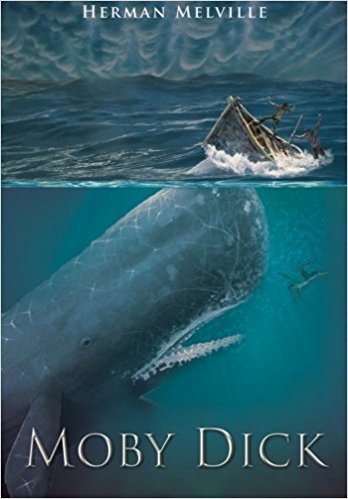
“Moby-Dick” (1851). I read about a fifth of Melville’s whale tale, and after a peppy start, alive with humor and heart and humanity, the slog began. I’ve heard you must muscle through, machete swinging through the anesthetizing filler and maddening digressions, and a grand story will emerge. But it’s simply too hard to focus on a crowded page when your eyes are so glazed over. 

41vnfkc9srl._sx346_bo1204203200_.jpg

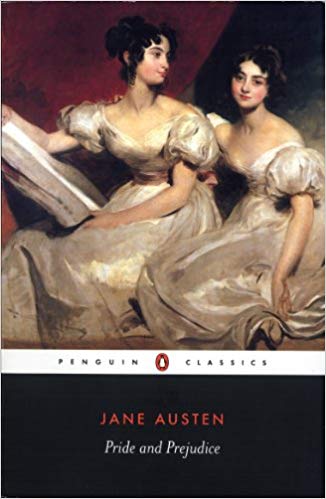
“Pride and Prejudice” (1813). I wrote the following here last summer: “I can’t do Jane Austen’s ‘Pride and Prejudice.’ I’ve tried to read it three times, and each time, at around page 20, I crinkle my nose, toss my head back, issue a fluttering sigh, then slap the book shut. Slap. Pinched and prissy, the prose is like flossy streamers of chirp and chatter, candied and precious and irritating.” Hmm, I’ll stand by that.

41uuHuulc1L._SX324_BO1,204,203,200_.jpg

“Gravity’s Rainbow” (1973). I’ve read some of Thomas Pynchon’s other novels and I am no fan. Here’s how a site described the author’s extravagant, fireworks-shooting, 760-page magnum opus: “Quantum mechanics, mass extinction, speculative metaphysics — heavy stuff. It doesn’t help that Pynchon’s style is free-flowing and flashback-heavy. This has been called the definitive postmodern novel.” I respectfully pass.

61u7TBzQp6L._SX322_BO1,204,203,200_.jpg

Anything by Charles Dickens (lived 1812-1870). I delighted reading “A Christmas Carol” as a child, but since then my relationship with the granddaddy of Victorian fiction has been a frustrating failure. Every so often I will try again to read one of his bloated novels — I picked up “A Tale of Two Cities” three times before I tossed it — but they’re so fussy, so verbose, so cutesy, even, with all those belabored character names. The books aren’t light. They go down like molasses: cloying, thick and sticky.

51sxQn48DPL._SX324_BO1,204,203,200_.jpg

Best summer reading (so far)

The damn summer is nearing its damn end and I still have at least two books I want to finish before autumn (dear, dear autumn) introduces its cool, dry resplendence. I will tackle Jamie Quatro’s debut novel “Fire Sermon” and Nick Drnaso’s ballyhooed “Sabrina,” the first graphic novel to make the Man Booker Prize longlist.

It’s been a fine summer reading-wise, with lots of pleasantly prickly fiction. I’m noting the best books I’ve read during the moist months so far. (Some of these blurbs, where noted, are recycled from prior blogs, but you won’t remember anyway.)

dz8qoorwaaebmxs.jpg

Rachel Cusk’s extraordinary Outline trilogy, starting with “Outline” in 2015 and concluding with “Kudos” this year, presents a minimalism that feels maximalist, a headlong plunge into the rather circumscribed but deeply philosophical world of a single female protagonist who’s on a first-person journey amidst many places and people, and it’s cerebrally and queerly enthralling. Restless and ruminative, each book is short, about 250 pages, and you can start with any of them. (I think “Kudos” is my favorite.)

513uyAYdssL._SX329_BO1,204,203,200_.jpg

A beautiful, privileged young woman is determined to hibernate from life via shelves of pills and pharmaceuticals, and we don’t quite know why. It is the cusp of 9/11 and the only people in her life are a mean sometime-boyfriend, a sort-of best friend and the indifferent fellows at the corner bodega. She’s a wreck, in cryptic self-exile. This wiggy, sometimes wayward study in alienation is at once comical, unnerving, depressing and iridescent. Yet, as good as it is, it’s not as fine as Moshfegh’s …

51LaqJZyp9L._SX325_BO1,204,203,200_.jpg

She types with talons, and it’s beautifully thorny, particularly in these indelible tales. As noted in a previous post: “Moshfegh’s stories are spare and wicked, laced with a perfect pinch of transgression, enough to fill an eye-dropper. They are comic and you laugh, but there’s dried blood in them.” I’d read them again in a (skipped) heartbeat.

51eg6Axn+jL._SX329_BO1,204,203,200_.jpg

I again quote a previous blog post: “This smashing debut by Tommy Orange is a novel of ambient beauty as well as a penetrating portal into urban Native American culture. It’s a world at once broken, squalid and, by the skin of its teeth, empowered. The writing swings, crackling with observational fire.” Look out for this one to sweep some prizes.

51u7-hHF1fL._SX331_BO1,204,203,200_.jpg

A funny, wry and almost gnomic novel about love, marriage (and its dissolution) and raising an inquisitive daughter in Brooklyn. So singular, it’s hard to describe, this brief, breezy book is rife with wisdom, borrowed (the Stoics to Kafka) and original. It’s a pure delight, a glittery gem, in which epiphanies and head-nodding observations abound. It seems to introduce a new fiction form, and it’s a sort of masterpiece.

51XyTyEIp7L._SX331_BO1,204,203,200_.jpg

Again, from a prior blog post: “Amie Barrodale’s ‘You Are Having a Good Time’ is a gratifying off-kilter kick, a spasm of spare, elusive, funny tales that are touched by mystery, an alluring unknowability. With cavalier irreverence, she throws a strobe-light on aberrant facets of the human condition.” A rare find, a dissonant joy.

More highly finicky reading

I’m the worst. I’m impatient. I’m mean. I’m discerning. I have taste. When it comes to books, I am ruthless. I’m even worse with movies. Most don’t stand a chance.

I have put down four books, closed them for good well before the 100-page mark, in the past two and a half weeks. Suffused with sorta-guilt — ah, not really — I swan to the next book, hoping for gems and genius. I am an optimist garbed as a very dark pessimist.

Mining this small stack I located gold — the books are by literary heavyweights, after all, and they do often gleam — but I also found fool’s gold, which I will not abide.

41wp7sr5mbl-_sx321_bo1204203200_.jpg

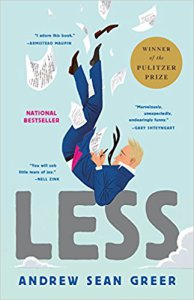
The yeasty comic novel “Less” was the chintziest of the four. It won the Pulitzer Prize this year for fiction. What are you gonna do? I read, I shrugged, I shut. 

With wan humor tangled in wry, hackneyed observations about gays and straights and executed in lite-beer fizzy prose — “a quick, easy summer read,” said one critic, as if that’s a compliment — “Less,” by Andrew Sean Greer, reminded me of a gay-themed comedy series on HBO, one of those middling shows no one watches. The novel, says Greer, is “a love story, a satire of the American abroad, a rumination on time and the human heart.” Thanks, Mr. Greer, for defining “generic.”

I read some 75 pages of “Less” and I must agree with this writer who actually finished the book: It’s “chock-full of gay clichés that feel outdated, and the tone is generally one of superficial, unearned cynicism that sometimes drifts into cattiness.”

Yup. Even The New York Times, in an upbeat review, called it “too sappy by half.”

Zadie Smith writes with a magic wand; her language and storytelling gifts are things celestial (and she makes me gush floridly). I’m an ardent fan of her fiction — “White Teeth” glitters — but her 2012 novel “NW,” a typically vibrant latticework of people and place, didn’t grab me by the lapels, no matter that I don’t have lapels. As exceptional as the writing is, the story has a matte finish when I yearned for glossy. 

Unknown.jpeg

Wade into Rivka Galchen’s hailed stories “American Innovations” and it’s clear why she is one of America’s hottest young fiction writers. She’s crisp, funny and fanciful, with a biting originality and a smidge of the surreal. But as much as I appreciated the collection, I put it down. I almost fell for it, then fashioned a one-word review: meh.

While there’s no shame in not finishing a book — I can’t believe people who feel they have to get to the last page even if it’s a slog — I can’t help but gulp and blush at this failure: Edith Wharton’s 1920 Pulitzer-winning classic “The Age of Innocence.”

I did not get far in the rather slim novel. I found the prose cluttered and perfumey, chokingly Austenian (though without the giggling), and fustily 19th-century for my contemporary palate. (Oddly, I loved Wharton’s 1911 “Ethan Frome.”) Wharton weaves long, highly populated sentences of lace and crushed velvet, many of them woozy and lovely.

Problem: I kept picturing doilies. 

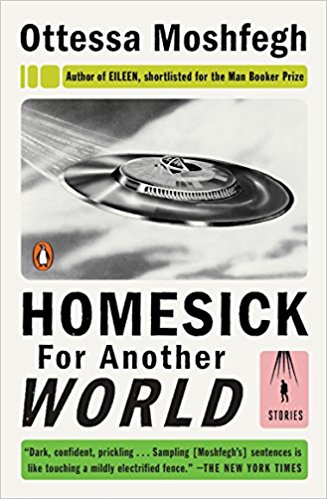
Antidotes to these literary losers are a trio of new fiction by some of the most acclaimed women authors around: “Kudos” by Rachel Cusk, “How Should a Person Be” by Sheila Heti and “Homesick for Another World” by Ottessa Moshfegh. 

51zp1zkt38l-_sx328_bo1204203200_.jpg

I’m knee-deep in that last title, a 2017 collection of stories by the precocious Moshfegh, whose novel “Eileen,” a darkly off-kilter character study, impressed and troubled me — just how I like it.    

Moshfegh’s stories are spare and wicked, laced with a perfect pinch of transgression, enough to fill an eye-dropper. They are comic and you laugh, but there’s dried blood in them. 

Some excerpts:

“He thought that the drugs we bought in the bus-depot restroom were intended to expand his mind, as though some door could be unlocked up there and he would greet his own genius — some glowing alien in glasses and sneakers, spinning planet Earth on its finger. Clark was an idiot.” 

“Our repartee would be rich with subtlety and sarcasm, as smart and funny as mid-career Woody Allen. Our fucking, like Werner Herzog, serious and perplexing.” 

“I hated my boyfriend but I liked the neighborhood.”

To me, that is dreamy writing, all at once blithely sardonic, intelligently aloof and drolly perceptive, attached to the stinger of a scorpion.

On readers: quote of the day

I know a handful of adult humans who, without a whiff of shame or embarrassment, blithely admit they don’t read. This is not only startling to me, it’s seismically appalling.

They (our president included) don’t get the appeal, they have no use for words or language or a particular type of storytelling that is expressly non-passive, that’s indeed near-immersive. I’m trying hard not to sound snobbish about this. It’s like the sports fan whose passion eludes the non-sports fan or the punker who has no interest in Bach or Bartok. We are who we are.

This bibliophile will never understand, and trying to understand the bookless simply exhausts me.

What I am — and here I quote one of the most apt descriptions I’ve seen — is “a person who considers reading an emotionally instructive and intellectually legitimate form of lived experience.”

That’s Alice Gregory reviewing Lisa Halliday’s new fiction “Asymmetry,” which I plan to grab once I finish Evan S. Connell’s smashing 1959 novel “Mrs. Bridge.” Gregory’s account of the serious reader made me even gladder to be one and sadder for those who are not.

What they are missing is incalculable.

shutterstock_112499642.jpg

It’s OK, you don’t have to read that

Idea of the week: “Some real talk: most writing isn’t worth consuming.”

This both striking and self-evident statement was plucked from a purposely (and pleasingly) provocative essay titled “The Case Against Reading Everything,” by Jason Guriel at The Walrus. It’s a good line, because it’s irrefutably true, and because it comes from a site called … The Walrus.

books4.jpg
No way.

Guriel is impugning the moldy axiom that all honest writers must “read widely” — that is, indiscriminately, catholically, voraciously, hoovering the latest hardbacks, pounding down poetry, gobbling it all, from Bellow and obituaries to Cervantes and cereal boxes. It’s the old “balanced diet” theory. He’s not having it.

Neither am I. It’s an unrealistic ideal, reading it all, though I freely admit to reading obits and cereal boxes. In my twenties, I tried strenuously to read wide and far, from the gilded canon to contemporary classics, and I about hurt myself. The volume of verbiage is simply too monstrous, overwhelming and intimidating. I now embrace my blindspots (“Infinite Jest,” sci-fi, “Ulysses,” anything by J.K. Rowling) and guiltlessly shun writers I don’t feel a quick kinship with.

In college, a tough-minded journalism professor chuckled when I told him about the stacks of books taunting me and my ironclad will to conquer them. “You must be selective,” he said, and I deemed him very wise.

To this day, with impunity, I put down books that don’t regale me 110-percent, even if I’m half-way through them. Long ago, I literally dropped in the garbage John Grisham’s “The Firm” with only 50 pages out of 544 pages left. (A bratty gesture, I know, yet one unencumbered with regrets.)

It’s the quality, the intensity, not the breadth of one’s reading that counts. It’s about focus and concentration — concentrating on the works and writers that nail your sweet spot and eschewing inconsequential distractions. Says Guriel:

“The call to ‘read widely’ is a failure to make judgments. It disperses our attention across an ever-increasing black hole of mostly undeserving books. Whatever else you do, you should not be reading the many, many new releases of middling poetry and fiction that will be vying for your attention over the next year or so out of some obligation to submit your ear to a variety of voices. … Instead, shutter your ear against mediocrity. To fall in love with language, don’t fan out. Fall down a rabbit hole. Cynthia Ozick wanted to be Henry James. Nicholson Baker has a whole book about his obsession with John Updike.”

I’ve fallen down many rabbit holes, becoming a near completist of Philip Roth and, yes, Nicholson Baker. I was religious in my ardor for former San Francisco Chronicle humor columnist Jon Carroll, and marveled at New Yorker film critic Anthony Lane’s linguistic paradiddles (until, that is, he became wearisome, cutesy and gassy, a fallen hero).

Rabbit holes are thrilling. I most recently tumbled into that of L.A.-centric novelist Eve Babitz, snarfing up five of her groovily stylish books in a matter of weeks. I did what Guriel suggests, fell in love with the language, shuttered my ear against mediocrity. It was to me what reading is all about. It was like a spell — a love affair without the doom.