Ready, set …

Right about now I have a squirming urge to bolt, to unshackle from the boring and banal, to hop a jet and vacate this place somewhere faraway, to get the hell out of here, to go go go. Sure, Mexico City was only six weeks ago, a distant, wondrous dream doused in humanity and habanero, but plans must be made when that itch called wanderlust screams for scratching.

And so I plan. And I move fast. And I’ve picked where to go next. And, greedily, I’ve chosen two discrete destinations for early 2026. And they’re probably not what you would think.

Because they’re not what I would think, either. Marseille, Aix-en-Provence and Arles in Southern France happen the first week of February. Then, in a whiplash turnaround, I hit Nashville, during the first week of March. 

Nashville? you ask. Me, too. 

In an abbreviated checklist, what the country musical capital has going for it: a slew of top-tier southern food restaurants, like the legendary Prince’s Hot Chicken (extra spicy fried fowl); the Country Music Hall of Fame Museum; the National Museum of African American Music; pour-happy whiskey distilleries; vibrant ‘hoods, including the hip, boho East Nashville, where I’m staying; and of course neon-bedazzled Broadway, where practically every bar — miles of them — is a honky-tonk or a venue hosting crunchy Americana in lieu of touristic cowboy hats.

The Strip slash Honky-Tonk Highway, as it’s alternately dubbed, is also where I will urgently avoid the famed flotillas of inebriated bachelorette bashes that turn the avenue into a twerking, tongue-flashing parade of sorority swillers. In pink cowboy boots, to boot. They should rename it Hell’s Highway.

Nashville’s blinding Broadway

Now, to France. Despite the grungy reputation of Marseille — France’s second largest city, animated by African and Italian immigrants, graffiti, a picturesque port and world-class cuisine — the character-rich, seaside region has found its footing in recent years as a must-do destination. 

It’s “the underrated city in the South of France that should be on your bucket list,” toots Condé Nast Traveller, calling it an “untamed labyrinth, the dusty-rouge Mediterranean Port City” that delivers everything from grand cathedrals to transcendent bouillabaisse, Marseille’s iconic seafood stew.  

And it’s affordable. For instance, my hotel, the whimsical Mama Shelter Marseille, is less than $100 a night, and it’s no dump. It has personality, pizzaz and a penchant for partying. (Grandpop here is bringing earplugs just in case.)

From Marseille I’ll catch under-an-hour train rides to Aix and Arles. These quaint, leafy, cobblestoned villages in Provence are where Roman ruins — ogle the gaping 2,000-year-old Arles Amphitheater, home to bullfights today — dot the stomping grounds of great painter Cézanne and great paint-eater Van Gogh. Both towns exude Old World charisma, naked charm and uninterrupted beauty. I’ll spend a day in each, then rail back to the grit, graffiti and gormandizing of Marseille.  

And then, sigh, my journeys will be complete for the first part of 2026, and I won’t embark on another one (or two!) till fall, when the weather cools and, critically, my wallet recovers. Wanderlust is an incurable disease and I’m inflamed and afflicted. I do what I can about it. Which invariably comes down to go

Marseille’s famous Vieux Port 

Berlin boogie

So there we were, rambling the hip Berlin sidewalks, hopscotching crumpled cigarette packs whose contents the locals so blithely puff, and glancing at the endless walls of colorful graffiti that looks like so much bubble-lettered gobbledygook, when we stumbled on a little shop that sells porcelain pups. Yes: glazed Great Danes and shiny Schnauzers. My brother and I peered in the windows, pointing, laughing, pining. Too bad the damn place was closed. We moved on, slightly crushed. Onward.

Berlin is a beaut. It may not be the prettiest or most charismatic city I’ve been to — you win, Paris, Istanbul and Tokyo — but it is relentlessly amicable, stylish, pulsing. The city, from which I just returned, has a big determined heart, still pulling itself out of the twin muck of Nazism and Communism, that makes it both a little staid and also, wildly, weirdly, the techno-rave dance capital of the world, a pent-up human energy explosion.

It’s an offbeat charmer, animated by a vibrant polyglot and a diverse people, be it leather-clad Eurotrash, Arab falafel slingers, or well-heeled bougies and their primly groomed doggies. It presents an alluring jumble of history and humanity, culture and cuisine, with a dash of decadence and the pesky ghosts of a bleak past that’s shudderingly recent.

We spent six full days stamping the streets, alleyways, museums and squares of this relatively young metropolis, whose US-backed west and USSR-backed east didn’t reconcile till the Wall came tumbling down in the great thaw of 1989. Much of the architecture looks shiny-new, replacements for the rubble left by ferocious Allied bombings during WWII.

Berlin was also rocked by rock ’n’ roll. We took a tour of  the city’s grungy, arty, DIY underbelly in a vintage 1972 Ford Econoline van driven by the shaggy founder of the Ramones Museum Berlin, which is really just a funky bar strewn with punk artifacts. It’s cool. The tour was happily heavy on David Bowie and Iggy Pop’s ‘70s stint in Berlin, which forged a collective creative milestone in rock, including Bowie’s wondrous “Heroes.” We can be heroes, just for one day. Or, in our case, six days.

A side note: For all its diversity — the Turkish and Arab worlds exert strong stakes — Berlin has blind spots. I saw fewer than three Black people in six days, and that’s troubling and hard to fathom for a US visitor. I googled this and read that most of the Black population lives in the so-called African Quarter, an area I’m pretty sure we didn’t hit and whose existence rather unsettles. Ignorance may place me out of my depth here; facts are elusive. And yet.

And now, a smattering of visuals — alas none of those porcelain pups that so capture the whimsy, artistry and dog-love of the bounty that’s Berlin … 

Berlin Cathedral with the famed, kitschy TV tower of East Berlin

Memorial to the Murdered Jews of Europe — stark, contemplative, abstract

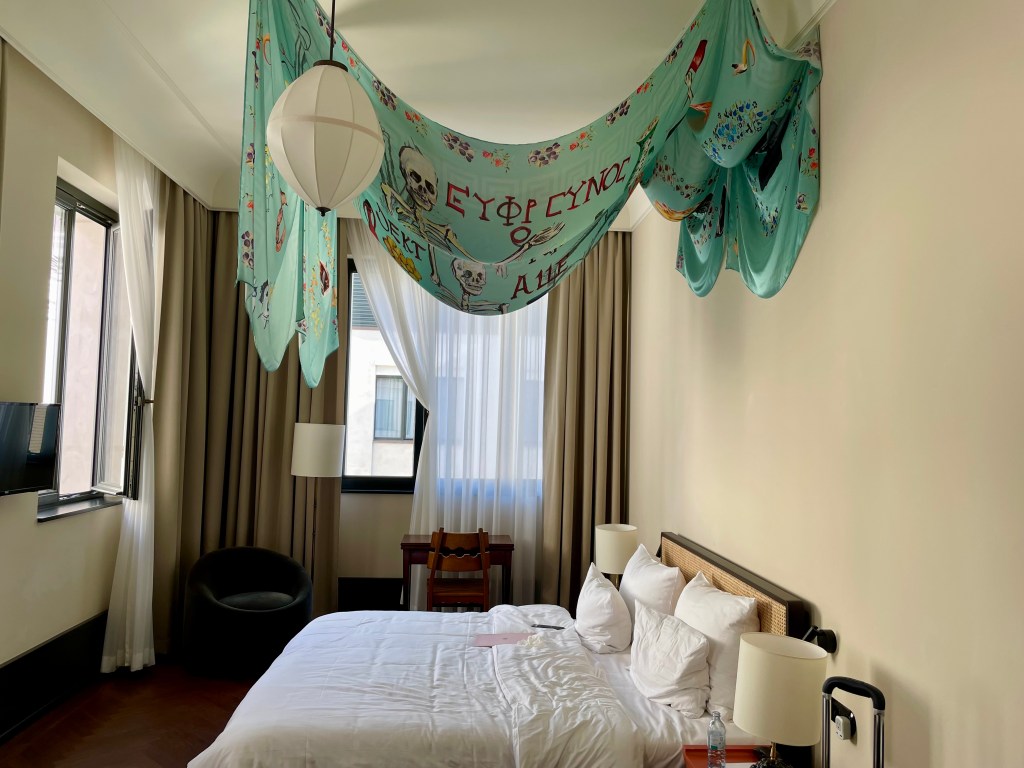
My bed at the lovely Chateau Royal Hotel, with mystifying skeleton-emblazoned canopy

The Tiergarten park, a 520-acre urban oasis in West Berlin, where I sipped a stein of lager in a leafy biergarten

Tiergarten

A bar I wish was open when I passed

Cafe Frieda, my favorite restaurant in Berlin, swathed in that glorious graffiti

Some of the bar staff at our arty hotel, a fantastically hospitable crew, slinging mean, creative drinks
Guinea fowl dinner at my second favorite Berlin restaurant, Eins44 Cantine

The iconic Brandenburg Gate, doing its thing, just sitting there, from the 1700s

One of my new Berlin buds

Portugal postcard #1

I about had a stroke scaling the steep medieval alleyways of my ‘hood in Porto, Portugal, last week, fuming at yet another of life’s inconveniences — precipitous hills! The humanity! — while clutching my chest and wiping my brow.

It was the same in Lisbon’s Alfama area, the capital city’s coolest, oldest, most mazy residential neighborhood, cut through with endless perpendicular hills and narrow passages. I am either desperately out of shape or the Portuguese are sadomasochists. (The former, decidedly.) 

These are not complaints. These — crippling strokes, premature heart attacks — are symptoms of the kind of euphoria travel so uniquely delivers, and what I experienced during a week split between Portugal’s two largest cities, Porto and Lisbon. Considering strokes and such, you could say the trip was to die for. I was smitten the entire time. 

I’ve been to much of the continent and Portugal reverberates with a different European tang that’s refreshingly, truly Old World. The people are amazing. And, except among many hacking, shriveled taxi drivers, English magically appears whenever you need it. It’s a country of nuance and contrast, urbanity and tradition. And with crazy luck, gorgeous January weather of cobalt skies and 60-degree days, everyday.

Both cities exude singular flavors. Sight-wise, there’s much to see but not an excess. That’s why walking tours are outstanding, taking you deep to reveal the nooks, the crannies, the crooks, the grannies (seriously: old women pop their heads out of two-story windows and chirp, “Bon dia!”). These are pleasant places, vibrant and laidback, and, with their fabled trams/trolleys, rolling hills and postcard waterfronts, redolent of classic San Francisco, my old stomping ground.

My brother asked if I missed a museum-centric city, à la Paris, but I did not. I do weary of so many museums in other cities that can, occasionally, feel like obligations. These cities are all street, with street art, graffiti, cathedrals, tavern after tavern (wifi — what’s that?), earthy food, multitudinous alcohol (Port, wine, Ginjinha!), ankle-twisting cobblestone, claustrophobic side streets, vertiginous hills and slopes, all of it intoxicating.

The streets are brilliantly bad for driving — lots of cobblestone in rattletrap cars with Model T shock absorbers. Sometimes I thought we’d been in an accident, but it was just a thump in the road. Rides are a steal: Uber lifts ran me $3 on average, with taxis still a bargain at twice the price.

Four days in Lisbon, then a three-hour train north to Porto, which resides languidly in pastel colors on the picturesque Douro River. My boutique hotel, a little alleyway charmer, was smack near the water, where it’s clotted with touristy action, even in January, but not too much. Like the guy with the explosive man bun juggling for tips. I got, but did not finish, a fish bowl of sangria, on the water, in the sun and breeze, while a hippie juggled in the distance.

In both cities the women are dark and lovely and the old men are raisin-faced, unshaven, bent over, sweater-clad, with baggy pants and newsboy caps — exactly how I hope to turn out. One day I had two female servers who possessed hairier arms than mine. As a man of Portuguese heritage, I almost cried with respect and admiration. They put my Aunt Silvia to shame, never mind my Uncle Johnny.

The Portuguese language is enchanting, musical, soft around the edges, like cookie dough. It has notes of Spanish, Italian and Russian, dappled with flower petals. It’s fragrant, easy on the ears and I know all of four words of it.

I found these twin cities fresh, novel, relaxed, uncrowded, winsome. Really, from the fine hotels to the affable people, authentic atmosphere to gushing hospitality, legendary history to rapturous food, Portugal is in my travel pantheon. It’s real Old World material. Humble but proud, and never pushy or arrogant. And always something beautiful.

Onto the slideshow, continued in the next blog post … 

Lisbon
The riverfront plaza three steps from my Porto hotel (try and spot the moon)
Alfama neighborhood in Lisbon, modern graffiti clashing with ancient tiles
Alfama
The infamous must-have Porto meal, the Francesinha, a heart-arresting cholesterol orgy of steak, ham, sausage, cheese and bread stacked and drowned in beer and spiced tomato sauce. Staggering decadence that could fell a mastodon. 
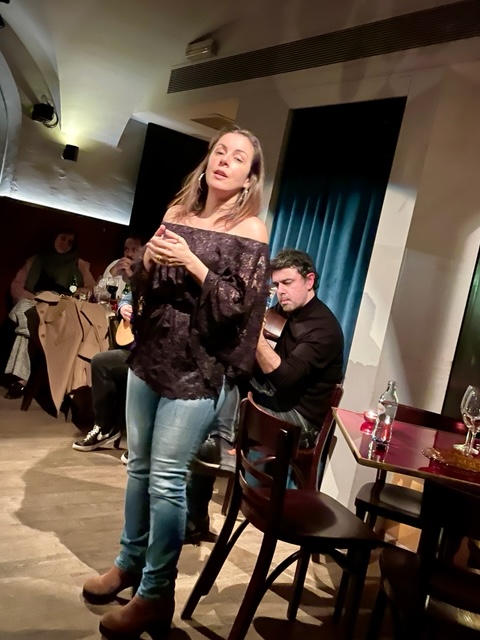
At Povo in Lisbon, where you eat and drink while witnessing fetching fado by up-and-comers in the Portuguese musical form, which is founded on soaring sentimental vocals. This singer cracked a roomful of hearts and we didn’t even know what she was saying. 
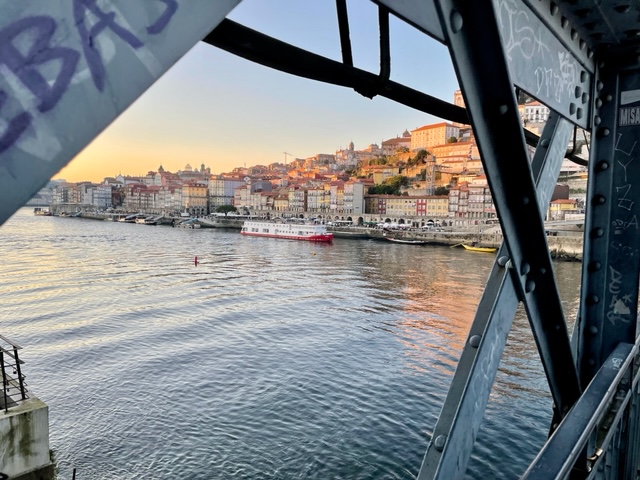
The Douro River in Porto
Street art is rampant, and almost always striking


Paris perambulations

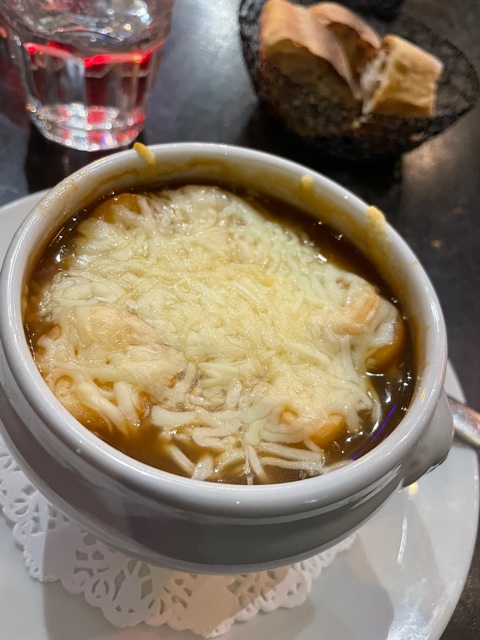
The worst French onion soup I ever had was in France.

It happened last week at a cozy bistro in Paris’ hip Le Marais district, a minor hiccup, though major faux pas, amid a constellation of remarkable meals I savored during my most recent travel escapade — eight days in Paris, the greatest city on the planet. 

I love onion soup, French style, but I never have it. Where do you get an authentic bowl? Well, try France. And so I did. Yet something went wrong. No, lots went wrong. The oily brown broth tasted OK — sweet, savory beef stock — but the onions themselves were pitifully scarce and, much worse, it was topped with small, stale, store-bought croutons and a grisly pile of clearly processed shredded cheese from a ziplock bag, cheese that was not Gruyere or Parmesan or melted.

I’ve had better onion soup in New Jersey. This was a disgrace. Only once, maybe twice, have I ever sent a dish back. I didn’t mutter a complaint about the soup. I didn’t want to shame anyone. Partly that’s because I also ordered escargot and it was pretty delicious — hot, plump mollusks drenched in garlic and olive oil. This was, of course, my purposely clichéd French meal. It had to be done, despite being a half fail.  

Saddest onion soup in the world

But I don’t travel for the greatest bowl of onion soup (or do I?). I do it for the explosive newness, to be pried out of my home-addled head and relocated to the novel and exotic, to live, learn, experience. To find joy, or even fear. To escape the self and kick open doors. To move, move, move. To seek, discover. To be astonished. 

Instead of my usual Paris haunt the Latin Quarter, I stayed in the aforementioned Le Marais on the Right Bank, a village of winding cobblestone streets, haute boutiques, LGBTQ cool, cafes, bars and trend-setting ambiance. It’s kind of fantastic. 

As usual I walked miles around the city till my toes blistered. Transportation-wise, I eschewed the Metro and instead hailed Ubers and taxis. After years of scrappy, lo-fi travel, I felt I deserved the convenience and ease of environmentally devastating vehicles. I’ll call it what it was: shameful, privileged laziness. It was a marvelously stupid decision that cost me hours in choking traffic and hundreds of precious dollars. I get all sad just thinking about it.

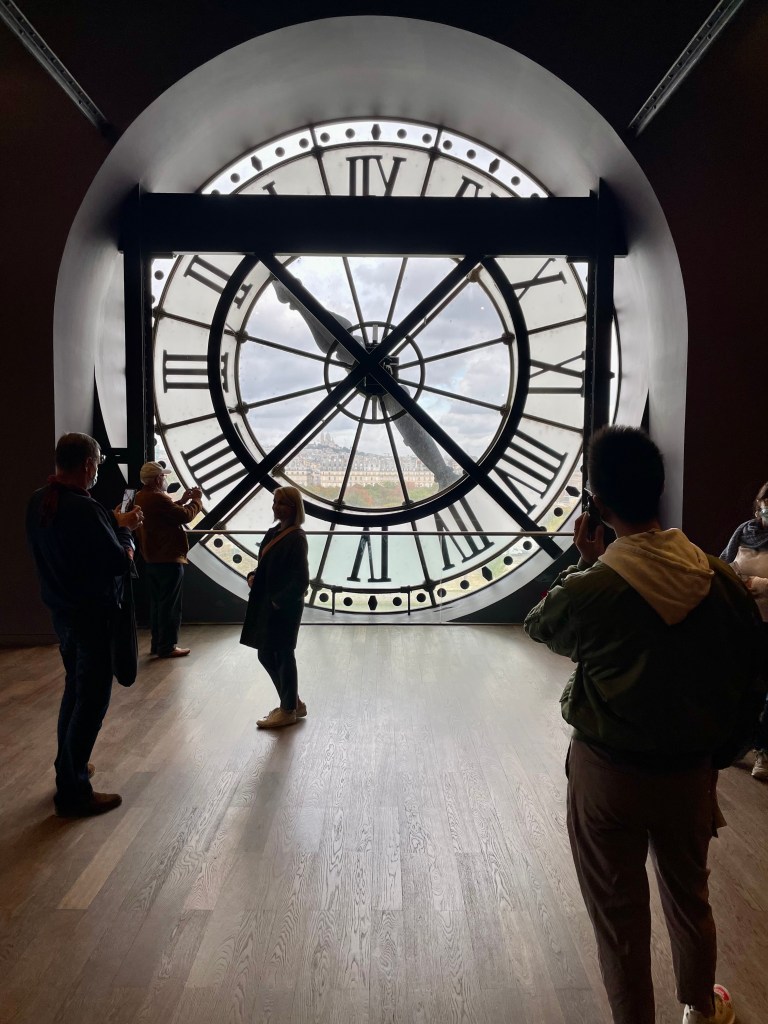
But the destinations, after I popped from the cars with a chirpy “Merci beaucoup!,” almost always assuaged the grief and guilt. There were of course essential standbys — the Louvre, D’Orsay, the legendary Shakespeare & Co. bookshop, the bone-encrusted Catacombs — but I added new spots to my well-trod Paris itinerary. 

Louvre

Like the avant-garde exhibition space Palais de Tokyo, where an impenetrable show by German artist Anne Imhof baffled and bored; and vaunted bistro L’Amis Jean, where I ate the most delectable rabbit and country vegetables and reveled in the festive atmosphere; and the dreamy Georgia O’Keefe retrospective at Centre Pompidou; and the itty-bitty restaurant-bakery Mokonuts, one of the hottest and hardest to get seats in town. 

Run by an endearing if understandably frenetic couple — with no employees, they’re the chefs, waitstaff and hosts — Mokonuts is low-key gourmet all the way. I had raw scallops that made me smile so involuntarily, co-owner/pastry chef/showrunner Moko Hirayama burst out laughing. (The main plate, pink-fleshed pigeon, was equally amazing.)  

Mokonuts is where I chatted with a middle-aged American couple about food and travel. They asked if I’d ever been to Lisbon, Portugal, and I said yes, I visited many, many years ago. (I’m of Portuguese descent, but that’s neither here nor there.) I found Lisbon to be like a giant, beautiful seaside village, suffused with languid, old-world charm. I relished it, but it didn’t leave teeth marks.

The couple perked up and replied that things have changed and they go there often for its food, people and invigorating bustle. Lisbon, I’ve since read, has become one of the most visited cities in Europe. My fellow travelers went on about it and inspired me to take a deeper look. The crazy result: I’m heading to Lisbon and Porto in mid-January. Expect a blog about sausage.

Musee D’Orsay

For the very first time in my many trips to Paris I did not see a classic American movie at one of the city’s numerous revival cinemas; no films (“An Affair to Remember” — pass) grabbed my interest, sadly. Yet I did take a short amble through my good friend Père Lachaise Cemetery, freckled as it was with fall leaves and dappled with autumn shadows. I sought out the relatively new grave of French actress Anna Karina, wife and muse of Jean-Luc Godard, with no luck. The place is massive. In fact I saw no celebrity plots — no Oscar Wilde, Jim Morrison or Edith Piaf — on this visit. Yet I still found a baroque beauty in death. 

As always seems to happen, I strolled by Notre Dame several times. The gothic vision oddly emerges out of nowhere almost anywhere you go. It demands your attention.

She is tragically transformed after the April 2019 blaze that tore her soul out and broke the world’s collective heart. Only the indelible, indomitable facade is fully visible, as the rest of the cathedral is girdled by a fortress of construction walls, webbed in scaffolding and towered over by spindly cranes. Depressingly visible are exposed wood planks on the flying buttresses and gaping maws in the charred rooftop. 

The surrounding wall panels are emblazoned with photos and explanatory text describing the fire’s destruction and exactly what type of surgical procedures the ancient lady is now undergoing. It’s informative, and classy. People still come to gaze in awe, and the cathedral’s gargoyles still perch in the heavens, smirking, telegraphing in their way that everything will be all right.