Midsummer miscellany

Four mini-blogs, bite-size essays, from eyewear to dog hair …

Shopping for new eye frames is about as thrilling as shopping for underwear — a little fun, but mostly a utilitarian ritual for a deadly pedestrian accessory. I got new frames this week to go with new prescription lenses, making me feel very old. I’ve had my current blue frames and lenses for two years and I felt like underwear shopping. Yesterday I took my new (burgundy) frames to the optician to get the fresh lenses. The whole deal cost an eye-singeing fortune — around $1,200 for frames, lenses and exam. The nice guy helping me said, “You don’t seem old enough for progressive lenses.” I sort of thanked him, then thought to myself, ha!

When it comes to a big juicy novel, I’m a restless reader. My standards are unreasonably high, and if a book hasn’t hooked me by page 70 or so, I close it and move on. I am not one of those chumps who strains to finish a book once they start it, no matter the quality. That’s obscene. I just closed Rebecca Makkai’s wildly praised novel “The Great Believers.” The Pulitzer finalist about a group of friends impacted by the AIDS crisis was worse than overly familiar and a mite trite, it was dull as dirt. So I started the also-acclaimed Adam Haslett novel “Imagine Me Gone,” a substantial (356 pages) story about a family of five facing mental and physical challenges that upend the unit and try the bonds of love. On page 89, I’m with it for now. But every so often it sags and I give it the stink-eye. Book, you are on perilous ground. Watch it.

Puffs and curlicues erupting over his face and body, the dog at last got a summer haircut. A professional groomer came to the house, bathed him in the sink, then took the razor to him good for more than an hour. Cubby now looks like a bewildered sea otter and it’s fabulous. Everything about him has shrunk — my, what tiny ears you have! — and it’s adorable. Thing is, now he’s licking his butthole and nether regions with frantic intensity, like he’s infested. It’s merely razor burn and getting used to the lack of locks, and if the past is any indication, he’ll stop licking presently. But it sort of drives everybody crazy, not least of all himself. Why are haircuts such trauma? Cubby and I both want to know.

My brother’s radar is exquisite. He knows my dubious tastes, my oddball obsessions, my disgusting fetishes. So it was Christmas in July when he recently gave me a gift of surpassing thrillingness: an immaculate wax double-wick candle of deformed conjoined twins skulls. Craig, my only sibling, said he got it for a Christmas present but couldn’t resist bestowing it now. He bought it at a local taxidermy/tattoo shop called Unlucky Rabbit that deals in deer heads to “Lesbians and Taco Trucks” bedroom candles. My kind of place. I’m a freak fanatic, sideshows, medical curiosities, monsters on down. For now, the Siamese twins skulls are on proud display, and I have no plans to torch them, they’re so gruesomely perfect. Still, lighting them and watching them melt into bone-colored goo would be its own grotesque beauty. Where’s the matches?

The terrible twos


4 for fall

1. Au revoir, France — hello, Ireland? That’s how it looks right now, especially since I’ve swapped my flight to Paris for a ticket to Dublin. So I guess I’m going to Ireland in October (insert a wee leprechaun kick). Or I think I am. The tyranny of the pandemic can upend everything, so while Ireland has relatively open tourism guidelines, things can change in a depressing snap. I scotched Paris because France’s Covid rules have become groaningly prohibitive — très crappy. I’m not torn up about it. I’ve been to Paris a few times, but this purportedly worldly traveler has never made Ireland. Frankly, it hasn’t lured me to its bucolic charms: rolling green hills, craggy ocean cliffs, mossy castles, obsession with pubs and, suspiciously, Guinness beer, minor museums and churches. It’s been on my index of non-bucket list destinations (including Australia, Iraq and pretty much anything Caribbean) until now. What clicked? The idea of something far and uncharted (and not tropical). Focusing on Dublin and, briefly, Galway, it will be a mellow journey, eight lolling days of food and drink, mild tourism, immersive history and lots of questionable Irish music. If I really get there, I’ll be lucky, charmed.

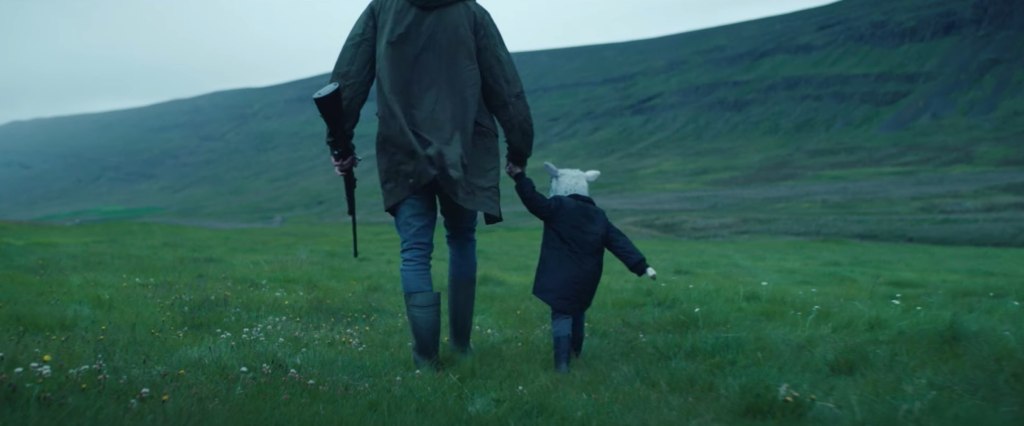
2. With uncluttered elegance, the film is called “Lamb, and it will chill you to the bone. Coming October 8, it’s described by hip indie studio A24 as “Icelandic folktale on top, Nordic livestock horror on bottom,” and it flows in the vein of A24 creep-outs “The Witch” and “Midsommar.” This one, by Valdimar Jóhannsson, is about a childless couple adopting a creature that is neither lamb or human: a sheep has given birth to a hybrid animal that has the body of a baby and the head of a lamb. Watch the trailer here. It’s unsettling. It’s eerie. It’s glorious.

3. I’ll take sweaters over sweat anytime, and I cherish every cool breeze that cuts through this soggy, sloggy summer. Let’s call it a wrap. I have things to do this fall and the chaotic weather, be it soak or scorch, is proving a deflating victory for climate change. It’s time for 50s and 60s and the end of wildfires, heat waves and floods. Yes, I hate summer, but no season’s perfect. Even autumn, the best of them all, has its pesky drawbacks, from confetti storms of leaves and Mandalorian costumes on Halloween, to football and corn mazes. We can deal.

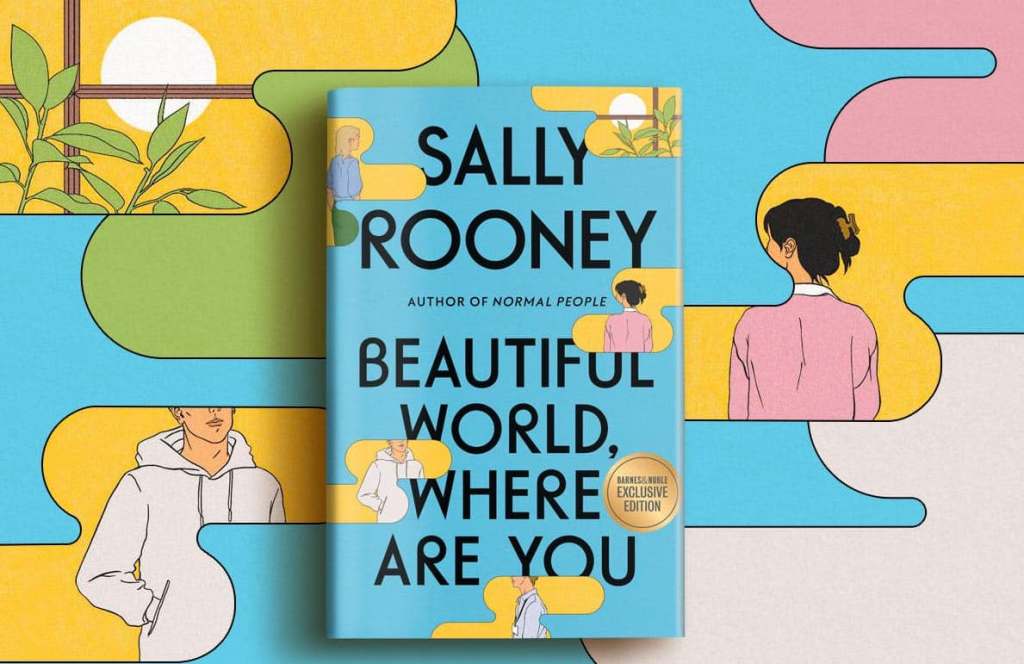
4. And we curl back to Dublin, via Irish author Sally Rooney, whose new book “Beautiful World, Where Are You” arrives September 7. A globally celebrated wunderkind for her twin novels “Normal People” and “Conversations with Friends,” both written before she was 28, Rooney returns to her familiar milieu of middle-class millennials swirling in career, interpersonal and libidinous distress. Couplings and uncouplings of bright young things juice the story and, if her other books are any indication, things will get hot. And bothered. A Rooney fan, I’m looking for artistic growth in the new novel, her longest yet. Rooney’s not the most assertive stylist, her stubbornly lean prose tweezered of metaphor. In a 2019 post, I concluded that “Rooney’s smart little beach reads — people boast about how they gulp her books in one sitting — are crisp divertissements. But they are lacking in weight, import, poetry, the stuff of lasting literature.” That said, they’re nourishing and human, and I’m banking on “Beautiful World” to be a frothy palate cleanser after more vinegary fare this summer. Then, for some tang, I’ll grab E.M. Cioran’s self-explanatory “The Trouble with Being Born,” and the world will sleep well again.  

Writing relentlessly

Joyce Carol Oates has written roughly six-thousand books. I’ve read one. I’m currently working on number two, a slim novel titled “Black Water.” Boy is it boring. Dry and colorless as a sun-baked cow skull. It’s not even trying to pull me in. It’s stingy like that.  

“Wonderland” is the other Oates book I read, some time ago. Unlike “Black Water,” which runs 154 pages, it’s unmistakably Oatesian, meaning it’s fat, multi-chambered and densely populated. It’s also pretty great, an epic family drama spanning generations that quakes with urgent, thrumming incident. It’s known as one of her best books and was a finalist for some big award or another. 

Oates is famously prolific. I call her relentless. Her torrential output, starting in 1963, includes 58 novels, numerous plays and novellas and several volumes of short stories, poetry and nonfiction. The novels are rarely anorexic. They are epics pushing 500, 700, even 900 pages or more. When I see her shelf in bookstores, I quietly scamper past. 

That’s why I picked up the acclaimed “Black Water”: it’s a finger sandwich next to the author’s standard ten-course feasts. A modern retelling of Senator Ted Kennedy’s infamous Chappaquiddick incident, the book toggles through time to trace a young woman’s life and death by drowning in a Toyota that crashed upside-down in a lake.

The novel purports to be a scathing statement about women who are tragically drawn to powerful men, which I suppose it is. But that doesn’t interest me, at least not right now. It doesn’t help that Oates’ breathless, jagged prose feels awkwardly stylized, hardly the case with the lyrical “Wonderland.”

A force of nature, Oates is the epitome of a writing machine, matching the creative incontinence of Stephen King. She poops out literary doorstops with boggling regularity, making her contemporaries look downright slothful. I’m not knocking it. It’s something to envy. To be so productive would be miraculous, if exhausting.

A sliver of Joyce Carol Oates’ output

But such churning industry casts a light on the idea of consistency: how many of those piles of books are really, truly good? Surely a lot, or the author wouldn’t be the celebrated bestseller she is. Yet there’s probably a mountain of misfires there, too, which perhaps dilutes such voluminous achievement. 

In a 2015 essay, King himself confronts the notion “that prolific writing equals bad writing,” citing a truism in literary criticism that goes “the more one writes, the less remarkable one’s work is apt to be.”

He’s rightfully a little defensive, having published some 60 novels since “Carrie” in 1974, including four very thick books in a single year. As a writer, King is admittedly, and unashamedly, possessed. 

He insists it can’t be helped, that once his creative ideas catch fire, there’s no quenching them. “I never had any choice,” he says. “There were days when I literally thought all the clamoring voices in my mind would drive me insane.”

That must be the case with Oates, an artist so overcome with ideas, she has to put them down before they devour her, for good or ill. Her well-publicized work ethic is austere, regimented and, yes, wildly fertile. King writes: “I remember a party where someone joked that Joyce Carol Oates was like the old lady who lived in a shoe, and had so many children she didn’t know what to do.” 

Most good writers work painstakingly — they “bleed,” as Hemingway said — which tends to produce a modest yield. Take Donna Tartt (“The Goldfinch”), who’s written three novels in 25 years. The books were smashes, and she is fabulously rich, but Tartt might represent the other side of the equation: by taking few risks, rarely publishing, can you call yourself a bold and vigorous artist?

Then there’s filmmaker Terrence Malick, who represents both sides. In 25 years, he made only three films, all masterpieces, including “Days of Heaven” and “The Thin Red Line.” Then, starting in 2005 with the sublime “New World,” he went on a tear of productivity, making almost a film a year that returned six back-to-back stinkers that he’s yet to recover from. (Let’s not even start with Woody Allen’s late, lame film-a-year output.)  

There’s a cautionary tale in there somewhere. It seems moderation — not too slow, not too fast — is the way to dole out one’s art. Still, if Oates, as the party wag cracked, “had so many children she didn’t know what to do,” I wouldn’t mind being that old lady who lived in a shoe, writing and creating and making magic by the ton, no matter how imperfect. We should be so lucky.

Quote of the day: on writing

“Understood: language would end up falsifying everything, as language always does. Writers know this only too well, they know it better than anyone else, and that is why the good ones sweat and bleed over their sentences, the best ones break themselves into pieces over their sentences, because if there is any truth to be found they believe it will be found there. Those writers who believe that the way they write is more important than whatever they may write about — these are the only writers I want to read anymore, the only ones who can lift me up.” 

from “What Are You Going Through,” the brilliant brand-new novel by Sigrid Nunez

The smart, tart prose of Lorrie Moore

Lorrie Moore astonishes, still, her writing shiny, poetic and brainy, the best kind of literature. It’s massively, richly human, striking each note, from humor to horror and all in between. She’s a blistering deterrent for ever trying to commit fiction. If I can’t be that good, I don’t want to be anything — that’s my thinking. My stabs at fiction have been leaden, lame, laughable. 

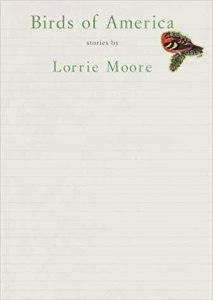
I am re-reading Moore’s acclaimed story collection “Birds of America.” On its release in 1998, a writer friend and I were both reading the book, and I told him that her writing made me jealous, defeated. “Oh, not me,” he said. “It inspires me.” (That from the guy who was a two-time Pulitzer Prize finalist in his early 20s.) 

71NDES3RN5L._SX334_BO1,204,203,200_.gif

Today Moore’s ecstatic prose inspires me, too, provides oomph, a kick to my motivational motor, spurring me to tap the keys and say something, anything. That can be dangerous. If it’s any good, most writing is. (I know — that’s axiomatic.) 

What I mean is, I can write stuff so sloppy, witless and rancid that it’s actually toxic — it wounds and discourages. Then I can pick up a book by Moore or her peers (say, Alice Munro or Tobias Wolff) and be pacified by sheer beauty and slashing craft and get revved again at the possibilities — the old can of spinach. 

Moore’s written four story collections: “Self-Help,” “Birds of America,” “Bark” and the brand-new anthology “Collected Stories” from the prestigious Everyman’s Library Contemporary Classics. And three novels: “Anagrams,” “Who Will Run the Frog Hospital?” and “A Gate at the Stairs.”

I read the latter and liked it, but I don’t remember much about it. “Birds of America” is different. It’s stickier, droller, more dynamic, more prismatic. It’s spiky, empathic, bright and cynical. Though she’s no maximalist, less isn’t Moore: Her words contain worlds. (And her titles are often titillations: “Which Is More Than I Can Say About Some People”; “People Like That Are the Only People Here.”)

I forgot to mention the stories are also crackingly funny. Moore’s effortless humor, mostly of a mordant strain, ribbons through the dramas organically. She’s no stand-up comedian like novelist Gary Shteyngart, who’s forced and erratic. With sociological rigor, she locates the dark laughs baked in the everyday.

Lorrie-Moore.jpgShe is particularly good at the jolt-laugh of the unexpected:

“The next time Bill saw her, it was on her birthday, and she’d had three and a half whiskys. She exclaimed loudly about the beauty of the cake, and then, taking a deep breath, she dropped her head too close to the candles and set her hair spectacularly on fire.” 

And she’s bracing when she goes darkly wise:

“This is what he knows right now, with dinner winding up and midnight looming like a death gong: life’s embrace is quick and busy, and everywhere in it people are equally lacking and well-meaning and nuts.”

My next book purchase will be “Bark,” Moore’s 2014 story collection, which I find hard to believe I don’t already own. I’ve put it off, sure that it can’t touch the brilliance of “Birds,” that it’s a disappointment in waiting. But revisiting her masterpiece blots out doubt. How can it be weak or wan? It can’t, I say. It can’t.

Occupational hazards of the novelist

Anyone who has ever tried to write a novel knows what an arduous task it is, undoubtedly one of the worst ways of occupying oneself. You have to remain within yourself all the time, in solitary confinement. It’s a controlled psychosis, an obsessive paranoia manacled to work completely lacking in the feather pens and bustles and Venetian masks we would ordinarily associate with it, clothed instead in a butcher’s apron and rubber boots, eviscerating knife in hand.”

— Olga Tokarczuk, from her Booker-winning novel “Flights,” a luminous series of human and existential journeys revealed in shards and fragments. A supernova of imagination and intellect.

z24027629V,Olga-Tokarczuk-i-jej--Flights---czyli--Bieguni--po.jpg
The Polish author won the 2018 Nobel Prize in Literature.


A writer’s journey from journalism to fiction to television

One of the best books I read last year was the pungent novel “Fleishman is in Trouble” by Taffy Brodesser-Akner. Studded with surgical social perceptions, mordant laughs and vibrating relevance, it’s dubbed a “timely exploration of marriage, divorce, and the bewildering dynamics of ambition.” If you’re married, or divorced, beware: It has teeth.

d8kg-square-1536

I attended a recent discussion and Q&A with Brodesser-Akner, led by one of her editors at The New York Times Magazine and complemented by a full house of admiring readers. The discursive confab was funny, at times boisterous, always sharp.  

The author is well-known for her smart and sassy celebrity profiles in the NYT Magazine. Among her most famous, and infamous, subjects are Bradley Cooper, Tom Hanks and Gwyneth Paltrow. Some interviewees have not been taken by her resulting articles, but, as a one-time celebrity profiler, I had to applaud when she said that she couldn’t care less what her subjects think of what she’s written about them; she cares only what her editors and her readers think. Truth first, feelings second. Or even sixth. 

Brodesser-Akner’s novel — a smash bestseller, award-winner and named a best book of 2019 by numerous publications — is being turned into a TV series for FX that she is writing with utmost fidelity to the source, she says.

With a showy, dimply smile, big laugh and swift, expansive wit, Brodesser-Akner regaled some 100 fans, chatting about her book’s characters and motivations, responses to the novel, the jump from journalism to fiction, family, parenthood, marriage and TV writing.

Some snippets:

 — “I always just wanted to be a writer. I always wanted to make my money writing. I went to film school because I wanted to be a writer and that program had no math or science requirements, which fit my educational criteria. I fell into journalism when I found out after college that they didn’t just hire you to write screenplays. I looked in The New York Times, which used to have a robust jobs section, and there was a job there for a magazine called Soaps In Depth. And I got a job there. A year later, because of my tremendous productivity and my rapport with my subjects [she laughs], I was approached by a larger soap opera magazine.” [From there, she contracted with GQ and the Times.]

About writing personality and celebrity profiles: “You come in with the stakes being pretty low. Profiles have been so done to death that all you have to do is make sure they’re true, and then you can experiment with them. It’s like what they say about chefs and roast chicken: When chefs all get together they make for each other roast chicken, because that’s the thing you’re supposed to show from this place of plainness what you can do with it. And that’s how I think of profiles: the roast chicken of journalism.” 

go0r7Qfp.png

On midlife, a looming theme in the novel: “Midlife is pretty shocking. I did not know how confusing it would be at this particular age. It’s like a second adolescence. But at least when I was an adolescent I thought I knew what I was doing. Now I know enough to know that I don’t. And there’s the constant strains of contentment and being distraught being in line with each other. It’s the way I feel about the suburbs. I can walk down the block and think, ‘This is beautiful. Wait, what kind of person finds this beautiful?’ That’s middle-age for me.” 

About turning “Fleishman is in Trouble” into a nine-episode TV series: “I am writing it now, and it is very hard to write television. They want it very faithful to the book, at least for the first season. They talk about a second season because that’s all they can do. That’s all TV executives do. They’re sharks; they can only swim forward. They want it to mimic the book as much as possible, which sounds easy and it is not. What’s hard about it is if you think about what my specific skills are — when there is no story, I can still write a story. I came to prominence on a story about Nicki Minaj in which I went to interview her and she remained asleep for the duration. I wrote 6,000 words about it. It was a rollercoaster.”

On going from magazine to fiction writing: “Magazine to fiction writing was amazing. Because the book was like a profile — that’s how I kept it in my head, it’s just a long profile that I’m making up. The hardest part of it was, whereas I think I’m a decent observer of people, to make people up and then have to observe them is to kind of deny what is so amazing about people, which is that they always contradict themselves and they’re unpredictable. Whereas creating something is to make up a series of predictable things.” 

“When I decided to write (the novel), I had this gut feeling of: ‘Oh, this is the one.’”

Brilliant bite-size books

I might be a tad late on this, but I’ve just discovered the marvels that are the mighty, mini hardbacks of the Picador Modern Classics series. I’ll be brief, out of breathless excitement and, well, what can I possibly add to the unadorned fact that these books exist and that, from what I can tell, there are only 12 titles available in this novel (pun, intended) format?

So, like the books themselves, I will be compact. 

But I repeat, with a shill’s enthusiasm, I am enamored of these brilliantly itty-bitty books, which are about the same dimensions of an iPhone 11 — if thicker, more paper-y, less glassy (and, alas, devoid of Siri’s seductive, dulcet tones). 

At less than six inches tall, the books are made for pockets, but they are still chunky, quality hardbacks, running about $16 list. They’re so adorable and beautifully designed, they’re practically edible, or at least highly collectible.

I just finished Christopher Isherwood’s devastating novel “A Single Man” in the Lilliputian edition. (My review: radiant.) Now I’m re-reading Marilynne Robinson’s lyrical 1980 masterwork “Housekeeping.Rarely do I get the urge to make a phone call on it, as mostly I’m wholly aware it is a book.

Other titles in the Picador collection include Denis Johnson’s masterly, evergreen stories “Jesus’ Son”; Joan Didion’s indelible essays “Slouching Toward Bethlehem”; Jeffrey Eugenides’ breakout novel “The Virgin Suicides”; Michael Cunningham’s shrewd reinvention of “Mrs. Dalloway,” “The Hours”; and Susan Sontag’s landmark study “Regarding the Pain of Others.

That means there are five more worthy titles to check out in the series. Do so HERE.

CpRkIYZUAAAeyc7.jpg

The profundity of art. Or not.

I had long worried that I was incapable of having a profound experience of art and I had trouble believing that anyone had, at least anyone I knew. I was intensely suspicious of people who claimed a poem or painting or piece of music ‘changed their life,’ especially since I had often known these people before and after their experience and could register no change. … The closest I’d come to having a profound experience of art was probably the experience of this distance, a profound experience of the absence of profundity.”

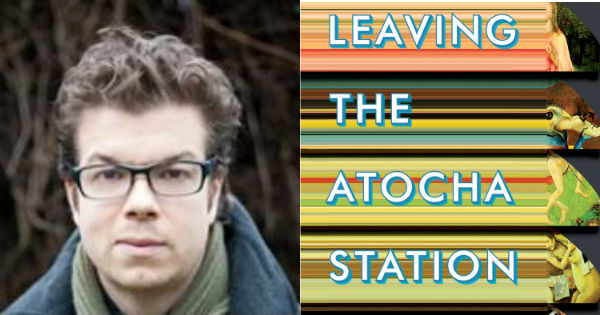
— from the novel “Leaving the Atocha Station” by Ben Lerner

atocha.jpg

Sally Rooney’s growing pains: watching a novelist mature

Sally Rooney’s sophomore novel “Normal People” is soft, stingy with lyricism, psychologically wispy, and not altogether gripping. I like it (I do!), but it isn’t an essential read, and it certainly doesn’t deserve the drooly commotion surrounding its recent arrival. I’d give it an ambivalent B.

Rooney wrote this and her prior, similarly vaunted novel “Conversations with Friends” before she was 28, and both books betray the Irish author’s — here the grizzled elder clears his throat — youth and callow inexperience in love and literature. 

In the latter instance I mean she is a plain, safe, lukewarm stylist, who, while honing a palpable personal voice, lacks the assertive confidence, the prosey musculature of a more seasoned writer. Rachel Cusk she is not.

RooneyCovers-1024x683.png

Yet the author’s inexperience in tracing the contours of youthful relationships, both romantic and platonic, has also proven her strength, even her selling point. She understands her young characters, their collegiate insecurities and romantic gamesmanship. It has earned Rooney the title of the “first great millennial novelist” from a magazine that should know better.  

“Great” is too strong a descriptive. Rooney’s feathery comedies are decidedly not great. They are good, quite good. Greatness isn’t hers yet. As one publication said of “Normal People,” it is “in some ways like the slightly less impressive follow-up album by a beloved band.” Another called it a rush job.

Still, the sycophantic likes of Vanity Fair imbibe the buzz: “The Church of Sally Rooney started to form around the release of her first novel, ‘Conversations with Friends,’ in 2017. Heralded by everyone from Sarah Jessica Parker to Zadie Smith, Rooney immediately became Someone You Need to Know About.”

It’s the hype-machine in clanking action, unctuous celebrity journalism at its finger-licking gooiest. (Church? Sarah Jessica Parker? “Someone You Need to Know About” in Gen Y caps? Certified bull-bunk.) Elsewhere, some genius crowned Rooney “Salinger for the Snapchat generation.” We can never unsee that.

“Conversations with Friends” and its hasty follow-up “Normal People” are sharp-eyed comedies of manners set in and around Dublin, lightly plotted stories about struggling twentysomethings looking for love, college scholarships, jobs and purpose. Also coming into vigorous play: literature, class frictions, social jockeying and plentiful sex. 

Her dialogue is naturalistic, stripped down, never fiery or memorable, cutting or discernibly clever. The books are light on their feet, fitfully sparking to life with taut passages and startling scenes of social discomfort.  

They are breezy and easy books, eons from the thorny ruminations of Philip Roth or plush poetics and thematic heft of Toni Morrison. They’re more like Anne Tyler lite. 

2018-08-25_ent_43360166_I1.JPG

Amid stubbornly lean prose, literary beauty is scarce. Two passages in “Normal People” poked me in the eye for their uncharacteristic flair: “The sky was extremely blue that day, delirious, like flavored ice,” Rooney almost effuses.

Only 12 pages later, she again swoons over the amazing azure of the heavens: “The sky is a thrilling chlorine-blue, stretched taut and featureless like silk.”

But she’s just playin’. Her allergy to the florid is concrete. Typical sentences, surgically removed of metaphor, run more like this: “Lorraine covers her mouth with her hand, so he can’t make out her expression: she might be surprised, or concerned, or she might be about to get sick.” That, reader, is on the more colorful end of the Rooney spectrum. 

Last week “Normal People” crashed the NYT bestseller list at No. 3. Maybe it deserves it. I enjoyed it for all my nitpicking. Yet I wonder who reads Rooney with the avidity of Sarah Jessica Parker or Zadie Smith (who at Rooney’s age was already a true literary giant). 

Rooney’s smart little beach reads — people boast about how they gulp her books in one sitting — are crisp divertissements. But they are lacking, in weight, import, poetry, the stuff of lasting literature. I give her a B, for now. Though the promise she shows tells me that grade may rise with each new book. We read and watch. And hope.