Answer: sort of.
To be clear, Seoul is cool. Tasty food. Delightful, welcoming people. Comfortable climate. Neat culture. Efficient transportation. Lots of greenery. Er …
I’m running out of tepid superlatives.
When you go someplace faraway that turns out to be a partial disappointment, there’s not much you can do but shrug and eat the money you spent, doing it with a wincing grin and a strained bulwark around regret.
I just returned from a week in Seoul, South Korea, and while I had a fine time, ate well and overall enjoyed the novelty of an uncharted capital city, it was lacking the electricity, neon bang and enveloping fizz I was hoping for, and indeed feel I was promised in my exhaustive research for the trip.
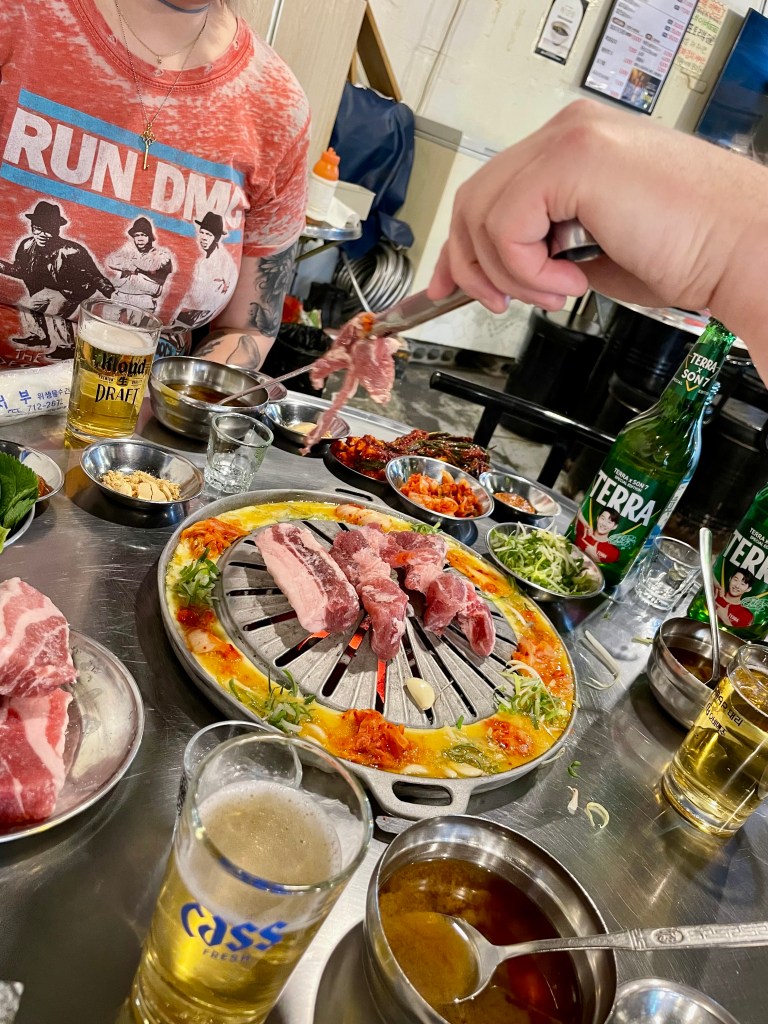
Things that stood out: Korean fried chicken, which cheekily goes by the initials KFC but ably kicks that franchise’s ass as far as creativity and salivating edibility. Also Korean BBQ, which requires guests to grill slabs of raw pork or beef and veggies on a grill in the middle of their table, and is served with an array of traditional Korean sides, including, of course, kimchi, love it or hate it (I kinda like that spicy pickled cabbage).
What else? A clutch of world-class museums, like the Leeum Museum of Art, hosting riveting contemporary and traditional Korean art, and the National Museum of Modern and Contemporary Art, where the first major Asian exhibition of British provocateur Damien Hirst (genius or charlatan?) was being showcased. Squirming with live octopuses, crabs and lobsters, and perfumed with tongue-tickling eons of Korean street food, the bustling Gwangjang Market offered excellent vittles — if you factor out the misbegotten “gelato” I dumbly bought.
And yet for all that, plus its plush verdancy — trees are abundant, parks plentiful — Seoul is far from the most handsome city I’ve visited. A hazy, pale brown sameness dominates and the skyline is crowded with towering forests of depressingly uniform apartment buildings that resemble the subsidized urban housing found in, say, New York.
I was underwhelmed. Maybe I set my sights too high. What I ask when I journey half-way round the globe is astonish me. I’ve been to adequate places before. The beaut that is Budapest, for one, didn’t knock my socks off. And Bologna, despite its undeniable gothic charm, failed to make my head spin. Arles: same. Buenos Aires: ditto.
In no particular order, I can rattle off twenty major cities that are more exciting, more charismatic, than Seoul, places I would gladly return to and have: Paris, Istanbul, Tokyo, Hong Kong, Rome, San Francisco, Barcelona, Lisbon, Madrid, Sevilla, Mexico City, Berlin, Naples, Ho Chi Minh City, Shanghai, Krakow, London, Florence, Mumbai, Bangkok.
What specifically let me down in Seoul? I won’t dwell on the negative — nothing was actually bad — though I will point out two areas of the city that are oversold.
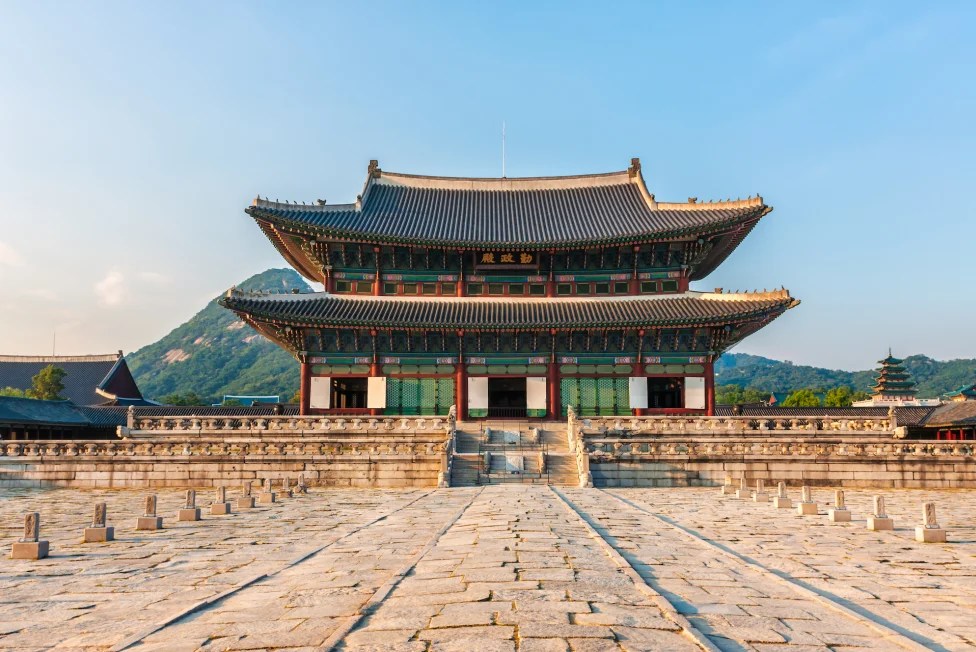
First, Gyeongbokgung Palace. It actually is a magnificent spread of ancient royalty and spiritual significance. Until you learn that the palace was built in the 1500s but was destroyed over decades and partially rebuilt in 1960. What stands now comes from a long-term restoration project that began in the 1990s and is still ongoing.
Oh. One of those. It’s like looking at a museum model, so removed from the original structure that it seems fake, a Lego model kit. And this is considered the top site to visit in Seoul. Hit the snooze button.
Then there’s Seongsu-dong, Seoul’s premier “newtro” hotspot, often called the “Brooklyn of Seoul” for its blend of repurposed industrial factories, trendy cafes and fashion pop-ups. A huge draw is the gaudy Dior store, in front of which girls and women snap mortifying selfies for reasons unfathomable.
I actually paid a guide to shuttle me through this consumer orgasm on a tour he curated. He showed me sunglasses stores, phone and K-beauty stores. I would smile and nod, wondering, wha? He led me into pretty cafes and eateries, where we did not drink or eat. I would nod again, impressed, but not really.
On a happier note, my hotel was a dazzling oasis in the lively Itaewon district, stacked with elegant bars and restaurants and even featured one of Korea’s ever-reliable convenience stores (as in Japan and Hong Kong, 7-Eleven is ubiquitous). The impeccable staff at the hotel couldn’t have been more gracious and helpful. I’ve never said thank you so many times, so genuinely, in such a short period.
Still, in Seoul, Korea, the epicenter of all things high-tech, futuristic and culturally forward, and from whence sparkling K-pop was born and unleashed like lightning across the world, I couldn’t help but wonder … Where’s the pop?