Japan by mouth

There’s a popular documentary from 2011 called “Jiro Dreams of Sushi.” As I plan a trip to Japan, I also dream of sushi. And ramen. And Sapporo. And yakitori. And sake. And squid. And Godzilla. 

If Jiro, a wispy 90-ish sushi master, merely dreams of sushi, I fully rhapsodize about sushi. (OK, I exaggerate. I only think about sushi, mm, twice a week. But it excites in ways other foods do not: Its silken, room-temperature raw-dacity; glistening, quivering slipperiness; palate-dancing umami-ness. Does that make me a sushi master? I think it does.) 

Jiro poster
Sushi swirls around the dreaming Jiro’s head. He dreams of sushi. He swims in it. He wonders: Why so much sushi? He dreams of retirement.

What I’m saying is I will ingest gobs and globs of raw fish during my 12-day fall journey, to the point of possibly getting mercury poisoning, which would be one hell of a souvenir. Sushi, that artisanal seafood delicacy, isn’t cheap, one reason why I eat it sparingly. Another reason is that where I live fine sushi is as rare as Rodan sightings. And mediocre sushi, like a half-ass steak, makes one ponder existence darkly. 

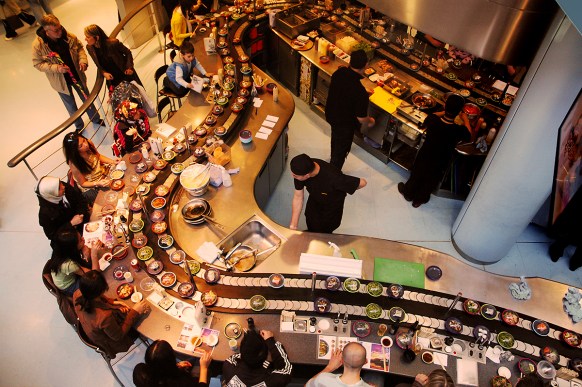
Therein lies the miraculous ingenuity of Japan’s conveyor-belt sushi (kaiten-sushi) — not amazing, not bad, but invariably cheap and gratifying seafood that winds through the restaurant on exactly that, a conveyor belt, like an assembly-line of deliciousness. Its brilliant utility blots out its majestic absurdity.

Round and round the little plates go, each saucer’s cargo a slab of prepared-before-your-eyes nigiri, circling a seeming mile on a tiny conveyor belt, waiting for you to snatch it at your desire as it rattles by. Each plate or piece costs about a buck-fifty or less, so a meal, for me at least, ranges a not-bad $10-$15.
Yo-Sushi.jpg
Conveyor-belt sushi, like a buzzing food factory.

But why not try Jiro’s sushi shrine, the tiny 10-seat Sushi Jiro, a Michelin three-star establishment/closet located in Tokyo’s Ginza subway station? For one, it’s $300-plus a meal, no exceptions. Two, it is nigh to impossible to net a reservation, though I did spot the so-called Jiro Dreams of Sushi Jiro Dinner & Luxury Tour at a fee of $1,500 per head. This one’s for Jiro cultists/completists and FOMOs only. Plus, men have to wear a blue or white shirt and a blazer and we know that’s not going to happen.
b4eizl4ezm49wqtayhat.jpg
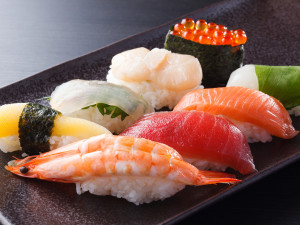
Edo-style sushi

So I’ll go back to school. Namely Sushi University, a two-hour tutorial pig-out in which you learn while you nosh at a fine Tokyo sushi restaurant. The pitch:

“How would you like to sit at an authentic, Edo-style sushi counter, enjoying sophisticated conversation with the chef? Each excursion includes a skilled interpreter who joins you from start to finish, allowing you to experience the culture and history of sushi as well as learn about the chef’s specialties and style of the restaurant.”

(Smoking and the wearing of perfume are forbidden lest they corrupt the delicate fishy.)

If I’m not a sushi master by now — though I think we’ve established that indeed I am — then surely I will be one after graduating Sushi University. Hai!

On my two prior trips to Japan I was gastronomically rudderless, lost, quite pathetic. I just ambled about, making impromptu eating choices based on whatever looked yummy and inviting in the neon-soaked Shibuya and Shinjuku areas where I stayed. I’d duck into an inevitably minuscule and packed yakitori place or busy conveyor-belt sushi joint, or simply grab some street food. (I ate whale. So sue me.)  I must say, I did eat fine.

Structure is the operative word this time. And learning (see: Sushi University) is part of it. Hence the Sake Tasting and Lecture I’ve enrolled in, aka Signature Sake-Tasting Course, a 10-plus glass sake tasting including sake snacks (or tsunami) and a lecture in English. It’s conducted at one of the most famous members-only sake houses (izakayas) in Tokyo, or so they say. (It could be a bar owned by the instructor’s cousin Rocco.) I don’t even like sake. But I am going for liquid enlightenment, to open my buds and brain. By course end, I will be a sucker for sake, otherwise I will upend the table and demand a refund. And then I’ll probably get roughed up and tossed to the curb.

maxresdefault.jpg

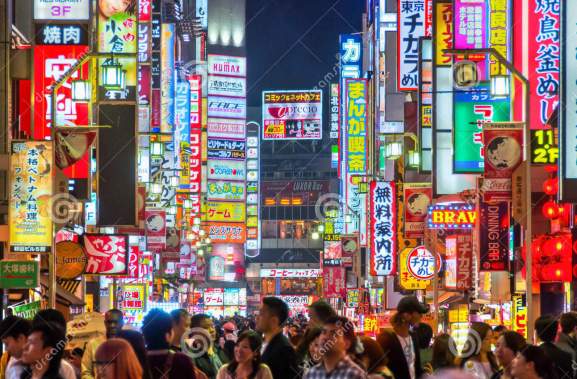
My Tokyo hotel is smack in the thwumping heart of kinetic, cornea-cooking Shinjuku, famous for its oceanic bar scene, insomniac nightlife and seedy red-light district — and for sucking up half the world’s electricity in hyperactive signage. I want to dig in with a little help from my friends, so I’m taking the Tokyo Bar Hopping Tour in Shinjuku — Explore the Hidden Bars in Food Alleys. I beg it’s as bulging as that unwieldy title, as our small group weaves through itty six-seat pubs and sake houses of the Golden Gai for food and drink and, I hope, staggering wisdom. Keep your tawdry Love Hotels. I’m not playing around. I’m here for elucidation and libation. Now where in hell do I get a stiff whisky? 
nightlife-shinjuku-tokyo-japan-one-s-business-districts-many-international-corporate-headquarters-located-here-40973672.jpg
Shinjuku — batshit.

Capping my Tokyo culinary explorations is an obligatory trip to the famed Tsukiji Fish Market for an early morning, 3.5-hour “food and culture” walking tour at the outer part of the massive market. Here’s some copy that’s as canned as Chicken of the Sea:

Rub shoulders with Michelin-starred chefs as they shop for ingredients at this sprawling, 80-year-old market for all things aquatic. Investigate the various stalls selling fish, shellfish, and everything in between, and sample Japanese favorites such as sushi, dried bonito, fresh oysters, and sake. Eat and drink like a Japanese local.”

Exactly. I want to eat and drink like a local, not a western bobble-head boob. That’s the point of this Edo-education and sake schooling — to figure how it’s done and cultivate an experience of maximum authenticity. I’m more about learning the history and culture than the language, though I do know three words in Japanese. Maybe four. No. Three.

shutterstock_1061193218.jpg
Tsukiji Fish Market. Looks disgusting. Tastes great.

At this point, I’ll be full up to the gills in raw fish, sake and sundry seafoods. I will have relished a moveable feast, an embarrassment of fishes. I will have been transported, spirited away. Jiro, that old master chef, will have nothing on me. I will have dreamed of sushi, and worlds more. I will at last be sated, and ready to start all over again. After you …

Random reflections, wryly

I have never done karaoke, and I never will.

I don’t understand runners. I don’t know what in the world they are doing.

Dancing — a faint memory from my roaring twenties that I hope goes away.

Reggae is the devil’s flatulence.

A good, mean rollercoaster mainlines an unparalleled high. 

There is nothing sexier than a comely woman reading a book. 

Cars. I will never get them. They are like refrigerators — necessary appliances.

‘Good dog’ is redundant.

People who purposely don’t travel are unevolved and sad. (And people who say Munich is better than Paris are the most unevolved and most sad.)

Going to the movies alone is the best.

Religion is so radically misunderstood, so repulsively knotted up, we should hit delete and start all over again.

I am constitutionally incapable of playing charades.

Giving money to your alma mater is strictly for suckers.

Unless you’re doing it to a tiny child, the high-five is socially questionable. Fist-bumps — criminal.

There are worse things than tongue piercings. Though I can’t think of anything.

When an adult says they’re “reading” Harry Potter, they’re not really reading at all.

Sushi is sublime. I’ll even eat the grocery store crap.

I‘m thinking of going back to Japan. The more I think about it, the crazier I get.

I have this thing that if someone tells me they don’t read, I want to go back in time to the moment where I hadn’t met them.

Carnivals are disgusting and revolting. I adore everything about them. Even those poor goldfish.

I can’t do the Great Outdoors. It’s the outdoors part that gets me.

I like sharks a lot. If one bit me, it would probably like me too.

Pet rats are like itty-bitty dogs — highly intelligent, funny, trainable, social, responsive. They drink beer and eat anything and, well, everything. Then at about 2-years-old they die and shatter your heart into 10,000 pieces. They’re the best.

If, in a post-apocalyptic world, all sports were wiped out, I wouldn’t care a whit. Take the fans first.

I was thinking of going to a local food festival and parade. Temporary insanity just creeps up on you.

roller-coaster-149508746-57ac7eb45f9b58974ace1b67.jpg
Good.
keep-calm-and-love-reggae-d001012131649.png
Evil.
_105702604_shark976.jpg
Cool.
Tongue-Piercing-Girl_620x349.jpg
Fool.

A transcendent dogumentary

They scramble and scrabble, bark and bound, nap and nuzzle, making an indelible imprint on their human pack leaders whose love for canines is crazily uncontainable.

Photos: Netflix

“Dogs,” a terrific six-part anthology series on Netflix, lushly shot by a squad of bravura documentarians (Glen Zipper, Oscar-nominated Amy Berg, et al.) , is a frank and unadorned look at the relationship between man and mutt. Heartrending and heartwarming, little is forced or pushily sentimental. Episodes provide spectacularly detailed snapshots of person, place and pup, and you strangely come away with a broader comprehension of life itself. Which makes the series certified art. 

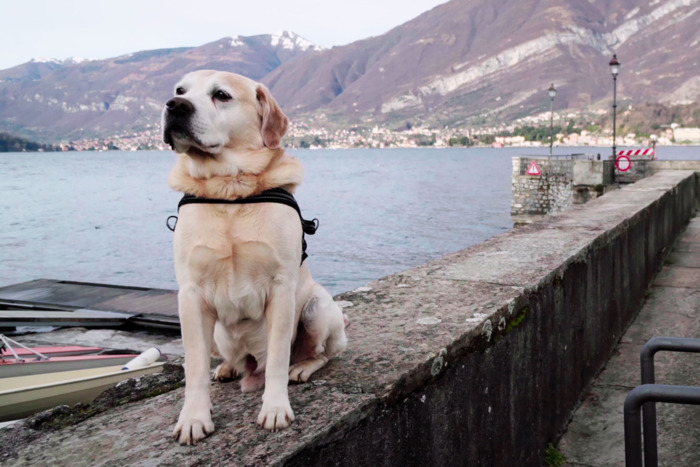
Emotions organically erupt from an array of situations, be it a Labradoodle service dog that detects seizures in its epileptic owner with whooping barks; an imperiled Syrian war refugee that happens to be a yowling Siberian Husky; an aging golden Lab in a quaint Italian fishing village that dutifully follows his master onto Lake Como where they drift together; the fabulously groomed pooches of Japan and the uncharted culture of competitive grooming; a sanctuary in Costa Rica that’s home to 1,200 free-range strays; or New York City’s exploding rescue-dog phenomenon.

Each textured 50-minute portrait is framed within the big picture of the humans’ lives, from political to familial, together with the dogs’ often precarious realities. Funny, galvanizing, sad, uplifting and even spiritual, “Dogs” shows how beautifully symbiotic the two entities, hound and human, truly are.

Watch the “Dogs” trailer HERE.

What we’re really looking for when we travel

“I travel not to go anywhere, but to go. I travel for travel’s sake. The great affair is to move.” — Robert Louis Stevenson

“I read; I travel; I become.” — Derek Walcott

Someone recently suggested to me that my many travels aren’t journeys to see the world and immerse myself in the new, novel and astonishing but to escape from life, to bolt from my existential predicament with its quotidian contours and smothering banality. 

Well, duh.

P1010466.jpg

Rather than take umbrage at this reductive hypothesis, I embraced its glaring self-evidence. But it is only half-right. Escape from routine and workaday doldrums is part of the algebra of travel for most of us, but the other part about immersion in the new, novel and astonishing is undeniably, irrefutably the most important piece of the equation. That unquenchable thirst for fresh, unpredictable experience, from culture to cuisine, people to history, is absolutely paramount. To say otherwise is preposterous.

IMG_2773

After all, you can’t actually escape yourself or your life just because you’re standing woozily before the Taj Mahal or whizzing happily on a moto-bike through the maniacal streets of Saigon. “Wherever you go, you take yourself with you,” author Neil Gaiman said. You can’t not pack you. You view the world through the lens — smudged, rosy, cracked — of your own inescapable mind.

Yet there’s another way to look at the urge to trot the globe, and it goes like this: “We travel not to escape life, but for life not to escape us.” That dimly cryptic maxim has no author, just the copout “anonymous,” but it’s deep nonetheless. It’s saying travel is life itself, that to travel is to truly live. I know I’m at my most alive, most stimulated traveling, when unfamiliar vistas and uncharted ways of seeing and surviving crack open like great gifts. I look, I learn, I marvel. Smitten here, flummoxed there, I gulp it all down.

IMG_2908

Contrarily there’s journalist Janet Malcolm, who finds travel a lesser version of daily living, “a low-key emotional experience, a pallid affair in comparison with ordinary life. (Our homes) are where the action is; they are where the riches of experience are distributed.” (A celebrity in her profession, Malcolm has an incredible job, and she presumably enjoys a highly satisfactory family and social life in very nice accommodations. I’m just saying.)  

Real life will inevitably beetle its way into our journeys. We are not immune from the humdrummeries of being human just because we’re sipping sangria in Sevilla or snorkeling in Thailand. More often than not, we are pulled back into normal existence while trekking and must deal with the minutiae and mundanities of getting by. Currency hassles, airport irritants, sore feet, crappy service, taxi ripoffs, unvarnished boredom — life is a greedy intruder. 

Some germane questions: Does travel satisfy the urge to fill something, or to shed something? Ponder.

P1010792

I finish with this besotted soundbite from illustrious world-traveler Pico Iyer, who defines wanderlust far better than I can: 

“We travel, initially, to lose ourselves; and we travel next to find ourselves. We travel to open our hearts and eyes and learn more about the world than our newspapers will accommodate. And we travel, in essence, to become young fools again — to slow time down and get taken in, and fall in love once more.” 

Travel as enchantment. There you have it.

(Photos by Chris at Gnashing.)