Roaming Roma

About that Mexico City trip I’m taking in November, I think I’m getting carried away. I’m there for a week and already I’ve booked four dinners and six tours, and I’m scanning more adventures in the heaving megalopolis, which goes by the sporty acronym CDMX. 

The gargantuan city is so overwhelming, with so much to see and eat, I feel I require more guidance and guardrails than on previous trips. I’m so fretful that I woke at 2 a.m. to make a pair of rarefied restaurant reservations just to make sure I secured them at the exact right time. (Scored!) 

But I’m also a loner, so, when it comes to tours, I really don’t want to get stuck with too many chatty chuckleheads from, say, Melbourne and Milwaukee. I can roll my eyes only so much. Still, I have six tours on my slate, a personal record, which could be a canny or foolhardy proposition. 

That said, I’m probably going to spend the rest of my time strolling the many neighborhoods solo and uncover my own delights. The place is frightfully big, so this expedition will either be sweetly exhilarating or operatically tragic. 
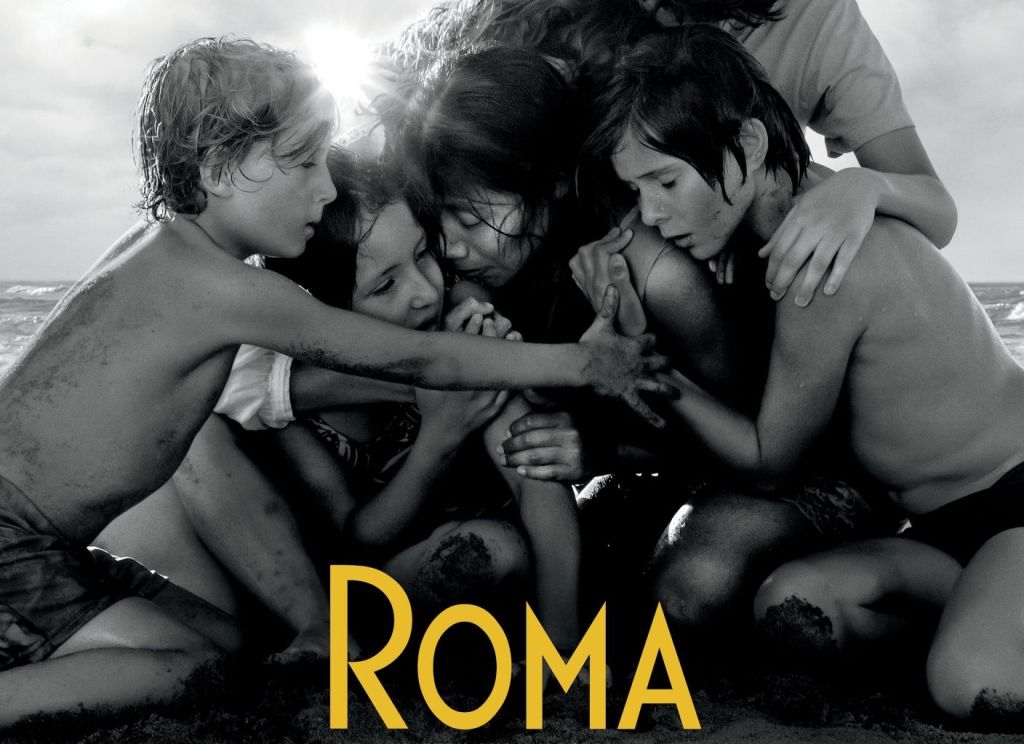
One of the tours I’ve booked is of the vibrant Roma area, billed as a paradise of local markets, parks, trendy restaurants, bars and hipster cafes. If that’s my sort of  thing — and it is, though I do love my grunge — it also evokes writer-director Alfonso Cuarón’s 2018 memory film “Roma,” set in the neighborhood during the much different 1970s, when the socio-political scene was uniquely combustible. (The area, incidentally, is named after Rome, Italy, as a tribute to its wealth and culture.)

The award-dappled movie is a languid stunner, an autobiographical portrait of growing up in Cuarón’s tight upper-middle class family, with special focus on the domestic help, namely Cleo, who, beyond sweeping up dog poop and making beds, takes care of Cuarón and his three gangly siblings.

Deceptively simple, “Roma” — shot in shimmery, Oscar-winning black and white that looks like quicksilver — is family drama at its most heightened and honest. Its verité verve is pure documentary immersion.

From the director of masterworks “Y tu mamá también,” “Gravity” and “Children of Men,” the movie examines with a flea comb the daily dynamics of living and loving together, and all the pain and joy that involves, including fatal frictions between husband and wife. 

And then there’s quiet, big-hearted Cleo, cooking and cleaning and embracing her role as part of the family — and in the process, becoming a sort of angelic savior keeping the clan together. The movie ranks #46 on the New York Times list of best films of the last 25 years.

The tour I booked has a lot to live up to.

(On Netflix.)

The 5 most overrated movies of the year (so far)

Critics and crowds made big stinks over these movies this year. I didn’t.

1. “Roma” — Topping many “bests of” lists, Alfonso Cuarón’s meandering memory drama, based on his early-‘70s childhood in Mexico City, was the biggest disappointment of the year. Flaccid and unfocused, this pretty black and white picture is about Cuarón’s middle-class family just as their father leaves it. Fatally, the film’s nominal main character is the live-in housekeeper, who, perplexingly, is a narcotized, non-verbal cipher. Her reaction when she discovers she is pregnant rivals Buster Keaton’s stone face matched with Harpo Marx. Some critics have tried to pass off “Roma’s” absence of structure as a “meditation.” It is not. Rather it’s a story-free stream-of-consciousness that leaves little to grab onto and be affected by. Dog poop, believe it or not, plays one of the liveliest roles. For all of Cuarón’s lush, gliding camerawork, swooshing this way and that, capturing rambling life as it happens, the affair is implacably inert.  

Roma-Movie-Review-Alfonso-Cuaron.jpg

2.“Leave No Trace” — A film that leaves no trace, emotionally or otherwise, this achingly static homeless drama about a father (Ben Foster) and his teenage daughter (Thomasin McKenzie — both shine) living off the grid in an Oregon forest suffocates on its own aridity. Scant happens when they’re hauled into social services, or when they attempt a run for the wild. For so much heart, little resonates.

leave-no-trace-movie.jpg

3. “The Ballad of Buster Scruggs” — In this six-chapter Western anthology, the Coen brothers hew tightly to time-honored oater conventions while spinning them on their dusty Stetsons for typical tonal whiplash. Zigging from bloody to farcical at the speed of a bullet, with a game all-star cast, it’s handsome, violent, intriguing, and tediously quirky. (Earmark the episode with Zoe Kazan. She’s fantastic, and she’ll shatter your heart.)

image.jpeg

4. “Shoplifters” — This sometimes playful Japanese social drama by the accomplished Hirokazu Kore-eda sporadically springs to life with small jolts that only make you hunger for more. The award-sprinkled film is about a family that relies on shoplifting to ease its poverty. Naturalistic and deeply humanistic, it suffers from a lack of movement, and the modest emotional punch comes too late. 

npzqw0jyoi31pfi0m8dd.jpg

5. “Private Life” — A hackneyed bourgeois dramedy about, sigh, a middle-aged couple that can’t have children in the traditional fashion, so try all manner of misadventure to conceive. The couple, played by Paul Giamatti and Kathryn Hahn, great comic actors brought down by middling material, are New York writers (really?) surrounded by brainy friends (really?) who try and help. Marital friction erupts (really?) until a secret weapon appears. Hope abounds. This is slushy, sitcomy stuff that writer-director Tamara Jenkins (“The Savages”) is above.

gn-gift_guide_variable_c.jpg

6 more: an honor-roll of the overpraised, in no order

“Isle of Dogs” — Wes Anderson, that leaping leprechaun of willed whimsy, presents a fun, funny premise about stray animated dogs sloughed off to a trash-heap island in Japan, until he, reliably, clutters things up with over-plotting and mirthless mayhem.

3-28_movies1_-_isle_of_dogs.jpg

“You Were Never Really Here” — I wish someone could’ve said that to me after watching this turgid hitman character study, starring a grody Joaquin Phoenix and directed by the grit-addicted Lynne Ramsay (“Ratcatcher,” “Morvern Callar”).  

“Hereditary” — Toni Collette’s lashing performance as a beleaguered mother can’t salvage this confused supernatural horror tale that careers from realistic, upsetting family drama to near-laughable nonsense replete with séances, demons and covens.

 “Mandy” — A full-on bonkers genre goulash of volcanic incoherence that, despite the presence of a teeth-gritting, eye-popping Nic Cage caked in baddies’ blood — just the way we like him — isn’t half as fun as it thinks it is.

mandy-box-office.jpg

“Black Panther” — As I wrote in June, I found this mega-hit a “slick, savvy vehicle that gets predictably bogged down in mythical mumbo-jumbo, comic-book convolutions and contrivances that I haven’t the energy to follow or care about.”

avengers-infinity-war-wakanda.jpg

“Happy as Lazzaro” — Watching this coy Italian flirtation with magical-realism, I felt I was dying a slow, awkward death.

1534850041653_0620x0435_1534851432553.jpg