I’m not eavesdropping, really …

Recently here I chatted up the new local cafe, the exquisitely hip, I’ve-been-to-India, dump-Trump joint with the jaunty name. I decided to pop into the other local cafe, that name-brand one that just reopened after long renovation. I’m there now — I write in cafes often, a living cliché — and I’m people-watching with a touch of eavesdropping. It’s not at all creepy.

I see a poised, pert, put-together brunette chirping quietly with her friend — hale, happy twentysomethings talking about job interviews and uproarious Facebook posts. She looks like she loves dinner parties and charades. She fancies a good daiquiri. Her favorite TV show is “This Is Us.” I’m just surmising, but I know I’m right.

18187449
A hypothetical cafe scene. They look ecstatic.

Elsewhere overheard: “You know, Mary, I’m not comfortable making those calls.” 

Enter: a 60-ish gent in a baggy Bill Cosby sweater, with stubble that looks like powdered sugar sprinkled on his pink pate. “I begin my teaching tomorrow. Seventy students!” he tells his companion, a flute-thin young woman with lank auburn hair who, I’m certain, is a teacher’s assistant. 

The fellow is loud and a roaring bore. He gesticulates like a madman. She sips some coffee and it goes down the wrong pipe. The ensuing coughing fit is something to behold. Napkins fly. We sympathize.

“We’re getting off track here,” an elderly woman laughs. She’s talking to a slightly younger woman at a corner table about scheduling some sort of meeting at her home. “Should we do RSVPs?” the younger woman asks. 

I soon gather they’re organizing a book club. They are perusing a list of titles. The younger woman describes a book that’s “very well-written” that sounds like a kind of real estate thriller. The authors Andre Dubus III and Michael Frayn (“He’s British”) are mentioned. “The person who selects the book is the host of the meeting,” says the younger woman.
06booknunez2-print-articlelarge-v2

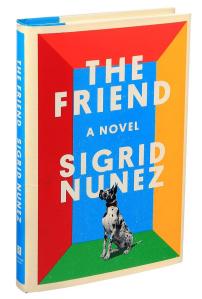
I want to chime in and suggest the novel I just finished, “The Friend,” Sigrid Nunez’s brisk, deceptively simple yet profound meditation on the writer’s life and friendships between people and dogs and people and people. It won the 2018 National Book Award. It’s lovely.

I pick the book. I’ll be the host. I’ll serve baked Alaska.

Someone just said “hypothesize” in mixed company. 

I ask the barista what she’s reading these days — we often yack about books — and she flashes her copy of the novel “The Secret History,” Donna Tartt’s 1991 cult smash. I kind of wrinkle my nose while evincing interest, and tell her I tried and failed to read Tartt’s 2014 Pulitzer-winning epic “The Goldfinch.” I read about half and put it down. The novel is divisive: You love it or loathe it.

She adores it. “What didn’t you like about it?” she asks. I thought it was cutesy, candied, implausible, whimsical and too redolent of Dickens. 

“It is Dickensian,” the barista says, and with that simple word my day is made.

Elephant adoption — it’s a real thing. Two ladies are talking about it. One explains that it costs $50 a year to adopt an African pachyderm and “each month they email you a picture and an update about your elephant.” She has an elephant. “I went to visit the orphanage in Nairobi,” she says. I suddenly want an elephant. 

“It’s my parents’ 43rd anniversary,” a 30-ish guy tells his friend. “That’s a long time to be sniffin’ someone else’s toots.” 

I missed most of the soliloquy, but a youngish man was rhapsodizing about coffee and espresso and the joys of sitting on his porch, and out of his mouth popped this phrase: “the waking beauty of life.”

Spectacular.

Eight books I’ll never read

Call me a masochist, a philistine, willfully depriving myself of some of world literature’s masterworks. 

I beg to differ. I’ve read wads of wonderful books and have countless more to go, including those which I call my hope-to books, meaning I hope to get around to them in this lifetime: “Don Quixote,” “Middlemarch,” “War and Peace,” “The Portrait of a Lady,” and to finally finish “The Brothers Karamazov” and Don DeLillo’s “Underworld.”

The following eight novels are books I’ve either attempted to read and put down with disappointment or volumes I simply know I won’t find the time for because I’m pretty sure I’ll banish them, deflated, demanding my many reading hours back. In no order:

“Remembrance of Things Past” (1913-1927). And so our hero launches a legendary journey through his past with one bite of a tea-soaked madeleine, a journey that seems, for thousands of pages, unstoppable. Marcel Proust’s seven-volume novel puts the “ick” in epic, warding off the casual reader who’d rather not commit eons to a single novel. I wish I could do it. I started volume one, “Swann’s Way,” but its famed vortex didn’t suck me in. I took a bite of a milk-soaked Oreo, but it didn’t have the same effect.

51e2K0ZM4aL._SX316_BO1,204,203,200_.jpg

“Ulysses” (1922). The most obvious book avoided by literary wussies, the Everest of difficult fiction, which has scuttled so many foolish takers. I’ve dipped into its brambled pages and got instantly lost and tangled in the impregnable modernist foliage. More trouble than it’s worth. While we’re at it, let’s add Joyce’s indecipherable “Finnegans Wake” (1939), another provocation for brawny brains and paragons of patience I will never read.

5117M1qFk9L._SX326_BO1,204,203,200_.jpg

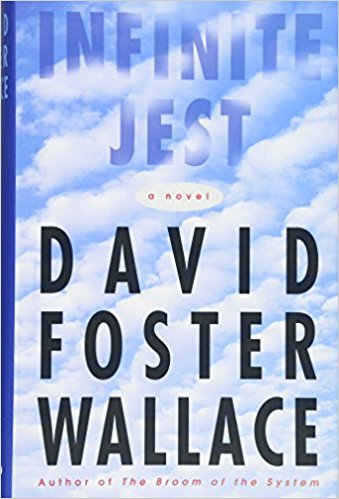
“Infinite Jest” (1996). 1,088 pages of post-modern tomfoolery and intellectual acrobatics, David Foster Wallace’s cult classic daunts and taunts. Not many conquer Wallace’s brilliant, monster challenge to hip, erudite readers, with its formal elasticity, cerebral satire, and devastating commentaries on everything from television to tennis. Another behemoth that I’m afraid I can’t swallow. (Though I relish his non-fiction. Does that count?) 

516Ymv7D7TL._SX337_BO1,204,203,200_.jpg

 “The Goldfinch” (2015). Adult fiction that reads like children’s literature, Donna Tartt’s old-fashioned opus is clammily contrived and wears a twee Dickensian frilliness. (It also, mystifyingly, won a Pulitzer.) I read almost half of its 976 pages, waiting for the story to grow muscle, to grow up. It’s a squishy coming-of-age tale so banal it’s hard to believe. If it was a movie, Chris Columbus would direct. (Actually, John Crowley, of “Brooklyn” fame, is directing the film. What are you going to do?)

41p4amaYISL._SX317_BO1,204,203,200_.jpg

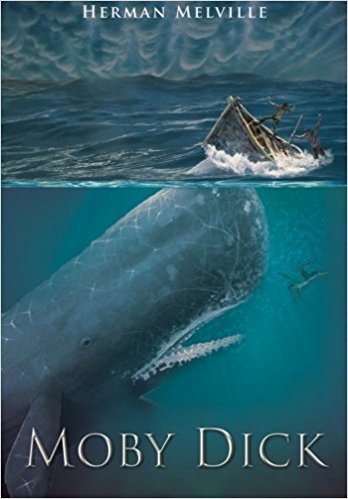
“Moby-Dick” (1851). I read about a fifth of Melville’s whale tale, and after a peppy start, alive with humor and heart and humanity, the slog began. I’ve heard you must muscle through, machete swinging through the anesthetizing filler and maddening digressions, and a grand story will emerge. But it’s simply too hard to focus on a crowded page when your eyes are so glazed over. 

41vnfkc9srl._sx346_bo1204203200_.jpg

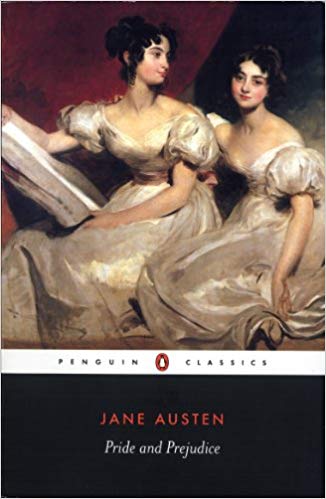
“Pride and Prejudice” (1813). I wrote the following here last summer: “I can’t do Jane Austen’s ‘Pride and Prejudice.’ I’ve tried to read it three times, and each time, at around page 20, I crinkle my nose, toss my head back, issue a fluttering sigh, then slap the book shut. Slap. Pinched and prissy, the prose is like flossy streamers of chirp and chatter, candied and precious and irritating.” Hmm, I’ll stand by that.

41uuHuulc1L._SX324_BO1,204,203,200_.jpg

“Gravity’s Rainbow” (1973). I’ve read some of Thomas Pynchon’s other novels and I am no fan. Here’s how a site described the author’s extravagant, fireworks-shooting, 760-page magnum opus: “Quantum mechanics, mass extinction, speculative metaphysics — heavy stuff. It doesn’t help that Pynchon’s style is free-flowing and flashback-heavy. This has been called the definitive postmodern novel.” I respectfully pass.

61u7TBzQp6L._SX322_BO1,204,203,200_.jpg

Anything by Charles Dickens (lived 1812-1870). I delighted reading “A Christmas Carol” as a child, but since then my relationship with the granddaddy of Victorian fiction has been a frustrating failure. Every so often I will try again to read one of his bloated novels — I picked up “A Tale of Two Cities” three times before I tossed it — but they’re so fussy, so verbose, so cutesy, even, with all those belabored character names. The books aren’t light. They go down like molasses: cloying, thick and sticky.

51sxQn48DPL._SX324_BO1,204,203,200_.jpg