Books, bookings, and Bourdain

A few things banging around my head this week …  

David Sedaris has a new book out. Whoop-dee-do.

Expectedly, knee-jerkingly, reviewers have stumbled over themselves to praise the foppish funnyman’s latest collection of personal tales (often tall), diary entries, cultural observations and social sniping. 

Snicker-worthy at his very best, Sedaris, a humor essayist for The New Yorker, has made a cottage industry out of wan, admittedly embellished autobiography, droll stories about his family, his husband and his privileged moves to the French and English countrysides. 

Turning life into literature, he is frank, irreverent, sassy, yet sensitive, as any good writer should be. And he is a good writer, even if his language is baldly prosaic, stylistically flat-footed, determinedly unadorned, dare I say drab. (I said it.)

Overrated, with thousands flocking to theater-sized readings to hear his nasally, high-pitched deadpan — I’ve been there — he’s not exceptionally funny or insightful, though he taps a reservoir of honest empathy. He’s a queer, urban Erma Bombeck, flattering a particular strain of hipster and sophisticate with teeny tee-hees. 

***

I’m pumped about Portugal. Barely back from Paris and already I’m poring over books and sites about Lisbon and Porto, legwork for a weeklong stay in mid-January, when I’ll probably get soaked by merciless rain (while temps hover at a balmy 58 degrees). Paris must feel like a betrayed mistress.

The flight, which cost less than a good winter coat thanks to an airline credit, is booked. Hotels, at seductive off-season prices, are booked. Two walking tours, including a Porto food tour, are booked. 

I got back from Paris exactly one week ago. I am shameless, a monster. 

Unlike Paris, London or Spain, Portugal isn’t front-loaded with blindingly spectacular sights and museums. It instead thrums with an old-world vibe, cobbly neighborhoods spread over San Francisco-y hills, views and plazas and churches and food, including unparalleled bounties from the sea, and of course the people. (My people. As mentioned before, I’m of Portuguese descent, though my ties to the country are tenuous at best. I’m a terrible ambassador.)

It’s a walking world, Portugal. I plan to amble, stomp and stagger through the country’s two biggest cities, with the very occasional — and very cheap — taxi for longer hauls. A picture says so much, and makes the heart do a jig:

Porto

***

Smarter, funnier, better looking and a brilliantly better writer — not mention an infinitely superior cook, natch — Anthony Bourdain and I still had a lot in common. 

We’re both wanderers, seekers, a little profane and rough around the edges, smart-alecks, atheists, ironists and guiltless sensualists. We’re angry, fiery and melancholic. We’re easily bothered and bored, and don’t always know what to do about it, except, in many cases, hit the road.  

And like him, for all my searching, I’m still not sure what I’m looking for. And I’m pretty sure I will never find out. Bourdain, a suicide in 2018, probably never did either.

This hits me watching “Roadrunner: A Film About Anthony Bourdain,” a moving, multilayered documentary about the celebrity chef, author and influential television host by gifted filmmaker Morgan Neville (the Oscar-winning “Twenty Feet from Stardom,” another masterpiece). 

Sure we had things in common, but Bourdain, in his books, shows and this remarkable movie, cuts a troubled figure, the classic brooding, almost romantic enigma who toggles manically between wonder and woe.

With his streamers of verbiage, buoyantly prickly charm, zeppelin-sized attitude (and ego), lanky strut, tats and designer shades, Bourdain was hipster as tour guide, a foodie philosopher, man of the world who was always just a little itchy in the role. He was the reluctant rock star — cynical, self-effacing — who still craved the glory, glamor, privilege and, alas, the drugs, including heroin, that came with it.

At his best Bourdain was an influencer before the term gained the narcissistic kiddie cachet it flaunts today. Before any trip, be it Toronto or Tokyo, I watch a rerun of “No Reservations” or “The Layover” to get a voluptuary’s feel for a city and nail down must-do destinations of plate and place. I’ll be rewatching his “Parts Unknown” episode about the food and culture of Porto soon enough. I trust him to steer me to the coolest and most coveted spots. He hasn’t failed me yet.

The programs, of course, are as much about the man as the places he visits. They’re about getting an earful, and a mouthful, from a dark, dazzling host who found so much joy between grumbles. He made the dangerous seem divine, just how I like it.

***

When in Paris, I always duck into the fabled Shakespeare & Company bookstore, smack on the Seine on the historically literary Left Bank, where Joyce, Hemingway, Fitzgerald, Stein and Sartre tippled and typed, spinning the blank page into eternal art. 
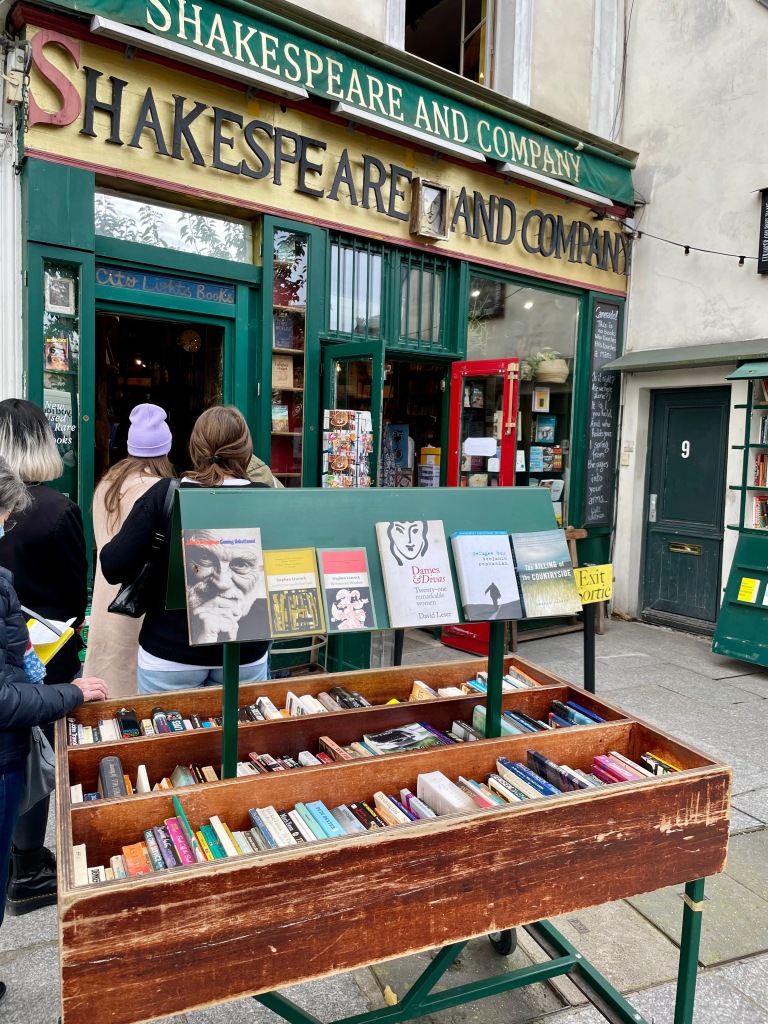
Cramped and crowded with tome-seeking tourists, the creaky-floored shop, honeycombed with nooks, alcoves and twisty aisles, specializes in French and English language literature — no junk, just the good stuff. It’s not snobby. It’s just smart. And the English-speaking staff are unfailingly cheerful and helpful, stamping your book with the store’s inky insignia. It’s a pulp paradise, the kind that makes a bibliophile go a little mad with delight and desire.

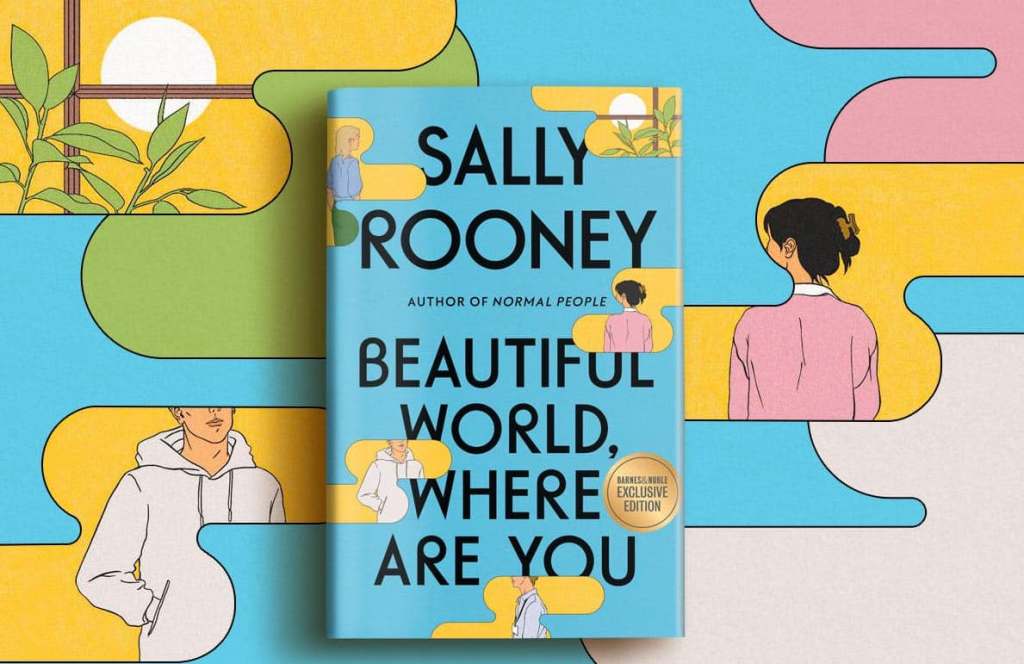
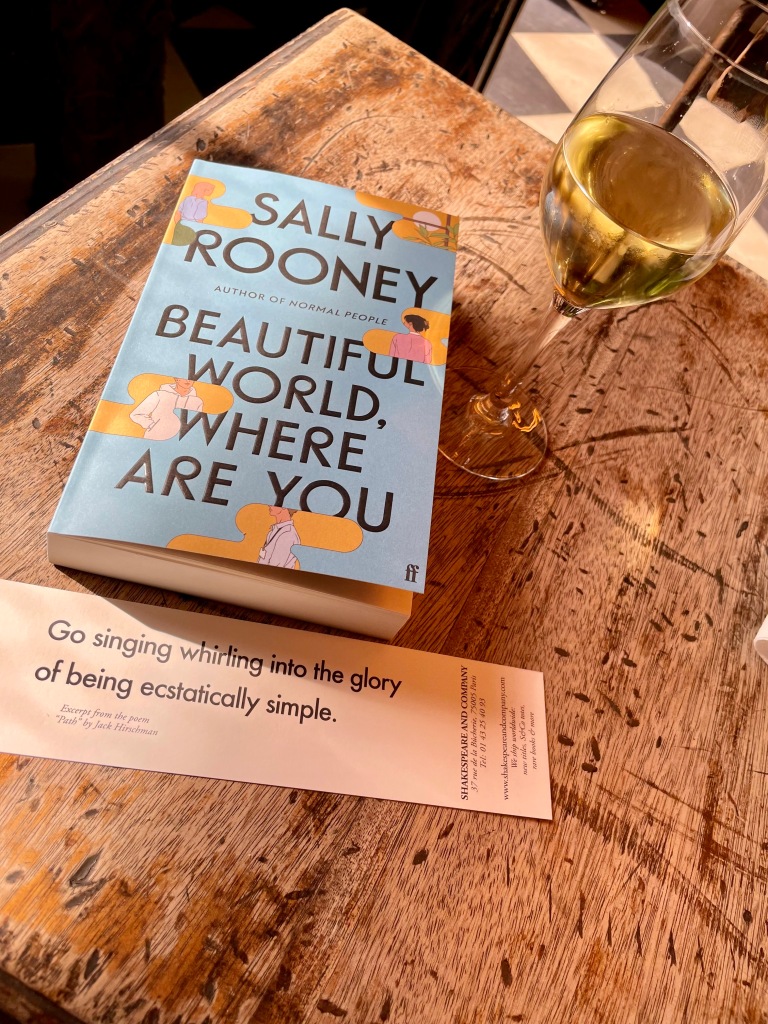
I went firmly middlebrow on my recent pilgrimage, grabbing a paperback (it’s only available in hardback in the States) of Sally Rooney’s new novel, the wincingly titled “Beautiful World, Where Are You.” I cracked it immediately, reading in bars and cafes with a Chardonnay or latte on hand. 

The Irish Rooney (“Normal People”) is a reliably breezy read, plainspoken, occasionally lyrical, but mostly succinct and pinched. Her control is impressive and her sturdy, confident voice makes you want to follow her wherever she’s going, which often includes naked people. 

I just finished the book on my return from Paris and enjoyed it. It covers Rooney’s preferred topics — love, sex and friendship, yearning and ambition among anguished millennials — with detour discussions about Marxism and life’s unfathomable purpose. (Rooney, a wunderkind at 30, is a professed Marxist.) 

Coming from the famous bookshop, it’s not only a winning read, it’s a fitting souvenir from that most bookish of cities.
Paris perambulations

The worst French onion soup I ever had was in France.

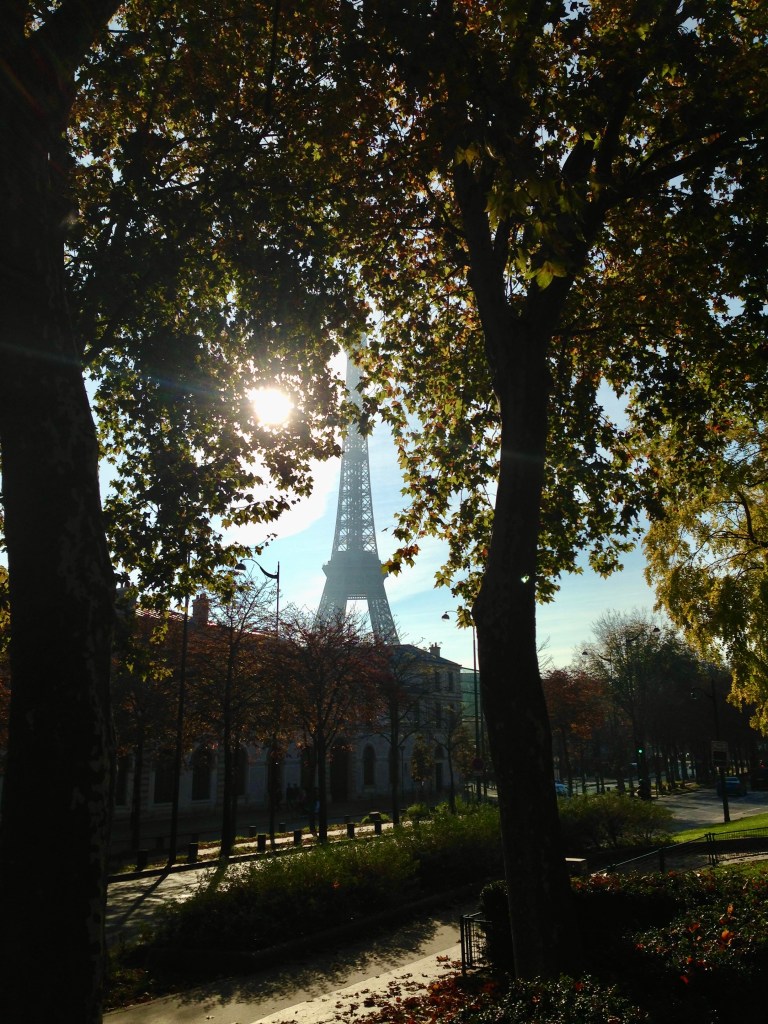
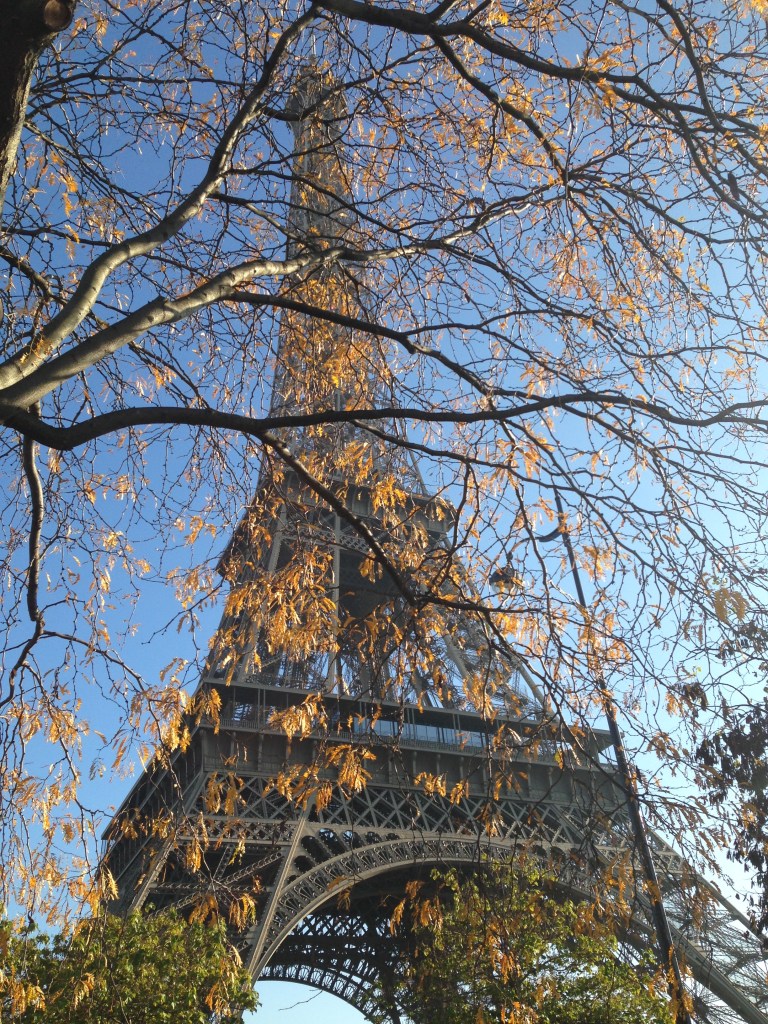
It happened last week at a cozy bistro in Paris’ hip Le Marais district, a minor hiccup, though major faux pas, amid a constellation of remarkable meals I savored during my most recent travel escapade — eight days in Paris, the greatest city on the planet. 

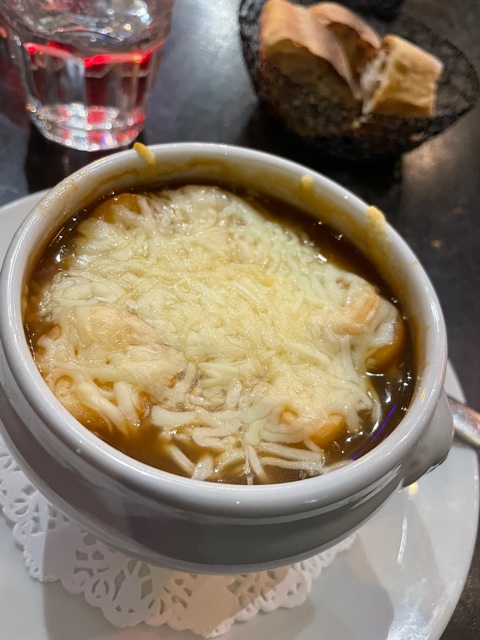
I love onion soup, French style, but I never have it. Where do you get an authentic bowl? Well, try France. And so I did. Yet something went wrong. No, lots went wrong. The oily brown broth tasted OK — sweet, savory beef stock — but the onions themselves were pitifully scarce and, much worse, it was topped with small, stale, store-bought croutons and a grisly pile of clearly processed shredded cheese from a ziplock bag, cheese that was not Gruyere or Parmesan or melted.

I’ve had better onion soup in New Jersey. This was a disgrace. Only once, maybe twice, have I ever sent a dish back. I didn’t mutter a complaint about the soup. I didn’t want to shame anyone. Partly that’s because I also ordered escargot and it was pretty delicious — hot, plump mollusks drenched in garlic and olive oil. This was, of course, my purposely clichéd French meal. It had to be done, despite being a half fail.  

Saddest onion soup in the world

But I don’t travel for the greatest bowl of onion soup (or do I?). I do it for the explosive newness, to be pried out of my home-addled head and relocated to the novel and exotic, to live, learn, experience. To find joy, or even fear. To escape the self and kick open doors. To move, move, move. To seek, discover. To be astonished. 

Instead of my usual Paris haunt the Latin Quarter, I stayed in the aforementioned Le Marais on the Right Bank, a village of winding cobblestone streets, haute boutiques, LGBTQ cool, cafes, bars and trend-setting ambiance. It’s kind of fantastic. 

As usual I walked miles around the city till my toes blistered. Transportation-wise, I eschewed the Metro and instead hailed Ubers and taxis. After years of scrappy, lo-fi travel, I felt I deserved the convenience and ease of environmentally devastating vehicles. I’ll call it what it was: shameful, privileged laziness. It was a marvelously stupid decision that cost me hours in choking traffic and hundreds of precious dollars. I get all sad just thinking about it.

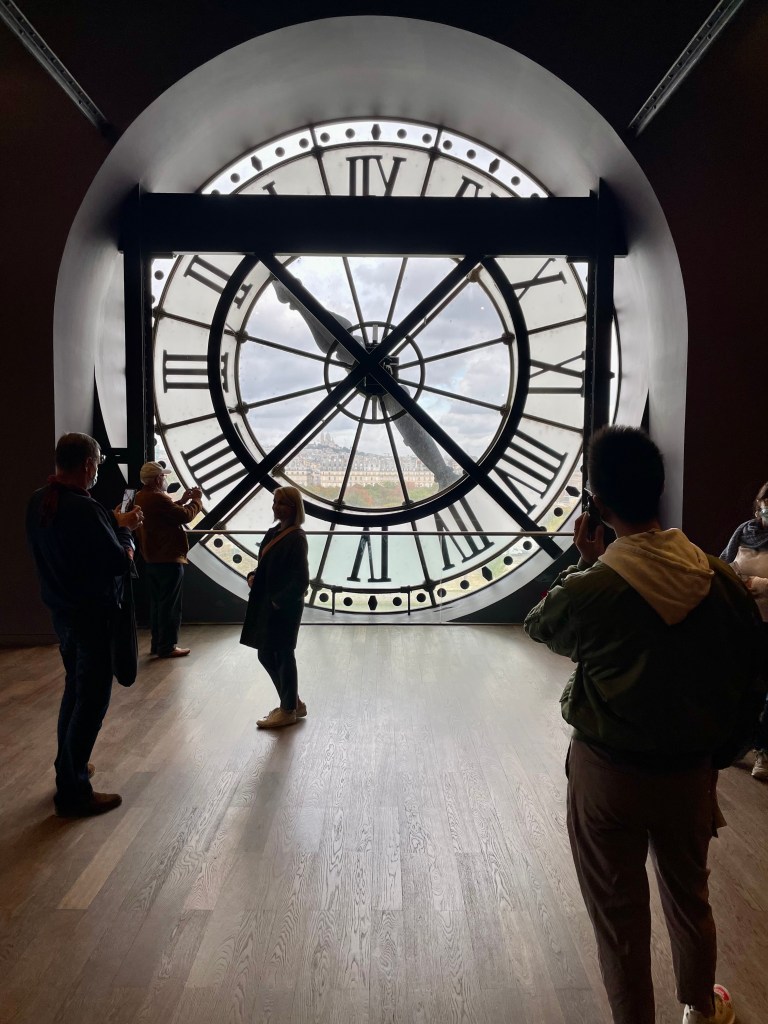
But the destinations, after I popped from the cars with a chirpy “Merci beaucoup!,” almost always assuaged the grief and guilt. There were of course essential standbys — the Louvre, D’Orsay, the legendary Shakespeare & Co. bookshop, the bone-encrusted Catacombs — but I added new spots to my well-trod Paris itinerary. 

Louvre

Like the avant-garde exhibition space Palais de Tokyo, where an impenetrable show by German artist Anne Imhof baffled and bored; and vaunted bistro L’Amis Jean, where I ate the most delectable rabbit and country vegetables and reveled in the festive atmosphere; and the dreamy Georgia O’Keefe retrospective at Centre Pompidou; and the itty-bitty restaurant-bakery Mokonuts, one of the hottest and hardest to get seats in town. 

Run by an endearing if understandably frenetic couple — with no employees, they’re the chefs, waitstaff and hosts — Mokonuts is low-key gourmet all the way. I had raw scallops that made me smile so involuntarily, co-owner/pastry chef/showrunner Moko Hirayama burst out laughing. (The main plate, pink-fleshed pigeon, was equally amazing.)  

Mokonuts is where I chatted with a middle-aged American couple about food and travel. They asked if I’d ever been to Lisbon, Portugal, and I said yes, I visited many, many years ago. (I’m of Portuguese descent, but that’s neither here nor there.) I found Lisbon to be like a giant, beautiful seaside village, suffused with languid, old-world charm. I relished it, but it didn’t leave teeth marks.

The couple perked up and replied that things have changed and they go there often for its food, people and invigorating bustle. Lisbon, I’ve since read, has become one of the most visited cities in Europe. My fellow travelers went on about it and inspired me to take a deeper look. The crazy result: I’m heading to Lisbon and Porto in mid-January. Expect a blog about sausage.

Musee D’Orsay

For the very first time in my many trips to Paris I did not see a classic American movie at one of the city’s numerous revival cinemas; no films (“An Affair to Remember” — pass) grabbed my interest, sadly. Yet I did take a short amble through my good friend Père Lachaise Cemetery, freckled as it was with fall leaves and dappled with autumn shadows. I sought out the relatively new grave of French actress Anna Karina, wife and muse of Jean-Luc Godard, with no luck. The place is massive. In fact I saw no celebrity plots — no Oscar Wilde, Jim Morrison or Edith Piaf — on this visit. Yet I still found a baroque beauty in death. 

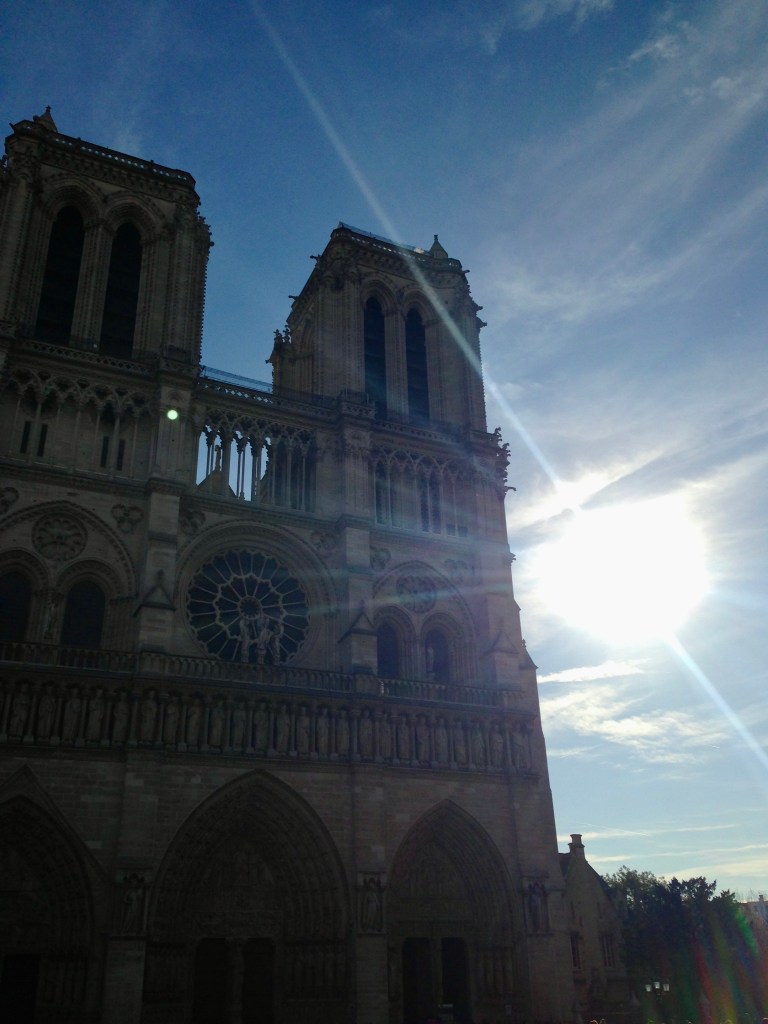
As always seems to happen, I strolled by Notre Dame several times. The gothic vision oddly emerges out of nowhere almost anywhere you go. It demands your attention.

She is tragically transformed after the April 2019 blaze that tore her soul out and broke the world’s collective heart. Only the indelible, indomitable facade is fully visible, as the rest of the cathedral is girdled by a fortress of construction walls, webbed in scaffolding and towered over by spindly cranes. Depressingly visible are exposed wood planks on the flying buttresses and gaping maws in the charred rooftop. 

The surrounding wall panels are emblazoned with photos and explanatory text describing the fire’s destruction and exactly what type of surgical procedures the ancient lady is now undergoing. It’s informative, and classy. People still come to gaze in awe, and the cathedral’s gargoyles still perch in the heavens, smirking, telegraphing in their way that everything will be all right. 

Paris ping-pong

So it’s back to Paris I go. After a foolish flirtation with a week-long trip to Ireland, which went as far as booking a flight, hotels and tours, I dithered again and scrapped the whole damn thing.

My fall travel plan was initially for Paris, which I booked early summer. Then I got cold (Covid?) feet and thought: Hm, I’ve been to Paris plenty of times, let’s try something virgin and verdant. Ireland! Odd, as I’ve never had one inkling of an urge to go there. Still, I traded my Paris flight for a Dublin one and away we (almost) go. 

And then I dove into my usual rigorous research, combing and poring over books and sites about the land o’ Guinness guzzlers (evidently not a cliché, at all) and after each tepid tourist “gem” (the insanely popular, intensely lame Guinness Storehouse) and middling tour (the Jameson whiskey distillery), my heart began to sink and I was like: shit

I was even hard pressed to find any restaurants worth a prized reservation in Dublin and Galway, my two destinations. What came up repeatedly and endlessly were pubs and pubs and pubs. And it hit me: I don’t even really like pubs, what with their rowdy regulars, garrulous gulpers and sports super-fandom. Dublin and its kinda interesting cathedrals, fascinating-for-about-14-minutes Book of Kells library and three million pubs fizzled fast. (Let’s not forget Enya.) 

Paris suddenly looked magical, marvelous, as it always does. Dublin dumped, I swapped back my flight to Paris, where I’ll spend eight days in mid-October. I’m staying in the chic, foot-trafficky Le Marais, eating fine cuisine at Buvette and beyond and cruising quays and cobblestone to my favorite museums and bone repositories, from the Catacombs to the oceanic Père Lachaise Cemetery.

Just booking the trip was its own journey. Oh, the fun, fickle planning of the neurotic mind. My impulses are famously rash — watch me shop online, and weep — and when I’m bitten by something that seems fantastic, I swoop into action, Visa in hand. That of course leads to the occasional snap judgement. Like Ireland. 

With that, you might say I’m depriving myself of a new experience, a land of uncharted wonders and bottomless brown suds. But I argue I’m saving myself from groaning mediocrity, eye-crossing tedium and the deflating effect of the chronically underwhelming. (Here I risk rousing the “ire” in Ireland.)

I’m certain Ireland has its charms and delights. But it’s not for me, not now. Paris is my place, an almost mythical destination — the art! the food! the bookshops! the cinemas! the river! the boulevards! the gardens! — that fairly twinkles. 

The City of Light makes me lightheaded.

4 for fall

1. Au revoir, France — hello, Ireland? That’s how it looks right now, especially since I’ve swapped my flight to Paris for a ticket to Dublin. So I guess I’m going to Ireland in October (insert a wee leprechaun kick). Or I think I am. The tyranny of the pandemic can upend everything, so while Ireland has relatively open tourism guidelines, things can change in a depressing snap. I scotched Paris because France’s Covid rules have become groaningly prohibitive — très crappy. I’m not torn up about it. I’ve been to Paris a few times, but this purportedly worldly traveler has never made Ireland. Frankly, it hasn’t lured me to its bucolic charms: rolling green hills, craggy ocean cliffs, mossy castles, obsession with pubs and, suspiciously, Guinness beer, minor museums and churches. It’s been on my index of non-bucket list destinations (including Australia, Iraq and pretty much anything Caribbean) until now. What clicked? The idea of something far and uncharted (and not tropical). Focusing on Dublin and, briefly, Galway, it will be a mellow journey, eight lolling days of food and drink, mild tourism, immersive history and lots of questionable Irish music. If I really get there, I’ll be lucky, charmed.

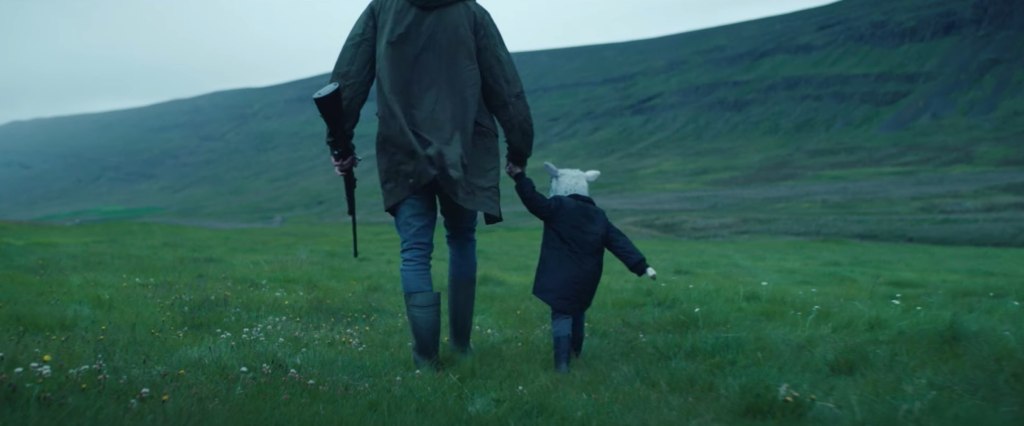
2. With uncluttered elegance, the film is called “Lamb, and it will chill you to the bone. Coming October 8, it’s described by hip indie studio A24 as “Icelandic folktale on top, Nordic livestock horror on bottom,” and it flows in the vein of A24 creep-outs “The Witch” and “Midsommar.” This one, by Valdimar Jóhannsson, is about a childless couple adopting a creature that is neither lamb or human: a sheep has given birth to a hybrid animal that has the body of a baby and the head of a lamb. Watch the trailer here. It’s unsettling. It’s eerie. It’s glorious.

3. I’ll take sweaters over sweat anytime, and I cherish every cool breeze that cuts through this soggy, sloggy summer. Let’s call it a wrap. I have things to do this fall and the chaotic weather, be it soak or scorch, is proving a deflating victory for climate change. It’s time for 50s and 60s and the end of wildfires, heat waves and floods. Yes, I hate summer, but no season’s perfect. Even autumn, the best of them all, has its pesky drawbacks, from confetti storms of leaves and Mandalorian costumes on Halloween, to football and corn mazes. We can deal.

4. And we curl back to Dublin, via Irish author Sally Rooney, whose new book “Beautiful World, Where Are You” arrives September 7. A globally celebrated wunderkind for her twin novels “Normal People” and “Conversations with Friends,” both written before she was 28, Rooney returns to her familiar milieu of middle-class millennials swirling in career, interpersonal and libidinous distress. Couplings and uncouplings of bright young things juice the story and, if her other books are any indication, things will get hot. And bothered. A Rooney fan, I’m looking for artistic growth in the new novel, her longest yet. Rooney’s not the most assertive stylist, her stubbornly lean prose tweezered of metaphor. In a 2019 post, I concluded that “Rooney’s smart little beach reads — people boast about how they gulp her books in one sitting — are crisp divertissements. But they are lacking in weight, import, poetry, the stuff of lasting literature.” That said, they’re nourishing and human, and I’m banking on “Beautiful World” to be a frothy palate cleanser after more vinegary fare this summer. Then, for some tang, I’ll grab E.M. Cioran’s self-explanatory “The Trouble with Being Born,” and the world will sleep well again.  

I plan for Paris. Covid laughs.

Last fall, Paris went kaput. That is, my planned trip to my favorite city was scrapped with a muscular assist from the pandemic. Covid, that magnificent killjoy, effectively squelched the October vacation, along with so many of your precious plans to get out and live life freely and safely. 

Woe is me. I know this is a first-world, big-baby complaint, but actually I’m not complaining. The trip was doomed from the start, founded on chutzpah and delusion. The pandemic would pass by October. Right. What a dope.

But I couldn’t resist the $430 round-trip flight bought last spring and the airline’s policy of crediting the ticket if trips were cancelled by Covid. Considering how grim everything was, it was sort of win-win.

I used that credit yesterday when I decided, rather rashly as usual, to take another shot at Paris in the fall. It cost a little more money, but the price was still right. Eight days in mid-October, starting where I left off during my last visit in fall 2015. 

Paris is slowly stirring from its Covid coma, when life was hamstrung by onerous rules and restrictions that made visiting pointless, if you could even get into Europe. I’m banking on more normalcy in the next few months as cafes, museums and bistros cautiously unlock their doors. (Alas, Notre Dame remains closed to worshippers and tourists after the blaze of 2019.)

Notre Dame, fall 2015

Must-dos: Musée d’Orsay; Musée Picasso (essential); Musée de l’Orangerie; citywide cinemas (I always see three or four classic movies in Paris); Centre Pompidou; and the skull-crammed Catacombs.

This time, my sixth in Paris, I will skip my beloved cemeteries: the lushly rococo Père Lachaise and the more classical Montmartre and Montparnasse cemeteries, which together house the graves of Jim Morrison, Oscar Wilde, François Truffaut, Susan Sontag, Edith Piaf, Chopin, Balzac, Sartre and Simone de Beauvoir. (Why visit cemeteries? Because they’re haunting and beautiful and, in Paris, they’re like strolling walks of fame for artists and intellectuals.)

Centre Pompidou, 2015

The Parisian foodie experience is paramount, and I have several places in my crosshairs: the peerless Frenchie; Michelin-star Le Chateaubriand; Buvette; and famed falafel joint L’As Du Fallafel in the Marais. For cocktails, it’s the vaunted Little Red Door — named one of the world’s 50 best bars for seven consecutive years — also in the Marais.

This all sounds super on paper, like most vacations do. The planning, the reservations, the advanced tickets, the accommodations (Hôtel Jeanne d’Arc Le Marais), the raw, giddy anticipation. But it’s a crap shoot.

I’m all in. I’m ready to split this burgh for a few days, sip wine on the Seine, see an old Eric Rohmer film, walk the Luxembourg and Tuileries gardens, skip the Mona Lisa, and be blown away by the city’s exuberant beauty. Again.  

I don’t know if I’ll actually get there. But I’m making a bid for it. For Paris, and for life. 

Flipping out for a photo

As I mentioned in a recent photo-centric post, I love taking pictures of kids I meet in my world travels. That’s because, I wrote, “They’re eager, giddy and attention-hungry, all the while laughing and bursting with curiosity, asking questions (‘Where you from?’) and grabbing at the camera with often sticky hands.”

I’ve taken plenty of pictures of Istanbul’s children, a panoply of poses, pouts and play.

Sometimes they’re happy, eager subjects:

Sometimes they’re playful:

Sometimes they’re artfully posed:

And sometimes they’re fledgling rebels, with a wee message for the dope with a camera:

This rapscallion is my kind of kid. There I am, popping my head out of my second-floor hotel room, presumptuously pointing the camera, and getting what I deserve — a little birdie telling me to go fly away, to take a flying f***. Brilliant.

Camera vs. camera

Confessions of a caveman: I’ve only been using my iPhone as a full-fledged camera for the past five years. Moreover: I’ve only had a mobile phone since 2010. Before that: strictly land lines. Living in the Pleistocene epoch is terrifically underrated.

I never thought I’d need a cell phone (raucous laughter), especially one with a camera. Since 2006, I’ve owned a perfectly snazzy, distressingly pricey digital camera, the Panasonic Lumix DMC-LX2, acquired for my world travels. 

With its professional Leica lens — as thick and round as a small stack of poker chips, not one of those budget pinholes — the camera separates itself from most Best Buy point-and-shoots. It also boasts manual capabilities, a 4x optical zoom, 10.2 megapixels and a 16:9 widescreen, among other visual gymnastics. It fits in my palm. It’s a good camera.

On a whim, I recently took the Lumix out of storage — that’s how resoundingly my iPhone camera had dethroned the fancier shooter: it was in storage. I had an itch to take more pro-grade photos and reacquaint myself with my trusty travel companion and its battery of bells and whistles.

Before I knew it, I was the greedy shutterbug I once was, seeking beauty and the bizarre, fascinating faces, stunning architecture, and getting in the crouch-and-shoot stance demanded of dogs and children.

First, I made portraiture of Cubby, a study in nappy nobility:

The cat, sleek and skittish, was next:

Outside I snapped this, whose boldface signage is probably telling me something:

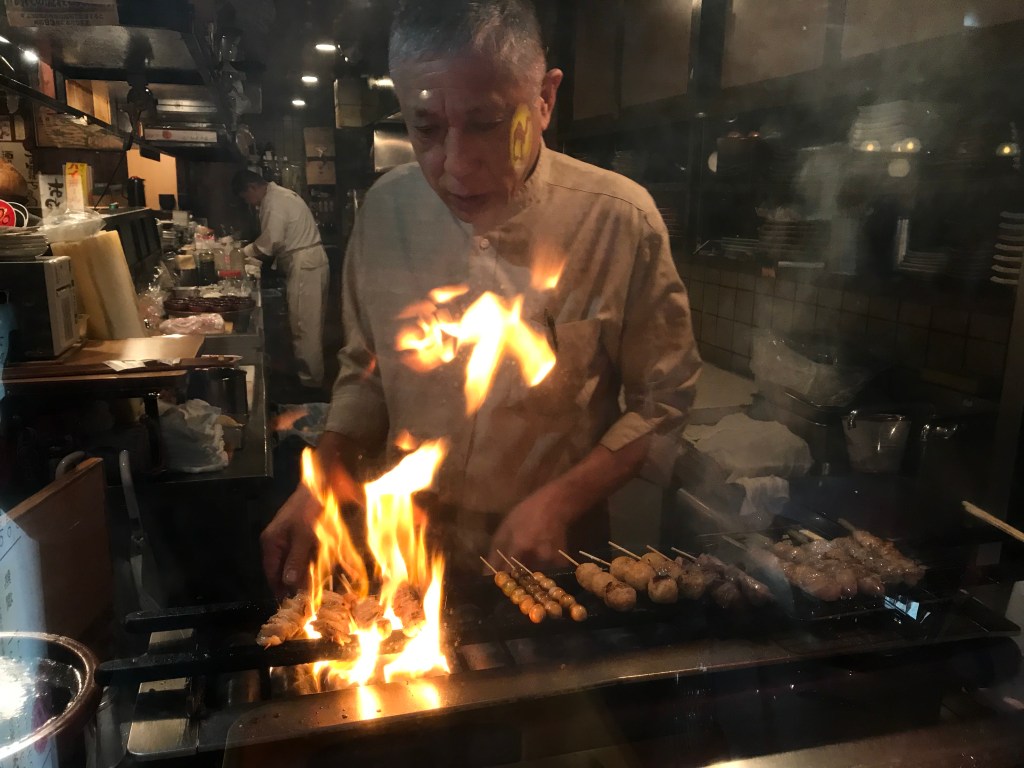
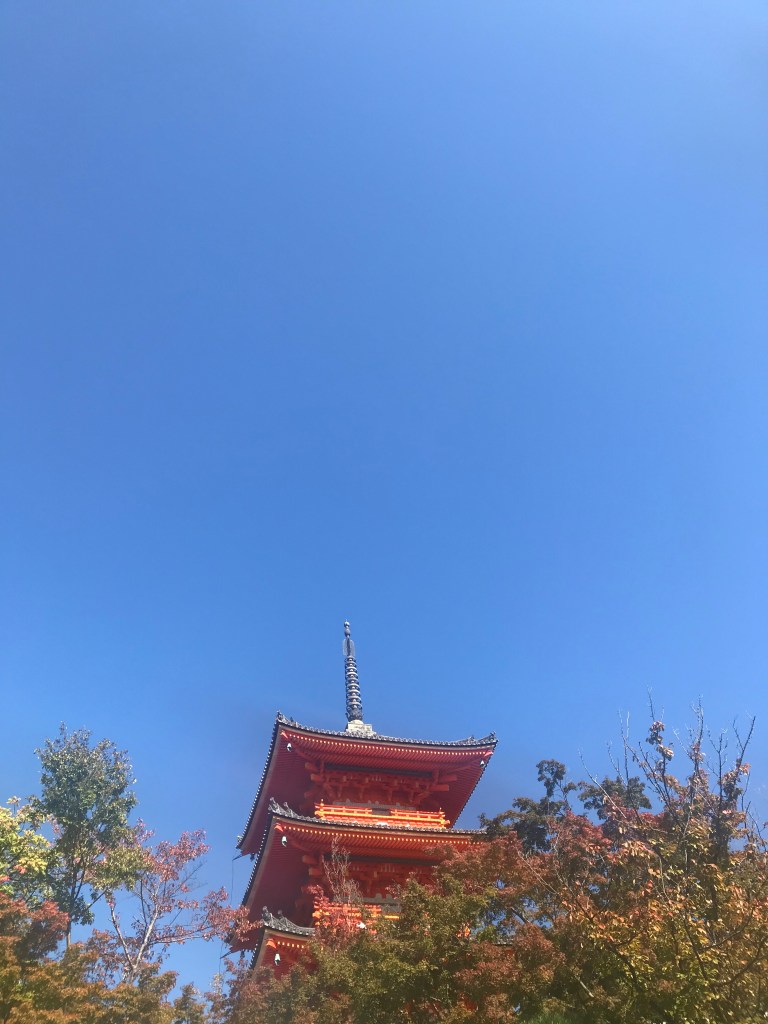
Now some iPhone shots, taken in Tokyo, Paris and Istanbul:

OK, so the little Queen of Hearts-sized iPhone appears to beat the pants off the Lumix in this demonstration. And my phone is ancient — a good five years old, perhaps a model 7. But the comparison isn’t quite fair. I’ve walked about six blocks over a few days with the Lumix taking pictures, while I traveled many years and thousands of miles with the iPhone, capturing exotic, iconic locations. Of course I have a similar stash of fine Lumix photos snapped in Japan, India, Texas and beyond, like these shots taken in Nepal, Beirut and Turkey, respectively:

There’s really no contest. Both contraptions take quality pictures. I prefer the Lumix as my main device — it feels like a real camera, for one. iPhones do not. They feel like Kit Kats. I find them unwieldy, tricky to aim, and the shoot button elusive and unreliable. Still, they produce knockout shots that get increasingly superior with each new model. And they handily fit in your pants pockets. 

The Lumix, comparatively, is a Land Rover to the iPhone’s Prius. But it’s not all that bulky. Like I said, I can grasp it in one palm and jam it in a coat pocket like a pack of cigarettes. It’s eminently portable. 

I’ll keep using both shooters for different occasions, the iPhone when I’m traveling ultra-light, the Lumix when I have more room and want more pictorial effects. Not sure which one wins, but it appears the race between cameras is the very picture of a photo finish.

Turkey’s tots

This post might better be called “Turkey’s tots and tweens,” as it’s really a mix of youths I took snapshots of as I got lost in the serpentine streets of Istanbul. In my travels kids are hands down the most fun to photograph. They’re eager, giddy and attention-hungry, all the while laughing and bursting with curiosity, asking questions (“Where you from?”) and grabbing at the camera with often sticky hands. Below are just a few of those characters, ebullience, boogers and all.

Talking to myself

When traveling alone, my inner mind buzzes so feverishly with thoughts, words and soliloquies that I often forget myself and think I’m making a racket that everyone can hear.

But no one can hear me, I realize, and I fall back into the hermetic hum. The brain rattles in verbal commotion, synapses chatting away, echoing through cranial canyons. It’s the classic internal monologue, an incontinent loop. (Do I ever get tired listening to myself? And how.)

In countries where I don’t speak the language — most of them — I can go hours, even whole days without uttering a word. Transactions are reduced to semaphore and sign language. There’s lots of pointing. The lingua franca of a candid smile goes a long way.

Talking aloud is good and healthy. Being a mime all day can be suffocating while alone on the road. You need to air out. I’m always relieved to hear my voice stir to sonic life at the end of the day when, say, I order dinner at a nice restaurant and converse with a waiter, or, if lucky, when gabbing with patrons at the local pub.

I blush to admit I’m terrible about learning languages of places I visit. It’s pitiful, really. I’ve never used a phrase book and only bother to learn terms for “hello,” “goodbye,” “please” and “thank you.” (In French and Spanish, I also know “Do you speak English?”)

And that’s always been enough (except with cab drivers, who invariably need written directions). English is so uniformly familiar around the world that I find getting by something of a breeze. 

Still, those basic words — spasiba (“thank you” in Russia); proszę (“please” in Poland); bro! (“hello” in Las Vegas) — are invaluable social tools that make life easier amid the exoticism of a new land. 

But there I am, tramping across jungle villages and cluttered cityscapes, locked in my own head, mostly mute but open to vocal interaction, the human touch. I can tell you there’s nothing like laughing with a local during a far-flung voyage. 

When you’re going solo, getting out of your head takes an effort, as does anything worthwhile. It’s easier than you think. And the rewards are rich. Just watch as the elderly shop lady goes from mirthless money taker, pensive her in her task, to beaming with gratitude all because you simply said xiè xiè (“thank you” in Chinese ) with a smile. It’ll make your day, and possibly hers, too. Nothing is lost in translation. Everything is gained.

Even travel letdowns are worth it

I’m a jaded traveler, asking much, with high expectations and a low threshold for disappointment. 

So naturally I’ve at times been disillusioned during my many journeys around the world. It happens. And it’s not a terrible thing. After all, how letdown can you be by, say, Madrid, a great city that pales a bit compared to its more lustrous and colorful cousins, Sevilla and Barcelona? Not much.

In a previous post I told how I recently unpacked piles of my travel journals from cold storage after several years. Written in blue ink in black notebooks — usually on barstools after long days wending wide-eyed through cobblestone streets and spindly alleyways — the pages are filled with the magic of travel, the mirth of discovery, the shock of the new, amazing people and far-out food (like the whole cobra I ate in Vietnam). 

The journals are also laced with descriptions of those isolated times when I was dissatisfied, underwhelmed or — what! — plain bored. I’ve re-read these bits with a kind of dismayed surprise: Really? That’s how I felt about Rome? Rome? 

Well, yeah, on that particular day. Travel experiences are colored by everything from jet lag to daily frustrations (taxi rip-offs, getting lost, language hassles). They are mutable. What deflates one day might electrify the next. 

My journals reminded me of this in bold strokes. These are some examples of thwarted expectations and little letdowns on travel’s twisty, rugged road: 

In 2000 I went to Israel a hardened agnostic bordering on a true atheist. Astounded by religion and the mindset of its believers, I wanted to go to the desert nation that’s home to the big three, Judaism, Christianity and Islam, and see what makes them tick. Scenes from my journal:

“Today in Bethlehem I arrived at the perhaps blasphemous idea that the region is a historical Disneyland, a realm of fairy tales. ‘Here’s where Jesus was crucified and resurrected.’ ‘This is where Mary slept.’ We might as well be told, ‘This is where Snow White ate the fateful apple,’ or ‘Behold the tomb of Cinderella’s stepsisters.’ It’s psychotic that pilgrims succumb to the fanciful whims of Constantine’s mother, who randomly appointed holy designations to places here. Paraphrasing something I actually heard on a tour: ‘Here’s King David’s tomb and the site of the Last Supper, but, uh, not really, because they’re lost somewhere far below the city.’ And people eat this stuff up.”

Later I noted:

“Believers hoisting giant wooden crosses follow ‘Christ’s final footsteps’ on the Via Dolorosa in Jerusalem’s Old City. It’s maniacal, and not half as fascinating as you’d think. That’s how religion is for me now. Just silly, impossible to be contemplated in the higher regions of the mind. It absolutely fails to astonish. So this trip, which is wonderful thus far — peaceful, pleasant, edifying — is innocent of any celestial wallop, of a blinding halo glow and spiritual intervention. I am unmoved. I am unchanged.”

Then there’s Prague, which I visited with inflated enthusiasm in 2002. I should have known better, especially since so many blinkered Americans just love the tourist-clogged Czech capital and callow expats infest the place. I got there and sighed, writing:

“Not entirely impressed by the city. Like an Eastern Amsterdam: beautifully antiquated, charmingly European, painted with time and soot, tired but proud. And yet rather vacant. It’s all show, with a familiar, generic Euro tang. My true feelings are stifled from sleepless flights. My impressions are, for now, Cubist — fragmented, jumbled, unreliable. But, so far, a fine, sturdy European city of great charm and Old World wealth. A Disneyland-like anachronism, bursting with pastel façades and fairy-book antiquity, tourist throngs and souvenir kitsch.” 

Two days later I wrote: 

“I like Prague, and yet needing to write that means I’m working at liking it as much as I’m supposed to.”

On my second trip to Italy, in 2003, I revisited Florence and Rome, with a day trip to Pisa to see that teetering tower. My scribbled impressions:

“Pisa is a university town with a tower. Not sure why Italy doesn’t touch or connect with me the way Paris does. It’s less refined, more brusque. Its virile, violent history isn’t as deep and textured. It’s less intellectual, less progressive and less interesting. It’s about gelato and church.”

And about Rome specifically:

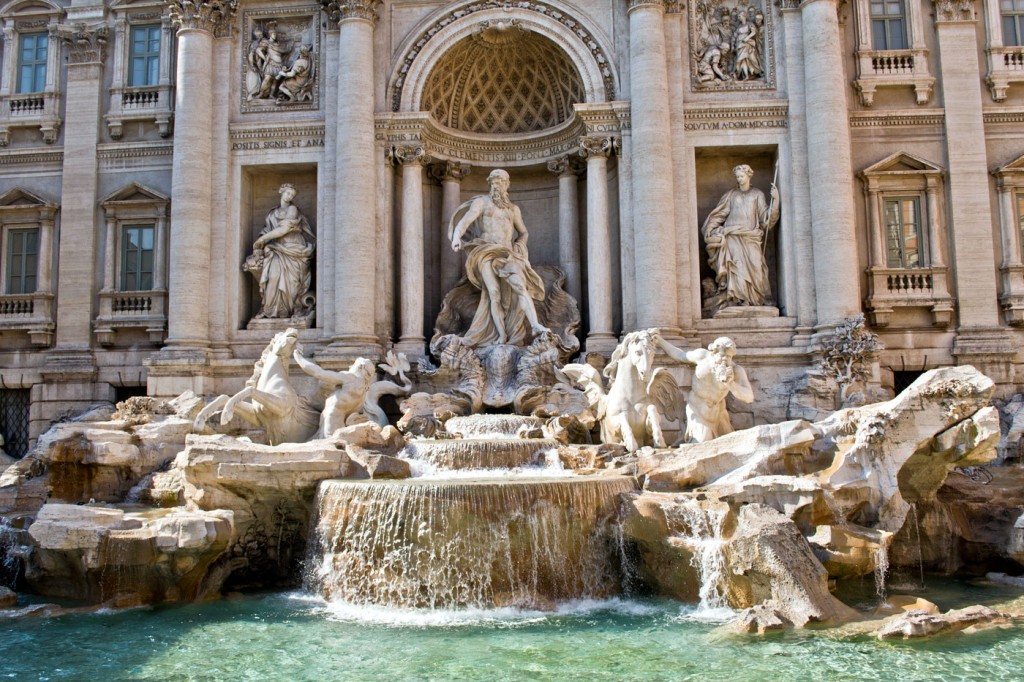
“Rome is OK. Trevi Fountain, Vatican, St. Peter’s — all numbingly familiar and inert, just there, edifices radiating gray. The city is sort of like Madrid or Berlin — popped expectations.”

What’s notable about the Italy trip is that when my girlfriend finally arrived to meet me there, everything shimmered to life with a giddy radiance. The Trevi Fountain at night was a splashy thrill, the Sistine Chapel an almost spiritual swoon. I loved my girl, and I loved Italy. 

I’ve learned that the fluctuating charms of travel cannot be underestimated. They should be greedily embraced. Up, down, it’s all about the ride, the swirling ecstatic journey.