Midsummer miscellany

Four mini-blogs, bite-size essays, from eyewear to dog hair …

Shopping for new eye frames is about as thrilling as shopping for underwear — a little fun, but mostly a utilitarian ritual for a deadly pedestrian accessory. I got new frames this week to go with new prescription lenses, making me feel very old. I’ve had my current blue frames and lenses for two years and I felt like underwear shopping. Yesterday I took my new (burgundy) frames to the optician to get the fresh lenses. The whole deal cost an eye-singeing fortune — around $1,200 for frames, lenses and exam. The nice guy helping me said, “You don’t seem old enough for progressive lenses.” I sort of thanked him, then thought to myself, ha!

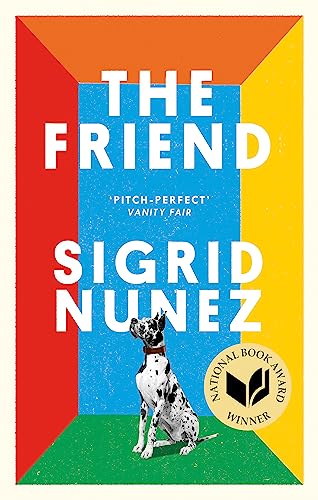
When it comes to a big juicy novel, I’m a restless reader. My standards are unreasonably high, and if a book hasn’t hooked me by page 70 or so, I close it and move on. I am not one of those chumps who strains to finish a book once they start it, no matter the quality. That’s obscene. I just closed Rebecca Makkai’s wildly praised novel “The Great Believers.” The Pulitzer finalist about a group of friends impacted by the AIDS crisis was worse than overly familiar and a mite trite, it was dull as dirt. So I started the also-acclaimed Adam Haslett novel “Imagine Me Gone,” a substantial (356 pages) story about a family of five facing mental and physical challenges that upend the unit and try the bonds of love. On page 89, I’m with it for now. But every so often it sags and I give it the stink-eye. Book, you are on perilous ground. Watch it.

Puffs and curlicues erupting over his face and body, the dog at last got a summer haircut. A professional groomer came to the house, bathed him in the sink, then took the razor to him good for more than an hour. Cubby now looks like a bewildered sea otter and it’s fabulous. Everything about him has shrunk — my, what tiny ears you have! — and it’s adorable. Thing is, now he’s licking his butthole and nether regions with frantic intensity, like he’s infested. It’s merely razor burn and getting used to the lack of locks, and if the past is any indication, he’ll stop licking presently. But it sort of drives everybody crazy, not least of all himself. Why are haircuts such trauma? Cubby and I both want to know.

My brother’s radar is exquisite. He knows my dubious tastes, my oddball obsessions, my disgusting fetishes. So it was Christmas in July when he recently gave me a gift of surpassing thrillingness: an immaculate wax double-wick candle of deformed conjoined twins skulls. Craig, my only sibling, said he got it for a Christmas present but couldn’t resist bestowing it now. He bought it at a local taxidermy/tattoo shop called Unlucky Rabbit that deals in deer heads to “Lesbians and Taco Trucks” bedroom candles. My kind of place. I’m a freak fanatic, sideshows, medical curiosities, monsters on down. For now, the Siamese twins skulls are on proud display, and I have no plans to torch them, they’re so gruesomely perfect. Still, lighting them and watching them melt into bone-colored goo would be its own grotesque beauty. Where’s the matches?

The terrible twos


Busload of memory

In grade school, my friends and I would take one of those long yellow school buses that picked us up at the bottom of our street. The interior of the bus was lined with green leather benches — they fit three kids, to hell with seatbelts — and it smelled funny. A little sweet but musty, like diesel and kid funk.

The bus driver was an amiable but firm 50-ish woman named Mrs. Pelton. She had short dark hair and wore a yellow polo shirt everyday like a school-district uniform. 

I don’t know what her pants were like because she was always sitting down in that lone, boxed-in driver’s seat, the one with the huge steering wheel and hissing, hydraulic lever that operated the folding door we kids clambered through.

I don’t recall Mrs. Pelton ever hollering at me to settle down and be quiet or anything like that, but once she alarmed me in a way I can’t forget. She was driving down a sloped street and something happened — what, I’m not sure. She didn’t crash or swerve or brake hard. 

But she was shaken, and she said, “I’d rather hit a dog than a child.” A cannonball hit my belly. I couldn’t believe it. Rather hit a DOG than a child? I was stricken, my callow little head not appreciating the value of human life. Like now, I was partial to animals, loved and worried about them unabashedly. 

“Rather hit a dog than a child.” I suppose I thought she should run down some snot-nosed kid instead of a poor, innocent pup. What a guy. That moment has followed me all these years. It’s the biggest thing I remember about Mrs. Pelton, who has surely passed on by now, unless she’s like 250. 

Memories, good and bad, are strange like that — random, sticky. I have a storehouse of them, and many seem to pop up daily. Like when Tom Rainbolt peed all over my back in the boy’s bathroom in third grade, or when I learned to ski, or when I kicked a hole in our hallway wall (so busted), or when my best grade-school friend, reckless Gene, hurled live shotgun shells into a bonfire, or working at the exotic dance club or landing my first newspaper job, or …

Often, when whacked with insomnia, a dusty reel of life memories unspools in a long, disjointed movie of the irrepressible past. Some of it’s joyful, a lot of it’s painful. The things done right and the endless bruising regrets. It’s the id unleashed. (Of course everybody does this.)

I have a strong memory muscle — I recall much of my childhood in blinding Technicolor — marred by minor spells of amnesia. It’s not like I forget who I am — though that would be tremendous (temporarily) — but more like I’m not as mindful, drifting off. This is bad. Memories are magic, if I can be any cornier, a pass key to the past, illuminating the present (lessons learned, etc.). Attention must be paid. OK, the homily is over.

Beyond the life-molding experiences — playing in bands, fizzled romances, getting peed on — it’s the people from the past who stand out: Mom, Dad, first-grade teacher Ms. Brose, Brandon, Janice, Roxanne, high school English teacher Mrs. Condon, Guen, Sativa, Nettie, Shannon, Laura, Nicky the dwarf — and, of course, ole Mrs. Pelton, who’d rather hit a dog than a kid, bless her sweet, sensible heart. With those few words, she locked a place in my long, crowded bus of memory.

The drudgery, and joy, of writing

Last month or so, I was reading a terrific book about the making of the classic movie “Chinatown” titled “The Big Goodbye: ‘Chinatown’ and the Last Years of Hollywood,” by Sam Wasson, and I had to grin at this quote from legendary screenwriter Robert Towne: “So much of writing is trying to avoid facing it.”

That’s hardly the most original thing uttered about the writer’s penchant for procrastination and craven dread of the blank page — Hemingway summed it up: “There is nothing to writing. All you do is sit down at a typewriter and bleed.” — but it was a reassuring reminder that cooking up stuff for a readership, a nervously performative act, isn’t always a joyride, or particularly easy. It can be a grind. It can be depressing. It can sap the soul. 

But it can also be exhilarating and, when things are flowing, a blast. Well, let’s not get carried away. How about … satisfying? Said great journalist Russell Baker: “I’ve always found that when writing is fun, it’s not very good. If you haven’t sweated over it, it’s probably not worth it.”

I don’t know how you reconcile that dichotomy, the yin and yang of good and rotten, delight and drudgery, but they seem to jibe. There’s a fruitful friction. Good days, bad days, middling days. (That last line? Lazy writing. Bad writing. I left it there as a specimen of what can go wrong.) 

I always want to write, but once I sit down and face the empty page that sneers, “Go ahead, try and fill me,” I tend to constrict, choke, unless I’m especially inspired and know how I’ll begin and where I’m (generally) going. Those days are the exception. Right now, I’m winging it. I had that Robert Towne quote in my head and started riffing. (Help!) 

There’s no map. There’s only this: Get it down. The prose may be raw and bloody — embarrassing, eye-sizzling — but the ideas matter and the words, those painstakingly chosen few, will be chiseled out of the viscous blob of verbiage. Editors are helpful at this stage, and I’ve worked with many who have saved my prolix ass. But here on this free-floating blog I’m on my own. I am judge, jury, executioner. And I probably should have executed that sentence. 

Point is, writing, like any creative endeavor, is a messy enterprise, hard to do but at times truly rewarding (I have ten journalism awards that bear that out, he crowed). You have to dive in head first, and toil to make a splash. Taking pride in your work is mandatory — read tons, write multiple drafts, and use spell check for chrissakes — the only way you’ll do anything worth a damn.

First you must conquer that blank page, which requires actually facing the music, not dodging it, as Towne noted. I’m working on a writing project that I approach tentatively, with baby steps, not because I’m indolent but because I am, frankly, a little scared. 

There’s a cure for that. It’s simple yet courageous: Sit down, stare at the page, and bleed.

You must win the staring contest with the blank page. Despair is likely. So is reward.

Jotting down life

I’ve been journaling since 1994, and the unrelieved banality of my journals not only disappoints me, it lances me, makes me realize how crushingly uneventful, how downright nondescript, my life has mostly been. 

Or has it?

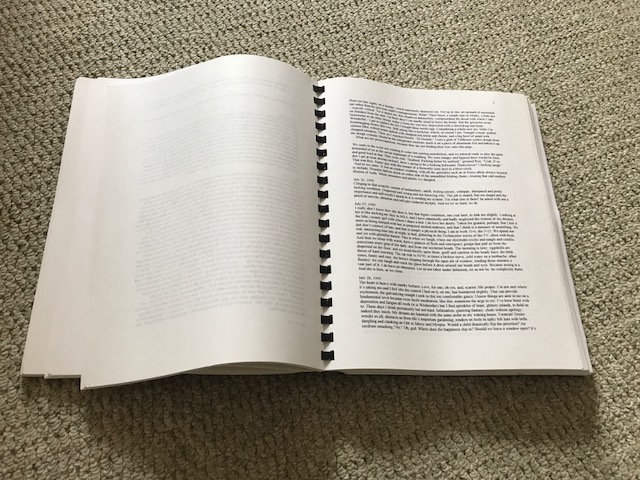
Of course there are highs and lows recorded in the reams of pages I clutch and possess with paternal jealousy, some on paper, such as Moleskin notebooks, but most in digital files stored on my well-backed-up laptop. 

That much verbiage can’t be all bad, and some of it, I humbly admit, is pretty all right. I’ve lived loudly. I’ve loved amply. I’ve travelled widely. I’ve won awards. I engage my myriad interests. And my friends and family are tops.

Rereading some old entries has triggered surprise and delight at a deft phrase, a funny observation, a jolting memory, or a nostalgic or sentimental rush. And none of it is performative; it’s for me and me only.

I have perused past journals raptly, and felt a strange exhaustion afterward, as if the words exhilarated me, hauling me through a woozy time-warp. Like: getting violently ill twice in Thailand in ’95; the great break-up of ’01; being shortlisted for a Pulitzer in ’06; Mom’s death in ’19; Dad’s passing the following year; and so much more.

I’ve done a decent job filling life’s canvas and, with equal fervor, filling pages about it all. This is starting to sound like a valediction, like I’m in hospice or something. That’s hardly the case. I’m merely musing, and that’s what journaling is about — navel-gazing, woolgathering, reflection and introspection. It’s capturing the milestones and the millstones, the highlights and the lowlights.

Almost always it’s simple recording, dull, everyday stenography. Like this I typed yesterday: “I lie in bed, trying to wrest another hour or so of sleep from the morning, and all it amounts to is tossing and turning and amplified anxiety, ugly thoughts and visions. It is torture.”

It can be dark, indulgent, meaningless, like the above. Even so, getting it down is the heart of the process. Journaling is purging, an irrigation of the brain and pipes of the soul. If lucky, it provides fuel for future scribblings. 

Some of my journals, printed and bound

A famous writer says to “mine your journals” for essay and blog material, something I’ve taken to heart. Dreary daily bulletins can be spun into content, stories, little narratives. Sometimes they are inspired, like gold; other times (too often), they’re gruel. 

So now when I return to this post’s opening graph, I think it’s all wrong. My journals aren’t reserves of the uneventful and the nondescript — the banality of drivel — but contain just enough substance of a full life. 

I’m no journaling master. And I obviously haven’t mastered this life thing. Last week in the airport, on the way to Scotland, I did some journaling. I’ve plucked a snippet from that entry, a sentiment that holds true for that trip, for writing, and for life as a whole:

“I still don’t know what in the hell I’m doing. I really don’t.”

The Tao of Nick Cave

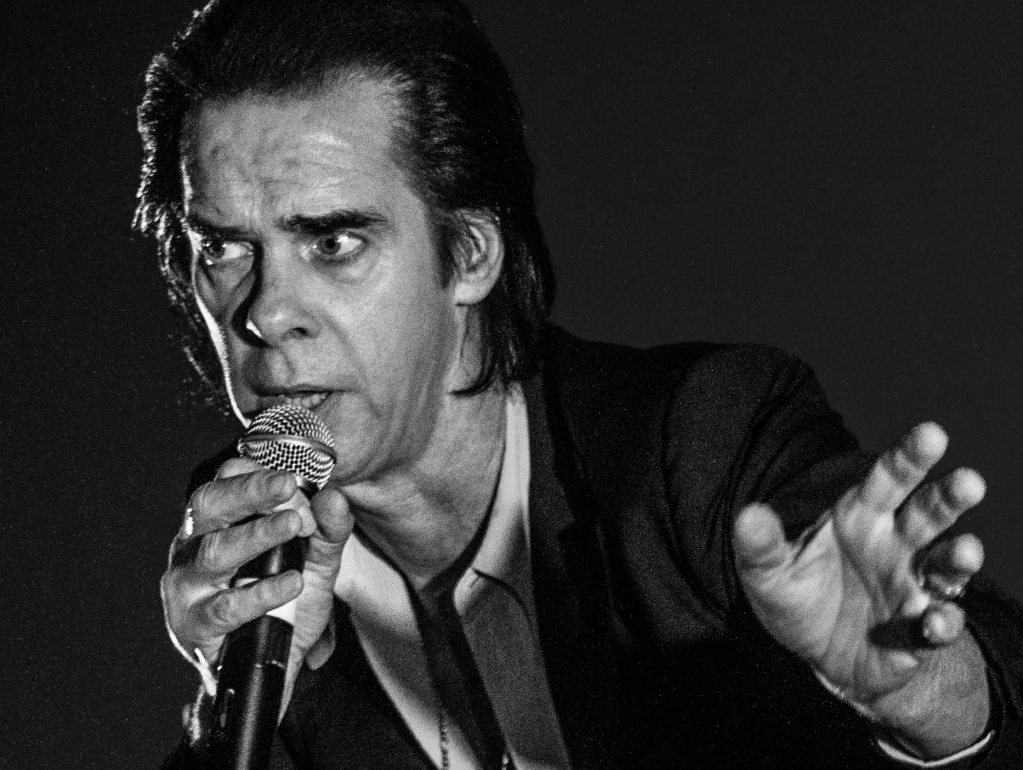
Nick Cave — Australian musician, composer, filmmaker, writer, artist, actor, all-around Renaissance man, with slick black hair and natty suits hanging off a long, pencil-thin frame — runs a sage, funny and heartbreakingly sincere advice column on his website The Red Hand Files. His counsel is so sharp and impassioned, you wonder: What can’t the guy do? I bet he can fly.

Recently, a precocious 13-year-old boy wrote in, asking this: “How do I live life to its absolute fullest, and not waste my potential? Especially as a creative. Also, what is a great way to spiritually enrich myself, in general, and in my creative work?”

I relished Cave’s response so much, I am excerpting a chunk of it here.

These are, to me, words to live by:

“Read. Read as much as possible. Read the big stuff, the challenging stuff, the confronting stuff, and read the fun stuff too. Visit galleries and look at paintings, watch movies, listen to music, go to concerts — be a little vampire running around the place sucking up all the art and ideas you can. Fill yourself with the beautiful stuff of the world. Have fun. Get amazed. Get astonished. Get awed on a regular basis, so that getting awed is habitual and becomes a state of being.”

Nick Cave — bard, baritone, Bad Seed, badass.

Getting fussy about fun

Talking on the phone with my Dad once in my early twenties, I used the word “funner” as an adjective and, stickler that he was, he busted me. 

“That’s not a word,” he intoned. 

Oh. I sat there chastened, my cheeks pink.

I was a burgeoning word freak but Dad was the authority, the maestro, a journalist and wordsmith for decades who loved dissecting language, adored puns (he was the worst!), and collected clichés with a far-flung dream of making a board game out of all the hoary, hackneyed maxims, platitudes and banalities he scribbled down on everything from receipts to cocktail napkins. 

Say something nakedly trite and he would call you out — ha! — scramble for a pencil and jot down the howling cliché you dared utter. Can you imagine what kind of game that would be? Either brilliant. Or inordinately annoying. Anyway, it never came to be.

Back to “funner.” Apparently that isn’t a real word. At least according to my father. And that has stuck ever since. I never say “funner.” Yesterday my brother used the word “funnest” and I pulled a Dad and said that’s not a word. My brother gave me the stink-eye and started making a voodoo doll of me.

But I was wrong. Sort of.

Here’s what the New Oxford American Dictionary says: “The comparative and superlative forms funner and funnest should only be used in very informal contexts, typically speech.”

That’s good news — informal contexts, typically speech. Just how I used funner.

However, an online teacher says this: “The next time students ask why they can’t say ‘funner,’ I say it’s because ‘fun’ was originally only a noun and the -er and -est forms are not commonly accepted. Stick to ‘more fun’ and ‘the most fun.’ ”

And another site avers: “There’s something funny about the word funner. It has the sound of a word twisted for the sake of a game of Scrabble, and any mention of it is liable to draw the response of, ‘Do you mean more fun?”

No! I mean funner! There, I said it, so many years later. Funner.

So, Dad, on this count you might have been off. I’m using funner as an adjective — better late than never. And with that phrase I’ve given you a moldy cliché for your board game, which would have surely been the funnest game of clichés ever.

Language is always evolving, especially between the formal and the colloquial. Take “over” vs. “more than,” for example. Both are now used to mean more than if used before a number or quantity, as in “This cost over four dollars.” That once was a stylistic no-no, but increasingly “over” is an acceptable substitute. 

I’m a word nerd. Love the language, love quips, innuendos, alliteration, even puns, which come tragically easy to me. I like big hairy words that have tentacles and teeth.

I do indeed find words fun. I find writing funner. I find finishing writing funnest of all. 


One of the hottest books of the year is cool to the touch

Funny how you can admire a book without fully liking it. That’s the case with the lavishly overpraised memoir “Stay True” by New Yorker writer Hua Hsu, which was named one of the 10 best books of the year by The New York Times and made book reviewers get all moist.  

It’s a baffling response to a book whose prose contains no electricity, no buzz. A book that rather lies there, dry, ho-hum and humorless. 

And yet Hsu reveals authorial gifts by showing what even a mildly engaging story can do: carry you along with raw pathos, stripped of punch and pyros. Though the book sputters at the half-way point — Hsu’s early years at UC Berkeley in the ‘90s aren’t as novel or riveting as he thinks they are — it occasionally grazes the profound with ranging reflection that delivers a spurt of substance. 

Still, missteps abound. Women, for instance, are almost totally absent for most of the book, noted in passing by first names only, granted the vaporous texture of ciphers. I don’t recall one speaking, even when Hsu at last finds a dimly sketched girlfriend.

Not even his Asian identity issues (he’s Taiwanese American), his mania for alt-music, or especially the zines he publishes pop off the page. These are exciting topics, but we’re left thirsting. While a huge fan, I find most New Yorker writing to be self-consciously restrained and prim. Staff writer Hsu suffers from a chronic case of New Yorker-itis.

But at least it feels real, which memoirs like Mary Karr’s aptly titled “The Liars’ Club” definitely do not. Which makes “Stay True” also aptly titled. (I find pretty much all memoirs to be 15-20% made up — there’s simply no way such decades-spanning reportage can be true — but that’s pulp for another blog.)

This book is about friendship and the violent loss of it and the hole it leaves. Hsu meets his friend Ken —  who’s mostly depicted as a one-dimensional cut-out — at college and they become best bros (Ken is in a frat, something initially anathema to the “outsider” Hsu). Ken is soon ripped from the narrative and we’re supposed to be crushed. 

But the loss of a character we barely knew is treated with a remove that makes it hard to share an emotional wallop. Believing otherwise, Hsu writes: “I was a storyteller with a plot twist guaranteed to astound and destroy.”

Not quite. “Stay True” misses its mark, but by feet, not yards. A few sentences jiggle with magic — “Their beats sounded like death rearranging furniture in the underworld,” Hsu notes about a rap group — and the closing passages of this slim volume emanate a cathartic warmth that’s AWOL in the gangly prose of the first 100-plus pages.

In the end, Hsu wants the truth to pierce. Here, it merely pinches. 

***

Ten books I really liked this year:

“Asymmetry” (Lisa Halliday); “Eleven Kinds of Loneliness” (Richard Yates); “The Copenhagen Trilogy” (Tove Ditlevsen); “Heat 2” (Michael Mann and Meg Gardiner); “Either/Or” (Elif Batuman); “How Should a Person Be?” (Sheila Heti); “Weather” (Jenny Offill); “Wildlife” (Richard Ford); “A Manual for Cleaning Women” (Lucia Berlin); “The Idiot” (Elif Batuman).  

Is reading for sissies?

As a kid, from ages seven to 17, I had subscriptions to sheaves of magazines I eagerly awaited to hit my mailbox — Dynamite, Ranger Rick, Hit Parade, Modern Drummer, BMX Action, Omni, Heavy Metal, Movie Monsters and more.

Each title represented a discrete passion — showbiz, animals, rock, drums, science, bikes — and the glossy journals were bibles of my interests. I read them rapt, lapping up interviews, gossip, photos, front-of-the-book ephemera, often scissoring them to bits for bedroom wallpaper and school-locker decor. (Try that with an online subscription.)  

At about 17, I started reading the local newspaper, the San Francisco Chronicle, with a new seriousness that went beyond comics “Bloom County” and “The Far Side.” I loved the stylish writing, current events, cranky columnists and clever critics. It was a daily feast, and each week I’d spend up to three hours poring over the overstuffed Sunday edition, an inky ritual I savored.   

I also read lots of books — “Charlie and the Chocolate Factory” to freak show biographies; “Slaughterhouse-Five” to Jim Morrison’s (dreadful) poetry — but that’s a given. When I was eight I read the fat paperback of Peter Benchley’s “Jaws,” and I’m still proud of it.

But is it normal, for a boy at least, to spend so much time with the written word, reading? Shouldn’t he be outside, say, throwing balls, or blowing things up?

While I hated most sports — except soccer, skiing and BMX — I was your average knee-scraping, war-playing, B.B.-gun-shooting, lizard-catching, fire-setting, doorbell-ditching, girl-crazy, grungy little scamp. 

Still, I adored words and what they imparted — ideas, information, whole worlds. I used to wade through our World Book encyclopedias and ginormous Mirriam-Webster dictionary just for fun. My best friend Gene and I wrote little books about devils, murder and other unspeakable mischiefs. We had a thing for horror.   

But did all that bibliophilia and word-love mean I was a giant wuss?

This week teacher and novelist Joanne Harris — bestselling author of “Chocolat” — said that reading is far more rare in boys than girls, for rather macho reasons:

“When I was teaching boys particularly, I found that not only boys did not read as much as girls but they were put under much more pressure by parents, largely fathers, to do something else as if reading was girly,” she said via LitHub. Boys, apparently, “ought to be out playing rugby and doing healthy boy things.”

And I reply: Can’t boys do both — reading and “healthy boy things” — like I did (and what’s a healthy boy thing, anyway)? 

Forbes reports that boys are way behind girls in reading comprehension and writing skills, because “reading and writing are stereotypically feminine endeavors, and boys tend to avoid anything that’s remotely feminine. In other words, it’s just not cool to read, because reading is for girls.”

This is clumsy and reductive (and offensive) reasoning, more fitting for the playground than a hard, rational study. Reading is for girls? You don’t say.

What then to make of all the wildly famous male writers overpopulating the literary canon who have (unjustly) eclipsed their female counterparts? Call Hemingway or Mailer a wuss and see where that lands you. 

I don’t doubt that girls read more than boys; I’ve seen it borne out. If it’s because boys are discouraged and intellectualism is deemed unmanly, then we have a real societal problem. I don’t have the answers — just my umbrage — but if you have any thoughts, please comment.  

I know many bibliophobes, people, almost all male, who would never think of strolling the living, fragrant stacks of a bookstore, or simply pick up a book for that matter. To me, they’re the wussies, un-evolved, willfully ignorant, with the vocabulary of third graders and the critical thinking skills of a hubcap. I don’t trust adults who don’t read. Philistinism is a cultural crime.  

World travel has largely usurped my juvenile need to start fires and catch lizards, but I still read at a mad clip and write as much as I can. Call me a sissy. I’m having a ball.