How wine’s vines wrap around your brain

I am sipping wine as I write this, a chilled glass of Portuguese rosé that is an ideal swirl of sweet and dry, fruity and floral. It is 42 degrees outside. The fusty stereotype says that rosé is expressly a summer drink, just as some insist soup is only a winter meal. I say balderdash to both feeble-minded myths, which suffer a fatal lack of imagination. 

So, indeed, I am sipping wine (rosé!). And I am thinking of an article a friend sent me about the intricate neurological processes involved in the simple joy of tasting wine. It says: “According to neuroscientist Gordon Shepherd, the flavor of wine ‘engages more of our brain than any other human behavior’” — be it pitching a baseball, basking in Bach, playing Fortnite or, I imagine, having tangly Tantric sex.         

I’ll drink to that (and I did). More, and listen closely as the ideas get knotty: 

“The apparently simple act of sipping Merlot involves a complex interplay of air and liquid controlled by coordinated movements of the tongue, jaw, diaphragm and throat. Inside the mouth, molecules in wine stimulate thousands of taste and odor receptors, sending a flavor signal to the brain that triggers massive cognitive computation involving pattern recognition, memory, value judgment, emotion and of course, pleasure.”

114539478_Booze_345070c.jpg

I’ll drink to that, too, mostly because that passage was as complex as some of the most sophisticated wine varietals, and it kind of gave me an instant hangover. (Shepherd’s book, by the way, is “Neuroenology: How the Brain Creates the Taste of Wine.”)

Yet so much jibber-jabber is a buzzkill. So let’s for a moment detour to Turkey, the last place I really indulged in wine. Namely to Göreme, in Cappadocia, where I enjoyed a marvelous wine tasting. Just me, the sommelier and lots of wine.

After almost crashing a rented motor scooter about four times in the craggy hills of Göreme, returning the vehicle well before it was due, I was rattled. Walking to the town center, defeated and with a comical helmet head, I caught a sign outside a handsome restaurant that said simply “Wine Tasting.” It was time for a drink, a celebration that I didn’t smash open my head toppling off the scooter into rocks and shrubs.

Apparently I stumbled upon a hotspot, the newish Mozaik Restaurant, which is rated the #1 restaurant in Göreme on TripAdvisor. (OK, it’s TripAdvisor — take it with a grain of salt.) For about $18.50 you get four tastings of the varietals of your choice. The wines come from the rugged Cappadocia region, a local tasting.

IMG_1259.jpeg
A rose from Cappadocia, served by my sunny sommelier.

Thing is, and I’m hardly complaining, my friendly host did not pour tasting measures — a few hearty sips — but pretty much full pours. I sat there for a good 90 minutes, sipping four glasses of wine — a Chardonnay, Merlot and, of course, two rosés. They were excellent, dimpled with notes and accents and bouquets and finishes and all that jazz.

I all but forgot about the scooter drama, because, little did I know, this was happening inside my head: The wine, recall from above, “stimulated thousands of taste and odor receptors, sending a flavor signal to the brain that triggered massive cognitive computation … emotion and, of course, pleasure.” (Italics mine.)

That’s a lot of action from a sip of fermented fruit. I know shamefully little about wine — I’m no vino snob; the rosé I’m sipping came out of a box — but I can tell good grape from rotgut pretty well. All that “cognitive computation” triggered by a “flavor signal” is nifty enough. But I think many of us agree it’s the “pleasure” that’s triggered that we are after. I’d drink to that, but, alas, my glass is empty.

The 5 most overrated movies of the year (so far)

Critics and crowds made big stinks over these movies this year. I didn’t.

1. “Roma” — Topping many “bests of” lists, Alfonso Cuarón’s meandering memory drama, based on his early-‘70s childhood in Mexico City, was the biggest disappointment of the year. Flaccid and unfocused, this pretty black and white picture is about Cuarón’s middle-class family just as their father leaves it. Fatally, the film’s nominal main character is the live-in housekeeper, who, perplexingly, is a narcotized, non-verbal cipher. Her reaction when she discovers she is pregnant rivals Buster Keaton’s stone face matched with Harpo Marx. Some critics have tried to pass off “Roma’s” absence of structure as a “meditation.” It is not. Rather it’s a story-free stream-of-consciousness that leaves little to grab onto and be affected by. Dog poop, believe it or not, plays one of the liveliest roles. For all of Cuarón’s lush, gliding camerawork, swooshing this way and that, capturing rambling life as it happens, the affair is implacably inert.  

Roma-Movie-Review-Alfonso-Cuaron.jpg

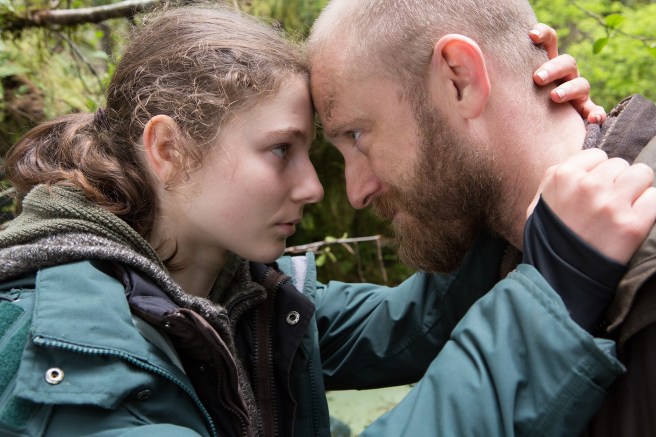
2.“Leave No Trace” — A film that leaves no trace, emotionally or otherwise, this achingly static homeless drama about a father (Ben Foster) and his teenage daughter (Thomasin McKenzie — both shine) living off the grid in an Oregon forest suffocates on its own aridity. Scant happens when they’re hauled into social services, or when they attempt a run for the wild. For so much heart, little resonates.

leave-no-trace-movie.jpg

3. “The Ballad of Buster Scruggs” — In this six-chapter Western anthology, the Coen brothers hew tightly to time-honored oater conventions while spinning them on their dusty Stetsons for typical tonal whiplash. Zigging from bloody to farcical at the speed of a bullet, with a game all-star cast, it’s handsome, violent, intriguing, and tediously quirky. (Earmark the episode with Zoe Kazan. She’s fantastic, and she’ll shatter your heart.)

image.jpeg

4. “Shoplifters” — This sometimes playful Japanese social drama by the accomplished Hirokazu Kore-eda sporadically springs to life with small jolts that only make you hunger for more. The award-sprinkled film is about a family that relies on shoplifting to ease its poverty. Naturalistic and deeply humanistic, it suffers from a lack of movement, and the modest emotional punch comes too late. 

npzqw0jyoi31pfi0m8dd.jpg

5. “Private Life” — A hackneyed bourgeois dramedy about, sigh, a middle-aged couple that can’t have children in the traditional fashion, so try all manner of misadventure to conceive. The couple, played by Paul Giamatti and Kathryn Hahn, great comic actors brought down by middling material, are New York writers (really?) surrounded by brainy friends (really?) who try and help. Marital friction erupts (really?) until a secret weapon appears. Hope abounds. This is slushy, sitcomy stuff that writer-director Tamara Jenkins (“The Savages”) is above.

gn-gift_guide_variable_c.jpg

6 more: an honor-roll of the overpraised, in no order

“Isle of Dogs” — Wes Anderson, that leaping leprechaun of willed whimsy, presents a fun, funny premise about stray animated dogs sloughed off to a trash-heap island in Japan, until he, reliably, clutters things up with over-plotting and mirthless mayhem.

3-28_movies1_-_isle_of_dogs.jpg

“You Were Never Really Here” — I wish someone could’ve said that to me after watching this turgid hitman character study, starring a grody Joaquin Phoenix and directed by the grit-addicted Lynne Ramsay (“Ratcatcher,” “Morvern Callar”).  

“Hereditary” — Toni Collette’s lashing performance as a beleaguered mother can’t salvage this confused supernatural horror tale that careers from realistic, upsetting family drama to near-laughable nonsense replete with séances, demons and covens.

 “Mandy” — A full-on bonkers genre goulash of volcanic incoherence that, despite the presence of a teeth-gritting, eye-popping Nic Cage caked in baddies’ blood — just the way we like him — isn’t half as fun as it thinks it is.

mandy-box-office.jpg

“Black Panther” — As I wrote in June, I found this mega-hit a “slick, savvy vehicle that gets predictably bogged down in mythical mumbo-jumbo, comic-book convolutions and contrivances that I haven’t the energy to follow or care about.”

avengers-infinity-war-wakanda.jpg

“Happy as Lazzaro” — Watching this coy Italian flirtation with magical-realism, I felt I was dying a slow, awkward death.

1534850041653_0620x0435_1534851432553.jpg

The shame of ‘showrooming’ bookshops

I am one of them. I am scum. A scoundrel. Rude, obnoxious, miserly, cheap. 

I confess: I have gone into an independent bookstore with my phone or laptop, browsed, then purchased the books I wanted on my Apple device — inside the bookstore. 

I did not carry the books to the cashier and buy them. No. With withering impudence, I hit the Amazon app, clicked twice and bought the books online, saving on average $8 per title. It was disgusting. It was exhilarating.

P1030224-1024x731

And it was wrong. No matter it was a decade ago, that cute little caper still reeks to high heaven. What I hate is that it’s probably worse than, if not equal to, what small bookshops are now dealing with: the tacky phenomenon of “showrooming,” explained here by The Guardian:

“Of all the insults that booksellers stomach, the most awful is the newest. Gone are the days when it was someone shoving a book down their pants … Now it is ‘showrooming’: when customers go to physical shops only to research purchases they will make online. This is a bugbear of the booksellers who have been engaged in a David and Goliath battle with online retailers for the past decade.”

Adds Keith Edmunds, a former bookstore owner, at Mental Floss: “They’ll come in and use their phone to take a picture of the cover and barcode and just use the bookstore as the Amazon showroom. It’s awful.”

It is awful. It’s gauche and sneaky. It gives one’s moral relativism a mighty workout.

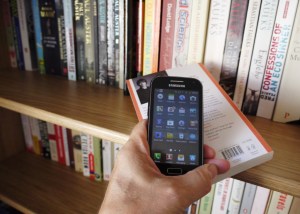
As mentioned, I showroomed. Some 10 years ago at my local indie bookshop, I scanned the shelves for Vietnam travel guides, plucked three or four volumes, went to the bookshop cafe, cracked my laptop and bought the best titles — online, at huge discounts.

Back then, I thought this was hand-rubbingly clever, cutthroat capitalism in action: Screw you, full-priced bookstore. I found a real deal!

Even now I don’t like paying $18 for a new paperback that I’m not sure I’ll like and that I can usually get in used condition for $4 at Amazon (one penny, plus $3.99 shipping). And I admit, guiltlessly, that I shop Amazon a lot, though I’m more inclined to use the library these days, saving cash and trees.

On occasion I will haunt our local indie bookstores, used and new, but my fealty to them isn’t ironclad. I feel more spiritually crushed paying $27 for a book at the store than paying $16 for the same product online. It’s a virtue vs. Visa smackdown.

I want to support the local shops, yes, but it comes at a literal high price. I have philosophical quibbles with Amazon, even if many authors do not (word is they profit more from high-volume discount sites than full-price brick-and-mortar outfits).

What’s not cool is showrooming. If you’re going to drop cash at Amazon or Barnes & Noble, do it at home. Looking at books in a store helps you shop with accuracy, and asking staff questions about titles is invaluable. And why you’re there, you might actually buy a book from the indie shop, a move that could abet its fragile longevity.

A great tweet from the owner of Fountain Books in Richmond, VA, recently went viral:

“We had a lot of ‘showrooming’ today: people taking pictures of books and buying them from in the store and even bragging about it. This is not ok, people.

Find it here.
Buy it here.
Keep us here.”

4f.jpg
Your neighborhood bookshop. A showrooming-free zone.

A tediously timely ‘Network’

In Ivo van Hove’s new Broadway production of “Network,” frantic stagecraft whirls with clamoring bodies in a dance of hectoring topicality. 

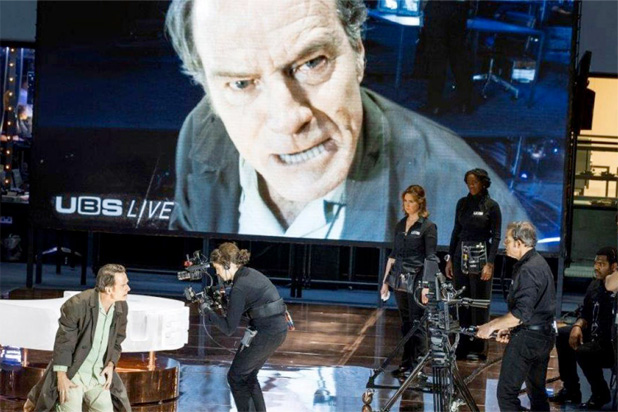
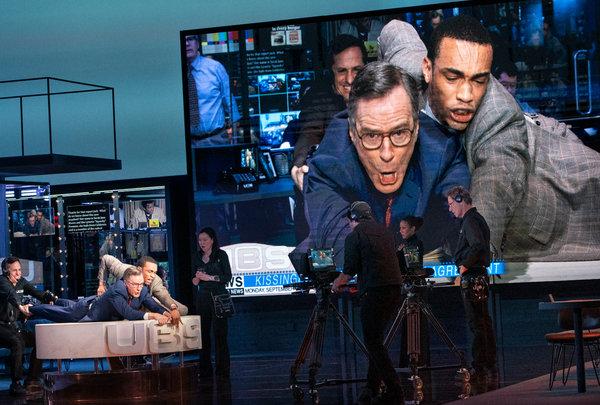
Multiple technicians wield video cameras, roving the stage, filling television screens small and large around the theater. Actors coax “live-studio-audience” applause from the crowd and demand that we bellow, not once but several times, that brimstone incantation: “I’m mad as hell and I’m not going to take it anymore!”

Led by Bryan Cranston’s bristling performance, there’s a lot to take in visually, if not intellectually. It’s all very slick, stylish and duly explosive. It’s a bombastic mediocrity. 

Unlike Sidney Lumet’s 1976 film, written with literary panache by Paddy Chayefsky, this “Network” — adapted both too faithfully and too diffusely by Lee Hall — lacks the  prescience about corporate greed and TV’s noxious influence. We know all that now. We’re living it. It makes this adamant version too on the nose. It brays to the choir.  

network.jpg

But there is Cranston. As Howard Beale — crusty anchorman-turned frothing oracular madman-turned vitriolic TV commentator — the actor is a one-man brush fire. His fed-up Beale, who declares he’s going to kill himself on air, becomes, in the words of one of his venal bosses, “a latter-day prophet, a magnificent messianic figure, inveighing against the hypocrisies of our times.”

In one blazing scene, Cranston cracks. Sara Holdren at vulture.com describes it with zest: 

“Cranston’s disintegration is a hell of a thing to watch, especially in the excruciating moments of silence before Beale launches into his first famous tirade. With a camera up in his face and that face looming, distorted with pain, up on the set’s back wall, Cranston stumbles and sways, squinting through tears and groping to pull the scattering fragments of his brain back together.”

All well and good, and Cranston veers to greatness. The rest of the cast — chiefly Tatiana Maslany (“Orphan Black”) and Tony Goldwyn (“Scandal”) — is serviceable. No one stands out, meaning Cranston carries the lurching show, which never stops groping for to-the-minute provocation.

What really hobbles things, though, is a story diluted with redundancies and non-essential scenes. Goldwyn’s moments of midlife melodrama await merciful amputations.

Yet it might be argued that this “Network” is a raucous, rousing, gimmicky divertissement by master showman van Hove (2016’s knockout “A View from the Bridge”). He pulls many effective flourishes from his bag of tricks.

But van Hove underscores the text’s topicality with a crowd-pleasing urgency. The show is timely, perhaps too timely. By the end, this Beale reaches a point of clanging didacticism and facile relevance that’s tiresome for all its exertion. You yawn instead of wince.

Playing Broadway’s Belasco Theater. Details here

merlin_146980140_4bff16c1-7d7d-4312-adf1-00afbb9f4bfc-articleLarge.jpg

On language: quote of the day

“Rather than make one’s argument come alive, clichés do the reverse. They capture a morsel of thought, cover it in batter, and fry it into mush.” — Mark Abley in The Walrus

For good measure, here’s a rogue’s gallery of flagrant clichés. As language guru William Safire put it (with a sardonic wink): “Last but not least, avoid clichés like the plague.”

Don’t cry over spilt milk; Selling like hotcakes; The rest is history; Every cloud has a silver lining; When it rains it pours; Don’t judge a book by its cover; Don’t beat around the bush; Don’t count your chickens before they hatch; It’s a dog eat dog world; To be honest; Basically; With all due respect; Giving it 110%. It is what it is; Paradigm shift; Walk the walk; Pushing the envelope; Thinking outside the box; The elephant in the room.

elephant-abley

Goosing perceptions of a certain fowl

The goose is loose, the geese unleashed. They waddle from the nearby park into the residential hinterland of manicured landscapes, Christmas lawn ornaments and porches peppered with boxes from Amazon and UPS. A suburban snow globe. 

Remarkably noisy, honking their own holiday songs (worlds out of tune), the geese are like plumed seasonal interlopers that just want to say hi to their human neighbors. And poop all over. And occasionally whip up a nest and lay eggs in your front yard (that happened, true). And spread disease. And … we’re getting ahead of ourselves.  

You know they’re coming from their squawky honks (squawnks?). Those bestial blasts are something else — the primitive, tortured horns on a 1912 Ford Model T. Nasally and blustery and violent. Atonal, discordant, foul (fowl?). 

The geese are here — it’s winter. The plump poultry galumph, don’t fly, south for the winter, a whopping three blocks south, the lazy bums. The park creek is frozen and perhaps food is scarce. They move in small gaggles of two to four, really just giggles. 

And for the number of dogs in the neighborhood, they are a bold lot. Strut they do, chests thrust, hooting and blaring. They are so cocky that they can be mean, and they’re known to attack humans if “provoked.”

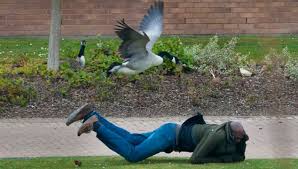
Exhibit A:

Unknown.jpeg

Experts at Rutgers University call this “Nuisance Behavior.” I’d say. “When protecting nests and goslings, geese can become aggressive. Attacks are rare, but they can cause injury to small children and pets.” That looks like a full-fledged adult to me, in full-blown duck and cover. Take note.

The Rutgerians explain that Canada goose flocks, which are what these are, head for places of “recreational purposes, such as parks, athletic fields, and shorelines.” (“Recreational purposes” — love that. Maybe geese enjoy hoops and the monkey bars.)

Next to knocking you to the ground, the geese bring all sorts of wonderful. “Accumulation of feces potentially creates a foul odor and slippery conditions, and these areas quickly become unattractive to people,” notes the panel with exceptional acuity.

We like, if do not love, the geese. Animals will be animals. Dookie is what they doo-doo. Yet the academics present a bona fide dark side: “Canada geese are carriers of bacteria and parasites that may be pathogenic to humans,” the most common being E. coli.

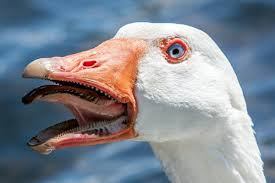
Rule No. 1: Do not pet the geese. Play it safe and don’t even look at them. They’ll probably give you the stink-eye anyway. No. 2: Wipe your shoes with a kind of horror-movie panic.

unknown1.jpeg
Jesus.

The more I learn about these geese the more they unnerve me. The more I want to purchase a crossbow. They are ornery, incontinent, complaining, belligerent and noxious. Plus, they’re homely devils.

Not long ago a story ran at thedodo.com with the headline “Why Are Geese Such Assholes?” The piece describes geese attacking humans, but implicates ducks, chickens and turkeys, too, as being “over the top,” says a woman.

“But as it turns out,” writes the author, “it’s actually for a very sweet reason. ‘The moms protect their eggs and young. The dads protect their families — their flock,’ ” says the same woman.

A few of my year-end enthusiasms

People, places and culture — little consolations — that are turning me on (saving me?) in the waning days of a sometimes unbearably tumultuous year …

  • Courtney Barnett — Guitar rock lives. Or so we can dream, a reverie persuasively advanced by grungy guitar-slinger Barnett, a pop-punk pixie who’s making some of the crunchiest, catchiest, folky-fuzzy rock around, music that sounds improbably lasting. A devout DIYer with a Grammy nod and fervent following, Barnett traces the raw, minimalist contours of Nirvana and the Pixies, with squalling distortion and a voice so uninflected that her Australian accent claws right through. That voice echoes the talk-singing and slightly nasal tones of Liz Phair, Patti Smith and The Hold Steady. Wincingly intimate, her jagged, jangly songs are shot through with personal drama and cutting irony. Often they’re downright hilarious. Choice cuts: “Pedestrian at Best,” “Debbie Downer,” “Avant Gardener,” “City Looks Pretty.” Watch her in concert HERE. And visit her squiggly world HERE.

courtney-barnett-elizabeth-weinberg-054.jpg

  • “Night Train”: New and Selected Stories by Thom Jones I didn’t even know Jones died two years ago. He’s one of my favorite short fiction writers and I kept wondering where in the hell he went, when he would publish again. I was alerted to his fate by this posthumous assemblage, plucked from Jones’ classic ’90s collections “The Pugilist at Rest,” “Cold Snap” and “Sonny Liston Was a Friend of Mine,” each worth owning, and cherishing. But with this chubby tome, featuring seven new stories, including the typically mordant title tale and spanning the biting, semi-autobiographical Vietnam War epic “The Pugilist at Rest” to the absurdist vermin mayhem of “Mouses,” Jones’ spare, sinewy, mean and bust-up funny realism comes into exhilarating focus. Fueled by grit, violence and the tough tenets of his hero Arthur Schopenhauer, this is essential contemporary fiction.

38496743._UY400_SS400_.jpg

  • Gin and tonic at Angel’s Share  Last month I drank a gin and tonic with a Japanese gin I criminally did not get the name of at Angel’s Share, the dark, elbow-jabbing speakeasy in New York’s East Village. It was the smoothest, lightest, tastiest G&T I’ve ever sipped, spritzed with a gorgeously un-cloying tonic that was gently fizzy, not nose-tickingly fizzy. The drink was a perfect alchemical mingling of alcohol and mixer, a frosty masterpiece. (If only I could afford the $17 elixir more than once a year.) 

gin-and-tonic-1

  • “I Am Dynamite!” by Sue Prideaux — Penetrating and punchy, with an attractively light touch for the weighty subject, Prideaux’s new biography of Friedrich Nietzsche, one of my dearest great dead thinkers — atheism! nihilism! iconoclasm! self-invention! and more furrowed-brow brilliance — is like literary windshield wipers, a slashing text of clarification and demystification. Despite the luxuriously daunting walrus mustache and monumental scowl worthy of a grumpus Mount Rushmore, the German polymath — yes: a prickly, willful malcontent — wasn’t the poisonous philosophical force we’ve been warned of. (For one, he abhorred antisemitism.) Reason reigned, until it crumbled amidst the famous crack-up that would kill him at age 56. Dead: first God, then him. 

31bookprideaux2-articleLarge

  • Istanbul — First come the post-vacation blues: the immediate despondency felt when you return home from a great trip. Crap, it’s over. And then there’s the afterglow: the crazy satisfaction and rapture you feel when the depression burns off. Damn, that was the best trip ever! I got back from Turkey last month and I’m basking in the afterglow. I was mostly in Istanbul, one of few cities that can hurl me into a dream state that’s as wondrous as it is ineffable, an otherworldly stupor of sights, sounds and flavors, pocked by the lovable multitude of stray dogs and cats and the unfailingly caring and splendid people. I still savor my Istanbul lodgings, the über-charming boutique Hotel Ibrahim Pasha and, in Cappadocia in Central Turkey, the Pumpkin Göreme Restaurant and Art Gallery, where the cheap and divine fixed menu delivers the allure of Turkey on many plates. If I sound a little intoxicated by it all, I am. 
turkey.jpg
Hagia Sophia, Istanbul
  • “Skate Kitchen” — The young women of this scruffy 2018 skateboard drama are hell on wheels — or is that Chanel on wheels? No way. The tribe of shredding female street teens are all about the clacking and scraping of boards on New York concrete, smoking spliffs and coupling with the opposite (or same) sex. The star here is bespectacled Camille (Rachelle Vinberg), a taciturn 18-year-old from Long Island who defies her mother for the skate parks and subways of Manhattan, where she’s promptly absorbed into a rowdy posse of all-girl skaters. The film is predictably sincere about teen rebellion equating to freedom and addressing, softly, teen politics and gender politics. Yet it works; it has kick. Crystal Moselle (2015’s hit documentary “The Wolfpack”) shoots with a meandering vérité camera, the city captured with gritty love and bloodied-knee realism, and music to match. The movie is on DVD and streaming. The trailer’s HERE.

event-9932572.jpg

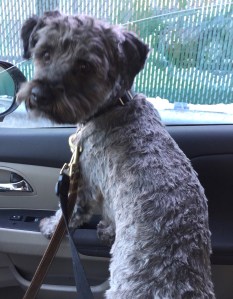
  • Cubby the Wonder Dog — The perennially pampered pup, huge heart, small bladder, gives as good as he gets — hugs and snuggles, mutual adoration, tricks and treats, ribald chit-chat over Scotch and cigars. We love the mutt with our lives, no matter if he begs, bedevils the cats or poops and pees on occasion and off the Wee-Wee Pad. Spiritual creatures, dogs are fuzzy founts of friendship, besting humans, I’m afraid. I’m rotten when I wake up, until I see that damn dog wagging his curled tail and things fall into place. Mused author Thom Jones (see above): “Dogs have a way of finding the people who need them, filling an emptiness we don’t even know we have.”
IMG_0001
Cubby

5 best movies of the year (so far)

  1. “Eighth Grade” — Her chin and forehead dappled with islands of acne, 13-year-old Kayla is stuck in the excruciating pangs of adolescent metamorphoses. A smidge pudgy with ruffled blonde hair, she is awkwardly pretty, a butterfly half-jammed in her chrysalis, squirming to soar. Her two front teeth, jumbly and slightly bucky, will break your heart. Played by a preternaturally perfect Elsie Fisher, Kayla is the can’t-keep-your-eyes-off lead in Bo Burnham’s indie wonder. She’s a compendium of teen neuroses, a raw nerve that keeps getting pinged. But as some have noted, the movie is not about geezers and their times bridging, torturously, eighth-grade and high school. It’s about today’s kids, glued to their phones, glazed in technology. It’s about forging one’s individuality amidst willful clones who gussy up their insecurities in narcotizing conformity. Kayla, a hero for our times, lives by her words, the dictums she professes on the videos she so bravely records on her phone. It doesn’t always work out, but watch her grow stronger after each posting. This rumpled, dimpled film is a marvel to behold, and one from which to learn.

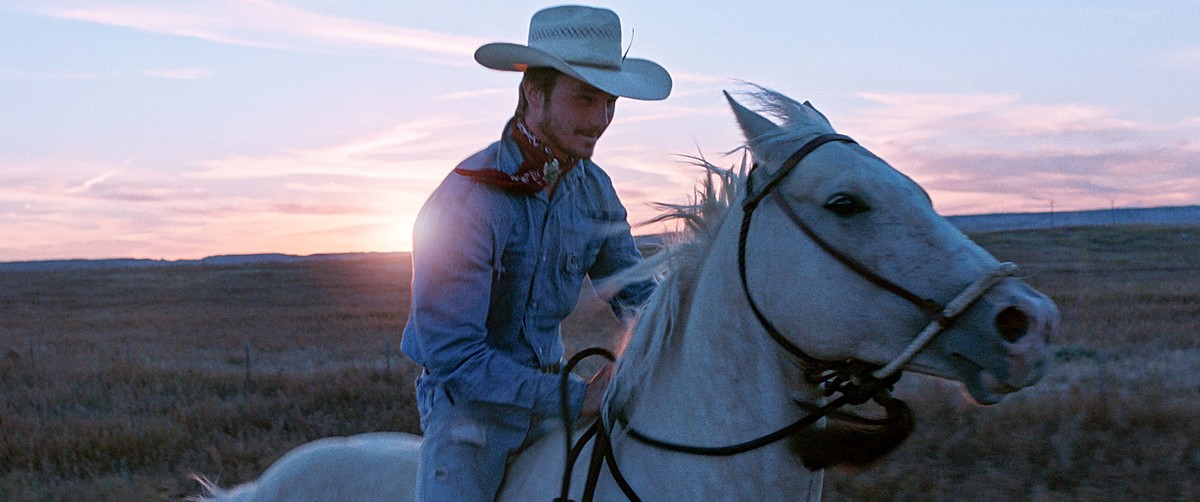
2. “The Rider” — Chloé Zhao’s lo-fi drama moves at a painstaking pace, the clip of everyday life in action. But little is everyday here: Twenty-something Brady (newcomer Brady Jandreau) is a local rock star of rodeo bronc riding whose skull, we see in the opening shots, is stapled shut and oozing blood. An accident in the ring has left him slightly brain damaged. He’s forced to give up the rodeo, the only life he knows, outside of breaking colts, which he does with a calm, tough-love Jedi mastery. The film is a fine-grained portrait of the pains of getting back on your feet after life-altering disappointment, about rebuilding your spirit after it’s been body-slammed and shattered. Easily the most moving film of the year, “The Rider” is pure distilled emotion, beautifully shot on the Dakota prairie by cinematographer Joshua James Richards. It won Best Feature at the prestigious Gotham Awards this week.

3. “A Star is Born” — Call me a sap but I fell hard for this high-sheen remake of a remake of a remake (of, yup, a remake) about a pair of star-crossed musicians working on love amid the ruthless, sometimes lethal brambles of showbiz. Bradley Cooper and Lady Gaga unswervingly possess their crooning characters, Jack and Ally, with explosive energy and heart-searing nuance. It’s a simple tale about mutual respect, and its flip-side jealousy, and how drugs can neuter talent and well-oiled ambition can nurture it. Cooper, whose steely direction wrests high drama from the grunge and glamor, sings and gives one of his finest performances. Lady Gaga is a blazing revelation. The picture boasts genuinely solid songs, including the hit “Shallow,” a soaring paean to the thrill, and fragility, of love.

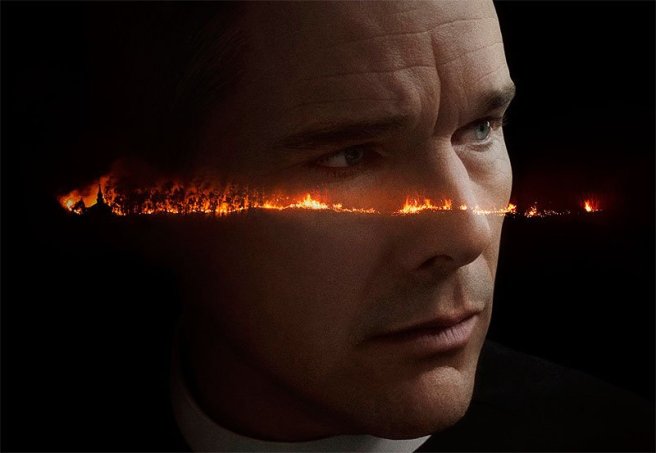
4. First Reformed” — The underrated Ethan Hawke, in his most hoarse, laser-beam performance, plays Rev. Ernst Toller, a clinically depressed man of enforced solitude who is too enmeshed in overwhelming epistemological questions for all that mainstream life stuff. He lives on the margins. He lives for God. He lives to save others, if not himself. Veteran writer-director Paul Schrader taps into his unshakable lodestar — Bergman and Bresson’s transcendental cinema of existential turmoil, spiritual struggle and personal despair — and fashions a dire universe for Toller, one consumed by crises of faith, guilt and penitence. Austere and bruised, this is not an easy picture. But it feels like a necessary one. (Hawke won Best Actor at the Gotham Awards.)

5. “Won’t You Be My Neighbor?” — Mister Rogers was a badass. Twinkly TV host, child advocate, public broadcasting pioneer, musician, writer, Presbyterian minister, seat-of-the-pants puppeteer, colorful cardigan fetishist and all-around super fella, Fred McFeely Rogers (McFeely!) held a special passport into fledgling hearts and minds to become a noble pied-piper of cheering children across the land. He worked his educational magic with a voice of honey and silk, a lilting instrument so soothing it could place you in a spontaneous coma, and a dapper dependability that made him seem like the safest person in the world. He was made of gumdrops and hugs and soaring imagination. Not a scintilla of that hagiographic image is tarred in this illuminating, touching documentary that follows the self-styled teacher of tots as he crafts his TV programs, mainly the paste-and-plastic “Mister Rogers’ Neighborhood.” It’s an adoring snapshot, a trippy bit of time-travel effusive with nostalgia and bolted together by Rogers’ nearly A.I. perfection. His virtuosity almost cloys: he was a wonderful husband and father (no! Not gay!), and his Midas touch with preschoolers was no fool’s gold. In the sphere of pedagogy, his sainthood is locked. (Gotham Audience Award winner.)

Of course there’s a slew of buzzed-about movies I haven’t seen yet that might still make the list: “Roma, “The Sisters Brothers, “Mission: Impossible — Fallout, “The Favourite,” “Widows,” “Blaze,” “I Am Not a Witch, “The House That Jack Built” and more.

Then there are the acclaimed movies that left me limp: “Black Panther,” “Leave No Trace,” “Ballad of Buster Scruggs,” “Isle of Dogs,” “Mandy,” “Shirkers,” “Miseducation of Cameron Post,” “You Were Never Really Here,” “Hereditary,” “Private Life.

And there are films I enjoyed perfectly well, like Julian Schnabel’s heady portrait of van Gogh “At Eternity’s Gate, the funny-sad triplets doc “Three Identical Strangers, the melancholy horse saga “Lean on Pete,”  the anthropomorphic, Wes Andersonian antics of “Paddington 2” and the asphyxiating thriller “A Quiet Place.

“A Quiet Place”

5 best books of the year

  1. “Cherry” by Nico Walker — Walker’s precocious debut novel is tough, streetwise and gruesomely war-torn. It is ugly, scabby — drugs, crime, graphic combat violence — yet lovely still, bristling with heart, candor and raw youthful love that throbs unvarnished truth. What emerges is a pungent, probing snapshot of America today, what has been dubbed “(perhaps) the first great novel of the opioid epidemic.” 

2. “There There” by Tommy Orange — This smashing debut is a novel of ambient beauty and a penetrating portal into urban Native American culture. It’s a world at once broken, squalid and, by the skin of its teeth, empowered. The writing swings, crackling with observational fire. Much of it hits home, like a lightning jag, pulsing with candor and woe.


3. “Kudos” by Rachel Cusk — My favorite book in Cusk’s remarkable Outline Trilogy, this slim volume continues a minimalism that feels maximalist, a headlong plunge into the circumscribed but deeply philosophical world of a single female protagonist who’s on a first-person journey amidst many places and people. Cerebrally and queerly enthralling.

4. “My Year of Rest and Relaxation” by Ottessa Moshfegh — A young woman is determined to hibernate from life via shelves of pharmaceuticals and we don’t quite know why. She is a wreck, in cryptic self-exile. This wiggy, sometimes wayward study in alienation is at once comical, unnerving, depressing and iridescent.

5. “Inseparable: The Original Siamese Twins and Their Rendezvous with American History” by Yunte Huang — The lone non-fiction book in the bunch, this sensitive, captivating and occasionally creepy biography of conjoined twins Chang and Eng is a strange tale, a sad tale, one of courage, dignity, triumph and increasing oddness, yet one of naked humanity and pulsating historical vitality.  

Bonus best: Classic book of the year, “The Easter Parade” by Richard Yates, from 1976, whose grim opening line sets a searing tone: “Neither of the Grimes sisters would have a happy life … ” By the author of 1961’s caustic suburban masterpiece “Revolutionary Road.

And, as always, I chucked aside the predictable pile of unsatisfying titles, including Nana Kwame Adjei-Brenyah’s hyped stories “Friday Black” and Lauren Groff’s collection “Florida, which is brawny, but I was distracted by stronger stuff. (I also thought her 2015 novel “Fates and Furies” was hysterically overestimated.) 

Good but overrated: “The Mars Room” by Rachel Kushner. I gladly finished it. Not bad, not brilliant. Same goes for Nick Drnaso’s perplexingly ballyhooed “Sabrina,” the first graphic novel to make the Man Booker Prize longlist. A few grades above meh.

A transcendent dogumentary

They scramble and scrabble, bark and bound, nap and nuzzle, making an indelible imprint on their human pack leaders whose love for canines is crazily uncontainable.

Photos: Netflix

“Dogs,” a terrific six-part anthology series on Netflix, lushly shot by a squad of bravura documentarians (Glen Zipper, Oscar-nominated Amy Berg, et al.) , is a frank and unadorned look at the relationship between man and mutt. Heartrending and heartwarming, little is forced or pushily sentimental. Episodes provide spectacularly detailed snapshots of person, place and pup, and you strangely come away with a broader comprehension of life itself. Which makes the series certified art. 

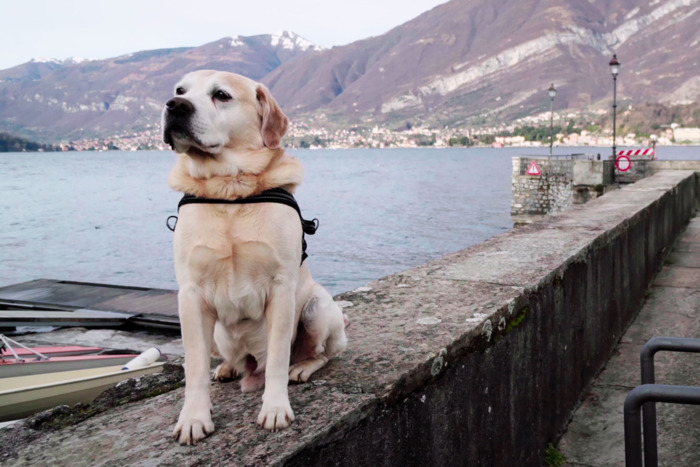
Emotions organically erupt from an array of situations, be it a Labradoodle service dog that detects seizures in its epileptic owner with whooping barks; an imperiled Syrian war refugee that happens to be a yowling Siberian Husky; an aging golden Lab in a quaint Italian fishing village that dutifully follows his master onto Lake Como where they drift together; the fabulously groomed pooches of Japan and the uncharted culture of competitive grooming; a sanctuary in Costa Rica that’s home to 1,200 free-range strays; or New York City’s exploding rescue-dog phenomenon.

Each textured 50-minute portrait is framed within the big picture of the humans’ lives, from political to familial, together with the dogs’ often precarious realities. Funny, galvanizing, sad, uplifting and even spiritual, “Dogs” shows how beautifully symbiotic the two entities, hound and human, truly are.

Watch the “Dogs” trailer HERE.