I’m not eavesdropping, really …

Recently here I chatted up the new local cafe, the exquisitely hip, I’ve-been-to-India, dump-Trump joint with the jaunty name. I decided to pop into the other local cafe, that name-brand one that just reopened after long renovation. I’m there now — I write in cafes often, a living cliché — and I’m people-watching with a touch of eavesdropping. It’s not at all creepy.

I see a poised, pert, put-together brunette chirping quietly with her friend — hale, happy twentysomethings talking about job interviews and uproarious Facebook posts. She looks like she loves dinner parties and charades. She fancies a good daiquiri. Her favorite TV show is “This Is Us.” I’m just surmising, but I know I’m right.

18187449
A hypothetical cafe scene. They look ecstatic.

Elsewhere overheard: “You know, Mary, I’m not comfortable making those calls.” 

Enter: a 60-ish gent in a baggy Bill Cosby sweater, with stubble that looks like powdered sugar sprinkled on his pink pate. “I begin my teaching tomorrow. Seventy students!” he tells his companion, a flute-thin young woman with lank auburn hair who, I’m certain, is a teacher’s assistant. 

The fellow is loud and a roaring bore. He gesticulates like a madman. She sips some coffee and it goes down the wrong pipe. The ensuing coughing fit is something to behold. Napkins fly. We sympathize.

“We’re getting off track here,” an elderly woman laughs. She’s talking to a slightly younger woman at a corner table about scheduling some sort of meeting at her home. “Should we do RSVPs?” the younger woman asks. 

I soon gather they’re organizing a book club. They are perusing a list of titles. The younger woman describes a book that’s “very well-written” that sounds like a kind of real estate thriller. The authors Andre Dubus III and Michael Frayn (“He’s British”) are mentioned. “The person who selects the book is the host of the meeting,” says the younger woman.
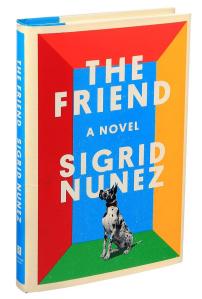
06booknunez2-print-articlelarge-v2

I want to chime in and suggest the novel I just finished, “The Friend,” Sigrid Nunez’s brisk, deceptively simple yet profound meditation on the writer’s life and friendships between people and dogs and people and people. It won the 2018 National Book Award. It’s lovely.

I pick the book. I’ll be the host. I’ll serve baked Alaska.

Someone just said “hypothesize” in mixed company. 

I ask the barista what she’s reading these days — we often yack about books — and she flashes her copy of the novel “The Secret History,” Donna Tartt’s 1991 cult smash. I kind of wrinkle my nose while evincing interest, and tell her I tried and failed to read Tartt’s 2014 Pulitzer-winning epic “The Goldfinch.” I read about half and put it down. The novel is divisive: You love it or loathe it.

She adores it. “What didn’t you like about it?” she asks. I thought it was cutesy, candied, implausible, whimsical and too redolent of Dickens. 

“It is Dickensian,” the barista says, and with that simple word my day is made.

Elephant adoption — it’s a real thing. Two ladies are talking about it. One explains that it costs $50 a year to adopt an African pachyderm and “each month they email you a picture and an update about your elephant.” She has an elephant. “I went to visit the orphanage in Nairobi,” she says. I suddenly want an elephant. 

“It’s my parents’ 43rd anniversary,” a 30-ish guy tells his friend. “That’s a long time to be sniffin’ someone else’s toots.” 

I missed most of the soliloquy, but a youngish man was rhapsodizing about coffee and espresso and the joys of sitting on his porch, and out of his mouth popped this phrase: “the waking beauty of life.”

Spectacular.
Goosing perceptions of a certain fowl

The goose is loose, the geese unleashed. They waddle from the nearby park into the residential hinterland of manicured landscapes, Christmas lawn ornaments and porches peppered with boxes from Amazon and UPS. A suburban snow globe. 

Remarkably noisy, honking their own holiday songs (worlds out of tune), the geese are like plumed seasonal interlopers that just want to say hi to their human neighbors. And poop all over. And occasionally whip up a nest and lay eggs in your front yard (that happened, true). And spread disease. And … we’re getting ahead of ourselves.  

You know they’re coming from their squawky honks (squawnks?). Those bestial blasts are something else — the primitive, tortured horns on a 1912 Ford Model T. Nasally and blustery and violent. Atonal, discordant, foul (fowl?). 

The geese are here — it’s winter. The plump poultry galumph, don’t fly, south for the winter, a whopping three blocks south, the lazy bums. The park creek is frozen and perhaps food is scarce. They move in small gaggles of two to four, really just giggles. 

And for the number of dogs in the neighborhood, they are a bold lot. Strut they do, chests thrust, hooting and blaring. They are so cocky that they can be mean, and they’re known to attack humans if “provoked.”

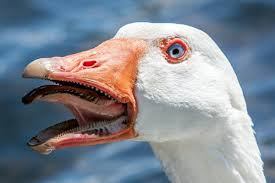
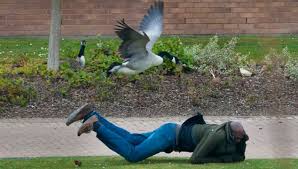
Exhibit A:

Unknown.jpeg

Experts at Rutgers University call this “Nuisance Behavior.” I’d say. “When protecting nests and goslings, geese can become aggressive. Attacks are rare, but they can cause injury to small children and pets.” That looks like a full-fledged adult to me, in full-blown duck and cover. Take note.

The Rutgerians explain that Canada goose flocks, which are what these are, head for places of “recreational purposes, such as parks, athletic fields, and shorelines.” (“Recreational purposes” — love that. Maybe geese enjoy hoops and the monkey bars.)

Next to knocking you to the ground, the geese bring all sorts of wonderful. “Accumulation of feces potentially creates a foul odor and slippery conditions, and these areas quickly become unattractive to people,” notes the panel with exceptional acuity.

We like, if do not love, the geese. Animals will be animals. Dookie is what they doo-doo. Yet the academics present a bona fide dark side: “Canada geese are carriers of bacteria and parasites that may be pathogenic to humans,” the most common being E. coli.

Rule No. 1: Do not pet the geese. Play it safe and don’t even look at them. They’ll probably give you the stink-eye anyway. No. 2: Wipe your shoes with a kind of horror-movie panic.

unknown1.jpeg
Jesus.

The more I learn about these geese the more they unnerve me. The more I want to purchase a crossbow. They are ornery, incontinent, complaining, belligerent and noxious. Plus, they’re homely devils.

Not long ago a story ran at thedodo.com with the headline “Why Are Geese Such Assholes?” The piece describes geese attacking humans, but implicates ducks, chickens and turkeys, too, as being “over the top,” says a woman.

“But as it turns out,” writes the author, “it’s actually for a very sweet reason. ‘The moms protect their eggs and young. The dads protect their families — their flock,’ ” says the same woman.

A few of my year-end enthusiasms

People, places and culture — little consolations — that are turning me on (saving me?) in the waning days of a sometimes unbearably tumultuous year …

  • Courtney Barnett — Guitar rock lives. Or so we can dream, a reverie persuasively advanced by grungy guitar-slinger Barnett, a pop-punk pixie who’s making some of the crunchiest, catchiest, folky-fuzzy rock around, music that sounds improbably lasting. A devout DIYer with a Grammy nod and fervent following, Barnett traces the raw, minimalist contours of Nirvana and the Pixies, with squalling distortion and a voice so uninflected that her Australian accent claws right through. That voice echoes the talk-singing and slightly nasal tones of Liz Phair, Patti Smith and The Hold Steady. Wincingly intimate, her jagged, jangly songs are shot through with personal drama and cutting irony. Often they’re downright hilarious. Choice cuts: “Pedestrian at Best,” “Debbie Downer,” “Avant Gardener,” “City Looks Pretty.” Watch her in concert HERE. And visit her squiggly world HERE.

courtney-barnett-elizabeth-weinberg-054.jpg

  • “Night Train”: New and Selected Stories by Thom Jones I didn’t even know Jones died two years ago. He’s one of my favorite short fiction writers and I kept wondering where in the hell he went, when he would publish again. I was alerted to his fate by this posthumous assemblage, plucked from Jones’ classic ’90s collections “The Pugilist at Rest,” “Cold Snap” and “Sonny Liston Was a Friend of Mine,” each worth owning, and cherishing. But with this chubby tome, featuring seven new stories, including the typically mordant title tale and spanning the biting, semi-autobiographical Vietnam War epic “The Pugilist at Rest” to the absurdist vermin mayhem of “Mouses,” Jones’ spare, sinewy, mean and bust-up funny realism comes into exhilarating focus. Fueled by grit, violence and the tough tenets of his hero Arthur Schopenhauer, this is essential contemporary fiction.

38496743._UY400_SS400_.jpg

  • Gin and tonic at Angel’s Share  Last month I drank a gin and tonic with a Japanese gin I criminally did not get the name of at Angel’s Share, the dark, elbow-jabbing speakeasy in New York’s East Village. It was the smoothest, lightest, tastiest G&T I’ve ever sipped, spritzed with a gorgeously un-cloying tonic that was gently fizzy, not nose-tickingly fizzy. The drink was a perfect alchemical mingling of alcohol and mixer, a frosty masterpiece. (If only I could afford the $17 elixir more than once a year.) 

gin-and-tonic-1

  • “I Am Dynamite!” by Sue Prideaux — Penetrating and punchy, with an attractively light touch for the weighty subject, Prideaux’s new biography of Friedrich Nietzsche, one of my dearest great dead thinkers — atheism! nihilism! iconoclasm! self-invention! and more furrowed-brow brilliance — is like literary windshield wipers, a slashing text of clarification and demystification. Despite the luxuriously daunting walrus mustache and monumental scowl worthy of a grumpus Mount Rushmore, the German polymath — yes: a prickly, willful malcontent — wasn’t the poisonous philosophical force we’ve been warned of. (For one, he abhorred antisemitism.) Reason reigned, until it crumbled amidst the famous crack-up that would kill him at age 56. Dead: first God, then him. 

31bookprideaux2-articleLarge

  • Istanbul — First come the post-vacation blues: the immediate despondency felt when you return home from a great trip. Crap, it’s over. And then there’s the afterglow: the crazy satisfaction and rapture you feel when the depression burns off. Damn, that was the best trip ever! I got back from Turkey last month and I’m basking in the afterglow. I was mostly in Istanbul, one of few cities that can hurl me into a dream state that’s as wondrous as it is ineffable, an otherworldly stupor of sights, sounds and flavors, pocked by the lovable multitude of stray dogs and cats and the unfailingly caring and splendid people. I still savor my Istanbul lodgings, the über-charming boutique Hotel Ibrahim Pasha and, in Cappadocia in Central Turkey, the Pumpkin Göreme Restaurant and Art Gallery, where the cheap and divine fixed menu delivers the allure of Turkey on many plates. If I sound a little intoxicated by it all, I am. 
turkey.jpg
Hagia Sophia, Istanbul
  • “Skate Kitchen” — The young women of this scruffy 2018 skateboard drama are hell on wheels — or is that Chanel on wheels? No way. The tribe of shredding female street teens are all about the clacking and scraping of boards on New York concrete, smoking spliffs and coupling with the opposite (or same) sex. The star here is bespectacled Camille (Rachelle Vinberg), a taciturn 18-year-old from Long Island who defies her mother for the skate parks and subways of Manhattan, where she’s promptly absorbed into a rowdy posse of all-girl skaters. The film is predictably sincere about teen rebellion equating to freedom and addressing, softly, teen politics and gender politics. Yet it works; it has kick. Crystal Moselle (2015’s hit documentary “The Wolfpack”) shoots with a meandering vérité camera, the city captured with gritty love and bloodied-knee realism, and music to match. The movie is on DVD and streaming. The trailer’s HERE.

event-9932572.jpg

  • Cubby the Wonder Dog — The perennially pampered pup, huge heart, small bladder, gives as good as he gets — hugs and snuggles, mutual adoration, tricks and treats, ribald chit-chat over Scotch and cigars. We love the mutt with our lives, no matter if he begs, bedevils the cats or poops and pees on occasion and off the Wee-Wee Pad. Spiritual creatures, dogs are fuzzy founts of friendship, besting humans, I’m afraid. I’m rotten when I wake up, until I see that damn dog wagging his curled tail and things fall into place. Mused author Thom Jones (see above): “Dogs have a way of finding the people who need them, filling an emptiness we don’t even know we have.”
IMG_0001
Cubby

A transcendent dogumentary

They scramble and scrabble, bark and bound, nap and nuzzle, making an indelible imprint on their human pack leaders whose love for canines is crazily uncontainable.

Photos: Netflix

“Dogs,” a terrific six-part anthology series on Netflix, lushly shot by a squad of bravura documentarians (Glen Zipper, Oscar-nominated Amy Berg, et al.) , is a frank and unadorned look at the relationship between man and mutt. Heartrending and heartwarming, little is forced or pushily sentimental. Episodes provide spectacularly detailed snapshots of person, place and pup, and you strangely come away with a broader comprehension of life itself. Which makes the series certified art. 

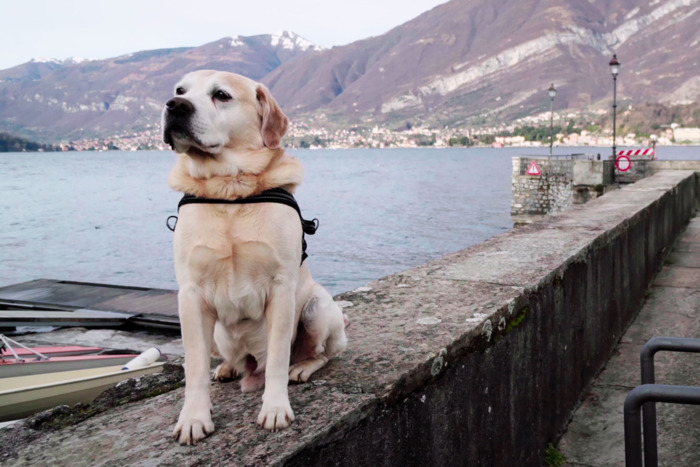
Emotions organically erupt from an array of situations, be it a Labradoodle service dog that detects seizures in its epileptic owner with whooping barks; an imperiled Syrian war refugee that happens to be a yowling Siberian Husky; an aging golden Lab in a quaint Italian fishing village that dutifully follows his master onto Lake Como where they drift together; the fabulously groomed pooches of Japan and the uncharted culture of competitive grooming; a sanctuary in Costa Rica that’s home to 1,200 free-range strays; or New York City’s exploding rescue-dog phenomenon.

Each textured 50-minute portrait is framed within the big picture of the humans’ lives, from political to familial, together with the dogs’ often precarious realities. Funny, galvanizing, sad, uplifting and even spiritual, “Dogs” shows how beautifully symbiotic the two entities, hound and human, truly are.

Watch the “Dogs” trailer HERE.

The ecstasy of the unleashed dog

Roxie! Roxie! Come on!

It’s dark out and the human couple are going crazy trying to corral their unleashed dog in the street near the park. Come on! they take turns beseeching the heedless hound.

The dog keeps circling them in wide arcs, mouth open, tongue wagging. He’s laughing at them. He’s having a ball. Catch me if you can! 

Exasperation streaks the air. This little game is growing old. The dog doesn’t know this. It’s cold, it’s getting late, dinner beckons. Ha! says the dog. He is free, free at last. And he isn’t wasting this hard-won opportunity of open-range rambling.

Roxie! (breathless) Roxie! (impatient) Come on! (aggravated) COME. ON. (hair being pulled)

The empty leash rattles, human feet stomp and scamper, doggie nails tappy-tap against pavement. The animal runs, feints, twists around, runs in the other direction. The humans are hopeless. 

There is no grand ending to this tableau. Eventually the drama fades, as it will. The dog is captured, the leash reattached. Feet shuffle away. If one listens closely, a dog pants and pants and says under his breath: Yes!

Hounding the dogs of Istanbul

She ambled into the cafe smiling, her rump gently shaking this way and that, tail shyly wagging. The cafe owner, a radiant globe-trotter named Nazan who’s lived in Istanbul for years, joyfully greeted the large brown mutt, patting her head and cooing her name. The dog then plopped onto the wood floor and rolled on her back, legs skyward. She remained in this posture for a good half hour. She looked ridiculous. And adorable.

1.jpg

The pup, whose name is Garip, is one in a gaggle of dogs and cats Nazan feeds and takes care of. Garip is a stray, part of thousands that live in the by turns picturesque and grungy streets of Istanbul, a massive, hilly metropolis bulging with 16 million people — the world’s fourth largest city and the biggest city in Europe. 

That means a lot of stray dogs, whose numbers rival the city’s seething stray cat population (lovingly profiled in the documentary “Kedi,” which I wrote about HERE). It’s a zoo out there, an amicable, well-behaved cosmos of bewhiskered street urchins that are mostly pampered by locals or, at worst, casually ignored. 

Animus towards the animals isn’t evident. I was in Istanbul for nine days this month and kept a close eye on the roving dogs and cats. The critters are almost universally plump and well-fed by caring, compassionate locals attuned to the spiritual sustenance of communing with intelligent four-legged creatures that reciprocate the love. 

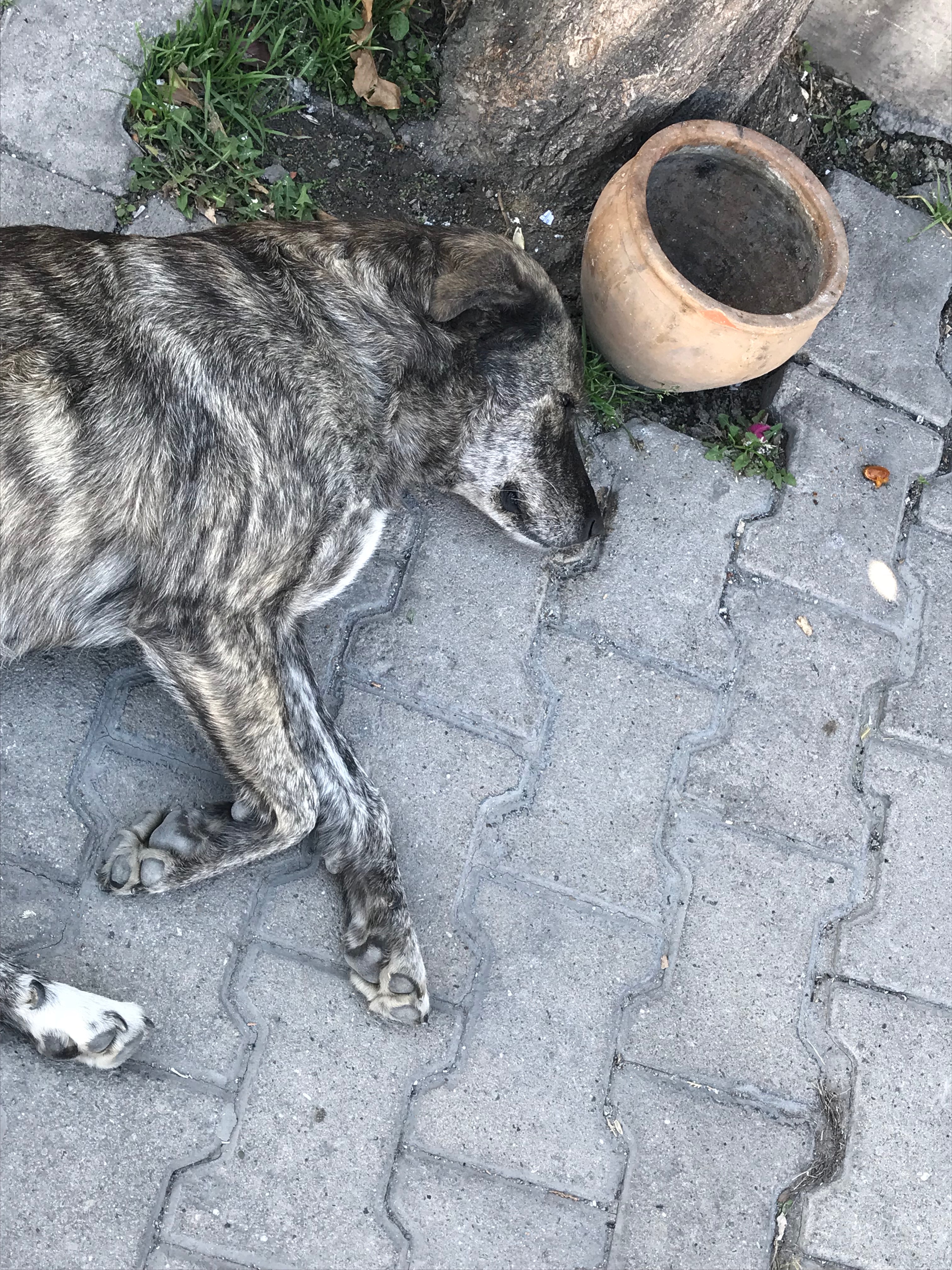
There they are, zonked out, on their sides or curled in balls, in the middle of plazas amid the bustle and noise of swarming tour groups that step over them. They loiter outside of restaurants, reliable fonts of food, and snarf up the dog kibble people put out for them on schedule. Nimbly dodging cars, some move in small packs but most ramble their neighborhoods as lone wolves, occasionally pausing to sniff one of their hairy cohorts’ rear-ends before tramping off down cobblestone paths.

The dogs calmly stroll around for snacks and strokes, but are rarely beggy. They don’t cadge, they don’t hector. They scarcely bark. Rather they befriend and endear. If you approach them, they nuzzle up to you, tail fanning, like any dog worth its canine credentials, yet leave you alone when you pull away (unless you call them to follow you, as I often did). Their independence is admirable, even noble.  

As the homeless can attest, street life’s a bitch. Hunger remains an imperative and untended wounds agonizingly fester. I met a dog with a ghastly slash around its throat and another with an oozing cut on its back leg that left a bright streak of blood down its fluffy cream tail, looking like a giant paint brush dipped in red paint. Many stray dogs are registered by the city, signaled by a tag on their ear that means they’ve been fixed and vaccinated. I think that’s swell.

At the cafe, the marvelous Mitara Cafe & Gallery, Nazan visibly adores her furry charges, her courteous quadruped pals. She speaks to them, strokes them, invites them in for a bite and respite from the heat or cold. When I handed her a tip for my lunch, Nazan assured me it would go to food and medical care for the animals. That was all right by me.

A motley gallery of some new Istanbul friends:

2

3.jpg

4.jpg

5.jpg

P1030568_1.jpg

6.jpg

7.jpg

P1030243_1.jpg

8.jpg

Radiance of the pet rat

If you want to see a rat drink beer, click HERE. I’ll wait.

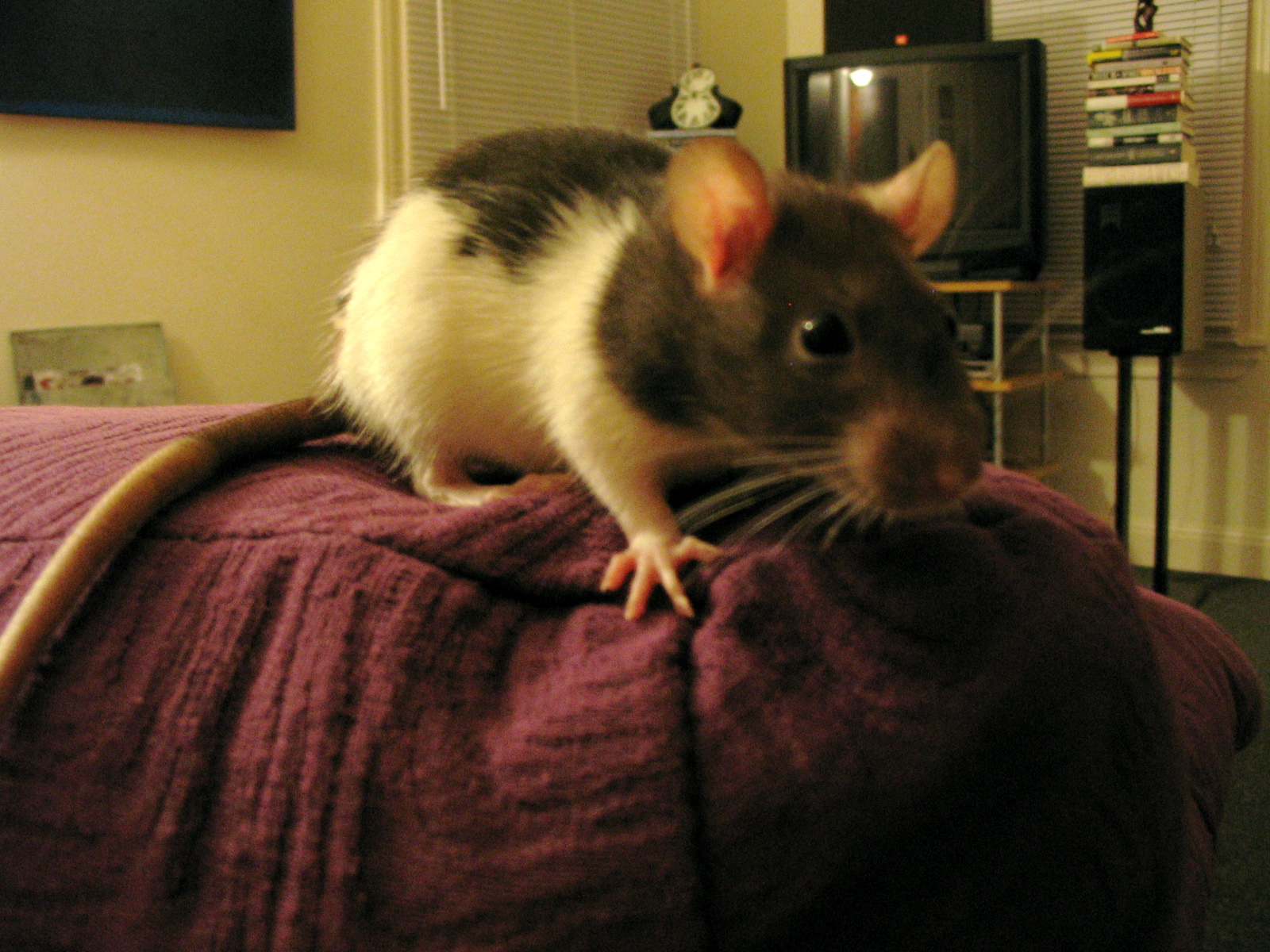
That’s Becky, my long-ago pet rat, whose both alarming and comical omnivorousness knew no bounds. Seriously: zero. 

She’d chomp broccoli, rubber bands, towels, chickpeas, cheese, books, dog food, t-shirts, pizza, gecko lizards and crawly cockroaches. She’d guzzle wine and the above beer. 

IMG_2471
Becky shares pizza with a pal.

She once bit into a small tube of Super Glue. In a miraculous stroke, the glue was so old it had evaporated. The alternate results would have been grisly, even fatal, I’m certain.

Rats, like honey badgers, don’t give a crap.

But they are as smart, sweet, social, endlessly curious and affectionate as any animal, be it a dog, cat, piranha or wildebeest. 

They play and wrestle, come when called, chill on your shoulder, build crafty nests from newspapers and less innocuous sources (like the fluffy guts of your sofa or that pricey box of Q-Tips), play fetch, groom with OCD avidity, swim, delight in belly rubs lying on their back, and so much more. Oh, and hoard. How they hoard. Hide all small valuables. (Becky stole my watch once. It took days to find.)

They’re like super pets that delight, entertain and nourish the heart and soul. As I’ve quoted in these pages before, rats are “cleaner than cats, smarter than dogs.” Whoever said that is just about spot-on and probably lives with a thousand rats and the authorities are onto him or her. A reality TV show is coming soon.

IMG_1385
Becky going head-first into the glass, tippling a fine (cheap) cabernet.

Pets hold spiritual qualities with their power to elevate and expand one’s being. But, like dogs and cats, rats do it with a special, irresistible elan, magnetism and downright adorableness. Still, it’s different. For one, they don’t fart.

With their silky, curling pink paws (tiny starfish), twitching whiskers, itty-bitty tongue and translucent ears, gently nibbling buck teeth and enormous hearts, they’re lovable buggers.

Those thick wiry tails that whip around, made strictly for balance, are something else. The creatures squeak in pleasure and, science has proven, giggle like little girls. When treated right, Prozac they don’t need. (Though they’ll eat that as well.)

Like sharks, rats are exquisitely evolved specimens. Get this: They can collapse parts of their skeleton to squeeze under doors and through tight cracks. I’ve seen it. They are quicksilver with fur, superheroes with a super power, lacking only a cape and a ridiculous moniker.

IMG_1359.jpg
Still life: Becky

An image I cannot shake: Becky drinking wine by dipping a paw in the liquid and licking the paw, like a cowboy drinking from the Rio Grande after days without water. (Her boozing was judiciously supervised — I only let her get a nice taste.)

And yet … well, rats will obliterate you. With a life-span of an average of two and a half years, they desert you far too quickly. They become your best friend and then, like a relationship gone bad, they end it, they vanish. They die. Usually it’s a respiratory disease or, more likely, cancer. It rips you to shreds.

Becky’s death was excruciating. I spent a lot of time and money on her, all of it beautifully worth it. Still, she had to go. She’s probably tearing up heaven, nibbling angel tunics, nesting in holy beards, gulping sacred wine. Being a worthy rat, not giving a crap.

P1010152
RIP Becky

Istanbul’s citywide kitty corner

Goddamm cats. 

All over Istanbul, they ramble and climb, pounce and shinny. These homeless street beasts tackle each other in play; hiss and strike in combat; scrounge and scavenge for the next meal. They barge into shops and curl up in chairs and beg for food at sidewalk cafes with various degrees of rough-hewn etiquette (claws, paws and purrs).

000e4198-800.jpg
From the film “Kedi”

Most importantly, they insinuate themselves into the homes and hearts of many of this huge city’s denizens, soft souls who often regard the felines with an almost spiritual gravity, spurring the occasional display of soggy sagacity: 

“Dogs think people are God, but cats don’t,” a cat-lover says in “Kedi,” a documentary about the thousands of stray cats of Istanbul. “Cats know that people act as middlemen to God’s will.” 

I’m pretty sure I have no idea what that means.

“Kedi” (cat in Turkish, though it sounds a lot like kitty) is a well-received film from last year that lavishes the love — there’s not one hater in the whole picture, no one shooing away a cat with a broom — on Istanbul’s famed felines. It feels like a short film stretched taffy-like into a 79-minute feature that’s at once indulgent and superficial, while pleasant and lightly informative in an ingratiating PBS sort of way.   

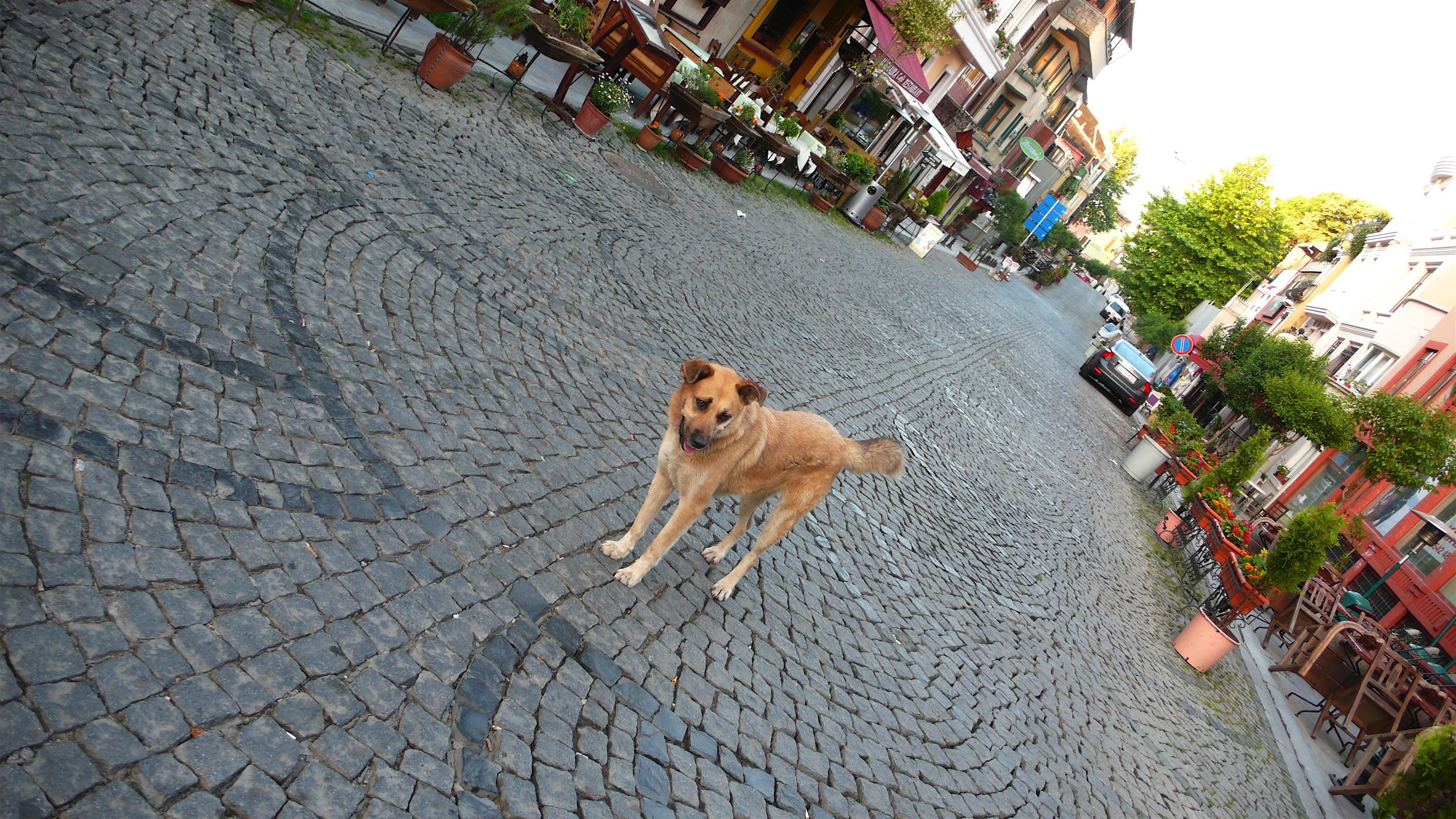
Someone in the movie declares the homeless kitties are the city’s soul, but on my few visits to Istanbul I saw far more stray dogs than cats. Like this winsome fella, who became my pal for nearly a month:

P1020788.jpg
Istanbul, 2008

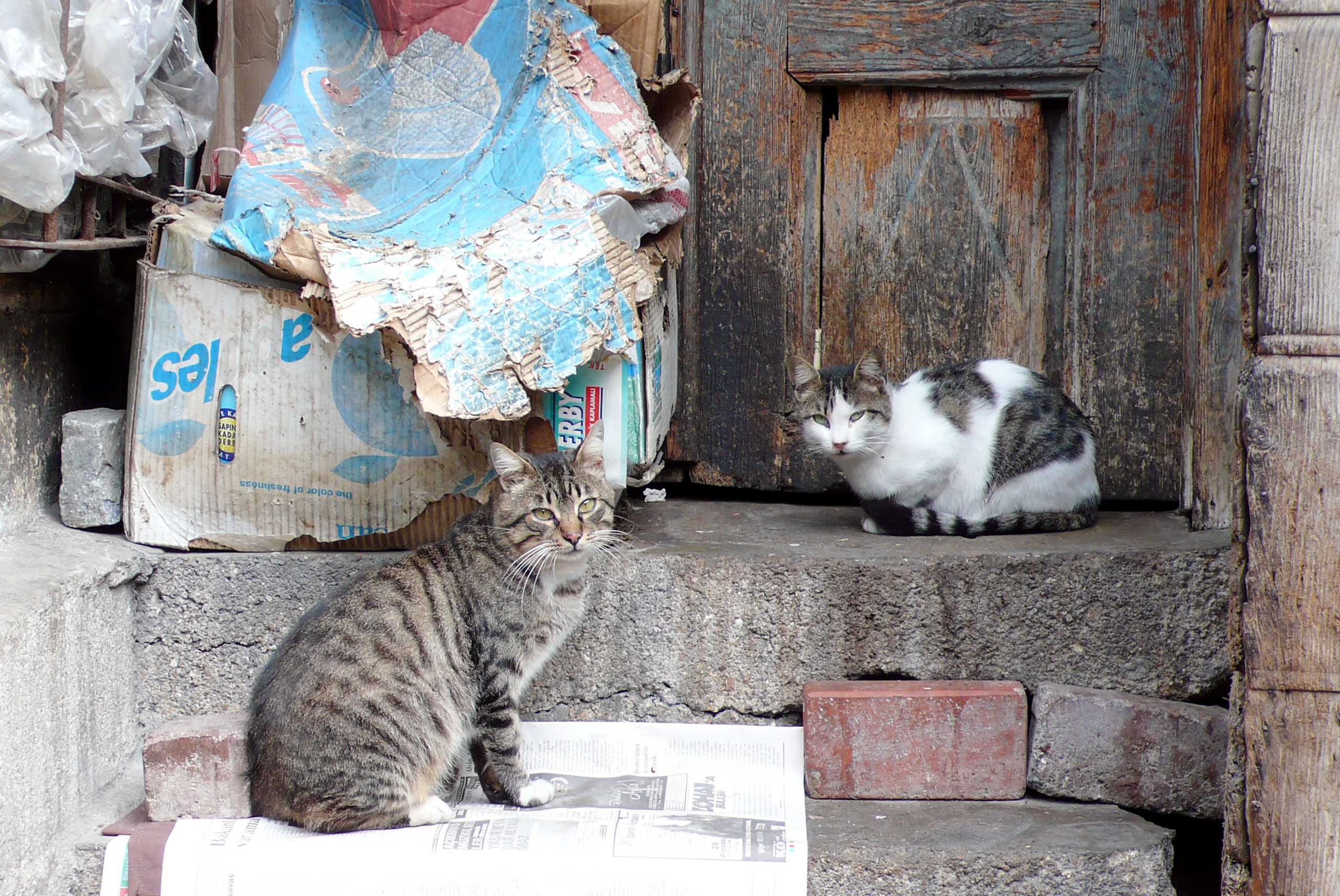
Still, I certainly saw many cats, such as this leery pair of scrappy, well-fed survivors:

P1030495_1.jpg
Istanbul, 2008

In “Kedi” cats inhabit rooftops, cardboard boxes, markets, cemeteries, trees and awnings, and the film paints artful visions of the kitty stars, from Bergmanesque close-ups to whisker-level Steadicam action of running, jumping and chasing (mice beware).

The cats comprise a motley array, and I expect to see the kitty cavalcade when I return to Istanbul next month — toms, calicos, tortoiseshells, mamas nursing their babes, cats with patterns like a painter’s palette, or, one of the stars of “Kedi,” a female hellion dubbed “the neighborhood psychopath.”

fat cat.jpg
From the film “Kedi”

Inevitably, kitty characters and personalities emerge, inescapably anthropomorphized. “It’s so fascinating,” says a simpatico fishmonger of the cats who not so mysteriously follow him around. “They’re just like people.”

We have two cats. They’re just like people: indifferent, solitary, narcissistic, wise, wily, incessantly hungry, jerks.

Yet in “Kedi” the humans are like grandparents who spoil their charges. A shopkeeper compares a kitty comrade to one of his children as he brushes her fur while she looks off into heavenly ecstasy. Another man compares the company of cats to the soul-soothing power of prayer beads.

Our cats provide the soul-soothing power of pooping, crotch-licking gremlins.

Taking care of these furry street urchins is, they say, their duty. They are cat custodians, and for many of them the animals supply a divine connection that is healing, curative and therapeutic.

How is this possible? one may ask. Cats purr and meow, but are otherwise as mute and inscrutable as the Sphinx. They scamper off a lot for no damn reason.

“I imagine having a relationship with cats must be a lot like being friends with aliens,” muses a dreadlocked woman in the film. “You make contact with a very different life form, open a line of communication with one another, and start a dialogue.”

As someone who talks to the animals, from cats to rats, I love that.

(“Kedi” stuff, including trailers, can be seen here.)

Of mouse and man

It’s hot outside, I’m hot, the dog is hot, the backyard plants are hot, and that reminds me, I need to water them. But not until it cools down, around dusk, say. Then that luxuriant jungle of exotic flora will get a soaking and gratitude will beam from the firmament.

A heat wave they’re calling this. It’s only 93 degrees right now but, coupled with sopping humidity, it feels like cruel triple digits. Within a minute of stepping below the blazing skies and into the muggy soup you break a sweat, rivulets down the cheeks, puddles in the small of your back. It’s disgusting. Right, this isn’t New Delhi or Bangkok, but still. Anyone who says they like this weather is either a liar or a twit or both.

Speaking of delightfulness, I recently destroyed a mouse. I did not want to, but my conscience got the better of me. So I held it by its gummy-worm tail and dunked it in the toilet and held it there until it drowned. It took fewer than two minutes, if that. Still, it made me kind of sick.

Why such horror? Thank the accursed cat, the tubby charcoal-gray tom with the white Hitler mustache. There he was, playing with a squirming, grievously wounded mouse, brown with a pink belly, in the dining room. It was the natural world in action, a realm Woody Allen, noting the pitiless animal food chain, dubbed “an enormous restaurant.”

20121211-105322.jpg

One might applaud the cat for capturing and maiming a crafty little house mouse, a ravaging rodent. I’m not giving ovations. I’m known for protecting and pampering animals, a latter-day St. Francis sans the amazing tunic, sneaking the dog table scraps and keeping sweet, smart rats as long-term pets. I rescued a baby squirrel from the maw of a snarling cur and a mauled bird from a godless outdoor cat (the bird didn’t make it).

And so I snatched the writhing, oddly bloodless mouse from the cat’s paws, carrying the creature by its silken tail. I wanted to save it, take it outside and let it scamper to freedom.

It scampered, but sideways, in a corkscrewy dance, clearly in pain and despair. It got away, crippled, ruined. I went back inside, crestfallen, wishing I had put it out of its misery. I figured it’d be out there, suffering a slow death for hours, maybe days.

Hours passed before it struck me to go and look for the mouse in the summer blaze. I promptly found it. It was motionless, hopefully dead. But when I touched it, it spun again in corkscrews, its whole body knotting in pain. This would not do. I pinched it by the tail, took it to the bathroom and snuffed what was left of its tiny life.

It was fast, but horrible. I held it moments longer than necessary to make sure the poor animal was out, gone. Then I carried the still, matted body back to the yard and set it behind the shrubs and covered it in mulch. I only wish I had done that five hours earlier.

These things aren’t simple. Even a mercy killing is troubling, against my nature. Pesky vermin — big deal, you say. Big deal, you bet.

Yet there’s no moral here. I don’t like what I did. Not one bit. But I’d do it again. In a heartbeat.

The dog’s search for meaning

It’s hot outside and the dog gallops up the stairs to the very warm attic, panting with a slashing smile, tongue flapping, teeth bared, eyes wide and wild, tail wagging. He looks “on,” like he’s just hit the stage to burst into a blazing showtune, or just won the lottery. He’s so very jazzed to be here. 

Realizing he’s just exerted that much energy only to run into me at the top, me, ordinary me, who has no food for him, just pets and pats for the good doggie, he quickly calms and collapses on the floor, seals his salivating maw, exhales one huffy breath through his nostrils and resigns himself to the humdruminess of life. Rip-off, he’s certainly thinking.

The dog is not alone in his deflation. The heat rises to the cozy attic and no fan, no matter its wattage, can disperse the vapors. But it’s an existential heat, too, one we all know at some point, here and there. The dog is in the throes of it, stretched out in languid dismay.

IMG_0829
The dog, gazing at me, pondering his existential predicament.

And so am I, to an extent, though I am not physically sprawled out, that would be ridiculous. Still, the dog and I are in moody concert, encased in ennui, a kind of life weariness, if just for this time. Trying to write, I turned to reading my book, “NW” by Zadie Smith, when the dog jogged up to say hello and discovered the groin-punch of nothingness.

Right now, his glass — or his water bowl — is half-empty, to borrow the old metaphorical measure of the optimist vs. the pessimist. He is slowly realizing that life isn’t a continuous (tennis) ball, that letdowns lurk, that existence precedes essence, that not all chew toys are created equal. These are things I learned years ago, that we make our own happiness, shape our own lives, that free will, not divine intervention, reigns, and that disappointments and satisfactions are divvied up about 65/35. The dog doesn’t know all this yet. He is a troubled soul.

In anthropomorphic terms, he’s displaying a glint of neuroses. Somewhere Freud and Jean-Paul Sartre are high-fiving over the notion that psychological and existential angst can be traced in a furry quadruped.

The dog seeks the meaning of life, this is plain from his searching brown eyes, furrowed brows and the alarming way he drags his butt across the carpet. Freud’s pleasure principle manifests itself in his frequent calls for belly rubs. Sartre’s theory, which states that our individual responsibility in defining our own lives is almost debilitating in its enormity, has the dog a little down. Knowledge of his own mortality is something of a buzz kill.

At times like this, a good, jaunty walk won’t cut it. Scooby snacks — nope. A ride in the car? He snickers. But the dog is resilient, and getting his tail wagging is not a demanding task. As with me, these moods of brooding despair and overthinking are intermittent. He’d rather eat a good meal or harass the cats than dwell on the insane, undeniable meaninglessness of his puny little life.

And the next time he does, I plan to start reading to him from Sartre’s daunting opus “Being and Nothingness” or Freud’s “The Future of an Illusion.” And when I myself plummet to pondering the philosophical conundrums, the dog can read to me from — this is an actual book — “Chicken Soup for the Soul: What I Learned from the Dog.”

Life’s too short for sulking. I know this. However, the dog, whose years are on the seven-year scale, meaning he’s about 21 to 28 in human years, resides on a shorter leash. But this canine savant is swiftly learning one of the essentials, no matter how fur-raising:

Self-realization — it’s a bitch.