Animal magnetism

There’s a pet pig on our block that makes everyone who sees it do swiney swoons. 

Trixie, the pink lady with black spots, who’s shaped like an overinflated football or a throw pillow, clicks down the sidewalk, nibbling grass, snout and low-slung belly to the ground, attended by three canine pals of various proportions. 

It’s quite the gaggle, and neighbors can’t resist snapping photos, giggling and petting, as if Miss Piggy and Babe had shown up in the hood, snorting for truffles. (Watch the pig and her posse HERE.) 

You don’t often see people with squirrel monkeys wearing tiny doll diapers anymore — animal abuse is finally unfashionable — but you do see the random exotic critter with its human comrades, like Trixie, who will grunt chunky oinks to amuse the masses. 

George Clooney and Miley Cyrus have famously made happy house pets of pigs, and if they can do it … well, not so fast. Some fancy Google footwork will tell you pet pigs are very expensive to acquire and maintain. And they’re space-hoggers, tending to get ginormous and push you out of your bed and eat all your Froot Loops, despite contradictory claims by Wilbur and Piglet.  

I admit I know little about our local piggy, except that she’s a trendy potbellied or “teacup” pig, a pink porker with evolved social skills and an impressive tolerance of dogs and piping children. She’s housebroken and uses a litter box. Also: she doesn’t like carrots. 

But she appears to like people, probably because they lavish her with, say, corn cobs and tequila — and because they don’t eat her for breakfast. Trixie basks in the human attention. Like a baby panda, she’s a star, a crowd-pleaser, eliciting oohs, aahs and ha’s. Pig as people-puller.

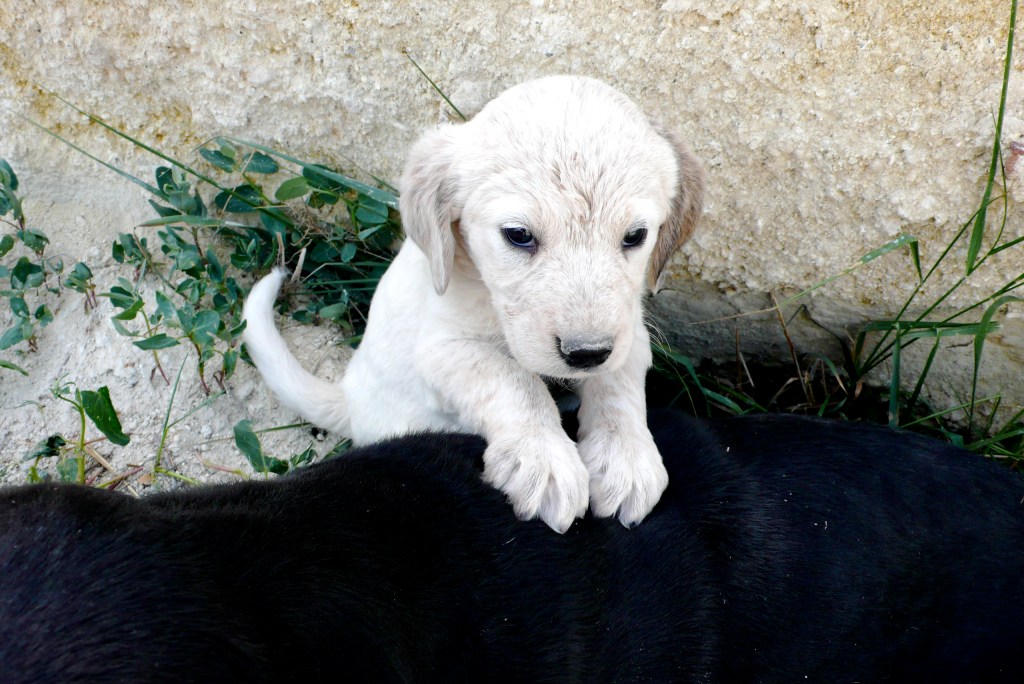
Which brings me to an acquaintance I knew in Texas, an esteemed novelist and journalist, whose new book happened to earn a rave in this weekend’s New York Times. Actually, it brings me to his dog, specifically his sweet blonde Lab puppy, whose name escapes me. It’s been a while.

We were at a backyard party — my then-girlfriend Laura and I, the above writer, and a slew of good friends — and the writer brought his attention-starved puppy (with his attention-starved self). My girlfriend sprung to the dog, talked to it and stroked it. (This is the girlfriend who once dumped a beer on me. On purpose. Because she’s a genius.)

Writer guy watches Laura, and says this about his special new puppy: “He’s a real pussy magnet.” The writer beams a smutty smile. Laura’s cooing turns to booing. She looks like she bit into a lemon. I’m near enough to hear, but say nothing to writer fella, a burly chainsmoker, disheveled in look and manner. I don’t like broken thumbs. 

This digression about the magnetic puppy is to show how animals can reduce people to marshmallows, and make others crack profane for a wan laugh. (Is the dog also a penis magnet? Har-har.) It’s to show how human and beast forge singular bonds, be it pup or pig, because we all possess big, needy hearts, and everyone likes to be pet. And licked. 

I once had a crazy, lick-your-entire-face puppy that I would call an everybody magnet. Everybody loved her and she loved everybody and there was no stopping the mutual gush of adoration. She was in a perpetual frenzy that caused her to lick your tongue if you weren’t careful. A French kiss, Fido-style. (Was she a tongue magnet?)

It’s hard to picture Trixie, she of the stripper’s name and porcine puss, kissing anything that isn’t slathered in ranch dressing. There she is, flat snout fluttering, hoofs tap-dancing on the concrete in bountiful suburbia, surrounded by fawning people (the fans) and curious dogs (the flummoxed), and showered with organic love. I don’t know about my neighbors, but I think this humble pig is nothing short of a me magnet.

Ten great indies you may have missed

So my movie-watching in this Covid cocoon is drastically spotty — I have yet to see Korean-American family drama “Minari” or Anthony Hopkins as “The Father,” both Oscar winners — and I find myself returning to favorite films, classics new (“John Wick”) and old (“The Thin Man”). 

What’s stuck with me of late is a passel of small newish movies, from “The Rider” to “Eighth Grade,” that could easily be missed by casual viewers, despite the pictures’ celebrated exceptionalism. 

I’ve culled 10 semi-obscure indie pearls from the past several years, 2013 to 2020, a few of which I’ve gushed about before, and many coincidentally released by A24, the hot independent distributor that’s crushing the competition with curatorial savvy. 

I’ve seen the following titles at least twice, except for “Uncut Gems,” whose mad, relentless intensity has, two years later, left me spent. It’s a bruiser. And a winner.

Onward. These are 10 great indie films highly worth your time, in order of release:

  • “Locke” (2013) — A desperate everyman (the brilliantly intense Tom Hardy) is in the driver’s seat, literally, for the movie’s entire 85 minutes. Yes, he’s driving the whole time. The camera never leaves him as he negotiates via smart phone personal tumults on the winding highway of life. It sounds grueling, claustrophobic and static. It’s not. It’s gripping, hypnotic, and exhilarating.
  • “The Witch” (2015) — The smartest, creepiest, most stylish horror picture in years, Robert Eggers’ frightfully immersive period chiller lands us in woodsy 1630 New England, where a family is torn apart by the disappearance of one of its children. Suspicions target eldest daughter Thomasin (wide-eyed Anya Taylor-Joy of “The Queen’s Gambit”), who may have flirted with the dark arts. Then there’s that menacing dancing goat, who’s not quickly shaken. Beware Black Phillip
  • “Tangerine” (2015) — Oh, is she pissed. When transgender hooker Sin Dee hears that her boyfriend and pimp cheated on her while she was in jail, she pops with glorious fury, tracking down him and his new lover and exacting a kind of sassy L.A. revenge that includes an inordinate amount of hair pulling. Move over, she’s stomping the sidewalk in teetering heels, cracking wise and hunting heedlessly. Sean Baker shot this scruffy, no-fi, Day-Glo gem on an iPhone, with stunning results. Raunchy and hilarious, it shimmers like a smoggy SoCal sunset.  
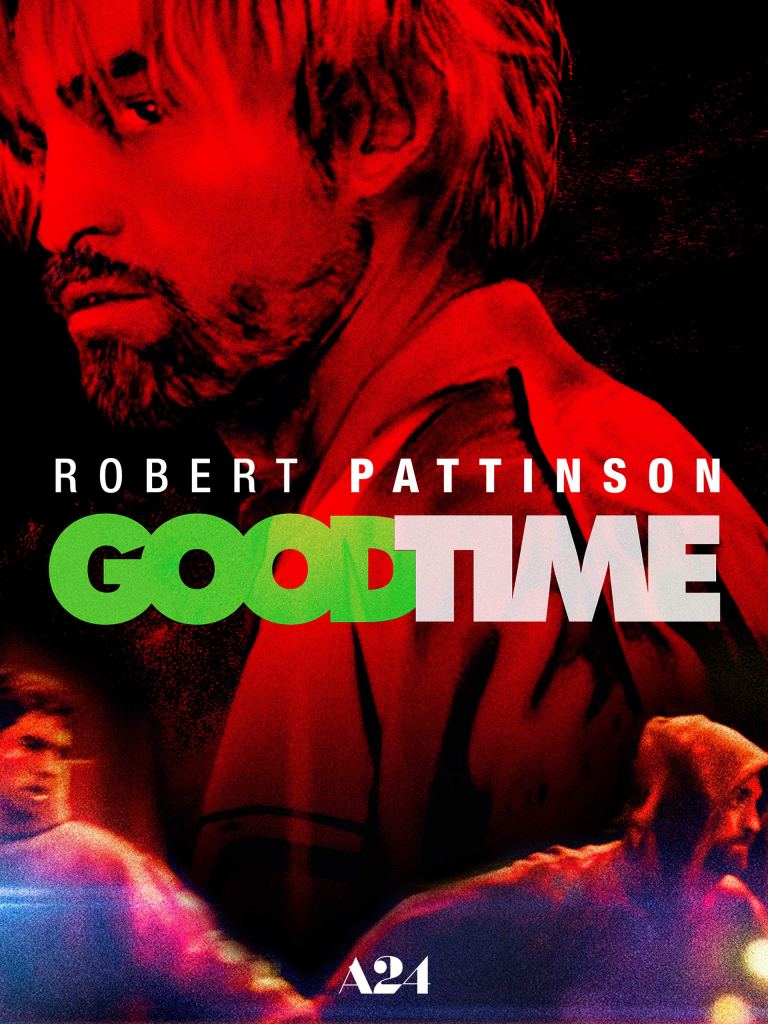
  • “Good Time” (2017) — With flickers of the young Pacino and De Niro, Robert Pattinson is revelatory as a scrappy, dangerous two-bit criminal who’s on the lam after a comically/tragically botched bank robbery. The feisty film, by the gifted Safdie brothers, pulls you on a rousing run-for-your-life tumble through nocturnal Queens that’s at once loose-limbed and sweatily taut. A raw portrait of redemption and ruin, pocked with ground-level authenticity, it thrills as it harrows.
  • “The Rider” (2017) — Chloé Zhao’s understated drama moves at the painstaking clip of everyday life, much like her recent Oscar-winner “Nomadland.” But little is everyday here: Brady (non-actor Brady Jandreau) is a rock star of rodeo bronc riding, until an accident in the ring leaves him slightly brain damaged. He’s forced to give up the only life he knows, outside of breaking colts, which he does with a calm, tough-love Jedi mastery. The film is a fine-grained portrait of the pains of getting back on your feet after life-altering disappointment, about rebuilding your spirit after it’s been body-slammed and shattered. Easily the most moving film of 2017, “The Rider” is pure distilled emotion, beautifully shot on the Dakota prairie.
  • “Eighth Grade” (2018) — Her chin and forehead dappled with islands of acne, 13-year-old Kayla is stuck in the excruciating pangs of adolescent metamorphoses. A smidge pudgy, she is awkwardly pretty, a butterfly half-jammed in her chrysalis, squirming to soar. Her two front teeth, jumbly and bucky, will break your heart. Played by the perfect Elsie Fisher, Kayla is the magnetic lead in Bo Burnham’s indie wonder. She’s an arpeggio of teen neuroses, a raw nerve that keeps getting pinged. It’s about today’s kids, glued to their phones, glazed in technology, and forging one’s individuality amid willful clones who gussy up their insecurities in narcotizing conformity. Kayla, a hero for the times, lives by her words, the dictums she professes on the videos she so bravely records on her phone. It doesn’t always work out, but watch her grow mightier upon each posting.
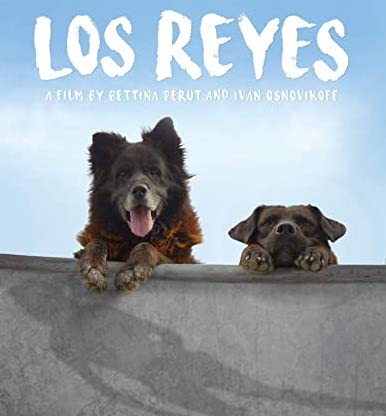
  • “Los Reyes” (2019) — In this inadvertently poetic, profoundly affecting doc from Chile, the camera veers from the skateboarding youth who cruise sinuous bowls to examine the laidback lives of BFFs (best furballs forever): Football, the elder, creaky-jointed cur, and Chola, the frisky female chocolate Lab mix that occasionally tries to hump a large pillow. Dispensing with anthropomorphic cutes, this astonishingly patient film relies on the dogs’ alternately mirthful and mournful antics, quizzical gazes, the way they doze unfazed among the rackety-clackety skaters, or a simple shot of Chola standing statue-still in the rain, getting soaked with the patience of a penitent.
  • “Uncut Gems” (2019) — Adam Sandler is off the hook, and it’s enthralling, like a buzzsaw to the head. In full serio-comic mode — he’s funny and foredoomed — Sandler plays a blingy, dingy New York jeweler who sees dollar signs even when there aren’t any. When he makes a reckless, big bucks bet that could set him up for life, he gets ensnared in a web of business buds, family and foes who all want a piece. Writers-directors the Safdie brothers (of the above “Good Time”) sustain such a frenetic frenzy in this chamber dramedy, you may feel wrecked.  
  • “My Octopus Teacher” (2020) — The octopus cautiously unfurls a tentacle like a flower blooming in a time-lapse photo to the human hand before her. It glances the hand then suddenly sucks it, gently pulling it toward her. The moment carries the pitter-patter of courtship. Could this be love? “That’s when you know there’s full trust,” says the owner of the suction-cupped hand, free diver and filmmaker Craig Foster, in his rare doc. A viral smash, the film won this year’s best documentary Oscar. It’s something else: a simple tale about a grown man befriending a gorgeously slithery cephalopod in the swaying kelp forests of South Africa. Quietly instructive, it goes from lush nature doc to poignant octo-poetry.
  • “Saint Maud” (2020) — Poor innocent Maud. A reclusive nurse seeking Christian devotion after a vague trauma, she becomes the caretaker of an aging dancer dying of cancer. Detecting weakness, and death, Maud (a pretty, pallid Morfydd Clark) kicks into high gear, striving to save her ward’s soul from hellfire with an eerie resolve straddling the sacred and profane. Supernatural phenomena unfurl with a tang of Christian creepiness. Nothing is obvious in Rose Glass’ weird spiritual thriller, especially an amazing climax that will leave you snickering in squirmy, baffled awe.

The pleasures and perils of reading outside

Reading outdoors is an ambiguous business. I’m an outdoor-reading veteran, a pastime that unites something I adore — reading — with something I barely tolerate — the outdoors. 

Yet occasionally a switch of scenery is required and I’ll dust off a patio chair at a spiffy sidewalk cafe and do the old curl-up with a crisp new paperback. Way back when, I’d try to read old-school newspapers while lounging on the beach, furiously fighting the wispy pages to stay put in the seaside gales. Without fail, a page corner would poke me in the eye and a full page would slap my cheeks. Repeatedly.

That’s how reading outdoors can be ambiguous. I was reminded of this today, a partly cloudy, 64-degree afternoon, when I fancied a book and a breeze would be a peachy idea. I grabbed my reading and hit the backyard deck thinking what a clever boy I am. 

After recently tearing through two new novels — “Whereabouts” by Jhumpa Lahiri and “Second Place” by Rachel Cusk, both ethereal, psychologically astute gems — I’m onto the Ralph Ellison classic “Invisible Man,” which even in its early pages is searing. Propulsive, savage, uncompromising — perfect for a glimmering spring day.

I lasted about 25 minutes out there. The clouds kept stubbornly shifting, sealing off the sky for jacket-ready cool, then opening to a sunscreen-ready radiance. Hopscotching moods, it was atmospheric ADD. 

I sniffled as puffs of wind released flurries of pollen over me, and my bookmark fluttered into the fresh, fragrant mulch. The chilly breezes, swaying shrubs and twisting trees, sent me back inside with grumbling memories of beach vs. newspaper. 

Mother Nature was playing with me, smudging the border between winter and spring, which had its calendrical kick-off March 20. (Summer — insufferable with its perplexing pleasures — arrives June 21, an annual day of mourning.) How else do you explain today’s crazy, veering temperatures? Nature knows how to confound. Watch how she drives meteorologists bat shit.

And she knows how to boomerang me back inside, onto the cushy Eames chair, body gently reclined, feet up, “Invisible Man” in hand, and not a mote of dusty golden pollen to spur the sneeze and wheeze.

This tiff with the elements isn’t over, and its history is rich. Just last week I was reading the Rachel Cusk novel on the deck in fine balmy air, the only irritant a black hairy bumblebee the size of a condor that decided it wanted my friendship. It buzzed and bothered; I swung and swatted. The encounter was a truce.  

I coulda been killed out there. What next while I’m reading amidst flora and fauna, burly bumblebees and erratic skies? Rabid chipmunks? A biblical hail storm? The next-door neighbor trying small talk over the fence? (I’ll take rabid woodland animals over that.)

Summer’s thermal terrors are fast coming and I will spend most of the hot months indoors, hands on the latest talked-up book or dog-eared classic. Inside it’s dark and dank, the only breeze wafting from A/C vents, the only deluge the torrent of words I’m reading, the only vicious creature a scruffy terrier mix named Cubby, who can be effectively disarmed with a hearty belly rub or a good Jack Reacher thriller. Much like me.

Fur, feathers, and folderol

On the About page of this blog, I caution that my writings here are “forever random and rambling.” Rarely has that been so true than right now … 

*  *  *

The Tao of Cubby 

Cubby, the über-mensch of mutts, scurries across the wood floor, his nails recalling the tip-tap of a typewriter. (If only he could actually type. That would save me tremendous carpal tunnel distress.) 

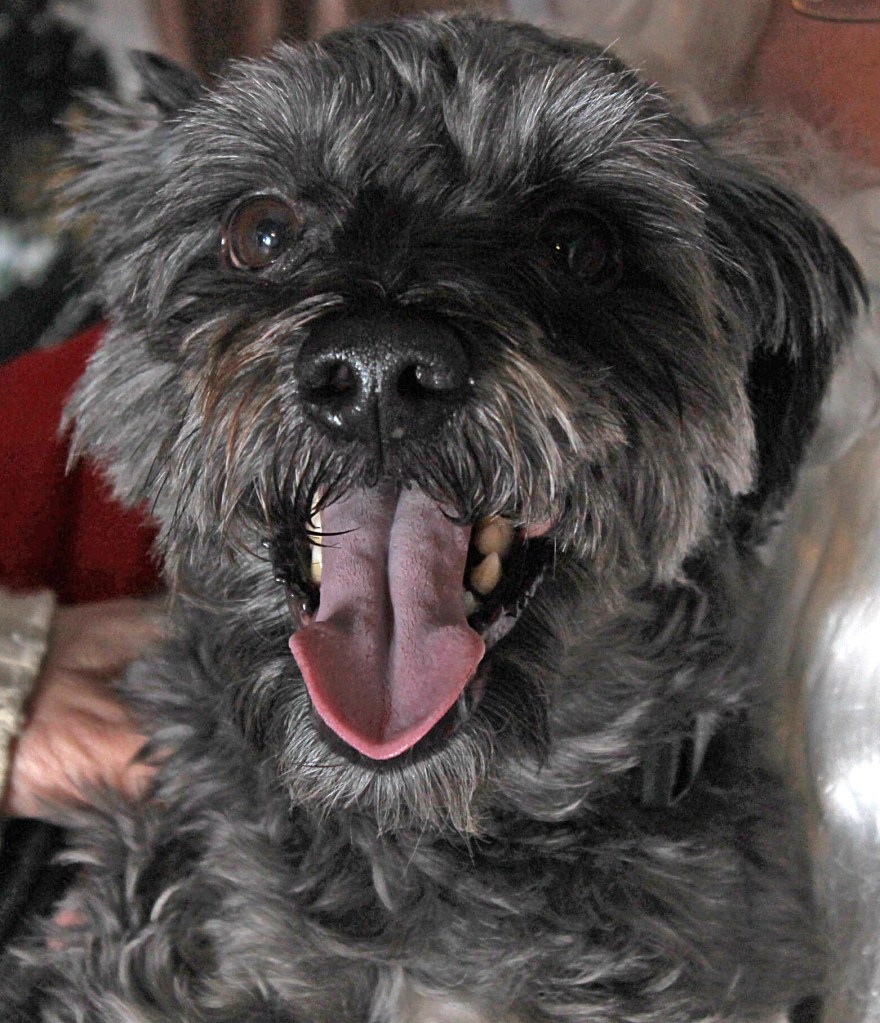
He is fleet, balletic. Though he resembles a gray Oscar the Grouch — bodily bedhead, articulate brows — the dog is chipper and civil, venting frenzied yaps only when evolutionarily expected (read: Amazon). 

Cubby is also mindful and meditative. He follows the flow of the universe and the whiff of tacos. Part Chinese sage, part Scooby-Doo, he adheres to the Taoist tenets of simplicity, patience, compassion, and the canine tenet of raw sirloin. 

Spiritual but godless, Cubby finds solace in Sartre’s “Being and Nothingness” — self-deception! free will! — but not in Scripture. He likes to quote Socrates: “I am the wisest dog alive, for I know one thing, and that is that I know nothing.”

For Cubby, things just are. Why this, why now? As Cubs might say, Because. Just because.

*  *  *

In anticipation of Easter, a short tale featuring baby chicks

When I was five, we had a pair of baby chickens, a female (yellow) and a male (black). They scuttled around our backyard and slept in a wood and wire coop, also in the backyard. The birds were strictly decorative. We had no intention of consuming their flesh.

One night a possum tried to get the chicks. Hearing the ruckus, my Dad went outside and our black Lab followed, charging and half-killing the hissing marsupial. Distressed by the injured animal — drama in suburbia — Dad tried to put it out of its misery using a broomstick (why not a spatula, or a straw?). 

He failed, unsurprisingly. The possum was either unconscious or playing dead. Because the next morning the creature was still moving in the garbage can in which it was placed. A man sans a plan, Dad left it there to die on its own, to the collective horror of his family. 

Soon after, we gave the chicks to a cousin who cared for them on his sprawling farm. I’m sure they were delicious. 

*  *  *

Speaking of chickens …

Braided with wisdom, wit and woe, Jackie Polzin’s “Brood” is a deceptively slight novel about a woman caring for a small brood of chickens as she copes with the personal tragedy of a miscarriage. 

Not sold? Be, because Polzin’s debut is sublime. It’s steely, and gentle as a breeze.

The chickens are both main characters and peripheral walk-ons in this compact book, so don’t fear a poultry-centric story. In fact, there’s not much of a story at all. Deeply contemplative and minutely observed — à la Jenny Offill (“Weather”) and Marilynne Robinson (“Gilead”) — Polzin limns her nameless narrator’s life with by turns clinical realism and dazzling impressionism. There is much to learn about chickens, and life.

The precision of the prose, so nipped, tucked yet vital, is a marvel. Even the chicken passages, with their homely brown eggs, scratch feed and scaly feet, are poetic reveries. A human- and chicken-scale miniature, “Brood” loses none of its emotional texture next to its lo-fi humor. It’s one of the most lulling and pleasant books I’ve read in a spell. 

*  *  *

The larger worth of small talk

Strolling down the sidewalk, you run into an acquaintance — someone you know only faintly, yet well enough for a stop and chat; say, your mechanic or a few-houses-down neighbor — and you find yourself beaming hello, how are you, and before you know it things have devolved into vapid chitchat, the dreaded small talk.

Small talk eats the soul — the empty jawing about weather, work, kids, traffic, assorted gossip and platitudinous pleasantries. Defined as “polite conversation about unimportant or uncontroversial matters,” small talk reeks of the banal, the trivial, the sort of airy transactions saved for your Uber driver, that guy you went to high school with and haven’t seen in years, or the faux-cheery barista you encounter each morning. 

Still, while it can be painful, what with the groaning predictability of the exchanges, small talk serves a purpose: it fills the dead space we all fear. It’s a buffer, prosaic padding, a time-killer of minor moments that would otherwise be awkward, excruciating, or both.

Words. They will save us. No matter how crudely utilitarian.

Hounding the strays of Istanbul

With a camera trained at butthole level, the street dogs of Istanbul bustle across the city, romp in parks, negotiate congested thoroughfares, brawl, chase cats, gambol, loiter and partake in public humping. 

This is a day in the life of the Turkish city’s derelict dogs in the patient, panting documentary “Stray,” released today. The film is a quiet, lolling chronicle of both canine and human behavior — the mutual respect and tolerance is moving — done minus narration. With few dramatic accents, though alive with built-in pathos, “Stray” is almost uninflected — unvarnished life through a studiously objective lens. What is spoken comes from the pups’ playful pantomime.

I’m on good terms with the stray dogs of Istanbul, having befriended, pet and fed several during my four trips to Turkey. The hounds are plentiful in the rolling, seaside city and are protected under a no-kill, no-capture policy. Each dog is registered, one of their ears pierced with an official tag. One of my favorite canine pals wore a red tag on her floppy left ear, leading me, with a poverty of imagination, to call her Red Tag.

They get you like that, these streetwise mongrels. Locals are mostly kind to the wandering, well-behaved dogs, leaving out bones and food and, when annoyed by them, gently shooing them away from storefronts and doorways. It helps if you have a soft spot for animals. My mushy affection led me to feed and pamper the friendly hounds, which I happily photographed. More than just memories, the animals were also sweet, licky mood-enhancers, a pack of therapy pups just for me.

Here’s where to watch “Stray,” and here are some of my street-dog snapshots.

My good pal Red Tag
I fed them cans of tuna.
Red Tag, again

In space, no one can hear you woof

Sometimes I want to shoot the dog into outer space. Suit him up, slide on a big round helmet, and strap him into a tin-can capsule, ready go, boom

Really, I want to keep old Cubby on terra firma, safely earthbound, away from martians and pesky space debris. Still, when he barks and wails and scratches the paint off the door when visitors knock, I think: Jupiter, yes. Jupiter would be a fine place for a dog park.

Such was the fate of Laika the space dog, a small, blameless pup who was hurled into orbit for the Soviet space program in 1957. A stray street mongrel with a skittish gaze, Laika was really three animals in one: a dog, guinea pig, and sacrificial lamb. 

Laika the cosmic canine

Many critters had flown to space before Laika — monkeys, mice, mutts — but she was set to be the first to orbit Earth. Probably quaking with terror, surrounded by lab-coated apparatchiks, Laika was loaded into the satellite Sputnik 2 for an experimental flight to prove that a living passenger could survive a launch into orbit and weightlessness. 

It was a suicide mission, or more accurately, murder. Laika was never expected to survive; once they sealed the capsule, the Soviets knew she was toast. 

And toast is practically what she became. Within hours of her spectacular orbit, Laika died from overheating and panic. Even the Soviets were mortified: the true cause of her death was not made public until 2002. They initially said she was euthanized with poisoned food before her oxygen ran out, a classic, blundering cover-up. The dead dog floated around up there for six months. She was incinerated when Sputnik re-entered Earth’s atmosphere.

The world mourned the pioneer pooch. She’s gone down in lore as an unwitting hero, nicknamed Muttnick, and honored with commemorative stamps, dolls and children’s books. A monument to Laika was erected in Moscow in 2008.

Muttnick. I like that. Maybe, with a nod to David Bowie, she’s Major Dog. Or Apawlo 13. Or Chewbarka. Never mind. What matters is that Laika lived as a Moscow street hound and died for Soviet sins. A would-be martyr — Joan of Bark — she’s a helpless symbol of the sketchy side of science and progress.

Cubby should be so symbolic. But he’s of a different breed, and an entirely different kind of nobility. And though he wouldn’t last as long as brave Laika in space — I give him two, three hours tops — he’s ready for lift-off and would do NASA proud.

I could see him as a stowaway on the Mars rover (did you say Rover?) Perseverance, which is up there sniffing for signs of ancient Martian life. Or he might hitch a ride to the Moon on one of Elon Musk’s radical SpaceX rockets, joining other civilians who are nutsballs enough to pay millions to pierce the wild blue yonder. That would be fitting, because the dog is definitely daft, a total and irrevocable space cadet. (Fun facts: Laika means “bark” in Russian. Cubby means “preposterous” in any language.)

I’m glad Cubs is still on Earth to provide happiness and headaches, and I hope he sticks around before zipping off to Andromeda. Laika, well. She did the impossible for all mankind. She gave us enlightenment. She cracked opened scientific universes. She kissed the stars and the heavens, where she now eternally resides.

Laika’s monument

Loving animals, doggedly

As I was scratching the dog’s belly today, he squeaked out a tiny fart that I excused him for since, as far as I know, he can’t speak English and isn’t versed in basic human etiquette. I kept scratching and he emitted customary groans that I tend to interpret as vague doggie ecstasy. Sounds coming from both ends, très stereophonic.

Cubby the Wonder Mutt likes to lie on his back, supine, head tossed back, eyes squinched, rear legs spread-eagle, his pee-pee out in all its centerfold glory. He’s a good dog, as they say — always “good,” never “great” or “fabulous,” why is that? — even if he resembles one of those diabolical pygmy hellions, an Ewok. Compare, contrast: 

OK, not exactly, but sometimes I glance at him and scream in fleeting horror.

Animals, like ol’ Cubs, are always on my mind. For some reason, I’ve been watching more YouTube junk than normal and it seems like half the videos are prefaced with ads for heart-curdling, soul-gutting animal causes. 

They’re the kind that show emaciated puppies and starving bony horses and shivering dogs with so much eye goop they can barely see. It screws everything up. I don’t even feel like watching the video I was set to watch after those damn commercials. 

They get me every time. So there I go, helplessly dropping cash into the coffers of PETA, the Humane Society and other groups, like the crazy one for abused donkeys in India and the World Wildlife Fund’s stupendous adopt an octopus program. 

And I recently joined the ASPCA’s modest monthly membership, which amounts to an obscenely affordable 63 cents a day. I told them to save resources and keep the free t-shirt, which would only wind up as a dust rag. Pretty soon, thanks to all my donations, I’m going to own about 14 complimentary animal calendars that I really do not want.

I think I’m so nuts about animals and their welfare because I was raised with a rotating menagerie of pets: dogs, cats, rats, turtles, fish, rabbits, hens, salamanders. And I was scarred by “family” films like “Old Yeller” and “Where the Red Fern Grows” that only make you love animals more and hate sadistic filmmakers. Even “Charlotte’s Web” planted a screwdriver into my heart, and she was just a crummy spider. (Even now I don’t kill spiders. I scoop them up and plop them outside.)

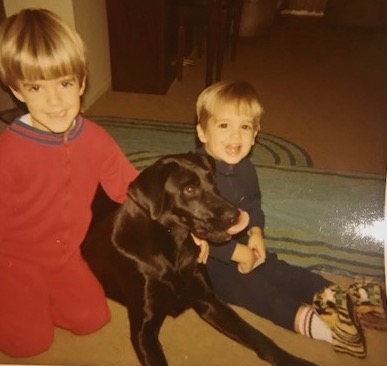
I hate to rate my animals, but since Cubby is in the other room probably flashing the neighbors on his back, I present the best dog my family ever had, a black Lab dubiously named Spooker. That’s her below, the one flicking her tongue. (I’m the one with the righteous tiger slippers; my brother Craig sports the scandalous red onesie.)  

Usually when I profess my love of animals I essentially mean dogs. I care a lot about monkeys, mice and manatees, but I can’t say I love them. Even as tykes, you can see how much we love our big black Lab, our companion, our third parent, protector and pal. Dogs are furry clichés: loyal, cheerful, eager, bursting with unconditional love, even if that means the occasional, totally misguided leg hump. That’s a pretty good package. 

Cubby fits the bill. He sort of represents all animals for me — penguins, porpoises, platypuses, the random narwhal — and so by caring for him I’m embracing the whole animal kingdom. 

That sounds super corny, and re-reading that sentence makes me shudder. But it’s true. Cubby contains multitudes. He’s small in body, big in heart. He lavishes affection on us and only asks in return walks, food, and heartfelt belly rubs, the kind that make him groan and wheeze like a 79-year-old with emphysema. Sometimes if you press just right, he produces the tortured warbling of bagpipes. Then he slowly passes out.

A good dog indeed. No. A great dog. How about a fabulous dog.

Freud, meet Fido

And so the dog, small and fleecy, plops down for a nap on the couch, and he is out. Which means at any moment the show will commence, an alternately startling and amusing bugaloo of twitches and flinches, pop dancing by way of late Katharine Hepburn and robot street performers. Cubby, the peerless pup, is about to dream. And it’s a marvel. 

Behold, he’s off. Stubby legs kick and quiver. Furry eyebrows twitch. Lips tremble and emit muffled woofs and squeaky whines. As he hyperventilates, his rib cage rises and falls, a small basketball being pumped. It appears he is running in place. Outstanding.

Until, that is, I recall how traumatic dreams can be. Mine, at least, are nocturnal ordeals, dark and gnawing, filled with ragged memories and wraithlike faces from prior lives. They’re about 35% anodyne and 65% anguish. I typically awake from them with a small head throb, a daub of sweat, an aftertaste of dread: the dream hangover. I might as well have met Freddy Krueger.

dog-dreams-about-you-dreaming-dog-750x440
This is not Cubby, but you know he’s ecstatically dreaming.

So, no matter how entertaining his dream exhibitions are (oh, and they are), I worry about the substance of Cubby’s nap-time reveries. What’s he woofing at? Why the whine? Is he chasing, or being chased? Is he yawping at the postman, as in everyday life, or is he after an intruder? Is he playing with us, scampering off with his crazy bone?

Whatever is happening, he is assuredly dreaming. Anyone with a dog knows they do this. One doggie site says “dogs are similar to humans when it comes to sleep patterns and brain wave activity. Like humans, dogs enter a deep sleep stage during which their breathing becomes more irregular and they have rapid eye movements (REM).”

Bonus factoid: “Research suggests that small dogs dream more than larger dogs. A Toy Poodle may dream once every ten minutes while a Golden Retriever may only dream once every 90 minutes.” Meaning, compact Cubby is a dream machine. (“We infer that dogs can have nightmares, too,” adds the American Kennel Club, with worrying certitude.)

Sometimes Cubby’s slumbering exhalations sound heavy, husky, demonic. Is he having a nightmare, or is he being naughty and promiscuous? Maybe he’s rocking a death metal show. “The dream is the liberation of the spirit from the pressure of external nature, a detachment of the soul from the fetters of matter,” wrote Freud, the original cigar-sucking dream guru. He added: “Dreams are never concerned with trivia.”

So maybe Cubby isn’t just frolicking with a bone during his alarmingly kinetic dream states, which resemble nothing less than a buckling seizure or a zippy electrocution. I’ve said here that Cubs is a deep character, a wise old soul, vigorously seeking meaning in his transience, pawing to the bottom of the mysteries of the conundrum called life. Merely chasing cats is unworthy of his elevated subconscious; sniffing Bowzer’s butthole is extravagantly beneath him.

The id, that deep sea of sloshing neuroses, engenders the happy and the hellacious and everything in-between. In sleep, you might trip joyously in love — or you might be scorched to a pork rind by a weirdly random dragon. Closing eyes, placing head to pillow, is a fraught crap shoot. 

Cubby’s not dreaming about dragons, we’re certain of that. His purview is relatively minuscule. Despite his rich introspection, I’m pretty sure he doesn’t know what TikTok, J.Lo or The Rock are.

I’m also sure I will never know what populates the dog’s leg-twitching dreamscapes. In the end, it doesn’t matter. Yet with Freudian reflection, I will ponder these deep enigmas. Let me sleep on it.

Dog Splayed Afternoon

CubbyThis is Cubby, über-hound, chillaxing on the cool wood floor on a balmy late-spring day. Sprawled out in sharp symmetry, almost X-shaped, he looks like a doggie cookie-cutter, or the puppy piece in Monopoly, or a pendant dangling from the neck of a dog lover of strenuous devotion. In a word, he looks amazing. Like an artwork Jeff Koons could only dream of, or a taxidermist’s dampest fantasy. He would look stunning on a mantel, a small, regal canine, with a muzzle oh-so fluffily bearded.

Cubby knows none of this. If he had heard the above during his spread-out siesta, he’d be all, “Enough. Leave me alone. I am napping on the cool floor, dreaming of squirrels, fire hydrants, and fat kielbasas. You are a ridiculous man. Be gone … zzzzz.”

What we have here is a tableau titled, say, “Dog Day Afternoon.” Or “Dog Splayed Afternoon.” Some kind of post-modern still-life William Wegman could appreciate in all its unposed dogitude. (Although, of course, Wegman meticulously poses his long-suffering Weimaraners, what with their fancy clothes and anthropomorphic exertions.)

So what we have is less Wegman and more found art. Cubby, surely warm under that carpet of curls, located open range in the cool foyer, plopped down and stretched out from his head to his pom-pom tail. He exhaled and sighed: Goddam.

And this is how we found him, still as a statue, a statue of such accidental perfection it might be worth lots of money. Certainly, because his preternatural pose notwithstanding, Cubby, that cuddliest of canines, is worth a million bucks.

Buyers?