A quote on confidence

I‘m reading “There There,” the smashing debut by Tommy Orange, and it’s a novel of ambient beauty as well as a penetrating portal into urban Native American culture. It’s a world at once broken, squalid and, by the skin of its teeth, empowered. The writing swings, crackling with observational fire. This aside about a young woman’s curdled confidence oddly hit home, like a lightning jag. It throbs with truth and woe.

“Something she always notices is how much confidence and lack of self-doubt people have. Take Harvey here. Telling this terrible story like it’s captivating. There are so many people she comes across who seem born with confidence and self-esteem. She can’t remember a day going by when at some point she hadn’t wished she could burn her life down.”

9780525520375

More highly finicky reading

I’m the worst. I’m impatient. I’m mean. I’m discerning. I have taste. When it comes to books, I am ruthless. I’m even worse with movies. Most don’t stand a chance.

I have put down four books, closed them for good well before the 100-page mark, in the past two and a half weeks. Suffused with sorta-guilt — ah, not really — I swan to the next book, hoping for gems and genius. I am an optimist garbed as a very dark pessimist.

Mining this small stack I located gold — the books are by literary heavyweights, after all, and they do often gleam — but I also found fool’s gold, which I will not abide.
41wp7sr5mbl-_sx321_bo1204203200_.jpg

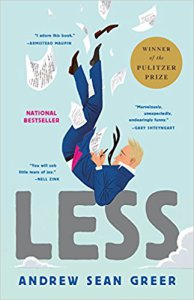
The yeasty comic novel “Less” was the chintziest of the four. It won the Pulitzer Prize this year for fiction. What are you gonna do? I read, I shrugged, I shut. 

With wan humor tangled in wry, hackneyed observations about gays and straights and executed in lite-beer fizzy prose — “a quick, easy summer read,” said one critic, as if that’s a compliment — “Less,” by Andrew Sean Greer, reminded me of a gay-themed comedy series on HBO, one of those middling shows no one watches. The novel, says Greer, is “a love story, a satire of the American abroad, a rumination on time and the human heart.” Thanks, Mr. Greer, for defining “generic.”

I read some 75 pages of “Less” and I must agree with this writer who actually finished the book: It’s “chock-full of gay clichés that feel outdated, and the tone is generally one of superficial, unearned cynicism that sometimes drifts into cattiness.”

Yup. Even The New York Times, in an upbeat review, called it “too sappy by half.”

Zadie Smith writes with a magic wand; her language and storytelling gifts are things celestial (and she makes me gush floridly). I’m an ardent fan of her fiction — “White Teeth” glitters — but her 2012 novel “NW,” a typically vibrant latticework of people and place, didn’t grab me by the lapels, no matter that I don’t have lapels. As exceptional as the writing is, the story has a matte finish when I yearned for glossy. 

Unknown.jpeg

Wade into Rivka Galchen’s hailed stories “American Innovations” and it’s clear why she is one of America’s hottest young fiction writers. She’s crisp, funny and fanciful, with a biting originality and a smidge of the surreal. But as much as I appreciated the collection, I put it down. I almost fell for it, then fashioned a one-word review: meh.

While there’s no shame in not finishing a book — I can’t believe people who feel they have to get to the last page even if it’s a slog — I can’t help but gulp and blush at this failure: Edith Wharton’s 1920 Pulitzer-winning classic “The Age of Innocence.”

I did not get far in the rather slim novel. I found the prose cluttered and perfumey, chokingly Austenian (though without the giggling), and fustily 19th-century for my contemporary palate. (Oddly, I loved Wharton’s 1911 “Ethan Frome.”) Wharton weaves long, highly populated sentences of lace and crushed velvet, many of them woozy and lovely.

Problem: I kept picturing doilies. 

Antidotes to these literary losers are a trio of new fiction by some of the most acclaimed women authors around: “Kudos” by Rachel Cusk, “How Should a Person Be” by Sheila Heti and “Homesick for Another World” by Ottessa Moshfegh. 

51zp1zkt38l-_sx328_bo1204203200_.jpg

I’m knee-deep in that last title, a 2017 collection of stories by the precocious Moshfegh, whose novel “Eileen,” a darkly off-kilter character study, impressed and troubled me — just how I like it.    

Moshfegh’s stories are spare and wicked, laced with a perfect pinch of transgression, enough to fill an eye-dropper. They are comic and you laugh, but there’s dried blood in them. 

Some excerpts:

“He thought that the drugs we bought in the bus-depot restroom were intended to expand his mind, as though some door could be unlocked up there and he would greet his own genius — some glowing alien in glasses and sneakers, spinning planet Earth on its finger. Clark was an idiot.” 

“Our repartee would be rich with subtlety and sarcasm, as smart and funny as mid-career Woody Allen. Our fucking, like Werner Herzog, serious and perplexing.” 

“I hated my boyfriend but I liked the neighborhood.”

To me, that is dreamy writing, all at once blithely sardonic, intelligently aloof and drolly perceptive, attached to the stinger of a scorpion.
Writers die. The art doesn’t.

The great authors Tom Wolfe and Philip Roth died eight days apart this month. I heard nothing about the startling proximity of the loss of two of America’s towering writers. And nothing about the theoretical third death of someone else famous when two celebrities die back-to-back. Nothing about that ghoulish trifecta.

th.jpeg
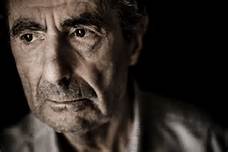
Philip Roth, died May 22.

If that make-believe third fatality does indeed occur soon, and he or she happens to be another English-language writer, which giant will fall? Toni Morrison? Stephen King? Alice Walker? John Irving? Ian McEwan? Cormac McCarthy? None of these literary lions are spring chickens, excuse the mixed animal metaphors.

Such morbid business is the stuff of cocktail party parlor games, slightly sick, if innocuous: King? No way. McCarthy is next, just watch. He’s 84! Or some such scintillating blather.

th-1.jpeg
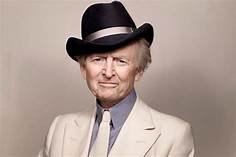
Tom Wolfe, died May 14.

When a popular artist dies it makes a loud rip and a mighty hole in the cultural fabric. A sometimes-fan of Wolfe — I couldn’t get through much of his work, but “The Right Stuff” and “Bonfire of the Vanities” thrilled with reportorial breadth and linguistic virtuosity — I am a confirmed Roth acolyte. His death briefly shook me and cast me in a blue mood. Celebrity passings rarely have this effect on me. I took it personally.

Yet the sting faded, and I was gladdened to see book shops and libraries erecting proud shrines to the author of “American Pastoral,” “Sabbath’s Theater” and “The Human Stain,” small mountains of hardbacks and paperbacks as monuments to genius.

640_P2010011

I’ll get back around to the books, but for now I’m revisiting the PBS documentary “Philip Roth Unmasked,” an incisive portrait for the budding Rothian, a reminder of what made the novelist a colossus and worthy of the Nobel Prize that so shamefully eluded him.

I should say I was also hit harder than usual by the deaths last year of novelist Denis Johnson and playwright-author-actor Sam Shepard. Johnson was a marvel, his seminal short stories “Jesus’ Son,” the hypnotically chiseled “Train Dreams” and the haunting Vietnam epic “Tree of Smoke” funny, hallucinogenic and wildly transporting.

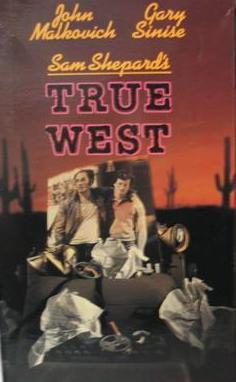
sam.shepard.true.west.vhs.s.2.JPG

Shepard, who I met and interviewed (see here), was always a personal favorite. An artist disguised as a road-weary bohemian cowboy, his acting was consistently spot-on (he was ace in the 1983 movie adaptation of Wolfe’s “The Right Stuff”) and I’m deeply partial to his 1980 play of fraternal fury “True West,” a raging comic masterstroke about bad blood, beer suds and the prickly craft of screenwriting. 

Watch it on YouTube, starring John Malkovich and Gary Sinise as riotously bickering brothers. It will, like Philip Roth at his best, knock you out. When you come to, the whole world will be a little bit different.

The next 5 books I’ll be cracking open

Far before I’m done reading a book, I know firmly what volume I’ll be cracking next. I keep an ever-replenished list of titles. Something is always ready, waiting, like the upcoming course at dim sum. 

As I wrap up “Inseperable,” the excellent new biography of Chang and Eng, the original Siamese twins, I know what’s next. I’m taking a worn paperback of Kurt Vonnegut’s archly prophetic classic “Mother Night” (1962) on my trip to Amsterdam next week. Vonnegut’s breezy cynicism, swirled with empathy, a hesitant optimism and measured absurdism, feels just right for airplane reading.

After that, 10 books weigh down my list. But half of them get to jump the line. These are the next five books I’m plunging into:

516B2M5L8XL._SX324_BO1,204,203,200_I’ve read three of Zadie Smith’s fine novels — “Swing Time,” “On Beauty” and, the best of the bunch, “White Teeth” — so I’m revved for “NW, her acclaimed 2012 tragicomedy about a slice of London and how its human patchwork intersects and interacts. The intellectually rangy Smith has a sorcerer’s touch, conjuring crowded, complex stories that can be mesmerizing jumbles: granular, moving, funny and expansively human.
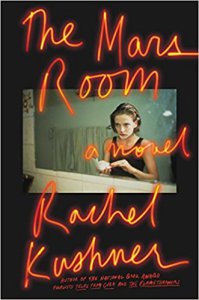
If Rachel Kushner’s wildly hailed fiction “The Flamethrowers” didn’t blow me away, it was still a fresh, propulsively entertaining epic about a young woman whose love of motorcycles, art and action hurl her on a picaresque through boho New York and radicalized Italy. In her new novel, the hotly awaited “The Mars Room, Kushner pinballs from the pitiless realities of a women’s prison to those in a San Francisco strip joint and beyond for a seedy and violent, harrowing but humorous skip through sordid demimondes. Raves wreathe the book already. “Heartbreaking and unforgettable … it deserves to be read with the same level of pathos, love and humanity with which it clearly was written,” gushes one reviewer.

41kvpzruegl-_sx329_bo1204203200_8.jpg

Our Shakespearean laureate, that lord of the Bard, Harold Bloom lasers in on one of the canon’s preeminent tragic figures in “Lear: The Great Image of Authority, a thin but typically volcanic volume that’s part of a series of portraits, including Iago, Falstaff and Cleopatra, titans all. Lear, fallen monarch, disgraced father, receives the full Bloomian treatment, a richly personal, prickly and cerebral exploration of the character and his enduring mythic stature.

Andrew Sean Greer’s “Less, winner of this year’s Pulitzer Prize for fiction, totally evaded my radar. I’m not even sure I’d heard of the novel until it cinched the award this month. I know so little about the bounding satire that I quote here from the dust jacket:

41wP7sR5mBL._SX321_BO1,204,203,200_

“Arthur Less will almost fall in love in Paris, almost fall to his death in Berlin, barely escape to a Moroccan ski chalet from a Saharan sandstorm, accidentally book himself as the (only) writer-in-residence at a Christian Retreat Center in Southern India, and encounter, on a desert island in the Arabian Sea, the last person on Earth he wants to face. Somewhere in there: he will turn fifty. Through it all, there is his first love. And there is his last.”

OK, I’m hooked.

A writer friend of mine won’t read Ottessa Moshfegh’s fiction, citing a gruesome quotient of blood and bodily fluids. I don’t know what she’s talking about because I’ve never read Moshfegh. Her stories “Homesick for Another World” have been called “eerily unsettling … almost dangerous, while also being delightful, even laugh-out-loud funny.” Characters are “unsteady” and the “grotesque and the outrageous,” a la Flannery O’Connor, “are infused with tenderness and compassion.”

51zp1zKT38L._SX328_BO1,204,203,200_

She has “a big mind, a big heart, blazing chops, and a political acuity that is needle-sharp,” crows the publisher. “The needle hits the vein before we even feel the prick.”

I think my friend is crazy. This sounds amazing.

And on things bookish, I finally discovered a well-tread site fully worth your while: Literary Hub. Brain-cracking interviews, essays, reviews, profiles — I won’t go on about it; just check it out.

On readers: quote of the day

I know a handful of adult humans who, without a whiff of shame or embarrassment, blithely admit they don’t read. This is not only startling to me, it’s seismically appalling.

They (our president included) don’t get the appeal, they have no use for words or language or a particular type of storytelling that is expressly non-passive, that’s indeed near-immersive. I’m trying hard not to sound snobbish about this. It’s like the sports fan whose passion eludes the non-sports fan or the punker who has no interest in Bach or Bartok. We are who we are.

This bibliophile will never understand, and trying to understand the bookless simply exhausts me.

What I am — and here I quote one of the most apt descriptions I’ve seen — is “a person who considers reading an emotionally instructive and intellectually legitimate form of lived experience.”

That’s Alice Gregory reviewing Lisa Halliday’s new fiction “Asymmetry,” which I plan to grab once I finish Evan S. Connell’s smashing 1959 novel “Mrs. Bridge.” Gregory’s account of the serious reader made me even gladder to be one and sadder for those who are not.

What they are missing is incalculable.

shutterstock_112499642.jpg

It’s OK, you don’t have to read that

Idea of the week: “Some real talk: most writing isn’t worth consuming.”

This both striking and self-evident statement was plucked from a purposely (and pleasingly) provocative essay titled “The Case Against Reading Everything,” by Jason Guriel at The Walrus. It’s a good line, because it’s irrefutably true, and because it comes from a site called … The Walrus.

books4.jpg
No way.

Guriel is impugning the moldy axiom that all honest writers must “read widely” — that is, indiscriminately, catholically, voraciously, hoovering the latest hardbacks, pounding down poetry, gobbling it all, from Bellow and obituaries to Cervantes and cereal boxes. It’s the old “balanced diet” theory. He’s not having it.

Neither am I. It’s an unrealistic ideal, reading it all, though I freely admit to reading obits and cereal boxes. In my twenties, I tried strenuously to read wide and far, from the gilded canon to contemporary classics, and I about hurt myself. The volume of verbiage is simply too monstrous, overwhelming and intimidating. I now embrace my blindspots (“Infinite Jest,” sci-fi, “Ulysses,” anything by J.K. Rowling) and guiltlessly shun writers I don’t feel a quick kinship with.

In college, a tough-minded journalism professor chuckled when I told him about the stacks of books taunting me and my ironclad will to conquer them. “You must be selective,” he said, and I deemed him very wise.

To this day, with impunity, I put down books that don’t regale me 110-percent, even if I’m half-way through them. Long ago, I literally dropped in the garbage John Grisham’s “The Firm” with only 50 pages out of 544 pages left. (A bratty gesture, I know, yet one unencumbered with regrets.)

It’s the quality, the intensity, not the breadth of one’s reading that counts. It’s about focus and concentration — concentrating on the works and writers that nail your sweet spot and eschewing inconsequential distractions. Says Guriel:

“The call to ‘read widely’ is a failure to make judgments. It disperses our attention across an ever-increasing black hole of mostly undeserving books. Whatever else you do, you should not be reading the many, many new releases of middling poetry and fiction that will be vying for your attention over the next year or so out of some obligation to submit your ear to a variety of voices. … Instead, shutter your ear against mediocrity. To fall in love with language, don’t fan out. Fall down a rabbit hole. Cynthia Ozick wanted to be Henry James. Nicholson Baker has a whole book about his obsession with John Updike.”

I’ve fallen down many rabbit holes, becoming a near completist of Philip Roth and, yes, Nicholson Baker. I was religious in my ardor for former San Francisco Chronicle humor columnist Jon Carroll, and marveled at New Yorker film critic Anthony Lane’s linguistic paradiddles (until, that is, he became wearisome, cutesy and gassy, a fallen hero).

Rabbit holes are thrilling. I most recently tumbled into that of L.A.-centric novelist Eve Babitz, snarfing up five of her groovily stylish books in a matter of weeks. I did what Guriel suggests, fell in love with the language, shuttered my ear against mediocrity. It was to me what reading is all about. It was like a spell — a love affair without the doom.

Tongue-tied in Russia? Nyet! (Maybe da.)

quote-russian-is-a-very-deceptive-language-because-it-looks-easy-at-first-it-s-like-setting-out-for-a-armand-hammer-317087.jpg

This is going to end in tears. I plan to go to Russia soon. I know only a single word in Russian, nyet, which of course means “no,” my favorite word in the English language. Actually, I also know vodka and borscht. I know what the first is. The second is a little hazy. Is it a type of sports car?

I’m always a bit insecure visiting foreign countries never knowing the host language. Because I never know it. Even in Spain, France and Germany, I go equipped with maybe four words and phrases — yes, no, please, thank you, do you speak English? — and that’s it. I’m terrible that way, afraid to fumble and bumble the sacred words of another place. I do my best, and thankfully English is such a dependable lingua franca. Even Turkey was a breeze, and I did miraculously all right in Japan and China. Vietnam teemed with English, so that was swell.

1_123125_123050_2111751_2120150_050609_cb_arabic_tn.jpg.CROP.original-original.jpg

But Russia, oy. (Yiddish, that.) Those words are long, even the short ones are long. And they’re in Cyrillic, not Latin. I searched “most difficult languages to learn” and Russian ties with Ukrainian as, get this, “Simply Arduous.” They come in third place. At number one is Polish, named “Extremely Hard.” Number two is “Very Hard,” with Finnish, Hungarian and Estonian tying. (English, incidentally, is number eight at “Basic to hard.”)

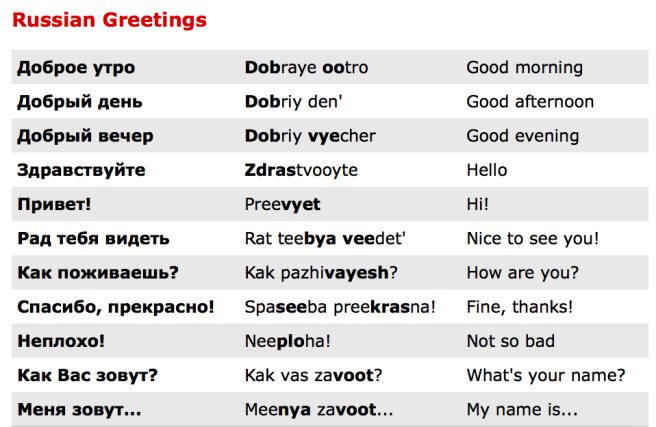
“Simply Arduous” is right. I scroll the travel guide’s little baby glossary in the back of the book and my stomach knots. I’m going to have to carry around a small slip of paper as a cheat sheet just for “hello,” “yes,” “thank you” and “please.” See this for greetings:

Screen-Shot-2015-10-09-at-18.54.45.png

How do you memorize all this? I’m sticking with Preevyet — “Hi!” — over the tongue-tangling Zdrastvooyte for “Hello.” There’s just no way. I’ll probably only wave, pretend I’m mute. “Yes” is a thank-god simple da. I can do that. And “thank you” is spa-see-ba — that looks manageable. “Goodbye” is Da sveedaneeya — not going to happen. Instead I will smile, shake hands and say, Paka, which is “Bye-bye.”

_66032538_144342017.jpgCall me a language wuss. I’m over it. I bone up, some, and I always do fine. I’m obviously not a big talker abroad, unless my interlocutor speaks English, then we have a fine old time. Russia just seems different. I’ve read repeatedly that you’ll have the best luck with English-speakers among millennials, students and the like, which makes sense. That’s how it was in Japan and China. Young people are learning the language and they absolutely love to practice with native speakers. I’ll be avoiding all locals with wrinkles, paunches and tweed berets.
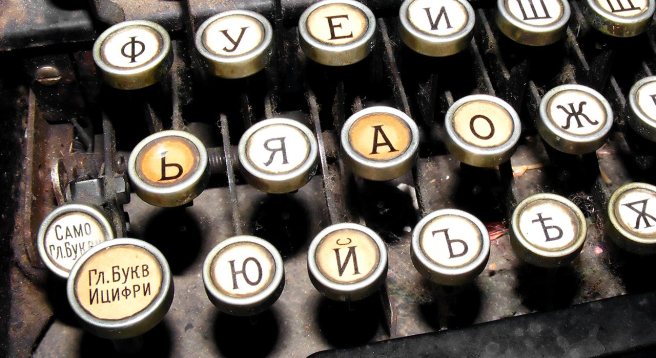
learn-russian-cyrillic-alphabet

When the language barrier is too great to bridge, I have on my trips resorted to producing my Moleskin journal and, I swear, taken turns drawing pictures with my new friend. I recall a woman in Lyon, France, trying to explain to me that gas, or petrol, was very expensive. She drew a car and a gas station pump and added exclamation points around the tableau. I got it. Other times, as in Tokyo, we’d write down words in the most elemental English, from movie titles we should see to places we should go. I tried to explain Woody Allen to someone, so I drew his iconic, bespectacled head. It worked. It’s a blast, these exercises in primal communication.

Russia, I hope, is no different. I look ahead to the awkward pauses of miscommunication, the stammers and even the throwing up of hands and parting ways amicably. I hope there are more da‘s than nyet’s, but even so I’ll have my notebook at the ready for my own version of Pictionary.