Lennon & McCartney in 3D

As surprising as it may be, especially for this recovering metalhead, the Beatles are unshakably my favorite musical entity, be it Mozart to Metallica (a pair that shares far more in common than you might think) and beyond. 

I adore almost every damn thing the Beatles recorded (OK, I can skip “All Together Now”) and marvel endlessly at their unsurpassed songcraft, sappy lullabies to psychedelic loopings, to the point of becoming overwhelmed and misty-eyed. Their music moves me like a great Vermeer or Turner, an old Woody Allen or Chaplin flick, a sumptuous Bolognese, or a beautiful woman.

It’s nothing new, this affection. As a toddler, I was singing along to “Yellow Submarine” with my dad and having a ball (I have it on tape). But it’s been roused as I read Ian Leslie’s new book, “John & Paul: A Love Story in Songs, a head-first spelunking into the two main Beatles’ musical/artistic/personal relationship as they composed some of their greatest tracks: “Yesterday,” “In My Life,” “Eleanor Rigby,” “Strawberry Fields Forever,” “A Day in the Life,” “Hey Jude.” It examines a plethora of terrific tunes, but places 43 under the microscope. Forty-three!     

Animated by fact and folklore, the book, which I admit I haven’t finished, begins in the beginning: how the boys met, formed early bands and honed their chops in German nightclubs. Yeah, yeah (She loves you, yeah, yeah) — that’s old news to Beatlemaniacs. It gets more interesting when John and Paul’s creative minds miraculously meld and songs start to pour forth in gorgeous, gobsmacking cataracts. 

The author launches with the somewhat green “Come Go with Me” in the late 1950s, strikes upon “Please Please Me,” with plenty of songs in between, and finally hits the stratosphere with “Ticket to Ride” and “We Can Work It Out.” It’s all joyride from there as the Beatles — George and Ringo included, of course, though they’re mere cameos — orbit Earth for seemingly ever. (But hardly. The Beatles lasted roughly 10 years, 1960-1970.)

Expectedly, Paul is painted as the pretty, peppy one, John the caustic, callous one. Yet both are endowed with bristling intelligence and an ample sense of play and worldly curiosity. They are autodidacts of the most ravenous kind, and they devour anything that has to do with art, literature and music. 

Their love of the American songbook, R&B and rock n’ roll is insatiable. And what they learn from them — doo-wop flourishes, country-western twang — dazzles. Their debt to Elvis and Dylan is bottomless.

The book is overstuffed with factoids, from the deep influence of Timothy Leary and LSD on the mid-career John song “Tomorrow Never Knows” to Paul asking George Martin for the kind of biting strings from the film “Psycho” for “Eleanor Rigby” — a masterpiece that Paul wrote at age 23.

It also doesn’t shunt on the group’s tour escapades, drug dabblings, interpersonal jealousies, and other gossipy gum drops. The book gleams with facets. Even at this early stage, Lennon and McCartney feel like brothers. My brothers. 

“John & Paul” is marvelous musicology, mind-blowing and wads of fun. It is my book of the summer, and I still have yet to reach “I Am the Walrus,” “Get Back,” “The Ballad of John and Yoko,” and, with terrible longing, yes, Paul’s heart-yanking “The End.”

B-sides: Beatles to Berlin

Lying in bed, listening to music, the Beatles’ “Strawberry Fields Forever” comes on, and I’m entranced anew. What a weird, wondrous thing it is, this John Lennon tune from 1967. Not quite rock, not quite orchestral, the four-minute track is something like psychedelic balladry meets woozy dreamscape. Yet it grooves and sways. Lennon’s cryptic poetry garlands the song’s kaleidoscopic effects — strings, horns, Mellotrons, tape loops — arranged by studio wiz George Martin. The result is marvelously sui generis. Listening in a nocturnal haze, it hits me that “Strawberry Fields,” a late-period masterpiece, may be my favorite Beatles song, a strong statement considering how many stone-cold gems the band produced in a mere seven and a half years together. I love so many Beatles songs — “Here Comes the Sun” to “Blackbird”; “I Am the Walrus” to “In My Life” — that I’d be here all day typing titles I can hardly live without. I’ll take “Lovely Rita” and “Norwegian Wood” over “Across the Universe” and “Come Together,” but that’s like saying I’ll take oxygen over water. Impossible. Their music is that gloriously essential.

The wonder boys.

In Berlin, where I’m headed this fall, I’ve signed up for a whack-sounding tour called Get in the Van! DIY & Subculture City Tour, in which you board a classic 1972 Ford Econoline van and “explore Berlin’s subculture and all things DIY, past and present, from the 1970’s until now: the bars, the squats, the venues, the backyards and the basements.” David Bowie’s heralded Berlin years, with pals Iggy Pop, Lou Reed and Brian Eno, are covered, as is the post-Wall cultural efflorescence of the ‘80s and ‘90s. The tour is run by the planet’s only legit Ramones Museum, a punk paradise bulging with artifacts and more from the fugliest band ever. The Ramones, who I saw live twice, were deep-dyed New Yorkers. A museum in Berlin? Besides the fact bassist Dee Dee Ramone grew up in Berlin, another reason for its existence there is that the so-called biggest Ramones fan resides in the city and opened the shrine to all things Ramones. I hear he shouts “Gabba gabba hey!” unprovoked. One can hope.

Best. Teacher. Ever.

Reading the short bubbly novel “The Prime of Miss Jean Brodie” by Muriel Spark, I’m reminded of my own most extraordinary high school teacher back in California so many years ago. 

In the book, Miss Brodie is a 30-ish instructor of teenage girls in Edinburgh, Scotland, with unorthodox teaching ways that fellow teachers sniff at as “experimental methods.” Weeding out her sharpest pupils from the dolts, Miss Brodie selects six girls to be “the crème de la crème” — the Brodie set.

“Determined to instill in them independence, passion, and ambition, Miss Brodie advises her girls, ‘Safety does not come first. Goodness, Truth, and Beauty come first. Follow me.’”

Miss Brodie goes on: “Art and religion first; then philosophy; lastly science. That is the order of the great subjects of life, that’s their order of importance”

At that, memories tumble forth of how my junior year English teacher, Mrs. Lisa Condon, laser-focused on art, literature, theater, poetry and all things high culture. And how she quietly cherry-picked certain students to be her, for lack of a better word, pets — the Condon set. She knew who would soar amid her unconventional efforts and those who would muddle through a fog of half-assed disinterest.

I went to an unremarkable high school in the flush suburbs of the East Bay near San Francisco, notable for its cloying rah-rah school spirit (Go Wolves!) and outstanding mediocrity, from academics to sports (Go Wolves?). The place sort of asphyxiated your teenage soul.

But there were exceptions in the form of a few teachers — colorful, charismatic, quirky characters who jumpstarted their subjects to phosphoric life. They’d challenge with an uncompromising affection for the material and the students. To name a few, there was Mr. Church, Mr. Weigardt, Mr. Nelson and, above all, the fearsome Mrs. Condon.

Mrs. Condon — always in flowing floral skirts, straight brown hair down her back, peasant blouses, no makeup — was soft but a fierce taskmaster. She could scare the snot-nosed adolescence out of you and make you a college-poised pupil in the first couple weeks of class. Each week we had to write a long essay. They took me five hours, every time. For midterms, we had to memorize the verbatim definitions of 125 vocabulary words.

Mrs. Condon was no martinet. She was warm and human, if tightly wound. She hewed to principle. She knew how things should be done and expected us to follow. There was little room for compromise. At 32, she was in her prime. 

On that crummy campus, her room was an oasis of art, civilization, rules and manners. She was dedicated to culturing us, wiping the philistine smirks off our faces, getting the gears in our sex-addled heads whirring. We studied Picasso, Dalí, Blake, Hemingway, Van Gogh, Dante, DeKooning, even lyrics by Iron Maiden and Pink Floyd. There was so much more. My head exploded. (She later added classical music to her syllabus. I would have killed for that. She would have broken down and cracked open the glories of Beethoven and Mahler with passion and ferocious intelligence and her students would weep.)

And woe to those who didn’t keep up. Mrs. Condon kicked out a jock when he couldn’t identify the ongoing famine in Ethiopia (he was back in class the next day), and ejected a cheerleader for cheating on the weekly vocabulary test (she never returned).

An unreconstructed Berkeley free-spirit, she maintained a rebellious streak — a “Question Authority” bumper sticker was posted by her desk for all to see and ponder — and actually told me what teachers to avoid or enroll with.

Mrs. Condon was a force. None of my college professors grazed her instructional power. Working at my second newspaper job in my mid-20s, I wrote her a note to thank her for the cultural exposure, no matter how demanding, that she instilled in me. She wrote me back, warmly pleased I was still writing. 

A couple years before that, while in college, I ran into Mrs. Condon at a San Francisco Ballet production of Stravinsky’s “Rite of Spring.” It was an awkward reunion, clumsy and blushing and impromptu and all, but nice nonetheless. I can only think she chalked up my attendance as a small triumph. I hope so. 

“What were the main influences of your school days? Were they literary, political, or personal?” a character asks one of the Brodie set in the novel.

The girl responds: “There was a Miss Jean Brodie in her prime.”

I’d say the same, but in my version: “There was a Mrs. Lisa Condon in her prime.”

The Tao of Nick Cave

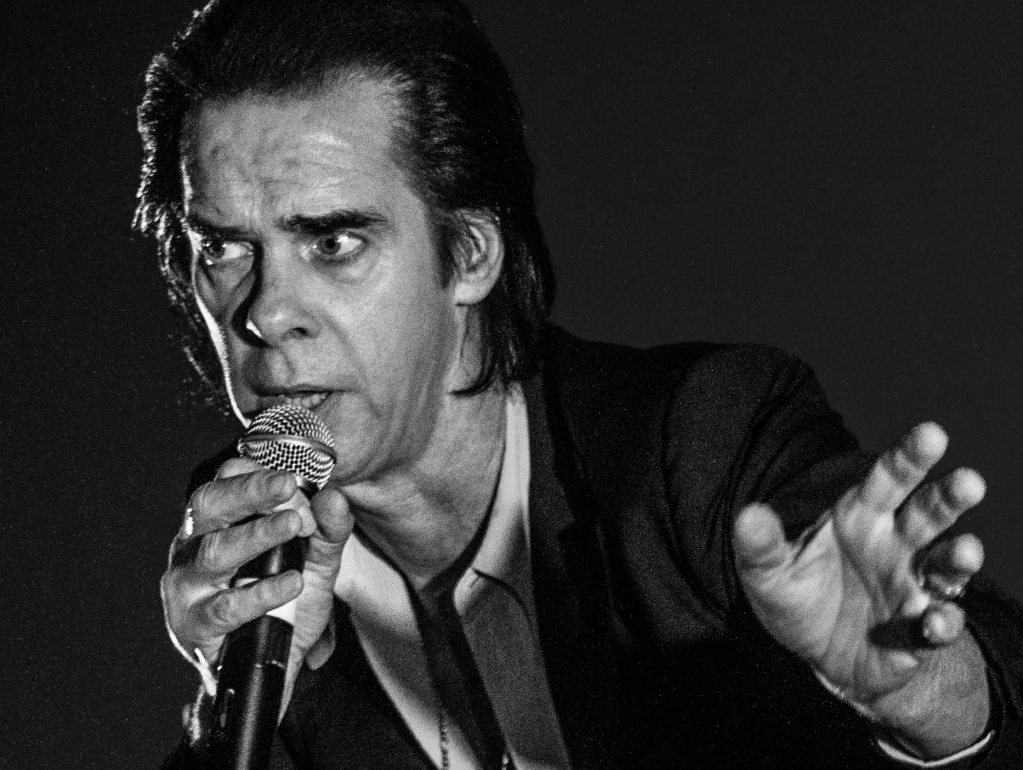
Nick Cave — Australian musician, composer, filmmaker, writer, artist, actor, all-around Renaissance man, with slick black hair and natty suits hanging off a long, pencil-thin frame — runs a sage, funny and heartbreakingly sincere advice column on his website The Red Hand Files. His counsel is so sharp and impassioned, you wonder: What can’t the guy do? I bet he can fly.

Recently, a precocious 13-year-old boy wrote in, asking this: “How do I live life to its absolute fullest, and not waste my potential? Especially as a creative. Also, what is a great way to spiritually enrich myself, in general, and in my creative work?”

I relished Cave’s response so much, I am excerpting a chunk of it here.

These are, to me, words to live by:

“Read. Read as much as possible. Read the big stuff, the challenging stuff, the confronting stuff, and read the fun stuff too. Visit galleries and look at paintings, watch movies, listen to music, go to concerts — be a little vampire running around the place sucking up all the art and ideas you can. Fill yourself with the beautiful stuff of the world. Have fun. Get amazed. Get astonished. Get awed on a regular basis, so that getting awed is habitual and becomes a state of being.”

Nick Cave — bard, baritone, Bad Seed, badass.

A day like any other, pretty much, kind of

Stuff that happened today, May 4: 

People reflected with distress and solemnity on the 50th anniversary of the Kent State massacre (war protesters, good; guns, bad). I ordered a pair of green shorts (yes, I said green). Dave Eggers, possibly my least favorite writer, penned a typically cutesy op-ed in The New York Times (vigorous head shake). Netflix announced that Nicolas Cage will play Joe Exotic from “Tiger King” in a new scripted series (pinch me). And the most spastically overrated novel of 2019 won the Pulitzer Prize (please, jurors, stop doing this). 

211bd3a4-CageJoeExotic1
Cage uncaged

What a day. But not really. Shit happens everyday, mostly minor and minuscule, a beige streak of the routine and quotidian, particularly these strange stay-at-home days. (I’m talking about ground-level life, of course, not the huge, horrible pandemic picture, whose enormity transcends the lines of this scrawny blog.) 

Today’s pedestrian episodes: I suffered continued undiagnosed abdominal issues (no, not the appendicitis, but perhaps more painful), the dog shat on the floor, a book of poetry I bought gravely disappointed, and the afternoon temperature dipped from 70 to 58 degrees over a couple hours, to my delight. I re-read an exceptional book of essays called “Off Ramp” that I recommend exuberantly. I exercised, mildly and miffed. I did the daily email boogie, writing and replying. I ate cucumber with hummus and sipped wine.

That was Monday, May 4, scrunched into a knotty ball. Not spectacular, not awful.

But lookie: The future holds quivering thrills.  

Tomorrow, May 5, is front-loaded with celebration: Cinco de Mayo, National Teacher Day and (oh, totally) National Hoagie Day. This motherlode of tippling tequila, a paean to pedagogues and bib-wearing sandwich snarfing is holiday-worthy. Where’s the confetti?

And yet the following day, May 6, pulls everything back into focus. Wednesday, according to the Fairy Godmother of special days, exalts National Tourist Appreciation Day — which reminds us: whoever’s a tourist on this day, in this moment, is a fool.

And, more poignantly, is National Nurses Day, which “provides recognition to nurses for their contributions and commitment to quality health care and brings awareness to the importance of nurses in the care, comfort and well-being of all of us.”

Now that’s a day worth honoring, one that’s not like other days, far outshining the banality of the white box on the calendar. And one that can kick your guts out, in the best, most inspiring way.

Things we used to like

We all have embarrassing lists of things we once thought were beautiful, whatever they are, like Monet haystacks or Kieslowski films.” 

— Megan O’Grady


Confession: Once upon a time, I was entranced by the poetry of Jim Morrison. Well, entranced is pushing it. I was interested in it, I liked it, I thought it was … neat-o.

At 17, I was spongey and vulnerable, easy prey for a bad poet with good hair who’d whisper sweet nothings (and I do mean nothings), like:

Did you have a good world when you died?/Enough to base a movie on?/I’m getting out of here./Where are you going?/To the other side of morning.

Blush.

At a friend’s urging, I had just finished the cathartically lurid biography of Morrison, “No One Here Gets Out Alive” (a sensational read, I’m telling you). It’s a thick mass market paperback and, as a budding rock ’n’ roller (I drummed for years, had hair down to here), I snarfed up Morrison’s simultaneously literary/glittery exploits, his Nietzschean excesses and his laughable self-crowning as the “Lizard King.” And of course his rockstar antics on- and offstage as the Dionysian frontman of The Doors. (Dead at 27. Long live the King!)

31591828846_b36df16120_b-e1551797088469
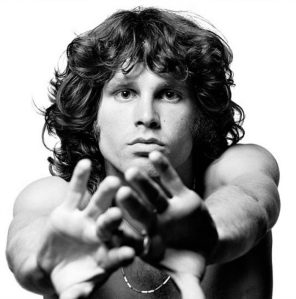
The “Lizard King”

In retrospect, Jim Morrison was a ridiculous, even dangerous cultural icon, despite that nimbus of curls and his body’s perfect synergy with tight leather pants. He was heedless, abusive, narcissistic, a drug addict, pure outsize ego and unshackled id. I thought he was cool. I hung a poster of him in my college dorm room. Until I put away childish things — in the dumpster.

As journalist Megan O’Grady points out at the top of this post, “We all have embarrassing lists of things we once thought were beautiful, whatever they are.” And what are they? They run from the sentimental and the tacky to the precious and pretentious. It’s stuff we grow out of, intellectually and aesthetically, as we mature or plainly change. 

(Such things are not to be confused with guilty pleasures, those so-bad-they’re-good objects: “a film, a television program or a piece of music, that one enjoys despite understanding that it is not generally held in high regard,” explains Wikipedia, that handy font of clickable sagacity. Did someone mention the 1965 schlockfest “Village of the Giants”? So delectably awful, so crazily unimpeachable.) 

Some other things I’ve changed my mind about or sloughed off like so much dead skin:

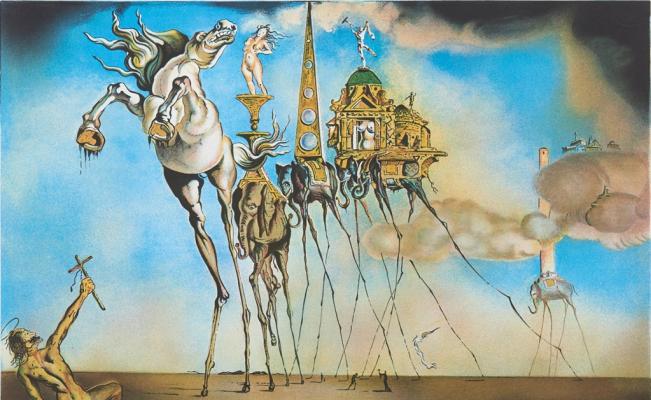
— In my late teens and early 20s the paintings of Salvador Dalí mesmerized me — all that trippy dream razzle-dazzle, latticed beauty, gimcrack grandeur and overblown symbolism. Yet Dalí the man, P.T. Barnum with an easel and vaudeville villain’s mustache, was a showoff, charlatan and prankster — not the king of Surrealism, but its preening court jester. With cartoonish Freud-meets-frenzy, he sabotaged his art, which was ultimately hollow and self-aggrandizing and so often silly.

dali.jpg
Dali’s ‘The Temptation of St. Anthony”

— As stated, I fell for Jim Morrison’s sophomoric poetry — and, almost as tragic, his band The Doors, which couldn’t afford a bass player so let Ray Manzarek fill the role with his corny, carnivalesque “keyboard bass.” I wish, like Morrison, I could blame whiskey and psychedelics for this troublesome stretch. Addled adolescence takes the rap.

— Oh, ’80s-era stone-washed jeans (before they inevitably got hip again). Whoever thought these were a good look (um, me) probably digs denim shorts. They scream John Hughes, “Dirty Dancing” and “Beverly Hills, 90210.” More a shriek than a scream really.

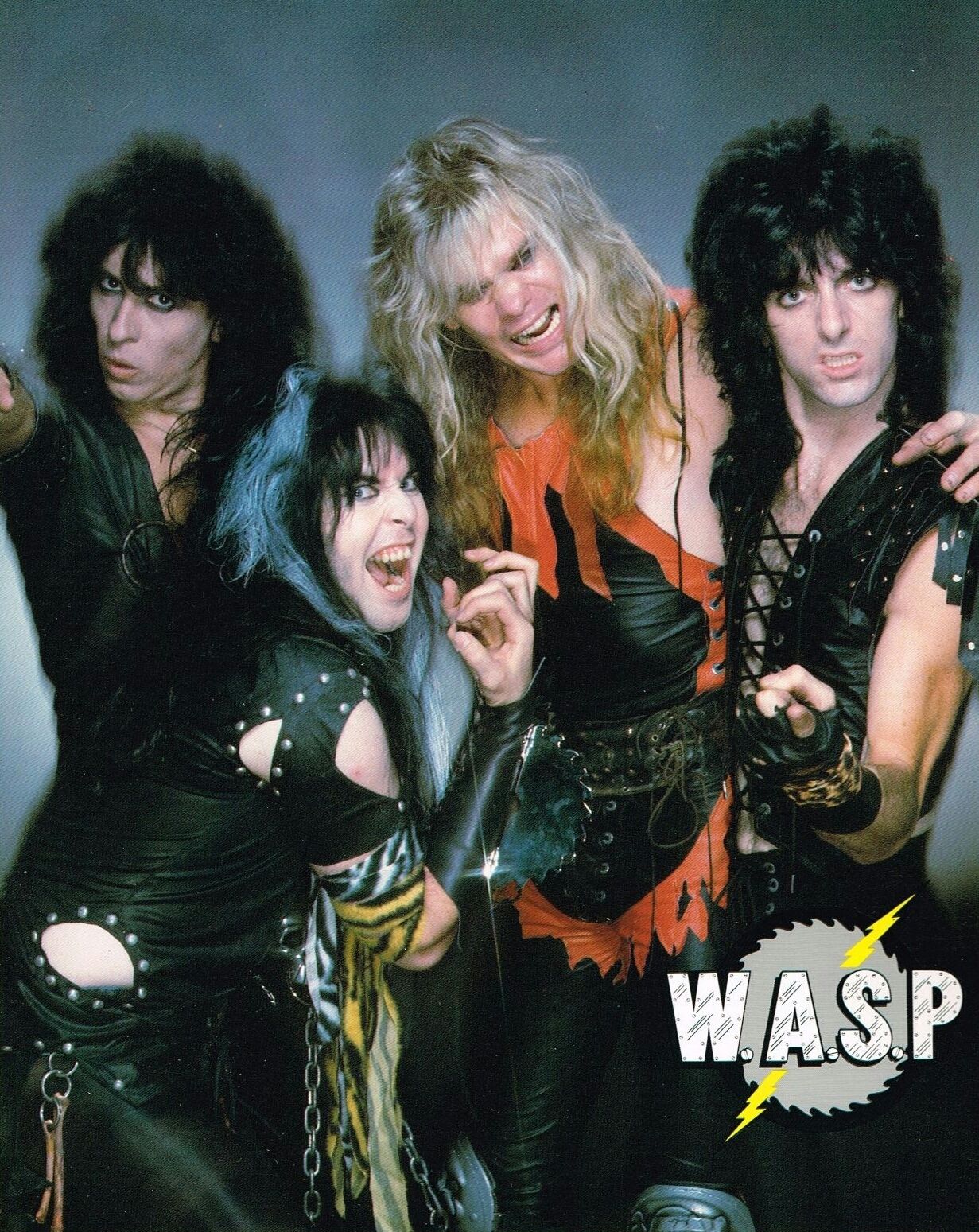
— Early in my dubious hard rock heyday, I fell briefly under the spell of metal hair bands Ratt, Mötley Crüe and W.A.S.P. They were loud. They were flamboyant. They were L.A. bad boys. They spritzed gallons of Aqua Net on voluminous tresses. In the case of W.A.S.P., the singer drooled fake blood. (Gene Simmons should sue.) I can only snicker now, with a sour wince. I blush a mean shade of fake blood.   

3d4b6f0aab2448086efd79702227d4ee.jpg

— How this happened, the cosmos will never tell, but during its bestselling peak I actually enjoyed Robert James Waller’s saccharine rural romance “The Bridges of Madison County” (I know). I eagerly recommended it to my mom. I think she finally decided not to strangle me in about 2011.

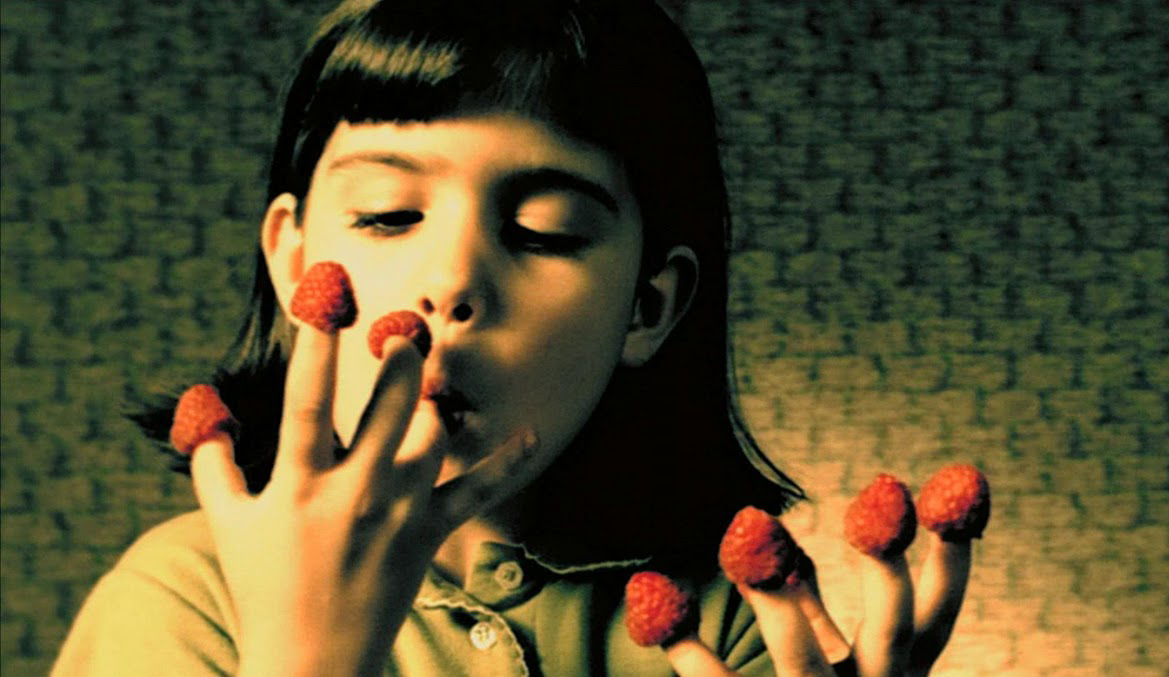
— It was adorable the first time, candied, cooing and so très French. Jean-Pierre Jeunet’s twee 2001 romantic comic fantasy “Amélie is a juicy smooch of primary-color whimsy, lush style and steroidal art direction. Its star Audrey Tautou is a human gumdrop. When I watched the film again, all of these descriptives became detractions. It grated and cloyed. It was unfunny and charmless, smitten with its own labored cutes. And Tautou’s mincing protagonist was someone to be throttled, not adored. The pixie was now poison.

amelie-movie-strawberries1.png

The daunting and taunting of the bulging bookshelf

Nothing in a home excites me more than bookshelves crammed and jammed with actual books, as opposed to knickknacks, tchotchkes and corny picture frames. Filled right, they are towering works of art, swirls of graphics and oceans of colors.

I love engorged, groaning bookshelves, whose heaving pulp cargo functions as stylish and classy decor, the jostling spines stringing rainbow rows of erudition, edification and entertainment. So gorgeous and seductive is a grand, brimming bookshelf, it’s almost erotic.

8536d681f28f66caa54226bbccc05e6b--bookstores-libraries.jpg

At minimum, it takes hundreds of volumes to stock an amply, aptly impressive bookshelf. It takes a collector’s fervor, an obsessive appetite for those bound squares of facts, fiction and, so often, beauty.  

But there’s this: Do we actually read all the books in these sprawling collections? Or do they act largely as pretentious decor, literary plumage that flatters the owner?

That depends, but I know I rigorously try to read every title on my shelves, as nearly impossible and as crazily aspirational that proposition is. Still, I don’t see them as frills and frippery. I simply think walls of books look amazing. (Bookshops and libraries: Platonic ideals of aesthetic glory.)

I confess I don’t read all the books I acquire. One, the quantity is too great, especially when new books keep crashing my bulging bookosphere. Two, not every book is worth reading — too many just aren’t good enough. 

So, as I’ve mused here before, I frequently dispense with books that aren’t thrilling me. The rate that I put books down at the 50-, 80- or 100-page mark is deplorable. It’s also necessary. I show no quarter.

“I own far more books than I could possibly read over the course of my remaining life, yet every month I add a few dozen more to my shelves,” writes Kevin Mims in this essay in the New York Times.

That is a sickness I know well. But mostly I’ve stopped this hoardish habit. I realize now that not every well-reviewed book or immortal classic is worth picking up.   

I used to work in a corporate bookstore — the biggest bookstore in San Francisco at the time — and, like that ravenous kid in the candy store, the one with chocolate smeared all over his mouth, I couldn’t help but accrue a gigantic book collection. It fast became overwhelming, so I kept a list on a lined yellow notepad of all the books I hadn’t yet read, planning to cross titles off as I went. Sheer folly, that.

I have since evolved and have become the prince of the partially read book. Though my shelves boast more tomes that I have actually completed, the rejects are copious. 

And then there are the books I haven’t even cracked yet, and may never get to. In his essay, Mims locates a term for this: “tsundoku, a Japanese word for a stack of books that you have purchased but not yet read. My personal library is about one-tenth books I have read and nine-tenths tsundoku.”

That doesn’t mean your fabulous bookshelves are mere pretty repositories, ceiling-scraping storage bins. They are libraries and all that that word implies: knowledge, art, stories, journeys, lives, cracking your head open with the world.  

Says Mims:

A person’s library is often a symbolic representation of his or her mind. A man who has quit expanding his personal library may have reached the point where he thinks he knows all he needs to and that what he doesn’t know can’t hurt him. He has no desire to keep growing intellectually. The man with an ever-expanding library understands the importance of remaining curious, open to new ideas and voices.”

bb42752b8ffbeacfca9b8d5d6918ecdd.jpg

* Late postscript: I stumbled upon this nifty quote in my readings later today. It’s from “The Bookish Life,” an article by Joseph Epstein:

So many books are there in the world that no one can get round to even all the best among them, and hence no one can claim to be truly well-read. Some people are merely better-read than others. Nobody has read, or can read, everything, and by everything I include only the good, the beautiful, the important books.”

Never done with Stephen Dunn

As sort of a literary snack, some lyrical Cheetos, I recently dipped into one of my favorite poetry books, Stephen Dunn’s “Different Hours.” It’s magnificent; so many fine poems, so many lines that quietly slash. The poems are all about wisdom and honesty and breakage, lovers and loss and burying a cat.

Stephen-Dunn
Dunn

I don’t care so much that the book won the 2000 Pulitzer Prize, though it surely deserved it. I do care that it contains this stanza:

I was burned by books early/and kept sidling up to the flame.

And I care even more that it has this bracing verse, from the final poem in the collection, “A Postmortem Guide (For my eulogist, in advance)”:

Tell them that at the end I had no need

for God, who’d become just a story

I once loved, one of many

with concealments and late-night rescues,

high sentence and pomp. The truth is

I learned to live without hope

as well as I could, almost happily,

in the despoiled and radiant now.

Those shimmering words shatter me, in a most positive fashion. (“In the despoiled and radiant now”!) The verse is frank but droll, vulnerable and confessional. It’s written with the points of melancholy stars.

Dunn, like his comrade in wry minimalism, Billy Collins, wields an unabashed colloquial touch, his plain-spokenness littered (glittered?) with joyous turns of phrase and often mischievous, tip-toeing humor.

He’s a master of subtlety, but any perceived simplicity is thoroughly deceptive. If you think Dunn’s poems are simple-minded, even pablum, you are sorely mistaken. You haven’t done the work.