The acrid bite of literary realism, in brief

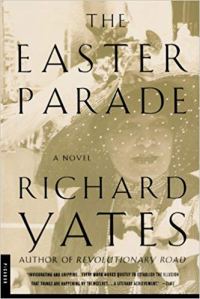
Realism rules. Consider the first 10 words in Richard Yates’ novel “The Easter Parade”:

“Neither of the Grimes sisters would have a happy life”

Sting, sizzle. 

This opener is massively effective. Knifelike, it plunges into the story, ducking preliminaries or decorous setups cluttered with background frills and bunting. Before we’ve even met the protagonists we are told in the chilliest terms how things will unspool for them tonally, if not dramatically. It’s a great entrance, pungent, punchy.
51N-fpgePTL._SX331_BO1,204,203,200_

I broach this because I’m half-way through “The Easter Parade” and its satisfactions are abundant, much like those in Yates’ corrosive classic of marital dissolution “Revolutionary Road.” That masterpiece of American realism is fiction with fangs, casting an unsparing eye on mainstream domestic rituals.

And it’s part of a 20th-century literary tradition, stories and novels, mostly by male writers, that scrutinize the age of anxiety, explicit sex, cynicism, malaise, regret, envy, jobs, kids, homes, husbands, wives, lovers, losers, drunks, the city and the mirage of the white suburban dream.

Highlights in this unofficial canon of realism include: Yates’ “Revolutionary Road”; Philip Roth’s “American Pastoral”; John Cheever, Ann Beattie, Raymond Carver and Tobias Wolff’s unflinching stories; James Salter’s “Light Years”; John Updike’s “Rabbit” tetralogy; Richard Ford’s “Bascombe” trilogy; and so many more.

51dfJ7pwjDL._SX331_BO1,204,203,200_

Disillusionment, loss, heartbreak and disappointment are fragrant themes of these authors. But strangely the stories don’t feel forlorn. They almost feel consoling, perversely empathic — even when the human condition is laid bare and loneliness, our worst fear, takes hold.

”If my work has a theme,” Yates said, “I suspect it is a simple one: that most human beings are inescapably alone, and therein lies their tragedy.”

These realists serve up banality without bathos, unnerving wisdom in unfussy, largely conventional language. They are bleak and blunt, sometimes cruel in their honesty.

A (bitter) tasting:

“The hell with this aching, suffering, callow, half-assed delusion that he was in ‘love’ with her. The hell with ‘love’ anyway, and with every other phony, time-wasting, half-assed emotion in the world.”  — Richard Yates, “Revolutionary Road”

“He had learned the worst lesson that life can teach — that it makes no sense. And when that happens the happiness is never spontaneous again. It is artificial and, even then, bought at the price of an obstinate estrangement from oneself and one’s history.” — Philip Roth, “American Pastoral”

“She perceived vaguely the pitiful corruption of the adult world; how cruel and frail it was, like a worn piece of burlap, patched with stupidities and mistakes, useless and ugly, and yet they never saw its worthlessness.” — John Cheever, “Stories of John Cheever”

“There is no complete life. There are only fragments. We are born to have nothing, to have it pour through our hands.” — James Salter, “Light Years”

“Any time spent with your child is partly a damn sad time, the sadness of life a-going, bright, vivid, each time a last. A loss. A glimpse into what could’ve been.” — Richard Ford, “Independence Day”

51aBkOQUbQLThese are acid words. They are tough and unsentimental. I gravitate to them, and I can’t recommend them enough. They are beautiful. In them I locate unembellished truth. I’ve lived a little (Christ, I’m starting to sound like a grizzled cowboy) and none of these sentiments rings false or fabricated. They sound snipped from life in all its tarnished glories and burnished failures, and it is intoxicating.

A quote on confidence

I‘m reading “There There,” the smashing debut by Tommy Orange, and it’s a novel of ambient beauty as well as a penetrating portal into urban Native American culture. It’s a world at once broken, squalid and, by the skin of its teeth, empowered. The writing swings, crackling with observational fire. This aside about a young woman’s curdled confidence oddly hit home, like a lightning jag. It throbs with truth and woe.

“Something she always notices is how much confidence and lack of self-doubt people have. Take Harvey here. Telling this terrible story like it’s captivating. There are so many people she comes across who seem born with confidence and self-esteem. She can’t remember a day going by when at some point she hadn’t wished she could burn her life down.”

9780525520375

More highly finicky reading

I’m the worst. I’m impatient. I’m mean. I’m discerning. I have taste. When it comes to books, I am ruthless. I’m even worse with movies. Most don’t stand a chance.

I have put down four books, closed them for good well before the 100-page mark, in the past two and a half weeks. Suffused with sorta-guilt — ah, not really — I swan to the next book, hoping for gems and genius. I am an optimist garbed as a very dark pessimist.

Mining this small stack I located gold — the books are by literary heavyweights, after all, and they do often gleam — but I also found fool’s gold, which I will not abide.

41wp7sr5mbl-_sx321_bo1204203200_.jpg

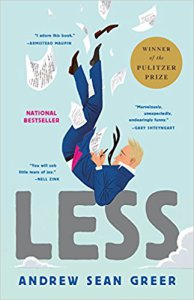
The yeasty comic novel “Less” was the chintziest of the four. It won the Pulitzer Prize this year for fiction. What are you gonna do? I read, I shrugged, I shut. 

With wan humor tangled in wry, hackneyed observations about gays and straights and executed in lite-beer fizzy prose — “a quick, easy summer read,” said one critic, as if that’s a compliment — “Less,” by Andrew Sean Greer, reminded me of a gay-themed comedy series on HBO, one of those middling shows no one watches. The novel, says Greer, is “a love story, a satire of the American abroad, a rumination on time and the human heart.” Thanks, Mr. Greer, for defining “generic.”

I read some 75 pages of “Less” and I must agree with this writer who actually finished the book: It’s “chock-full of gay clichés that feel outdated, and the tone is generally one of superficial, unearned cynicism that sometimes drifts into cattiness.”

Yup. Even The New York Times, in an upbeat review, called it “too sappy by half.”

Zadie Smith writes with a magic wand; her language and storytelling gifts are things celestial (and she makes me gush floridly). I’m an ardent fan of her fiction — “White Teeth” glitters — but her 2012 novel “NW,” a typically vibrant latticework of people and place, didn’t grab me by the lapels, no matter that I don’t have lapels. As exceptional as the writing is, the story has a matte finish when I yearned for glossy. 

Unknown.jpeg

Wade into Rivka Galchen’s hailed stories “American Innovations” and it’s clear why she is one of America’s hottest young fiction writers. She’s crisp, funny and fanciful, with a biting originality and a smidge of the surreal. But as much as I appreciated the collection, I put it down. I almost fell for it, then fashioned a one-word review: meh.

While there’s no shame in not finishing a book — I can’t believe people who feel they have to get to the last page even if it’s a slog — I can’t help but gulp and blush at this failure: Edith Wharton’s 1920 Pulitzer-winning classic “The Age of Innocence.”

I did not get far in the rather slim novel. I found the prose cluttered and perfumey, chokingly Austenian (though without the giggling), and fustily 19th-century for my contemporary palate. (Oddly, I loved Wharton’s 1911 “Ethan Frome.”) Wharton weaves long, highly populated sentences of lace and crushed velvet, many of them woozy and lovely.

Problem: I kept picturing doilies. 

Antidotes to these literary losers are a trio of new fiction by some of the most acclaimed women authors around: “Kudos” by Rachel Cusk, “How Should a Person Be” by Sheila Heti and “Homesick for Another World” by Ottessa Moshfegh. 

51zp1zkt38l-_sx328_bo1204203200_.jpg

I’m knee-deep in that last title, a 2017 collection of stories by the precocious Moshfegh, whose novel “Eileen,” a darkly off-kilter character study, impressed and troubled me — just how I like it.    

Moshfegh’s stories are spare and wicked, laced with a perfect pinch of transgression, enough to fill an eye-dropper. They are comic and you laugh, but there’s dried blood in them. 

Some excerpts:

“He thought that the drugs we bought in the bus-depot restroom were intended to expand his mind, as though some door could be unlocked up there and he would greet his own genius — some glowing alien in glasses and sneakers, spinning planet Earth on its finger. Clark was an idiot.” 

“Our repartee would be rich with subtlety and sarcasm, as smart and funny as mid-career Woody Allen. Our fucking, like Werner Herzog, serious and perplexing.” 

“I hated my boyfriend but I liked the neighborhood.”

To me, that is dreamy writing, all at once blithely sardonic, intelligently aloof and drolly perceptive, attached to the stinger of a scorpion.

Death becomes us

“To live fully is to live with an awareness of the rumble of terror that underlies everything.” 

Ernest Becker, “The Denial of Death”

For some of us, the above “rumble of terror” is a buckling, earth-cracking tremor felt many times each day, a sort of clockwork bell that tolls every hour, on the hour. It is, of course, death, our unavoidable mortality, crooking a finger, baring its teeth and uttering a horror-movie cackle.

Drama aside, what Becker says is that without a sharp recognition of the reality of your own death you paper over a critical dimension of existence. Without death, paradoxically, a major chunk of life is muted. You reside in the dark.

5154120492_e2269336f61.jpg

The existential denial Becker speaks of amounts to an ignorance as willful as it is mystifying. To mention dying has become taboo. How can the most important stage in life, the great closure, the monumental punctuation mark, be off limits? I don’t want to think about it,” goes a common refrain. “It’s just too horrible.” 

But is it? By being aware of your mortality, knowing you will die, that it is an unstoppable event, you can cultivate a richer, more philosophical, existentially awakened life. The aim of this consciousness, as I’ve written before, is to “put you in touch with an untapped aspect of your spirituality, to jolt you out of complacency and into perhaps uncomfortable soulfulness.”

Instead, people distract themselves from the big questions and tough realities. Texting, Facebook and binge TV shows are potent diversions. We think we have control over our lives by doing the right things — exercising, eating healthfully, thinking positive, traveling, communing with art and nature, procreating.

Rubbish.

“Modern man is drinking and drugging himself out of awareness, or he spends his time shopping, which is the same thing,” Becker says.

Death isn’t on my lips — I rarely broach the subject — but it weighs on my mind like an anvil. I’m not talking about the gruesome, corporeal details of death — the corpse, the medical examiner, the venal funeral industry, the land waste of burial — but the chilly philosophical fact of mortality, of dying. Not how we die, but that we die.

Hans Larwin's amazingly evocative 'Soldat und Tod' ('Soldier and Death') from 1917

It’s confounding that people dodder through life without considering death, as though it’s some vague, distant inconvenience that won’t afflict them — not even when they’re crossing a busy street or speeding down the highway or eating a marbled slab of steak or hauling around 100 pounds of extra body weight. The musty cliché “ignorance is bliss” could not be more fitting.

Accepting our fate now, in the present, dulls the fear factor. The idea of dying — Becker’s “rumble of terror” — is inarguably frightening, and that’s certainly why so many of us keep it at bay. But awareness makes you smarter, more prepared. It eases the angst. “The fear of death follows from the fear of life,” Mark Twain said. “A man who lives fully is prepared to die at any time.”

To live fully, says Becker, means to live mindfully, to be cognizant of that lyrical rumble of terror, to embrace one’s fate, or to at least be on cordial terms with it. It is, in fact, consciousness in full bloom.

What we’re really looking for when we travel

“I travel not to go anywhere, but to go. I travel for travel’s sake. The great affair is to move.” — Robert Louis Stevenson

“I read; I travel; I become.” — Derek Walcott

Someone recently suggested to me that my many travels aren’t journeys to see the world and immerse myself in the new, novel and astonishing but to escape from life, to bolt from my existential predicament with its quotidian contours and smothering banality. 

Well, duh.

P1010466.jpg

Rather than take umbrage at this reductive hypothesis, I embraced its glaring self-evidence. But it is only half-right. Escape from routine and workaday doldrums is part of the algebra of travel for most of us, but the other part about immersion in the new, novel and astonishing is undeniably, irrefutably the most important piece of the equation. That unquenchable thirst for fresh, unpredictable experience, from culture to cuisine, people to history, is absolutely paramount. To say otherwise is preposterous.

IMG_2773

After all, you can’t actually escape yourself or your life just because you’re standing woozily before the Taj Mahal or whizzing happily on a moto-bike through the maniacal streets of Saigon. “Wherever you go, you take yourself with you,” author Neil Gaiman said. You can’t not pack you. You view the world through the lens — smudged, rosy, cracked — of your own inescapable mind.

Yet there’s another way to look at the urge to trot the globe, and it goes like this: “We travel not to escape life, but for life not to escape us.” That dimly cryptic maxim has no author, just the copout “anonymous,” but it’s deep nonetheless. It’s saying travel is life itself, that to travel is to truly live. I know I’m at my most alive, most stimulated traveling, when unfamiliar vistas and uncharted ways of seeing and surviving crack open like great gifts. I look, I learn, I marvel. Smitten here, flummoxed there, I gulp it all down.

IMG_2908

Contrarily there’s journalist Janet Malcolm, who finds travel a lesser version of daily living, “a low-key emotional experience, a pallid affair in comparison with ordinary life. (Our homes) are where the action is; they are where the riches of experience are distributed.” (A celebrity in her profession, Malcolm has an incredible job, and she presumably enjoys a highly satisfactory family and social life in very nice accommodations. I’m just saying.)  

Real life will inevitably beetle its way into our journeys. We are not immune from the humdrummeries of being human just because we’re sipping sangria in Sevilla or snorkeling in Thailand. More often than not, we are pulled back into normal existence while trekking and must deal with the minutiae and mundanities of getting by. Currency hassles, airport irritants, sore feet, crappy service, taxi ripoffs, unvarnished boredom — life is a greedy intruder. 

Some germane questions: Does travel satisfy the urge to fill something, or to shed something? Ponder.

P1010792

I finish with this besotted soundbite from illustrious world-traveler Pico Iyer, who defines wanderlust far better than I can: 

“We travel, initially, to lose ourselves; and we travel next to find ourselves. We travel to open our hearts and eyes and learn more about the world than our newspapers will accommodate. And we travel, in essence, to become young fools again — to slow time down and get taken in, and fall in love once more.” 

Travel as enchantment. There you have it.

(Photos by Chris at Gnashing.)

Unsparing truth, from Philip Roth, 1933-2018

“No one gets through unmarked by brooding, grief, confusion, and loss. Even those who had it all as kids sooner or later get the average share of misery, if not sometimes more. There had to have been consciousness and there had to have been blight.”

— Philip Roth, “American Pastoral”

roth.png


The rational heresy of Sam Harris

“The problem with religion, because it’s been sheltered from criticism, is that it allows people to believe en masse what only idiots or lunatics could believe in isolation.”

“While believing strongly, without evidence, is considered a mark of madness or stupidity in any other area of our lives, faith in God still holds immense prestige in our society. Religion is the one area of our discourse where it is considered noble to pretend to be certain about things no human being could possibly be certain about.”

Sam Harris, philosopher, author (“The End of Faith”)

atheists

Never done with Stephen Dunn

As sort of a literary snack, some lyrical Cheetos, I recently dipped into one of my favorite poetry books, Stephen Dunn’s “Different Hours.” It’s magnificent; so many fine poems, so many lines that quietly slash. The poems are all about wisdom and honesty and breakage, lovers and loss and burying a cat.

Stephen-Dunn
Dunn

I don’t care so much that the book won the 2000 Pulitzer Prize, though it surely deserved it. I do care that it contains this stanza:

I was burned by books early/and kept sidling up to the flame.

And I care even more that it has this bracing verse, from the final poem in the collection, “A Postmortem Guide (For my eulogist, in advance)”:

Tell them that at the end I had no need

for God, who’d become just a story

I once loved, one of many

with concealments and late-night rescues,

high sentence and pomp. The truth is

I learned to live without hope

as well as I could, almost happily,

in the despoiled and radiant now.

Those shimmering words shatter me, in a most positive fashion. (“In the despoiled and radiant now”!) The verse is frank but droll, vulnerable and confessional. It’s written with the points of melancholy stars.

Dunn, like his comrade in wry minimalism, Billy Collins, wields an unabashed colloquial touch, his plain-spokenness littered (glittered?) with joyous turns of phrase and often mischievous, tip-toeing humor.

He’s a master of subtlety, but any perceived simplicity is thoroughly deceptive. If you think Dunn’s poems are simple-minded, even pablum, you are sorely mistaken. You haven’t done the work.

Jeff Koons: self-importance as an art form

“Koons’ act, which is perhaps not even an act, is to believe that he is a natural descendant of the great artists of the past, interpreting religious iconography with a kind of contemporary twist, but aspiring to the same level of eternal fame and truth. … Nobody questions the work because Koons’ lock on the market is so thorough. It’s a form of spiritual vandalism.”

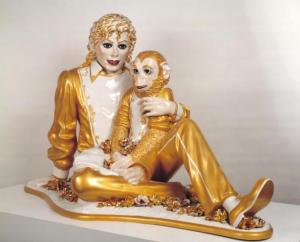
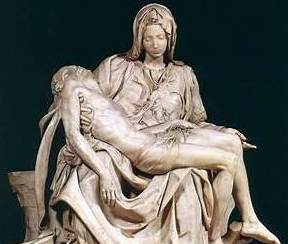
 Critic Robert Hughes on artist Jeff Koons, after Koons compared his 1988 porcelain “Michael Jackson and Bubbles” to Michelangelo’s 1498 “Pieta”

koons-michael-jackson-and-bubbles-1988  th.jpeg