Never done with Stephen Dunn

As sort of a literary snack, some lyrical Cheetos, I recently dipped into one of my favorite poetry books, Stephen Dunn’s “Different Hours.” It’s magnificent; so many fine poems, so many lines that quietly slash. The poems are all about wisdom and honesty and breakage, lovers and loss and burying a cat.

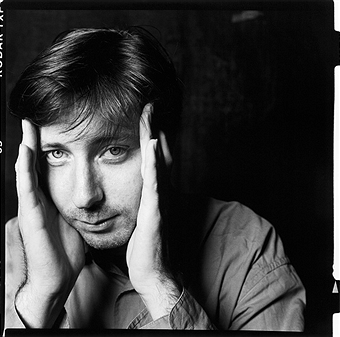
Stephen-Dunn
Dunn

I don’t care so much that the book won the 2000 Pulitzer Prize, though it surely deserved it. I do care that it contains this stanza:

I was burned by books early/and kept sidling up to the flame.

And I care even more that it has this bracing verse, from the final poem in the collection, “A Postmortem Guide (For my eulogist, in advance)”:

Tell them that at the end I had no need

for God, who’d become just a story

I once loved, one of many

with concealments and late-night rescues,

high sentence and pomp. The truth is

I learned to live without hope

as well as I could, almost happily,

in the despoiled and radiant now.

Those shimmering words shatter me, in a most positive fashion. (“In the despoiled and radiant now”!) The verse is frank but droll, vulnerable and confessional. It’s written with the points of melancholy stars.

Dunn, like his comrade in wry minimalism, Billy Collins, wields an unabashed colloquial touch, his plain-spokenness littered (glittered?) with joyous turns of phrase and often mischievous, tip-toeing humor.

He’s a master of subtlety, but any perceived simplicity is thoroughly deceptive. If you think Dunn’s poems are simple-minded, even pablum, you are sorely mistaken. You haven’t done the work.
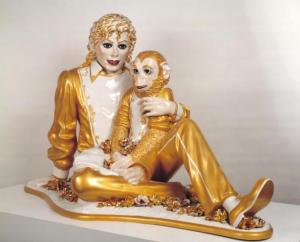
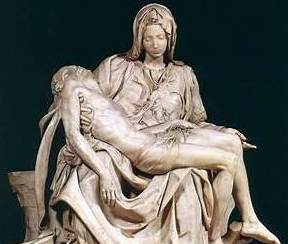
Jeff Koons: self-importance as an art form

“Koons’ act, which is perhaps not even an act, is to believe that he is a natural descendant of the great artists of the past, interpreting religious iconography with a kind of contemporary twist, but aspiring to the same level of eternal fame and truth. … Nobody questions the work because Koons’ lock on the market is so thorough. It’s a form of spiritual vandalism.”

 Critic Robert Hughes on artist Jeff Koons, after Koons compared his 1988 porcelain “Michael Jackson and Bubbles” to Michelangelo’s 1498 “Pieta”

koons-michael-jackson-and-bubbles-1988  th.jpeg

Quote of the day, via Philip Roth

“He had learned the worst lesson that life can teach — that it makes no sense. And when that happens the happiness is never spontaneous again. It is artificial and, even then, bought at the price of an obstinate estrangement from oneself and one’s history.”  

— Philip Roth, “American Pastoral”

d4b60-philip2broth.jpg

Germane words from Orwell on the biggest, most obscene day in sports

A non-sports fan of the most unreconstructed order, I found this bit in an op-ed in yesterday’s New York Times so very fitting on whatever today is, some big sports thingamajig I hear people give a disproportionate bleep about (bold-faced italics mine):

(George) Orwell noted that sports faded in prominence after the fall of Rome, only to surge again in the 19th century, in England and the United States, where games became “a heavily financed activity, capable of attracting vast crowds and rousing savage passions.”

For Orwell, the rise of sports was bound up with the rise of nationalism, both of them examples of “the lunatic modern habit of identifying oneself with large power units and seeing everything in terms of competitive prestige.”

College-Fans.jpg
Really?

My romance with travel — quote of the day

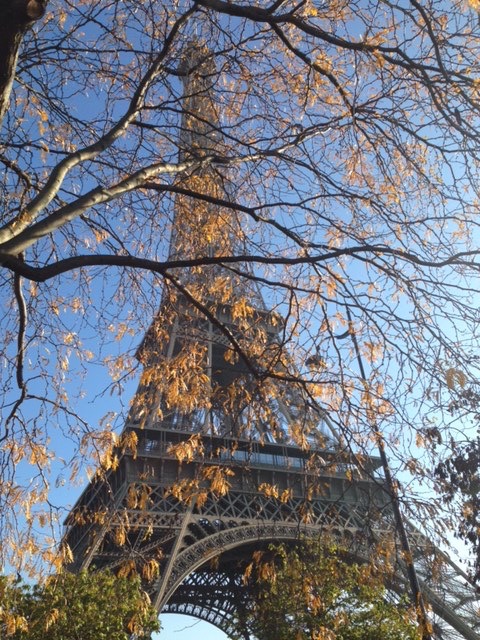
P1000486.JPG
Paris

“Traveling is the great true love of my life. I have always felt that to travel is worth any cost or sacrifice. I am loyal and constant in my love of travel, as I have not always been loyal and constant in my other loves. I feel about travel the way a happy new mother feels about her impossible, colicky, restless newborn baby — I just don’t care what it puts me through. Because I adore it. Because it’s mine. Because it looks exactly like me. It can barf all over me if it wants to — I just don’t care.” — Elizabeth Gilbert

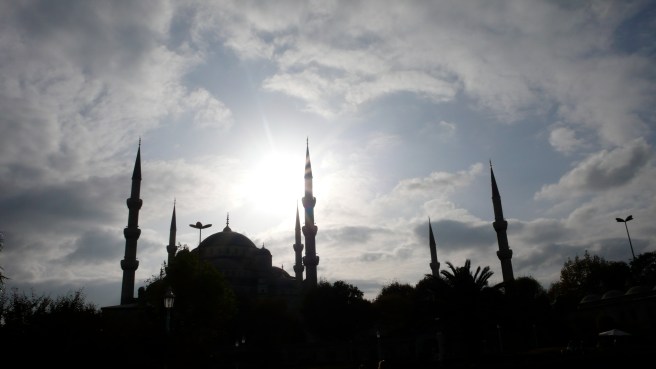
P1030532_1.JPG
Istanbul
143C59B0-8CE1-4A64-94D3-832306AA8DFF.jpg
Paris

Life, death, brevity — quote of the day

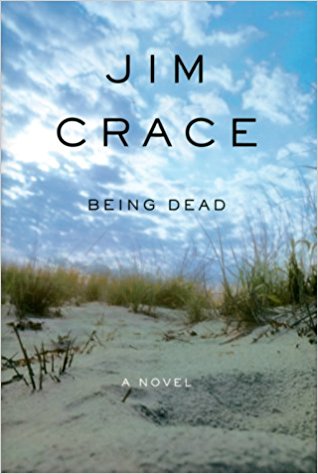
“The world’s small, breathing denizens, its quaking congregations and its stargazers, were fools to sacrifice the flaring briefness of their lives in hopes of paradise or fears of hell. No one transcends. There is no future and no past. There is no remedy for death — or birth — except to hug the spaces in between. Live loud. Live wide. Live tall.’’

Jim Crace, “Being Dead”

41RCP79053L._SX316_BO1,204,203,200_.jpg