Chatting with the makers of one of the year’s best films

In the remarkably moving, charmingly idiosyncratic documentary “Honeyland,” Hatidze Muratova is a Macedonian mountain woman with the face of a craggy Margaret Hamilton and a spirit of peerless pluck. She harvests honey from beehives as her livelihood, while tending to her blind, ailing mother in a rustic shack. Her new neighbors are more than exasperating, and she views them, and environmental concerns, as threats to her precious beekeeping ways. There is drama, joy, exotic upheaval and heartache. I can’t recommend the picture more, easily one of the year’s best.

The movie has won 11 festival awards, including three this year at Sundance, many of them singling out the stunning cinematography. (The film opens July 26. See the trailer HERE.)

Sundance-honeyland-1100x520.jpg

I recently spoke by phone with directors Tamara Kotevska and Ljubo Stefanov, both from Skopje, Macedonia, and whose English, if broken, is strong. These are edited excerpts of our conversation:

Gnashing: Where in the world did you find your leading lady, Hatidze, and how did you know she would be the one to guide your story?

Ljubo Stefanov: While we were finishing our previous film, we got a tip from our agency for a certain environmental project. We started to do research and our task was to find a subject in this (Macedonia) area for a short documentary. But soon after that we discovered the village with Hatidze inside, and it was clear that she would lead our story, which was supposed to be a couple months of filming and editing. But it turned to one year of filming, then three years of filming. A complicated process, but the result probably justifies it.
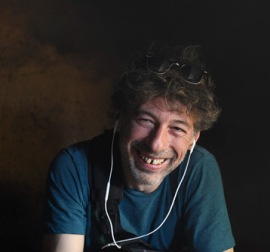
Ljubomor_Stefanov
Ljubo Stefanov

How did you locate the film’s story with such wide-open choices?

LS: There are two aspects. One is humanistic, the relations between characters. And the other one is the environmental message of the film. Before Hatidze is going to the city to sell the honey, she is taking the honey and she is talking to the bees, “Help for me, help for you.” We filmed that during the first week of shooting, and it was clear that this very strong motto would underline the film. It’s about users and providers. Users are human in many cases, the bees providers, the natural resources. The environmental message in this very simple story is about overusing natural resources.

How did the narrative evolve? Was it supposed to be a story about this solitary beekeeper and then suddenly this disruptive family moves in next door? Did you expect that to happen?

Tamara Kotevska: This story unfolds much over time. It started as something completely different. When we found her and started working with her we were still wondering if the form of this film should be more just a portrait of her. We realized that this would not be the film we want. We wanted to actually create a stronger story from her, not just a portrait. The nomad family came but we didn’t pay any attention to them, until we found out that they were the crucial part of the conflict in her life. It was crucial for us to find a way to bring them into the film because they make up a huge part of her life.
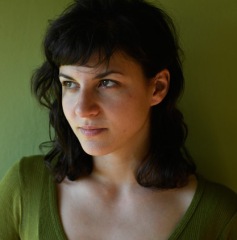
Tamara_Kotevska
Tamara Kotevska

How would you describe your heroine Hatidze? To me, she is plucky, resourceful, lonely …

TK: She is a miracle. Anybody who’s met her says you’ve never met anyone similar, because going to this place, everything is completely lifeless, time is completely different, everyone walks very slowly. Even when we went there, our energy just went down. It’s shocking to see her, the only person who spent her life there, and she has the most energy, most spirit. She’s completely open to people, she’s an extrovert and loves being seen and to talk to people. She’s a star.

The cinematography has received lavish attention and won many awards. How important was it to have such lush, observant camerawork for a film like this?

LS: We were a filming crew of four — two cinematographers and two directors. We filmed with DSLRs (digital cameras) with simple photographic lenses, no filters or additional light, and cheap microphones mounted on the cameras. There’s nothing spectacular with the equipment. But obviously the skills of the cinematographers (Fejmi Daut and Samir Ljuma) and the will for bringing the goods were crucial parts of such visual quality. Also, we don’t understand Turkish, so we were filming based on the visual activities, so great visuals were important.
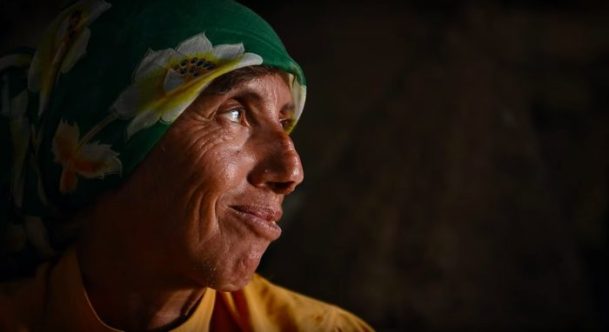
honeyland-700x382.jpg
Hatidze Muratova

Killer whales, killer times: San Diego part II

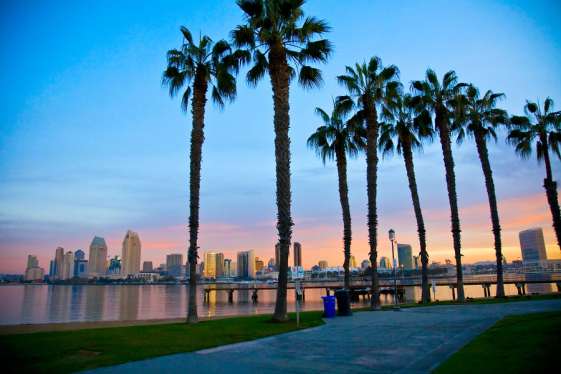
It’s astonishing how pleasant and doable the weather was yesterday in Coronado, San Diego, what with hair-flustering breezes and temps hardly nicking 70. It’s nuts. I mad-love it, especially considering the 100-ish hell-wave I’ll be facing back on the East Coast. That’s nuts, too, but in a whole other way, the kind that makes you cussy and crazed. 

Weather’s the worst. It’s almost never perfect. Climatic sweet spots are as slippery as quicksilver. But these days are pretty swell. I can wear pants. I can wear shorts. I can slip on a light jacket. Or not. Actually, it could be a dash cooler — mid-to-low-60s would be Edenic — but I’m being positive. Sunshiny, if you will. 

SanDiego.jpg

So. San Diego. I haven’t been here since a wild weekend at my brother’s dorm at San Diego State University, where he went for one semester before beating it the hell to Cal Berkeley. Yes, of course he took the 17-year-old me to Tijuana, and, natch, what happens in Tijuana stays in Tijuana. So quit asking. (Frankly, I don’t remember a thing.)

Now, with six other family members, I’m on vacation at a place I would never choose on my own. But majority rules. We did the vaunted San Diego Zoo, a lush green compound where the exhibited animals play a mean game of hide and seek with gullible human visitors craving a glimpse of (and desperate selfies with) those cuddly koalas. Peek-a-boo at the zoo. No one wins.

The other major attraction here is, of course, splashy, clamorous SeaWorld, where yowling seal barks and the wet slap of bellyflops by multi-ton orcas fill the salty air. 

Along with human screams.

That’s because the ocean park has perforce reduced its vulgar killer whale and dolphin shows after cries of demonstrable animal cruelty and have filled the entertainment void with, what else, rollercoasters and marine-themed thrill rides. 

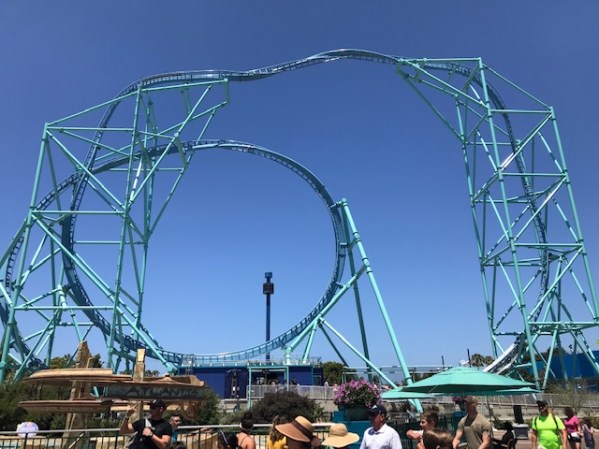
Like the Tentacle Twirl, Tidal Twister, and the fearsome Electric Eel, the “tallest, fastest” rollercoaster in all of — hang on — greater San Diego. It’s a bit like saying a place has the best, zestiest tacos in Des Moines, Iowa. It’s all comically relative.

IMG_1473.jpg
The Electric Eel rollercoaster — a shocking surprise.

But my sarcasm falls flat because the Electric Eel is a stellar coaster. We rode it today, and each herk, jerk, corkscrew, twist, twirl, drop and fling came out of nowhere. Usually you sort of know the layout of a rollercoaster, how many loops it has and such. The Eel was sheer breathtaking surprise, fast, furious fun.

Waddling, nose-diving penguin colonies; bulbous ivory beluga whales; tubby, slothish walruses; greedy, hand-fed manta rays; bullet-like harbor seals; the inevitable killer whale show, which is now solely an educational experience without dopey trainers standing on the animals’ backs like they’re water skiing. Thanks to foot fatigue, missing on our expedition were dolphins, otters, polar bears, sharks and the almost mythical narwhal, the so-called unicorn of the sea that I would like to ride around the Arctic.

Like yesterday, the weather held today at a tolerable 72 degrees, which still staggers. (And still left me sunburned.) This SoCal trip winds down tonight with tacos and tequila at the poolside cantina, called fittingly enough The Cantina.

This was an accomplishment. I survived all the trappings of a semi-swanky beach resort, swaying palm trees, children splashing (and shrieking) in swimming pools, grown men in flip-flops and tank tops, quaint downtowns, extravagantly famous theme parks filled with captive creatures and $10 beers. I spent time with family and realized its uncanny resemblance to the macaque. I pet a dog at a restaurant that growled at me fiercely. I splurged on too many beverages. I didn’t go to the beach. I didn’t fish. I ate scallops. I didn’t eat ice cream. I had a blast.

IMG_1472.jpeg
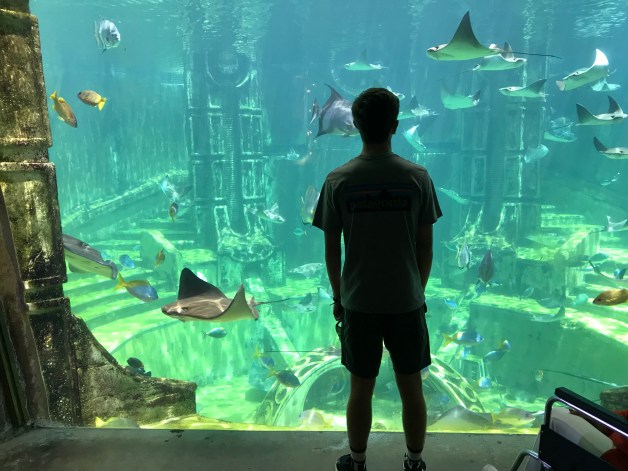
Nephew Nick, pondering the rays and fishies at SeaWorld.

Drumming up memories

I’m on seedy Broadway in San Francisco, on stage in a smoke-choked, beer-splashed nightclub called Mabuhay Gardens, aka The Mab, a DIY punk dive nestled amidst a blinking drag of vintage strip joints, including the storied Condor.

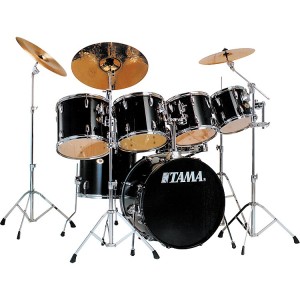
449098000000000-00-750x750I’m playing drums, a 7-piece Tama kit that exudes hard rock, in a band with an Aerosmith-y tang called Cheater. Long hair, striped pants and songs like “Knocking Down Your Door,” “Live for Today” and the inimitable “The Girl’s a Fish,” an infectious groove featuring double-bass kick pedals and cowbell. You heard that right.

This night was my second performance ever before a live audience. Prior to it, by mere weeks, I played a high-school talent show in a metal band named Enforcer. We covered Queensrÿche’s “Queen of the Reich” and Metallica’s “For Whom the Bell Tolls” — the first song fast and filigreed and vocally demanding; the second a raw, elemental, melodic stomp that’s become a Metallica classic.

As a nervous introvert, playing before a crowd was no small feat. I could barely give a speech in English class. It was a social and psychological breakthrough, and a dream come true. Rock was my destiny, and I was living it. And having a blast.

That is until my first “professional” show at The Mab. During the second song in Cheater’s set, the nylon strap on my right-foot bass pedal snapped, cutting off all right-pedal action, which meant I had to play with my left-foot pedal. Big problem: the left-foot pedal was strictly for double-bass play; my left foot coordination was weak, only apt for chh-chh high-hat work. (Now, if I had had only one pedal that night, the show would’ve been over.)

I choked. Instead of finishing the song with my left foot, I stopped playing altogether, meaning the band stopped, too — a concert faux pas. It took a few minutes to figure out that I had to keep going with one pedal — the left one, with which, again, I had minimal coordination. I am not ambidextrous.

Mortified and furious, as I was, my bandmates glared at me, then went ahead with the next song, “The Girl’s a Fish,” which demanded heavy double-bass footwork. I faked it with the left pedal, as I did during the rest of the set. The result was passable. Yet, by concert’s end, I was so mad at myself, so totally disappointed, I kicked drums and tossed cymbals to the point that the rear-entry doorman told me to cool it. An auspicious beginning to my awesome rock ’n’ roll career. I went home alone and moped grievously. 

A year later, post-Cheater, my scrappy garage band again played the high-school talent show. For some reason, the vice-principal thought our group could sell tickets, so he asked me to organize a band for the show. This time we were called THC, and we were more ambitious and ready to show-off than the year before. We wanted to shock and awe, to all-caps ROCK. (Though we ditched the smoke bombs from before.)

2db9a1ec682ed21d9492c60b55bec05bThis time we covered Iron Maiden’s “The Trooper” and Metallica’s “The Four Horsemen,” a seven-minute opus of relentless time changes and merciless riffs that amounts to about six songs in one. The songs proved ferocious, byzantine metal symphonies best left to virtuosos and masochists. I beat off more than I could chew, excuse the potentially repulsive pun.

And yet another mishap bedeviled me. This time my monitors konked out during an especially complex passage in “The Four Horsemen” and abruptly I couldn’t hear the rest of the band. I lost my place and had to stop playing for several seconds. It was humiliating. When the sound finally returned, the guitarists shrewdly cut to the song’s main riff and we finished with a flourish. Still, I was rattled instead of rocked.

Soon after, I sat in with a band called — wait for it — Mistress. The deal was I would record a demo tape with them and call it a day. I wound up doing that and a show at Mabuhay Gardens. With songs unironically titled “One Touch” and “We’ll Fight” — all heavier and more intricate than anything by Cheater — we played the San Francisco club without a hitch. Members of Cheater were in the crowd, cheering us on.

TD25KVSet-large
Electronic Roland kit with double-bass pedals

It’s been some time since I drummed. My last kit was a five-piece Roland electronic rack, with one acoustic touch — an 8-inch Zildjian splash cymbal to furnish shimmery accents. I kept my DW double-bass pedal with the set, and stuck with Vic Firth American Classic drumsticks that were a cross between jazz and rock style. I played hard, reducing them to splinters.

I was never a great drummer, mostly competent, deftly intermediate, even though I took lessons from the eminent Jeff Campitelli, the most affable pro and unfailing mensch, who was teaching Metallica’s drummer, Lars Ulrich, at the same time. (A secret: It’s all in the wrists, not the arms.)

I love the instrument, and to this day when I hear a favorite song, I might just erupt into spontaneous air drums. Thing is, I’m kind of a better air drummer than an actual drummer (cue rim-shot).

I miss the crisp metallic thwack of the snare and thuddy boom of the kick drum; the brassy, splashy explosion of a crash cymbal and pingy, bell-like precision of a ride cymbal. I miss being a song’s pulse and heartbeat, of driving it with thrust, swing, exactitude, and occasional fury. Musicianship, I am certain, is an exquisite madness.

What’s in a name? Lots apparently

“When you’re a white, blonde-haired, blue-eyed woman named LaKiesha, life can get complicated.” 

So begins an excellent CNN.com story that continues: “Strangers burst out laughing when you tell them your name. Puzzled white people ask what your parents were thinking. Black people wonder if you’re trying to play a bad joke.”

190609180750-lakiesha-francis-super-169.jpg
LaKiesha Francis

The story’s headline is “What it’s like to be a white woman named LaKiesha,” and what follows by reporter John Blake is a probing, provocative account of life for a very white LaKiesha Francis in small-town Ohio because of her exotic birth name, and what it means when a white person has a “black” name and a black person has a “white” name. 

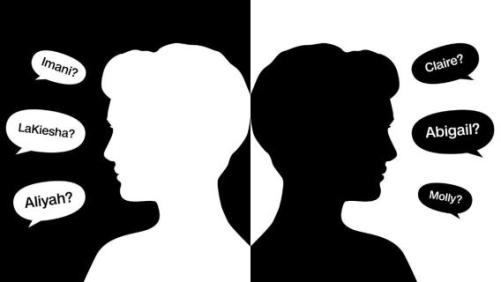
“We hear a lot about what are known as ‘black-sounding’ names these days,” Blake writes. “What LaKiesha has discovered is that the names of Americans are as segregated as many of their lives. There are names that seem traditionally reserved for whites only, such as Molly, Tanner and Connor. And names favored by black parents, such as Aliyah, DeShawn and Kiara. … But when you move through life with a name that violates those racial and ethnic boundaries, LaKiesha has found that people will often treat you as an imposter.”

unnamed-file.jpgFurther proof of name prejudice and name politics is this 2006 ABC report on “whitest” and “blackest” names:
“Studies of résumés found that people with black-sounding names are less likely to get callbacks. ABC put 22 pairs of names to the test, posting identical résumés except for the names at the top. The résumés with the white-sounding names were actually downloaded 17 percent more often by job recruiters than those with black-sounding names.”

Toxic and pernicious, let’s call this what it is: flagrant racism. Both of these articles are so powerful and troubling on their own — do click their links — that I have little of substance to add to them. My reactions are as visceral as intellectual, and putting them into words would likely be messy.

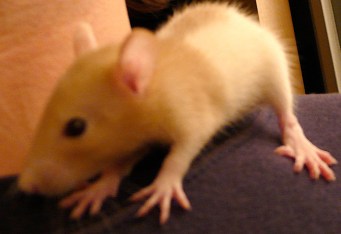
Yet I have my own modest story about appropriating a so-called black name. A long time ago I bought a white and ginger pet rat. I named her LaShonda for no greater reasons than I thought it was cute and cheeky. And fitting. Like her, it was adorable, full of spirit.

But then I started second-guessing the name. What would vets and their receptionists think when I brought in a white rodent named LaShonda? When I told friends her name the response was usually laughter. What had I done? Was I making fun of a black name? Or, as I believed, was I giving my pet the coolest name I could think of? (I thought of changing it, but LaShonda mysteriously died in her cage after only three weeks.)

P1010172.jpg
This is actually Tammy the rat, but she is practically a twin of the late LaShonda.

Would LaShonda have faced the same backlash LaKiesha Francis does? Would she have been treated as an imposter, her job applications put at the bottom of the pile because of her exotic moniker? Would she have been bullied by other rats? Would she have legally changed her name to Carol or Gertrude? Would she have resented me for putting so much social pressure on her?

“It can be exhausting constantly explaining yourself to white people, even though you’re white,” writes Blake. I believe it. LaKiesha and LaShonda “sound” black, but expectations are upended, confusion reigns and mockery and resentment are possible outcomes.  “A name isn’t just a name, according to history and social science,” Blake says. “Give someone the wrong name and it can become a burden.”

Funerals in the forest

I’ve talked here before about how to dispose of my body after I croak. I have particular, peculiar, deeply secular ideas. First, do not bury me; I am not landfill. Second, do cremate me; you can put my ashes in a curvy hourglass, a swirling snow globe, or a Magic 8 Ball to be shaken for answers to imponderable cosmic queries, such as, “Does Suzy like me?”  

These are some very real alternatives, as well:

* As I’ve written here, Washington State is considering allowing human remains to be disposed of and reduced to soil through composting. It works like this: Decomposing bodies crumble and decay into soil and are dispersed to help flowers and trees thrive. There’s no coffin, no chemicals, no pricey cemetery plot and none of the fossil fuels used in cremation. Eco-ecstasy.

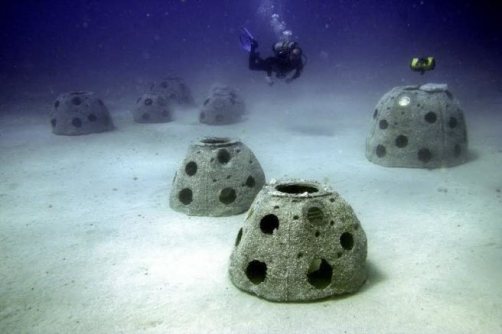
* In another post I described the underwater reef ball, an eco-friendly, reef-building sphere of cement in which your ashes are placed and then sunk to the bottom of the sea. First you’re cremated. Then your ashes are stirred with concrete and shaped into a hollow, hole-pocked reef ball. Resting on the seafloor, its goal is to provide a teeming marine habitat for fish, coral and other sea critters.

image.jpg

Now there’s another option, which I saw in the Times. “Could Trees Be the New Gravestones?” the headline asks. It’s a bit cryptic, but read on and it’s all about forest funerals. The first thing that popped to mind was hiding a corpse in the woods, throwing some leaves over it, and running. 

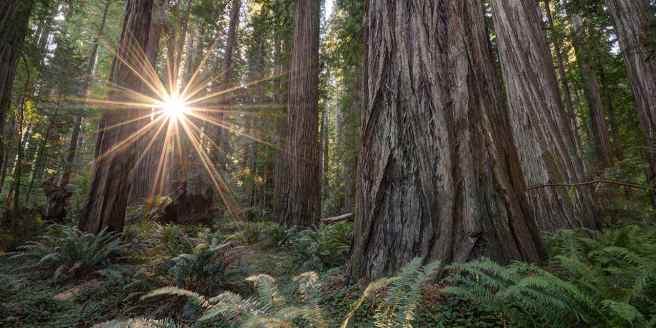
But no. This is about a respectable body receptacle, a burial place for human (and pet) ashes deep among towering trees, verdant ferns and Chia-lush moss, a sylvan Eden of mist and dew, deer, butterflies and half-men, half-goats. You want to be buried in beauty, this is your spot.

Better Place Forests, a Bay Area start-up, is “buying forests, arranging conservation easements intended to prevent the land from ever being developed, and then selling people the right to have their cremated remains mixed with fertilizer and fed to a particular tree,” the Times says. (Fed to a particular tree — Mother Nature’s bottomless buffet chomps on.) vc_insidersguidetocaliforniasredwoodcoast_st_rm_ea6f8r_1280x640.jpgIt sounds a lot like Washington State’s human composting proposal, but Better Place Forests seems to have this thing up and rolling with a tree-specific blueprint. The company emailed me this simplified explanation of how its “memorial forests” work:
  1. You choose a tree in one of our private, permanently protected forests.
  2. Under this tree, you spread ashes of family members and pets for generations to come.
  3. Our forests are easy to reach. Your family can visit your tree at any time.

Along with flowers, bring a backpack, picnic spread, bottle of rosé and bug spray.

So far, only two forests are taking cremains: one in Point Arena on the ocean-sprayed coast of Northern California and the dense Santa Cruz Forest, where 6,000 trees are available on 80 acres. Spots in Seattle, Denver, Portland and Flagstaff are in the works.

Dying is easy; paying for it is hard. What’s your budget? What kind of tree do you want to be eaten by? Some of the nitty-gritty (boldface mine):

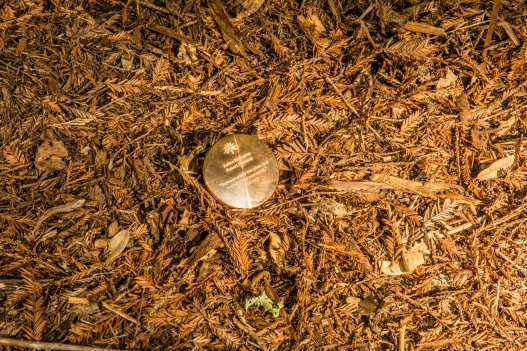
“Customers come to claim a tree for perpetuity. This now costs between $3,000 (for those who want to be mixed into the earth at the base of a small young tree or a less desirable species of tree) and upward of $30,000 (for those who wish to reside forever by an old redwood). For those who don’t mind spending eternity with strangers, there is also an entry-level price of $970 to enter the soil of a community tree. (Cremation is not included.) A steward then installs a small round plaque in the earth like a gravestone.”

I don’t know about you, but I’m not doing “a less desirable species of tree” (sorry, pine) or the community tree, which smacks of a pauper’s grave — fine for Mozart but not moi. I’m going for it — 30K to snuggle up to an ancient, majestic redwood, a barky skyscraper that kisses the clouds and tickles the sun. That sounds lovely. I’ll be dead, but still.

How strange to be sprinkled at the base of a giant tree in a vast shadow-dappled forest. Will an impish fox come dig me up, uprooting the whole rest-in-peace thing? Might a small-bladdered hiker use my tree as a makeshift urinal? Even stranger, could a fern sprout where my ashes are buried like in the book “Where the Red Fern Grows”?

That would be deliciously nuts — what color would my fern be? — and as surreal, incomprehensible and amazing as death itself.

Now, where do I sign up?

(The company’s video pitch is HERE.)

merlin_155601582_ab30cd88-747a-4c47-852f-f6b4d0b79d11-superJumbo.jpg
“A small round plaque in the earth like a gravestone.” They’re not kidding. That looks to be about the size of a silver dollar.

Random reflections, wryly

I have never done karaoke, and I never will.

I don’t understand runners. I don’t know what in the world they are doing.

Dancing — a faint memory from my roaring twenties that I hope goes away.

Reggae is the devil’s flatulence.

A good, mean rollercoaster mainlines an unparalleled high. 

There is nothing sexier than a comely woman reading a book. 

Cars. I will never get them. They are like refrigerators — necessary appliances.

‘Good dog’ is redundant.

People who purposely don’t travel are unevolved and sad. (And people who say Munich is better than Paris are the most unevolved and most sad.)

Going to the movies alone is the best.

Religion is so radically misunderstood, so repulsively knotted up, we should hit delete and start all over again.

I am constitutionally incapable of playing charades.

Giving money to your alma mater is strictly for suckers.

Unless you’re doing it to a tiny child, the high-five is socially questionable. Fist-bumps — criminal.

There are worse things than tongue piercings. Though I can’t think of anything.

When an adult says they’re “reading” Harry Potter, they’re not really reading at all.

Sushi is sublime. I’ll even eat the grocery store crap.

I‘m thinking of going back to Japan. The more I think about it, the crazier I get.

I have this thing that if someone tells me they don’t read, I want to go back in time to the moment where I hadn’t met them.

Carnivals are disgusting and revolting. I adore everything about them. Even those poor goldfish.

I can’t do the Great Outdoors. It’s the outdoors part that gets me.

I like sharks a lot. If one bit me, it would probably like me too.

Pet rats are like itty-bitty dogs — highly intelligent, funny, trainable, social, responsive. They drink beer and eat anything and, well, everything. Then at about 2-years-old they die and shatter your heart into 10,000 pieces. They’re the best.

If, in a post-apocalyptic world, all sports were wiped out, I wouldn’t care a whit. Take the fans first.

I was thinking of going to a local food festival and parade. Temporary insanity just creeps up on you.

roller-coaster-149508746-57ac7eb45f9b58974ace1b67.jpg
Good.
keep-calm-and-love-reggae-d001012131649.png
Evil.
_105702604_shark976.jpg
Cool.
Tongue-Piercing-Girl_620x349.jpg
Fool.

The story behind my blog photo

People have asked me if the photograph above this blog is is a screen-shot from Francois Truffaut’s “The 400 Blows,” as it resembles a scene from that classic 1959 film. It is not.
It is Alfred Eisenstaedt‘s ecstatic picture of kids at a Parisian puppet show, “Saint George and the Dragon,” at an outdoor theater in 1963.
01_00760343.jpg

Time magazine recently wrote about this enchanting photo:

Capturing the thrill, the shock, the shared triumph-over-evil that the children feel at the very moment when St. George slays the mythical beast, Eisenstaedt’s picture feels as fresh as when it was made, more than 50 years ago.

Here, the picture tells us, is an innocence that can remind even the most jaded of what it was once like to believe, to really believe, in the stories that unfold before our eyes onstage, or onscreen.

The master photographer himself said of this very picture:

“It took a long time to get the angle I liked. But the best picture is the one I took at the climax of the action. It carries all the excitement of the children screaming, The dragon is slain! Very often this sort of thing is only a momentary vision. My brain does not register, only my eyes and finger react. Click.”

A pungent parting shot for ‘Game of Thrones’

“Game of Thrones” is over — thank god.

And yet the chatter sputters on. Fans can’t clam it. Of all the “GOT” noise — a FOMO racket, a bellyaching din — this might be my favorite snippet, courtesy of clear-eyed Washington Post critic Hank Stuever, whose healthy cynicism is gleefully cathartic:

It’s likely you’re already aware of the dissatisfaction with the conclusion tweeted hither and yon — six weeks of nitpicking complaints, first-class nerd whining and an ungodly amount of postgame analyses. Consider all those hastily posted diatribes or that pointless online petition with a million deluded signatures on it, demanding (demanding!) to have Season 8 scrubbed and remade. In some ways, “Game of Thrones” had grown so popular that it made its viewers look embarrassingly out of touch with life itself.

This can only happen when we love our popular culture a little too hard, crossing some line of personal investment, forgetting when a TV show is only just that. It was our fault for coming to regard the show as the apogee of the medium itself.

It’s also why I’m glad some unnamed, unwitting hero left a coffee cup in the camera shot in the episode that aired May 5. That one coffee cup humanized the whole endeavor. It reminded us that a TV show, no matter how absorbing, is a folly, a fake, a job that someone is hired to do, so that an HBO subscription can be sold to you. The coffee cup will be scrubbed away with a quick flick of magic technology; but before it’s entirely gone, I hope they give it an Emmy.”

p-1-whatand8217s-that-coffee-cup-on-game-of-thrones-worth-to-starbucks.gif.jpeg

The last Sea-Monkey post, I promise

The Sea-Monkeys are doing swimmingly, thank you, flapping and flying through speckled salt water, pumping fleshy wings and wagging long pink tails like bitty aquatic dragons. Dozens of them flit and twirl about in a plastic tank that’s at best seven inches tall. (See some in action here. It’s totally worth it.)  

The last time I reported on Sea-Monkeys — here — I had just watched a memory-rattling short film about the fanciful water simians, which are actually simple but neato-to-watch brine shrimp. (But let’s pretend they’re actually otherworldly, kinda creepy alien demon creatures, the love-children of Poseidon and a mermaid — or of Aquaman and a king prawn. You pick.) 

Unknown.jpeg

Watching the film, I was prepared to order the small Sea-Monkey tank that comes with Water Purifier, Instant-Life Crystals (eggs) and Growth Food packets lickety-split, I was so excited seeing again the novelty pets I had owned so many times over the decades. (I’m apeshit for these monkeys, you might say.) 

So I did. For $12.98 at Amazon, I got The Amazing Live Sea-Monkeys Ocean-Zoo, which the package promises “The World’s Only Instant Pets!”®. I filled the tank with tepid tap water, churned in the Water Purifier and waited the prescribed 24 hours before dumping in the Monkey eggs. I stirred them good and waited. 

777c3e02-5a77-41c2-833d-2e1994af9e0e_1.133506a679ed8f7edd89240552b3e3aa

Within minutes pencil-dash creatures were zigzagging the water, itsy, white, herky-jerky things you might see under a microscope — autonomous amoebas swimming on their own and doing gleeful backflips. A month later, they are happy, confident, independent and plump — about the size of fingernail clippings — everything you want in healthy offspring. I asked my niece to name the critters. She named them all Charlie. 

The Sea-Monkey world is like an undersea ant farm, without the dirt and without, in my case when I tried to cultivate an ant farm, mass annihilation. Not that Sea-Monkeys don’t die. They do. But they also reproduce and replenish their populations in sly ways, such as lacing the Growth Food with fresh eggs that hatch instantly when I feed the creatures every five days or so. Smelly green powder goes in, and babies, mere monkey specks, promptly appear. 

It’s that kind of thing that keeps me in the strange thrall of Sea-Monkeys. They really are pets, even if they don’t bark at the mailman, play fetch or, like a certain cat, curl up on your face while you sleep. They don’t stain the carpet, rack up vet bills or, really, do much of anything.

They’re like fish — pretty, transfixing, calming things to look at — but you don’t have to clean the tank. Self-sufficient, save for periodic feedings by their benevolent master (me), Sea-Monkeys just do their thing, flip about, swim around, dance and jig with an alacrity we can only envy. 

Looking back at Chewbacca

This is the very first image I ever saw of Chewbacca:

photo-SW-K-15.jpg

It was spring 1977 and I was young. I had hair like a mid-career Beatle. Movie-wise, I was obsessed with “Jaws” from two years prior. And, even at that early grade-school age, I thought “Dog Day Afternoon,” watched repeatedly on cable, was the dope. (Later movie manias would include “Close Encounters,” “Alien” and “The Elephant Man.”)

My dad came home with a thick press kit for the summer movie roster from 20th Century-Fox. (A journalist, he often arrived from the office with public relations goodies from movie studios and, maybe coolest, the Mattel toy company. We were the first kids in town to have Slime and Shogun Warriors.)

I don’t recall any of the movies in the 20th Century-Fox press kit but one, a mysterious little picture called “Star Wars” that was slated to hit theaters May 25. My immediate fascination with the movie, well before I saw it, is so clichéd that I will keep the recollection trimmed and distilled. 

Amid a sheaf of black and white stills of characters from the film, bound in a colorful folder emblazoned with the now-iconic “Star Wars” logo, my attention zeroed in on one particular photo. The caption read: “Chewbacca, the hundred year old Wookiee, co-pilots the Millennium Falcon, a Carnelian pirate starship.”

Chewbacca? Wookiee? Yes! This was the baddest movie character I’d ever seen, a hair-covered giant holding an automatic weapon in what appeared to be the desert with a Clint Eastwood, “Go ahead, make my day” expression on his Sasquatchian puss. The pure, scorching exoticism of it blew my little mind. I immediately stuck on my wall the 8-x-10 with four silver tacks. Anticipating the day I could see this creature move and (not quite) speak on the big screen became a pastime of electric excitement. 

The man I would soon learn filled the Chewbacca fur-fest was Peter Mayhew, a 7-foot-3 Briton who died of a heart attack at 74 yesterday at his North Texas home. (Check out his personal site Chewbacca.com.) The galaxy weeps. 

chewbacca.jpg
Mayhew and Chewbacca. Similarities abound.

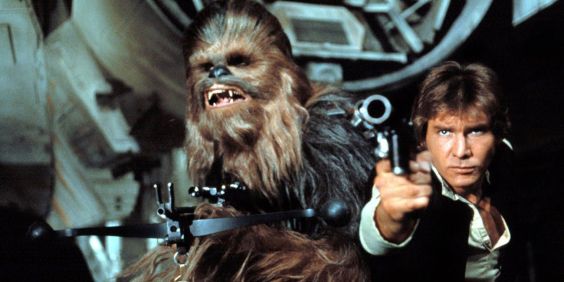
As Chewie, Mayhew growled and laser-gunned his way through five “Star Wars” features as sidekick and co-pilot to Harrison Ford’s swashbuckling Han Solo. They were a dynamic duo, BFFs who fought together, cried together, drank together and probably had a secret handshake. That’s all the speculation I will pursue.

Chewbacca wasn’t the most complex character. He had moist, soulful animal eyes and teeth like a German shepherd’s. The mournful, bestial yowls he had to rely on for vocal communication without the gift of speech could shred your ears, and rend your heart. (His voice was created with recorded animal sounds.)

“He put his heart and soul into the role of Chewbacca and it showed in every frame of the films, from his knock-kneed running, firing his bowcaster from the hip, his bright blue eyes, down to each subtle movement of his head and mouth,” Mayhew’s family said in a statement.

han_and_chewbacca.jpg
Chewie and Solo — one of the great action duos in movie history

Valiant, righteous, a fighter, friend and even funny, Chewbacca as portrayed by Mayhew was more than a guy pantomiming in a gorilla suit. He lent the Wookiee spirit, spunk and purpose. I absorbed all of this when I finally, in a one-screen art-deco movie theater in the summer of ’77, saw my hero in action, this towering benevolent beast, who fleetly dispensed with Imperial baddies and didn’t complain when saucy Princess Leia dismissed him as a “walking carpet.”

It’s why as a kid I was so crestfallen when, at the end of the film, everybody got a Medal of Bravery for saving the galaxy and blowing up the Death Star except Chewie, who just stands there during the ceremony, tall and noble, nothing dangling around his neck. Only his mighty ammo-filled bandolier, worn like a sash on his left shoulder, bedecks him.

But that’s Chewbacca — humble, honorable, tough and self-effacing. He deserves a medal. If not for assisting in nearly killing Darth Vader, then for being both a literal and figurative colossus.

final-29.jpg