Winkless at 35,000 feet

Right now it’s 104 degrees at George Bush Intercontinental Airport in Houston, which seems appropriate considering the facility’s infernal namesake. I have arrived from the East Coast, where it was 74 at 10 a.m. — it will hit 94 — and I am connecting to a flight that will take me to the land of 54 degrees, for it is winter in Buenos Aires, my latest destination on my quest to see as much of the world as I can before it blows up.

Hours later, I write this in the dark on a punishing nine-hour redeye during that weird interval when the pilot douses the cabin lights so his human cargo can go sleepy time. I’m a jet-plane insomniac so that trick ain’t working. Instead I atrophy in my seat, reading a bit, maybe watching a few minutes of a movie (or eavesdropping on what others are watching — almost uniform tripe), but mostly fiddling my brain’s thumbs and sneaking the occasional mini bottle of scotch that I smuggled aboard. (Contraband. I rule.)

Of course, as always, the guy next to me is comatose, swaddled in a blue airline blankie, a rivulet of drool squiggling down his chin — paradise. And there I’ll be when we disembark, sleep-deprived, pissed-off, testy, tetchy, impatient — and singing glory hallelujah I’m in South America, my first time on the continent! Bloodshot eyeballs, bewhiskered, frowzy hair — who cares. The miracle of modern aeronautics has delivered me someplace new and far, uncharted and exciting. I have no idea what I’m getting myself into.

And that’s the gist of it. No matter how physically miserable I am right now — there’s six hours left on the flight and I’ll be burning untold calories fidgeting, not to mention enduring fearsome temblors of turbulence — I still have much to look forward to, lots of which I’ll probably share here. 

Meanwhile, I have a funny novel to finish, some hooch to furtively sip and a few episodes of “Rick and Morty” to watch. Things could be a hell of a lot worse.

Argentina, here we come (gulp)

The plane is set to depart Sunday at 2:09 p.m. local time, and by 2:49 p.m. I plan to have a scotch resting on my drop-down tray next to my trusty laptop or a scintillating paperback, my carry-on tucked overhead, seat reclined and the fat, brushing butts and sharp, errant elbows of fellow fussing passengers over and done and in their seats, preferably nowhere near me.

Grrr.

Air travel, the great triathlon, the great grumble-thon. Packing, getting to the airport — in an Uber, no less, with those ubiquitous pine trees dangling from the rearview that reek of urinal cakes — boarding the plane sheep-like, the scrum of seating, and all the fun, head-imploding minutiae in between. (Security — fuck yeah!) As a blanket complaint, it couldn’t be more cliché. Deal.

I’m soaring from the East Coast to a layover in Houston, then off to Buenos Aires for nine days, which seems a little excessive but at this point I’m kind of stuck. (Note to self: check out Montevideo in nearby Uruguay, or ride a horsey with some dusty Argentinian gauchos. Eat steak. Mounds of it. I really don’t know.)

Dress appropriately. This one’s tricky. It will be 90 degrees at my departure and 53 degrees at my arrival in South America, where it is currently winter below the equator. I’ll wear jeans and a t-shirt and carry a mid-weight jacket on the plane. When I arrive in Buenos Aires I’ll figure out what to unpack and put on. A cinch.

I’m the fourth most neurotic traveler on the globe, and so of course I’m bitten with anxiety about what’s in store in a city, a country, a continent, I’ve never been to. Will I be dazzled? Will I have fun? Will my many plans pan out? Will I get robbed and beaten in a taxi cab?

My myriad trips always work out fine or better despite my weak-kneed worries. And of course I’m already scheming the trip after this, my annual late-October journey. I was leaning toward Budapest, where I’ve never been, and Krakow, where I have been and loved. Now I’m considering Madrid, where I’ve been, and Bilbao and San Sebastián in Basque Country, which are new to me.

But first things first. I have Buenos Aires to explore and get lost in yet. Museums and mausoleums; graffiti and galleries; tango and tours; all within sweeping European influence tangled with Latin passion and grandeur. A mad melange.

And before that, the flight. Oh, god, muzzle the chatterboxes, in my row or any row. Or the bewhiskered guy next to me who plays video games for 10 hours straight. Or, heaven forfend, the shrieking infant, diapered spawn of the devil. 

I can do this. I always do. Excuse me, flight attendant, I need a tall cocktail of one part gin, two parts exasperation, and a splash of fizzy rage. Gee, thanks. And I wash it all down with one big Xanax. And from there we’ll see how things go.

My bet: swimmingly. Absolutely swimmingly.

My current cultural playlist

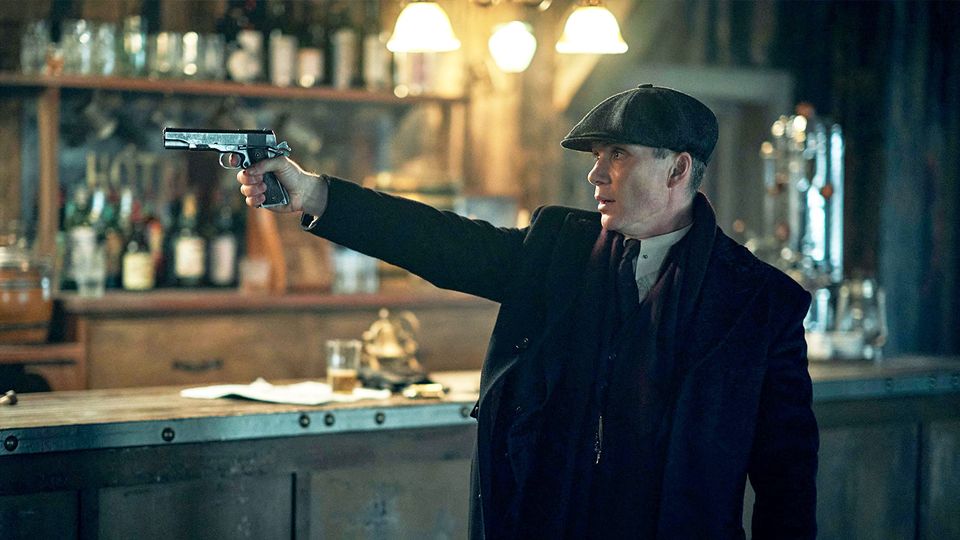
1. Way behind on the cult British crime saga, I’m discovering the gritty and gruesome pleasures of “Peaky Blinders,” an uncompromising gangster epic bristling with politics, razor blades, gamblers, guns, and unvarnished thuggery. 

Set in Birmingham, England, just after World War I, the Netflix series is a fearsomely atmospheric blood opera starring a rogue’s gallery of dapper gangsters with deep family roots and a hunger to stay in power. It openly, inevitably recalls “The Godfather,” “The Sopranos” and, on a knife and knuckle street level, “Gangs of New York,” with perhaps more thematic tentacles.

The show is fronted by Cillian Murphy as crime boss Thomas Shelby, whose smoldering menace can burn a hole like a bullet. One website has voted him the Greatest TV Character of All Time, a testament to Murphy’s pit bull commitment and conviction. He unnerves every time he’s onscreen, makes you shift in your seat. Pepper the grimy period setting with tunes by Nick Cave, PJ Harvey and White Stripes and you get more than anachronistic friction; you get gang-banging with a boogie beat. 

2. Listening to Nirvana’s short, punchy songs, it struck me again why the band is so good and lasting: Almost lick for lick, Nirvana is as infectiously hooky as the Beatles.

And on the Beatles — my favorite band, and I’m not a hundred years old — I liked this line from “The Idiot,” Elif Batuman’s riotous novel of the head and heart: “The Beatles turned out to be one of the things you couldn’t avoid, like alcohol, or death.”

3. You also can’t avoid Marvel and its muddleheaded mayhem in the current cinema, a soul-battering bummer. But there do exist little oases floating past the aesthetic carnage, attractive indie films like the raunchy, uproarious “Zola” and my latest favorite, “The Worst Person in the World.” 

The grabby title is slyly misleading in this dark rom-com drama about a young woman who skitters between jobs and lovers while surfing life’s foibles. Joachim Trier’s prickly Norwegian charmer, ablaze with insinuating characters and sexy anecdote, is told in 12 fluid chapters, led by endearing star Renate Reinsve, who won best actress at Cannes for her intricate portrayal of a woman in flux. Hardly the worst person in the world, she’s a millennial supernova.

4. Ottessa Moshfegh’s new novel “Lapvona” is grossing out reviewers with its blithe violence and panoramic depravity. (Is Moshfegh the worst person in the world?) The medieval fable, set in a village rife with plague and other misfortunes, is earning wildly mixed reviews, many of them lashing in their displeasure, even from fans of Moshfegh’s previous dark fictions (“Eileen,” “Homesick for Another World”). 

I’m a fan as well, and I’m steeling for a rough ride. I’m only on page nine, and here’s a verbal taste: “disemboweled” “heads of the dead,” “a bone sticking out through the flesh,” “animal excrement.” (Page nine.) The book, in all its gloppy mucus and viscera, came out this week — which makes it the perfect summer beach read. You heard it here first.

In praise of small pleasures

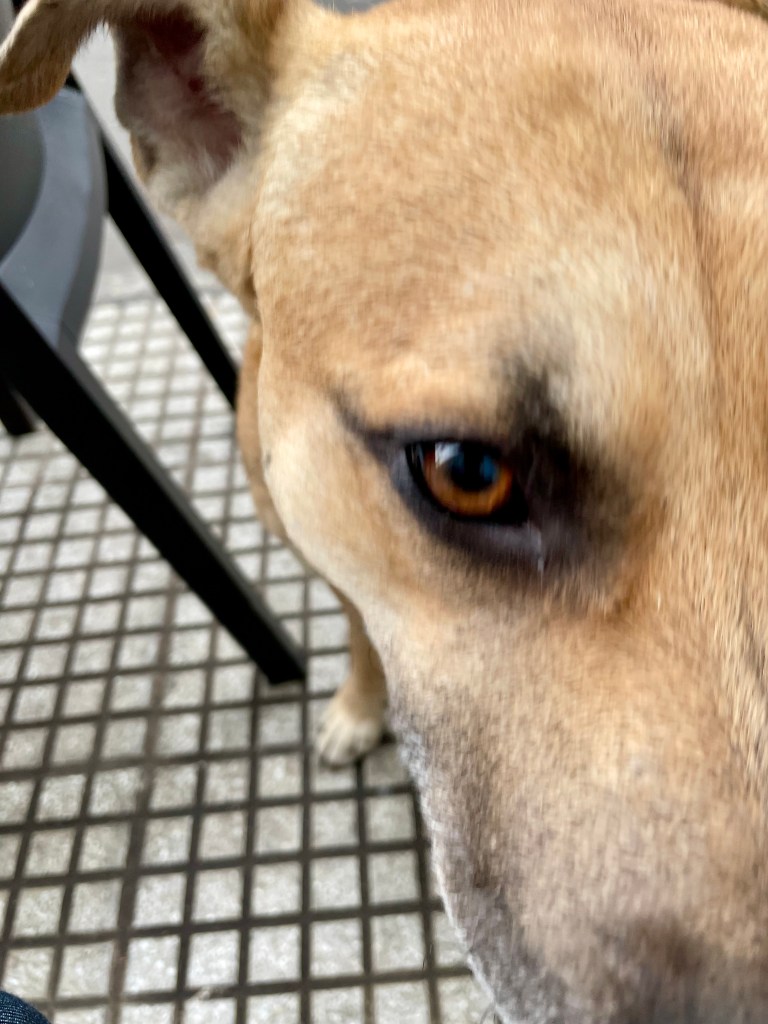
Stay away. We’re contagious. First my nephew caught Covid, then I did. Now my brother has it. Next up: the dog. 

This too shall pass, this rottenness, and I’m happy that the virus, for now, is behind me. It’s just one small blessing in muddled times, a jagged slab of flotsam to hug while the ship sinks.

There are other things. Like Elif Batuman’s new novel, “Either/Or,” which I’ve plugged here before briefly. It’s one of few passing pleasures right now, be it a startling observation about love or a suave turn of phrase that knocks me dizzy. 

Or a jab of insight glinting with wry misanthropy: 

“Of course, you couldn’t have a party without alcohol; I understood this now. I understood the reason. The reason was that people were intolerable.” 

Or any number of absurdist gems: 

“I hadn’t a clear mental picture of his new girlfriend, Lara, and realized that I had almost expected her to look blurry.”

But what’s a small delight to me may be imperceptible to you. 

Unless you’re traveling abroad and you’ve just learned that the U.S. has lifted its Covid testing requirements to return to the States — a major hassle deleted from an already stressful travel climate. I recently had to take the test in Portugal and Italy to get back home and the logistics were near-traumatic. 

So rejoice for that minor miracle. And why not the same for Monkey 47, a richly aromatic, botanically fierce, impishly named gin that I’ve rediscovered and is well worth the price. Even the gin-averse extol its ample virtues. It may be the best gin on the shelf, a smooth bracer for rough days.

What else is keeping me warm, now, when the skies are dark? The crack and screech of Brandi Carlile’s voice on her song “Broken Horses.” The zesty mazeman noodles at Ani Ramen House. Penélope Cruz’s febrile, heartrending performance in Pedro Almodóvar’s stirring melodrama “Parallel Mothers.” My unquenchable wanderlust. Bongos. That woman at the cafe. Books, mountains of them.

The dog. 

The dog. 

The dog.

Culture in the time of Covid

My Covid’s gone and I feel strong as an ox, even though I barely know what an ox is. A big cow? Paul Bunyan’s interspecies BFF? Actually, I just looked it up. An ox is a “castrated bull used as a draft animal.” So let’s scratch the whole ox analogy entirely. 

Point is, I’m back — non-contagious, symptom-free, fit as a fiddle. (I don’t know what that means either. Skip it.) It took about five days to vanquish the virus, and it wasn’t as bad as I imagined. It was like a mild cold, but without mucus violently erupting from my lungs. This was a dry cough, little hacks, as if an infant was smoking a cigarillo.

As hoped, I got a lot of reading done during my convalescence. I wrapped up “The Sportswriter,” Richard Ford’s extraordinary, bittersweet novel about life, love and letdowns, and started three more books, all highly acclaimed and released in the past few weeks.

Alas, two of them tanked. Those would be Ali Smith’s “Companion Piece” and Mieko Kawakami’s “All the Lovers in the Night.” 

I’m not sure what critics are going on about with Smith. They go bananas for her Seasonal Quartet novels — I failed miserably to warm up to two of them — and seem to regard the new book as the prosaic sublime. I read 175 pages of “Companion Piece” and surrendered with a mere 50 left. She’s a slog, oblique, flirting willfully with incoherence. I wasn’t having fun. I was having a migraine.

I enjoyed Japanese super-author Kawakami’s earlier novels, the shrewd and touching “Heaven” and “Breasts and Eggs,” which sounds like a particularly provocative breakfast dish. But her latest, though not totally displeasing, never takes off. It’s slow going … going nowhere.

But I hit pay dirt with “Either/Or,” Elif Batuman’s sequel to “The Idiot,” tracing the turbulent interior life of a female college student who’s trying to figure it all out. It’s at once wildly funny and erudite, catchy and sparkling, and that’s about all I can ask for in a book. Bonus: the author’s name is Elif.

For someone isolating with time to burn, I watched very little in the way of shows and movies. I did stay abreast of the series “Hacks” (hilarious), “Top Chef” (harrowing) and “Barry” (hilarious and harrowing). And I’m looking forward to sinking my teeth into “Irma Vep,” the great Olivier Assayas’ dramedy about a vamp, vampires and the insanity of making movies.

Meanwhile, everybody and their easily-scared tweens are bingeing Netflix’s gimmicky genre mash “Stranger Things.” I preferred the show when it was called “Scooby-Doo.”

I also got to anticipate my July journey to Buenos Aires as I was spread out, aching and sniffling with dramatic moans of self-pity. It’s something to look forward to, and, from a piece I read recently, that’s not only a good thing, it’s a healthy thing: “Having something to look forward to boosts your mood and lowers your stress. It can increase motivation, optimism and patience and decrease irritability.” Huh.

Not quite a Covid cure, but it can’t hurt. So much so that I started looking forward to my annual October trip, leap-frogging the July trip I haven’t even taken yet.

I’m thinking Budapest, a European joint I have yet to visit. Or perhaps a return to Krakow. Or Berlin. I’ll have to see what Covid is up to in those places. I might be cured, but the tenacious bug, mean and mercurial, still has the world in its gooey grip. 

Is reading for sissies?

As a kid, from ages seven to 17, I had subscriptions to sheaves of magazines I eagerly awaited to hit my mailbox — Dynamite, Ranger Rick, Hit Parade, Modern Drummer, BMX Action, Omni, Heavy Metal, Movie Monsters and more.

Each title represented a discrete passion — showbiz, animals, rock, drums, science, bikes — and the glossy journals were bibles of my interests. I read them rapt, lapping up interviews, gossip, photos, front-of-the-book ephemera, often scissoring them to bits for bedroom wallpaper and school-locker decor. (Try that with an online subscription.)  

At about 17, I started reading the local newspaper, the San Francisco Chronicle, with a new seriousness that went beyond comics “Bloom County” and “The Far Side.” I loved the stylish writing, current events, cranky columnists and clever critics. It was a daily feast, and each week I’d spend up to three hours poring over the overstuffed Sunday edition, an inky ritual I savored.   

I also read lots of books — “Charlie and the Chocolate Factory” to freak show biographies; “Slaughterhouse-Five” to Jim Morrison’s (dreadful) poetry — but that’s a given. When I was eight I read the fat paperback of Peter Benchley’s “Jaws,” and I’m still proud of it.

But is it normal, for a boy at least, to spend so much time with the written word, reading? Shouldn’t he be outside, say, throwing balls, or blowing things up?

While I hated most sports — except soccer, skiing and BMX — I was your average knee-scraping, war-playing, B.B.-gun-shooting, lizard-catching, fire-setting, doorbell-ditching, girl-crazy, grungy little scamp. 

Still, I adored words and what they imparted — ideas, information, whole worlds. I used to wade through our World Book encyclopedias and ginormous Mirriam-Webster dictionary just for fun. My best friend Gene and I wrote little books about devils, murder and other unspeakable mischiefs. We had a thing for horror.   

But did all that bibliophilia and word-love mean I was a giant wuss?

This week teacher and novelist Joanne Harris — bestselling author of “Chocolat” — said that reading is far more rare in boys than girls, for rather macho reasons:

“When I was teaching boys particularly, I found that not only boys did not read as much as girls but they were put under much more pressure by parents, largely fathers, to do something else as if reading was girly,” she said via LitHub. Boys, apparently, “ought to be out playing rugby and doing healthy boy things.”

And I reply: Can’t boys do both — reading and “healthy boy things” — like I did (and what’s a healthy boy thing, anyway)? 

Forbes reports that boys are way behind girls in reading comprehension and writing skills, because “reading and writing are stereotypically feminine endeavors, and boys tend to avoid anything that’s remotely feminine. In other words, it’s just not cool to read, because reading is for girls.”

This is clumsy and reductive (and offensive) reasoning, more fitting for the playground than a hard, rational study. Reading is for girls? You don’t say.

What then to make of all the wildly famous male writers overpopulating the literary canon who have (unjustly) eclipsed their female counterparts? Call Hemingway or Mailer a wuss and see where that lands you. 

I don’t doubt that girls read more than boys; I’ve seen it borne out. If it’s because boys are discouraged and intellectualism is deemed unmanly, then we have a real societal problem. I don’t have the answers — just my umbrage — but if you have any thoughts, please comment.  

I know many bibliophobes, people, almost all male, who would never think of strolling the living, fragrant stacks of a bookstore, or simply pick up a book for that matter. To me, they’re the wussies, un-evolved, willfully ignorant, with the vocabulary of third graders and the critical thinking skills of a hubcap. I don’t trust adults who don’t read. Philistinism is a cultural crime.  

World travel has largely usurped my juvenile need to start fires and catch lizards, but I still read at a mad clip and write as much as I can. Call me a sissy. I’m having a ball.

Covid chronicles, part 2

I’m in the clutches of Covid, as I wrote upon my discovery two days ago, and my symptoms, from a light wheeze to a drippy schnoz, are getting cute on me. Just when it feels like they are receding, they jack-in-the-box back up, all flailing arms and googly eyes, heckling me with a mighty, Ha!  

So I thought it wise that I ordered a two-pack of DayQuil and NyQuil “liquicaps” for cold and flu stuff, from headaches to sneezing. It arrived yesterday and I promptly popped some DayQuil, which doesn’t contain the depressant effect of the sleepy NyQuil caps, I’m guessing.

Ha! again, because the DayQuil failed me like a two-bit placebo. My chest is still heavy, head thrums, throat sizzles, sinuses swell. This is why I rarely bother with so-called cold medicines, those blister packs of impotence, those doses of disappointment.

Compounding things, I look beastly. I’m brushing the Mickey Rourke phase. I’m sallow, splotchy, puffy. My eyes are poached eggs. And I have a zit on my cheek that could pass for a siamese twin.

I’m at home, isolating for at least a few more days. It’s a lonely spot, a kind of plush solitary confinement where complaining has no place, because, for one, no one can hear me. The pharmaceuticals might not work, but life continues mostly uninterrupted. I have my books, TV, computer, phone, food and a reservoir of self-pity. The dog looks at me and just shakes his head.

Being sick is never a Disney pleasure cruise. It’s more like “The Exorcist.” Since I started this post, I took the NyQuil half of the gel caps — it’s now past midnight — and the result seems preordained. I feel no better. I feel the same shade of blech. And I had high hopes for this one, with its shimmery emerald hue suggesting a soothing shot of absinthe. 

But no. The absinthe is absent. The NyQuil hasn’t made me drowsy and for some reason my ears feel like they’re stuffed with gauze, which means I have a brand-new symptom: deafness. 

Three more days of this, but of course it could drag on. I’ve quit the ‘Quils and will coast on bladder-bulging volumes of water and isn’t that the oldest home remedy in the book when you’re sick — fluids, more fluids. I think I saw that on “Little House on the Prairie” when Pa or a tween Laura Ingalls Wilder caught a chill. They drank like whale sharks. 

For now, that’s me. Bound for bloat on the good ship Covid. Glub, glub.

Sick daze

Well, I got it. Or it got me. Whatever. It’s my turn. For Covid, that is. 

Some crabby cold symptoms — the usual gunk: light cough, wet nose, swimmy head, a generalized ick — proved to be the real deal today. A test said so. My achy-breaky body bears it out.

Now what?, I wonder. First, I’ll be isolating for five days. Then I’ll take another test. Meantime, lots of fluids, rest, crushing boredom, gratitude that I haven’t lost my taste or smell (yet!), and some reflecting on how foolish I was to think I was impervious to the virus, as I took all the precautions — two rounds of shots plus a booster, regular mask-wearing, mega doses of arrogance, etc. Small irony: I was slated to get my second booster this afternoon. 

They say most of us will get Covid, so I don’t feel completely singled out and picked on (mmm, yes I do). Still, it’s a drag. I’ve had to rearrange my schedule, cancel appointments, and, sorely, I will miss a public reading of one of my brother’s stellar plays. Plus, I have a wee dry cough that sounds like a choking Munchkin.

Reading. I’ll catch up on some reading. I’m already waist-deep into a re-read of Richard Ford’s beautifully observed 1986 novel “The Sportswriter.” A piercing slice of contemporary realism, the book is tinged with rue and humor and grit, and profoundly meditative about the everyday struggle. It’s oddly comforting, despite the sting. 

On deck is “Either/Or,” Elif Batuman’s brand-new sequel to her hit novel “The Idiot.” Like its predecessor, critics adore it (“This novel wins you over in a million micro-observations” — NYT) and the way it sweeps you into a bright young woman’s woolly world of self-discovery. (That’s all I got. I haven’t read it yet.)

I can get all philosophical about contracting the virus, or not. It’s plain as day, and because it’s physical, intellectualizing it, cataloging the myriad ways the body betrays us, is just so much wheel-spinning. So far, the malady feels like a mild head cold — every so often I wonder if I really even have it — and I’m banking on it staying that way. 

Covid can kill you, but so can the flu, or a drive to the pharmacy. I know lots of people who’ve had it and each one pulled through famously. So I’m not too tangled up about it. Everything will be just fine … right?

As the lead in “The Sportswriter” says, “Sometimes I’m afraid … It’s natural to the breed.”

Going out in a blaze

There’s the scratch and sizzle of a striking match. Then the blue-orange blaze that ignites the shrouded body, which is wreathed in marigolds. Then … foof! … all is rising flame and billowing smoke. The corpse begins to burn. It will do so for hours, until all that remains is a heap of ash and bone.  

I witnessed such sacred funeral pyres on the Ganges in India and on the Bagmati River in Nepal some years ago. I didn’t stumble upon them; I sought them out as quasi-spiritual pilgrimages. My slightly morbid, slightly practical fascination with death led me there. Beholding the ritualized smoke and fire, I felt privileged and humbled.

What I didn’t feel was awed. Death is deeply quotidian to this non-believer. There is nothing mystical, magical or celestial about it. Ashes to ashes, dust to dust, with no heaven, hell or afterlife to follow. Pardon the party-poopery.

Seeing these holy spectacles, my thoughts toggled between where the spirit goes (er, nowhere) and the fact that I was simply watching large bonfires almost beautiful in their pageantry. Any psychic weight was emotional — these were real, beloved humans — and philosophical — what does it mean? — and not, at last, spiritual. 

I’m brought to these memories by a spread in today’s Times about the only public open-air funeral pyre in the U.S., located in the small, dusty town of Crestone, Colorado. The story follows an 81-year-old resident from the last stages of his illness to his outdoor cremation:

“He knew his body would be wrapped into a simple shroud, carried on a wooden stretcher into an enclosure, and placed on a platform a few feet from the ground,” the story goes. “His sons and his wife would light the fire and watch his body burn for several hours. The next day, they would collect the ashes.”

While pyres are rare, cremation in the States is hot stuff. In a statistical shift, more than half of Americans are cremated after death, and you can be sure that’s how I’m getting out of here. Embalming is for chumps, religious beliefs be damned, and casket funerals are so much ceremonial claptrap — wasteful, ghoulish, quixotic. (You can read about far more creative and eco-friendly ways to be put to rest here and here.)

The Hindus have it down. Across Asia they practice communal, public pyres that almost anyone can chance upon and witness. They are solemn. Tears are shed. But for some reason they are not private family affairs, but rather regal roasts for all to see. Crestone, Colorado, is on to something.

Yet as much as I respect it, that’s not for me. Let me say — family, listen — I do not want to be burned on a communal funeral pyre for public consumption. A high-tech, high-temperature crematorium is just fine, and afterward, as I’ve said, do what you will with my ashes. I suggest salt and pepper shakers. 

What I saw in India and Nepal was real and powerful, despite my spiritual doubts that border on irreverent. I’m of two minds, the sacred and the profane, but a bit closer to one than the other. Guess.

Funeral pyre, Nepal

Books, actually

So let me bore you silly and tell you that I’m currently re-reading Joseph Conrad’s slim epic “Heart of Darkness,” a smidge more than 100 pages of nightmarish adventure up the African Congo, rife with colonial violence and brushes with death, and co-starring a renegade colonist named Kurtz who’s apparently gone mad in the jungle.

It’s been decades since I’ve read the classic novella, which of course inspired Francis Ford Coppola’s Vietnam phantasmagoria “Apocalypse Now,” back when ELO and C-3PO held cultural sway. And it felt about right for a revisit, don’t ask me why. 

(No, ask away. Okay, I needed a shortish book to hold me over while I wait for a copy of the new Michael Cimino biography. A mysterious figure, Cimino directed the Oscar-winning Vietnam drama “The Deer Hunter” and the catastrophic flop “Heaven’s Gate,” both right about the time of ELO and C-3PO.)  

Before re-picking up “Heart of Darkness” only yesterday, I was hopscotching between three books: Tove Ditlevsen’s mesmeric memoir “The Copenhagen Trilogy”; humorist Lindy West’s caustic movie reviews, “Shit, Actually”; and cartoonist Roz Chast’s lauded memoir “Can’t We Talk About Something More Pleasant?” 

Ditlevsen’s “Trilogy” bundles three smallish memoirs — “Childhood,” “Youth” and “Dependency” — in a single volume, and the cumulative effect is powerfully poignant. She traces her life in the 1930s and ‘40s, from about age 6, when her interest in poetry flowered, to her twenties, as a young mother and successful author addicted to painkillers. The prose is clean and unflinching and recalls the transfixing autofiction of Elena Ferrante and Karl Ove Knausgaard.

Lindy West is the opposite of Ditlevsen — tart, messy, sophomoric, fueled entirely by pop culture punch. Her rambunctious movie reviews aren’t primly unfurled; they’re yelled in a neon hailstorm. Mainly they’re plot synopses with running commentary festooned in ALL CAPS, promiscuous italics and serial exclamation points (because they’re funny in bulk!!!!!). It really is like she’s yelling at us.

She LOVES!!!! 1993’s “The Fugitive” and rates movies — from “Face/Off” (a misunderstood masterpiece she direly underestimates) to “Harry Potter” — on how they stack up to the Harrison Ford thriller.

“‘The Fugitive’ is the only good movie. We didn’t need any more movies after ‘The Fugitive,’” she gushes. “We don’t need any movies before it either. We should erase those.”

That would be funny if it wasn’t so wrong. I’ve always thought “The Fugitive” was one of the most overrated movies of the ‘90s. But she’s obviously exaggerating for comic flash and bratty button pushing (right?). I’ll give her this: The title of this book, “Shit, Actually,” is also the title of her scorched-earth review of the barfy, saccharine rom-com “Love, Actually.” Good show.

Yet ultimately West is so insincere and strenuously flip that you can’t tell what she really likes or loathes for all the jokiness. She’s a little Andrew Dice Clay-esque — it’s hard to tell where schtick ends and truth begins.

You’d know these characters anywhere: the nervously quivering bodies, gaping grimaces, dark rings around the eyes, skinny arms and big heads. Roz Chast draws consummate depictions of raw, buzzing angst — humanly and hilariously — with squiggly lines that look like she has a bad case of the shakes. Why’s she so rattled?

Well, life to begin with. That’ll do it. But in her 2014 memoir “Can’t We Talk About Something More Pleasant?,” Chast, the longtime New Yorker cartoonist, tackles the dreaded situation of “an only child watching her parents age well into their nineties and die.” Oof. Grim.

And funny. Because it’s true. Chast, for all her squirms and squiggles, draws and writes with unvarnished precision about the tragicomedy of becoming your parents’ caregivers, when the roles reverse. You could say she goes straight into the heart of darkness, and finds bittersweet laughs.