Talking to myself

When traveling alone, my inner mind buzzes so feverishly with thoughts, words and soliloquies that I often forget myself and think I’m making a racket that everyone can hear.

But no one can hear me, I realize, and I fall back into the hermetic hum. The brain rattles in verbal commotion, synapses chatting away, echoing through cranial canyons. It’s the classic internal monologue, an incontinent loop. (Do I ever get tired listening to myself? And how.)

In countries where I don’t speak the language — most of them — I can go hours, even whole days without uttering a word. Transactions are reduced to semaphore and sign language. There’s lots of pointing. The lingua franca of a candid smile goes a long way.

Talking aloud is good and healthy. Being a mime all day can be suffocating while alone on the road. You need to air out. I’m always relieved to hear my voice stir to sonic life at the end of the day when, say, I order dinner at a nice restaurant and converse with a waiter, or, if lucky, when gabbing with patrons at the local pub.

I blush to admit I’m terrible about learning languages of places I visit. It’s pitiful, really. I’ve never used a phrase book and only bother to learn terms for “hello,” “goodbye,” “please” and “thank you.” (In French and Spanish, I also know “Do you speak English?”)

And that’s always been enough (except with cab drivers, who invariably need written directions). English is so uniformly familiar around the world that I find getting by something of a breeze. 

Still, those basic words — spasiba (“thank you” in Russia); proszę (“please” in Poland); bro! (“hello” in Las Vegas) — are invaluable social tools that make life easier amid the exoticism of a new land. 

But there I am, tramping across jungle villages and cluttered cityscapes, locked in my own head, mostly mute but open to vocal interaction, the human touch. I can tell you there’s nothing like laughing with a local during a far-flung voyage. 

When you’re going solo, getting out of your head takes an effort, as does anything worthwhile. It’s easier than you think. And the rewards are rich. Just watch as the elderly shop lady goes from mirthless money taker, pensive her in her task, to beaming with gratitude all because you simply said xiè xiè (“thank you” in Chinese ) with a smile. It’ll make your day, and possibly hers, too. Nothing is lost in translation. Everything is gained.

Even travel letdowns are worth it

I’m a jaded traveler, asking much, with high expectations and a low threshold for disappointment. 

So naturally I’ve at times been disillusioned during my many journeys around the world. It happens. And it’s not a terrible thing. After all, how letdown can you be by, say, Madrid, a great city that pales a bit compared to its more lustrous and colorful cousins, Sevilla and Barcelona? Not much.

In a previous post I told how I recently unpacked piles of my travel journals from cold storage after several years. Written in blue ink in black notebooks — usually on barstools after long days wending wide-eyed through cobblestone streets and spindly alleyways — the pages are filled with the magic of travel, the mirth of discovery, the shock of the new, amazing people and far-out food (like the whole cobra I ate in Vietnam). 

The journals are also laced with descriptions of those isolated times when I was dissatisfied, underwhelmed or — what! — plain bored. I’ve re-read these bits with a kind of dismayed surprise: Really? That’s how I felt about Rome? Rome? 

Well, yeah, on that particular day. Travel experiences are colored by everything from jet lag to daily frustrations (taxi rip-offs, getting lost, language hassles). They are mutable. What deflates one day might electrify the next. 

My journals reminded me of this in bold strokes. These are some examples of thwarted expectations and little letdowns on travel’s twisty, rugged road: 

In 2000 I went to Israel a hardened agnostic bordering on a true atheist. Astounded by religion and the mindset of its believers, I wanted to go to the desert nation that’s home to the big three, Judaism, Christianity and Islam, and see what makes them tick. Scenes from my journal:

“Today in Bethlehem I arrived at the perhaps blasphemous idea that the region is a historical Disneyland, a realm of fairy tales. ‘Here’s where Jesus was crucified and resurrected.’ ‘This is where Mary slept.’ We might as well be told, ‘This is where Snow White ate the fateful apple,’ or ‘Behold the tomb of Cinderella’s stepsisters.’ It’s psychotic that pilgrims succumb to the fanciful whims of Constantine’s mother, who randomly appointed holy designations to places here. Paraphrasing something I actually heard on a tour: ‘Here’s King David’s tomb and the site of the Last Supper, but, uh, not really, because they’re lost somewhere far below the city.’ And people eat this stuff up.”

Later I noted:

“Believers hoisting giant wooden crosses follow ‘Christ’s final footsteps’ on the Via Dolorosa in Jerusalem’s Old City. It’s maniacal, and not half as fascinating as you’d think. That’s how religion is for me now. Just silly, impossible to be contemplated in the higher regions of the mind. It absolutely fails to astonish. So this trip, which is wonderful thus far — peaceful, pleasant, edifying — is innocent of any celestial wallop, of a blinding halo glow and spiritual intervention. I am unmoved. I am unchanged.”

Then there’s Prague, which I visited with inflated enthusiasm in 2002. I should have known better, especially since so many blinkered Americans just love the tourist-clogged Czech capital and callow expats infest the place. I got there and sighed, writing:

“Not entirely impressed by the city. Like an Eastern Amsterdam: beautifully antiquated, charmingly European, painted with time and soot, tired but proud. And yet rather vacant. It’s all show, with a familiar, generic Euro tang. My true feelings are stifled from sleepless flights. My impressions are, for now, Cubist — fragmented, jumbled, unreliable. But, so far, a fine, sturdy European city of great charm and Old World wealth. A Disneyland-like anachronism, bursting with pastel façades and fairy-book antiquity, tourist throngs and souvenir kitsch.” 

Two days later I wrote: 

“I like Prague, and yet needing to write that means I’m working at liking it as much as I’m supposed to.”

On my second trip to Italy, in 2003, I revisited Florence and Rome, with a day trip to Pisa to see that teetering tower. My scribbled impressions:

“Pisa is a university town with a tower. Not sure why Italy doesn’t touch or connect with me the way Paris does. It’s less refined, more brusque. Its virile, violent history isn’t as deep and textured. It’s less intellectual, less progressive and less interesting. It’s about gelato and church.”

And about Rome specifically:

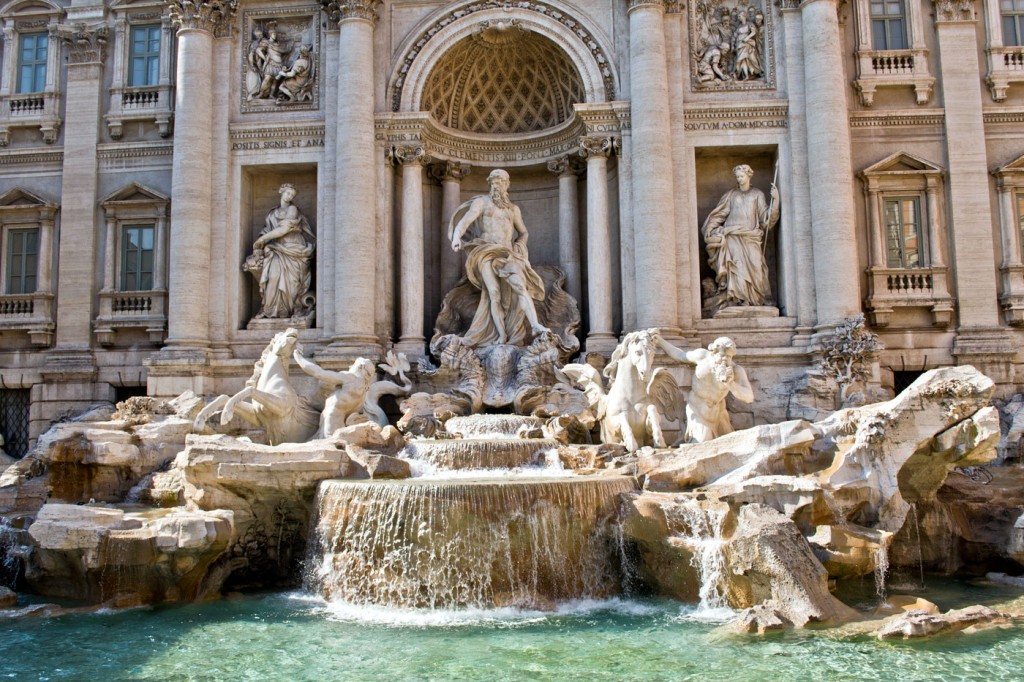
“Rome is OK. Trevi Fountain, Vatican, St. Peter’s — all numbingly familiar and inert, just there, edifices radiating gray. The city is sort of like Madrid or Berlin — popped expectations.”

What’s notable about the Italy trip is that when my girlfriend finally arrived to meet me there, everything shimmered to life with a giddy radiance. The Trevi Fountain at night was a splashy thrill, the Sistine Chapel an almost spiritual swoon. I loved my girl, and I loved Italy. 

I’ve learned that the fluctuating charms of travel cannot be underestimated. They should be greedily embraced. Up, down, it’s all about the ride, the swirling ecstatic journey.

The vilest man in the world

And there they were, the hirsute hillbillies and toothless terrorists who mobbed and defiled the U.S. Capitol yesterday, a cankerous confederacy of dunces, rampaging racists and whooping ignoramuses. That much cheap camouflage is never a good look.

The lowest of the low, these punks and goons are in lockstep with their pestilent potentate, whose grotesque name and rightfully imperiled title shall go unspoken. 

I’m at a loss to add anything brilliant to the roiling conversation about the fatal White House-whipped insurrection. But what was it Robert De Niro famously said about the one-term racist/criminal/liar/sexual assailant? 

This.

Even for the most solo traveler, the human touch matters

Early on my vacation to Beirut, Lebanon, in 2008, I scribbled this in my faithful moleskin journal: “Depressed tonight, like the trip’s a mistake.”

Those are ugly, gooey words for an insatiable, solo world traveler like me, someone who practically levitates just smelling the inky pages of a new travel guide. Recently I hauled out a dusty box of journals from many journeys, randomly cracking open the Beirut book for the first time in 12 years. I was surprised at what I found, how dark it all read. 

It wasn’t exactly a revelation, but it’s a bit different from memories I shared in a long-ago blog post that described the city as “beautiful but battered, regal but raw … a lovely, melancholy place, at once desolate and disarming, friendly and not a little forlorn.”

What stands out in the journal is how damn down I am, on the city and on travel in general, and that’s the real shocker. Yet I think it all signifies those inevitable pockets of mild dejection, loneliness, confusion and fatigue experienced during any trip, even my best ones.

“I am so precariously manic as I travel,” I wrote in Beirut after a day of jumbled emotions. “Life’s complexion switches kaleidoscopically as I journey — up, down, sideways, loops and spirals.”

Yet this was different, so much intensely bleaker than the emotional yo-yos of my usual one-man voyages, be it China, Portugal, Morocco, Japan, France, etc. 

Much of it was certainly that the war-torn capital — once regarded the Paris of the Middle East for its beachside beauty and lush cosmopolitanism — felt like a tumbledown tomb, hushed and sealed off, choked in a martial pall. This despite hip bars and cafes, delicious restaurants, the prestigious American University and all the shiny men’s hair products.

I knew what I was getting into. I did my homework and sought out a place rocked by enthralling if troubled history, yet still knew how to party. (And how: the narrow, bar-lined Gemmayzeh district absolutely spills with stylish, rambunctious — and not a few douchey — revelers every night.)

Still, once there, my initial assessment was harsh: “Most of the city is a rundown wreck. Even the ‘nice parts’ are dilapidated — the Hamra district is gimcrack, mostly crumbling and derelict and spray-painted and bullet-pocked. … Beirut is an ugly city.” (I think I just lost my gig writing the Lonely Planet guide to Beirut.) 

I was slipping, hard, right into the old emotional vortex, and I was confused.

“I don’t know what is happening,” I wrote. “I suppose it’s the listlessness of the place that has robbed my zest. Something big is missing. A sucking, sinking void, parts depression, loneliness (one feeds the other), dislocation, depleted expectations.” 

Then I really laid it on: “This happens, and it’s fatal because it corrodes my desire to ever travel again, a crazy but not unfamiliar notion. ‘I’m through’ — that’s what I feel.”

The isolation I was experiencing in a cold city, despite interesting chats with taxi drivers and random conversations with locals in bars, was wearing. I’m far from extroverted or people-needy. But something dawned on me. I journaled, “I just need someone to talk to. My blood has frozen.” I was crying out, pitifully and most uncharacteristically.

Enter Lina, brilliant, warm, charitable Lina! The young local and I were forced to share a tiny table at popular loo-sized bar Torino Express on Gemmayzeh one night, and we naturally started talking. I learned she’s Christian, a teetotaler and speaks Arabic, French and English. She likes the heavy metal band Savatage.

Lina
Lina’s useful Arabic cheat-sheet

Not only did she write in my journal helpful Arabic phrases, she later drove me up Lebanon’s northern coast to lovely Byblos, showed me around and introduced me to some friends. She even invited me to her small birthday gathering at a bar the next night (I still don’t know how old she is). It wasn’t a romantic thing, it was plain, extraordinary hospitality. She was a mensch, a blast of sunlight in a dark stretch.

After even more encounters with friendly travelers and locals over 19 days — I spent a week in Beirut and 12 days in heavenly Istanbul — animated with laughs and living, I finally admitted in the journal: “Meeting people is groovy.”

On one of my last nights during the trip, I met a trio of travelers in Istanbul, an hour or so during which I may have finally figured something out about travel, and life. 

“I made people laugh tonight, honest extemporaneous guffaws, eye-squinching laughter,” I wrote in the moleskin. “That’s worth something. Real human connection. Meeting of minds, tickling of souls. What else is there?”

Love, laughs, loss

Girlfriends are great. I adore them, madly, with smashing intensity. They like me too (yo, it takes two to tango), even if they have to slalom around my prickly edges, indigo moods, slashing humor and periodic bouts of suicidal solitude. But really, no joke, I’m a blast.

Just ask some past survivors — er, lovers. One said I was “brooding and negative” (aw, thanks, honey). Another called me a “tortured artist.” And, more to the point, I was told I’m an “s.o.b.” and, shucks, an “asshole.”

Ah, romance. All flowers and firebombs.

Those Hallmark sentiments, spouted in rare snaps of high dudgeon, are the exception not the rule. I’m a good, if challenging, partner, as my exes will attest. Almost all of them remain tight friends, and at least two are undying soulmates, exceptional individuals with whom I’ve never laughed harder, shared harder, and created quirky little worlds together.

I bring this up after watching two of my favorite fractured romances, movies that either rip me up or crack me up before sending me off blubbering like an Italian widow. 

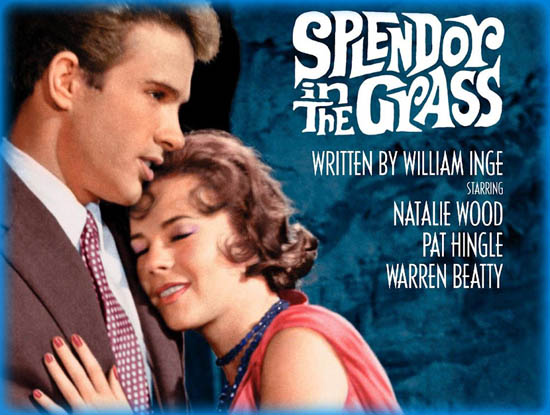
In 1961’s “Splendor in the Grass,” Natalie Wood plays a sexually repressed teenager who falls for Warren Beattie’s high school jock and, in short, goes crazy. As they go their separate ways, Wood’s psychosis intensifies. Later, supposedly cured, she visits her ex, who is now married. The ending will kick your guts out.  

Freighted with neuroses, Woody Allen courts a young, insecure Diane Keaton in 1977’s “Annie Hall,” the quintessential Allen love story, whose tagline is the very apt “a nervous romance.” With Allen’s overbearing hangups and egotism and Keaton’s skittish fragility, the couple’s frequently hilarious affair doesn’t stand a chance. Friendship will have to do. The last, lingering shot is almost unbearably wistful.

My relationships have bits of both films — possessiveness, craziness, big laughs, deep-dish neuroses, breakups and friendship. They have no boozy “Fool for Love” abuse, or bat-shit “Fatal Attraction” obsession. They are earthbound, boring to some; glorious fireworks spectaculars to those involved. 

I’m lucky to have dodged real drama, yet love isn’t always pretty. An otherwise sweet, sane woman shattered a glass on my bedroom floor in blind fury. (I told her I wouldn’t have dinner with her family on Christmas — smash!). Another one dumped her beer on me with extreme prejudice. But these are aberrant episodes in my relationship history, teensy scars I can look back on lightly. What’s a soaked, sudsy shirt between sweethearts?

I don’t want to date a deranged Natalie Wood from “Splendor in the Grass,” and I have dated a Diane Keaton from “Annie Hall,” who yielded almost too much fun to describe. But life isn’t the movies and love isn’t easy. Just ask my exes. They’ll tell you. Believe it all.

Books — visas to new vistas

I’m greedily tearing through “Interior Chinatown,” a tangy cultural satire by hot young writer Charles Yu. I’m savoring the book’s poppy humor, clever screenplay format and edifying critique of what it’s like to be Asian in America (bluntly: assimilation’s a bitch). The novel, which is also a scathing indictment of racial stereotyping in Hollywood, won this year’s National Book Award. It probably deserves it.

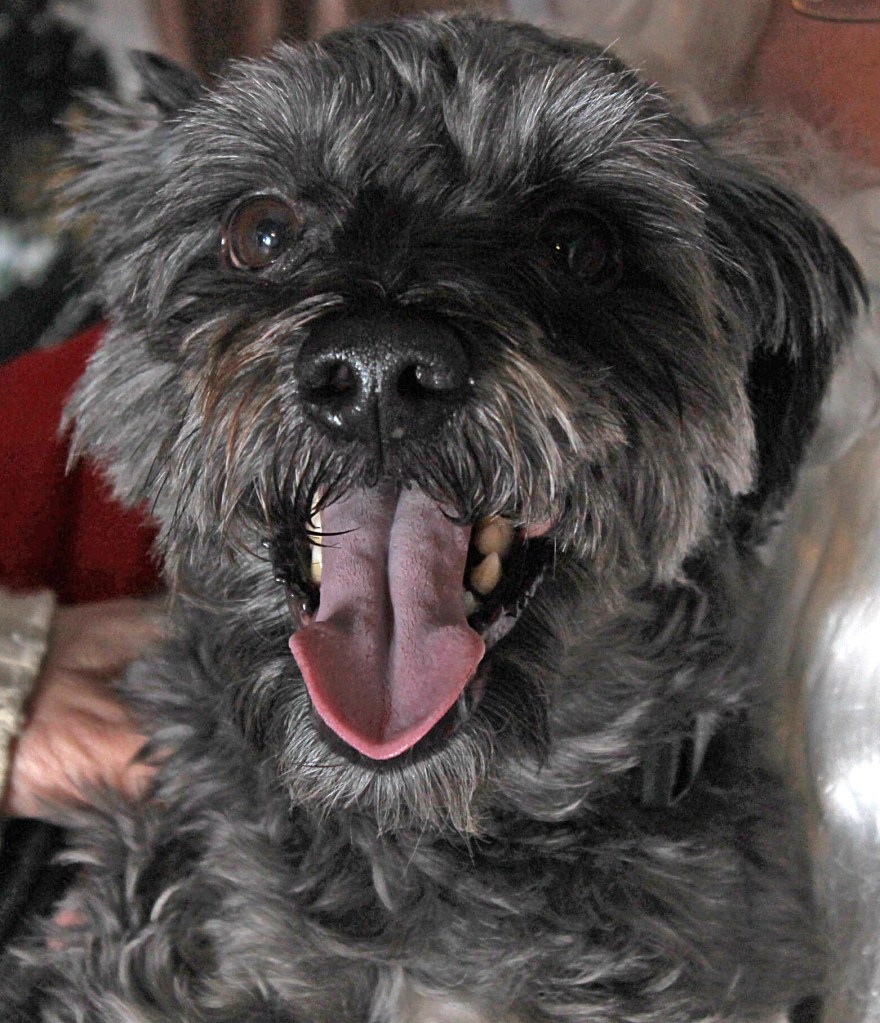
As I read, plunging into a world both comic and caustic, ordinary life churns on. I pop a mild tranquilizer (tranquility, wee), the snow melts into puddly archipelagos, the washing machine sloshes, the small gray dog curls up like a sow bug on the couch. These are not distractions, though I sometimes get sidelined by looking forward to my next book, no matter how good the current read is.

Like: 

  • “The Trouble with Being Born,” a collection of acrid aphorisms by E.M. Cioran, who calls birth “that laughable accident.” (Wait, did he write this for me personally?) 
  • I’ll revisit Virginia Woolf’s hypnotic “Mrs. Dalloway,” inspired by a recent essay extolling its literary radicalism. Not a simple read, Woolf challenges audience assumptions, and rewards them with rapture.
  • I’ll also take a second dip into “Sex and Rage,” Eve Babitz’s raffish auto-fiction, whose subtitle, “Advice to Young Ladies Eager for a Good Time,” is a brazen come-on. The book’s so saucy, such unfiltered fun, and the writing so ablaze, resisting it would be dumb self-denial.  
  • Then there’s “Geek Love” by Katherine Dunn, a rollicking freak show saga told by an albino hunchback dwarf. Echoing with the bearded lady’s cackle, this exotic family comedy has been called “a Fellini movie in ink.” Nirvana. 

It’s trite to note how reading has risen during the pandemic. That’s almost a year now of increased literary calories. And, gulp, plump we get. If you’re braving the prolix Russians, you’re assuming even more brain girth. Conversely, if your diet is J.K. Rowling, you could be anorexic. (And the knuckle-draggers who boast they don’t read? Mind rot — enjoy!)

Certain books, hence, are in high demand. I’m having a hell of time getting my mitts on Maggie O’Farrell’s award-winning historical fiction “Hamnet,” a speculative study of Shakespeare’s complex marriage, his young son’s death from the plague, and how that loss might have led the playwright to make his immortal “Hamlet.” The slavered-over tome is out of stock at (boo, hiss) Amazon and on back order at the local indie shop. All 66 copies in the county library system are checked out.

It can wait. I have the above books on queue, with a few other titles earmarked. You can never run out of choices, even if it leads you to reread a book or three, which is how you know you’ve struck a great one, like my current pleasure “Interior Chinatown,” a contender for a later revisit.

Literature is like another book, the passport. It slings you aloft, carries you to far-flung places. In these cloistered days, reading is the safest, most satisfying way to get out of your space, the claustrophobic chambers of the solitary mind. While we can barely leave home, books are effectively the new travel, transporting — and transcendent.

Uber ride, über-terror

What do you do when your Uber driver is apparently psychotic?

I had one of those rare trips from hell yesterday in a ride-share Jeep Cherokee, a 30-minute voyage of carelessness, irresponsibility and stinkiness, many near-swerves off the road, hacking coughs, phone call-making, improper mask wearing, etc. It was a real white-knuckler. I would have stunt-rolled out the door, one of my specialities, but we were on the freeway and, besides, I was on a clock.

After shambling out of the vehicle, I reported my experience to Uber, feeling like the playground tattle-tale, but about an issue of life and death. I wrote: “erratic and distracted driving, possibly intoxicated, wore a ratty old face mask that he slipped off his nose repeatedly, and filled the car with scary, raucous coughing.”

I didn’t mention the unbearable stench of Marlboro smoke and the man’s sub-hobo appearance, or that he was fidgeting like a mangy dog (or a meth-head), with barely one hand on the wheel. The only time I piped up was to exclaim “Dude!” when he about crashed into a guardrail doing 70 for the umpteenth time. Did I mention he came this close to rear-ending a shiny burgundy Honda?

A little miffed and rattled, I rated the driver two stars, which is “bad,” only because the one star “terrible” rating looked so harsh. After all, he did deliver me to my destination, though neither of us exchanged a customary “thank you.” He can only dream I tipped him for that fright ride, that possibly infectious (Covid!) and deadly ride. Now that I think about it, I should have pressed “terrible.”

When you rate a driver that low, Uber asks for a report from the aggrieved, which I noted above. They were quick to refund the $27 ride and assure me, “We are investigating this situation further to evaluate whether or not the driver will continue to have access to the Uber app” 

Oh, crap. Did I just get this driver fired? The whole thing is unpleasant and could get ugly. I don’t feel too bad for the guy — he kinda sucks — but I don’t want that much negative power. I hope they straighten it out, that he was just having a bad day, that he wasn’t driving under the influence, and that he has a super Christmas. (Also that he takes a shower, quits smoking, goes to driver’s ed and does something about those crazy jitters.) 

I’m trying not to be flip here, but it’s all out of my hands, and for all I know he destroyed me on my rating (drivers, of course, being able to rate riders, too). 

But, really, what’s he going to get me for — leaving deep fingernail marks of naked terror on the armrests?

Someone else’s tough-love rating, for reasons more innocuous than mine.

Turning the page, in literature and life

These days, I seem to only get high on the fumes — the thick, inebriating perfume — of words. I just read a fine passage in my current book and it brushed the orgasmic. To write like that, to make literary music, is the best thing, the very best thing. It matches, maybe surpasses, love.

Too much? Too loopy? Probably. But great art does that — it makes you dizzy. During the pandemic captivity, I’m reading with fiendish greed, in oceanic gulps. I’m buying with crazy zeal. And you probably can’t get that book you want at the library because I already checked it out. Terribly sorry.

More than ever, I grab the written word for solace, inspiration and spiritual nutrition. Yet while I crack mounds of books, I don’t always finish them. I am a notorious book-slammer, shunting aside titles that don’t rivet me by page 50 or so. Mediocrity won’t cut it. I’ve had enough meh, oof and blah. Especially this year.

These are grim days — both of my parents died in the past year; the Covid terror seethes; the Trump shit-show blunders on; some personal turmoil has body-slammed me; pick your catastrophe — and lots of us look to art for escape, empathy and temporary amnesia. 

Art extends beyond the written word, of course, so I’m still listening to music, watching films and TV shows and streaming all manner of streamy abundance. 

Stuff that stands out: the wise, tartly funny Pamela Adlon comedy “Better Things,” in which Adlon plays a frazzled single mother of three offbeat daughters and simply tries to, well, cope; the bizzaro “Pen15,” a cringe comedy starring two 30-something women playing seventh graders with boggling juvenile verisimilitude; and “The Crown,” that tea-time telenovela about British royalty that entrances, despite me caring less about the real Royals than I do about carbuncles.

“Pen15” (yes, these ‘girls’ are really in their thirties)

I always have to nitpick at year’s end, too. Always. If the just-fine though room temperature chess drama “The Queen’s Gambit” missed the sublime, it ably outclassed other hot streamers, like the broad, shrill “Schitt’s Creek” and the animated “BoJack Horseman,” whose mordant mopiness was mistaken for hip profundity. (Speaking of adult animation, does anybody still watch “Archer,” the subversive, devilishly clever cartoon on FX? Join me.)  

Thanks to Covid-contorted release formats, I’m behind on new movies, especially presumptive Oscar contenders. I did try to watch David Fincher’s tediously diffuse “Mank” but couldn’t finish it, and, yes, I can tick-off all of its esoteric Hollywood references. I’m skipping Spike Lee’s Vietnam fantasia “Da 5 Bloods” for two reasons: It doesn’t look very good and Lee’s track record of great films is plain disheartening. (I will also be skipping “Wonder Woman 1984,” grumbled grandpa.)

This is what kind of year it’s been: Mere weeks ago I watched and can recall almost nothing about the admired indie “First Cow” by Kelly Reichardt, one of my favorite minimalist filmmakers, except that some guys make yummy biscuits. I’m renting the scruffy period piece again to see what I’m blanking on.

Movies I’m looking forward to include the adaptation of August Wilson’s “Ma Rainey’s Black Bottom”; Frances McDormand in “Nomadland” (by the director of 2017’s extraordinary “The Rider”); the viral documentary “My Octopus Teacher,” about a grown man befriending a gorgeously slithery mollusk; and Frederick Wiseman’s typically sprawling doc “City Hall.”

“My Octopus Teacher”

And yet for all that — let’s swoop back to the start of this entry — books are my sweet spot right now. In the past few tumultuous months I’ve savored “Those Who Leave and Those Who Stay,” the ravishing third novel in Elena Ferrante’s four-part Neapolitan series; Jess Walter’s jaunty period saga “The Cold Millions”; and “Leave the World Behind,” Rumaan Alam’s quiet thriller about race, class, marriage and other thorny things.

But what’s providing the most satisfying literary kicks are titles from the New York Review Books Classics series, an eclectic spread of fiction and nonfiction from the past, each book a minimally designed paperback that bespeaks worldly elegance. Called “discoveries” by the publisher, the books are “established classics and cult favorites, literature high, low, unsuspected and unheard of.”

I now own 13 terrific novels from the series, with another  — Leonard Gardner’s gritty boxing drama “Fat City” — on the way. Today I’m reading the noirish “Nightmare Alley” by William Lindsay Gresham (midgets, mediums, mendacity). Before that was the twisty, eerily timely crime thriller “The Expendable Man” by Dorothy B. Hughes, who wrote cult classic “In a Lonely Place,” part of the series I also devoured. 

My NYRB Classics collection

What’s getting me is the power of words, the emotional and psychic heft, the sheer salve of art, and the attendant awe. I’ve always loved books and any words on paper (and screen), but I seem to love them more in the rotten times, a stretch so shitty, I haven’t touched this blog in over three months. I hadn’t the urge nor the heart. Fall, my favorite season, gone wasted. 

Maybe I’m uncoiling from a prolonged flinch. I don’t know. But this, now, during some of the very bleakest days, is where I’m at. Turning the page in another chapter.

Quote of the day: on writing

“Understood: language would end up falsifying everything, as language always does. Writers know this only too well, they know it better than anyone else, and that is why the good ones sweat and bleed over their sentences, the best ones break themselves into pieces over their sentences, because if there is any truth to be found they believe it will be found there. Those writers who believe that the way they write is more important than whatever they may write about — these are the only writers I want to read anymore, the only ones who can lift me up.” 

from “What Are You Going Through,” the brilliant brand-new novel by Sigrid Nunez

A needling issue

At long last, I got my first flu shot. The transaction — their needle, my flesh and humility — happened in a grubby drug store pharmacy. The prick was quick and slick, and I didn’t even pass out. Nice work, Maggie. 

Peg me a shiftless procrastinator, a craven needle-phobe or simply irresponsible, but I was never motivated to get a flu shot. I figured as I never get the flu, why volunteer for a small agony. This, in hindsight, was naked folly. The new nature of viral contagions changed my mind lickety-split, and almost happily I rolled up my sleeve, squinched my eyes and turned my head as the pharmacist harpooned me.

Of course when I first saw the syringe, I made an exaggerated ack sound, like I was horrified of needles, which, well, I kind of am. To wit: When I was 12, I contracted mononucleosis, which is referred to as the kissing disease by hormonal middle-school gossips. Much blood was drawn from my arm, and more than once the nurse had to pull out smelling salts before my drooping body slunk to the floor. (Smelling salts are fantastic. They’ll snap you out of a coma.)

Finishing the mono bit, news of my illness spread across campus, initially as fodder for racy rumors but ultimately becoming a badge of honor. Not only was I out of school for six weeks — a scholastic triumph — I returned a sort of hero, a tween Don Juan who not only got, but conquered, the mythic kissing disease. Thank you.

Today the flu vaccination is coursing through my body, a shield against aches and fevers and coughs and sneezes. But that’s only partly true. Because Covid-19 still lurks with no vaccine in plausible sight, no matter the president’s flatulent lies. And Covid is not just the seasonal flu, as our genius in chief crows. Remember this doozy? “When it gets a little warmer, it miraculously goes away.” (I need a large crowbar.) Or this, about the U.S. death toll so far: “It is what it is.” What a fella.

And now he’s pressuring his administration to approve a coronavirus vaccine ahead of the November election, before they have proof that it is safe and effective, reports, well, everyone. “The faster, the better,” Trump spouts.

It’s the stick-it-in-your-arms race: Trump rushes to produce a politicized vaccine while Russia does the same in order to burnish its standing in the nationalistic spotlight. Who can do it first? (Me first!) Are Trump and Putin kindergartners? Yes. Yes, they are.  

I’ll take a Covid immunization — when it’s thoroughly tested and certified by doctors and experts who do not kowtow to venal politicians. A hurried, premature Covid vaccine got a volunteer very sick this week. Yeah, I can wait. 

It’s been two days since my comparably inane flu shot, and I think I have the slightest sore spot where the needle poked me. Boo-hoo. This is serious stuff. I’ll be glad to get another flu jab next year, and I look forward to a safe Covid shot. I’ll be there, rolling up my sleeve, squeezing shut my eyes and turning my head in the other direction. Smelling salts optional. The shot itself: mandatory.