The best performance of the year (so far)

Writer-director Alex Ross Perry and actress Elisabeth Moss have a special relationship: He puts her through the wringer and she acts her guts out. 

In two films, this year’s “Her Smell” and 2015’s “Queen of Earth” — deep-dish psychological studies of women flailing and wailing on the verge — the result is explosive symbiosis, a convulsive give and take between a director who lays out a vision and lets his muse run with it at breathtaking velocity. 

p16645992_v_v8_aa

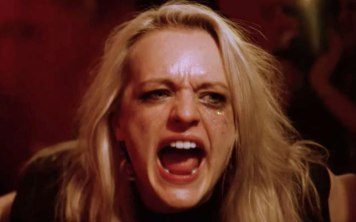
Run she does, maybe too far, too fast (as some have argued). Moss’ performance in “Her Smell” is athletically interior and exterior, jagged with physical fits and spasms like a lunatic child having a druggy temper tantrum. It’s my favorite performance of the year so far. 

Moss plays Becky, volatile front-woman of a female punk band she’s struggling to keep together between coke binges and flame-throwing hissy fits. The actress stirs up a hot, cackling cauldron of Courtney Love, Blanche DuBois, Charles Manson and Gena Rowlands in “A Woman Under the Influence.” It’s all raw-nerve, and Moss commits to her anti-heroine in a self-immolating blaze.

Eyes drizzling mascara, teeth gnashing, arms and hair thrashing, lipstick smeared with a paint-roller, Moss spews apoplectic, apocalyptic poetry in what’s less a performance than a detonation of eye-popping possession. It’s an electric and crazily entertaining one-woman show, the kind Oscar never sees and wouldn’t know what to do with anyhow.

09-elisabeth-moss-her-smell-4

What grabs you is the devotion Moss brings to both Becky in “Her Smell” and the more quietly unhinged, clinically depressed Catherine in “Queen of Earth.” Dramatically different than her more contained, yet reliably strong women in “Mad Men,” “The Handmaid’s Tale” and “Top of the Lake,” these characters are solipsistic, narcissistic, unbalanced, straight-up unwell. 

Director Perry grants them close-up, single-take soliloquies that are so chiseled they avoid becoming indulgent workshop exercises. The camera eye stares Moss down, never letting her off the hook. Moss gives right back. You watch shaken, exhilarated.

It’s important to note Moss isn’t performing in a vacuum, despite the fact the characters, especially punker Becky, would make arresting (abrading?) Off-Broadway solo turns. Both films have slight but linear stories — they are the definition of soul-baring character examinations — populated with superb co-stars, from the bandmates and manager (Eric Stoltz, wonderful to see you) in “Her Smell” to the great, flinty Katherine Waterston as Moss’ increasingly estranged best friend in “Queen of Earth.”

Without other players, Moss’ fascinating creations would just be feral, foundering head cases bouncing off the walls and slipping into oblivion. Her cast-mates keep Becky and Catherine in reality, our world. They are friends and antagonists, yang to Moss’ yin, and they haul her from the edge.

Still, what this formidable actress pulls off on her own, between her and the camera, is remarkable. With scary conviction, she summons wrenching human meltdowns in all their grim and glorious beauty.

images

“Her Smell” and “Queen of Earth” are on DVD and several streaming outlets. 

“Her Smell” trailer HERE.

“Queen of Earth” trailer HERE.

The story behind my blog photo

People have asked me if the photograph above this blog is is a screen-shot from Francois Truffaut’s “The 400 Blows,” as it resembles a scene from that classic 1959 film. It is not.
It is Alfred Eisenstaedt‘s ecstatic picture of kids at a Parisian puppet show, “Saint George and the Dragon,” at an outdoor theater in 1963.
01_00760343.jpg

Time magazine recently wrote about this enchanting photo:

Capturing the thrill, the shock, the shared triumph-over-evil that the children feel at the very moment when St. George slays the mythical beast, Eisenstaedt’s picture feels as fresh as when it was made, more than 50 years ago.

Here, the picture tells us, is an innocence that can remind even the most jaded of what it was once like to believe, to really believe, in the stories that unfold before our eyes onstage, or onscreen.

The master photographer himself said of this very picture:

“It took a long time to get the angle I liked. But the best picture is the one I took at the climax of the action. It carries all the excitement of the children screaming, The dragon is slain! Very often this sort of thing is only a momentary vision. My brain does not register, only my eyes and finger react. Click.”

Want to know if the dog dies? Go here first

In the bullet-peppered, body-slamming thriller “John Wick,” innumerable bad guys die stylishly gruesome deaths.

So, alas, does the dog.

The blameless Beagle puppy named Daisy is mercilessly killed before our hero’s eyes, which squint with vengeance instead of squinch with tears. John Wick (Keanu Reeves) isn’t taking this outrage sitting down — he’s not letting dead dogs lie — in the 2014 cult classic. He’s about to unleash a two-hour massacre.

john-wick-dog-e1533830984142-625x352.jpg
Play dead. For good.

Spoiler? You bet. That’s exactly what the fine, sometimes funny and oddly practical movie- and animal-lover site Does the Dog Die? is here for — to tell you ahead of time if the damn dog dies. You want to know. I definitely want to know.

Anytime a dog, or any animal for that matter, appears on screen I tense up and just hope the creature doesn’t get shot, run over by an SUV or mauled by a demon (or, if you’re the rabbit in “Fatal Attraction,” boiled alive). Animals in movies are too often sacrificial lambs, beelines to our heartstrings or, as in Wick’s case, catalysts for revenge. (Or just workaday roadkill. Shrug.)

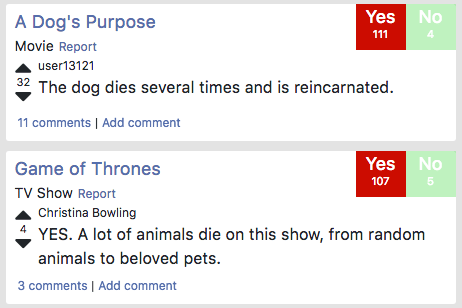
The website covers all manner of movie, TV and book animal deaths. Fed by visitor input, it’s a spoiler sanctuary revealing what animals perish or get injured and how, in often graphic terms. (Sample: “A cat accidentally gets smashed by a book. A half-human, half-dog gets his arm chopped off and punched into the ground.”) Ha, ha.

It’s humorous. It’s helpful. It’s horrific. Here’s a short screen grab to show you what entries looks like (note, it’s not the prettiest web design):

3fa53c75-9daf-41aa-b438-3b09f616fa24-screen-shot-2019-03-21-at-105648-am.png

Some more reader reports about dogs dying onscreen at Does the Dog Die:

  • “The Babadook” — “For anyone who DOESN’T WANT TO WATCH THE DEATH OF THE DOG, don’t watch from 1:09:20 to 1:11:20.”
  • “I Am Legend” — “Dog is infected by a zombie-esque virus and is killed by her owner.”
  • “The Witch” — “Dog disemboweled in the woods.”
  • “The Good Place” (TV) — “A dog is kicked into the sun.”
  • “The Thing” — “Many dogs die on and off camera. One looks like it got doused in acid and is still moving around.”
  • “John Wick” — “Yes, and it’s terrible, BUT John Wick spends the rest of the movie deliberately, gloriously, and violently avenging the dog, so it feels really pro-dog overall.”
  • “Old Yeller” — “Yes the dog dies. He’s shot by his owner after contracting rabies.”
Old Yeller. You bet your life the dog dies..jpg
“Old Yeller” — he’s either shaving or he has rabies. Yep: He dies.

Does the Dog Die goes well beyond dog deaths, featuring 50 queasy-making topics, things you might want to know before flipping on the TV or entering the multiplex. Some topics and contributor comments:

Does a kid die?

  • “Game of Thrones” (TV) — “Season 2, Episode 1: For goodness’ sake, don’t watch this episode if you can’t stand a child being hurt. A baby is murdered.”

Is someone burned alive?

  • “Thor Ragnarok” — “Someone is literally melted.”

Are there clowns?

  • “It” — “Shockingly, there are clowns.”

Does a head get squashed?

  • “Venom” — “Does a head getting eaten count as squashed? I’d say yeah, but some may disagree.”

Is Santa spoiled?

  • “Bojack Horseman” (TV) — “In the Christmas special, Bojack’s character admits that Santa is a lie in a way that is phrased to deny the existence of God.”

Are any teeth damaged?

  • “Room” — “Ma has a ‘bad tooth’ which hurts her when she eats. It eventually falls out and she gives it to her son.”

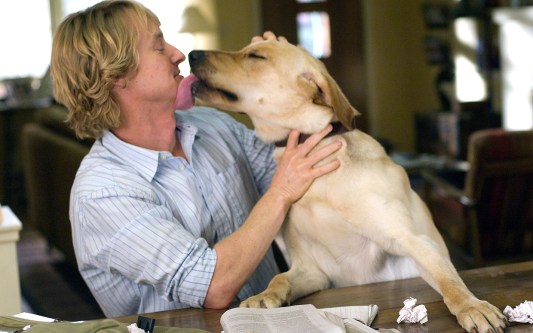
I can handle clowns, squashed heads and rotten teeth, but I hate it when the dog dies. Hate it. It’s one reason I call canine-killing movies like “Where the Red Fern Grows” and “Marley & Me” doggie-death porn. They all but fetishize the dog’s demise, milking the moment as they twist a knife in your heart, probably snickering as they do it. Sadists.

And so we have this neat site to tell us when to cover our eyes, leave the room, or skip a movie, show or book altogether. It’s not just a clever concept, it’s a public service.

Marley-and-Me-FTR.jpg
Sorry, Marley — you’re doomed.

Good movies right now

Before summer’s prequels, sequels and tweak-quels bombard us, I offer this eclectic spread of late-spring cinema surprises, all worth a look:

booksmart.jpg

 “Booksmart”

Barreling forth with raunchy vigor and unbridled zest, this breakneck coming-of-age comedy, actress Olivia Wilde’s impressive directorial debut, screams fun. Almost literally: There’s a lot of screaming — in surprise, horror and explosive joy. It’s damn near contagious.

An amplified spin on school-days greats — “Dazed and Confused,” John Hughes’ oeuvre and last year’s “Lady Bird” and “Eighth Grade” — “Booksmart” piles on twists and layers with a sharp, knowing eye that zooms in on the timely and topical, from female power and LGBTs, to bullying and the corrosive effects of cliques — and of course the liberating if daunting pull of sexual exploration.

Beanie Feldstein and Kaitlyn Dever play best friends Molly and Amy, super-nerds at their high school who are maligned for their almost pathological goodie-goodie-ism. They’re all books and no bacchanal and are certain that’s the only way to make it through college and life.

Molly, who has a crush on an unattainable pretty boy, and Amy, who has a crush on a scrappy skate-girl — sort of the story’s dual heroes’ journey — recklessly decide to shed their image and go all out on the night before graduation. The upshot is an epic party-hopping misadventure festooned with the silly, surreal and psychedelic, aided by riotously inspired side players who should get their own movies (including Carrie Fisher’s daughter, the scene-stealing Billie Lourd).

“Booksmart” radiates the crazy anarchic spirit of party-hearty teen classics like “Superbad,” and indeed “crazy” might be the movie’s one-word elevator pitch. Hang on for the insta-classic “doll scene.” It’s a little bit Barbie, a little bit “Team America,” and all warped genius.

In theaters. Watch the trailer HERE.

*nonfiction-actual-final-poster.pngNon-Fiction”

French writer-director Olivier Assayas‘ new dramedy is a tireless, tonic gabfest that had me speed-reading the flurry of subtitles more than drinking in the warm faces and colors of the bustling scenes.

That’s no complaint. The profusion of words — intelligent, eloquent, biting — brim with ideas, humor, pain and pathos, for an enveloping artful experience. You want to know the fork-tongued characters, led by a ravishing Juliette Binoche, because of the literary, arty cosmos in which these writers, editors and actors orbit. It’s intoxicating and deeply human: They’re just people, with all of our people-ly problems, and it’s more exciting than you think.

Part tart publishing-world satire, part feast of infidelity, part anatomy of midlife crises, “Non-Fiction” is light on plot, more enmeshed in ideas about love and life, loyalty between friends and lovers, and, in a topical concession, a pointed conversation about new media vs. the printed word. It’s like a Gallic Woody Allen comedy, without the tootling clarinet and stammering, gesticulating neuroses (though there’s plenty of neuroses to go around). 

Assayas, one of our most talented and inventive living filmmakers — like Michael Winterbottom and the late Kubrick, he’s a virtuoso of versatility — has made a comedy of manners that has more in common with his wonderful, verbose family drama “Summer Hours” than his masterly supernatural genre-buster “Personal Shopper.” Like the best of his movies, it’s brightly observant and conspicuously literate — as rich as a great novel, kind of ironic for a picture titled “Non-Fiction.”

In theaters. Watch the trailer HERE.

*

p16607639_v_v8_aa.jpg

“The Souvenir”

Not an easy film, Joanna Hogg‘s elusive, divisive relationship drama is boobytrapped with qualities that repel people away from the arthouse. It’s glacial, elliptical, remote, woolly. It makes you work with loosely hanging scenes, a jagged structure and oblique characterizations. I broke a small sweat trying to solder the plot together, identify with the actors and figure out where Hogg was taking me. (“Hogg,” writes one critic, “has the courage of her incoherence.”) Mostly I succeeded, finally granting this vaguely experimental flick a shaky B+.

The main entry point is young film student Julie, played with winsome diffidence by Honor Swinton Byrne, daughter of indie eminence Tilda Swinton, who has a small role as, who else, Julie’s flittering mother, her face a pinched mask of imperious disquiet.

Julie’s lover Anthony (Tom Burke) is a heroin addict, a secret until it’s not, which inevitably tangles their relationship. The story is mostly scenes of the couple muddling through their unconventional, occasionally off-putting upper-middle-class affair. With drugs. And spats. And sex. And dinner parties. And the making of a student film. And an IRA bombing. Hogg’s disparate elements somehow fall together.

There were two huffy walkouts at my recent screening, and online reviews are tetchy. “I found this film to be tedious and unrewarding,” one gripes. “I want my money back,” harrumphs another. And this: “The only movie I’ve ever walked out of in my life. I’m amazed I stayed awake and endured it for over an hour.”

With a giggle, I take those as good signs — chance-taking auteurism is always encouraging — more reasons to stick with this exacting film and reap its chilly virtues.

In theaters. Watch the trailer HERE.

*
WhatsMyName_Ali_KeyArt_lreb.jpeg

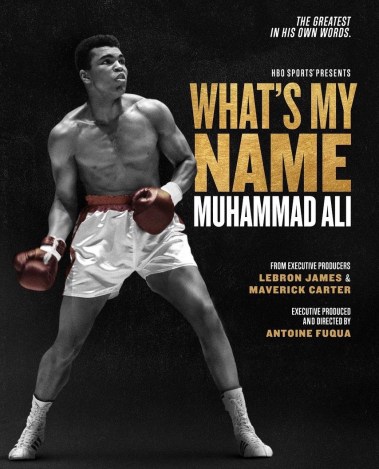
 “What’s My Name: Muhammad Ali”

Eyes wide, mouth agape, a fist pounding the table, Muhammad Ali is unleashed, free-associative verse tumbling from his unstoppable maw. Harnessing vainglory and the gift of gab, Ali is showboating, again, his audience of press and promoters rapt and laughing. And then he winds down, admitting exhaustion, the pugilist at rest.

The sudden calm is a rare state for the heavyweight champ, self-anointed The Greatest, whose taunting poetic prattle — “I’m so bad, I make medicine sick!” — earned him both infamy and adulation. “He talks too damn much! Put your fist in his mouth!” Ali recalls a ringside heckler shouting in this HBO documentary, a transfixing, rap-rattling trip through the fighter’s professional life told almost exclusively in his own words. It’s a beautifully edited stream of vintage press conferences, TV and radio interviews, with ribbons of color from managers and trainers, magazine covers and newspaper headlines.  (“He could never keep his big mouth shut,” reads one.)

The two-part, near-three-hour film, directed by Antoine Fuqua (“Training Day,” “Southpaw”) and co-produced by LeBron James, whomps with exhilarating fight footage, and so much more. If Ali was a raving icon in the ring, he was perhaps more of one outside it. He used his supersize personality and cascading eloquence to speak out for civil rights and Islam and against segregation and the Vietnam War. This keen portrait of social decency and athletic supremacy is also a voyage through late 20th-century history and culture, in which an African-American became an international hero.

On HBO and HBO GO. Watch the trailer: HERE. 

*

8f516a76-5047-42a5-9337-be30f22332c4.jpg

“The Biggest Little Farm”

If John and Molly Chester learn a few things while building their farm from the sun-baked dirt up, it’s that birds decimate crops, pigs get sick, coyotes feast on chickens, organic eggs sell crazy-fast and manure is magic.

Stars of this inspiring, sometimes harrowing auto-doc, thirty-something couple John and Molly chronicle what happens over seven years when they ditch their tiny Santa Monica apartment for 200 neglected acres an hour outside L.A. to miraculously conjure a working, biodiverse farm. It’s a quixotic, back-to-the-land quest made of heedless ambition and fashionable enlightenment.

“Everyone told us that attempting to farm in harmony with nature would be reckless if not impossible,” says John, this enchanting film’s director and narrator.

Well, almost impossible. John, a wildlife cinematographer — blame him for the movie’s plush nature imagery — and Molly, a chef and food blogger, seek purpose via this sustainable farm. Molly yearns to grow everything she cooks in conservational fashion, as if from a “traditional farm from the past,” dutifully echoing the Earth-friendly ethos of the likes of chef Alice Waters and responsible-foodie manifesto-writer Michael Pollan.

Over years battling pests, drought and the elements, the Chesters’ apparent folly assumes the mantle of glorious accomplishment. (How they pay for it is another question entirely.) Through toil and struggle, heartache and heartbreak, they cultivate a luminous idyll, a practically paradisiacal spread bounding with life, joy and abundance. You almost can’t believe your eyes.

In theaters. Watch the trailer HERE.

*

0a78b0b4cb26ac831ac16ac5d7e6cceada6c69ee.jpg

  • Bonus pre-summer movie: I haven’t seen it yet, but I know a masterpiece when it has a barrel pressed against my head: “John Wick: Chapter 3 — Parabellum. Taciturn and hitman-cool, the Keanu Reeves vehicle has been called bloody, balletic, exhilarating and “a refresher course, and a liberating one, in the nature of escapist entertainment.” If you haven’t caught the first two John Wick flicks, you have my sympathy. The trailer’s HERE.

A pungent parting shot for ‘Game of Thrones’

“Game of Thrones” is over — thank god.

And yet the chatter sputters on. Fans can’t clam it. Of all the “GOT” noise — a FOMO racket, a bellyaching din — this might be my favorite snippet, courtesy of clear-eyed Washington Post critic Hank Stuever, whose healthy cynicism is gleefully cathartic:

It’s likely you’re already aware of the dissatisfaction with the conclusion tweeted hither and yon — six weeks of nitpicking complaints, first-class nerd whining and an ungodly amount of postgame analyses. Consider all those hastily posted diatribes or that pointless online petition with a million deluded signatures on it, demanding (demanding!) to have Season 8 scrubbed and remade. In some ways, “Game of Thrones” had grown so popular that it made its viewers look embarrassingly out of touch with life itself.

This can only happen when we love our popular culture a little too hard, crossing some line of personal investment, forgetting when a TV show is only just that. It was our fault for coming to regard the show as the apogee of the medium itself.

It’s also why I’m glad some unnamed, unwitting hero left a coffee cup in the camera shot in the episode that aired May 5. That one coffee cup humanized the whole endeavor. It reminded us that a TV show, no matter how absorbing, is a folly, a fake, a job that someone is hired to do, so that an HBO subscription can be sold to you. The coffee cup will be scrubbed away with a quick flick of magic technology; but before it’s entirely gone, I hope they give it an Emmy.”

p-1-whatand8217s-that-coffee-cup-on-game-of-thrones-worth-to-starbucks.gif.jpeg

The last Sea-Monkey post, I promise

The Sea-Monkeys are doing swimmingly, thank you, flapping and flying through speckled salt water, pumping fleshy wings and wagging long pink tails like bitty aquatic dragons. Dozens of them flit and twirl about in a plastic tank that’s at best seven inches tall. (See some in action here. It’s totally worth it.)  

The last time I reported on Sea-Monkeys — here — I had just watched a memory-rattling short film about the fanciful water simians, which are actually simple but neato-to-watch brine shrimp. (But let’s pretend they’re actually otherworldly, kinda creepy alien demon creatures, the love-children of Poseidon and a mermaid — or of Aquaman and a king prawn. You pick.) 

Unknown.jpeg

Watching the film, I was prepared to order the small Sea-Monkey tank that comes with Water Purifier, Instant-Life Crystals (eggs) and Growth Food packets lickety-split, I was so excited seeing again the novelty pets I had owned so many times over the decades. (I’m apeshit for these monkeys, you might say.) 

So I did. For $12.98 at Amazon, I got The Amazing Live Sea-Monkeys Ocean-Zoo, which the package promises “The World’s Only Instant Pets!”®. I filled the tank with tepid tap water, churned in the Water Purifier and waited the prescribed 24 hours before dumping in the Monkey eggs. I stirred them good and waited. 

777c3e02-5a77-41c2-833d-2e1994af9e0e_1.133506a679ed8f7edd89240552b3e3aa

Within minutes pencil-dash creatures were zigzagging the water, itsy, white, herky-jerky things you might see under a microscope — autonomous amoebas swimming on their own and doing gleeful backflips. A month later, they are happy, confident, independent and plump — about the size of fingernail clippings — everything you want in healthy offspring. I asked my niece to name the critters. She named them all Charlie. 

The Sea-Monkey world is like an undersea ant farm, without the dirt and without, in my case when I tried to cultivate an ant farm, mass annihilation. Not that Sea-Monkeys don’t die. They do. But they also reproduce and replenish their populations in sly ways, such as lacing the Growth Food with fresh eggs that hatch instantly when I feed the creatures every five days or so. Smelly green powder goes in, and babies, mere monkey specks, promptly appear. 

It’s that kind of thing that keeps me in the strange thrall of Sea-Monkeys. They really are pets, even if they don’t bark at the mailman, play fetch or, like a certain cat, curl up on your face while you sleep. They don’t stain the carpet, rack up vet bills or, really, do much of anything.

They’re like fish — pretty, transfixing, calming things to look at — but you don’t have to clean the tank. Self-sufficient, save for periodic feedings by their benevolent master (me), Sea-Monkeys just do their thing, flip about, swim around, dance and jig with an alacrity we can only envy. 

Looking back at Chewbacca

This is the very first image I ever saw of Chewbacca:

photo-SW-K-15.jpg

It was spring 1977 and I was young. I had hair like a mid-career Beatle. Movie-wise, I was obsessed with “Jaws” from two years prior. And, even at that early grade-school age, I thought “Dog Day Afternoon,” watched repeatedly on cable, was the dope. (Later movie manias would include “Close Encounters,” “Alien” and “The Elephant Man.”)

My dad came home with a thick press kit for the summer movie roster from 20th Century-Fox. (A journalist, he often arrived from the office with public relations goodies from movie studios and, maybe coolest, the Mattel toy company. We were the first kids in town to have Slime and Shogun Warriors.)

I don’t recall any of the movies in the 20th Century-Fox press kit but one, a mysterious little picture called “Star Wars” that was slated to hit theaters May 25. My immediate fascination with the movie, well before I saw it, is so clichéd that I will keep the recollection trimmed and distilled. 

Amid a sheaf of black and white stills of characters from the film, bound in a colorful folder emblazoned with the now-iconic “Star Wars” logo, my attention zeroed in on one particular photo. The caption read: “Chewbacca, the hundred year old Wookiee, co-pilots the Millennium Falcon, a Carnelian pirate starship.”

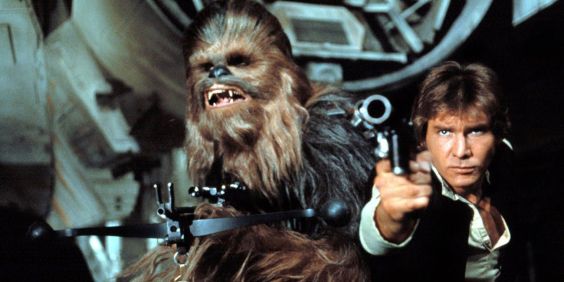
Chewbacca? Wookiee? Yes! This was the baddest movie character I’d ever seen, a hair-covered giant holding an automatic weapon in what appeared to be the desert with a Clint Eastwood, “Go ahead, make my day” expression on his Sasquatchian puss. The pure, scorching exoticism of it blew my little mind. I immediately stuck on my wall the 8-x-10 with four silver tacks. Anticipating the day I could see this creature move and (not quite) speak on the big screen became a pastime of electric excitement. 

The man I would soon learn filled the Chewbacca fur-fest was Peter Mayhew, a 7-foot-3 Briton who died of a heart attack at 74 yesterday at his North Texas home. (Check out his personal site Chewbacca.com.) The galaxy weeps. 

chewbacca.jpg
Mayhew and Chewbacca. Similarities abound.

As Chewie, Mayhew growled and laser-gunned his way through five “Star Wars” features as sidekick and co-pilot to Harrison Ford’s swashbuckling Han Solo. They were a dynamic duo, BFFs who fought together, cried together, drank together and probably had a secret handshake. That’s all the speculation I will pursue.

Chewbacca wasn’t the most complex character. He had moist, soulful animal eyes and teeth like a German shepherd’s. The mournful, bestial yowls he had to rely on for vocal communication without the gift of speech could shred your ears, and rend your heart. (His voice was created with recorded animal sounds.)

“He put his heart and soul into the role of Chewbacca and it showed in every frame of the films, from his knock-kneed running, firing his bowcaster from the hip, his bright blue eyes, down to each subtle movement of his head and mouth,” Mayhew’s family said in a statement.

han_and_chewbacca.jpg
Chewie and Solo — one of the great action duos in movie history

Valiant, righteous, a fighter, friend and even funny, Chewbacca as portrayed by Mayhew was more than a guy pantomiming in a gorilla suit. He lent the Wookiee spirit, spunk and purpose. I absorbed all of this when I finally, in a one-screen art-deco movie theater in the summer of ’77, saw my hero in action, this towering benevolent beast, who fleetly dispensed with Imperial baddies and didn’t complain when saucy Princess Leia dismissed him as a “walking carpet.”

It’s why as a kid I was so crestfallen when, at the end of the film, everybody got a Medal of Bravery for saving the galaxy and blowing up the Death Star except Chewie, who just stands there during the ceremony, tall and noble, nothing dangling around his neck. Only his mighty ammo-filled bandolier, worn like a sash on his left shoulder, bedecks him.

But that’s Chewbacca — humble, honorable, tough and self-effacing. He deserves a medal. If not for assisting in nearly killing Darth Vader, then for being both a literal and figurative colossus.

final-29.jpg

Sally Rooney’s growing pains: watching a novelist mature

Sally Rooney’s sophomore novel “Normal People” is soft, stingy with lyricism, psychologically wispy, and not altogether gripping. I like it (I do!), but it isn’t an essential read, and it certainly doesn’t deserve the drooly commotion surrounding its recent arrival. I’d give it an ambivalent B.

Rooney wrote this and her prior, similarly vaunted novel “Conversations with Friends” before she was 28, and both books betray the Irish author’s — here the grizzled elder clears his throat — youth and callow inexperience in love and literature. 

In the latter instance I mean she is a plain, safe, lukewarm stylist, who, while honing a palpable personal voice, lacks the assertive confidence, the prosey musculature of a more seasoned writer. Rachel Cusk she is not.

RooneyCovers-1024x683.png

Yet the author’s inexperience in tracing the contours of youthful relationships, both romantic and platonic, has also proven her strength, even her selling point. She understands her young characters, their collegiate insecurities and romantic gamesmanship. It has earned Rooney the title of the “first great millennial novelist” from a magazine that should know better.  

“Great” is too strong a descriptive. Rooney’s feathery comedies are decidedly not great. They are good, quite good. Greatness isn’t hers yet. As one publication said of “Normal People,” it is “in some ways like the slightly less impressive follow-up album by a beloved band.” Another called it a rush job.

Still, the sycophantic likes of Vanity Fair imbibe the buzz: “The Church of Sally Rooney started to form around the release of her first novel, ‘Conversations with Friends,’ in 2017. Heralded by everyone from Sarah Jessica Parker to Zadie Smith, Rooney immediately became Someone You Need to Know About.”

It’s the hype-machine in clanking action, unctuous celebrity journalism at its finger-licking gooiest. (Church? Sarah Jessica Parker? “Someone You Need to Know About” in Gen Y caps? Certified bull-bunk.) Elsewhere, some genius crowned Rooney “Salinger for the Snapchat generation.” We can never unsee that.

“Conversations with Friends” and its hasty follow-up “Normal People” are sharp-eyed comedies of manners set in and around Dublin, lightly plotted stories about struggling twentysomethings looking for love, college scholarships, jobs and purpose. Also coming into vigorous play: literature, class frictions, social jockeying and plentiful sex. 

Her dialogue is naturalistic, stripped down, never fiery or memorable, cutting or discernibly clever. The books are light on their feet, fitfully sparking to life with taut passages and startling scenes of social discomfort.  

They are breezy and easy books, eons from the thorny ruminations of Philip Roth or plush poetics and thematic heft of Toni Morrison. They’re more like Anne Tyler lite. 

2018-08-25_ent_43360166_I1.JPG

Amid stubbornly lean prose, literary beauty is scarce. Two passages in “Normal People” poked me in the eye for their uncharacteristic flair: “The sky was extremely blue that day, delirious, like flavored ice,” Rooney almost effuses.

Only 12 pages later, she again swoons over the amazing azure of the heavens: “The sky is a thrilling chlorine-blue, stretched taut and featureless like silk.”

But she’s just playin’. Her allergy to the florid is concrete. Typical sentences, surgically removed of metaphor, run more like this: “Lorraine covers her mouth with her hand, so he can’t make out her expression: she might be surprised, or concerned, or she might be about to get sick.” That, reader, is on the more colorful end of the Rooney spectrum. 

Last week “Normal People” crashed the NYT bestseller list at No. 3. Maybe it deserves it. I enjoyed it for all my nitpicking. Yet I wonder who reads Rooney with the avidity of Sarah Jessica Parker or Zadie Smith (who at Rooney’s age was already a true literary giant). 

Rooney’s smart little beach reads — people boast about how they gulp her books in one sitting — are crisp divertissements. But they are lacking, in weight, import, poetry, the stuff of lasting literature. I give her a B, for now. Though the promise she shows tells me that grade may rise with each new book. We read and watch. And hope.

A sacred place. Even for heathens.

I last visited Notre-Dame just over three years ago, in fall 2015. When in Paris, I invariably duck into the grand Gothic cathedral several times, because it’s there, because it’s beautiful, because its draw is irresistible. It is Paris splendor epitomized.

I’ve been to Paris on five occasions, which means I’ve been to Notre-Dame at least 15 times. It never gets old. Rather, each visit rewards with something new and startling. Sometimes I just hang out on the plaza in front of Our Lady — the sprawling Place Jean-Paul II Square — sipping coffee, people-watching, marveling at the twin bell-tower facade and those maniacal, sniggering gargoyles perched way up high. 

A Catholic apostate and mid-level opponent of organized religion, I don’t worship in Notre-Dame, which went up in flames yesterday, mostly surviving the catastrophic blaze that had the world aghast. (Maybe there is a God.)

merlin_153563949_4a583841-241c-47fd-acff-a7c8dff47f89-superJumbo.jpg
Notre-Dame Cathedral in flames Monday in Paris

I don’t go for the holy experience, but the wholly experience — a soothing spiritual state of serenity and rumination, reflection and introspection, inspired by the vaulting, dimly lit sanctuary’s artwork, architecture, luminescent stained-glass and twinkling constellations of prayer candles. And that’s just the interior. 

Agnostic natives are with me, according to a piece in today’s NY Times: “France is one of the least religious countries in Europe. Urbane, intellectual Parisians often dismiss religion as archaic and unenlightened.”

IMG_0736.jpeg
Notre-Dame facade, fall 2015

But like other transporting religious structures around the world — from the Jama Masjid mosque in Delhi to the Wat Arun Buddhist temple in Bangkok — Notre-Dame is staggering to even this peevish secular humanist, with its gilded grandeur and gravity-defying architecture that toils so magnificently to transcend crude corporeality and reach for the heavens. In all her glory, Our Lady, I think, tickles the firmament.

(This goes for scores of religious sanctums I’ve traveled long and far to be dazzled by: the Blue Mosque in Istanbul, St. Peter’s in Rome, Angkor Wat in Siem Reap, La Sagrada Familia in Barcelona, and on and on. All instill dizzy awe, even if I’m not always buying what they’re peddling.) 

Even without the slightest religious propensity, I bewail the damage to Notre-Dame. Like most, I was sickened watching flames devour the cathedral, my old friend, on the news. More is there than a quaint, history-encrusted, 850-year-old church. It is the ineffable, the mystical, the irrefutably sacred.

img_0690.jpeg
Standing tall, fall 2015.

The cathedral, with a wingspan from Joan of Arc to Victor Hugo to Disney, “is universal, Western, religious, literary and cultural, and that’s what makes it different from any other object,” says a French analyst in the Times. “It’s the whole spectrum from the trivial to the transcendent, the sacred to the profane.”

In other words, it is stubbornly irreplaceable. Its survival, by a hairbreadth, an act of God, divine intervention, is something I am loath to believe in: a naked miracle.

Whatever saved it, I think it was more the skill, action plans and water hoses of the Parisian fire fighters than, say, the conquest of virtue vs. evil. But it doesn’t matter. Notre-Dame didn’t collapse or burn to cinders. It is, they declare, structurally sound. No lives were lost. And for that, all of us should sigh a collective amen.

But do note, those devilish gargoyles survived the flames, and they are still sneering.

gargoylesnotredame.jpg

Black hole bust

I can’t tell you how underwhelmed I am by the newly released photo of an honest to god galactic black hole — the first-ever snapshot of one of these largely invisible yet still whoa-awesome mega-vacuums.  

“It’s like the universe had a royal baby: That’s how excited everyone is for this first glimpse of a black hole,” writes Slate.

My interest in royal progeny or anything about the Royal Family is several notches below my interest in macramé and pulling weeds, so right there we have a faulty analogy.  

I like stars and planets, the sun and galaxies and Chewbacca, but I’m a solar system sourpuss on this one. I don’t frown upon astronomers finally clicking a picture of a black hole — “an abyss so deep and dense that not even light can escape it” — it’s just not emotional rocket fuel. It elicits a cosmic shrug. I was expecting explosions and ecstasy.

“The image is based on data from radio telescopes all over the world,” Slate says, “so it’s not technically even a picture of a black hole. It’s really confusing that everyone’s acting like we have a picture of one. This is actually a composite that shows the shadow of a black hole.” 

Here is the image, released today by astronomers:

event-horizon-black-hole-images-1554901170942-threeByTwoLargeAt2X-v2.jpg

“A composite that shows the shadow of a black hole”? Maybe you can see why there’s disappointment amid the jazzed gawping. Not only is it not an actual black hole, but the photo really isn’t so hot. Blurry, amorphous, rather dull. Like a toddler accidentally took a picture of a lightbulb with his mom’s lame Android phone.

Some liken it to an orange donut, the bagel emoji, or a SpaghettiO — a junk-food fest. Others, like the New York Times, wax poetic, declaring the black hole, “55 million light-years away from Earth, resembling the Eye of Sauron, a reminder yet again of the implacable power of nature. It is a smoke ring framing a one-way portal to eternity.”

Deep. And quite lovely.

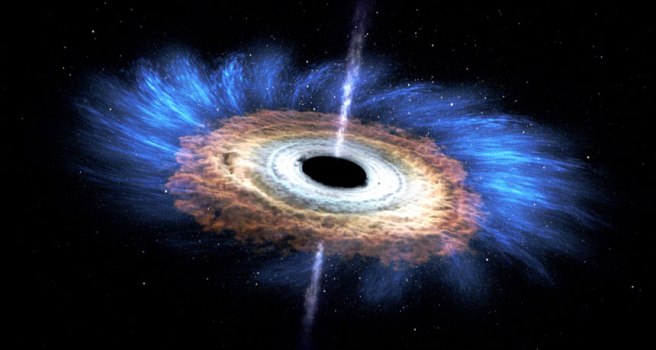
But really now, this is a black hole:

030918_EC_superconducting_black-holes_main.jpg

This is the black hole of our dreams and nightmares, the yawning, all-devouring abyss of a crappy 1979 Disney fantasy titled, aptly, “The Black Hole,” the cosmos’ most grandiosely epic sucker-upper, a whirling, phosphorescent monster maw, God’s unblinking eye, or the fiery, furious, inflexibly unforgiving gateway to Hell. It is glorious and mad, beautiful on a mind-altering scale, a spinning top dancing on the lip of the great beyond.

But it is also just a NASA illustration, a dazzling graphic vibrating with the curiosity and imagination of good speculative sci-fi. No one knows what a black hole really looks like, even after the new fuzzy photo. I’d love to see a crisp, clear portrait of one of those galactic phenomena that sucks up everything in its path. Alas, today’s picture just sucks.