
The email contained bad news. My guide, whose ratings are off the charts, was bailing on our tour of Aix-en-Provence in Southern France. Cold comfort: He was enlisting a substitute guide in his place, someone named Ivanna, about whom I knew nothing. I pictured a comely Ukrainian woman, perhaps bespectacled, tall, sweet and ironic.
A few days later Ivanna introduced herself via text: “I’ll be the little Asian lady with bluish hair, so I’ll be hard to miss!”
Oh. Grand.
Trips are rife with hiccups, snags. This wasn’t one of them. Ivanna turned out to be a joy, a brainy fount of local knowledge, witty, thoughtful, considerate, with hair tinted a winning shade of cobalt. She’s young, Malaysian, went to Loyola University in Maryland and speaks three languages. She lives in Aix with her husband and children. In two brisk, stuffed hours, she led me down skinny cobblestone lanes and yawning boulevards, telling me scads about the city’s history, from kings to cathedrals, and where to get the best ice cream and ogle good art.
This is the best of travel — the brain- and eye-popping excursions that crack open new vistas you could only wonder about. Topped with two scoops of lip-smacking ice cream.
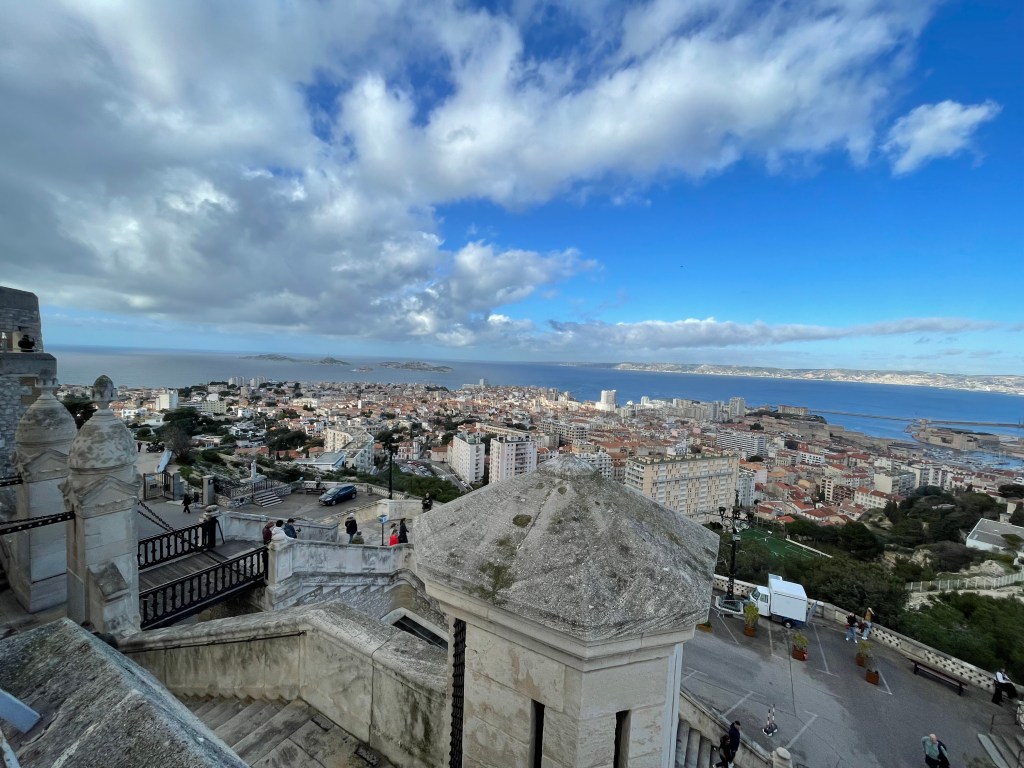
I was staying in Marseille for six days last week and Aix was an obvious day trip, as was Arles (Roman ruins! Van Gogh!), but more on that lovely town another time. Marseille and Aix are 39 minutes apart by train, yet worlds apart in complexion.
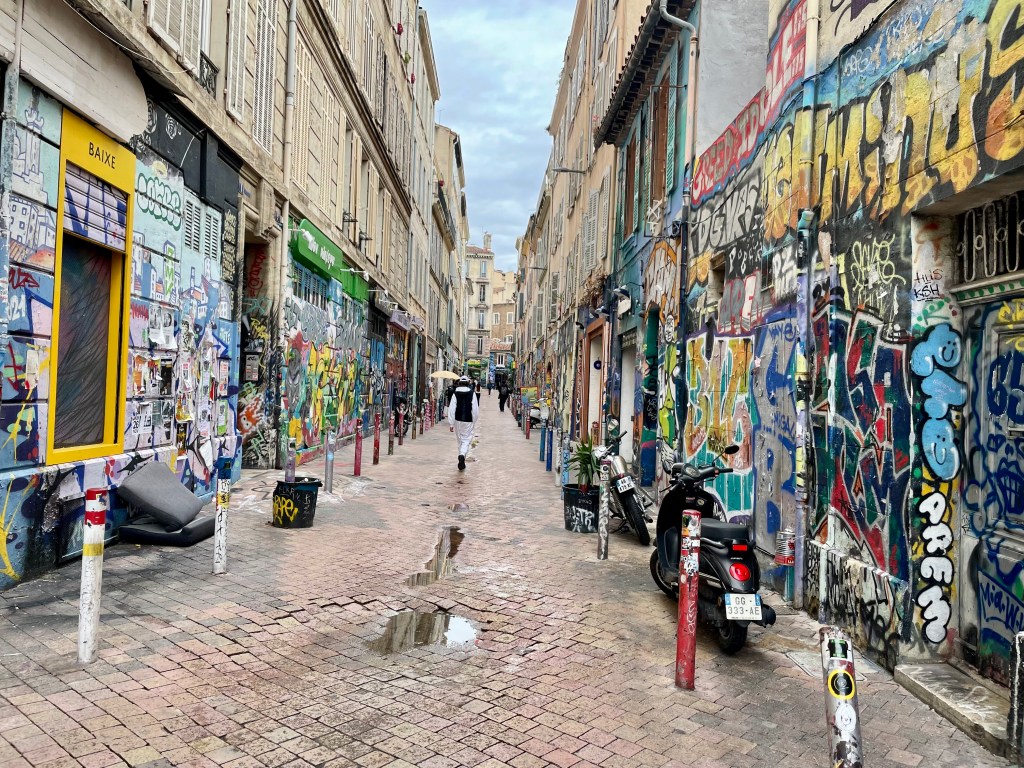
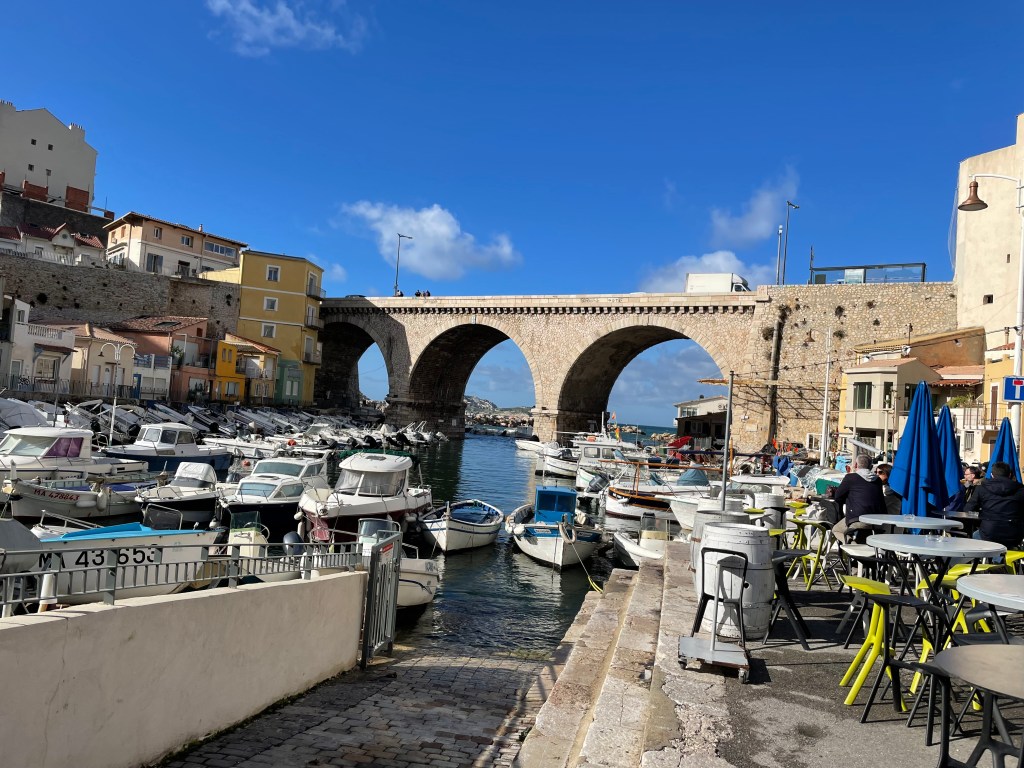
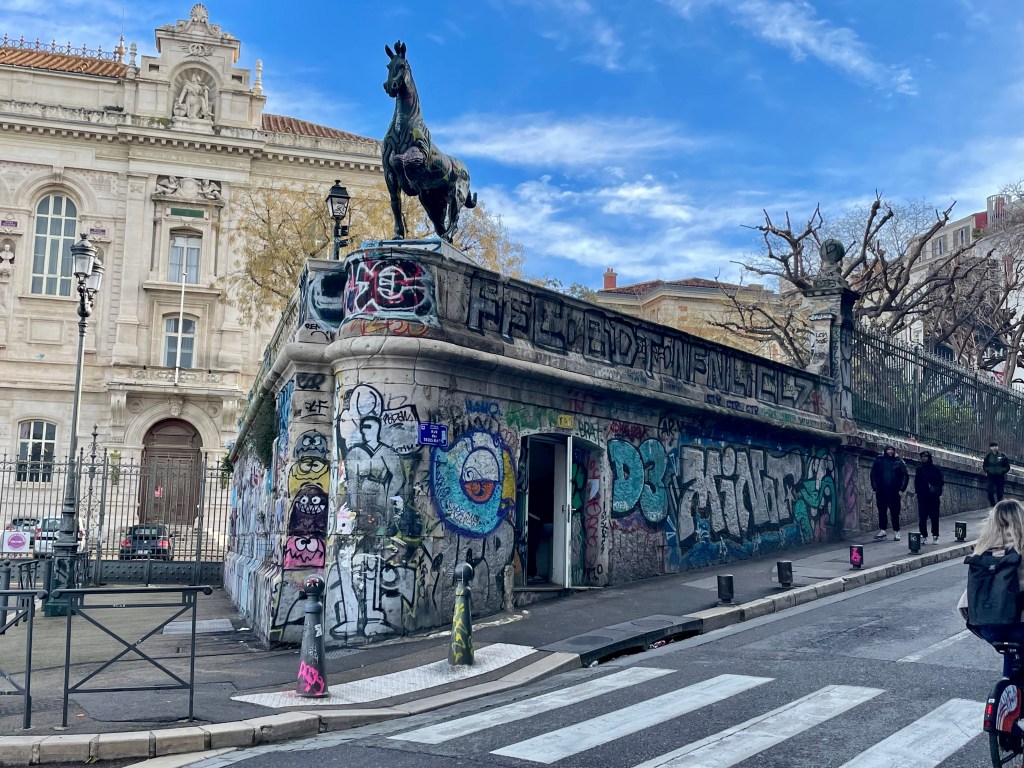
Marseille: gritty and huge (France’s second largest city); slathered in graffiti and street art; assertively multicultural; set on a picturesque port; growling with speeding scooters and motorbikes; part Paris, part chaos.
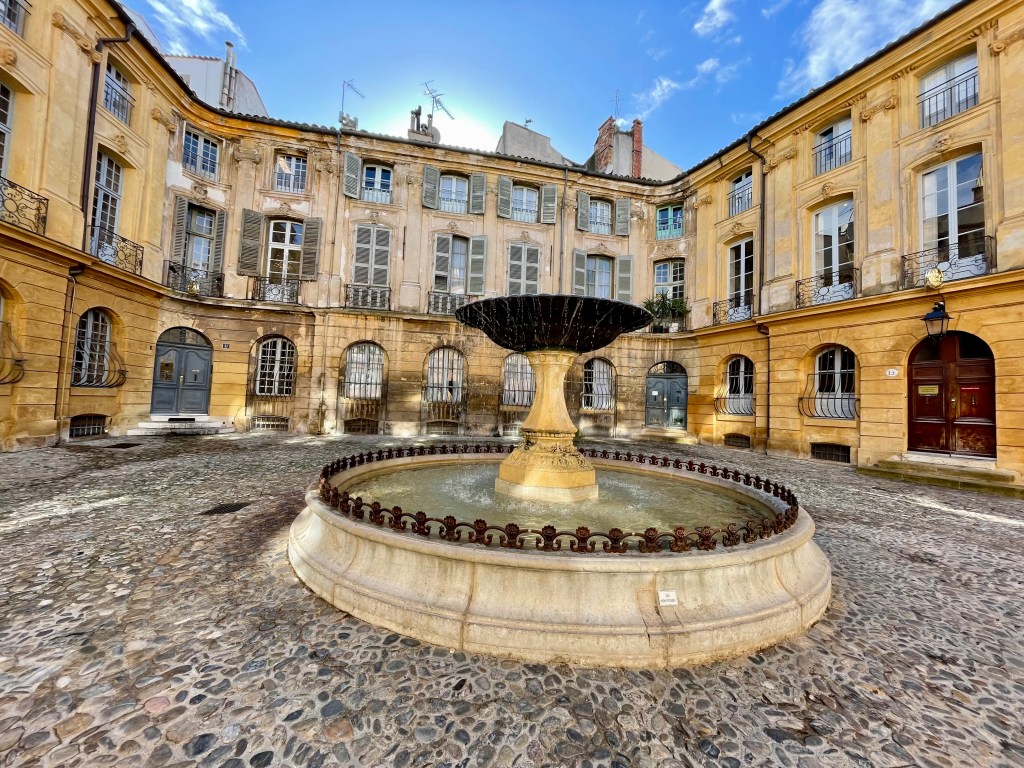
Aix: exuberant, medieval charm constructed of yellow and ocher stone; clock towers, boulevards and basilicas; fountains juiced by thermal springs; home of Cézanne (though, tragically, the city owns none of his paintings); boutiques and tranquil beauty.
The dichotomy is dizzying. One thumps with rap and rock, while the other strolls, hands in pockets, whistling. Both are ancient — at 2,600 years old, Marseille is the oldest city in France — and exude that quaint, sometimes ghastly, always intoxicating historical spirit that Europe seems to have a monopoly on.
Why Marseille, you say? Partly because it’s enjoying a moment right now, with hosannas in The New York Times to Condé Nast Traveler and beyond. A trend follower I am not. I did a day trip to Marseille in 2007 that spurred my urge to return to this bustling, bracingly diverse city. And so I did. And I’m glad. There you have it.
Marseille’s reputation for crime and grime is passé at best, slanderous at worst. Locals laughed with me when this was brought up, like, What are they talking about? Think New York, Chicago, San Francisco — they have their blights and trouble spots, but there are simple ways around that. And what’s a big city without some dirt under its nails? (My Fodor’s travel guide said my hotel was in an “iffy” neighborhood. I call bullshit. The crib and the hood are très cool.)
Vaunted as a foodie’s paradise, Marseille let me down many times gastronomically. I tucked into good but never great dishes originating from France, Italy, Argentina, Tunisia and the Ivory Coast. Alas, with heaving disappointment, my maiden acquaintance with Marseille’s world-famous fish stew, bouillabaisse, was a bust. The fish was dry and flavorless, the broth bland and tepid, and this was at legendary bouillabaisse megastar Chez Fonfon. The soup and one glass of wine took me for a hundred US dollars. The web review I wrote back at the hotel is a seething tirade about getting rooked.
Where the food flopped, the people shined. My minor allergy to others is cured when I travel. Connections with locals are almost always tonic and nourishing, pulling me out of my fortress of solitude to swap world views and pleasantries. We laugh as we wrestle with our linguistic limitations — my French is pretty much non-existent, basically sign language — and commiserate when politics are broached, which gladly is not often.
My past as a film critic is my social super power. It uncorks an uncanny passion in people that’s rooted in the universal language of cinema. I had a half dozen lively conversations with local Marseillaise about their favorite films and filmmakers, from Tarantino to Tarkovsky and every indie and classic in between. France’s renowned love affair with the movies burns bright. (I stumped them all when I mentioned “Annie Hall,” however.)
Meanwhile, over at my hotel, the hipster joint with the hipster name, Mama Shelter Marseille, the music played loud on weekends, pure DJ slop stuck on the same crowbar-to-the-cranium beat. The throb carried straight to my fourth-floor room well past 1 a.m. and I found myself in grandpa grumpus mode, calling reception to complain. To my surprise, the next day they upgraded my room to a larger one away from the bar, and even gifted me two fat gourmet cookies and a bottle of apricot juice. I felt like a little boy. I thought it was the nicest thing in the world. I’ve never said merci beaucoup so many times.
About fifteen feet from the hotel is a tiny pizzeria, really rather a dump that’s mostly for take-out, where I got my final meal in Marseille. No more overpriced, underwhelming haute cuisine on this trip, I sniffed.
Again, the people. The pizzeria is run by a stout, olive-skinned woman in perhaps her mid-forties with a handkerchief on her head and flour on her hands. I bought three plain slices and while they heated up we chatted in stilted English (she apologized for hers) about where I was from and she seemed happy for this foreigner’s patronage.
She told me her son had just visited Miami and loved it. She asked if I had been and I had to say I wasn’t a big fan of South Beach — the place reeks of douchebaggery, though I left that out — but that young men adore it and, for that, America is doomed. I left that out, too. She chuckled. I took my slices back to the hotel and bellowed a hearty Merci! Au revoir!
Later, after watching “Forgetting Sarah Marshall” in French with no subtitles, I went to bed. I heard nothing but the occasional motorbike screaming down the narrow streets.


 GNASHING.