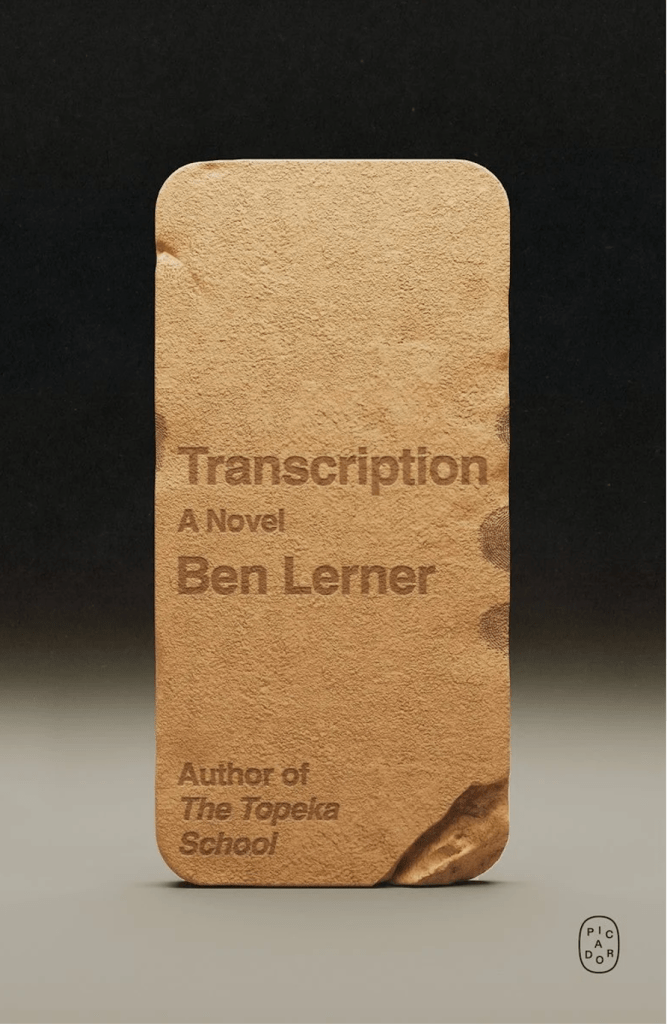
“Transcription”
I could see this happening to me: On the way to interview a very important person, you drop your phone, i.e. your recording device, into a sink filled with water. Phone ruined, you are forced to interview the person without a recorder, a fact you fudge by reconstructing the confab from memory for your article, a high-wire act and any writer’s nightmare. Novelist Ben Lerner — who’s also a gifted poet and has been dubbed the “most talented writer of his generation” — uses this premise as a springboard to something timely, profound and ineffably transfixing. A novel in name only — think the brainy consciousness streams of Rachel Cusk — the 130-page “Transcription” presents a nameless narrator and two other men in conversations about art, life, friendship, fatherhood and technology amid the backdrop of early Covid. Plot is nebulous and tricky to summarize, but the brilliance at work is distinctly Lerner’s. (I’m an avid fan of his novels “Leaving the Atocha Station” and “10:04.”) Lerner writes deceptively plain prose with a wizard’s wand — simple on the surface, yet each hypnotic line peels layers of insight and meaning. It’s all mesmerizingly meandering, to a destination both uncommon and rewarding.
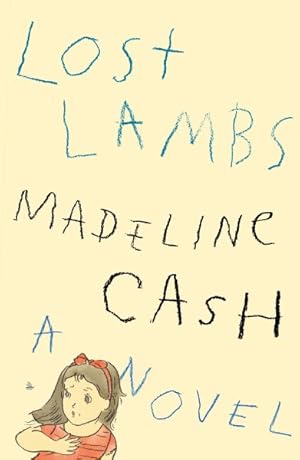
“Lost Lambs”
In this sharp and irreverent new novel, Madeline Cash flips notions of family, marriage, community, church and capitalism to expose their crawly underbellies. It’s prickly, spot-on, strange. And hilarious. The book’s many moving parts include an open marriage that veers to amorous calamity; star-crossed trysts; a trio of precocious teens that grazes danger in a vile adult world; a tech billionaire whose dealings are creepy at best; and a church Father whose hands may be scandalously dirty. Cash trains a compassionate bullseye on those creatures called teenagers and a cynic’s bead on the perilous pact of matrimony. (“The biggest conspiracy of all? This whole love thing,” a character sniffs.) But Cash isn’t cruel. She exudes empathy and openly likes her characters — the ones that deserve it. “Lost Lambs” is frothy literary fiction, until it’s not. It is droll and buoyantly written yet lands the well-placed left hook. I can imagine it becoming a four-part Netflix series, a smart, soapy, surreal dramedy starring Ben Stiller and Laura Linney. If it happens, I won’t watch it. I’ll stick to the book. The book is always better.
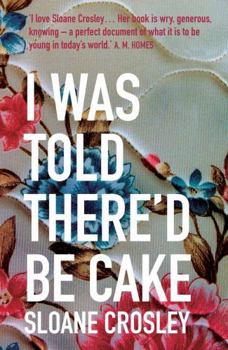
Three humor collections by Sloane Crosley
David Sedaris is the standard-bearer of comic essays. I believe this is wrong. I believe he is drastically overrated. I believe he is rarely actually funny. I believe his prose is limp. I believe his professional persona is as confected as a Girl Scout Samoa. You know who’s wittier, hipper and more stylish? Sloane Crosley, who’s written three collections of humor essays that impressed me enough to sit down and commit hosannas. Her first collection, “I Was Told There’d Be Cake,” is best. It also has the best title. Although “How Did You Get This Number,” her second book, and “Look Alive Out There,” her latest collection (from 2018), also have wry, hooky titles. Part-journalism, part-memoir, Crosley’s essays are first-person escapades, experiential and anecdotal and typically relatable. They bristle with razor observation and social commentary. Here, she mordantly muses about her only slightly embarrassing collection of plastic toy ponies. There, she riffs on her fraught city-girl excursion to Alaska, where, in an SUV, there is one guy among many women: “He is our lone star of testosterone in a galaxy of chick.” She deconstructs the bizarro experience of playing herself on “Gossip Girl” and takes merciless stock of her dating life. It’s not all playtime. Crosley doesn’t duck drama and high stakes (her queasy adventures in altitude sickness are almost contagious). Like Sedaris, some of Crosley’s situations and interactions smack of exaggeration or plot-propelling fancy. Such is the plight of the mass-consumed writer — feed the beast. Though the humor is a soft weave, coolly conversational, she can be overtly jokey, and the jokes rarely clank. Her voice is reliably amusing, cut with a measure of snark that gives her sweet prose a tangy kick.
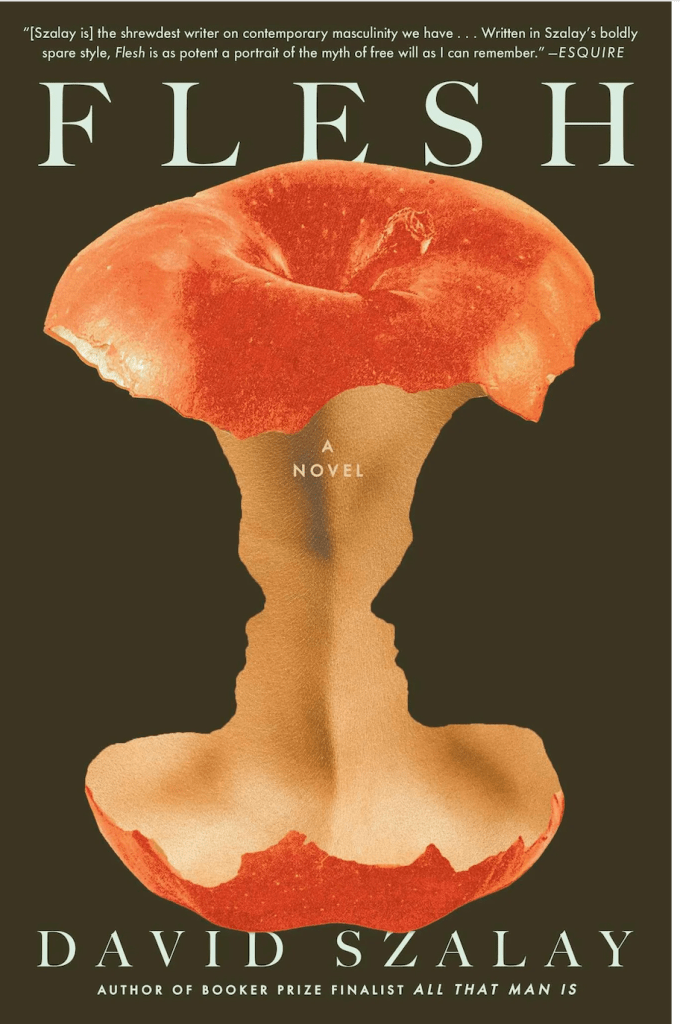
“Flesh”
In minimalist language so parched it’s practically puckered, David Szalay spins a story of the classic Solitary Man, a Hungarian immigrant in England named István who embraces a nearly non-verbal solitude as a shield against a world of discomfort. We follow this modern existential character from his cringey deflowering as a teen to his coupling with a rich married woman and decades beyond. Szalay’s tensed prose mirrors the character’s isolation, which occasionally sees shafts of light. While his interior life remains unexamined — his disaffection can be frosty — István is no cipher. He’s a well-drawn loner, a compelling picture of alienation. He’s also something of a symbol, a metaphor for class, urban malaise, the gesture of empty sex and deep loss. (It’s telling that his extravagant cigarette habit is a key character trait.) István fascinates by dint of what he shows as much as by what he withholds. What’s so remarkable about “Flesh,” which won the Booker Prize in 2025, is a descriptive precision and drum-tight realism that would make Hemingway beam. Grim and gripping, it’s a master class in control.