I don’t understand runners. I don’t know what in the world they are doing.
Dancing — a faint memory from my roaring twenties that I hope goes away.
Reggae is the devil’s flatulence.
A good, mean rollercoaster mainlines an unparalleled high.
There is nothing sexier than a comely woman reading a book.
Cars. I will never get them. They are like refrigerators — necessary appliances.
‘Good dog’ is redundant.
People who purposely don’t travel are unevolved and sad. (And people who say Munich is better than Paris are the most unevolved and most sad.)
Going to the movies alone is the best.
Religion is so radically misunderstood, so repulsively knotted up, we should hit delete and start all over again.
I am constitutionally incapable of playing charades.
Giving money to your alma mater is strictly for suckers.
Unless you’re doing it to a tiny child, the high-five is socially questionable. Fist-bumps — criminal.
There are worse things than tongue piercings. Though I can’t think of anything.
When an adult says they’re “reading” Harry Potter, they’re not really reading at all.
Sushi is sublime. I’ll even eat the grocery store crap.
I‘m thinking of going back to Japan. The more I think about it, the crazier I get.
I have this thing that if someone tells me they don’t read, I want to go back in time to the moment where I hadn’t met them.
Carnivals are disgusting and revolting. I adore everything about them. Even those poor goldfish.
Ican’t do the Great Outdoors. It’s the outdoors part that gets me.
I like sharks a lot. If one bit me, it would probably like me too.
Pet rats are like itty-bitty dogs — highly intelligent, funny, trainable, social, responsive. They drink beer and eat anything and, well, everything. Then at about 2-years-old they die and shatter your heart into 10,000 pieces. They’re the best.
If, in a post-apocalyptic world, all sports were wiped out, I wouldn’t care a whit. Take the fans first.
I was thinking of going to a local food festival and parade. Temporary insanity just creeps up on you.
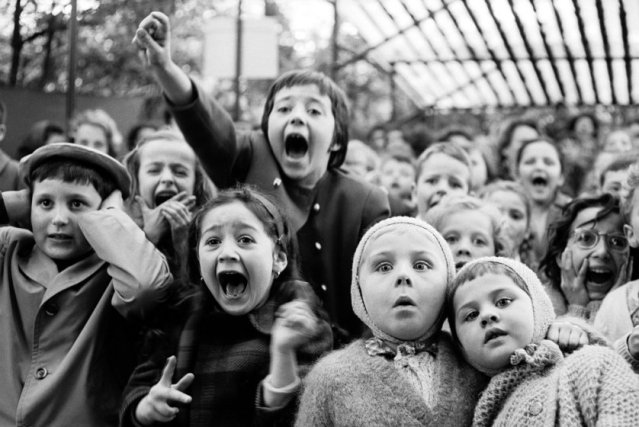
People have asked me if the photograph above this blog is is a screen-shot from Francois Truffaut’s “The 400 Blows,” as it resembles a scene from that classic 1959 film. It is not.
It is Alfred Eisenstaedt‘s ecstatic picture of kids at a Parisian puppet show, “Saint George and the Dragon,” at an outdoor theater in 1963.
Time magazine recently wrote about this enchanting photo:
Capturing the thrill, the shock, the shared triumph-over-evil that the children feel at the very moment when St. George slays the mythical beast, Eisenstaedt’s picture feels as fresh as when it was made, more than 50 years ago.
Here, the picture tells us, is an innocence that can remind even the most jaded of what it was once like to believe, to really believe, in the stories that unfold before our eyes onstage, or onscreen.
The master photographer himself said of this very picture:
“It took a long time to get the angle I liked. But the best picture is the one I took at the climax of the action. It carries all the excitement of the children screaming, The dragon is slain! Very often this sort of thing is only a momentary vision. My brain does not register, only my eyes and finger react. Click.”
I last visited Notre-Dame just over three years ago, in fall 2015. When in Paris, I invariably duck into the grand Gothic cathedral several times, because it’s there, because it’s beautiful, because its draw is irresistible. It is Paris splendor epitomized.
I’ve been to Paris on five occasions, which means I’ve been to Notre-Dame at least 15 times. It never gets old. Rather, each visit rewards with something new and startling. Sometimes I just hang out on the plaza in front of Our Lady — the sprawling Place Jean-Paul II Square — sipping coffee, people-watching, marveling at the twin bell-tower facade and those maniacal, sniggering gargoyles perched way up high.
A Catholic apostate and mid-level opponent of organized religion, I don’t worship in Notre-Dame, which went up in flames yesterday, mostly surviving the catastrophic blaze that had the world aghast. (Maybe there is a God.)
Notre-Dame Cathedral in flames Monday in Paris
I don’t go for the holy experience, but the wholly experience — a soothing spiritual state of serenity and rumination, reflection and introspection, inspired by the vaulting, dimly lit sanctuary’s artwork, architecture, luminescent stained-glass and twinkling constellations of prayer candles. And that’s just the interior.
Agnostic natives are with me, according to a piece in today’s NY Times: “France is one of the least religious countries in Europe. Urbane, intellectual Parisians often dismiss religion as archaic and unenlightened.”
Notre-Dame facade, fall 2015
But like other transporting religious structures around the world — from the Jama Masjid mosque in Delhi to the Wat Arun Buddhist temple in Bangkok — Notre-Dame is staggering to even this peevish secular humanist, with its gilded grandeur and gravity-defying architecture that toils so magnificently to transcend crude corporeality and reach for the heavens. In all her glory, Our Lady, I think, tickles the firmament.
(This goes for scores of religious sanctums I’ve traveled long and far to be dazzled by: the Blue Mosque in Istanbul, St. Peter’s in Rome, Angkor Wat in Siem Reap, La Sagrada Familia in Barcelona, and on and on. All instill dizzy awe, even if I’m not always buying what they’re peddling.)
Even without the slightest religious propensity, I bewail the damage to Notre-Dame. Like most, I was sickened watching flames devour the cathedral, my old friend, on the news. More is there than a quaint, history-encrusted, 850-year-old church. It is the ineffable, the mystical, the irrefutably sacred.
Standing tall, fall 2015.
The cathedral, with a wingspan from Joan of Arc to Victor Hugo to Disney, “is universal, Western, religious, literary and cultural, and that’s what makes it different from any other object,” says a French analyst in the Times. “It’s the whole spectrum from the trivial to the transcendent, the sacred to the profane.”
In other words, it is stubbornly irreplaceable. Its survival, by a hairbreadth, an act of God, divine intervention, is something I am loath to believe in: a naked miracle.
Whatever saved it, I think it was more the skill, action plans and water hoses of the Parisian fire fighters than, say, the conquest of virtue vs. evil. But it doesn’t matter. Notre-Dame didn’t collapse or burn to cinders. It is, they declare, structurally sound. No lives were lost. And for that, all of us should sigh a collective amen.
But do note, those devilish gargoyles survived the flames, and they are still sneering.
As one who seeks out the freaky and far out in my travels, serendipity seems to be the best GPS for the fiendishly, often funnily, strange. Mostly this is in the form of art, mainly sculpture and statue and the occasional painting. (Or some decidedly unfunny human cremations in India and Nepal — I’ll spare you.)
Sure, it’s superficial this fascination. (So weird! So hilarious!) What does it mean? Not much. It’s aesthetics of the outré, stimuli out of left field, tailored, perhaps, to the oddballs among us. It’s striking, warped and wonderful. The more ghastly the better. The more shocking the cooler. (Note: I have yet to stumble upon art or artifact that’s sincerely blasted my senses. It’s out there, and I will find it.)
Here, meanwhile, are irresistible curiosities I’ve come across around the world:
Cast of Joseph Merrick’s, aka the Elephant Man’s, skull, Royal London Hospital. One of the most interesting, most hideous and saddest skeletal specimens ever.Latex cast of the Elephant Man from the 1980 David Lynch film “The Elephant Man” at the Museum of the Moving Image, New York. This is the mold they used to make-up John Hurt as the real-life Elephant Man.“Crucified Woman,” an unsettling work by supreme provocateur Maurizio Cattelan, hanging in the Guggenheim in New York City. Note the pigeons. I have no idea what’s going on.Cracked cherub in Iglesia de El Salvador, a gorgeous church in Sevilla, Spain. I love the little fella’s decrepitude and pink and bulgy doll-like creepiness.Museu d’Art Contemporani de Barcelona. Stacked: a sheep, a pig, a cow, all with unicorn horns. Interesting, until you realize it’s just bad art.Montreal Museum of Fine Arts. Rugged hiking man with primates. The bloke’s head is like a bobble-head.The Met, New York City. Exactly how I wake each morning.Body cast of Chang & Eng, original Siamese twins, Mutter Museum, Philadelphia. Gross and glorious.A baby through Picasso’s eyes, Paris. I just like this poor warped toddler, so bulbous and twisted — and probably demonic.Peter and Paul Fortress, St. Petersburg, Russia. At the resident Torture Museum. Highlight: the saliva string and puddle.Hirshhorn Museum, Washington, DC. Trump in two years, in his cell. Malformed Baby Jesus, flea market, Barcelona, Spain. So distorted and freakish I desperately wanted to take it home and cuddle it.Hanging horses by crazy Cattelan, Guggenheim, NYC. Something out of Fellini. See the little Pinocchio puppet by its front legs. Discuss.Monkey murder. I really haven’t the foggiest. I wish I did, but I don’t. Montreal Museum of Fine Arts.
I once knew someone who actually said this when I mentioned that my favorite city is Paris: “Huh? Even Munich is better than Paris.”
Deathly silence.
Munich?
Munich?
Thunderstruck, I retain this memory with terrible clarity. I crossed that person off my Christmas card list.
(Now, nothing against Munich. Munich is neat-o. I thoroughly enjoyed Munich, if I didn’t fall in love with it. I like beer. And cuckoo clocks.)
When I was in Amsterdam in May, I was on a boat tour through the lovely canals and, coaxed by the pushy skipper, I was evidently dumb enough to say the city was beautiful, much like Paris, wherein the whole boat, about eight people, groaned, “Whoa! Amsterdam is waay better than Paris.” Murmurs and whispers ensued. (Oh, those awful French people, groused a ditzy Brit, echoing the laziest cliché in the history of world travel.)
I had to, first, snuff my indignation, then muffle my bemusement, then muzzle my laughter. Were they serious? Amsterdam is gorgeous and fun and historically and culturally robust, but it doesn’t hold a flickering little paper match to the overwhelming majesty of sprawling, art-encrusted, haute cuisine-infused, history-convulsed Paris, which boasts its own sinuous canal in the knockout, 483-mile Seine and all of its inviting, ancient quays.
The last thing Paris needs is some doltish American offering injured and angry apologias for the grand, gilded metropolis. Paris stands supreme, proudly independent, unimpeachable, a dazzling European peacock, plumage in full splay. Perhaps not everyone’s favorite destination, it remains high up, cleanly above Munich and Amsterdam. (I choose Amsterdam, which I adore for so many reasons, over Munich, for the record.)
Central Paris, that masterpiece of urban planning, conflates the antiquated and the contemporary for stunning treelined strolls. Magnificent parks, gardens and cathedrals stipple the cityscape and some of the most august art repositories in the world — Musèe d’Orsay, the Louvre, Musèe de l’Orangerie, Musèe Picasso, Centre Pompidou — unfailingly spellbind. Food, fashion, film — Paris is a throbbing epicenter for it all.
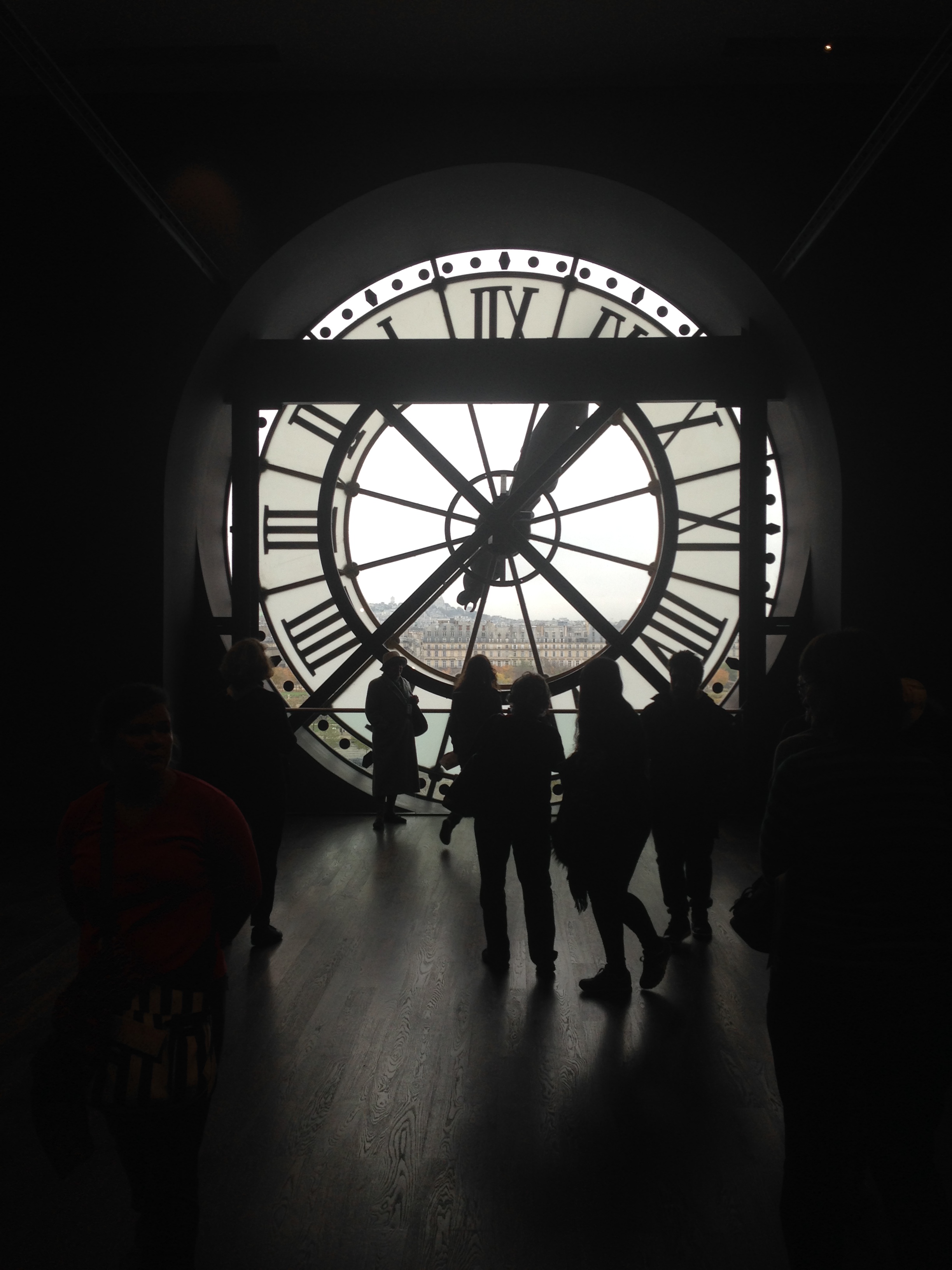
Musee d’Orsay, November 2015
But we know this. Here I am describing, a mite defensively, the patent pleasures of this great city. All of it world-renown. For a reason.
While Paris preens and beguiles, some of my other eternal boldfaced cities include New York, Tokyo, London, Barcelona, San Francisco, Krakow and stately Istanbul, where I return this month, giddily.
Reader: I’d love to hear about your favorite travel spots. Drop names in the comments section and be as brief or windy as you’d like. I’m curious if Paris makes the cut or not, or if I’m crazy, and if I’m overlooking other star locations, be it Botswana or Buenos Aires. Type away …
This was a mistake: I once told a female friend to go ahead and meet me in Tokyo when I went some time ago. She was excited. Then I wrote in a blog that she shouldn’t be too excited because I need my space, that I, huh-hum, walk the Earth alone. This did not go over well. This was unmannerly. And dumb. Whatever. It was true.
Louvre, Paris, 2015
Decidedly, defiantly, I am an incorrigible solo traveler. Occasionally I’ve traveled to Europe or somewhere in the States with a gal pal, but 99-percent of the time I’m a one-man production. Two weeks in Japan. Three weeks in India. Two weeks in Turkey. Ten days in Paris. Do I get lonely? Rarely. Embracing solitude and deflecting loneliness is an art form, and, done right, it’s invigorating.
Last fall, I wrote here about loneliness vs. solitude: “My own skin doesn’t fit well. Which means comfort among others doesn’t come easy. Traveling, I love to read in cafes, scribble in journals in bars, roam streets, cathedrals and cemeteries alone, without the nattering of companions. I move to my own beat …”
So I am gladdened by the new book “Alone Time: Four Seasons, Four Cities, and the Pleasures of Solitude” by journalist Stephanie Rosenbloom. Not only are the four cities she explores — Paris, Istanbul, Florence, New York — some of my absolute favorites, but her experiment in solitary travel is of course immensely attractive.
Despite spending undue verbiage defending solitude — feebly citing scientists, psychologists and philosophers who rail against the social stigma of aloneness, as if it’s some zany pathology — Rosenbloom says that solo travel is surging, and, a fine reporter, she provides the stats.
In a time when everything is socially entwined and extravagantly networked, the hunger for alone time is greater than ever, be it a solo trip to a movie or a solo trip to Morocco. I habitually go the movies alone, just as I unfailingly globe-trot untethered. As Rosenbloom learns, such excursions are steeped in rare splendors, from the placidity of eating alone and truly savoring a meal to the transformative power of focusing on the present moment.
“Alone, there’s no need for an itinerary,” she writes. “Walk, and the day arranges itself.” One can be “curious, improvisational, open to serendipity.”
Blue Mosque, Istanbul, 2008
As when I spontaneously tooled through the fairy-tale hills of Cappadocia, Turkey, on a rented Vespa, or stumbled upon the ritual slaughter of sacred rams in a mosque abattoir in Istanbul, or visited an orphanage for critically ill children in Siem Reap, Cambodia, or, most harrowing, got myself detained by Hezbollah goons in South Beirut. And of course there are countless cordial encounters and forged friendships among fellow travelers and locals that organically blossom, and often last.
Rosenbloom had a plan: visit Paris in springtime, Istanbul in summer, Florence in autumn and New York, her hometown, in winter. Except for New York, she was only in each city for up to one week. Her aim was to peel back the delights of traveling alone in exemplary locations, ones awash in food, architecture and art, revealing how fine it can be to be unhurried, “accountable to no one,” exhilaratingly free.
The upshot is part vivid travelogue and vague memoir, filigreed reportage and free-floating opinion. “Alone Time” doesn’t provide the stunning personal epiphanies and life-altering experiences of Elizabeth Gilbert’s classic “Eat, Pray, Love” (nor the luxurious prose). It’s more a practical guide, a how-to on solo travel, including an epilogue, “Tips and Tools for Going It Alone.” (Though I had to roll my eyes at a few sections, like this one: “How to Be Alone in a Museum” — really?) She offers some gauzy instructions, like how “to be open to wonder,” which, actually, is much easier than you think.
Rosenbloom, diehard journalist, is wed to her sources, so that her rigorous apologia for eating alone comes with too many testimonials from psychologists and the like, bogging down what modest narrative thrust there is. I wanted to blurt out: “Eating alone: Just do it! It’s entirely fine and easy and acceptable. You don’t need a sheaf of Ph.D studies to validate this primal pleasure.”
For this introvert, whose two favorite cities happen to be Paris and Istanbul, “Alone Time” is a mild affirmation that my travel habits might have universal appeal, something I kind of already believed. Solitude -— not loneliness, which must be fended off — is a source of power and creativity, great assets while on the road.
East River, New York City, 2010
As I wrote last fall: “In solitude one reaps energy from oneself. You create your own space on your own terms, with your own powers, cultivating your mind, with the option of joining the wide world at anytime. Great freedom defines solitude. It’s the incubator of creativity and art. It’s the locus of self-communion.”
Rosenbloom, who began her physical journey and spiritual awakening in the City of Lights, sums up with characteristic pragmatism and admirable ambition: “My aim wasn’t to master Paris. It was to master myself: to learn how a little alone time can change your life — in any city.” And there she nails it.
Finished Tommy Orange’s debut novel “There There” — terrific, explosive — and I’m now onto Amie Barrodale’s arch short stories “You Are Having a Good Time.” After just a few of these fun-size fictions, I am firmly in the book’s thrall. The title alone thrills me a little.
I am glad I’m reading “You Are Having a Good Time,” because I am indeed having a good time. But frankly the stories are a lucky place holder for a book I’m waiting to arrive, “Alone Time: Four Seasons, Four Cities, and the Pleasures of Solitude,”by travel journalist Stephanie Rosenbloom.
The book is about her year traveling solo in Paris, Istanbul, Florence and New York — four of my favorite cities, especially the first two — and all that she loved, loathed and learned basking in that life-expanding mode of emancipated alone-hood. I’m an inveterate solo trekker enamored with the places she visits, so Rosenbloom and I might have a lot in common.
Amie Barrodale
For now, Barrodale’s “You Are Having a Good Time” is a gratifying off-kilter kick, a spasm of spare, elusive, funny tales that are touched by mystery, an alluring unknowability. With cavalier irreverence, she throws a strobe-light on aberrant facets of the human condition.
Barrodale conjures “stories that don’t behave as you expect stories to behave,” notes the book flap. “Beautiful or Grotesque?” asks the headline on a review of the 2016 collection.
Or there’s this review headline: “Stories Exploring the Misguided, the Unrequited and the Mortified.” That review concludes: “None of these stories explain themselves willingly.”
That is true. Take “The Imp,” in which a possible ghost upends the relationship of a man and his pregnant wife. A tarot reader is involved. Or the bleakly comic “Night Report,” which follows a troubled woman to a New Age mountain retreat where she breaks down and declares, “I wish that I were dead. I’m heartbroken, and if I had a gun I would use it. … I’d shoot Eve. Thank you. I’d shoot Eve in the chest.”
Then there is “Frank Advice for Fat Women,” which opens with a dry, quizzical flourish: “A woman who was lonely and depressed should begin by getting on some medication. She should clean her house and throw away clutter. After that, Dr. Sheppard told his patients to lose weight and wear dresses.”
Her eye for detail is keen: “The restaurant was empty except for a guy at the bar. He was a little chubby. I could tell he was single because he was wearing white tube socks with black dress shoes. His jeans were too tight on him. I don’t mean that he had on skinny jeans. I mean that he had on jeans that were two sizes too small, and he was uncomfortable. He kept squirming, fooling with his phone. … Outside, through the window, I saw an old guy stop under a tree, pull down a branch, and smell a flower.”
On love: “Being torn apart is what a relationship is. So don’t be afraid. Play the game.”
The stories groove to mercurial rhythms, and sometimes seem to bear a torch, in search of a point. They withhold facile answers and spurn tidy bows. They’re fun like that, and funny. They are dark, but giddy.
Barrodale’s stories — this is her only book — are a cousin to the blithely jagged fiction of Ottessa Moshfegh, who’s an avowed fan. “It’s one of my favorite books,” she recently said. “Like (Michael) Ondaatje, Barrodale makes me hold my head and ask, ‘How?’”
Moshfegh shouldn’t be too envious. She’s the better writer, more probing, bolder, weirder. But Barrodale is a force, an alchemist of the odd, fabricating devilish modern tales that totter your balance and leave your mouth dry.
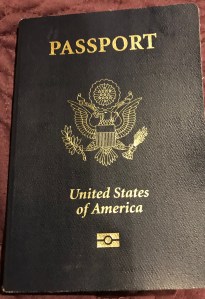
So my passport is about to expire — August 18, to be exact — and I’ve spent the last 40 minutes or so applying for a spanking new one, filled with precisely 28 crisp blank pages watermarked with stirring visions of Americana, from the Statue of Liberty to orbiting spacecraft; from an Alaskan grizzly eating a fresh, flopping salmon (true!) to the noble, jut-jawed mugs of Mt. Rushmore. It’s like a little picture book to remind you of home while you’re happily clomping around and spending money in someone else’s fine nation.
To get this desperately necessary booklet (I travel, therefore I am), I have to send thoroughly filled out PDF forms, a check for $110, a new mug shot (I’m camera shy, so that’s delightful) and my old passport to whatever U.S. department of whatever. Then, in several weeks, I’ll have a crease-free dark blue book that will allow me to get the hell out of here to somewhere new, exotic and magnificently dangerous. Or maybe just to Paris.
I will miss my current passport. For one, my photo isn’t ghoulish. I look young, boyish, and remarkably tan. And I’m proud of the stamps from other countries I’ve collected in the course of its 10-year life: Lebanon, Syria, Russia, the Netherlands, France, Turkey, Spain, Canada (well, Canada), England, and more. I will stick a Post-It note on this passport with the earnest message: Please return this! When I did that last time, they returned it, but punched a bunch of holes in it to invalidate it. Fair enough. Old passports make fond keepsakes.
It’s crazy and not a little depressing that it’s already time to renew my passport. Ten years is a stretch. But I’ve given this pocket pal a good workout, gripping it to far-flung places, some of which I never imagined I’d ever go. I don’t look the same, but only once has a customs agent done a double-take when checking my photo. “That was a long time ago,” I assured her. She smiled. I sighed.
The last time I renewed a passport and got the one I have now, the one about to expire, I did it a couple years before its expiration. That’s because I was traveling to Lebanon and Syria (before the current war) and my passport contained a stamp from Israel, where I had been years earlier. Both Lebanon and Syria bar entry if your book has an Israel stamp for obvious, if arguable, political reasons. So I had to get a whole new passport. What with paying for a Syrian visa to boot, those pre-trip costs were onerous.
She’s still in good shape.
This time I’m cutting it close. In some countries your passport must be valid for more than three months before the expiration date. When I went to Amsterdam a few weeks ago the airline attendant looked at my passport date, did some quick math in her head, and paused before letting me check-in.
I’ll have none of that. Time is of the essence if I want to travel anytime soon, though I have no plans. I’m off to get a new passport photo, which for me is like getting a colonoscopy, an uncomfortable, possibly traumatizing event. If the recent picture on my Russian visa is any indication, the new photo will be monstrous, even gargoylian.
I have no idea where I’m going next with the new passport. I don’t travel in summer -— too hot, too crowded, too pricey — so I can relax and blithely research the next adventure. Then, by fall, I’ll be off, ready to deflower the new booklet with its first kiss, the loud, mechanical thomp of the customs agent’s stamper.
“Travel is intensified living — maximum thrills per minute and one of the last great sources of legal adventure. Travel is freedom. It’s recess, and we need it.”
Wanderlust is a malady, chronic and unquenchable. It’s a greedy thing. It wants, desires. It pulses with passion. A lust to wander — exactly as advertised. Lust isn’t a neutral word. It implies the untamable, the uncontainable. It’s hot to the touch.
I’m forever locked in wanderlust’s fevered clutches, craning my neck in search of the next journey somewhere far away. I need to move. I demand experience. I devour culture. I like airplanes.
This year found me bounding near — D.C., Philadelphia, Boston — and swanning far — London, Montreal, St. Petersburg, Russia. Last year was Spain, for the second time; the year before, Paris, for the fifth time. If all that hadn’t broke the bank, I’d now be giddily racking my brain and scanning maps to locate my next adventure.
Let’s do it anyway. Where next?
Obvious contenders are places I haven’t been, from Central and South America to Kenya and Iceland; from Indonesia and Ireland to Singapore and Stockholm.
But I’m picky. I won’t name names, but some places just don’t seem culturally rich enough, or they’re too mojito-on-the-beach boring, or they’re totally repellent in an I-don’t-want-to-be-beheaded way. Too hot. Too cold. Too aesthetically barren. Let’s not forget places with unconscionable alcohol bans.
Though I enjoyed insanely sweaty jaunts in Thailand, India, Egypt and Vietnam (the latter was best), I mostly spurn hot, tropical climes. I don’t do palm trees. Sand: the great deal-breaker. No matter where I go, early spring and early fall are my optimal travel times.
Ho Chi Minh City, Vietnam
I go for cities, jostling, clamorous metropolises, be it Shanghai or Barcelona, Berlin or Mumbai, Tokyo or Hong Kong, Istanbul or Marrakesh. That to me is where the action is, not enveloped in frothing seawater on a Boogie Board or panting across sinuous mountain hiking trails.
Before choosing Russia for my recent fall trip, I looked hard at South Africa, but decided it was both too expensive and too outdoorsy. There is fairly cosmopolitan Cape Town, known mostly for its seaside “scenery” — cliffs and water and the like. Victoria Falls and overpriced safaris could not seal the deal. I’m not mad about seeing hyenas in their natural habitat, when all is said and done. (Why do tourist safaris seem so canned, so kind of phony?)
Some time ago I came close to buying tickets to Argentina — zesty Buenos Aires! Wine! Steaks! — and Brazil, until I peered closer at the year-round temperatures and the Brazilian proclivity for volleyball and Speedos. Only Rio’s storied favela piqued my interest in the end, so I swiftly looked elsewhere for the next journey.
I picked Istanbul for its European patina and Ottoman exoticism, and, once there, was instantly won over by its luminous culture, wonderful people, Old World beauty, dazzling mosques and cobblestone-y charms. A weekend trip to the fairy-tale cave village of Cappadocia topped a perfect two-week vacation. I have since returned to Istanbul, and will surely go back.
Blue Mosque, Istanbul
But not now. I’m looking for the new, the untouched, the virgin vacation. Japan oddly beckons, but I’ve been there twice, though I’d like to dedicate more time to Kyoto; I think I rushed it. Swaths of Northern Europe — Norway, Sweden, Switzerland, Denmark — fail to excite. I’ve come close to trying Hungary, mostly for the Gothic visions of Budapest, but there doesn’t seem to be enough cultural ballast to sustain a full trip. Prague is near Hungary, but I’ve done that and wasn’t bowled over. A bit too touristy, a bit too lightweight.
I’ve been to Poland, Mexico, China, Austria, Nepal, Cambodia, Beirut and Israel. But I’ve never been to Australia, and I don’t yen to go, for many of the reasons noted above. (“Sun and fun” as an ideal does not compute.) Toronto looks … meh. Indonesia seems too balmy, if unspeakably gorgeous.
Angkor Wat, Cambodia
This is a crazily superficial, obscenely first-world conundrum to be stuck in. I’ll pry myself loose when the time comes, when I’m ready for the next big trip (Chicago? Taiwan? South Korea?). Meanwhile, I gaze at my suitcase with longing, hoping to fill it soon, even if I have nowhere to go. Wrote Stephen Sondheim: “Stop worrying where you’re going … If you can know where you’re going/You’ve gone.”








 GNASHING.