As one who seeks out the freaky and far out in my travels, serendipity seems to be the best GPS for the fiendishly, often funnily, strange. Mostly this is in the form of art, mainly sculpture and statue and the occasional painting. (Or some decidedly unfunny human cremations in India and Nepal — I’ll spare you.)
Sure, it’s superficial this fascination. (So weird! So hilarious!) What does it mean? Not much. It’s aesthetics of the outré, stimuli out of left field, tailored, perhaps, to the oddballs among us. It’s striking, warped and wonderful. The more ghastly the better. The more shocking the cooler. (Note: I have yet to stumble upon art or artifact that’s sincerely blasted my senses. It’s out there, and I will find it.)
Here, meanwhile, are irresistible curiosities I’ve come across around the world:
Cast of Joseph Merrick’s, aka the Elephant Man’s, skull, Royal London Hospital. One of the most interesting, most hideous and saddest skeletal specimens ever.Latex cast of the Elephant Man from the 1980 David Lynch film “The Elephant Man” at the Museum of the Moving Image, New York. This is the mold they used to make-up John Hurt as the real-life Elephant Man.“Crucified Woman,” an unsettling work by supreme provocateur Maurizio Cattelan, hanging in the Guggenheim in New York City. Note the pigeons. I have no idea what’s going on.Cracked cherub in Iglesia de El Salvador, a gorgeous church in Sevilla, Spain. I love the little fella’s decrepitude and pink and bulgy doll-like creepiness.Museu d’Art Contemporani de Barcelona. Stacked: a sheep, a pig, a cow, all with unicorn horns. Interesting, until you realize it’s just bad art.Montreal Museum of Fine Arts. Rugged hiking man with primates. The bloke’s head is like a bobble-head.The Met, New York City. Exactly how I wake each morning.Body cast of Chang & Eng, original Siamese twins, Mutter Museum, Philadelphia. Gross and glorious.A baby through Picasso’s eyes, Paris. I just like this poor warped toddler, so bulbous and twisted — and probably demonic.Peter and Paul Fortress, St. Petersburg, Russia. At the resident Torture Museum. Highlight: the saliva string and puddle.Hirshhorn Museum, Washington, DC. Trump in two years, in his cell. Malformed Baby Jesus, flea market, Barcelona, Spain. So distorted and freakish I desperately wanted to take it home and cuddle it.Hanging horses by crazy Cattelan, Guggenheim, NYC. Something out of Fellini. See the little Pinocchio puppet by its front legs. Discuss.Monkey murder. I really haven’t the foggiest. I wish I did, but I don’t. Montreal Museum of Fine Arts.
I once knew someone who actually said this when I mentioned that my favorite city is Paris: “Huh? Even Munich is better than Paris.”
Deathly silence.
Munich?
Munich?
Thunderstruck, I retain this memory with terrible clarity. I crossed that person off my Christmas card list.
(Now, nothing against Munich. Munich is neat-o. I thoroughly enjoyed Munich, if I didn’t fall in love with it. I like beer. And cuckoo clocks.)
When I was in Amsterdam in May, I was on a boat tour through the lovely canals and, coaxed by the pushy skipper, I was evidently dumb enough to say the city was beautiful, much like Paris, wherein the whole boat, about eight people, groaned, “Whoa! Amsterdam is waay better than Paris.” Murmurs and whispers ensued. (Oh, those awful French people, groused a ditzy Brit, echoing the laziest cliché in the history of world travel.)
I had to, first, snuff my indignation, then muffle my bemusement, then muzzle my laughter. Were they serious? Amsterdam is gorgeous and fun and historically and culturally robust, but it doesn’t hold a flickering little paper match to the overwhelming majesty of sprawling, art-encrusted, haute cuisine-infused, history-convulsed Paris, which boasts its own sinuous canal in the knockout, 483-mile Seine and all of its inviting, ancient quays.
The last thing Paris needs is some doltish American offering injured and angry apologias for the grand, gilded metropolis. Paris stands supreme, proudly independent, unimpeachable, a dazzling European peacock, plumage in full splay. Perhaps not everyone’s favorite destination, it remains high up, cleanly above Munich and Amsterdam. (I choose Amsterdam, which I adore for so many reasons, over Munich, for the record.)
Central Paris, that masterpiece of urban planning, conflates the antiquated and the contemporary for stunning treelined strolls. Magnificent parks, gardens and cathedrals stipple the cityscape and some of the most august art repositories in the world — Musèe d’Orsay, the Louvre, Musèe de l’Orangerie, Musèe Picasso, Centre Pompidou — unfailingly spellbind. Food, fashion, film — Paris is a throbbing epicenter for it all.
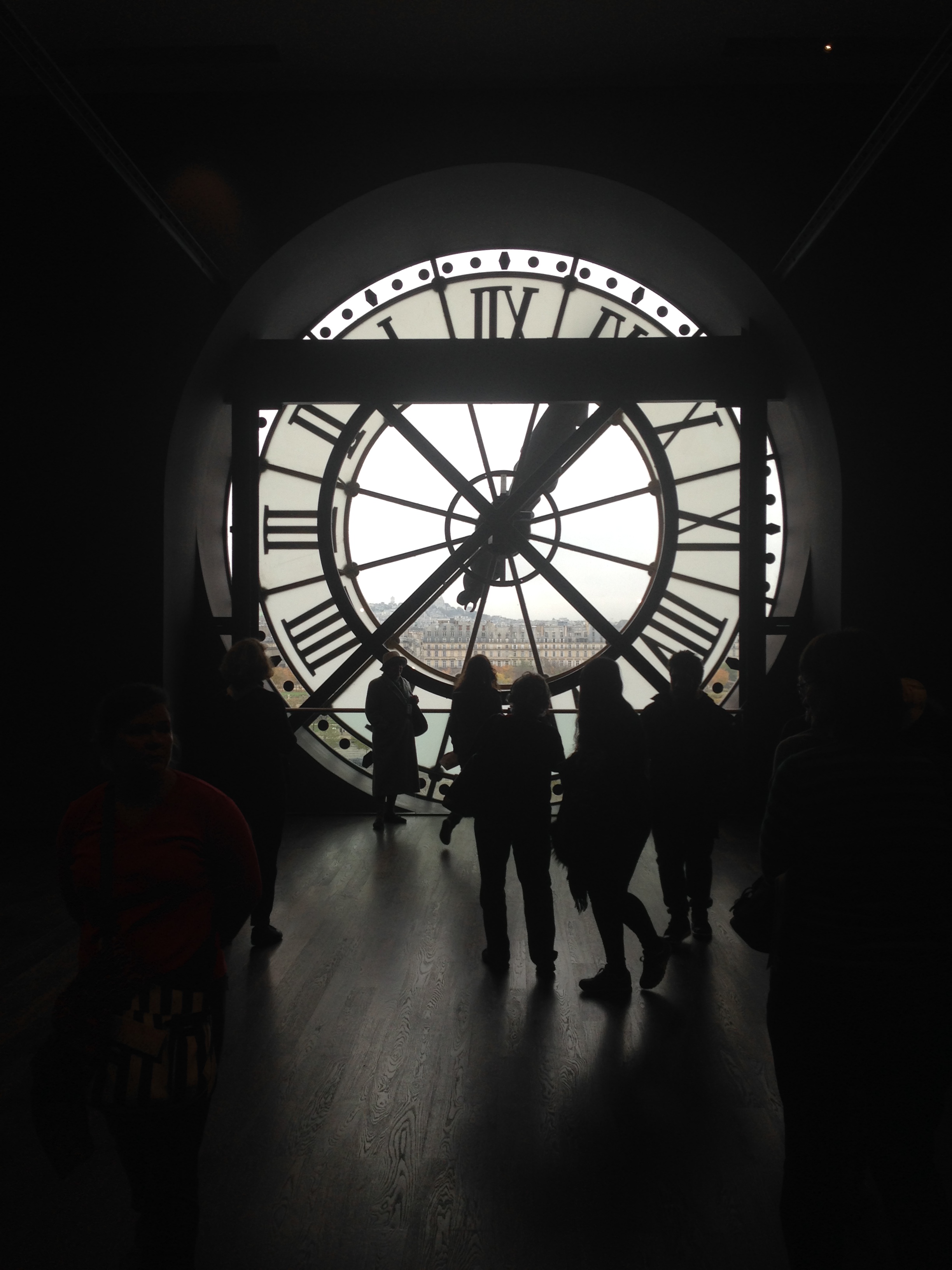
Musee d’Orsay, November 2015
But we know this. Here I am describing, a mite defensively, the patent pleasures of this great city. All of it world-renown. For a reason.
While Paris preens and beguiles, some of my other eternal boldfaced cities include New York, Tokyo, London, Barcelona, San Francisco, Krakow and stately Istanbul, where I return this month, giddily.
Reader: I’d love to hear about your favorite travel spots. Drop names in the comments section and be as brief or windy as you’d like. I’m curious if Paris makes the cut or not, or if I’m crazy, and if I’m overlooking other star locations, be it Botswana or Buenos Aires. Type away …
The stony hills don’t roll so much as jag and tumble. Fantastic rock formations — so often called “fairy chimneys” that the term, apt as it is, has become cliché — spiral from the clay-colored earth in tapered towers and stout tepees.
Cave dwellings and ancient cave chapels adorned with shimmeringly preserved Christian frescoes honeycomb hillsides. Phallic boulders and chalky spires erupt out of the arid Anatolian plains. Horses graze amid tall grass and bright wildflowers and horse-pulled carts trundle down steep stone streets.
After a long time away, I am soon returning to this otherworldly, almost Martian landscape of Cappadocia, Turkey, where I will rent a motor scooter and buzz the hills, stop and gape at the underground cities and famed Open-Air Museum, stay in the obligatory cave hotel, tuck into lavish Turkish cuisine and partake of the modest nightlife. (I’m partial to the funky Flintstone Bar, which is also, yes, a cave.)
I was last in Cappadocia a decade ago and I marveled then and expect to marvel all over again at the sculpture-like topography — it’s a mushroom! It’s an arrowhead! — molded by the artistic hands of the heavens. This UNESCO World Heritage site, whose pink dawn skies are peppered with flotillas of touristy hot-air balloons, would make an exemplary location for a sci-fi or fantasy movie, and probably has.
It’s practically a hop-skip from Istanbul to Central Anatolia — a 90-minute flight, that, at $25 each way, is a steal that can’t be denied. So back I go this fall.
These are scenes from my last stay in Cappadocia — looking back while looking forward.
My cave hotel in Goreme, Cappadocia
Cave hotel room
And three bonus photos that really capture the magic, borrowed from the web:
Like regular human ardor, a love affair with a city is complicated — prickly, passionate, vexing, ineffable. We adore our favorite cities, which are not breathing creatures but quasi-animate entities that are unquestionably alive, pulsing and forever mutable.
When pressed, the two cities I enjoy the most intense romances with are Paris and Istanbul. Paris is my baby, but sometimes I think I love them equally. (Sorry, ma chérie.)
I fell in love with Istanbul in the spring and fall of 2008, two trips comprising some of my very peak travel experiences. There were times when I actually lost myself, and, this is spectacularly unusual, crawled out of my muzzy head, breathed a little and existed, if momentarily, in a vacuum of Edenic placidity, even contentment. I flew.
Ten years on, the country has hurtled into political tumult: multiple terrorist attacks, violent anti-government protests, an attempted coup and the burn marks of President Erdogan’s tightening authoritarian chokehold. The guidelines of a culinary walking tour in Istanbul actually state: “We are not responsible for acts beyond our control, including but not limited to … acts of war, or other unrest caused by state or non-state actors.” Terrific.
I could boycott Turkey, but that’d be my loss. I miss the generosity of the people, the grandeur of Hagia Sofia and the Blue Mosque, the majesty of the sun-twinkling Bosporus, the exquisite food, the dazzling cultural and religious breadth of East meets West. So I am returning this fall, with a two-day excursion amid the fairytale moonscapes of Cappadocia in Central Anatolia. (See them here. Ignore the festering hot-air balloons.)
These shots of Istanbul, snapped on my long-ago journeys, remind why I’m going back.
This was a mistake: I once told a female friend to go ahead and meet me in Tokyo when I went some time ago. She was excited. Then I wrote in a blog that she shouldn’t be too excited because I need my space, that I, huh-hum, walk the Earth alone. This did not go over well. This was unmannerly. And dumb. Whatever. It was true.
Louvre, Paris, 2015
Decidedly, defiantly, I am an incorrigible solo traveler. Occasionally I’ve traveled to Europe or somewhere in the States with a gal pal, but 99-percent of the time I’m a one-man production. Two weeks in Japan. Three weeks in India. Two weeks in Turkey. Ten days in Paris. Do I get lonely? Rarely. Embracing solitude and deflecting loneliness is an art form, and, done right, it’s invigorating.
Last fall, I wrote here about loneliness vs. solitude: “My own skin doesn’t fit well. Which means comfort among others doesn’t come easy. Traveling, I love to read in cafes, scribble in journals in bars, roam streets, cathedrals and cemeteries alone, without the nattering of companions. I move to my own beat …”
So I am gladdened by the new book “Alone Time: Four Seasons, Four Cities, and the Pleasures of Solitude” by journalist Stephanie Rosenbloom. Not only are the four cities she explores — Paris, Istanbul, Florence, New York — some of my absolute favorites, but her experiment in solitary travel is of course immensely attractive.
Despite spending undue verbiage defending solitude — feebly citing scientists, psychologists and philosophers who rail against the social stigma of aloneness, as if it’s some zany pathology — Rosenbloom says that solo travel is surging, and, a fine reporter, she provides the stats.
In a time when everything is socially entwined and extravagantly networked, the hunger for alone time is greater than ever, be it a solo trip to a movie or a solo trip to Morocco. I habitually go the movies alone, just as I unfailingly globe-trot untethered. As Rosenbloom learns, such excursions are steeped in rare splendors, from the placidity of eating alone and truly savoring a meal to the transformative power of focusing on the present moment.
“Alone, there’s no need for an itinerary,” she writes. “Walk, and the day arranges itself.” One can be “curious, improvisational, open to serendipity.”
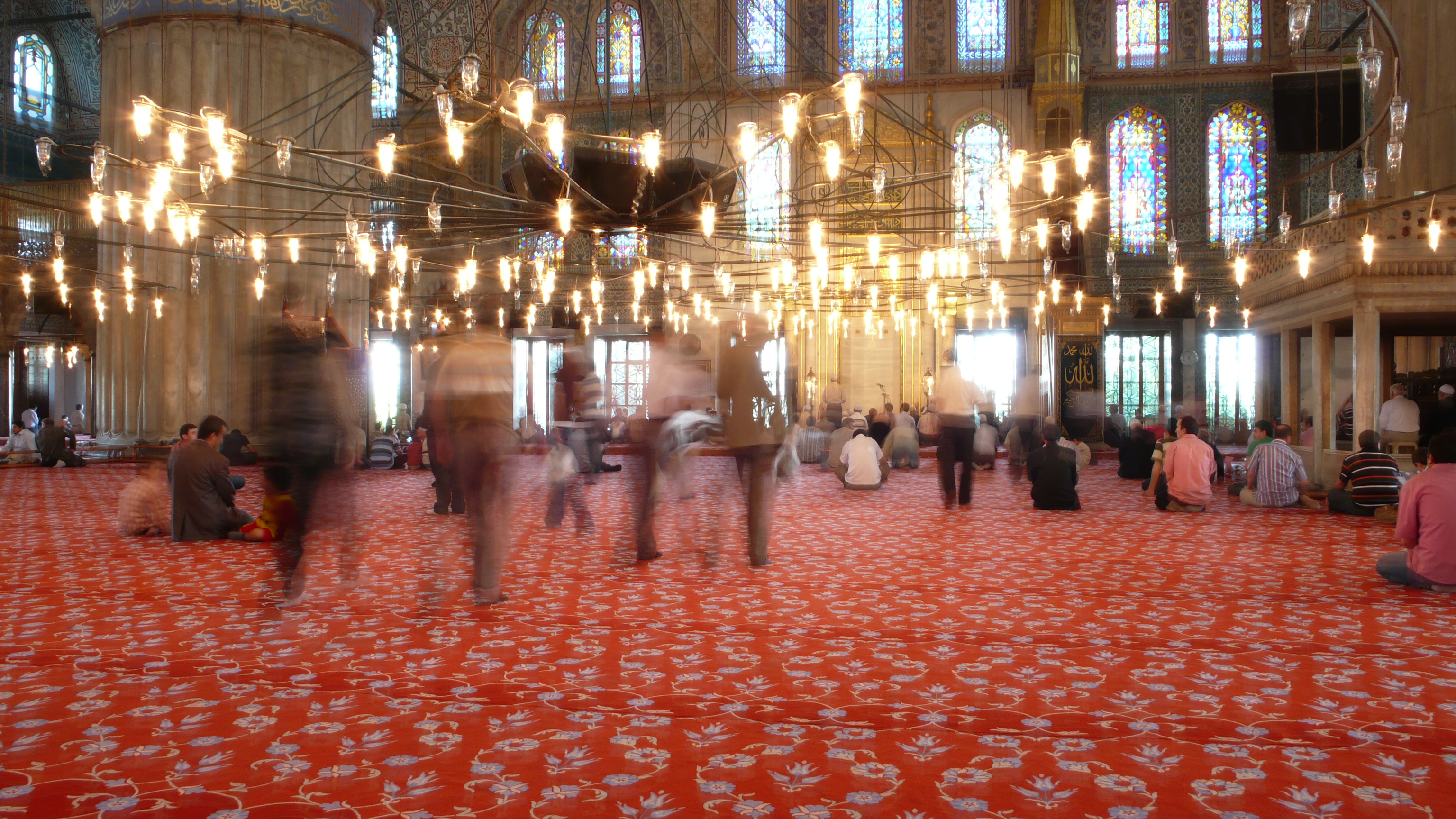
Blue Mosque, Istanbul, 2008
As when I spontaneously tooled through the fairy-tale hills of Cappadocia, Turkey, on a rented Vespa, or stumbled upon the ritual slaughter of sacred rams in a mosque abattoir in Istanbul, or visited an orphanage for critically ill children in Siem Reap, Cambodia, or, most harrowing, got myself detained by Hezbollah goons in South Beirut. And of course there are countless cordial encounters and forged friendships among fellow travelers and locals that organically blossom, and often last.
Rosenbloom had a plan: visit Paris in springtime, Istanbul in summer, Florence in autumn and New York, her hometown, in winter. Except for New York, she was only in each city for up to one week. Her aim was to peel back the delights of traveling alone in exemplary locations, ones awash in food, architecture and art, revealing how fine it can be to be unhurried, “accountable to no one,” exhilaratingly free.
The upshot is part vivid travelogue and vague memoir, filigreed reportage and free-floating opinion. “Alone Time” doesn’t provide the stunning personal epiphanies and life-altering experiences of Elizabeth Gilbert’s classic “Eat, Pray, Love” (nor the luxurious prose). It’s more a practical guide, a how-to on solo travel, including an epilogue, “Tips and Tools for Going It Alone.” (Though I had to roll my eyes at a few sections, like this one: “How to Be Alone in a Museum” — really?) She offers some gauzy instructions, like how “to be open to wonder,” which, actually, is much easier than you think.
Rosenbloom, diehard journalist, is wed to her sources, so that her rigorous apologia for eating alone comes with too many testimonials from psychologists and the like, bogging down what modest narrative thrust there is. I wanted to blurt out: “Eating alone: Just do it! It’s entirely fine and easy and acceptable. You don’t need a sheaf of Ph.D studies to validate this primal pleasure.”
For this introvert, whose two favorite cities happen to be Paris and Istanbul, “Alone Time” is a mild affirmation that my travel habits might have universal appeal, something I kind of already believed. Solitude -— not loneliness, which must be fended off — is a source of power and creativity, great assets while on the road.
East River, New York City, 2010
As I wrote last fall: “In solitude one reaps energy from oneself. You create your own space on your own terms, with your own powers, cultivating your mind, with the option of joining the wide world at anytime. Great freedom defines solitude. It’s the incubator of creativity and art. It’s the locus of self-communion.”
Rosenbloom, who began her physical journey and spiritual awakening in the City of Lights, sums up with characteristic pragmatism and admirable ambition: “My aim wasn’t to master Paris. It was to master myself: to learn how a little alone time can change your life — in any city.” And there she nails it.
An article I just read triggered a deep-seated pet peeve of mine. It’s not about how super it is that summer’s almost here, which really gets my goat, because I loathe summer. And it’s not about the astonishing nincompoopery going on in Washington right now.
It’s more important than all that. It’s about patrons taking selfies in the world’s greatest museums, standing like glassy-eyed dolts before masterpieces by Van Gogh, Da Vinci, Rembrandt and Caravaggio, all the while blocking the paintings for others as they stage strenuous fake smiles at their cell phones without actually studying the monumental artworks hanging mere feet away. Pose, smile, snap, leave.
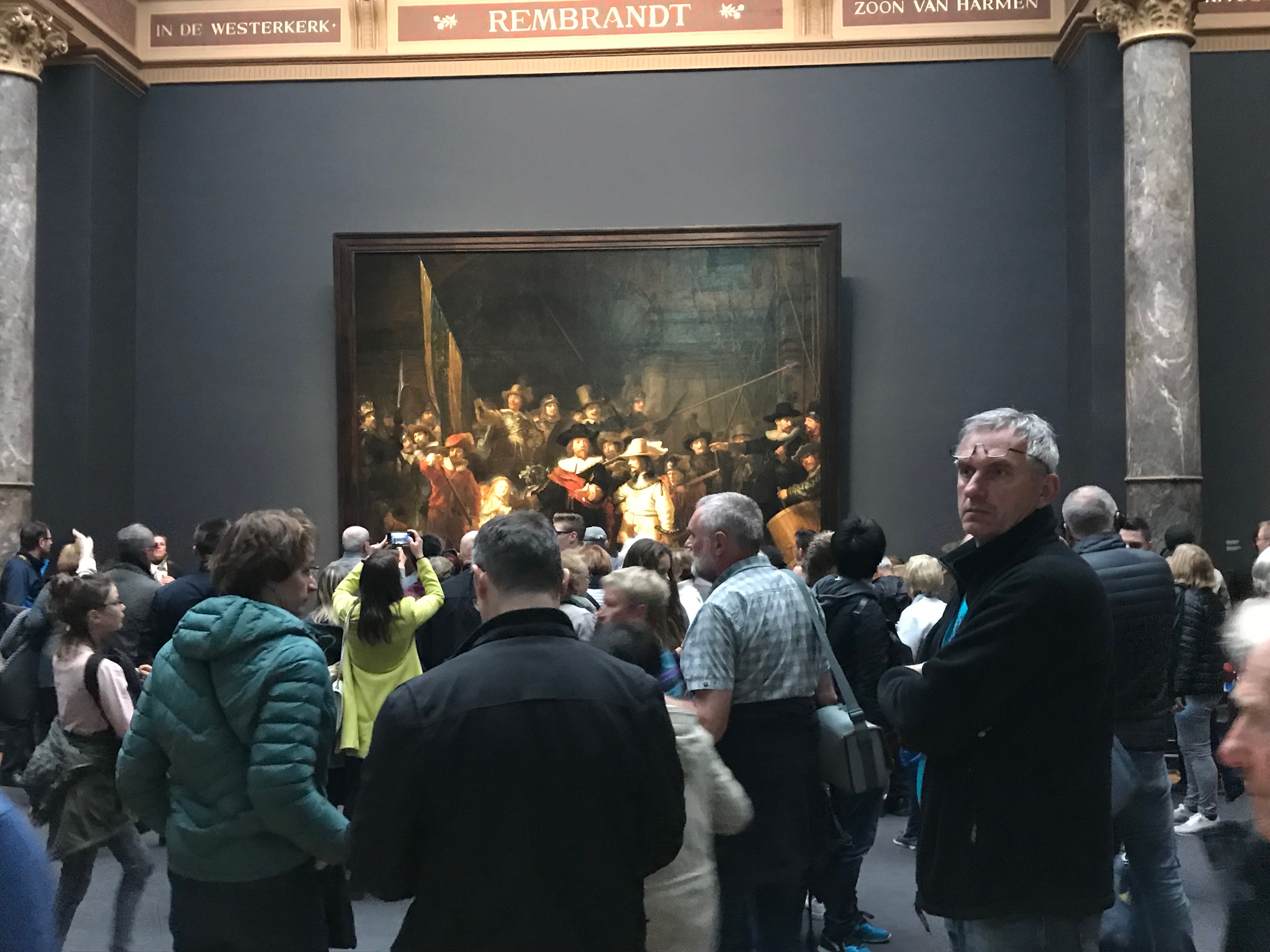
Recently at the Rijksmuseum in Amsterdam I was looking forward to truly absorbing Rembrandt’s grand, justly famous “Night Watch.” It had been years since I’d seen it in the flesh, and this time I read up on it, prepared for a more immersive, enlightened viewing.
Mobs of viewers before Rembrandt’s “The Night Watch” this month in Amsterdam.
Not a chance. The painting is quite gigantic and still, when I got to it, a crush of phone-wielding zombies were cluttering up the view. I jostled and elbowed, to no avail. Details I wanted to drink in, such as the fuzzy little self-portrait of Rembrandt peeking out from between two watchmen, had to be quickly glanced before some dunderhead, camera in fist, bumped me away.
Cell phones and those mortifying selfie sticks abounded, with people actually pointing cameras at themselves, plastering on gargoyle grins and snapping themselves in front of a masterwork they couldn’t care less about except for how it will look on Instagram. Can you imagine how those shots turned out? The mind reels. The stomach turns.
A few sublime Vermeers prominently adorn the Rijksmuseum, but if you want to see them, really see them, wait until the Selfie Squadron gets its fix. Watch as it rushes up to gentle tableaus of sun-splashed domestic life, framing and snapping pictures, then summarily rushing to the next painting, like it’s a contest, some kind of desperate relay.
The selfie epidemic is even uglier at the Louvre with Da Vinci’s magnetic “Mona Lisa.”
The way many patrons “interact with the 500-year-old painting exemplifies how differently the digital generation experiences art,” says The New York Times article I read. “Most of the roughly 150 people crowded around the painting were taking photographs of the piece, or of themselves in front of it. In the presence of the ‘Mona Lisa,’ digital photography, more than looking at the actual artwork, has become the primary experience.”
The “Mona Lisa” at the Louvre in Paris. (Photo by Pedro Fiuza.)
This disgusts me, and it probably shouldn’t. No, actually it should. And this is why:
“Imprisoned by its reputation as the most famous painting in the world, the ‘Mona Lisa’ has, to all meaningful intents and purposes, ceased to exist as an original work of art. It has become an idea — and a photo opportunity.”
Hasn’t everything been reduced to this, a crass photo opportunity? Even at Starbucks, I see people satisfying the urge to take selfies of themselves with their massive milkshakes that pass as coffee drinks, tongues hanging out or lips pursed, fingers making a peace sign. Who but the takers wants to look at these images?
It’s too easy to blame unchecked narcissism, yet that’s surely a contributing toxin. As someone who’s almost pathologically camera shy, I can’t fathom this slavering need to record oneself every 15 minutes until dizzying repetition nullifies any semblance of originality. The pictures all look the same; only the “zany” faces vary. People love to look at themselves. As the center of the universe, their self-adoration knows no bounds. It is, I think, a sickness. The camera-clicking hordes in museums reveal a kind of twisted vanity.
Think about it. Your mugging face, beaming, and in the far background, lost in the clamor, is “The Night Watch” or the “Mona Lisa.” What then? The shame.
As we strolled by the famous Theatre Casa Rosso, Amsterdam’s mecca of live sex shows, our Red Light District tour guide, an American expat with an aptly ribald air, offered the small group a couple of tips.
“I strongly suggest you go to a live sex show, where you see people actually having sex on stage. And I think you should try the nearby peep show, where you can watch various sex acts through a little window at a cost of 2 euros for two minutes. It’s a riot.”
Red Light District canal lined with lust and live sex shows. The fabled Casa Rosso on the left.
She chuckled at her naughty proposals, but she wasn’t kidding. While others in the tour vacantly snapped photos, she took me aside and stressed what a kick the peep shows are in language I won’t share on this page.
Of course I took the bait. I was in Amsterdam last week and, as always in my travels, I strive for an immersive experience. I’d already caught one of the live sex shows during a previous visit to the city years ago. (It was one of the least sexy spectacles I’ve ever seen.)
Perhaps the oldest coffeeshop in Amsterdam, The Bulldog, where pot and hash are sold and smoked. It’s also the most touristy.
So I went for the peep show, because at 2 euros ($2.37) there’s little to lose. The peep show theater is like most of the live sex show venues on the lip of the canal — dark with black walls and a few colorful lights. I walked into a broom-closet-size booth, dropped a coin into the slot, and a small window slid open. The whole thing smelled of disinfectant.
On view was a young woman in a thong bikini writhing on the floor, occasionally shaking her tush at my window, then writhing some more. Immediately bored, a tad nauseated, I lasted about 52 seconds. It was unsexy, unsavory, underwhelming. Moral qualms weren’t at play; aesthetics were. Yet I didn’t feel burned as I left. I didn’t know what to expect, although the tour guide promised miles more than what I saw. Glad I missed it.
Next to the fierce, hands-on-hips prostitutes rapping their glass windows to get my attention, that was the extent of the “sexy” side of the Red Light I endured on this visit. I skipped the ultra-raunchy Sexmuseum Amsterdam (I did that on the last trip; one word: bestiality) and the softer Erotic Museum, and eschewed the glut of tawdry sex shops selling so much rubber, leather and latex, eye-popping erotica so loony it was comical.
Red-lighted brothel windows where sex workers showoff their merchandise.
Shot through with Instagram-ready canals and curling medieval alleyways, the Red Light District is so iconic it’s practically a cliché. Pot-peddling coffeeshops, bondage and condom stores, coitus and cannabis museums — a cornucopia of no-no’s that happen to be gleefully and legally A-OK. It’s a degenerate’s playground, a voyeur’s wonderland, and an exotic otherworld for the blamelessly curious.
Oude Kerk
Rinsed of its notorious junky past, the Red Light is safe, clean and aggressively touristy. It can be enigmatic, and incongruities abound: Next to the Princess Juliana Nursery School, where children of sex workers attend, are not only brothels, but also the gothic 14th-century church De Oude Kerk (The Old Church), once Catholic and now a bastion of Dutch Protestantism. It’s the oldest building in Amsterdam. Around the corner is the city’s comparatively staid Chinatown, crackling with ethnic eateries, whole cooked ducks dangling in windows.
While pot-smoky coffeeshops and party-hearty bars lace the neighborhood — see The Bulldog chain — hidden gems are nestled amid the mild mayhem. Just off a canal, tucked in a snug alley, sits the jenever (Dutch gin) tasting tavern Wynand-Fockink, a 17th-century distillery of international renown that packs ‘em into its W.C.-sized room.
The flavored and unflavored jenevers — scores of varieties line the back wall — are poured liberally in tulip glasses for free tastings. I tried a range of five, settling on a lemon-infused concoction that was as refreshing as lemonade, but with snap.
Some of my samples at the jenever tasting at Wynand-Fockink.
Frankly, it had more bite, imagination and personality than the pallid peep show I stumbled out of moments earlier. A good stiff drink is always a powerful antidote to a spirit-sucking sex show.
The Red Light District can’t quite transcend hard-stuck stereotypes. Yet physically it’s startlingly pretty, graced with old, skinny gabled houses, tree-lined canals and cobblestone pathways. It’s one of the city’s homiest hoods. Bicycles asphyxiate streets with a collective smile, wind-blown hair and the musical clang–ching of tiny bells.
The District bristles with fast food stalls and it’s prime for the mandatory frites, or fries, drowned in mayo. A mad confusion of tourist shops tout the gamut: T-shirts and postcards, psychedelic mushrooms, pot-infused lollipops, trip-happy Space Cakes, bongs, pipes and papers, condoms and cock rings.
You can’t help smirking at this uninhibited XXX Disneyland, which broadcasts its checkered past in blazing neon and, with equally cheeky pride, trumpets a checkered present aspiring to smutty heights. Yet if it knows no limits, it’s clear that most of its visitors do. (As you’d expect, the later it gets, the rowdier it gets.)
The District is hardly running amok (see these safety measures for sex workers), even if some imaginations do. With few exceptions, the place is shrink-wrapped, condom-coated, safe and, counterintuitively, good, clean fun. It’s naughty, but nice.
Before I travel, I prepare like a madman, and my outstanding trip to Amsterdam last week was no exception. One night, fueled by wide-eyed, butterfly-stomach pre-travel excitement, I purchased a few advance museum tickets online: the Rijksmuseum (all majesty and splendor), the Van Gogh Museum (strong, if a tiny bit disappointing) and, in a snap of psychosis or addled hastiness, an 18 € ($21.50) ticket for the Heineken Experience, billed as a “sensational interactive tour” set in the original Heineken brewery turned museum in Amsterdam’s city center.
I grosslymiscalculated.
The Heineken Experience was so massively lame, such an appalling and transparent marketing apparatus, that I was actually embarrassed to be there. You don’t go to be enlightened but to have “interesting” factoids about the Heineken family and the titular beer’s recipe recited to you by overexcited twenty-somethings wearing skinny headset microphones á la Beyoncé. If you have any idea how beer is made, the tour is old news.
I should have known better, that a beer tour that includes two and a half “complimentary” drinks would attract mostly frat boys, their sorority cohorts and Euro trash, all of whom seemed glazed with boredom by the broad and vacuous explanations of how hops, water, barley and yeast make beer, and didn’t even seem terribly impressed by the stable of eight black horses, the so-called famous Heineken horses that stood there looking equally bored, sad that they didn’t get to also imbibe the scrumptious brew.
One of the blush-inducing “interactive” delights at the Heineken Experience.
When the informational part of the tour ends, the museum falls back hard on high-tech filler that you can’t believe, from a ride in which you become a beer bottle to laser-lighted basketball hoops; a room pumped with blaring electronic dance music and strafed with green (the brand color) lasers, to a large photo-booth room where people sit on stationary Heineken bicycles while street scenes of Paris are projected on back-screens, so it looks like you’re pedaling through the French capital. Imagine that! People were having a good old time on those bikes, smiling at their own images as if they really believed they were in Paris. And they hadn’t even drank yet.
Selfies, unaccountably huge here.
By then I was practically jogging to the final room, the bar pouring “free” beer. I sipped my beers with the faintest scowl, while trying to pretend I wasn’t altogether repulsed. My fellow chumps were laughing, taking endless selfies, shaking to the music, which veered from nauseating EDM to friendly pop rock.
A drum kit made of beer kegs! He looks elated and not at all a little confused.
All I could think was: There isn’t enough Heineken suds in this entire old brewery to numb me enough to believe this was a good idea. And then there was this: As in all museums you exit through the gift shop. But once you leave this emporium of baldly branded gear, guess what? You hit another gift shop, which is when I sighed to myself, Get me out of this Heineken hell. I felt violated, ripped off. Worse, those beers didn’t even give me a buzz.
A disproportionate amount of weak to bad museums litter otherwise wonderful Amsterdam — from the pot museum, prostitution museum and cheese museum, to the sex and erotic museums to the canal museum and, yes, the dopey Heineken predicament.
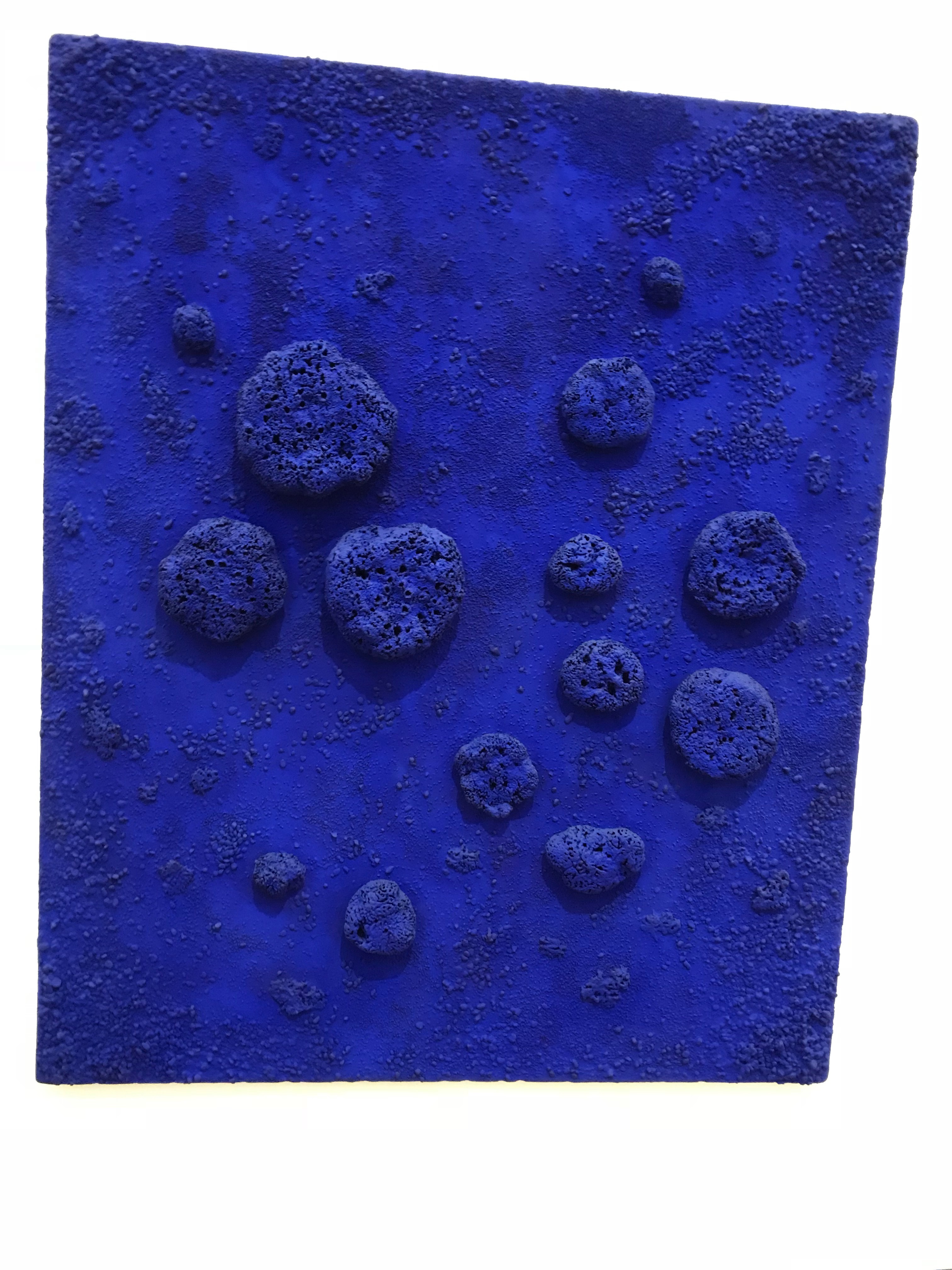
The antidote is to choose wisely. You can’t miss with the aforementioned Rijksmuseum (Rembrandts and Vermeers adorning a knockout space) and Van Gogh Museum (beautifully curated and suavely laid-out), plus the fine modern art collection at the underrated Stedelijk Museum, where everyone from Picasso to Damien Hirst are represented by canonical works. I’d gladly trade those 2½ beers for just one look at this ravishing blue doozy by Yves Klein at the Stedelijk:
Weighing Budapest against Amsterdam for my next trip, the Netherlands won out ably after effortless contemplation that sprung to mind peerless European art, worldly cuisine, cobblestone, canals and cannabis.
Compared to the striking Hungarian capital, there’s more to see and do in one of Europe’s most bristling cradles of culture, a smallish, quintessentially Old World setting marbled with a pungent contemporary tang. (And naughtily dubbed Sin City for its legal prostitution and lax marijuana laws.)
Once, in the 1600s, it was the world’s richest city; port-centric commerce flourished. Now, it’s a reservoir of humanistic riches — art, food, style, architecture. Friends of mine are so taken with the city that they’re moving to Amsterdam from Manhattan ASAP.
It’s been years since I’ve visited Amsterdam, and those times had the brevity of stopovers. Budapest’s Gothic spikiness and post-Soviet chill can wait. My destination offers popping pastel charms, including an iconic fretwork of canals lined by trees and spindly, leaning houses that seem to be jostling for room on the banks. And now there’s a lot more time.
No tulips or bicycles for me (and, alas, no Anne Frank House: tickets are plum sold out during my stay, though I’ve been there twice before), but I’m all about the hazy gold and brown Rembrandts, those Vermeers and the cornea-sizzling Van Goghs gracing the majestic Rijksmuseum and Van Gogh Museum, plus the spread of classic modern art — Haring to Kruger — at the recently reopened Stedelijk Museum.
Gourmet stuffed pancakes, Indonesian bites (of which Holland is a hotbed), Dutch dishes, frites with mayo, pickled herring, European lagers and gin, or, in Dutch, jenever — that’s my menu. Cafes, pubs, maybe a sooty “coffeeshop” — those are where I will recharge.
Museum Vrolik, grisly, glorious.
Out of touristic obligation I’ll trot the tawdry and corny Red Light District, which stings the nostrils with damage, despair and possibly disease, and get out fast to catch a 90-minute canal boat tour run by the cheeky Those Dam Boat Guys, who encourage you to bring whatever ingestible vice you’d like. “Bring all the wine you have,” they exclaim. “Sure, it thins the blood and will kill you quicker, but I’ll be damned if it don’t make you forget the nippiness. We’ll provide the best cheap, shitty, plastic cups not very much money can buy!”
After that, a heady spin through the Heineken brewery seems mandatory, as does the Museum Vrolik, a shuddery repository of the “normal anatomy of humans, but also pathological anatomy and congenital malformations.” Meaning, contorted skeletons, chubby jarred fetuses, outlandish taxidermy and all things squishy and wrong.
I blush at how this reads like a breathless brochure by a lackey at the Amsterdam Chamber of Commerce. Part of the unseemly boosterism, the unbridled optimism, comes from the vim of nailing down a destination and the kick of anticipation. Of the simple notion of travel and gulping the exotic. Of being able to finally say: Amsterdam. Yes.
The naked man looked at the clothed man, and then he looked at the naked people, and then back at the clothed man, all the time wearing a scrunched look that said, “What is this dude doing here?”
This dude (yours truly), fully dressed, was there to talk to naked people. He told the naked man this, and the naked man relaxed. But the clothed man did not relax, for he was one of only a few clothed people in an art gallery filled with naked men and women.
Twenty-one of the naked people were there in the literal, quivering flesh, and about as many were hanging on two long walls, the subjects of life-size photographs by artist George Krause.
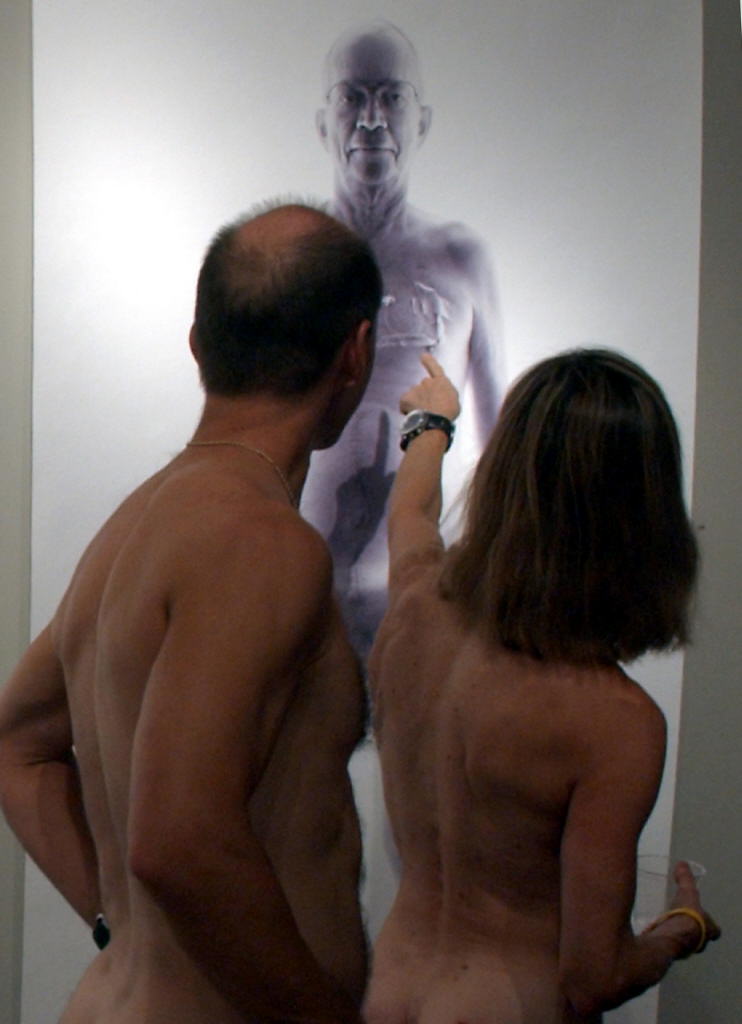
Recently at an urban art gallery, a bevy of nudists came to a nude art show. The nudists, an informal tribe of devoted clothes peel-offers, are always on the lookout for novel ways to gather, and what’s more fitting than naked people looking at naked people?
The gallery owner was happy to give the group a private viewing, and Krause, clothed but bald, came to talk about his work. Each human-size black-and-white portrait depicts an ordinary person, standing stark naked, facing the camera. His singular technique uses white light to create a smoky sfumato effect, bathing the figures in a ghostly, X-ray glow.
Naked people admired the photos’ indiscriminate honesty, and the boxy, concrete gallery echoed with the slappy patter of bare feet. Sipping cheap cabernet in plastic cups, nudists mixed casually in the shocking altogether, proud in their mammalian resplendence. They embodied all sizes and shapes, from pears to bears, though the age scale tipped to ear hair and back aches.
“Seeing the photos in the middle of a group of nudes reinforces how many different kinds of bodies there are,” said nudist Bill Morgan, whose body hair could pass for clothing in some cultures. “Running around with this group has done a lot for me in terms of accepting my own body.”
One thin woman was all bare flesh but for a yellow Livestrong bracelet, while a tall man with a round belly wore only silver-rimmed spectacles. A green, quarter-sized tattoo announced itself from a woman’s right dorsal cheek. Tan lines: oddly scarce.
The nudist group has roughly 60 members, about 40 of whom are men, says club president Steve Bosbach, diminutive and hairless as a fish. The lopsided male-to-female ratio was on full-frontal display at the private party. It was a man’s world.
There was chatter about “liberation,” “society” and the nudist “agenda,” yet a curious dearth about sexuality and the whole nakedy thing. One wondered how these people abstain from . . . looking.
“With some practice, it’s completely possible to maintain eye contact with a topless woman,” Morgan said. “You don’t stare, but you don’t avoid looking in a particular direction either.”
Morgan has a long gray ponytail and lives with his mother, who was surprised by his nuditude. She doesn’t see him naked, though her son likes to spend a few hours a day kicking back in the buff. Like his clubmates, Morgan does many things without attire, cut free from the bondage of cotton fibers. Perhaps it’s the leather seats, but one thing he has not done is drive naked.
“I’ve wanted to drive naked a few times after club get-togethers,” he said. “Putting the clothes back on is the hardest part.”















 Recently at an urban art gallery, a bevy of nudists came to a nude art show. The nudists, an informal tribe of devoted clothes peel-offers, are always on the lookout for novel ways to gather, and what’s more fitting than naked people looking at naked people?
 GNASHING.