When Halloween gets lost in translation

Pretty much kaput, Halloween means just about nothing to me nowadays. The thrill is gone. The chill is gone. I’m not 7, dig. 

Yet something about Halloween sticks, hovering like a blanket of graveyard fog. Each year I gladly inhale the occasion’s residual festive fumes, pumped in like so much giddy-making nitrous oxide. Hey, unlike zombies, I have a pulse.

Though costumes are long — and forever — doffed and I’ve retired the habit of sneaking morsels from the communal candy bowl (It’s for the kids, dammit!), I remain devoted to this perverse, very North American celebration of the gross, grim and ghoulish. (And, yeah, I lied: the Reese’s cups are mine.) 

But I effectively don’t partake in the big-picture party, unless you count sometimes serving as the eve’s Doorbell Dork, doling out Snickers and Tootsie Pops, smiling like the village idiot on cue when a particular and rather mystifying catchphrase (starts with trick) is shrieked by decked-out kiddies (and a few shameless, straggling grown-ups who can only dream they’re getting a Kit-Kat from this finger-wagging candy dispenser).

It’s a festival of enforced flamboyance. Excess is enshrined. Generally sane people douse themselves in corn syrup blood. Sex is flaunted in racy micro-fashions: cats and maids and devils. It’s masks and makeup and Marvel; wigs, witches and wizards; Pokémon, pirates and pop stars (and, yes, Pop Tarts) — the palette is as infinite as it is infantilizing. The id comes out to romp. 

2016.halloweenies
Halloween in Sevilla, Spain, 2016 — amateur hour.

In placid suburbia, lawn dioramas have grown ambitiously disgusting. I love the sinew-chewing zombies (with staticky sound effects), life-size, yoga-posed skeletons and tombstone-cluttered cemeteries, gnarled limbs popping out of the ground. I beseech you: gross me out.

It’s a bacchanal of fantasy and horror, whimsy and steroidal imagination. It’s pop cinema — slashers to superheroes — sprung to life. And it’s uniquely, wildly American (and, I hear, Canadian). 

2008
Halloween, Beirut, 2008 — not cool.

I’ve done Halloween in London, Paris, Beirut, Ho Chi Minh City, Kathmandu and Sevilla. As the locals tried to summon the spirit, they invariably botched the holiday, blundering with gauche costumes (er, blackface in Beirut and Paris) and feebly attended parties — strictly amateur hour, training wheels required.

Except when they’re not. Except when the night has been co-opted with the verve and vision matching the western prototype. All eyes on … Japan. It’s said that Japan has only been practicing Halloween in earnest for five years. But amateurs? Hardly.

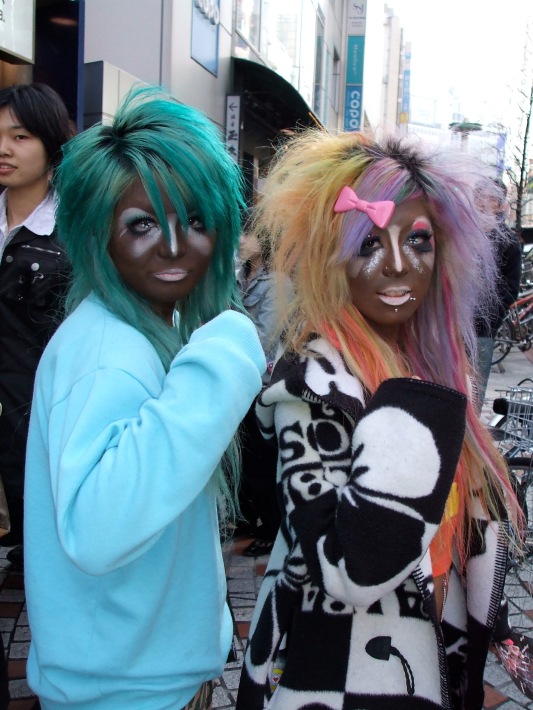
The Japanese were born pros, built for Halloween. Nothing is lost in translation. Dress up and cosplay are daily mainstream occurrences. Stroll anytime through Tokyo’s Harajuku district for teen fashion so high, so rococo, it passes as a perpetual street costume party.

IMG_2777
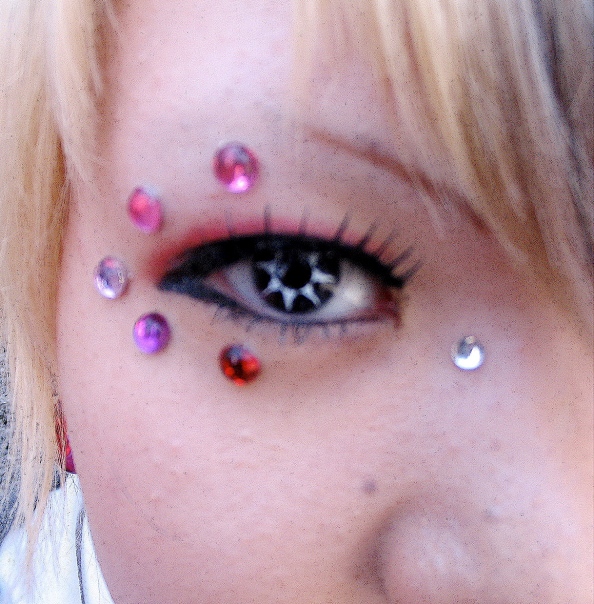
Harajuku teen, Tokyo, in April 2006.

Which should make this year’s Halloween something special. I land in Tokyo on October 30, giving me less than 24 hours to steel for whatever that hyper-charged city has in store in the way of a woozy wingding.  

Because there is no way I’m not wading into the most outrageous Halloween hotspots — like bustling, youthful Shibuya, where a million revelers are expected — to get the full Japanese treatment: anime and cosplay characters, J-horror ghosts and vampires, video-game avatars and the universal diet of Star Wars, Harry Potter, Power Rangers and other mega-brands. (Oddly, Where’s Waldo? seems to still be popular. I’ll look into it.) 

This is what I wanna see, Halloween with kick (I’ll return with a full, bloody report):

https-hypebeast.com-image-2018-05-tt-1.jpg
Witches? Zombies? No idea but I’m thrilled. 
maxresdefault.jpg
Nerd, nerd, nerd, nerd and nerd. That’s five nerds. God bless them.
halloween-in-japan-shibuya-costumes-13-018-600x400.jpg
Grisly Disney: zombie versions of famous cartoon characters, including Minnie Mouse and Snow White.
halloween-costumes-2018-designboom-004.jpg
A gaggle of zombie fast food (flesh food?) servers. Do you want fingers with that human hamburger?

And the best for last …

best-for-last.jpg

Monkey see, monkey don’t

There’s a monkey on my back.

Several, actually. And they want my money. Every time I open a website, they are there, pawing at me.

The animals are macaques, with pomegranate faces and heads hooded in fuzzy Eskimo parkas rimming wise, frowning visages of grizzled monks or mystics. They are bathing and grooming and picking at each other in hot springs at the Jigokudani Wild Snow Monkey Park in Japan. They look to be suffering chronic mites and fleas.

-20121121232817-39B6918F7B8D4ED4BEC436470B0205E1.jpgThey are world-famous monkeys; you see them in every other wildlife documentary, steam rising around their half-submerged bodies. These simian superstars are chillaxing in a simmering jacuzzi nestled amid frosty mountains. And they pick and pick.

I, for one, can’t avoid their pink, pensive faces. They want me to come visit them, terribly. Ever since I began researching hotels, food tours and day trips in Japan, the insistent monkey pop-up ad, hectoring click-bait, has infiltrated all of my most visited sites, from The New York Times to Rotten Tomatoes. I can’t get the goddam monkeys out of my sight. Fortunately, they’re cute and furry. Unfortunately, they’re expensive. 

For about five seconds it’s tempting to actually take the ad up on its offer with a simple click: $146 for eight hours of touring, including one (one!) hour at the monkey sanctuary; time at the famed Zenko-ji temple; lunch; some sake sipping; and, really, not much else. Bullet train transportation is not included (rip!).

And can you believe this: “Guests are not permitted to touch, feed or bathe with the monkeys at any time.” I guess I won’t be bringing a towel and a bar of Dial.

So the deal effectively stinks, even if you do get a brief (dry) encounter with the enchanting, lightly parboiled macaques.  

Yet more caveats abound, and they are dire. I came across an alarming blog post titled “Why Seeing the Snow Monkeys in Japan Sucked” (read it in full HERE). A grisly excerpt:

“Instead of a snow-covered paradise, I was standing in what felt like a construction site full of rubble, with piles of rocks and exposed cables forming a backdrop against the commotion. I watched in dismay as staff at the Jigokudani Monkey Park threw food at the agitated macaques until they began to screech and fight on the damp mud. This was one of the worst animal encounters I’d ever experienced.”

No monkeys for me. See no evil, hear no evil, speak no evil. Click no evil.

00000.jpeg

Tokyo visions

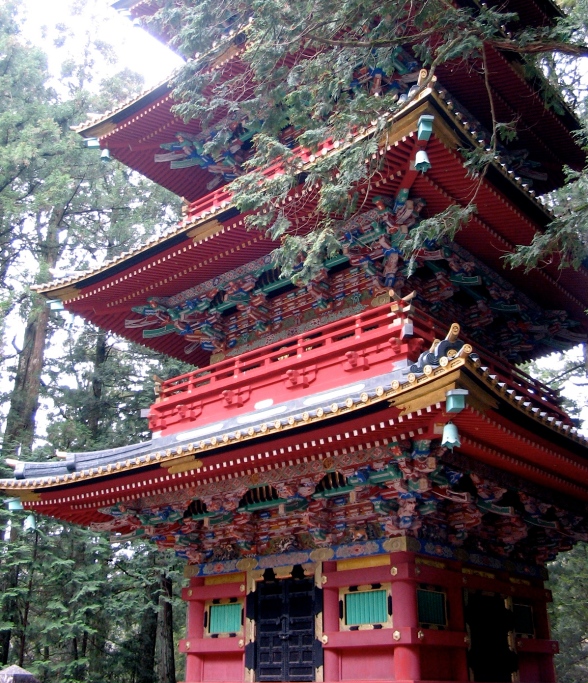
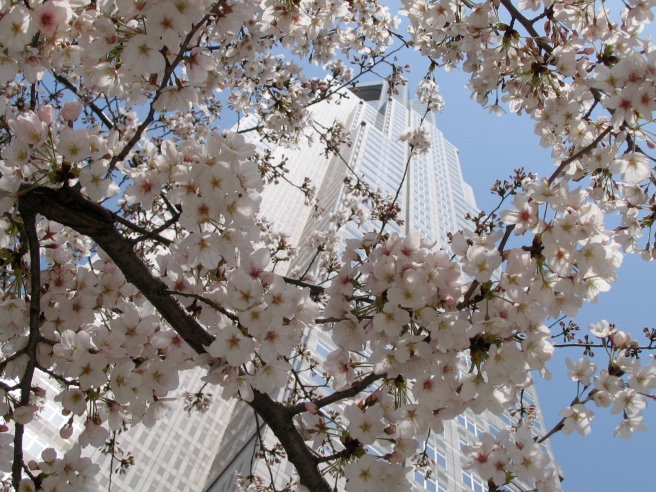
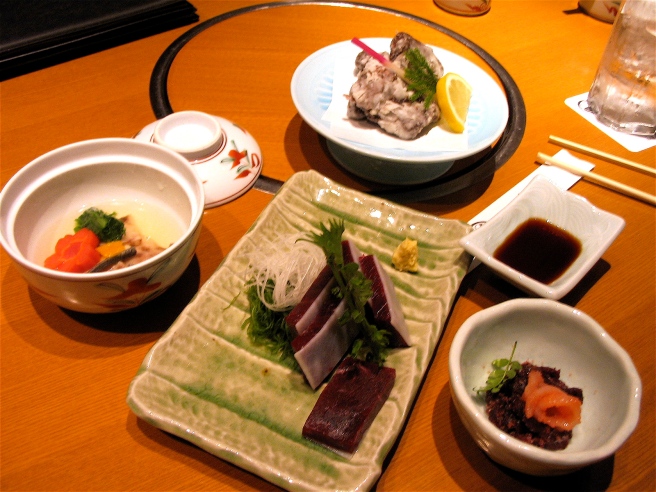
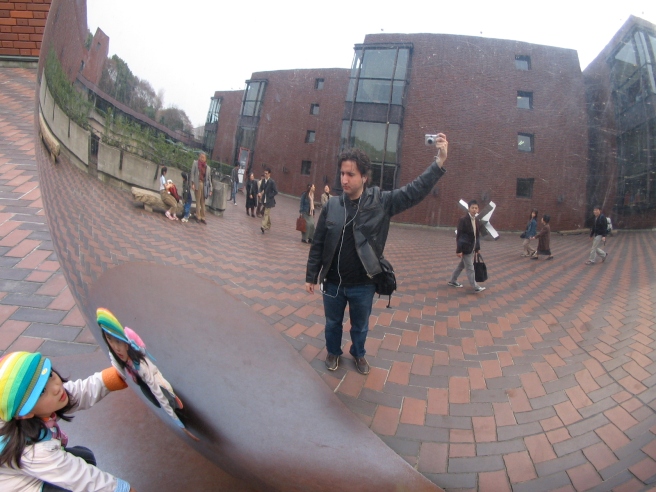
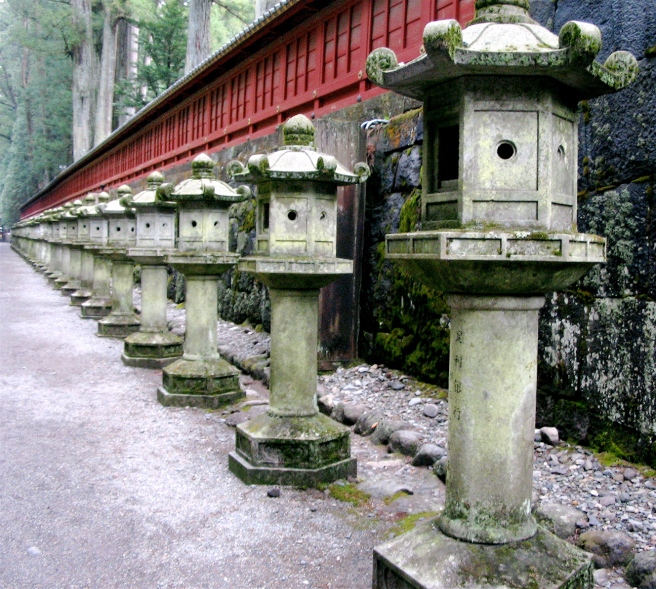
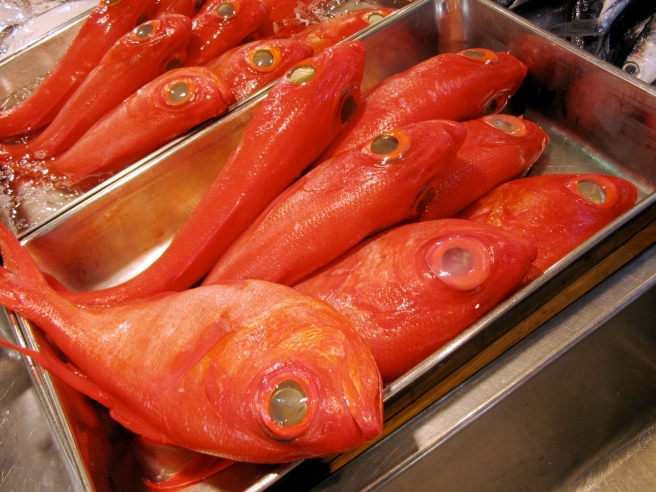
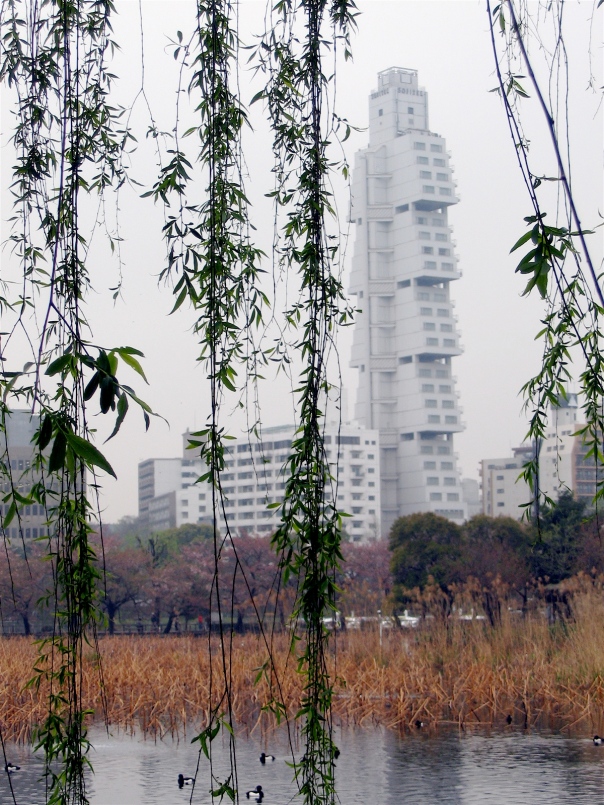
So I return to Japan in late October, my first time in several years, and the anticipation is giving me fits of insomnia. The capital, Tokyo, is one of my favorite and most indelible cities, part of a troika that includes Paris and Istanbul. I was skipping through some photos from past trips — people and places inside and outside of that teeming, gleaming metropolis: pagodas and Harajuku Girls; whale meat and cherry blossoms; lakes and a big, cool silver orb that, in its own odd way, sums up the reliable surreality of Tokyo.

IMG_2908.jpg

IMG_0693.jpg

IMG_0828.jpg

IMG_2773.jpg

IMG_2547.jpg

Nicole's Tokyo freaks.jpg

IMG_2887.jpg
(Yes, I’m afraid this is a whale feast.)

IMG_0569.jpg

IMG_2918.jpg

IMG_1003.jpg

IMG_2885.jpg

IMG_2772.jpg

Dogma of the dog

I’m pretty sure Cubby the dog doesn’t believe in many things — God, playing dead for treats, how wonderful I am — though I’m convinced he believes in some things. Like meatballs and bully sticks and tummy massages and bedtime snuggles and brisk walks and peeing on the rug. He’s a good dog. And like most good dogs, he’s ridiculous. Neurotic, but nourishing. 

Rescued from a shelter, Cubby has, in the past year or so, learned how to act like a tried-and-true doggy, a small, curly-haired mutt with a pleading gaze and a tail that swoops up and over into a large Spaghetti-O. 

He now knows how to worry a bone, chomp stuffed toys, play tug of war with said toys, scurry after the bone when it’s tossed then make you chase him around in a game of try and get it, sucker. All this is heartening. He’s maturing. He’s getting sillier. 

But I think he’s deeper than all that stock dog stuff. Cubby is a wise old soul, beyond his four or five years, attuned to his lot in life, his place on the totem pole of existence, and, with a melancholy tinge, his impermanence.

img_0829.jpg
No, I don’t believe in God. Death, yes.

This struck me last summer, detailed in this blog post, where I observed: 

“The dog seeks the meaning of life, this is plain from his searching brown eyes, furrowed brows and the alarming way he wipes his butt across the carpet. Freud’s pleasure principle manifests itself in his frequent calls for belly rubs. Sartre’s existentialist theory, which states that our individual responsibility in defining our own lives is almost debilitating in its enormity, has the dog a little down. Knowledge of his own mortality is something of a buzz kill.”

Cubby may be a Buddhist. He is mindful and meditative, his solace arriving many hours each day. (Some call these naps; I call them rumination, deep cogitation, mini comas.) He is a passive soul. Barking he does sparingly, almost exclusively when the mail comes, then he claws the paint off the front door and cries like an aggrieved banshee. It is the yelp of an injured Indian spirit, whose dead have been gravely molested. Then he shuts down, curls up, and ponders the teachings of Siddhartha and the joys of a good tennis ball.

We wonder. What does this animal believe in? Tasty bones, yes. Death, alas. A vigorous rub behind the ears, certainly. Bacon Beggin’ Strips, no doubt.

Yet the question resounds: Can animals really believe?

Cats — pshaw; they believe in their own supercilious godliness. Forest dwellers — a humble group deeply in accord with nature’s bylaws, true believers. African wildlife — a hot mess, as seen on “Planet Earth,” strictly heathens and satanists that believe in ritualistic bloodletting and organized torture on the Serengeti.

None of that for Cubby. He’s a fuzzy little wiseman. He should be wearing beads and vestments and lighting incense. He is a philosophical creature; don’t let his crazed, leg-scratching greetings fool you. When you gaze into his small eyes, worlds are revealed. One’s heart softens and the soul cracks open. He is telling you something, and not just “Get the leash, I gotta poop.”

Was it Nietzsche who said “The better I get to know men, the more I find myself loving dogs”? Or was it Harpo Marx? No matter. This is an inversion of the master/slave equation, wherein the master (you) succumbs to the overpowering ardor and joy provided by the slave (doggy). That is this dog’s wisdom. He has our number. And he calls frequently. Collect.

Cubby’s beliefs are better than his bite. In his canine universe, he is disciplined, devout, enlightened. He has found meaning and purpose. The dog is, indeed, dogmatic, a mutt with a mind. And, uh, yes, that’s him over there, avidly licking his genitals.

61iIezdav2L._SY679_.jpg

Sun, sand and a menagerie of bashful animals

I don’t do sun and fun. Yet here I am in breezy, easy San Diego, Calif., for a shortish vacation with the extended family — mother, brother, nephew, et al. Seven of us total. 

Why do I shun the pool and the Pacific? I sure didn’t used to, particularly growing up in oceanside Santa Barbara, Calif. There I was like any splash-happy, wave-plunging kid, giddiest reverting to a primal state of fluidity, getting soaked, sandy and sun-baked.

I think I just grew out of it. By my teens, living in the temperate San Francisco Bay Area, I loathed the heat, anything over 75 degrees was excruciating. And it still is. I’m a 40s and 50s kind of guy. Fall and winter are my homies. Jeans, jacket, scarf — the ideal uniform. Shivering is my version of sweating. (Sweat is my kryptonite.) I aspire to be an Inuit.

Against my nature, but not my will, I’ve been cajoled to one of the beachiest places on the planet. Briny water everywhere. The profusion of palm trees — Christ. Boats and bikinis, flip-flops and fish, pink flesh and pervasive pastels. It’s Coronado Bay, San Diego.

203105671.jpg

I actually sat poolside — in the shade, with shirt and sneakers firmly affixed — this afternoon and survived. I had a book (Peter Orner’s new, remarkable short stories “Maggie Brown & Others”) and the laptop (the resort, yes, resort, has spiffy wifi) and a beer and an al pastor taco, so it worked swimmingly, if you will. Then I repaired to my room for some AC time, even though the temps all week are in the mercifully mid-to-low 70s. 

I begged off the beach. The six of them headed out to sit on sand beneath yawning umbrellas and presumably tiptoe into the chilly sea. I had no business there, as much as I love sharks. But the chances of a shark sighting were as good as those of me not being bored out of my skull plopped on mushy sand under a giant parasol. (Instead, I’m writing this. I bet you wish I went to the beach.) 

When many of us think of San Diego, the mega-famous zoo (known as the world’s best) and SeaWorld spring to mind. In other words: creatures, critters, cetaceans, crustaceans. Now, those I can do. Captive animals crack my heart, but at least the respected zoo sustains “natural” habitats and breeds endangered species. And even the ethically iffy SeaWorld has banished its dubious in-park breeding and tawdry theatrical whale shows. (Shamu — rhymes with boo.)  

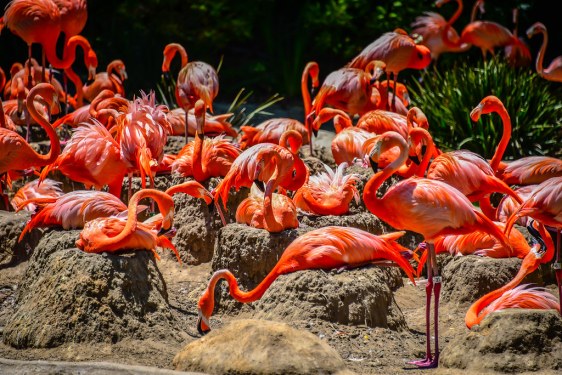
Today was San Diego Zoo day, and it was about as thrilling as watching a flock of pink, and a few juvenile gray, flamingos stand on one preternaturally long and spindly leg and snooze, or projectile poop, or, in the case of the gray downy youngsters, stumble and wash and act as adorable as can be. When flamingos are a highlight, well …

27845391521_03f8fb4be8_b.jpgBesides being reminded on a double-decker bus tour around the park that hippos are “the most dangerous animals in the world” (for some reason, I find that exhilarating) and that some wolves smell like seething skunk bud, mostly the day consisted of trying to locate animals in their enclosures. Craned necks and dashed hopes were major exertions. It was the land of the empty habitat. 

There’s one alpha gorilla sitting tall and proud, and there he goes, vanishing behind a rock. There’s a sole polar bear sleeping up on a hill, partially obscured. Ah, I spy a pygmy hippo — 90-percent submerged in a pond. And so on. Zoos might be the most exasperating animal experience available. Go to a mall pet shop to see more furry mammalian action. 

But the weather remained agreeable — low-70s — so things meteorologically were dreamy. And they sell beer all over the place. (Wait, $9 for a can of Corona — where are the hippos when I need them?)

I don’t want to complain. I saw frolicsome monkeys and fat pythons and some Chaplinesque penguins, not to mention a guy dressed in a ragtag rhinoceros costume posing for pictures who made legions of unsuspecting visitors uneasy.

But where, I direly wondered, were the real rhinos? And giraffes? And hyenas. And, come on, the platypuses? We spotted, nestled in thick foliage, a koala. It was like seeing a child’s stuffed animal stuck in a way-up tree. It wanted nothing to do with us, the cranky marsupial. That’s what happens when you sleep 22 hours a day.  

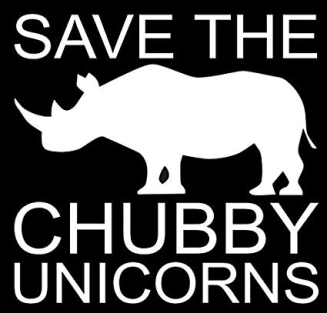
A leopard showed its spots — for about 34 seconds. Then there was the funky smelling wolf — a total no-show, just a nose show. The macaques — same. Empty habitats are like unfulfilled dreams, dollar bills set on fire. Enter the gift shop and suddenly the animals are fluffy, smiling, en masse, thriving. A simple magnet of a magnificent mountain lion or a whimsical t-shirt of a rhinoceros (“Save the Chubby Unicorns”) about makes it all OK.

image.png

Japan by mouth

There’s a popular documentary from 2011 called “Jiro Dreams of Sushi.” As I plan a trip to Japan, I also dream of sushi. And ramen. And Sapporo. And yakitori. And sake. And squid. And Godzilla. 

If Jiro, a wispy 90-ish sushi master, merely dreams of sushi, I fully rhapsodize about sushi. (OK, I exaggerate. I only think about sushi, mm, twice a week. But it excites in ways other foods do not: Its silken, room-temperature raw-dacity; glistening, quivering slipperiness; palate-dancing umami-ness. Does that make me a sushi master? I think it does.) 

Jiro poster
Sushi swirls around the dreaming Jiro’s head. He dreams of sushi. He swims in it. He wonders: Why so much sushi? He dreams of retirement.

What I’m saying is I will ingest gobs and globs of raw fish during my 12-day fall journey, to the point of possibly getting mercury poisoning, which would be one hell of a souvenir. Sushi, that artisanal seafood delicacy, isn’t cheap, one reason why I eat it sparingly. Another reason is that where I live fine sushi is as rare as Rodan sightings. And mediocre sushi, like a half-ass steak, makes one ponder existence darkly. 

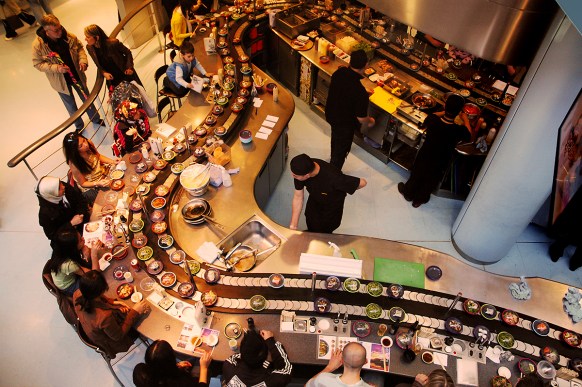
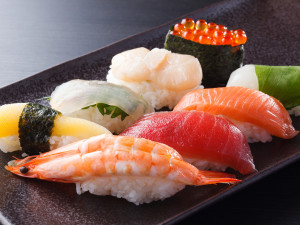
Therein lies the miraculous ingenuity of Japan’s conveyor-belt sushi (kaiten-sushi) — not amazing, not bad, but invariably cheap and gratifying seafood that winds through the restaurant on exactly that, a conveyor belt, like an assembly-line of deliciousness. Its brilliant utility blots out its majestic absurdity.

Round and round the little plates go, each saucer’s cargo a slab of prepared-before-your-eyes nigiri, circling a seeming mile on a tiny conveyor belt, waiting for you to snatch it at your desire as it rattles by. Each plate or piece costs about a buck-fifty or less, so a meal, for me at least, ranges a not-bad $10-$15.

Yo-Sushi.jpg
Conveyor-belt sushi, like a buzzing food factory.

But why not try Jiro’s sushi shrine, the tiny 10-seat Sushi Jiro, a Michelin three-star establishment/closet located in Tokyo’s Ginza subway station? For one, it’s $300-plus a meal, no exceptions. Two, it is nigh to impossible to net a reservation, though I did spot the so-called Jiro Dreams of Sushi Jiro Dinner & Luxury Tour at a fee of $1,500 per head. This one’s for Jiro cultists/completists and FOMOs only. Plus, men have to wear a blue or white shirt and a blazer and we know that’s not going to happen.

b4eizl4ezm49wqtayhat.jpg
Edo-style sushi

So I’ll go back to school. Namely Sushi University, a two-hour tutorial pig-out in which you learn while you nosh at a fine Tokyo sushi restaurant. The pitch:

“How would you like to sit at an authentic, Edo-style sushi counter, enjoying sophisticated conversation with the chef? Each excursion includes a skilled interpreter who joins you from start to finish, allowing you to experience the culture and history of sushi as well as learn about the chef’s specialties and style of the restaurant.”

(Smoking and the wearing of perfume are forbidden lest they corrupt the delicate fishy.)

If I’m not a sushi master by now — though I think we’ve established that indeed I am — then surely I will be one after graduating Sushi University. Hai!

On my two prior trips to Japan I was gastronomically rudderless, lost, quite pathetic. I just ambled about, making impromptu eating choices based on whatever looked yummy and inviting in the neon-soaked Shibuya and Shinjuku areas where I stayed. I’d duck into an inevitably minuscule and packed yakitori place or busy conveyor-belt sushi joint, or simply grab some street food. (I ate whale. So sue me.)  I must say, I did eat fine.

Structure is the operative word this time. And learning (see: Sushi University) is part of it. Hence the Sake Tasting and Lecture I’ve enrolled in, aka Signature Sake-Tasting Course, a 10-plus glass sake tasting including sake snacks (or tsunami) and a lecture in English. It’s conducted at one of the most famous members-only sake houses (izakayas) in Tokyo, or so they say. (It could be a bar owned by the instructor’s cousin Rocco.) I don’t even like sake. But I am going for liquid enlightenment, to open my buds and brain. By course end, I will be a sucker for sake, otherwise I will upend the table and demand a refund. And then I’ll probably get roughed up and tossed to the curb.

maxresdefault.jpg

My Tokyo hotel is smack in the thwumping heart of kinetic, cornea-cooking Shinjuku, famous for its oceanic bar scene, insomniac nightlife and seedy red-light district — and for sucking up half the world’s electricity in hyperactive signage. I want to dig in with a little help from my friends, so I’m taking the Tokyo Bar Hopping Tour in Shinjuku — Explore the Hidden Bars in Food Alleys. I beg it’s as bulging as that unwieldy title, as our small group weaves through itty six-seat pubs and sake houses of the Golden Gai for food and drink and, I hope, staggering wisdom. Keep your tawdry Love Hotels. I’m not playing around. I’m here for elucidation and libation. Now where in hell do I get a stiff whisky? 

nightlife-shinjuku-tokyo-japan-one-s-business-districts-many-international-corporate-headquarters-located-here-40973672.jpg
Shinjuku — batshit.

Capping my Tokyo culinary explorations is an obligatory trip to the famed Tsukiji Fish Market for an early morning, 3.5-hour “food and culture” walking tour at the outer part of the massive market. Here’s some copy that’s as canned as Chicken of the Sea:

Rub shoulders with Michelin-starred chefs as they shop for ingredients at this sprawling, 80-year-old market for all things aquatic. Investigate the various stalls selling fish, shellfish, and everything in between, and sample Japanese favorites such as sushi, dried bonito, fresh oysters, and sake. Eat and drink like a Japanese local.”

Exactly. I want to eat and drink like a local, not a western bobble-head boob. That’s the point of this Edo-education and sake schooling — to figure how it’s done and cultivate an experience of maximum authenticity. I’m more about learning the history and culture than the language, though I do know three words in Japanese. Maybe four. No. Three.

shutterstock_1061193218.jpg
Tsukiji Fish Market. Looks disgusting. Tastes great.

At this point, I’ll be full up to the gills in raw fish, sake and sundry seafoods. I will have relished a moveable feast, an embarrassment of fishes. I will have been transported, spirited away. Jiro, that old master chef, will have nothing on me. I will have dreamed of sushi, and worlds more. I will at last be sated, and ready to start all over again. After you …

Seeing SeaWorld with moral clarity

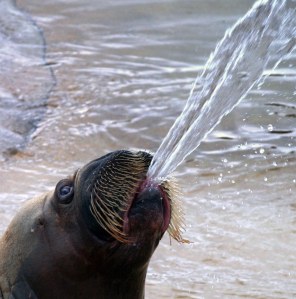
The last time I was at SeaWorld in San Diego, epochs ago, an elephantine walrus sprayed a vast and violent spume of water at my mom, soaking her in spit and salt water and leaving me half aghast, half in giggles. It was a splashy public display — a decent crowd circled the creature’s enclosure — and mom was not overjoyed. Harpoons danced in her head.

This was the revenge of the pinniped, a blubbery brown Jabba the Hutt that seemed to be broadcasting to us all, “Stop taunting, gawking and pointing at me and my helplessly oppressed prison mates. Enough! Sploosh.

3831424696_c9a7ba4813_b

If only all the park’s captive marine animals — penguins, dolphins, seals, sea otters, orcas, sharks, florescent fishies — could speak so eloquently, so mean and to the point. Because these swimming, jumping, barking, glowing creatures are not happy campers. They are abductees, held against their natures, highly evolved wildlife reduced to playthings, ogled objects, effectively slaves. They should hold a hunger strike, or incite a riot, or at least sign petitions.  

I’m returning to SeaWorld this month with a hard gulp of guilt. First, there’s the raping of my wallet: the standard entry fee is a leap-off-a-bridge $92. Surely at that price I can ride a killer whale and feed a Great White and take home a baby otter. (But, uh-uh, I can’t.)

But more importantly I am guilty about all those animals, many of which have heartrending backstories. It mostly plays like this: The animals are snatched from their mothers on the open sea and dropped into a tiny, concrete, chemical-laden pool for a torturous eternity of crowd-pleasing antics, frozen fish food, disease and premature death. Did I note that the mothers from which they are snatched are often slaughtered? There’s that.

D6JAryUUYAExLOo

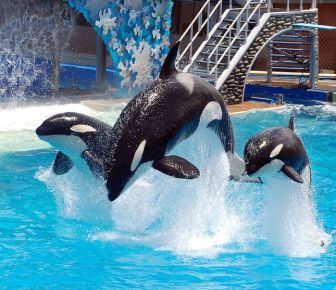
Despite meager improvements — SeaWorld, under tremendous public pressure, ceased its orca shows in 2017 — the new documentary “Long Gone Wild” reveals a “wildlife trade that includes capturing orcas from the wild and selling them to the exploding marine theme park industry in China, and points to the hardships orcas experience in captivity, such as collapsed fins, broken teeth, and severe boredom and depression.”

I have little doubt the remaining killer whales at SeaWorld are borderline suicidal. 

And why did SeaWorld San Diego halt its theatrical killer whale shows? It’s thanks in large part to powerful agitprop, particularly the 2013 documentary “Blackfish,” which follows a performing killer whale’s cruel treatment in captivity and its resulting swath of destruction, killing several people while in captivity.

(As for swimming with dolphins, that exotic brand of blissful exploitation: also reprehensible. See HERE and HERE.)

So off to SeaWorld I go (it’s a family thing). I can bring money, I can bring empathy and sympathy and an overall spirit of goodwill. I can look a dolphin in the eye and whisper, “Dude, hang in there. You can do this.” I can tell a walrus to chill and enjoy his prison comrades, before he loogies in my face and tells me to go to hell.

I can’t free Willy, but I can instill in him and his sea-park pals dignity and self-worth. It won’t be easy — those flapping, clapping sea lions look thrilled to be there, despite yelping like they’re being run over by a Range Rover. Yet with rectitude, altruism and a soupçon of soul, the animals might know we’re out there, and that we give a damn.

shutterstock_68472997.0.0

  • For more on the ethical iffiness and ickiness of SeaWorld, go HERE and HERE.

9 best films of 2019 (so far)

In no particular order, the movies I’m excited about at the year’s half-way point …
Climax-Banner.jpg

“Climax”

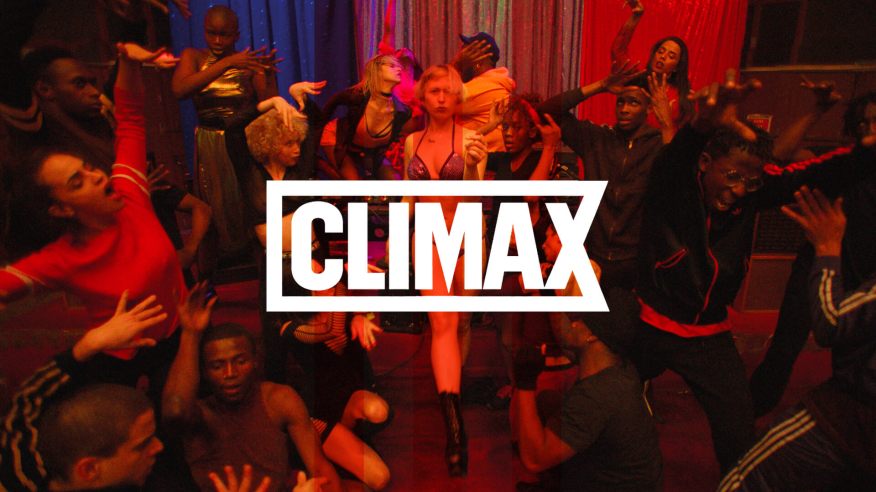
Puckishly sadistic, Gaspar Noé and Lars von Trier remain cinema’s great pessimists, glib nihilists and gleeful provocateurs. Look, without flinching, at Noé’s masterwork “Irréversible” or von Trier’s “Antichrist” and you’ll see my point. With the head-spinning, hallucinogenic swirl of body (and camera) movement that is “Climax,” Noé takes his visual and thematic tics past the edge of woozy chaos. When an extraordinarily talented dance troupe’s party is ruined by a bowl of LSD-spiked punch, hell uncorks with fury. What was a glorious pageant of writhing bodies becomes a descent into a violent nightmare of screeching, thrashing individuals trying to relocate reality. The camera rides a liquid wave of neon hues, racing and corkscrewing down halls and weaving through rooms. Frequently indulgent and meandering, with no real characters or story, just sensation and electro-shock, the film is pure immersion, a sustained climax. I didn’t say it was pleasant. But it is novel, and queerly riveting. And purely Noé. Watch the trailer HERE.

last_black_man_in_san_francisco_ver3.jpg

“The Last Black Man in San Francisco”

At once arty, elegiac, poetic and tough-minded, this is a tale, a beautiful reverie, that strikes on topics of race and class and gentrification with sparks and lyricism and primary-color Spike Lee sizzle. It’s something singular, and it slowly intoxicates with its emotional and sociological depths. Following Jimmie Fails (played by the actor of the same name — he’s as charismatic as a young Don Cheadle) as he presses to reclaim the giant Victorian home of his grandfather, the film is both a call to honoring blood bonds and a plaintive hymn to a troubled city. Joe Talbot directs (and co-writes) with soaring vision and intense feeling. The result is dire, daring, dreamy. Trailer HERE.
honeyland.jpg

“Honeyland”

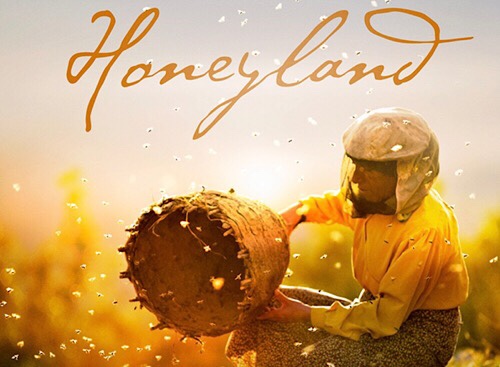
In this gorgeously observational documentary, weathered, middle-aged Hatidze lives in the rocky Macedonian mountains, where she cares for her ailing mother and tends to several beehives that produce honey for a tenuous livelihood. A large, rowdy family moves next door and decides to try beekeeping, but without expertise, they flail and almost comically get stung more than they harvest the sweet goo. Tensions arise between the neighbors, but this achingly humanistic look at an exotic if seriously impoverished way of life is mostly a portrait of Hatidze, a steely, lonely woman who has as much soul as those mountains can contain. The doc won a record three awards at Sundance 2019, including for its ravishing cinematography. Trailer HERE.

mustang.jpg

“The Mustang”

Breaking a horse is a bitch. Triple the challenge if it’s a rearing, snorting wild desert mustang. That’s what Roman (Matthias Schoenaerts) is tasked with as a violent criminal in a Nevada prison program in which convicts break mustangs for auction, preparing them for work in law enforcement. “We’re not training these horses for little kids’ birthdays and pony rides,” growls Bruce Dern’s crusty bossman, who knows both man and horse require an especially prickly strain of tough-love. If Laure de Clermont-Tonnerre’s feature debut falls into a formulaic groove — the apex of the depiction of trust-building between human and wild horse remains Carroll Ballard’s 1979 “The Black Stallion” — the film doesn’t flinch from gritty, violent twists. The dangerous dance between Roman and his horse Marcus retains tension, as the two captives, both scrappy and obstinate, circle each other in a face-off that could end in injury and defeat, or mutual respect and friendship. Roman’s frustration boils — “Just fucking listen to me!” he snaps. “I’m not going to hurt you! You hear me, you stupid animal!” — and it’s no surprise the horse is listening. Trailer HERE.

her smell.jpg

“Her Smell”

Elisabeth Moss’ performance in this shambolic punk-rock portrait is as athletically interior as it is exterior, spiked with physical fits and spasms like a lunatic child in a druggy tantrum. In my favorite performance of the year, Moss plays Becky, volatile front-woman of a female punk band she’s struggling to keep together between coke binges and flame-throwing hissy fits. The actress stirs up a cackling, hand-flinging cauldron of Courtney Love, Blanche DuBois, Charles Manson and Gena Rowlands in “A Woman Under the Influence.” It’s all raw-nerve, and Moss commits to her anti-heroine in a self-immolating blaze. She’s as shattering as this ballsy, surprisingly sensitive film by writer-director Alex Ross Perry. Trailer HERE.

Booksmart-Movie-2019-900x506.jpg

“Booksmart”

Barreling forth with raunchy vigor and unbridled zest, this breakneck coming-of-age comedy, actress Olivia Wilde’s impressive directorial debut, screams fun. Almost literally: There’s a lot of screaming — in surprise, horror and explosive joy. An amplified spin on school-days greats — “Dazed and Confused,” John Hughes’ oeuvre and last year’s “Lady Bird” and “Eighth Grade” — “Booksmart” piles on twists with a sharp, knowing eye that zooms in on the timely and topical, from female power and LGBTQs, to bullying and the corrosive effects of cliques, and, duh, the liberating if daunting pull of sexual exploration. Starring a terrific Beanie Feldstein and Kaitlyn Dever as boundary-pushing besties, who learn, in a fleeting haze, that maybe bongs are as fun as books. Trailer HERE.
46084844_685873568460655_5249823622087835648_n.jpg

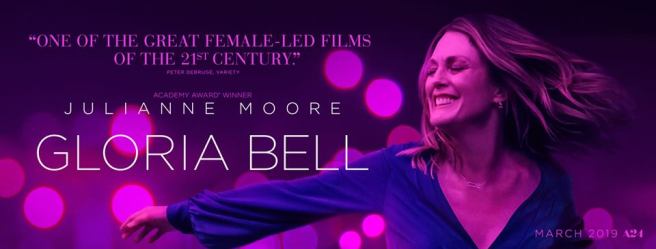
“Gloria Bell”

A glowing Julianne Moore — is there a more radiant actress? — assumes the title role in this sweet, ebullient, slightly melancholic snapshot of a middle-aged divorced woman seeking love and connection in modern Los Angeles. A touching remake of the 2013 Chilean film “Gloria,” by the writer-director of that movie, Sebastián Lelio, the movie follows its wise, free-spirited character onto her favorite place, the dance floor, where she finds romance with a nice guy (a fine, empathetic John Turturro) and all the attendant delights, complications and disappointments of love. No matter how sore things get, Gloria’s joie de vivre stays infectious. Trailer HERE.

NON FICTION.jpg

“Non-Fiction”

French writer-director Olivier Assayas‘ dramedy is a tireless, tonic gabfest that had me speed-reading the flurry of subtitles more than drinking in the warm faces and colors of the bustling scenes. That’s no complaint. The profusion of words — intelligent, eloquent, biting — brim with ideas, humor, pain and pathos, for an enveloping artful experience. You want to know the fork-tongued characters, led by an enchanting Juliette Binoche, because of the literary, arty cosmos in which these writers, editors and actors orbit. It’s heady and human: They’re just people, with all of our people-ly problems, and it’s more exciting than you think. Part tart publishing-world satire, part feast of infidelity, part anatomy of midlife crises, “Non-Fiction” is light on plot, more enmeshed in ideas about love and life, loyalty between friends and lovers, and, in a topical concession, a pointed conversation about new media vs. the printed word. It’s like a Gallic Woody Allen comedy, without the tootling clarinet and stammering, gesticulating neuroses. Trailer HERE.

souveneir.jpg

“The Souvenir”

Not an easy film, Joanna Hogg‘s elusive, divisive relationship drama is boobytrapped with qualities that repel people from the arthouse. It’s glacial, elliptical, remote. It makes you work with loosely hanging scenes, a jagged structure and oblique characterizations. I broke a small sweat trying to solder the plot together, identify with the actors and figure out where Hogg was taking me. The entry point is young film student Julie, played with winsome diffidence by Honor Swinton Byrne. Julie’s lover Anthony (Tom Burke) is a heroin addict, a secret until it’s not, which inevitably snarls their relationship. The story is mostly scenes of the couple muddling through their unconventional, occasionally off-putting upper-middle-class affair. With drugs. And spats. And sex. And dinner parties. And the making of a student film. And an IRA bombing. Somehow, Hogg’s disparate elements crazily fall together. Trailer HERE.

What’s in a name? Lots apparently

“When you’re a white, blonde-haired, blue-eyed woman named LaKiesha, life can get complicated.” 

So begins an excellent CNN.com story that continues: “Strangers burst out laughing when you tell them your name. Puzzled white people ask what your parents were thinking. Black people wonder if you’re trying to play a bad joke.”

190609180750-lakiesha-francis-super-169.jpg
LaKiesha Francis

The story’s headline is “What it’s like to be a white woman named LaKiesha,” and what follows by reporter John Blake is a probing, provocative account of life for a very white LaKiesha Francis in small-town Ohio because of her exotic birth name, and what it means when a white person has a “black” name and a black person has a “white” name. 

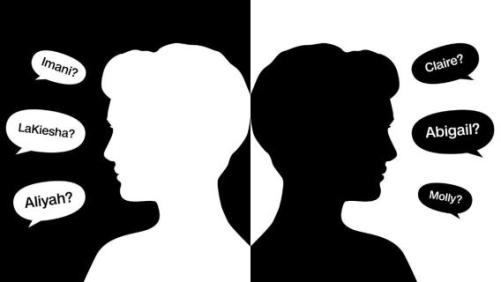
“We hear a lot about what are known as ‘black-sounding’ names these days,” Blake writes. “What LaKiesha has discovered is that the names of Americans are as segregated as many of their lives. There are names that seem traditionally reserved for whites only, such as Molly, Tanner and Connor. And names favored by black parents, such as Aliyah, DeShawn and Kiara. … But when you move through life with a name that violates those racial and ethnic boundaries, LaKiesha has found that people will often treat you as an imposter.”

unnamed-file.jpgFurther proof of name prejudice and name politics is this 2006 ABC report on “whitest” and “blackest” names:
“Studies of résumés found that people with black-sounding names are less likely to get callbacks. ABC put 22 pairs of names to the test, posting identical résumés except for the names at the top. The résumés with the white-sounding names were actually downloaded 17 percent more often by job recruiters than those with black-sounding names.”

Toxic and pernicious, let’s call this what it is: flagrant racism. Both of these articles are so powerful and troubling on their own — do click their links — that I have little of substance to add to them. My reactions are as visceral as intellectual, and putting them into words would likely be messy.

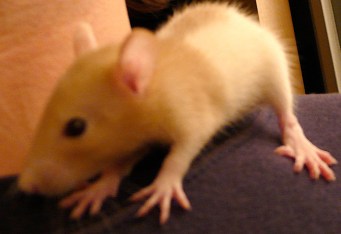
Yet I have my own modest story about appropriating a so-called black name. A long time ago I bought a white and ginger pet rat. I named her LaShonda for no greater reasons than I thought it was cute and cheeky. And fitting. Like her, it was adorable, full of spirit.

But then I started second-guessing the name. What would vets and their receptionists think when I brought in a white rodent named LaShonda? When I told friends her name the response was usually laughter. What had I done? Was I making fun of a black name? Or, as I believed, was I giving my pet the coolest name I could think of? (I thought of changing it, but LaShonda mysteriously died in her cage after only three weeks.)

P1010172.jpg
This is actually Tammy the rat, but she is practically a twin of the late LaShonda.

Would LaShonda have faced the same backlash LaKiesha Francis does? Would she have been treated as an imposter, her job applications put at the bottom of the pile because of her exotic moniker? Would she have been bullied by other rats? Would she have legally changed her name to Carol or Gertrude? Would she have resented me for putting so much social pressure on her?

“It can be exhausting constantly explaining yourself to white people, even though you’re white,” writes Blake. I believe it. LaKiesha and LaShonda “sound” black, but expectations are upended, confusion reigns and mockery and resentment are possible outcomes.  “A name isn’t just a name, according to history and social science,” Blake says. “Give someone the wrong name and it can become a burden.”

Funerals in the forest

I’ve talked here before about how to dispose of my body after I croak. I have particular, peculiar, deeply secular ideas. First, do not bury me; I am not landfill. Second, do cremate me; you can put my ashes in a curvy hourglass, a swirling snow globe, or a Magic 8 Ball to be shaken for answers to imponderable cosmic queries, such as, “Does Suzy like me?”  

These are some very real alternatives, as well:

* As I’ve written here, Washington State is considering allowing human remains to be disposed of and reduced to soil through composting. It works like this: Decomposing bodies crumble and decay into soil and are dispersed to help flowers and trees thrive. There’s no coffin, no chemicals, no pricey cemetery plot and none of the fossil fuels used in cremation. Eco-ecstasy.

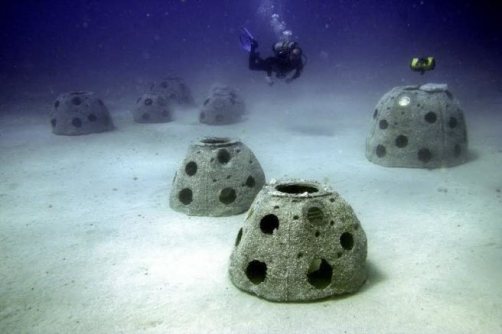
* In another post I described the underwater reef ball, an eco-friendly, reef-building sphere of cement in which your ashes are placed and then sunk to the bottom of the sea. First you’re cremated. Then your ashes are stirred with concrete and shaped into a hollow, hole-pocked reef ball. Resting on the seafloor, its goal is to provide a teeming marine habitat for fish, coral and other sea critters.

image.jpg

Now there’s another option, which I saw in the Times. “Could Trees Be the New Gravestones?” the headline asks. It’s a bit cryptic, but read on and it’s all about forest funerals. The first thing that popped to mind was hiding a corpse in the woods, throwing some leaves over it, and running. 

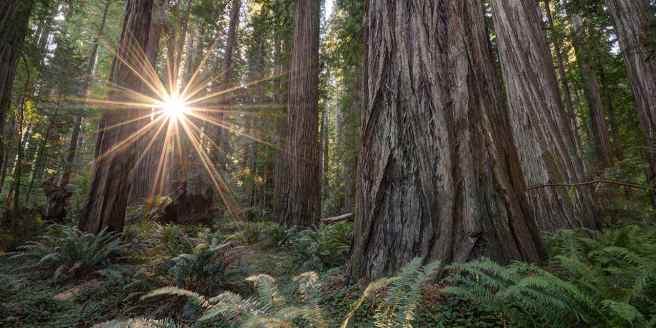
But no. This is about a respectable body receptacle, a burial place for human (and pet) ashes deep among towering trees, verdant ferns and Chia-lush moss, a sylvan Eden of mist and dew, deer, butterflies and half-men, half-goats. You want to be buried in beauty, this is your spot.

Better Place Forests, a Bay Area start-up, is “buying forests, arranging conservation easements intended to prevent the land from ever being developed, and then selling people the right to have their cremated remains mixed with fertilizer and fed to a particular tree,” the Times says. (Fed to a particular tree — Mother Nature’s bottomless buffet chomps on.) vc_insidersguidetocaliforniasredwoodcoast_st_rm_ea6f8r_1280x640.jpgIt sounds a lot like Washington State’s human composting proposal, but Better Place Forests seems to have this thing up and rolling with a tree-specific blueprint. The company emailed me this simplified explanation of how its “memorial forests” work:
  1. You choose a tree in one of our private, permanently protected forests.
  2. Under this tree, you spread ashes of family members and pets for generations to come.
  3. Our forests are easy to reach. Your family can visit your tree at any time.

Along with flowers, bring a backpack, picnic spread, bottle of rosé and bug spray.

So far, only two forests are taking cremains: one in Point Arena on the ocean-sprayed coast of Northern California and the dense Santa Cruz Forest, where 6,000 trees are available on 80 acres. Spots in Seattle, Denver, Portland and Flagstaff are in the works.

Dying is easy; paying for it is hard. What’s your budget? What kind of tree do you want to be eaten by? Some of the nitty-gritty (boldface mine):

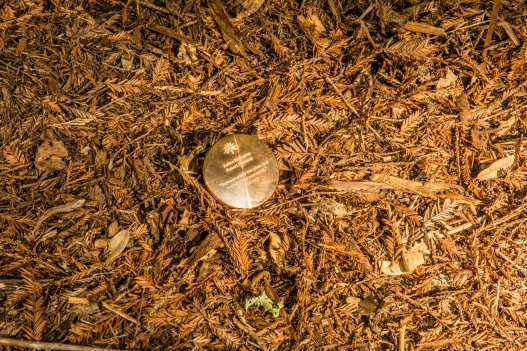
“Customers come to claim a tree for perpetuity. This now costs between $3,000 (for those who want to be mixed into the earth at the base of a small young tree or a less desirable species of tree) and upward of $30,000 (for those who wish to reside forever by an old redwood). For those who don’t mind spending eternity with strangers, there is also an entry-level price of $970 to enter the soil of a community tree. (Cremation is not included.) A steward then installs a small round plaque in the earth like a gravestone.”

I don’t know about you, but I’m not doing “a less desirable species of tree” (sorry, pine) or the community tree, which smacks of a pauper’s grave — fine for Mozart but not moi. I’m going for it — 30K to snuggle up to an ancient, majestic redwood, a barky skyscraper that kisses the clouds and tickles the sun. That sounds lovely. I’ll be dead, but still.

How strange to be sprinkled at the base of a giant tree in a vast shadow-dappled forest. Will an impish fox come dig me up, uprooting the whole rest-in-peace thing? Might a small-bladdered hiker use my tree as a makeshift urinal? Even stranger, could a fern sprout where my ashes are buried like in the book “Where the Red Fern Grows”?

That would be deliciously nuts — what color would my fern be? — and as surreal, incomprehensible and amazing as death itself.

Now, where do I sign up?

(The company’s video pitch is HERE.)

merlin_155601582_ab30cd88-747a-4c47-852f-f6b4d0b79d11-superJumbo.jpg
“A small round plaque in the earth like a gravestone.” They’re not kidding. That looks to be about the size of a silver dollar.