Random reflections, part IV

This painting kills me. It’s titled “Brave Cone Dog” and it’s by a wry, puckish character named Brandon Bird, who makes very witty pop art. I don’t have much to say about the minimalist image, because it speaks (morosely, piteously, hilariously) for itself. I own a framed print of it, and everyday it stirs in me an emotional milkshake. 

cone_dog.jpg
“Brave Cone Dog”

This I like, from a recent book review: “Walter Benjamin wrote that a truly great sentence is one that’s been burnished to perfection, then sabotaged in some respect. Wounded or weakened just sufficiently to seduce.”

As a kid, I was a quivering hypochondriac. To wit: At age 7 I had a cramp on the left side of my belly that lasted a couple hours. Convinced it was appendicitis, I curled into a ball in my parents’ empty bed and envisioned horrors of surgery and gloom and, yes, death. The cramp subsided and I proceeded to watch TV, tear-streaked. Around age 9 I had a swollen bruise on my knee that I mistook for a malignant tumor. I crumpled on my bedroom floor in a sleeping bag, too distraught to clamber into bed, and imagined losing my leg to certain amputation. Later, I calmed and accepted that it was just a bruise and I watched TV, tear-streaked. I still often misdiagnose myself, hurling me into fleeting, fluttery hysteria. Then I watch TV, tear-streaked. Reader, WebMD is your foe.

In this week’s “By the Book” column in The New York Times, singer-author-badass Patti Smith is asked “What’s the last great book you read?” She replies:
51hC8kgrS9L._SX308_BO1,204,203,200_

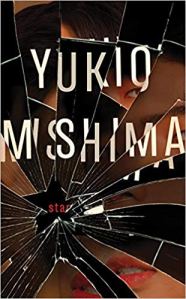
Recently I was captured by two small, addictive works. “Kingdom Cons,” by the Mexican author Yuri Herrera, floored me. … And “Star,” by Yukio Mishima, is a startlingly modern, hypervisual jewel; it could be a really interesting movie. Both books were mesmerizing, seeming to fall in my hands from an alternative sky.

As I’m doing a semi-immersion in Japanese literature and film in preparation for a fall trip to Japan, I picked up “Star,” which is about a hot movie actor in existential distress. From Smith’s zippy description, I expect glitter and diamonds.

At the cafe today, a 30-something hipster in a wool fedora, four-day stubble and ratty Chuck Taylors sans socks sat next to me, slipped on headphones and went on to loudly tap his feet and roll his head, wearing an imbecilic grin, all but dancing in his seat. I wanted to spill his kombucha. Was I wrong? And: He wore a large thumb ring.

ichi_the_killer_poster.jpg.500x715_q85_crop-smart

One of the Japanese movies I’m revisiting before I go to Japan is “Ichi the Killer,” a shock-cinema bloodbath from bad boy auteur Takashi Miike (say: Meek-a). About a kidnapped yakuza boss, his punky minion — a psychopathic sadomasochist whose specialty is baroque disfigurement — and the titular hero, a bullied weakling out for revenge, this notoriously twisted crime comedy was tonic jazz the first time I saw it. Now it mostly plays as an extreme exercise in tedious transgression: How disgusting can we get? Bloated with rape, murder, drugs, gangsters, prostitution, masturbation, self-mutilation, unthinkable torture, disembowelment and ample amputation, the film is set in the sometimes seamy nightlife district of Shinjuku in Tokyo. Which is where I’m staying. 

I‘ve owned pet rats named Phoebe, Becky, Tammy and LaShonda. A friend told me I’d inadvertently given the rats the names of receptionists at construction companies.

The other day I actually saw a guy rollerblading in the neighborhood. That is something you cannot unsee. It’s sort of like seeing someone on a unicycle.

Words I love: blithebloviate, evanescent, loquacious. Let’s add nincompoopery to the list.

Random reflections, part III

“We die — that may be the meaning of life,” said author Toni Morrison, who died Monday. “But we do language. That may be the measure of our lives.”

I‘ve tried many times to watch “The Princess Bride,” “Stand By Me” and “When Harry Met Sally,” but I’ve never been able to get through any of them. They are ham-handed. They aren’t funny. They clunk. That Rob Reiner directed all of them is strictly coincidental.

ht_meg_ryan_billy_crystal_when_harry_met_sally_jc_140711_31x13_992.jpg
The famous “orgasm” scene, which gets more embarrassing with each viewing.

I swear, Cubby the dog has a perverse crush on the female cat Tiger Lily. He gawkily flirts with her, and her eye-rolling indifference is touching. Such inter-species passion is a spectacle. I sure hope I don’t see a newborn kitten that barks.

I jot in my journal pretty much every day with purpose and the fugitive hope of substance. The author Yiyun Li writes, “How did I forget to start each and every page of my journal with the reminder that nothing matters?” My head nods vigorously.

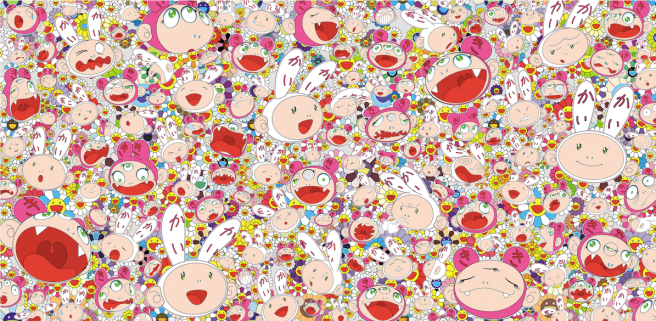
The last time I went to Japan I got hooked on the sizzling pop art of Takashi Murakami, whose work spans painting, sculpture, fashion, merchandise and animation. It’s fun and whimsical and dazzlingly colorful — and not a little geeky. His subject matter is cute (kawaii), psychedelic and satirical, with well-trod motifs: smiling flowers, mushrooms, skulls and manga culture. Murakami could be the Jeff Koons of Japan. I’m going there soon. My goal is to get Murakami’d, big time.

210522_1325221.png
My phone’s current wallpaper.

A few years ago I discovered I had an adult-onset allergy to shrimp and prawns. It’s like the second worst thing that’s ever happened to me.

41cFc108RGL._SX329_BO1,204,203,200_

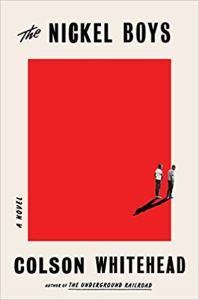
A fan of novelist Colson Whitehead, I’m deflated by his new, lavishly overrated book “The Nickel Boys.” It lacks energy, momentum and finally fizzles at the halfway mark. So I put it down (I also couldn’t get into his early novel “John Henry Days,” though I’m all about “The Intuitionist” and “The Underground Railroad”) and picked up Haruki Murakami’s “Norwegian Wood.” I’ve read one other Murakami novel, “The Wind-Up Bird Chronicle,” and I almost threw it against a wall. The edge is where I live.

Tonight we popped a bottle of Suntory Whisky Toki, “blended Japanese whisky that is both groundbreaking and timeless.” It is silky and smoky with strong, sweet vanilla notes. I think none of us is going to bed.

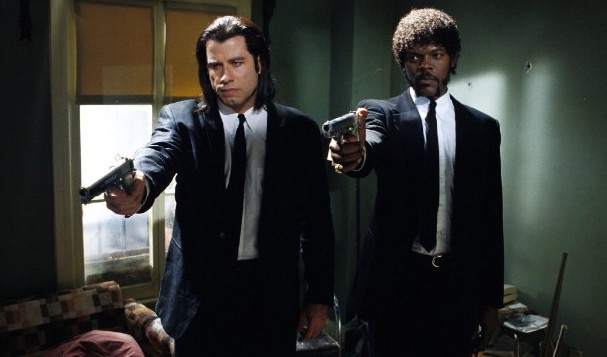
Quentin Tarantino has made movies. He has made only two masterworks, “Reservoir Dogs” and “Pulp Fiction.” That was a very long time ago. The rest of his oeuvre seesaws from juvenilia to junk. As critic David Denby wrote on the release of the imbecilic “Inglourious Basterds”: “Tarantino has become an embarrassment: his virtuosity as a maker of images has been overwhelmed by his inanity as an idiot de la cinémathèque.”

140922202605-08-pulp-fiction-story-top.jpg

Intimacy is scary. Love is scarier. Someone recently dubbed the phenomenon “the terror of loving.” I like that. Its precision is chilling.

I am typing most of this in the air, row 45, seat G, on United flight 497 to San Francisco. You might say I’m skywriting. Forget I just said that.

A pungent parting shot for ‘Game of Thrones’

“Game of Thrones” is over — thank god.

And yet the chatter sputters on. Fans can’t clam it. Of all the “GOT” noise — a FOMO racket, a bellyaching din — this might be my favorite snippet, courtesy of clear-eyed Washington Post critic Hank Stuever, whose healthy cynicism is gleefully cathartic:

It’s likely you’re already aware of the dissatisfaction with the conclusion tweeted hither and yon — six weeks of nitpicking complaints, first-class nerd whining and an ungodly amount of postgame analyses. Consider all those hastily posted diatribes or that pointless online petition with a million deluded signatures on it, demanding (demanding!) to have Season 8 scrubbed and remade. In some ways, “Game of Thrones” had grown so popular that it made its viewers look embarrassingly out of touch with life itself.

This can only happen when we love our popular culture a little too hard, crossing some line of personal investment, forgetting when a TV show is only just that. It was our fault for coming to regard the show as the apogee of the medium itself.

It’s also why I’m glad some unnamed, unwitting hero left a coffee cup in the camera shot in the episode that aired May 5. That one coffee cup humanized the whole endeavor. It reminded us that a TV show, no matter how absorbing, is a folly, a fake, a job that someone is hired to do, so that an HBO subscription can be sold to you. The coffee cup will be scrubbed away with a quick flick of magic technology; but before it’s entirely gone, I hope they give it an Emmy.”

p-1-whatand8217s-that-coffee-cup-on-game-of-thrones-worth-to-starbucks.gif.jpeg

Critiquing the critics

Great piece in the April issue of Harper’s Magazine titled “Like This or Die” by Christian Lorentzen. He’s a critic taking aim at the soggy state of criticism, and his article is by turns scathing and amusing and devastating.

After noting that “clichés are pandemic” in newspaper book reviews, Lorentzen says “Endless lists of book recommendations blight the landscape with superlatives that are hard to believe.” (Guilty as charged: The New York Times and New York magazine.)

He goes on:

The basic imperatives of the review — analysis and evaluation — are being abandoned in favor of a nodding routine of recommendation. You might like this, you might like that. Let’s have a little chat with the author. What books do you keep on your bedside table? What’s your favorite TV show? Do you mind that we’re doing this friendly Q&A instead of reviewing your book? What if a generation of writers grew up with nobody to criticize them?”

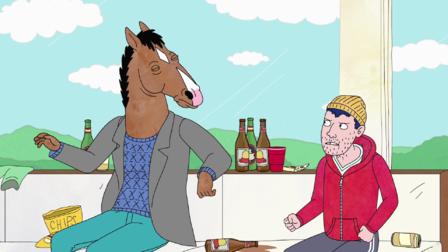
His sentiments remind me of the youth-pandering boosterism of Vulture and the somewhat more adult slavering of Vanity Fair, to name two obvious culprits that more often than not elect fuzzy over fulmination. They are hardly alone in hailing mediocrities like Netflix’s “Bojack Horseman” and “Stranger Things,” floridly overpraised series that reveal a critical desperation to like stuff.

Being honest isn’t the same as being sadistic. “Negativity is part of the equation,” Lorentzen says, “because without it positivity is meaningless.”

More from the article, which can be read here:

What jars is the self-satisfaction expressed by people who should know better. Editors and critics belong to a profession with a duty of skepticism. Instead, we find a class of journalists drunk on the gush. In television, it takes the form of triumphalism: a junk medium has matured into respectability and its critics with it. In music, there is poptimism, a faith that whatever the marketplace sends to the top must be good.”

9d6ec2a4dbc9179d270f064178d60ff9e5d0b7a0.jpg
The unhilarious “Bojack Horseman” — yet one example of a series overrated by TV critics desperate to cling onto something in the bleak crap-o-sphere.

Going down darkly with Denis Johnson

Denis Johnson — novelist, poet, playwright — wrote mad sentences. The author of the swooning novella “Train Dreams,” harrowing Vietnam War epic “Tree of Smoke” and, most famously, the indelible stories in “Jesus’ Son,” left behind a pageant of ravishing prose, much of it festooning the darkly lyrical stories in “The Largesse of the Sea Maiden,” released last year after his death in 2017 at age 67.

I was reminded of his genius when I saw that this last book is a finalist for the National Book Critics Circle Award, whose winner will be announced next month.

I ran across a couple of brief, bleakly reverberating quotes from “Sea Maiden” that I’d scribbled in my journal. If Johnson could be grim, his poetics were reliably heartrending.

I’m getting depressed … you forgot to say prepare to fall down through a trap door in the bottom of your soul.”

Yeah boy he dragged me down to his jamboree. Dragged me down through the toilet formerly known as my life. Down through this nest of talking spiders known as my head. Down through the bottom of my grave with my name spelled wrong on the stone.”

largess.jpg

‘When writing is fun, it’s not very good.’

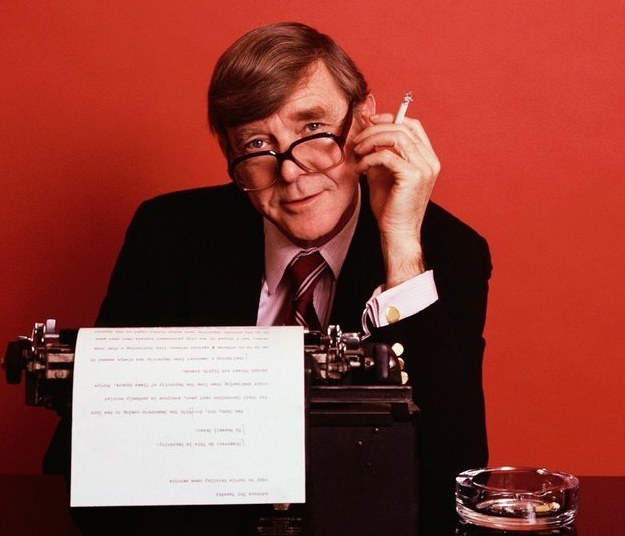
I’ve always found that when writing is fun, it’s not very good. If you haven’t sweated over it, it’s probably not worth it. So it’s always been work. But it’s the kind of work you enjoy having done. The doing of it is hard work. People don’t usually realize what it takes out of you. They just see you sitting there, staring at the wall, and they don’t know that you’re looking for the perfect word to describe a shade of light.”

— Russell Baker, journalist and two-time Pulitzer winner, who died in January

winfrey-russell-baker-1.jpg


There is nothing to writing. All you do is sit down at a typewriter and bleed.” — Ernest Hemingway 

635875962654001518-nasbrd-04-12-2015-tennessean-1-e008-2015-04-09-img-nas-classicalfunfact-1-1-cvaet45t-l592668167-img-nas-classicalfunfact-1-1-cvaet45t.jpg

God or godless. Either way, you’re wrong

Though I’ve only made a wee dent in the book I got today — “Seven Types of Atheism” by philosopher John Gray — I am already bitten and beguiled. On page 33 of the 170-page manifesto, I find myself putting it down often to copy a tart line or provocative passage.

Gray, without airs but with erudition, places in his crosshairs the arm wrestle between religion and atheism, that eternal, irreconcilable chasm of belief, God and godlessness. He is acridly and relentlessly critical of both.

Dense but light on its feet, slim but chubby with fact, philosophy and opinion, the book reveals a bracing entertainer who hardly balks at taking intellectual swipes at celebrity atheists slash rational humanists like Sam Harris, Richard Dawkins and other crusaders. 

Gray, says The Guardian, “is a card-carrying misanthrope for whom human life has no unique importance, and for whom history has been little more than the sound of hacking and gouging.”

That’s my kind of guy, though Gray takes things a little further than I do when it comes to faith, history and humanism. Still, his book, from 2018, is studded with eyebrow-cocking history lessons, slashing judgments and pleasing iconoclasm. A few nuggets from my early reading:

41LcPf9aHaL._SX324_BO1,204,203,200_.jpg

“There is no such thing as ‘the atheist worldview.’ Atheism simply excludes the idea that the world is the work of a creator-god, which is not found in most religions. … Nowhere does Buddhism speak of a Supreme Being, and it is in fact an atheist religion.”

“Many versions of Jesus and his life can be supported on the basis of existing evidence. Among the least plausible are those that have been presented as fact by Christian churches.”

“Christian thinkers have interpreted the rise of their religion as a sign of Jesus’ divine nature. Among the many prophets teaching at the time, why should he alone have inspired a religion that spread to the last corner of the earth? Unless you think that human events unfold under some sort of divine guidance, the metamorphosis of Jesus’ teaching into a universal faith can only have been the result of a succession of accidents. … The Christian religion is a creation of chance.”

“A free-thinking atheism would begin by questioning its prevailing faith in humanity. But there is little prospect of contemporary atheists giving up their reverence for this phantom. Without the faith that they stand at the head of an advancing species, they could hardly go on. Only by immersing themselves in such nonsense can they make sense of their lives. Without it, they face panic and despair.”

On language: quote of the day

“Rather than make one’s argument come alive, clichés do the reverse. They capture a morsel of thought, cover it in batter, and fry it into mush.” — Mark Abley in The Walrus

For good measure, here’s a rogue’s gallery of flagrant clichés. As language guru William Safire put it (with a sardonic wink): “Last but not least, avoid clichés like the plague.”

Don’t cry over spilt milk; Selling like hotcakes; The rest is history; Every cloud has a silver lining; When it rains it pours; Don’t judge a book by its cover; Don’t beat around the bush; Don’t count your chickens before they hatch; It’s a dog eat dog world; To be honest; Basically; With all due respect; Giving it 110%. It is what it is; Paradigm shift; Walk the walk; Pushing the envelope; Thinking outside the box; The elephant in the room.

elephant-abley

The euphoria of traveling alone

This was a mistake: I once told a female friend to go ahead and meet me in Tokyo when I went some time ago. She was excited. Then I wrote in a blog that she shouldn’t be too excited because I need my space, that I, huh-hum, walk the Earth alone. This did not go over well. This was unmannerly. And dumb. Whatever. It was true.

2015
Louvre, Paris, 2015

Decidedly, defiantly, I am an incorrigible solo traveler. Occasionally I’ve traveled to Europe or somewhere in the States with a gal pal, but 99-percent of the time I’m a one-man production. Two weeks in Japan. Three weeks in India. Two weeks in Turkey. Ten days in Paris. Do I get lonely? Rarely. Embracing solitude and deflecting loneliness is an art form, and, done right, it’s invigorating.

Last fall, I wrote here about loneliness vs. solitude: “My own skin doesn’t fit well. Which means comfort among others doesn’t come easy. Traveling, I love to read in cafes, scribble in journals in bars, roam streets, cathedrals and cemeteries alone, without the nattering of companions. I move to my own beat …”

41glx2w8k7l-_sx329_bo1204203200_

So I am gladdened by the new book “Alone Time: Four Seasons, Four Cities, and the Pleasures of Solitude” by journalist Stephanie Rosenbloom. Not only are the four cities she explores — Paris, Istanbul, Florence, New York — some of my absolute favorites, but her experiment in solitary travel is of course immensely attractive.

Despite spending undue verbiage defending solitude — feebly citing scientists, psychologists and philosophers who rail against the social stigma of aloneness, as if it’s some zany pathology — Rosenbloom says that solo travel is surging, and, a fine reporter, she provides the stats.

In a time when everything is socially entwined and extravagantly networked, the hunger for alone time is greater than ever, be it a solo trip to a movie or a solo trip to Morocco. I habitually go the movies alone, just as I unfailingly globe-trot untethered. As Rosenbloom learns, such excursions are steeped in rare splendors, from the placidity of eating alone and truly savoring a meal to the transformative power of focusing on the present moment.

“Alone, there’s no need for an itinerary,” she writes. “Walk, and the day arranges itself.” One can be “curious, improvisational, open to serendipity.”

BLUE 2008.jpg
Blue Mosque, Istanbul, 2008

As when I spontaneously tooled through the fairy-tale hills of Cappadocia, Turkey, on a rented Vespa, or stumbled upon the ritual slaughter of sacred rams in a mosque abattoir in Istanbul, or visited an orphanage for critically ill children in Siem Reap, Cambodia, or, most harrowing, got myself detained by Hezbollah goons in South Beirut. And of course there are countless cordial encounters and forged friendships among fellow travelers and locals that organically blossom, and often last.

Rosenbloom had a plan: visit Paris in springtime, Istanbul in summer, Florence in autumn and New York, her hometown, in winter. Except for New York, she was only in each city for up to one week. Her aim was to peel back the delights of traveling alone in exemplary locations, ones awash in food, architecture and art, revealing how fine it can be to be unhurried, “accountable to no one,” exhilaratingly free.

The upshot is part vivid travelogue and vague memoir, filigreed reportage and free-floating opinion. “Alone Time” doesn’t provide the stunning personal epiphanies and life-altering experiences of Elizabeth Gilbert’s classic “Eat, Pray, Love” (nor the luxurious prose). It’s more a practical guide, a how-to on solo travel, including an epilogue, “Tips and Tools for Going It Alone.” (Though I had to roll my eyes at a few sections, like this one: “How to Be Alone in a Museum” — really?) She offers some gauzy instructions, like how “to be open to wonder,” which, actually, is much easier than you think.

Rosenbloom, diehard journalist, is wed to her sources, so that her rigorous apologia for eating alone comes with too many testimonials from psychologists and the like, bogging down what modest narrative thrust there is. I wanted to blurt out: “Eating aloneJust do it! It’s entirely fine and easy and acceptable. You don’t need a sheaf of Ph.D studies to validate this primal pleasure.”

For this introvert, whose two favorite cities happen to be Paris and Istanbul, “Alone Time” is a mild affirmation that my travel habits might have universal appeal, something I kind of already believed. Solitude -— not loneliness, which must be fended off —  is a source of power and creativity, great assets while on the road.

2010.jpg
East River, New York City, 2010

As I wrote last fall: “In solitude one reaps energy from oneself. You create your own space on your own terms, with your own powers, cultivating your mind, with the option of joining the wide world at anytime. Great freedom defines solitude. It’s the incubator of creativity and art. It’s the locus of self-communion.”

Rosenbloom, who began her physical journey and spiritual awakening in the City of Lights, sums up with characteristic pragmatism and admirable ambition: “My aim wasn’t to master Paris. It was to master myself: to learn how a little alone time can change your life — in any city.” And there she nails it.