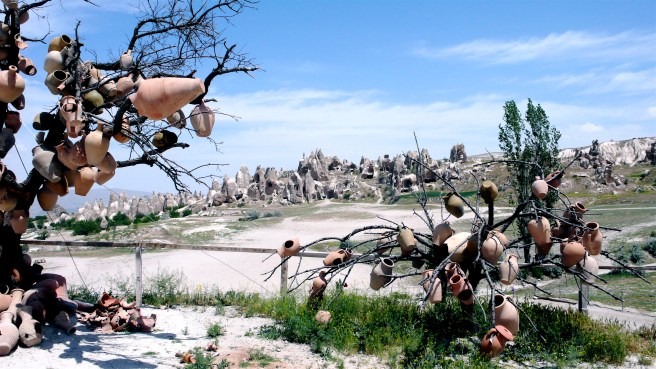
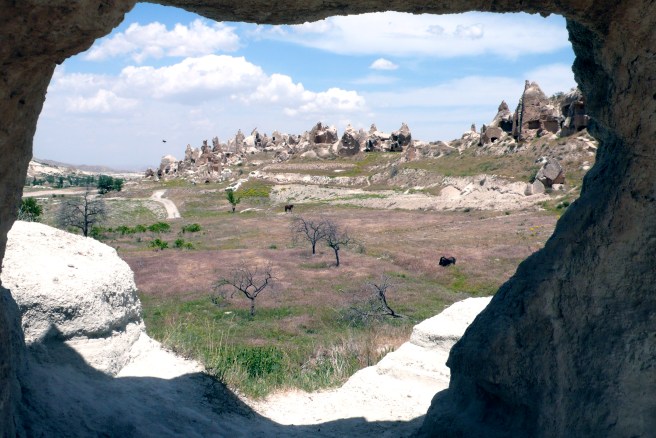
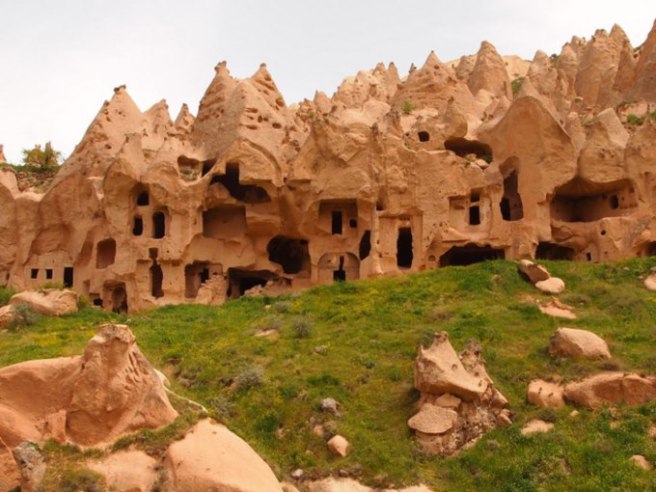
The stony hills don’t roll so much as jag and tumble. Fantastic rock formations — so often called “fairy chimneys” that the term, apt as it is, has become cliché — spiral from the clay-colored earth in tapered towers and stout tepees.
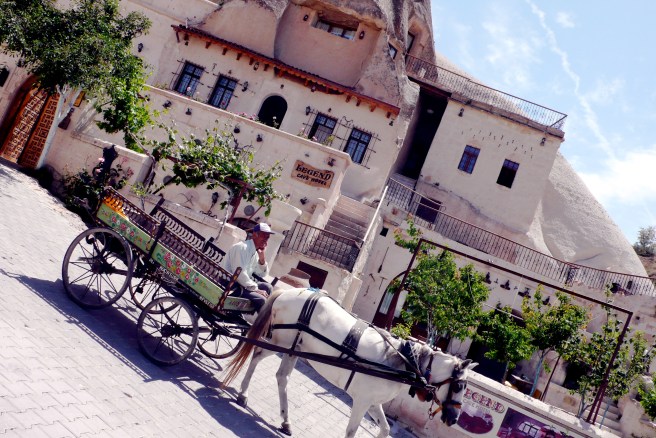
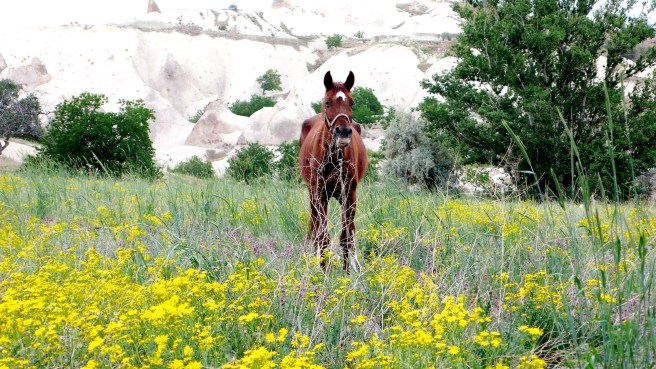
Cave dwellings and ancient cave chapels adorned with shimmeringly preserved Christian frescoes honeycomb hillsides. Phallic boulders and chalky spires erupt out of the arid Anatolian plains. Horses graze amid tall grass and bright wildflowers and horse-pulled carts trundle down steep stone streets.
After a long time away, I am soon returning to this otherworldly, almost Martian landscape of Cappadocia, Turkey, where I will rent a motor scooter and buzz the hills, stop and gape at the underground cities and famed Open-Air Museum, stay in the obligatory cave hotel, tuck into lavish Turkish cuisine and partake of the modest nightlife. (I’m partial to the funky Flintstone Bar, which is also, yes, a cave.)
I was last in Cappadocia a decade ago and I marveled then and expect to marvel all over again at the sculpture-like topography — it’s a mushroom! It’s an arrowhead! — molded by the artistic hands of the heavens. This UNESCO World Heritage site, whose pink dawn skies are peppered with flotillas of touristy hot-air balloons, would make an exemplary location for a sci-fi or fantasy movie, and probably has.
It’s practically a hop-skip from Istanbul to Central Anatolia — a 90-minute flight, that, at $25 each way, is a steal that can’t be denied. So back I go this fall.
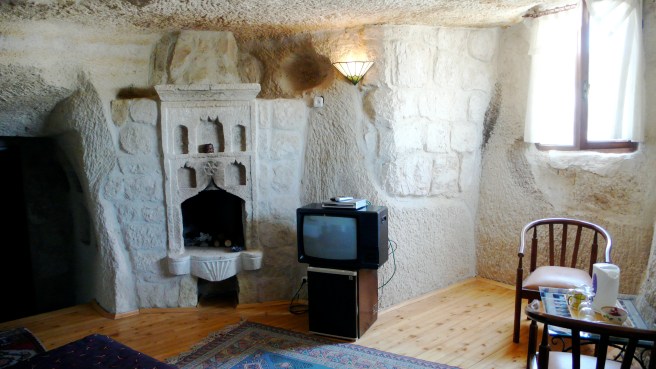
These are scenes from my last stay in Cappadocia — looking back while looking forward.
My cave hotel in Goreme, Cappadocia
Cave hotel room
And three bonus photos that really capture the magic, borrowed from the web:
Like regular human ardor, a love affair with a city is complicated — prickly, passionate, vexing, ineffable. We adore our favorite cities, which are not breathing creatures but quasi-animate entities that are unquestionably alive, pulsing and forever mutable.
When pressed, the two cities I enjoy the most intense romances with are Paris and Istanbul. Paris is my baby, but sometimes I think I love them equally. (Sorry, ma chérie.)
I fell in love with Istanbul in the spring and fall of 2008, two trips comprising some of my very peak travel experiences. There were times when I actually lost myself, and, this is spectacularly unusual, crawled out of my muzzy head, breathed a little and existed, if momentarily, in a vacuum of Edenic placidity, even contentment. I flew.
Ten years on, the country has hurtled into political tumult: multiple terrorist attacks, violent anti-government protests, an attempted coup and the burn marks of President Erdogan’s tightening authoritarian chokehold. The guidelines of a culinary walking tour in Istanbul actually state: “We are not responsible for acts beyond our control, including but not limited to … acts of war, or other unrest caused by state or non-state actors.” Terrific.
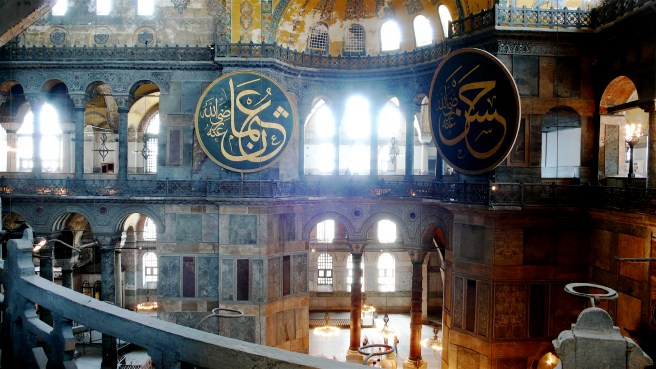
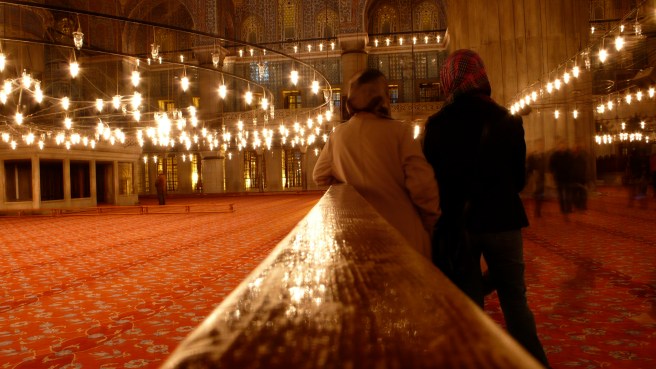
I could boycott Turkey, but that’d be my loss. I miss the generosity of the people, the grandeur of Hagia Sofia and the Blue Mosque, the majesty of the sun-twinkling Bosporus, the exquisite food, the dazzling cultural and religious breadth of East meets West. So I am returning this fall, with a two-day excursion amid the fairytale moonscapes of Cappadocia in Central Anatolia. (See them here. Ignore the festering hot-air balloons.)
These shots of Istanbul, snapped on my long-ago journeys, remind why I’m going back.
This was a mistake: I once told a female friend to go ahead and meet me in Tokyo when I went some time ago. She was excited. Then I wrote in a blog that she shouldn’t be too excited because I need my space, that I, huh-hum, walk the Earth alone. This did not go over well. This was unmannerly. And dumb. Whatever. It was true.
Louvre, Paris, 2015
Decidedly, defiantly, I am an incorrigible solo traveler. Occasionally I’ve traveled to Europe or somewhere in the States with a gal pal, but 99-percent of the time I’m a one-man production. Two weeks in Japan. Three weeks in India. Two weeks in Turkey. Ten days in Paris. Do I get lonely? Rarely. Embracing solitude and deflecting loneliness is an art form, and, done right, it’s invigorating.
Last fall, I wrote here about loneliness vs. solitude: “My own skin doesn’t fit well. Which means comfort among others doesn’t come easy. Traveling, I love to read in cafes, scribble in journals in bars, roam streets, cathedrals and cemeteries alone, without the nattering of companions. I move to my own beat …”
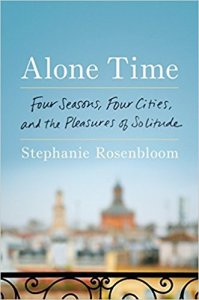
So I am gladdened by the new book “Alone Time: Four Seasons, Four Cities, and the Pleasures of Solitude” by journalist Stephanie Rosenbloom. Not only are the four cities she explores — Paris, Istanbul, Florence, New York — some of my absolute favorites, but her experiment in solitary travel is of course immensely attractive.
Despite spending undue verbiage defending solitude — feebly citing scientists, psychologists and philosophers who rail against the social stigma of aloneness, as if it’s some zany pathology — Rosenbloom says that solo travel is surging, and, a fine reporter, she provides the stats.
In a time when everything is socially entwined and extravagantly networked, the hunger for alone time is greater than ever, be it a solo trip to a movie or a solo trip to Morocco. I habitually go the movies alone, just as I unfailingly globe-trot untethered. As Rosenbloom learns, such excursions are steeped in rare splendors, from the placidity of eating alone and truly savoring a meal to the transformative power of focusing on the present moment.
“Alone, there’s no need for an itinerary,” she writes. “Walk, and the day arranges itself.” One can be “curious, improvisational, open to serendipity.”
Blue Mosque, Istanbul, 2008
As when I spontaneously tooled through the fairy-tale hills of Cappadocia, Turkey, on a rented Vespa, or stumbled upon the ritual slaughter of sacred rams in a mosque abattoir in Istanbul, or visited an orphanage for critically ill children in Siem Reap, Cambodia, or, most harrowing, got myself detained by Hezbollah goons in South Beirut. And of course there are countless cordial encounters and forged friendships among fellow travelers and locals that organically blossom, and often last.
Rosenbloom had a plan: visit Paris in springtime, Istanbul in summer, Florence in autumn and New York, her hometown, in winter. Except for New York, she was only in each city for up to one week. Her aim was to peel back the delights of traveling alone in exemplary locations, ones awash in food, architecture and art, revealing how fine it can be to be unhurried, “accountable to no one,” exhilaratingly free.
The upshot is part vivid travelogue and vague memoir, filigreed reportage and free-floating opinion. “Alone Time” doesn’t provide the stunning personal epiphanies and life-altering experiences of Elizabeth Gilbert’s classic “Eat, Pray, Love” (nor the luxurious prose). It’s more a practical guide, a how-to on solo travel, including an epilogue, “Tips and Tools for Going It Alone.” (Though I had to roll my eyes at a few sections, like this one: “How to Be Alone in a Museum” — really?) She offers some gauzy instructions, like how “to be open to wonder,” which, actually, is much easier than you think.
Rosenbloom, diehard journalist, is wed to her sources, so that her rigorous apologia for eating alone comes with too many testimonials from psychologists and the like, bogging down what modest narrative thrust there is. I wanted to blurt out: “Eating alone: Just do it! It’s entirely fine and easy and acceptable. You don’t need a sheaf of Ph.D studies to validate this primal pleasure.”
For this introvert, whose two favorite cities happen to be Paris and Istanbul, “Alone Time” is a mild affirmation that my travel habits might have universal appeal, something I kind of already believed. Solitude -— not loneliness, which must be fended off — is a source of power and creativity, great assets while on the road.
East River, New York City, 2010
As I wrote last fall: “In solitude one reaps energy from oneself. You create your own space on your own terms, with your own powers, cultivating your mind, with the option of joining the wide world at anytime. Great freedom defines solitude. It’s the incubator of creativity and art. It’s the locus of self-communion.”
Rosenbloom, who began her physical journey and spiritual awakening in the City of Lights, sums up with characteristic pragmatism and admirable ambition: “My aim wasn’t to master Paris. It was to master myself: to learn how a little alone time can change your life — in any city.” And there she nails it.
Finished Tommy Orange’s debut novel “There There” — terrific, explosive — and I’m now onto Amie Barrodale’s arch short stories “You Are Having a Good Time.” After just a few of these fun-size fictions, I am firmly in the book’s thrall. The title alone thrills me a little.
I am glad I’m reading “You Are Having a Good Time,” because I am indeed having a good time. But frankly the stories are a lucky place holder for a book I’m waiting to arrive, “Alone Time: Four Seasons, Four Cities, and the Pleasures of Solitude,”by travel journalist Stephanie Rosenbloom.
The book is about her year traveling solo in Paris, Istanbul, Florence and New York — four of my favorite cities, especially the first two — and all that she loved, loathed and learned basking in that life-expanding mode of emancipated alone-hood. I’m an inveterate solo trekker enamored with the places she visits, so Rosenbloom and I might have a lot in common.
Amie Barrodale
For now, Barrodale’s “You Are Having a Good Time” is a gratifying off-kilter kick, a spasm of spare, elusive, funny tales that are touched by mystery, an alluring unknowability. With cavalier irreverence, she throws a strobe-light on aberrant facets of the human condition.
Barrodale conjures “stories that don’t behave as you expect stories to behave,” notes the book flap. “Beautiful or Grotesque?” asks the headline on a review of the 2016 collection.
Or there’s this review headline: “Stories Exploring the Misguided, the Unrequited and the Mortified.” That review concludes: “None of these stories explain themselves willingly.”
That is true. Take “The Imp,” in which a possible ghost upends the relationship of a man and his pregnant wife. A tarot reader is involved. Or the bleakly comic “Night Report,” which follows a troubled woman to a New Age mountain retreat where she breaks down and declares, “I wish that I were dead. I’m heartbroken, and if I had a gun I would use it. … I’d shoot Eve. Thank you. I’d shoot Eve in the chest.”
Then there is “Frank Advice for Fat Women,” which opens with a dry, quizzical flourish: “A woman who was lonely and depressed should begin by getting on some medication. She should clean her house and throw away clutter. After that, Dr. Sheppard told his patients to lose weight and wear dresses.”
Her eye for detail is keen: “The restaurant was empty except for a guy at the bar. He was a little chubby. I could tell he was single because he was wearing white tube socks with black dress shoes. His jeans were too tight on him. I don’t mean that he had on skinny jeans. I mean that he had on jeans that were two sizes too small, and he was uncomfortable. He kept squirming, fooling with his phone. … Outside, through the window, I saw an old guy stop under a tree, pull down a branch, and smell a flower.”
On love: “Being torn apart is what a relationship is. So don’t be afraid. Play the game.”
The stories groove to mercurial rhythms, and sometimes seem to bear a torch, in search of a point. They withhold facile answers and spurn tidy bows. They’re fun like that, and funny. They are dark, but giddy.
Barrodale’s stories — this is her only book — are a cousin to the blithely jagged fiction of Ottessa Moshfegh, who’s an avowed fan. “It’s one of my favorite books,” she recently said. “Like (Michael) Ondaatje, Barrodale makes me hold my head and ask, ‘How?’”
Moshfegh shouldn’t be too envious. She’s the better writer, more probing, bolder, weirder. But Barrodale is a force, an alchemist of the odd, fabricating devilish modern tales that totter your balance and leave your mouth dry.
This was the “Do Not Disturb” flyer for my hotel room at the amazing, artsy Volkshotel in Amsterdam last month. I like it so much I had to share it (and I had to steal it).
“I travel not to go anywhere, but to go. I travel for travel’s sake. The great affair is to move.” — Robert Louis Stevenson
“I read; I travel; I become.” — Derek Walcott
Someone recently suggested to me that my many travels aren’t journeys to see the world and immerse myself in the new, novel and astonishing but to escape from life, to bolt from my existential predicament with its quotidian contours and smothering banality.
Well, duh.
Rather than take umbrage at this reductive hypothesis, I embraced its glaring self-evidence. But it is only half-right. Escape from routine and workaday doldrums is part of the algebra of travel for most of us, but the other part about immersion in the new, novel and astonishing is undeniably, irrefutably the most important piece of the equation. That unquenchable thirst for fresh, unpredictable experience, from culture to cuisine, people to history, is absolutely paramount. To say otherwise is preposterous.
After all, you can’t actually escape yourself or your life just because you’re standing woozily before the Taj Mahal or whizzing happily on a moto-bike through the maniacal streets of Saigon. “Wherever you go, you take yourself with you,” author Neil Gaiman said. You can’t not pack you. You view the world through the lens — smudged, rosy, cracked — of your own inescapable mind.
Yet there’s another way to look at the urge to trot the globe, and it goes like this: “We travel not to escape life, but for life not to escape us.” That dimly cryptic maxim has no author, just the copout “anonymous,” but it’s deep nonetheless. It’s saying travel is life itself, that to travel is to truly live. I know I’m at my most alive, most stimulated traveling, when unfamiliar vistas and uncharted ways of seeing and surviving crack open like great gifts. I look, I learn, I marvel. Smitten here, flummoxed there, I gulp it all down.
Contrarily there’s journalist Janet Malcolm, who finds travel a lesser version of daily living, “a low-key emotional experience, a pallid affair in comparison with ordinary life. (Our homes) are where the action is; they are where the riches of experience are distributed.” (A celebrity in her profession, Malcolm has an incredible job, and she presumably enjoys a highly satisfactory family and social life in very nice accommodations. I’m just saying.)
Real life will inevitably beetle its way into our journeys. We are not immune from the humdrummeries of being human just because we’re sipping sangria in Sevilla or snorkeling in Thailand. More often than not, we are pulled back into normal existence while trekking and must deal with the minutiae and mundanities of getting by. Currency hassles, airport irritants, sore feet, crappy service, taxi ripoffs, unvarnished boredom — life is a greedy intruder.
Some germane questions: Does travel satisfy the urge to fill something, or to shed something? Ponder.
I finish with this besotted soundbite from illustrious world-traveler Pico Iyer, who defines wanderlust far better than I can:
“We travel, initially, to lose ourselves; and we travel next to find ourselves. We travel to open our hearts and eyes and learn more about the world than our newspapers will accommodate. And we travel, in essence, to become young fools again — to slow time down and get taken in, and fall in love once more.”
An article I just read triggered a deep-seated pet peeve of mine. It’s not about how super it is that summer’s almost here, which really gets my goat, because I loathe summer. And it’s not about the astonishing nincompoopery going on in Washington right now.
It’s more important than all that. It’s about patrons taking selfies in the world’s greatest museums, standing like glassy-eyed dolts before masterpieces by Van Gogh, Da Vinci, Rembrandt and Caravaggio, all the while blocking the paintings for others as they stage strenuous fake smiles at their cell phones without actually studying the monumental artworks hanging mere feet away. Pose, smile, snap, leave.
Recently at the Rijksmuseum in Amsterdam I was looking forward to truly absorbing Rembrandt’s grand, justly famous “Night Watch.” It had been years since I’d seen it in the flesh, and this time I read up on it, prepared for a more immersive, enlightened viewing.
Mobs of viewers before Rembrandt’s “The Night Watch” this month in Amsterdam.
Not a chance. The painting is quite gigantic and still, when I got to it, a crush of phone-wielding zombies were cluttering up the view. I jostled and elbowed, to no avail. Details I wanted to drink in, such as the fuzzy little self-portrait of Rembrandt peeking out from between two watchmen, had to be quickly glanced before some dunderhead, camera in fist, bumped me away.
Cell phones and those mortifying selfie sticks abounded, with people actually pointing cameras at themselves, plastering on gargoyle grins and snapping themselves in front of a masterwork they couldn’t care less about except for how it will look on Instagram. Can you imagine how those shots turned out? The mind reels. The stomach turns.
A few sublime Vermeers prominently adorn the Rijksmuseum, but if you want to see them, really see them, wait until the Selfie Squadron gets its fix. Watch as it rushes up to gentle tableaus of sun-splashed domestic life, framing and snapping pictures, then summarily rushing to the next painting, like it’s a contest, some kind of desperate relay.
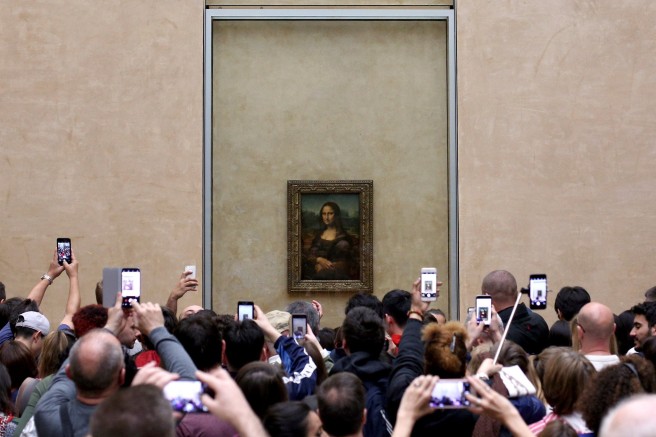
The selfie epidemic is even uglier at the Louvre with Da Vinci’s magnetic “Mona Lisa.”
The way many patrons “interact with the 500-year-old painting exemplifies how differently the digital generation experiences art,” says The New York Times article I read. “Most of the roughly 150 people crowded around the painting were taking photographs of the piece, or of themselves in front of it. In the presence of the ‘Mona Lisa,’ digital photography, more than looking at the actual artwork, has become the primary experience.”
The “Mona Lisa” at the Louvre in Paris. (Photo by Pedro Fiuza.)
This disgusts me, and it probably shouldn’t. No, actually it should. And this is why:
“Imprisoned by its reputation as the most famous painting in the world, the ‘Mona Lisa’ has, to all meaningful intents and purposes, ceased to exist as an original work of art. It has become an idea — and a photo opportunity.”
Hasn’t everything been reduced to this, a crass photo opportunity? Even at Starbucks, I see people satisfying the urge to take selfies of themselves with their massive milkshakes that pass as coffee drinks, tongues hanging out or lips pursed, fingers making a peace sign. Who but the takers wants to look at these images?
It’s too easy to blame unchecked narcissism, yet that’s surely a contributing toxin. As someone who’s almost pathologically camera shy, I can’t fathom this slavering need to record oneself every 15 minutes until dizzying repetition nullifies any semblance of originality. The pictures all look the same; only the “zany” faces vary. People love to look at themselves. As the center of the universe, their self-adoration knows no bounds. It is, I think, a sickness. The camera-clicking hordes in museums reveal a kind of twisted vanity.
Think about it. Your mugging face, beaming, and in the far background, lost in the clamor, is “The Night Watch” or the “Mona Lisa.” What then? The shame.
Things change. Switcheroos occur. Some books work, some don’t. I close and tuck away the latter and embrace and finish the former. There’s been some tucking away going on.
I announced on the blog that after completing the superb Siamese twins biography “Inseparable” I would take on my Amsterdam holiday Kurt Vonnegut’s darkly comic wartime novel “Mother Night.” All of that happened.
Except: I didn’t cotton to the Vonnegut book as I was certain I would. Quite early on I found it uninviting, atonal and dry. I shut it. And became desperate. I was still in the States and my sole vacation book was failing me.
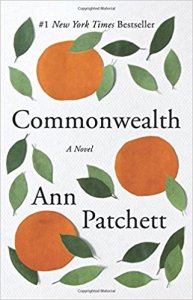
Discouraged yet determined, I marched to an airport bookshop, poked and peeked at a dozen acclaimed books, until I hit the staff picks display, which spotlighted Ann Patchett’s heavily praised novel “Commonwealth.” I’m not used to paying full price for paperbacks, but I popped the almost $20, grimacing and banking on the best — even while recalling that I couldn’t get into Patchett’s previous blockbuster “Bel Canto” the two times I tried.
“Commonwealth” is strong. On the whole trip, though, I read only 47 pages of it — my laptop is a serious distraction. I enjoyed the book’s humor, descriptive muscle and palpable humanity, and I planned on gladly finishing it back home.
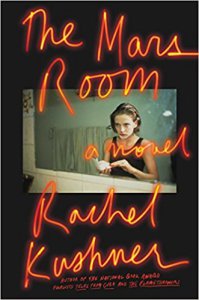
Then this happened: Waiting for me at home was Rachel Kushner’s new, ecstatically reviewed “The Mars Room,” which was on my list of five books to read next. It was, of all things, a library book, with a two-week checkout limit. I pounced. “Commonwealth” would have to wait.
I just wrapped “The Mars Room,” a very good if never truly great page-turner set largely in a sordid women’s prison, much like “Orange Is the New Black,” with grim and funny detours streaking the story, including a few to the San Francisco strip club of the title. Kushner is good with grit, limning harrowing and humorous situations with a kind of streamlined tough-gal strut. And the final pages seize you hard.
Before the Amsterdam trip, I borrowed two other titles on my list of five, Zadie Smith’s “NW” and Ottessa Moshfegh’s “Homesick for Another World,” neither of which I got around to thanks to the pleasingly time-consuming “Inseparable.” They remain fast on my reading list.
And yet: Dropping off “The Mars Room,” instead of getting the Smith or Moshfegh books, I got distracted and picked up two more books on my extended wishlist, Curtis Sittenfeld’s comic coming-of-age novel “Prep” and Jesmyn Ward’s National Book Award-winner “Salvage the Bones.”
I get sidetracked in a snap when I’m around piles of books, my head on a pivot, eyes flashing, hands flipping pages, picking up and putting down volumes. So much to read, so many diversions, so many anxious postponements.
Of the two books I grabbed, I chose first to plunge into the poverty-stricken, pre-Katrina, Mississippi-set “Salvage the Bones.” So far, it is rapturously evocative, the prose raw and earthy and exquisite, the narrative quivering and propulsive.
Here is Ward’s description of a pit bull giving birth to puppies:
“Skeetah grabs the puppy’s rear, and his hand covers the entire torso. He pulls. (The mother) growls, and the puppy slides clear. He is pink. When Skeetah lays him on the mat and wipes him off, he is white with tiny black spots like watermelon seeds spit across his fur. His tongue protrudes through the tiny slit that is his mouth, and he looks like a flat cartoon dog. He is dead.”
If “Bones” eventually chokes — that’s far-fetched — I’ll do what I am wont to do: put it down and move on to the next title. But what will that be? “Prep” or …
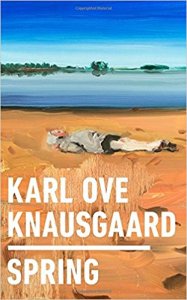
Even with two books before me, I said screw it and ordered Karl Ove Knausgaard’s “Spring,” a slim new memoir arriving in the States bubble-wrapped in effusive plaudits. The book is “poignant and beautiful,” a critic says. “Even if you think you won’t like Knausgaard, try this one and you’ll get why some of us have gone crazy for him.” (I’ve read five of his books and have gone crazy for him.)
“Prep” or “Spring” — I’m betting on the latter. Or will yet another title crash my consciousness and hijack the show? Likely.
Book fiends I know are afflicted with this disease of ravenousness, of greedy insatiability, of jonesing for the next fix. Books as lifeblood. Beats baking. Beats sports.
The saga continues, so much pulped wood before me, no end in sight. It’s an embarrassment of riches — words, language, poetry, morality, mortality, love and loss. And, as that, it’s a crazy blessing.
A long time ago in the hip and happening capital of Texas …
AUSTIN — Motorcycles have their place: soaring over rows of parked trucks; buzzing maniacally inside the Globe of Death; revving on stage at Judas Priest concerts. But they really stank up the city over the weekend, when nearly a billion rumbled in with their owners and the chicks who ride on the back for the annual hog-athon.
The bikes were gorgeous, exotic creatures: fetishistically sculpted chrome and steel, sparkling in the sun, low-slung and high-maintenance. Many appeared like they just vrooomed out of TV’s “American Chopper.” And they were everywhere downtown, rolling in parade formations and shredding the muggy air with hot chainsaw screams and crackling flatulence.
In other words, they were noisy and they took every single parking space. (One bike per meter? Please. You can stuff four of those things between the painted lines.) Still, I’m glad these hairy, leather-laden compatriots, who seem to believe a well-tied head scarf serves the same protective function as a helmet, enjoyed the weekend fellowship and Austin’s renowned ethos of tolerance. It gives the city that rowdy edge.
Timothy “Speed” Levitch
I didn’t even mind that the bikes’ symphonic violence (thousands of tubas played in a rain of napalm) sporadically drowned out my conversation with Speed Levitch at Casino El Camino. Through the bar’s ambient chatter, through the jukebox punk and metal, the choppers chopped.
Speed’s the star of the garrulous documentaries “The Cruise” and “Live From Shiva’s Dance Floor.” The movies reveal a young eccentric whorling through funny, far-out reveries, spinning streamers of soliloquy around the neon rave of his own mind. He’s a performance artist, a living one-man show, radiating an internal spotlight. He’s pretty charismatic, if kind of freaky.
Part poet, part gypsy-hippy, Speed has lots of friends in town and performs here often. He came from New York to do his show over the weekend. Saturday night he was merely hanging at one of his favorite local bars to get one of his favorite local dishes, Casino’s eggplant sandwich.
As we wove through flotillas of idling two-wheelers, Speed told how he’s reinvented his famed New York tour-guide shtick into ambulatory sidewalk theater. (Watch the above movies and you’ll understand.) He was inspired by a friend who coached the late Spalding Gray, Speed said. “He told me, ‘Do what you feel and keep a clear communication with your soul, amplify it, and then call it theater.’ ”
Then Speed sped off.
Later, at the city’s premiere arts venue: Some two hundred people attended Andrei Tarkovsky’s 1972 sci-fi fugue “Solaris” at the Paramount Theatre.
The turnout surprised me. “Solaris” isn’t action-packed summer adventure. It has more in common with Ingmar Bergman, fog and glaciers than George Lucas, androids and lasers. It’s a challenging, deeply spiritual and very long trip. It’s been called the Soviet answer to “2001: A Space Odyssey.” But Kubrick’s film is “Spaceballs” compared to the abstruse, though fascinating, eye-squinchingly wise “Solaris.”
Nearly everyone endured all three hours, despite an intermission — an invitation to flee. As the red velvet curtains closed over an elegant “The End” tag, the audience sat in dumbfounded silence. Eventually, murmurs were heard. Blood returned to vital organs.
I’m picturing some of these brave souls walking to their cars in a stun-gun stupor. They drive silently through the dark, the radio off. At home, they strip, lie on their bed in the dark, and softly weep.
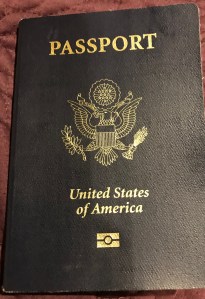
So my passport is about to expire — August 18, to be exact — and I’ve spent the last 40 minutes or so applying for a spanking new one, filled with precisely 28 crisp blank pages watermarked with stirring visions of Americana, from the Statue of Liberty to orbiting spacecraft; from an Alaskan grizzly eating a fresh, flopping salmon (true!) to the noble, jut-jawed mugs of Mt. Rushmore. It’s like a little picture book to remind you of home while you’re happily clomping around and spending money in someone else’s fine nation.
To get this desperately necessary booklet (I travel, therefore I am), I have to send thoroughly filled out PDF forms, a check for $110, a new mug shot (I’m camera shy, so that’s delightful) and my old passport to whatever U.S. department of whatever. Then, in several weeks, I’ll have a crease-free dark blue book that will allow me to get the hell out of here to somewhere new, exotic and magnificently dangerous. Or maybe just to Paris.
I will miss my current passport. For one, my photo isn’t ghoulish. I look young, boyish, and remarkably tan. And I’m proud of the stamps from other countries I’ve collected in the course of its 10-year life: Lebanon, Syria, Russia, the Netherlands, France, Turkey, Spain, Canada (well, Canada), England, and more. I will stick a Post-It note on this passport with the earnest message: Please return this! When I did that last time, they returned it, but punched a bunch of holes in it to invalidate it. Fair enough. Old passports make fond keepsakes.
It’s crazy and not a little depressing that it’s already time to renew my passport. Ten years is a stretch. But I’ve given this pocket pal a good workout, gripping it to far-flung places, some of which I never imagined I’d ever go. I don’t look the same, but only once has a customs agent done a double-take when checking my photo. “That was a long time ago,” I assured her. She smiled. I sighed.
The last time I renewed a passport and got the one I have now, the one about to expire, I did it a couple years before its expiration. That’s because I was traveling to Lebanon and Syria (before the current war) and my passport contained a stamp from Israel, where I had been years earlier. Both Lebanon and Syria bar entry if your book has an Israel stamp for obvious, if arguable, political reasons. So I had to get a whole new passport. What with paying for a Syrian visa to boot, those pre-trip costs were onerous.
She’s still in good shape.
This time I’m cutting it close. In some countries your passport must be valid for more than three months before the expiration date. When I went to Amsterdam a few weeks ago the airline attendant looked at my passport date, did some quick math in her head, and paused before letting me check-in.
I’ll have none of that. Time is of the essence if I want to travel anytime soon, though I have no plans. I’m off to get a new passport photo, which for me is like getting a colonoscopy, an uncomfortable, possibly traumatizing event. If the recent picture on my Russian visa is any indication, the new photo will be monstrous, even gargoylian.
I have no idea where I’m going next with the new passport. I don’t travel in summer -— too hot, too crowded, too pricey — so I can relax and blithely research the next adventure. Then, by fall, I’ll be off, ready to deflower the new booklet with its first kiss, the loud, mechanical thomp of the customs agent’s stamper.



















 GNASHING.
