Freud, meet Fido

And so the dog, small and fleecy, plops down for a nap on the couch, and he is out. Which means at any moment the show will commence, an alternately startling and amusing bugaloo of twitches and flinches, pop dancing by way of late Katharine Hepburn and robot street performers. Cubby, the peerless pup, is about to dream. And it’s a marvel. 

Behold, he’s off. Stubby legs kick and quiver. Furry eyebrows twitch. Lips tremble and emit muffled woofs and squeaky whines. As he hyperventilates, his rib cage rises and falls, a small basketball being pumped. It appears he is running in place. Outstanding.

Until, that is, I recall how traumatic dreams can be. Mine, at least, are nocturnal ordeals, dark and gnawing, filled with ragged memories and wraithlike faces from prior lives. They’re about 35% anodyne and 65% anguish. I typically awake from them with a small head throb, a daub of sweat, an aftertaste of dread: the dream hangover. I might as well have met Freddy Krueger.

dog-dreams-about-you-dreaming-dog-750x440
This is not Cubby, but you know he’s ecstatically dreaming.

So, no matter how entertaining his dream exhibitions are (oh, and they are), I worry about the substance of Cubby’s nap-time reveries. What’s he woofing at? Why the whine? Is he chasing, or being chased? Is he yawping at the postman, as in everyday life, or is he after an intruder? Is he playing with us, scampering off with his crazy bone?

Whatever is happening, he is assuredly dreaming. Anyone with a dog knows they do this. One doggie site says “dogs are similar to humans when it comes to sleep patterns and brain wave activity. Like humans, dogs enter a deep sleep stage during which their breathing becomes more irregular and they have rapid eye movements (REM).”

Bonus factoid: “Research suggests that small dogs dream more than larger dogs. A Toy Poodle may dream once every ten minutes while a Golden Retriever may only dream once every 90 minutes.” Meaning, compact Cubby is a dream machine. (“We infer that dogs can have nightmares, too,” adds the American Kennel Club, with worrying certitude.)

Sometimes Cubby’s slumbering exhalations sound heavy, husky, demonic. Is he having a nightmare, or is he being naughty and promiscuous? Maybe he’s rocking a death metal show. “The dream is the liberation of the spirit from the pressure of external nature, a detachment of the soul from the fetters of matter,” wrote Freud, the original cigar-sucking dream guru. He added: “Dreams are never concerned with trivia.”

So maybe Cubby isn’t just frolicking with a bone during his alarmingly kinetic dream states, which resemble nothing less than a buckling seizure or a zippy electrocution. I’ve said here that Cubs is a deep character, a wise old soul, vigorously seeking meaning in his transience, pawing to the bottom of the mysteries of the conundrum called life. Merely chasing cats is unworthy of his elevated subconscious; sniffing Bowzer’s butthole is extravagantly beneath him.

The id, that deep sea of sloshing neuroses, engenders the happy and the hellacious and everything in-between. In sleep, you might trip joyously in love — or you might be scorched to a pork rind by a weirdly random dragon. Closing eyes, placing head to pillow, is a fraught crap shoot. 

Cubby’s not dreaming about dragons, we’re certain of that. His purview is relatively minuscule. Despite his rich introspection, I’m pretty sure he doesn’t know what TikTok, J.Lo or The Rock are.

I’m also sure I will never know what populates the dog’s leg-twitching dreamscapes. In the end, it doesn’t matter. Yet with Freudian reflection, I will ponder these deep enigmas. Let me sleep on it.

Hats off to a birthday boy

The raging pimple on my nose couldn’t take away from the raucous ecstasy of my nephew’s modest — but laughy, giggly, shrieky, slangy, sing-songy (“Dancing Queen”!) — fifteenth birthday party among a half-dozen friends in my brother’s cozy backyard this very hot day. That damn zit — I’ll squeeze it till fluids flow. Be gone. Because there is bawdy jokes to be told, games to be played, junk food to be gorged, gossip to be spread. (What’s that? You have a boyfriend!)

And so it went. Two giant picnic umbrellas popped open like vast bat wings. Three fat coolers lined the deck. Tostitos — all over the place. Ice cream, cupcakes, cookies, Sprite, cheap plastic toys, bubbles. And, god, the laughter and the squawks of rare tropical birds. A blast was being had. 

I observed from afar, never getting close to these dangerous exotic animals. Instead: me, a mirror, a zit. Let’s go. (Gruesome details have been redacted by WordPress censors.)

In the mirror, I am reminded of the blooming, uncut hairdo I’m currently sporting. My last haircut was scheduled for April 3. It never happened thanks to quarantine. Do the math, they say, with a frat-boy sneer. I’ll do the math. The math says: shit. 

I noted here that I bought a New York Times baseball cap to tame my anarchic locks. It’s working out nicely, I think. But summer will be a Rapunzel-ready efflorescence, fluffy, uncontainable tresses, suitors scaling them to reach me in my dank, lonesome tower.

So I’ve ordered two more caps, one that will reveal a sliver of my cultural tastes, though I’ve mentioned Metallica before here.20170628_175149_7549_996230

The second hat is more personal, a custom-made lark, which I will wear with unwavering nerdiness:

Screen Shot 2020-06-06 at 7.47.37 PM

But this is really about my nephew’s big number 15. Not the pimple, not the hats. His birthday is actually tomorrow, June 7. To accommodate his besties, the party was thrown today. Plus, Saturday is always better than Sunday for a shindig.

In a rare aside, I asked my nephew how the get-together was going.

“Good,” he said, which is about the only answer he knows to feed lame adults who ask lame questions.

Good.

That will do. That will do good.

Now, Clearasil. Anyone?

Homebound, book-bound

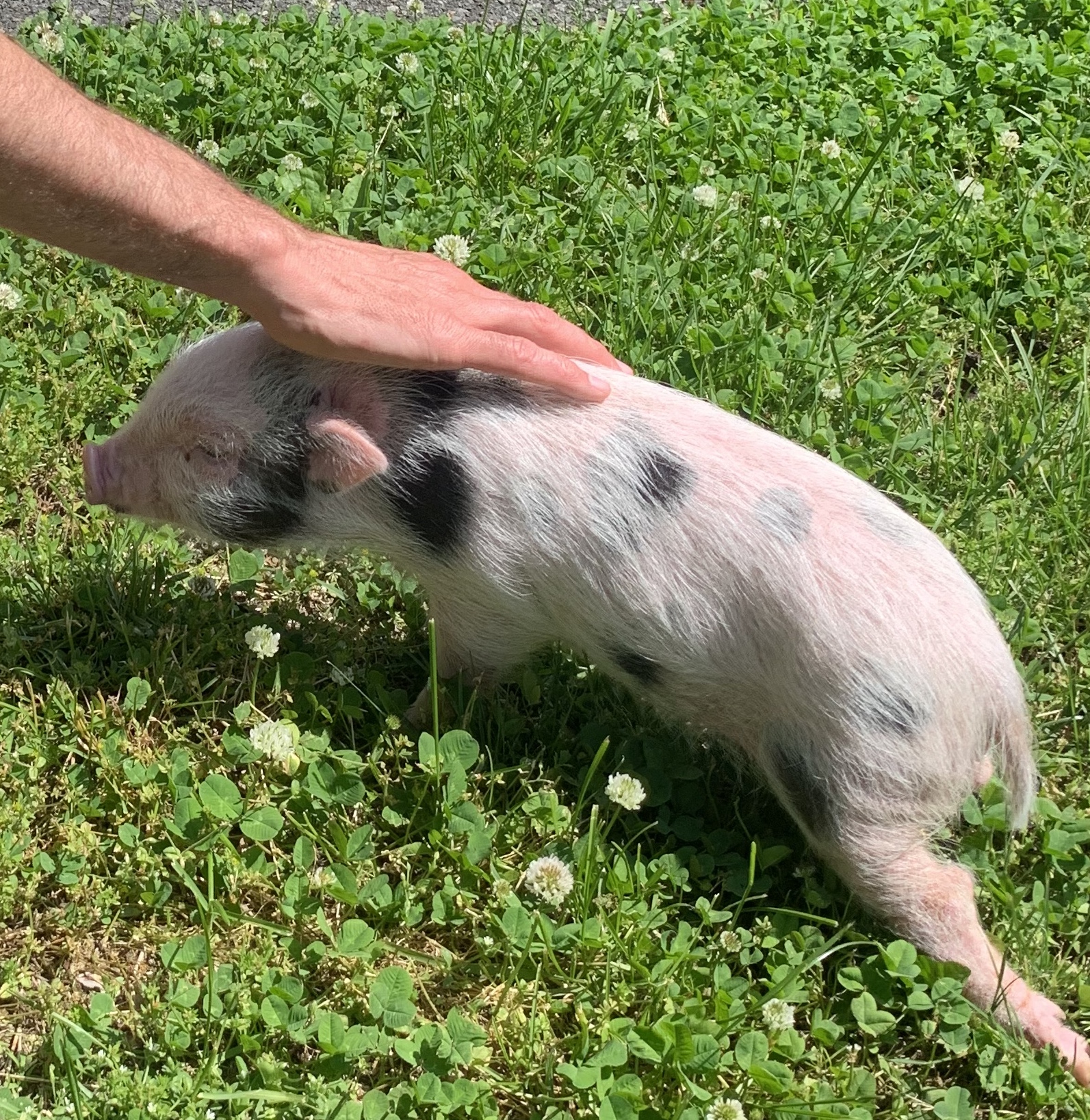
The neighbors down the street have acquired a tiny spotted piglet and that means nothing, because that’s not what I’m here for. Just thought I’d mention it as a friendly neighborhood bulletin, despite its thoroughgoing irrelevance to anything on this page.

I’m here to talk books — books I’m gathering around me like a collective paper blanket during the sheltering in place (my least favorite term for the eternal quarantine). I have mentioned I’m ordering new and used books hungrily, and now the stacks are rising precariously. Somebody stop me. 

51ha+QWsOXL._SX329_BO1,204,203,200_

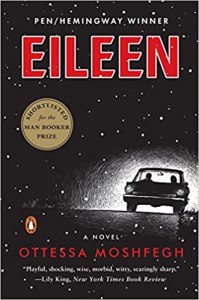
Over time I’ve read three or four novels and story collections by the daring, queasily beguiling Ottessa Moshfegh, whose darkly defiant streak, which runs from addiction to murder, poop to pathologies, has never been as palpable as in her 2016 debut “Eileen.” I just gobbled up the slim novel and I’m savoring its bitter aftertaste. I wanted to be ready for Moshfegh’s much-anticipated novel “Death in Her Hands,” coming out in two weeks. Hardly a spoiler: It’s being called perverse and strange. Bring it on.  

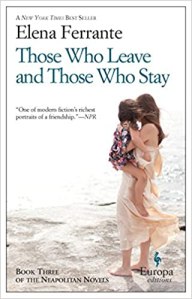
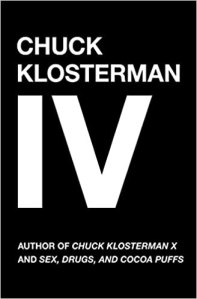
In a snap of energetic laziness, I skipped the first two books in Elena Ferrante’s universally lauded series The Neapolitan Novels, which kicks off with “My Brilliant Friend,” opting instead to watch the first two parts in the epic HBO adaptations (luminous, devastating). Now I’m into the third book, “Those Who Leave and Those Who Stay” and it makes me anxious: How much lush, moving prose did I miss by not reading the first two books? Yet another literary project materializes. 519LmMYfn-L._SX318_BO1,204,203,200_There’s a handful of hip, youngish, mostly male writers I avoid because of both their grating public images and callow, look-at-me writing (see ya, Dave Eggers). Journalist Chuck Klosterman, who specializes in rock and pop culture at large, has always made my belly twist at the teensy bit of his I’ve read in the likes of Spin magazine. He’s published loads of essay collections, like “Sex, Drugs, and Cocoa Puffs” and “Chuck Klosterman IV: A Decade of Curious People and Dangerous Ideas,” the latter of which I swallowed hard and purchased. Surprise — it’s damn good. With a mix of irreverence and shaggy erudition, humor and a swingingly unadorned style, the author asserts a penetrating, smarter-than-his-subjects but not condescending attitude on everyone from Britney Spears and Radiohead to Metallica and Robert Plant. A pop culture polymath, a smart-aleck with a laser-pointed pen, Klosterman is good company.
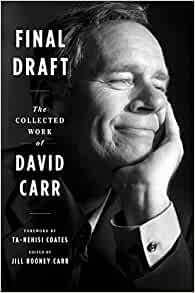
41N3Bj9x7IL._SX326_BO1,204,203,200_Also a delight are the words of the late David Carr, the New York Times media columnist who in 2015 dropped dead in the Times newsroom, a fact that might have tickled the celebrated super-journalist. “Final Draft,” a new collection of his writing from the past 25 years, reveals a passionate pro and consummate stylist at his best. We get reportage and ruminations on racism, personal addiction, media blowhards, personalities and the often checkered texture of journalism itself. Carr was a star. This book shows why. Unknown And now, the pig:
IMG_6001

Dog Splayed Afternoon

CubbyThis is Cubby, über-hound, chillaxing on the cool wood floor on a balmy late-spring day. Sprawled out in sharp symmetry, almost X-shaped, he looks like a doggie cookie-cutter, or the puppy piece in Monopoly, or a pendant dangling from the neck of a dog lover of strenuous devotion. In a word, he looks amazing. Like an artwork Jeff Koons could only dream of, or a taxidermist’s dampest fantasy. He would look stunning on a mantel, a small, regal canine, with a muzzle oh-so fluffily bearded.

Cubby knows none of this. If he had heard the above during his spread-out siesta, he’d be all, “Enough. Leave me alone. I am napping on the cool floor, dreaming of squirrels, fire hydrants, and fat kielbasas. You are a ridiculous man. Be gone … zzzzz.”

What we have here is a tableau titled, say, “Dog Day Afternoon.” Or “Dog Splayed Afternoon.” Some kind of post-modern still-life William Wegman could appreciate in all its unposed dogitude. (Although, of course, Wegman meticulously poses his long-suffering Weimaraners, what with their fancy clothes and anthropomorphic exertions.)

So what we have is less Wegman and more found art. Cubby, surely warm under that carpet of curls, located open range in the cool foyer, plopped down and stretched out from his head to his pom-pom tail. He exhaled and sighed: Goddam.

And this is how we found him, still as a statue, a statue of such accidental perfection it might be worth lots of money. Certainly, because his preternatural pose notwithstanding, Cubby, that cuddliest of canines, is worth a million bucks.

Buyers?

My freakish fixation

When am I not thinking about the Elephant Man? 

I’m not just talking about the shattering 1980 film by David Lynch (still one of my favorite movies — see my appreciation here). I also mean the actual, real-life Elephant Man, née Joseph Merrick, the hideously deformed young Brit who, with considerable luck and one doctor’s wayward compassion, went from the squalid, dehumanizing freak show circuit to become the toast of Victorian London before he died at age 28 in 1890.

Merrick has been on my mind since I was yay high. Call it odd, perverse or, well, freakish, but the creepy and offbeat have clutched me in their thrall since my youthful exposure to Universal Horror flicks, campfire myths like Bigfoot and the Moth Man, and the most enduring gift I received on my eighth birthday, the thick book “Very Special People: The Struggles, Loves, and Triumphs of Human Oddities” by Frederick Drimmer.  

Josephmerrick1889

In the book, among the likes of Jo Jo the Dog-Faced Boy; Grace McDaniels the Mule-Faced Woman; the original Siamese twins; and Julia Pastrana, aka the Ugliest Woman in the World, was Merrick, perhaps the saddest story of them all. (Although Pastrana’s story is heartrending, bizarrely grotesque, and worth a look here.)

A speedy summary: In an unorthodox gesture of charity, Dr. Frederick Treves took in the incurable Merrick, who suffered from severe neurofibromatosis, at the Royal London Hospital, furnishing the sick, lost and abused sideshow veteran a dazzling new life of comfort, friends, celebrity visitors, room and board and more. Though his appearance still terrified the faint of heart, Merrick was embraced by mainstream society until his premature death. IMG_0581.JPG

(Merrick’s skeleton resides at the old Royal London Hospital, and a few years ago I visited hoping to see the bones. I was rebuffed, but I had the pleasure of the hospital’s special museum dedicated to Merrick’s life.) 

I know a lot about “The Terrible Elephant Man,” as he was billed on the road, not only from “Very Special People” and Lynch’s ravishing biopic, but from a slim paperback I bought in seventh grade, “The True History of the Elephant Man,” about which I wrote and presented a book report to my befuddled English class. 

What gets me about Merrick is his life story, one so rippled with tragedy and depravity, it curdles the soul as it breaks the heart. Living in a sooty black-and-white London of clanking, steaming machinery that ushered in the Industrial Revolution, Merrick’s old-timey milieu also enthralls (see the Lynch movie for a rattling immersion in time and place), and seems of a piece with his destitute, Dickensian plight. 

And the disease: The exotically gruesome, inconceivably savage affliction renders man into monster, whose corrupted flesh cannot conceal the gentle soul locked inside the twisted, tumored carapace.  

My fascination has become rather fanboy. (Elephant Man cosplay — I will have to pass.) Besides books about Merrick — including “Making ‘The Elephant Man’” by one of the film’s producers, which I just bought — I own the American, Turkish and Japanese posters of Lynch’s movie, as well as a coffee mug embossed with a period photo of Merrick looking dapper in a three-piece suit. 

the-elephant-man-japanese-movie-poster

Around the time I got the making-of book, I ordered what I’ve wanted for a long time, a t-shirt of the “Elephant Man” movie. This one is a silkscreen of the film’s Japanese poster art, fusing my passion for all things Japanese with my strange Merrick mania. 

A tad zealous, perhaps. But consider that Michael Jackson famously tried to buy Merrick’s bones. He was flatly refused. I once thought that Jackson was overreaching, being the creepy eccentric he was.

Nowadays, not so much.

Remembering Eddie Haskell, TV’s ultimate wiseass

When I wrote for my college newspaper, I began covering hard news, though I longed to write features and entertainment stories. One of my first half-dozen articles was just that, a story about former “Leave It to Beaver” actor Ken Osmond doing a modest one-man show on campus. 

Osmond played oily, two-faced teen Eddie Haskell on the popular television show. The actor, who could never parlay his wily Haskell image into further acting gigs, died yesterday at age 76. 

I feel kind of bad sharing this, but the following is my very green, very irreverent review of Osmond’s appearance on my college campus so many years ago. The headline, which I didn’t write, reads: “Leave it to Eddie Haskell to empty the auditorium.” 

Watching Ken Osmond, Eddie Haskell of TV’s “Leave It to Beaver,” Wednesday was reminiscent of those news clips of a beaten Richard Nixon kicking around the beach in giant Bermuda shorts — a fall from grace into the ranks of pitiful anonymity.

Osmond’s lecture-presentation attracted no more than 25 people, the type that go ga-ga over cult personalities even after their coolness has long diminished. At one point, Osmond felt obliged to apologize for the thin turnout. The whole scene made me feel kind of sad inside. 

Just minutes before the Associated Students-sponsored show began, Osmond aimlessly paced around the vast, empty auditorium — hands in pockets, head down. I thought at any minute he might ask me for spare change.

Currently, Eddie, as everyone addressed Osmond, is a dead ringer for Jimmy Durante. Tan, wrinkled, and graying, Eddie donned faded 501s and, in a feeble attempt at nostalgia, a blue Mayfield High letter sweater. At about 5 feet 11 inches and 130 pounds, Osmond preserved his boyish, gee-whiz mannerisms that made him a cult commodity and even demonstrated some classic Eddie wisecracks to the group’s delight.

But that was about as good as it got.

In an obvious move to kill time, Eddie played a 20-minute video compilation of bloopers and behind-the-scenes clips from “The New Leave it to Beaver Show,” television’s windless attempt to breathe new life into the Beave’s popularity and the producer’s wallet. The series, which ran sporadically from 1984-89 on syndicated television, is on a humor level a notch below “Who’s the Boss?” The video reflected this pie-in-the-face brand of inanity.

The video showed Wally and a tubby Beaver — now adults — blowing their lines, then slapping each other on the back as they guffawed like madmen. Even June Cleaver got in on the laugh riot shenanigans as she goofed on camera then yelled, “Goddammit!”

The purpose of the clips were to show the audience that these characters whom we’ve grown up with are real people who can make real mistakes. Almost unbearably, Osmond even apologized for the video because of the audible laugh deficit during the presentation. There were more cringes than chuckles. 

“I’ve been doing Eddie for 34 years,” Osmond said. “I can just turn him off and on at will. It’s almost schizophrenic.”

And so he demonstrated for an audience member. “Why, that’s a lovely jacket you’re wearing,” he said in Eddie’s shifty manner. Then, “Get outta here, Sam!”

But it just wasn’t the same.

Eddie unabashedly described his career move to the LA police force in 1980. “I did it strictly for financial reasons,” he confessed. 

Eddie even admonished the crowd about the dangers of pursuing an acting career. “Don’t rely on it for a living. It’s the most unstable career you could ever imagine.”

This is particularly true for Osmond, since, as he said, he is irrevocably typecast as Eddie Haskell, precluding any more acting work. “I can’t complain,” he shrugged. “Eddie’s been very good to me.”

It got really depressing when Osmond discussed how some of the original members of the real Beaver show wound up. Whitey’s in Oregon, “into his art”; Hugh Beaumont, aka Ward Cleaver, is dead; Beaver’s beloved school teacher, Ms. Landers, was in a brutal car accident and later died of cancer. And the rest of the cast — stuck in perhaps a worse fate — are doing shoddy programs like “The New Leave it to Beaver Show.” 

18Osmond1-superJumbo
Ken Osmond, aka Eddie — RIP.

You must remember this 

I own a stockpile of childhood memories (a disproportionate number of them featuring poo) that I access often and for the most part fondly — distant, dreamlike time travel that reminds me I’m alive and have lived. 

Randomly: There’s the time my mom got sprayed and drenched by a blubbery walrus at SeaWorld when I was 8. My first real kiss with Stephanie when I was 12. My dad taking us to a live taping of “The Tonight Show with Johnny Carson” at 14. Playing drums in my first professional rock concert at 17. And when a kid peed all over my back while I was stationed at a urinal in the boy’s bathroom. I was 7, and wearing a brand-new shirt to boot. Yeah, I bawled. (The fact that I never made a voodoo doll of that kid is miraculous.) 

Those are youthful flickers. I’m skipping adult flashbacks — like when I was detained by Hezbollah in Beirut, or when I got acupuncture and almost puked — in favor of more faded scrapbook pages, not all of them fully innocent or delightful, but mostly far enough in the past that any sting has been blunted. (Strike that: a guy pissed all over me.) 

It’s smart to wax philosophical about these things. “Memories warm you up from the inside,” writes novelist Haruki Murakami. “But they also tear you apart.”

True that. I harbor some memories that are seared in my consciousness as if by a cattle brand, and I wince to this day. Still others are sublime and soaring, pleasures to revisit and revel in, visions that, as Murakami says, “warm you up from the inside.” Memories are agents of powerful, sometimes bulldozing, emotions. They hit you right here. They are not to be trifled with.

Summer memoriesMore remembrances, good, bad, ugly: At age 9, my best friend and I got our impish hands on some shotgun shells and threw them into a backyard fire in hopes they’d blow off (they didn’t). Selling lemonade from a curbside stand, my gal pal and I — we were about 7 — beseeched a passing teenage driver to buy a tasty beverage. He flipped us off. We were scandalized between giggles. My black Lab killed the neighbors’ cat. A few of us mischief-makers planned to dig a giant hole, cover it in leaves, and invite a neighbor kid over to fall into the pit. Digging the hole was so hard, I abandoned the plan within minutes. 

These are piquant memories, fragmentary yet oddly enduring. Evoking them — like seeing that dead horse in the road after it was hit by a car when I was 6 — is bittersweet.

I retain a catalog of episodic nostalgia, musty but living organisms that are easily accessible and flicker like short films across slabs of my brain: the hippocampus, neocortex and amygdala. Exhuming them is akin to fanning a Polaroid, waiting to see the image, with great and terrible affection.

Quit moaning. This is how it’s going to be.

Booked on a calculated whim, the trip to Paris set for mid-October looks more and more like a comic blunder, a fool’s pipe-dream, a rash impulse buy. (The flight was so cheap, I practically had to get it.) The whole idea shrivels before my eyes as the pandemic spreads with no end in sight. Covid cases explode, fatalities rise, economies crater and global cities are in enforced lockdown — a fall Paris sojourn is, I am certain, très peu probable.

So the trip is pretty much DOA, as I suspected in a previous post, and we’ll be homebound for more months than ever imagined and stir-craziness is its own pandemic and who cares? People are dying and I could be next and I’m moping about not getting to dine on Michelin-star cuisine and missing the Christo show at the Centre Pompidou and forgoing the serial heart attacks Parisian women unfailingly give me.

There is so much more to mope about, of course, and I am an Olympian moper. Give me a large pimple, computer glitches, long hold times, an exorbitant phone bill, cruddy customer service, a mean paper cut and you will see sulking in all its ravishing splendor. It’s like out of a Bergman film.  

Now is not the time to complain and temperamentally crumble, but it seems like our entrenched culture of complaint is in full grousing, shouting swing. Everybody’s bitching about something: quarantines, Trump, lack of this and that, government overreach, face masks, being barred from the nachos plate at Chili’s. It’s a big boo-hoo carnival. I refuse to partake.

How? By keeping my über-fluffy head on straight (no haircuts! Mope!), not sweating the small stuff (I’m working on it), doing my best to ignore the White House, and trying not to weep myself to sleep about the surely dashed Paris trip.

Whining about so much picayune stuff is a luxury these days. (Paris is itself a luxury, the very definition of an obscene luxury, so buck up, crybaby.) There’s sure to be much more about which to complain, cry and caterwaul, and few of us will go untouched. As the more trusted experts are saying, this is going to get exponentially worse. So snap on your face mask, hang tight, and shush.  

It’s time to recalibrate and sacrifice. To adjust expectations and know that we’re pretty screwed. In this bonkers new world, it’s time to realize we can’t always get what we want. And we won’t.

Paris? Ha.

Paris-Photography-A-List-of-the-Best-Paris-Photo-Spots-Map
Yeah. I don’t think so.

High school highs, and lows

High school was hell, but Eve Babitz makes me envious of those four ego-scarring years with her descriptions of life on campus at prestigious performing arts school Hollywood High, which is famed as much for its glitzy alumni as for its cameos in films like, uh, Jon Favreau’s “Made.” (Anyone?)

Babitz mentions her days/daze at Hollywood High School in “I Used to Be Charming,” a plump collection of essays and magazine articles by the cool, acerbic chronicler of LA’s kaleidoscopic contours which I happen to be reading. It’s the early 1960s and she “used to watch them, those guys in their maroon and white sweaters at Hollywood High, their handsome faces and their invincibility and the way they smiled and said Hi.”

Right, that sounds like many a teenage girl mooning over the jock block. But Hollywood High is different, a sort of Harvard of the arts, a Juilliard transplanted to the sunny, mountain-fringed SoCal coast. It’s where the likes of Judy Garland, Cher, Laurence Fishburne, Carol Burnett, Selena, Bruce Lee, Sarah Jessica Parker, Lana Turner, John Huston and a wad of other luminaries graduated from. 

For mere mortals, it makes you think: Well, crap.

My California high school was a miasma of mediocrity: Clorox-white, suburban, middle-class, filled with dullards and philistines and animated by cliquey teen clichés — jocks, stoners, nerds, punks, cheerleaders, et al. “The Breakfast Club” writ eye-rollingly real. 

This callow pimple-verse was of course dominated by the chest-thumping jocks, those entitled, vainglorious meatheads, who actually believed they were special and that anyone but them gave one goddam about a Friday night football game. In four years, I attended one pep rally. I’ve never been so mortified in my life.

I can’t imagine the boho Babitz — artist, writer, rock- and art-scene groupie — stooping to the synthetic glee of a pep rally. But who knows. She was a wild one, slurping up life’s rich cocktail, no matter how corny or queasy. Her eyes were wide open, and rimmed with an agreeable cynicism that gave her writing a feral pop.

51qpHkS8hyLThe trope goes that high school is misery for anyone who’s even partially cognizant. It’s political, hierarchical, mean, rife with crappy beer, unshackled lust and timorous gropes. It leaves burn marks.

Not so for Babitz. Beautiful and busty — “When I was fifteen years old, I bought and filled my first 36DD bra,” she writes — and talented to boot, Babitz cultivated hot style with her precocious female cronies, described as “preternatural high schoolers,” which groomed her for a young adulthood of exotic artsy adventures, including a famous dalliance with Jim Morrison. 

One observer writes:

“It’s very likely Eve Babitz’s high school experience bore little resemblance to her readers’, then or now. A graduate of Hollywood High, the LA-based writer and artist moved in a circle of young women who enjoyed the company of older men. They smoked with abandon, casually popped pills, made out with the boyfriends of famous actresses, and occasionally made it to class. Many of Babitz’s peers were achingly beautiful; more than a few became famous because of it.”

I had more fun in high school than I let on — a dash of Babitz’s decadence and a lot of standard teen tomfoolery, as well as the predictable sturm und drang (angst for the memories) and a streak of bleeding heartache. 

Despite my tight quartet of high school friends being creative, thoughtful and music-obsessed, we were no Algonquin Round Table, nothing as chic, daring and ambitious as Babitz’s band of pretty bright things. 

We felt we were treading water in a sea of douchebaggery, believing, as deluded teens will, that we had an edge on most of our classmates, that someday our low-key cool would be appreciated. We were most assuredly wrong. 

So, these many years later, I pine for richer high school days, ones more artistically rarefied and socially sophisticated; grittier, glammier, sexier and slambangier. Pathetic? So be it. If I’m viewing it all through a gauze of romanticism, turning the rearview mirror into a funhouse mirror, I blame Babitz, that bard of badassness, queen of cool and cynosure of sex appeal.

If only.