Doing the Charleston

History throbs and threads through Charleston, South Carolina, a city I haven’t visited for about 16 reasons, the biggest being I just haven’t made it down there yet. Part of that is because I feel I got my Deep South fix some years ago during a greatest-hits southern road trip with my brother in a brazenly purple Saturn sedan rental. It was a blast.

big_image_Dolly_Parton_-_Dollywood_Postcard04

Filled with barbecue, catfish and boiled peanuts, we shoehorned as much as we could into five days, pit-stopping in Nashville; Memphis; Sun Records; Graceland; Asheville, N.C., which is tucked in the Blue Ridge Mountains; Montgomery and Birmingham; the dewey-eyed Dollywood Theme Park in the Smoky Mountains of Tennessee; as well as Thomas Jefferson’s digs at Monticello in Virginia on our way back north to Brooklyn. For much of the journey we listened to the operatically twangy “A Country Boy Can Survive” by Hank Williams Jr., an aching ode to hillbilly pride suddenly apt for these puke-making MAGA days, which dominated the local airwaves. (Listen HERE. It’s impossibly catchy.)  

A native Californian who survived more than a decade in Texas, I’m now an inveterate Yankee. As much as that maiden journey was an eye-opening kick, the South doesn’t come naturally to me. On a later road trip I circumnavigated coastal Florida, from St. Augustine to Miami and the Keys, St. Petersburg to Panama City. (We cut through Alabama and landed in New Orleans, La.) I found Florida gauche, grubby and at times noxiously racist. You couldn’t bribe me back.
Rainbow-Row-charleston-sc-historic-district_.jpg
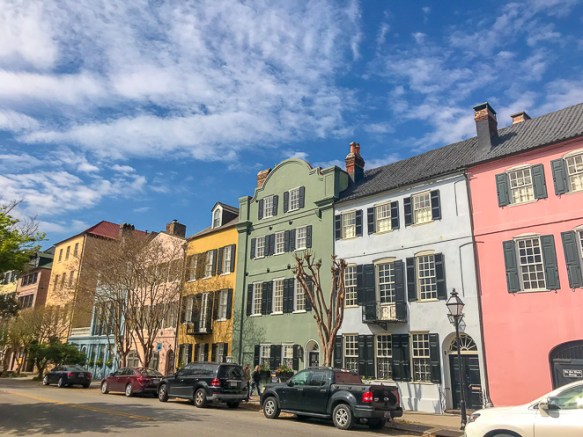
Enter Charleston, S.C., above, a stately midsize city swathed in Civil War lore and, just as intriguing, boasting gourmet gold. I leave in two weeks for a fast three-day trip. Here’s Lonely Planet on the burg’s historical heft:  

“Cannons, cemeteries and carriage rides conjure an earlier era in this lovely city. Signers of the Declaration of Independence puffed cigars and whispered of revolution in historic homes, and the first shots of the Civil War rang out over Fort Sumter. The city was built on slave labor, and several sights are among the nation’s most important educators on the long-standing oppression of African Americans.”

This is a small jaunt — a two-hour flight (free, thanks to airline credits) and a reasonable if flavorless midrange hotel in the Historic District. I’m taking a walking tour of the cobblestone-paved historic hood, including the French Quarter, but I’m not overly excited about the glut of antebellum mansions — silk sofas don’t thrill me — sprawling parks or even fabled Fort Sumter, surefire soporifics I’d rather read about than actually visit.

In my sights is the Old Slave Mart Museum, which “recounts the story of Charleston’s role in the interstate slave trade by focusing on the history of this particular building and site and the slave sales that occurred here.” And I’ll meander through and photograph the history-rich spreads of St. Philip’s Graveyard and Magnolia Cemetery, morbid musts.

15CHARLESTON1-jumbo.jpg

Called the Holy City for contested and not necessarily pious reasons, Charleston keeps accruing accolades as the “friendliest city” and “best city to visit” and other breathless superlatives glossy magazines can’t help bestowing on every cool town (hello, Austin). 

Part of its cachet derives from its evolution as a culinary epicenter, with drooled-over fine dining spots like Fig and McCrady’s, which offers a rarefied tasting-menu experience — “inventive cuisine fresh from the farm” — with only 22 seats.

sean-brock-lede-3x2
Supreme southern chef Sean Brock

The McCrady’s kitchen is run by award-winning chef Sean Brock, who’s been extensively profiled on “Chef’s Table” and “The Mind of a Chef” on Netflix. Brock also co-owns the more casual Southern food destination Husk, where the crispy fried chicken skins are legend (and not always on the menu, drat). Brock and his famed dishes are a big reason I’m going to Charleston. Oysters are also a pull, with Leon’s Oyster Shop and its exalted shellfish and scalloped potatoes firm on my gastronomic itinerary. 

Call it my foodie expedition, brevity be damned. It’s also my overdue return to the South, a region rather alien to me, a cluster of unvarnished Americana, verdant beauty, rampant Republicanism and Confederate fervor that, if nothing else, will impart salutary exposure to the unusual, surprising and startling — a whole new world, exactly why I pack up and go.
A book with bite

A girlfriend once said I have dog teeth. For real. She didn’t mean I literally have a mouthful of, say, Doberman teeth. She meant that my teeth reminded her of a dog’s. (My canines are on the long side.) Either way, it was a comment that falls under the heading “shitty.” I should have bit her. But I’m over it. In fact, I think it’s riotous, edging on genius.

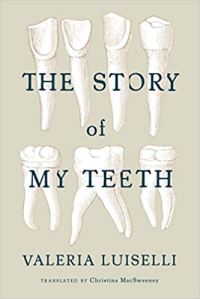
Anyway, I just picked up the novel “The Story of My Teeth” by Mexican author Valeria Luiselli, whose current book “Lost Children Archive” is a literary smash, a timely drama about family and the immigration crisis on our southwestern border. I’ve read a chunk of it. It’s very good. Pick it up. 

“The Story of My Teeth” is also a hailed exemplar of storytelling, making a zillion top 10 lists in 2015 and shortlisted for juicy awards. Yes, it’s about teeth. About the teeth of folks like Plato, Virginia Woolf, Petrarch and Borges that are collected by eccentric auctioneer Gustavo (Highway) Sánchez Sánchez, the story’s kooky narrator.

41Ohej2i9JL._SX331_BO1,204,203,200_

And it’s a lot about his teeth and his desperate goal to get his calamitously crooked choppers fixed. In this funny, fanciful book observations about people’s teeth abound. 

There is for example: the man with “the slightly sinister smile of those who have paid many visits to the dentist”; Octavia Augustus’ “small, few and decayed” teeth; and the remark “Americans may have no identity, but they do have wonderful teeth.”

Teeth, teeth, teeth. And this is in just the first two dozen pages. By page 26 our homely hero Highway has hit dental pay dirt. 

Like how? Like this:

At auction he buys Marilyn Monroe’s teeth. “Yes indeed, the teeth of the Hollywood diva. They were perhaps slightly yellowed, I believe because divas tend to smoke,” he explains. 

Back home in Mexico, “Each of the teeth belonging to the Venus of the big screen was transplanted into my mouth by a world-class dental surgeon.”

How over the moon he is! Highway tips his hat to himself in mirrors and shop windows, awash in good fortune, elated, Monroe’s dental work now his. At long last, his rows of teeth, once tornado-whipped picket fences, are even and upright, straight and sturdy.

“My luck was without equal, my life was a poem, and I was certain that one day, someone was going to write the beautiful tale of my dental autobiography.”

And this is where I’m at in Luiselli’s toothsome feat of imagination. It’s the end of Book I — there are seven books, littered with photos and floating quotes and graphics, plus an afterward by the translator — in a slim 195 pages. I don’t know if Highway keeps Monroe’s teeth throughout the story, but I’ve read enough to enjoy a cameo by John Lennon’s molar, which fetches $32,000 at auction, rather on the low side, I thought.

But where we last left off, Highway was musing about “the beautiful tale of my dental autobiography.” Which is where I began this post — my dental autobiography, the story of my teeth. (Recall: mutt mouth.) The book aside, let’s pursue that thread. Hang tight.

Dental histories aren’t pretty. They are violent, invasive, queasy, medieval. Anxiety and discomfort are operative words, shrieking like exposed nerves. Drills, needles, pliers. Teeth are the worst.

When I was 14, the dentist noticed my gums were receding. He wanted to prop some of them up. His solution: slice chunks of skin from the roof of my mouth and use the flesh to support the falling gums. This happened. I was knocked out, but I briefly came to mid-operation and saw the surgeon’s smock and gloves smeared in blood.

I was luckier when my wisdom teeth were pulled. The dentist put me out so deeply that I woke up in a wheelchair. My mouth was swollen and filled with blood, but I was giddy.

I had braces. I have too many fillings to count and three crowns (a grisly business requiring a jackhammer). I’ve rode merry clouds of nitrous oxide and been jabbed by needles the length and girth of bratwursts.

That is the partial story of my teeth. I have crooked teeth, stained teeth, chipped teeth. I’m making my mouth sound like a massacre. It’s not. Maybe I do have dog teeth. Maybe I have teeth like Marilyn Monroe’s. Maybe I can sell them at auction. After all, some of my molars are encrusted in gold. But time is of the essence, before I get too long in the tooth.

Ha.

74963e22c75560c8ca86a4f1a6f74046

View of the day, wistfully

IMG_1286.jpgMy laptop, a tall drink and a fairy tale vista — about all I need in my travels.

This was the perch on the rooftop terrace of my Istanbul hotel in November. I went up there a lot for the trusty Wi-Fi; cool fall breezes; Efes Pilsener, the cheap local brew that hits the spot despite its unflagging mediocrity; and, of course, the pristine views of the fabled Blue Mosque and yawning Bosphorus strait. 

At night the mosque lights up like a jeweled crown. The water shimmers. I sip my drink and tip-tap on the keyboard, writing nothing of consequence, most of it rot. Istanbul is paradisiacal, keenly removed from normal life, so transporting you sigh with an operatic flutter. It’s Paris of the East, a storybook nirvana.

I miss the mosques, the street food (döner kebabs, simits, etc.), unduly charming people, sweet stray dogs and cats, and ancient rococo scenery. It is where I want to be, right now.

IMG_1196.jpg
Blue Mosque, November 2018

Dog-doo afternoon

Warning: This post discusses poop. Specifically dog poop.

The dog’s poop is marbled with blood. (I told you.) He relieved himself on the basement’s honey-hued carpet, which now bears permanent crimson splotches, some of them in the shape of small nations and rural flyover states. It’s a fecal atlas. 

Flippancy aside, recall: poo, blood, dog. This is eyebrow-raising on one hand, panic-time on the other. Bloody dookie is nothing to snicker, or snarl, at. It’s a call-the-vet-pronto affair, especially when said doggie, Cubby, is also behaving strangely and doing this regurgitation thing in which he chews and swallows whatever he’s just hacked up. It’s coming from both ends. It’s abnormal. We fear for the furball.

IMG_0832.jpg
Cubby in healthier days.

Should I worry if my dog’s stool has blood or mucus? That’s an actual question posted at Pet Health Network, a, well, pet health network that will either assuage your nerves or trigger the trots. 

If you, like me, are a hypochondriac, then you shouldn’t even be visiting sites like this or the human version, WebMD, where I often go to learn that my tennis elbow is likely an inoperable tumor and my heartburn is assuredly a minor stroke.

(Doctors hate sites like WebMD for spawning a nation of needlessly freaked out patients. I used to carry a sheaf of so-called diagnoses that I printed from the internet when I visited my doctor. He wanted to strangle me.)

The answer to the “my dog’s stool” query has several answers, making for something of a rollercoaster ride. Causes might be: an upset stomach from eating bad food (whew); inflammation of the colon (also, probably, whew); internal parasites (some antibiotics and we’re good, right?); cancer (Jesus!); allergies (we can deal); autoimmune disorders (egads). 

Cubby the über-hound is at the vet as I type. (No matter the diagnosis, I won’t let him read this.) The sun is dipping, kicking up skies of charcoal and embers. It’s 35-degrees out, just right, and somebody has to clean up the basement carpet. If Cubby’s OK, he can do it. 

And now a text arrives from Cubby’s mom at the vet: The doc can’t tell what the problem is but the bill, counting all manner of exams, including a stomach X-ray, is a soul-shriveling $901. Almost a thousand dollars in less than an hour. I’m gobsmacked until I remember how I once spent roughly $500 on an ailing pet rat. Animals will do that — break your heart while breaking the bank.

So it appears to be wait and see for schlubby Cubby, despite the red-streaked poop, which is actually the least of the vet’s concerns. The dog has a fever of 103, says the vet, who gave Cubs an antibiotic, anti-nausea meds and fluids for dehydration. The tummy X-ray was sent to a specialist, even though the vet saw nothing unusual in it like, say, a toothbrush or an iPhone.

This non-vet will tell you the animal has been unusually lethargic, and has picked up some odd habits over the days (he’s suddenly fond of karaoke and mojitos) and has dramatically altered his cravings (he wants nachos and Popeye’s). He isn’t chewing his beloved bully stick, which is, literally, a dried bull penis. He canceled his subscription to People and has gone to watching the dreadful third season of “True Detective.”

He’s one sick pup.

Going down darkly with Denis Johnson

Denis Johnson — novelist, poet, playwright — wrote mad sentences. The author of the swooning novella “Train Dreams,” harrowing Vietnam War epic “Tree of Smoke” and, most famously, the indelible stories in “Jesus’ Son,” left behind a pageant of ravishing prose, much of it festooning the darkly lyrical stories in “The Largesse of the Sea Maiden,” released last year after his death in 2017 at age 67.

I was reminded of his genius when I saw that this last book is a finalist for the National Book Critics Circle Award, whose winner will be announced next month.

I ran across a couple of brief, bleakly reverberating quotes from “Sea Maiden” that I’d scribbled in my journal. If Johnson could be grim, his poetics were reliably heartrending.

I’m getting depressed … you forgot to say prepare to fall down through a trap door in the bottom of your soul.”

Yeah boy he dragged me down to his jamboree. Dragged me down through the toilet formerly known as my life. Down through this nest of talking spiders known as my head. Down through the bottom of my grave with my name spelled wrong on the stone.”

largess.jpg

Snow job

image.png

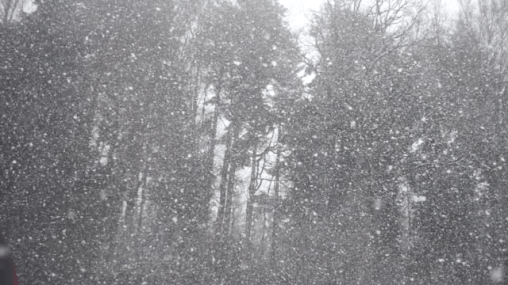
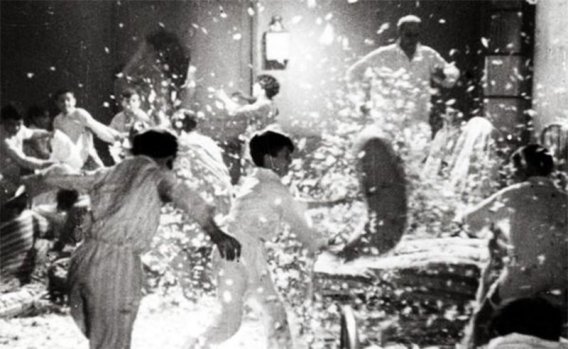
It looked like a pillow fight in a movie: downy feathers of snow twisting and drifting through the air, with little space between the fluttering flakes. A midday flurry making landfall in heaps and mounds. 

Yet it wasn’t too voluminous, this late-winter coating, and instead of pillowy tufts, the following day offers equal parts splash and crunch. Anything beautiful about the snow has thawed into a slurry swamp. Walking the dog, we slalomed around slush and brown puddles resembling polluted ponds. My sneakers got wet. 

Slush, rivers of slush.

I love winter. I like the cold. But I can do without snow, which wasn’t true during my salad days of skiing down vertiginous slopes, laughing all the way. Nowadays I’m too reserved to even toboggan, and I am not squatting in one of those saucer sleds for the certainty that I will break my collar bone in a spectacular face plant. 

Snow now means shoveling, one of the lowest forms of drudgery, right there with prisoners smashing quarry rocks in old-timey pictures like “I Am a Fugitive from a Chain Gang.” No matter how frigid it is, I sweat piggishly when shoveling snow. I hate sweating. I hate heat. Did I mention I like winter?

But the season will soon cruelly vanish and shorts, a sartorial scandal, will be all the rage. It’s probable more snow will fall before that; March often gets dumped on without mercy. If there was a hill around here, I’d rent some skis. (And probably snap a femur.) 

So this is a premature farewell to the fair season, when we abide icy irritants for the relievedly short days, chilly breezes, hot toddies, fashionable outerwear (is anything hipper than a natty scarf?) and indiscriminate cuddling. (About outerwear: I never don gloves or hats in winter. My mammalian blood takes care of the extremities, ears too.)

When another snow day comes this season, I will gripe and groan. But I will also be grateful that it’s still winter. That I can wear a parka with impunity. That I don’t have to attend barbecues and eat outdoors. That bugs and sunshine won’t assail me. And that I can, joyfully, unabashedly, freeze my ass off.

zero-for-conduct_f

A few things revving me up

I’m having a tricky time getting jazzed about too much lately — only Socrates rivals my sage discernment and penetrating taste — yet I am alive, blood sluices through my veins. Some things I’m digging:

dia-beacon
Richard Serra sculptures at Dia: Beacon, New York

Caustically hilarious British TV series “Fleabag”; Sigrid Nunez’s quietly affecting novel “The Friend”; the reliably stirring Dia: Beacon museum, so serenely cluttered with minimalist and sculptural masterworks; poetic Polish romance (and Oscar nominee) “Cold War”; and Weezer’s “Teal Album,” featuring frighteningly faithful covers of Toto’s “Africa” to Black Sabbath’s “Paranoid” and Michael Jackson’s “Beat It.” It’s a gas.

Mostly this entry is a sequel to my December year-end inventory of now-time enthusiasms, stuff getting my juices flowing. These are the current tops:

  • Jade Bird

Strumming an acoustic guitar, her long hair swinging, she sings in a hushed girlish voice before belting like a banshee, loosing a squall of blazing catharsis. She has pipes that purr, then roar, then come back. You sway to twangy folk, then rock with giddy fury. 

Intimate and Velcro-sticky, Bird’s music, performed acoustically or with a small band, circles Americana, punk and soulful indie pop. Country fans are drawn by her evocations of rocky, star-crossed relationships, and there’s country crunch in those folk-rock vocals. Her galloping cover of Johnny Cash’s “I’ve Been Everywhere” is a jam-session joy.

hbz-jade-bird-index-1535023013.png

In this 21-year-old Brit, the Dixie Chicks are at their fiercest, alongside a banging Liz Phair, Courtney Barnett, PJ Harvey and other steely indie royalty. Bird’s lyrics pop and sear. In the unreasonably rousing “I Get No Joy,” Bird sings with such speedy agility, she’s almost rapping:

“Psychotic, hypnotic, erotic, which box is your thing?/How many days a week, do you feel/Electric, connected, unexpectedly/Affected, what do you need?”

It’s a kind of sublime whiplash.

(Watch her HERE.)


  • “Capernaum”

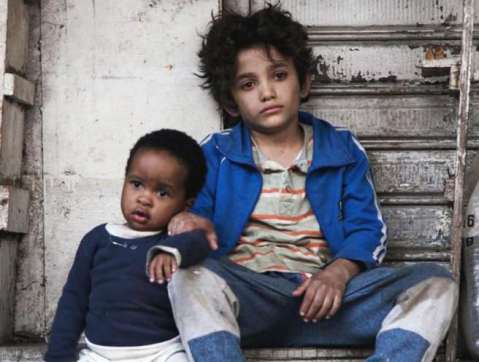
His hair is a fluffy fiasco, a brown brushfire, his splotched face the seasoned mug of a gang member. He’s filthy and swears like a sailor. He’s homeless. He’s 12. 

In Nadine Labaki’s Beirut-set stunner, a nominee for the best foreign language Oscar, the boy, Zain, is a resourceful renegade in the scrappy mold of Huck Finn and Antoine Doinel in “The 400 Blows.” Fed up with his struggling parents and their feckless care of their many children, Zain takes them to court, accusing them of the crime of giving him life. It’s a preposterous idea, a satirical glance at the Lebanese judicial system.

181210-winkelman-capernaum-review-tease_exy4at.jpeg

Zain (the extraordinary Zain al Rafeea) fast becomes a tough street urchin who finds a gig babysitting the gurgling infant of an illegal Ethiopian refugee, played by Yordanos Shiferaw. (The film’s devastating cast of non-professionals play versions of themselves.) When the young mother is arrested, Zain is stuck taking care of the baby on his own. In this harrowing situation — the movie is a tart indictment of Beirut’s corrupt state of child welfare — the fathomless despair can be unbearable to watch.

“Capernaum” — the title means “chaos” — owes much to the children-centric neorealism of ‘80s and ‘90s Iranian cinema, from “The White Balloon” to “The Color of Paradise” — heart-renders told in raw, wrenching lyricism that aren’t without political undercurrents. It’s a street tale alive with miscreants and thieves and few kind gestures. It’s so gritty and grubby the camera lens almost seems smudged. Redemption, however, is in the air.

(Trailer HERE.)


  •  “Asymmetry”

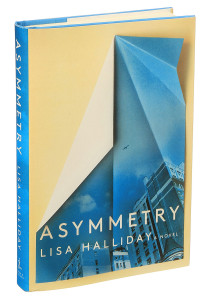
Beautifully written, radiantly spun and shot through with smashing intelligence, Lisa Halliday’s first novel “Asymmetry” bristles with humanity as it mingles conventional and unorthodox structures. It’s a literary feat kneading the fictional form like Play-Doh.

I’m only a third of the way through its brisk 271 pages, but I’m sold. (Being part-way in a book you’re relishing is where you want to be; there’s more on the way to savor.)

07bookhalliday2-superjumbo.jpg

The novel is chopped into three sections. I finished the first section, “Folly,” which traces the May-December romance between Alice, a 25-year-old aspiring writer, and Ezra Blazer, a famous author 40 years her senior. (If he rather resembles Philip Roth, it’s not chance: Halliday had a relationship with Roth while in her twenties.)

And so we get an old-fashioned affair of unpushy comedy and sweet asides set amidst Upper West Side means, with tender banter and the not uncomplicated theme of apprenticeship, much like a Woody Allen movie, without the deep-dish neuroses.

Alice has career issues, Ezra has health issues, and brewing in the background is the launch of the Iraq War. (The war plays a prominent role in the next section, “Madness.”) In this, one of The New York Times’ 10 best books of 2018 (and a favorite of Barack Obama), Halliday doesn’t flinch from the vagaries of love, including the sort, like Woody’s, peppered with literary chatter and throbbing with aching uncertainty.

The dialogue is unfailingly smart, wry, just right. Alice and Ezra conduct short, gem-cut conversations that bring a knowing grin:

“Is this relationship a little bit heartbreaking?” he said.

The glare off the harbor hurt her eyes. “I don’t think so. Maybe around the edges.”


  • “United Skates” 

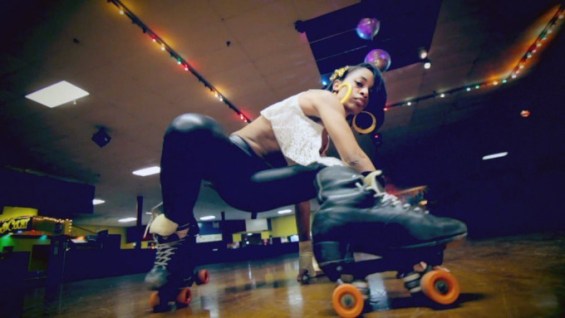
In urban roller rinks across the country thousands of African-American roller-skaters are lacing up and getting down. Beneath rays of twirling disco balls an underground roller renaissance thrives among a force of skate buffs who throw after-dark rink parties and commit kinetic art on waxed wood floors: backflips and break-dances, tag-team acrobatics, backwards trains and other daredevilry. Many revelers simply trace ovoid loops in a kind of roller-boogie bliss.

With new and archival footage, much of it contagiously groovy, “United Skates” directors Dyana Winkler and Tina Brown chronicle the hip-hop-fueled scene with at once bracing and brooding electricity. They hopscotch the nation — Los Angeles to Baltimore — and capture the community-building soul of skating as well as the heartrending gentrification that’s swiftly shutting down classic rinks, dinosaurs of the ‘70s and ‘80s. Few will survive.

merlin_147232281_f4784760-d08e-4e67-b827-dda2964987c2-jumbo.jpg

Next to dwindling skate spaces, the film locates other troubles: the apparent profiling of black skaters at certain rinks that ban rap and the skinny wheels many black skaters prefer. When skaters organize “adult nights” — “Code for ‘black night,’” says one — police fill the parking lots and security is thick. No such hysterics are apparent on a typical “white” night. It’s a familiar microcosm of current race relations.

Yet the party rolls on. The subculture retains a die-hard exuberance not easily snuffed. The film’s final scenes are far from elegiac; against all odds they are tonically celebratory.

(Starting Feb. 18 on HBOTrailer HERE.)

When the pup popped pills

We OD’d the dog. 

Cubby the magic mutt was supposed to get one sedative pill before his visit to the vet yesterday. He’s a nervous guy, especially around the ominous sterility of the doctor’s office and creepy paper-sheathed exam table. So he pops a chill pill. (We should all be so lucky.) 

An hour before his appointment, I dipped a tablet in peanut butter, tricking him into swallowing the large pill. It’s an anti-anxiety med made for, get this, humans over age 25. It’s called Trazodone and it’s prescribed for any “stressful event.” I am seriously considering stealing a couple. 

Then this: Minutes later, my sister-in-law, unaware her dog was already medicated, gave him another Trazodone. Within a half hour, it was clear: Cubby was cooked. 

A smallish dog covered in gray curls, Cubby suddenly looked heartbreakingly lost, a Who-what-where am I? expression on his Ewok face. Dazed and confused, he started lurching and stumbling in slow-motion, like a wagon with a wobbly wheel, or Dean Martin.

His eyes little pinwheels, he looked like Joe Cocker on his first acid trip. He furrowed his brows and those eyes filled with vacant perplexity. 

He tottered up the stairs and onto the low bed, where he looked around wondering what was going on. His wet-noodle limbs did him no favors. He was a fuzzy stumblebum. He followed me into the bathroom and tried to leap atop the closed toilet but slipped and fell on his butt onto the floor, where he remained, shrugging, Whateva.

It was an unnerving spectacle. I felt at once bad for and envious of the doped dog. This was some drug. Trazodone is also an anti-depressant and off-label is used as “a hypnotic to initiate sleep.” (Seriously. I’m taking some. Shhh.)

And why did Cubby need this mega-med? He was going to the vet to get his nails clipped (really?) and to have his anal glands expressed,” or emptied (really!). You know it’s time for that undignified procedure when your animal starts scooting across the floor, sphincter in the carpet, sliding like he’s on wheels.

Cubby survived the vet visit. Of course, he was baked, so maybe he even enjoyed it. The doctor said it would take 12 hours for the pills to wear off and for his expression to stop resembling Cheech and Chong’s.

dolly.470pxwidthmaximum.gif
Not actually Cubby, but this is exactly how he wound up that night.

By night, the dog wore a look of blissed bewilderment. He passed out. There he was, zonked on his back, legs sticking straight in the air like an overturned table. Gone. 

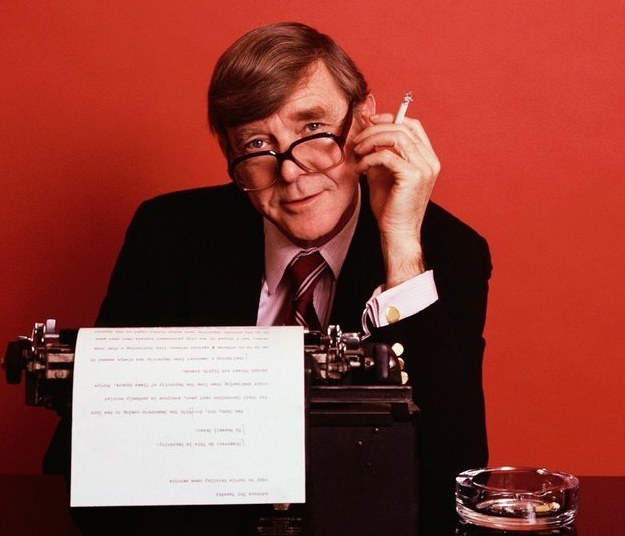
‘When writing is fun, it’s not very good.’

I’ve always found that when writing is fun, it’s not very good. If you haven’t sweated over it, it’s probably not worth it. So it’s always been work. But it’s the kind of work you enjoy having done. The doing of it is hard work. People don’t usually realize what it takes out of you. They just see you sitting there, staring at the wall, and they don’t know that you’re looking for the perfect word to describe a shade of light.”

— Russell Baker, journalist and two-time Pulitzer winner, who died in January

winfrey-russell-baker-1.jpg


There is nothing to writing. All you do is sit down at a typewriter and bleed.” — Ernest Hemingway 

635875962654001518-nasbrd-04-12-2015-tennessean-1-e008-2015-04-09-img-nas-classicalfunfact-1-1-cvaet45t-l592668167-img-nas-classicalfunfact-1-1-cvaet45t.jpg

Super Bowl? Super bored

It’s weird that I even know who’s playing in the Super Bowl this Sunday. Usually I’m hard-pressed to name the teams because frankly and emphatically I really, truly, rabidly don’t care. But, sure, Sunday’s face-off between the Cowboys and Dolphins should be something super neat-o. 

Yeah, I’m a riot — Rams vs. the Patriots, there we have it. And how that means absolutely nothing to me. Zip. It’s a gaping vacuum in my personal cosmos, a shrieking black hole of wild indifference. I won’t eat wings on Super Bowl Sunday. I won’t watch the inane commercials. Half-time band Maroon 5 makes me alternately apoplectic and very sad.  

i-dont-hate-your-team-i-hate-all-sports-4d65e.png

My antipathy to sports is long and legion. They never spoke to me — or is that grunted to me. I think of atavistic grunting when I think of sports, chiefly team sports, for which I reserve the most distaste.

Grunting, yelling and grab-ass — the team sports post-play repertoire. Players, those self-adulating egoists, shoot arms in Nixonian salutes, teeth bared. They thump their chests and leap onto the nearest teammate, bonking helmeted heads together. This is raw joy. Twisted, but still something recognizable as euphoria.

It’s a glee I do not share. I don’t care about that game-winning grand slam, swan-diving touchdown, three-point swoosh. Still, I am not wholly unmoved by athletic grace and skill. I know it when I see it, and I am often impressed. 

For instance, I recognize the poetry in a goal by Cristiano Ronaldo, a breathtaking feat of mathematical precision and almost tearjerking eloquence. I get it. I gasp.   

While athletics aren’t in my DNA, I enjoy the Olympics and I thrill watching individual competitors — track stars, skiers, surfers, gymnasts, cyclists — going for it, fueled by sheer will, determination and transcendent talent. 

6255307966_508f7e98d1_b

Though never a jock — I was more into rock — I played soccer for years, if pretty reluctantly. I kicked that habit for BMX and snow skiing — individual athletic expressions of reckless speed and airborne glory. Granted, I wasn’t terrific at either sport, but I had a blast. 

I’ve quoted author Roxane Gay before on this subject, and do so again: “As a child, I was uninterested in becoming athletic. I was not a team player. I was a dreamer, something of an oddball loner. I wanted to spend all my time with books.”

That was me. 

Bizarrely but not surprisingly, some sports fans can’t resist equating coming out as a non-fan to coming out out. “Gay” someone wrote on an online message board in response to a man who admitted he didn’t like sports. 

“Are you sure you’re a guy? When was the last time you checked?” wrote another genius. (Tony Hollowell’s book “I Have a Penis and I Hate Sports” is a rejoinder to such nincompoopery.)

This is what we’re dealing with. Homophobic taunts and pea-brained putdowns. Guys must love sports or they’re not entirely manly. Their virility is at stake. The jerry-rigged logic of that racks one’s head like blunt trauma.

Which brings me to what I really abhor about sports, besides the crushing tedium of the actual games: the fans and the culture. Yelling, all that yelling. The militaristic crowds that smack of the obscenely coarse rallies of a particular world leader. The mob mentality and animalistic tribalism that fosters brute behavior, not excluding the rare deadly riot. 

UGH.jpg

And the yelling. The endless yelling.

A level-headed sports fanatic wrote online why he thinks some people hate sports: “Sports tend to create a very superficial culture. Athletes are popular for primarily their athletic abilities, not necessarily for their philanthropy, intelligence, personality, or any number of gauges we tend to look for in friends or other role models.”

That’s pretty perspicacious coming from a fan, and I agree with almost all of it. 

Not being a fan is like being excluded from a humungously happening party, and it’s not always the most comfortable spot to be in. It’s akin to not liking “Titanic” or “Avatar” (I find both movies laughably bad) — you become the party-pooper, the hater, the other.

But that’s OK. As long as I don’t have to watch those movies again — or sit through Sunday’s interminable football game, that gigantic neon advertisement for numbskull primitivism and frenzied jingoism — I’ll be fine.