Random reflections, part V

A freestyle digest of stuff — anecdotes, lists, thoughts, opinions … 

paul-rudd-headed-to-netflix.jpgIn 2007 I interviewed actor Paul Rudd at the South by Southwest Film Festival in Austin, Texas. He was charming, funny and absurdly laidback. As he answered one of my questions he blurted out a lengthy, earth-rattling burp. “Whoa,” I laughed, “what flavor was that?” Rudd replied: “You know what’s weird? It wasn’t a flavor so much as an actual scent, like a potpourri, a mixture of peppermint and brisket. I went to (barbecue joint) The Salt Lick last night, and I ate brisket. I’ll tell you something: It was very different than my Nana’s brisket.”

51Joc3GzvtL._SX331_BO1,204,203,200_Ben Lerner’s “10:04” is a breed of intellectual masterpiece, a novel I’ve praised here before. His 2011 debut “Leaving the Atocha Station” is also remarkable, the work of a poetic brainiac with torrents to say, crackling with life observations. His new novel, “The Topeka School,” is his most acclaimed yet — and I’m not sure why. I read fully half of it, and while the writing is pristine, the thinking impressive, I got lost in the choppy, distracting narrative thread. Unmoored, I put it down, migraine emerging. Yet I’m not through with the scandalously young Lerner. I’m taking “10:04” on my 14-hour flights to and from Japan — my third communion with that radiant auto-fiction.

My list of favorite cities has shifted just-so over time, and will likely keep doing so. For now: 1. Paris (eternally tops);  2. Istanbul;  3. Tokyo (this may change after my upcoming visit); 4. New York;  5. London;  6San Francisco;  7. Sevilla;  8Amsterdam.

paris-shutterstock-1400x500.jpg
Numero Uno

The New York Review of Books is hallowed home to academic think pieces about all things, from politics to poetry, by some of our most prodigious and stylish writers: Zadie Smith, Adam Kirsch, Marilynne Robinson, Jonathan Lethem, Rachel Cusk. Why then do I find the essays gassy, tedious, enervating, as long and dry as the Sahara? Never, not once, have I read more than a third of one. (It’s me, I know.) 246x0w.jpgRightful cult classics, “John Wick” and “John Wick: Chapter 2,” starring a lank-haired, bullet-proof Keanu Reeves, are action-flick orgies, chop-socky pistol poetry of a kind unseen since the heyday of John Woo’s “The Killer” and “Hard-Boiled.” I could barely wait for this summer’s “John Wick: Chapter 3 – Parabellum.” And then, ugh. Grindingly repetitive (though that urban horse chase is nifty), drawn out and mired in its own smug formula — with a wider narrative scope that attenuates rather than expands the affair — this one is all diminishing returns. The film runs 131 minutes. I quit it, bored, fatigued, with 40 minutes left to go. This Wick is no longer lit.

kianu-rivz-keanu-reeves-john-wick-john-wick-chapter-3-parabe.jpg

It’s still hard to reckon, a year after his death, that American novelist Philip Roth never won the Nobel Prize in Literature. Like most awards, it’s a scam, a sham. Roth was one of the greatest, dwarfing most writers who have indeed won the prize. That he received only a single Pulitzer — for 1997’s astonishing “American Pastoral” — is itself a gross dishonor. Every once in a while this pops into my head and I get all rankled. philip-roth-e1545164284312.jpg

Gusty and blustery, a wind storm howls, churning treetops like crumpled paper, flinging acorns that pelt cars and roofs, dropping like small rocks, falling leaves twirling, the house creaking, windows rattling and Cubby the dog, shaking, leaps into my lap, where he curls into a donut, glancing up with fraught brown eyes that say, simply: “Papa.”               This lasts all day. img_0832.jpg

When I wrote about film in Austin, a particular local celebrity didn’t like me. That’s because I didn’t write super stuff about her — one Sandra Bullock. I thought she was a cutesy hack, all dimples and snorts, with dismal taste in roles. Knowing she told a colleague that she wanted my “head on a stick,” I won’t deny a small surge of pride.

rs_1024x759-160707175713-1024.Sandra-Bullock-Miss-Congeniality.tt.070716.jpg
“Ms. Congeniality” —   enough said.

Quirky kiddie queries about death, dying and other fun stuff

As people grow up, they internalize this idea that wondering about death is ‘morbid’ or ‘weird.’ They grow scared, and criticize other people’s interest in the topic to keep from having to confront death themselves. … Most people in our culture are death illiterate, which makes them more afraid.”  —  Caitlin Doughty

primary_2_2.jpg

Children, meanwhile, fueled by unfettered curiosity and innate innocence, don’t always harbor silly adult fears of death. They’re allowed to, expected to, wonder about death and dying. It’s a learning process;  it’s not “morbid” or “weird.” It’s eye-opening, mind-inflating. Asking questions about it is a step closer to not being “death illiterate.”

The quote topping this post is from Caitlin Doughty’s new book, the funny and informative “Will My Cat Eat My Eyeballs?,” whose subtitle is “Big Questions From Tiny Mortals About Death.” That means both wiggy and weighty queries from children about death, inquiries she routinely receives as a death-chick rock star: mortician, author, podcaster, “death activist” and “funeral industry rabble-rouser.” In the book Doughty answers 34 kid-friendly (well, kinda) questions about death and dying, and a bit beyond.

A total pro, her attitude is cheeky, frisky and upbeat, often with a wink. It’s hardly just kid’s stuff. She applies sweeping research and her own mortician’s know-how, a braid of science, craft, technology and, unavoidably, morbidity. It gets gleefully icky at times.

Doughty goes into gripping, grisly detail about livor mortis (“bluish color of death”), rigor mortis (“stiffness of death”), putrefaction, embalming, burial, cremation ovens, blood draining, organ donation, and, #1 on the hit parade, postmortem gas. 

And she does it with oozy, crunchy, gelatinous eloquence:

413b7oOI9KL._SX329_BO1,204,203,200_.jpg

  • “Welcome to putrefaction,” she writes. “This is when the famous green color of death comes into its own. It’s more of a greenish-brown, actually. With some turquoise. … The green colors appear first in the lower abdomen. That’s the bacteria from the colon breaking free and starting to take over. They are liquefying the cells of the organs, which means fluids are sloshing free. The stomach swells as gas starts to accumulate from the bacteria’s ‘digestive action’ (i.e., bacteria farts).”
  • “In the first ten minutes of cremation, the flames attack the body’s soft tissue — all the squishy parts, if you will. Muscles, skin, organs, and fat sizzle, shrink, and evaporate. The bones of the skull and ribs start to emerge. The top of the skull pops off and the blackened brain gets zapped away by the flames.”
  • “Oh, how to describe the smell of a decomposing human body — what poetry is needed!” Doughty gushes. “I get a sickly-sweet odor mixed with a strong rotting odor. Think: your grandma’s heavy sweet perfume sprayed over a rotting fish. Put them together in a sealed plastic bag and leave them in the blazing sun for a few days. Then open the bag and put your nose in for a big whiff.”

Now, on to questions, a sampling of the kids’ queries, which on average yield two- to three-page responses in Doughty’s book. In brief, inquiries include:

  • The jejune: Will I Poop When I Die? (“You might poop when you die. Fun, right?” Doughty giggles. True: It depends on how “full” you are when you croak. You don’t automatically doo-doo at death.)
  • The sentimental: Can I Keep My Parents’ Skulls After They Die? (No. No. And no. There are such things as “abuse of corpse” laws, our trusty authority tells us.)
  • The ludicrous: What Would Happen If You Swallowed a Bag of Popcorn Before You Died and Were Cremated? (What do you think would happen in 1,700-degree flames?)
  • The freaky: What If They Make a Mistake and Bury Me When I’m Just in a Coma? (Pretty impossible — a battery of medical tests are conducted to confirm brain death.)
  • The ghoulish: We Eat Dead Chickens, Why Not Dead People? (Guess what — some people do. They’re called cannibals. Next!) 
  • The metaphysical: Is It True People See a White Light As They’re Dying? (“Yes, they do. That glowing white light is a tunnel to angels in heaven. Thanks for your question!” the author ribs.)
  • And the vaguely vain: Will My Hair Keep Growing in My Coffin After I’m Buried? (Sorry, Rapunzel. That’s a big fat “death myth.”)

About the book’s titular question, “Will My Cat Eat My Eyeballs?” — this refers to the dreaded scenario of you dying alone in your home, your corpse left for days and your unfed pet, well, getting hungry. Doughty relishes this one. 

29insidelist-jumbo
Caitlin Doughty

“No, your cat won’t eat your eyeballs,” she writes. “Not right away, at least.” 

That’s the short answer. 

The longish answer shivers with excitement:

“Cats tend to consume human parts that are soft and exposed, like the face and neck, with special focus on the mouth and nose. Don’t rule out some chomps on the eyeballs,” Doughty says, but more likely your feline friend will dig into the lips, eyelids and tongue.

And what about Pepi the peaceful poodle, human’s best friend, your cuddle buddy? 

“Your dog will totally eat you,” Doughty assures.

Poignant pups in a barky, bittersweet doc

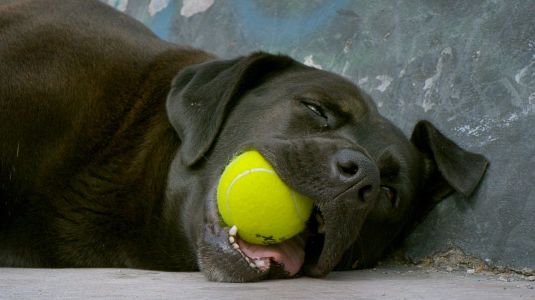
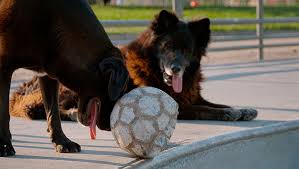
A peculiar joy is had watching the yelping delight two stray dogs derive from the simple actions of a bouncing soccer ball or a hurled tennis ball. Prancing, dancing, they are elated, gamboling across the nail-clicky concrete of Los Reyes, the oldest skatepark in Santiago, Chile, and, in a way, we are too.
1f75b438-fee3-4d55-8de6-cf760c6f1df1.jpg
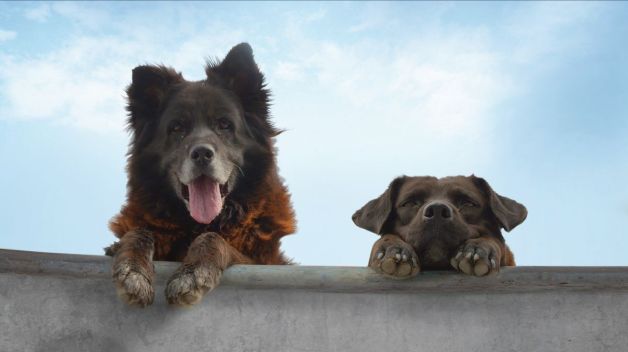
In Chilean duo Ivan Osnovikoff and Bettina Perut’s almost inadvertently poetic, profoundly moving “Los Reyes,” the camera veers from the skateboarding youth who cruise sinuous bowls to examine the laidback lives of BFFs (best furballs forever) — Football, the elder, creaky-jointed cur that resembles a mangy male lion, and Chola, the frisky female chocolate Lab mix that occasionally tries to hump a large pillow. 
 
It wasn’t supposed to be this way. The filmmakers set out to document the skaters but located more compelling subjects in the park’s two permanent residents, who have little direct contact with their human visitors, save for the sporadic ball toss. Shot over two years, the doc can’t totally avoid the skaters, and it shouldn’t. Creatively hiding their identities, it captures them in snippets, mostly arty images of their hands, bodily shadows, long shots of them skating and idle voice-over chatter detailing the troubles and trivialities of their hardscrabble lives, from drugs to home and school dramas.
los_reyes-_chola.jpg
Dispensing with music, narration and anthropomorphic cutes, this is an astonishingly patient film, relying on the dogs’ alternately mirthful and mournful antics, quizzical gazes, the way they doze unfazed among the rackety-clackety skaters, or a simple shot of Chola standing statue-still in the rain, getting soaked with the patience of a penitent.
Despite their companionship, the mutts are essentially loners and there’s an aching desolation in their struggle-filled lives. Poetry blossoms from extreme close-ups of a long, panting tongue or rapidly fluttering nostrils, flies nipping at their flesh or a pair of scraggly paws at rest.
Los-Reyes-STILL-3.jpg
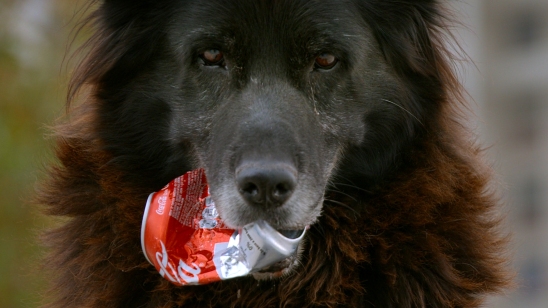
In this, “Los Reyes” is deceptively shapeless, so willfully hands-off, the 75-minute movie often plays like a lyrical and lovely Terrence Malick fugue. And then scruffy old Football will put something in his mouth, be it a Coke can, a pack of discarded cigarettes or a gigantic rock, and the pensive mood melts again. And so do we.
Unknown.jpeg
In select theaters. Watch the trailer HERE.

Random reflections, part III

“We die — that may be the meaning of life,” said author Toni Morrison, who died Monday. “But we do language. That may be the measure of our lives.”

I‘ve tried many times to watch “The Princess Bride,” “Stand By Me” and “When Harry Met Sally,” but I’ve never been able to get through any of them. They are ham-handed. They aren’t funny. They clunk. That Rob Reiner directed all of them is strictly coincidental.

ht_meg_ryan_billy_crystal_when_harry_met_sally_jc_140711_31x13_992.jpg
The famous “orgasm” scene, which gets more embarrassing with each viewing.

I swear, Cubby the dog has a perverse crush on the female cat Tiger Lily. He gawkily flirts with her, and her eye-rolling indifference is touching. Such inter-species passion is a spectacle. I sure hope I don’t see a newborn kitten that barks.

I jot in my journal pretty much every day with purpose and the fugitive hope of substance. The author Yiyun Li writes, “How did I forget to start each and every page of my journal with the reminder that nothing matters?” My head nods vigorously.

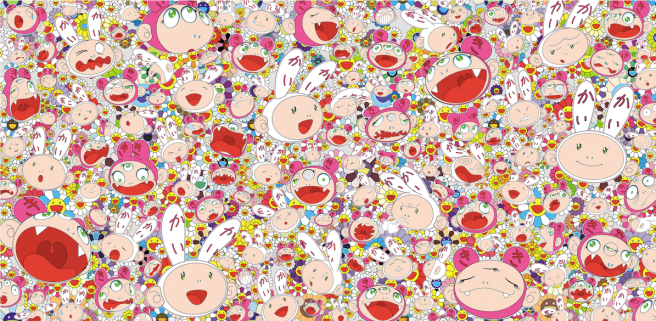
The last time I went to Japan I got hooked on the sizzling pop art of Takashi Murakami, whose work spans painting, sculpture, fashion, merchandise and animation. It’s fun and whimsical and dazzlingly colorful — and not a little geeky. His subject matter is cute (kawaii), psychedelic and satirical, with well-trod motifs: smiling flowers, mushrooms, skulls and manga culture. Murakami could be the Jeff Koons of Japan. I’m going there soon. My goal is to get Murakami’d, big time.

210522_1325221.png
My phone’s current wallpaper.

A few years ago I discovered I had an adult-onset allergy to shrimp and prawns. It’s like the second worst thing that’s ever happened to me.

41cFc108RGL._SX329_BO1,204,203,200_

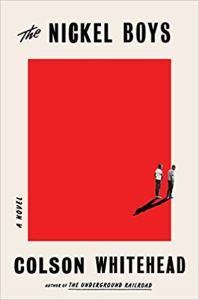
A fan of novelist Colson Whitehead, I’m deflated by his new, lavishly overrated book “The Nickel Boys.” It lacks energy, momentum and finally fizzles at the halfway mark. So I put it down (I also couldn’t get into his early novel “John Henry Days,” though I’m all about “The Intuitionist” and “The Underground Railroad”) and picked up Haruki Murakami’s “Norwegian Wood.” I’ve read one other Murakami novel, “The Wind-Up Bird Chronicle,” and I almost threw it against a wall. The edge is where I live.

Tonight we popped a bottle of Suntory Whisky Toki, “blended Japanese whisky that is both groundbreaking and timeless.” It is silky and smoky with strong, sweet vanilla notes. I think none of us is going to bed.

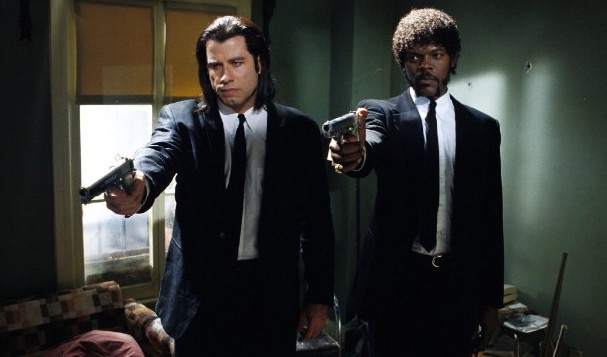
Quentin Tarantino has made movies. He has made only two masterworks, “Reservoir Dogs” and “Pulp Fiction.” That was a very long time ago. The rest of his oeuvre seesaws from juvenilia to junk. As critic David Denby wrote on the release of the imbecilic “Inglourious Basterds”: “Tarantino has become an embarrassment: his virtuosity as a maker of images has been overwhelmed by his inanity as an idiot de la cinémathèque.”

140922202605-08-pulp-fiction-story-top.jpg

Intimacy is scary. Love is scarier. Someone recently dubbed the phenomenon “the terror of loving.” I like that. Its precision is chilling.

I am typing most of this in the air, row 45, seat G, on United flight 497 to San Francisco. You might say I’m skywriting. Forget I just said that.

Monkey see, monkey don’t

There’s a monkey on my back.

Several, actually. And they want my money. Every time I open a website, they are there, pawing at me.

The animals are macaques, with pomegranate faces and heads hooded in fuzzy Eskimo parkas rimming wise, frowning visages of grizzled monks or mystics. They are bathing and grooming and picking at each other in hot springs at the Jigokudani Wild Snow Monkey Park in Japan. They look to be suffering chronic mites and fleas.

-20121121232817-39B6918F7B8D4ED4BEC436470B0205E1.jpgThey are world-famous monkeys; you see them in every other wildlife documentary, steam rising around their half-submerged bodies. These simian superstars are chillaxing in a simmering jacuzzi nestled amid frosty mountains. And they pick and pick.

I, for one, can’t avoid their pink, pensive faces. They want me to come visit them, terribly. Ever since I began researching hotels, food tours and day trips in Japan, the insistent monkey pop-up ad, hectoring click-bait, has infiltrated all of my most visited sites, from The New York Times to Rotten Tomatoes. I can’t get the goddam monkeys out of my sight. Fortunately, they’re cute and furry. Unfortunately, they’re expensive. 

For about five seconds it’s tempting to actually take the ad up on its offer with a simple click: $146 for eight hours of touring, including one (one!) hour at the monkey sanctuary; time at the famed Zenko-ji temple; lunch; some sake sipping; and, really, not much else. Bullet train transportation is not included (rip!).

And can you believe this: “Guests are not permitted to touch, feed or bathe with the monkeys at any time.” I guess I won’t be bringing a towel and a bar of Dial.

So the deal effectively stinks, even if you do get a brief (dry) encounter with the enchanting, lightly parboiled macaques.  

Yet more caveats abound, and they are dire. I came across an alarming blog post titled “Why Seeing the Snow Monkeys in Japan Sucked” (read it in full HERE). A grisly excerpt:

“Instead of a snow-covered paradise, I was standing in what felt like a construction site full of rubble, with piles of rocks and exposed cables forming a backdrop against the commotion. I watched in dismay as staff at the Jigokudani Monkey Park threw food at the agitated macaques until they began to screech and fight on the damp mud. This was one of the worst animal encounters I’d ever experienced.”

No monkeys for me. See no evil, hear no evil, speak no evil. Click no evil.

00000.jpeg

Dogma of the dog

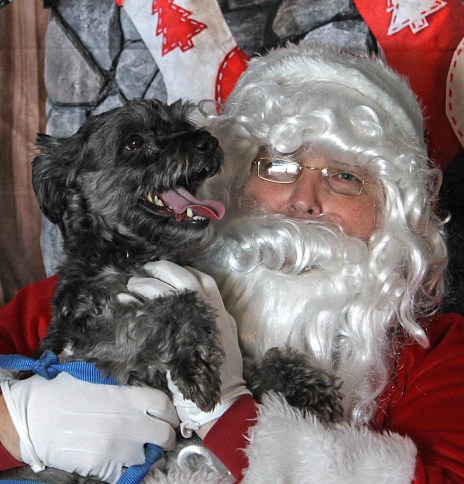
I’m pretty sure Cubby the dog doesn’t believe in many things — God, playing dead for treats, how wonderful I am — though I’m convinced he believes in some things. Like meatballs and bully sticks and tummy massages and bedtime snuggles and brisk walks and peeing on the rug. He’s a good dog. And like most good dogs, he’s ridiculous. Neurotic, but nourishing. 

Rescued from a shelter, Cubby has, in the past year or so, learned how to act like a tried-and-true doggy, a small, curly-haired mutt with a pleading gaze and a tail that swoops up and over into a large Spaghetti-O. 

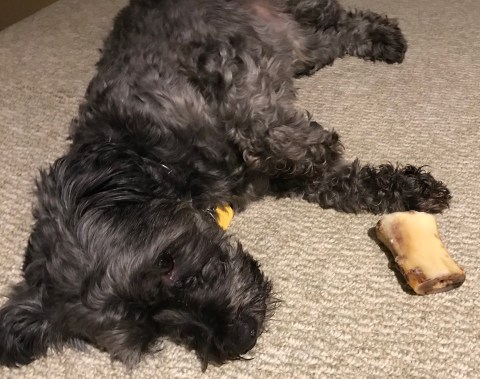
He now knows how to worry a bone, chomp stuffed toys, play tug of war with said toys, scurry after the bone when it’s tossed then make you chase him around in a game of try and get it, sucker. All this is heartening. He’s maturing. He’s getting sillier. 

But I think he’s deeper than all that stock dog stuff. Cubby is a wise old soul, beyond his four or five years, attuned to his lot in life, his place on the totem pole of existence, and, with a melancholy tinge, his impermanence.

img_0829.jpg
No, I don’t believe in God. Death, yes.

This struck me last summer, detailed in this blog post, where I observed: 

“The dog seeks the meaning of life, this is plain from his searching brown eyes, furrowed brows and the alarming way he wipes his butt across the carpet. Freud’s pleasure principle manifests itself in his frequent calls for belly rubs. Sartre’s existentialist theory, which states that our individual responsibility in defining our own lives is almost debilitating in its enormity, has the dog a little down. Knowledge of his own mortality is something of a buzz kill.”

Cubby may be a Buddhist. He is mindful and meditative, his solace arriving many hours each day. (Some call these naps; I call them rumination, deep cogitation, mini comas.) He is a passive soul. Barking he does sparingly, almost exclusively when the mail comes, then he claws the paint off the front door and cries like an aggrieved banshee. It is the yelp of an injured Indian spirit, whose dead have been gravely molested. Then he shuts down, curls up, and ponders the teachings of Siddhartha and the joys of a good tennis ball.

We wonder. What does this animal believe in? Tasty bones, yes. Death, alas. A vigorous rub behind the ears, certainly. Bacon Beggin’ Strips, no doubt.

Yet the question resounds: Can animals really believe?

Cats — pshaw; they believe in their own supercilious godliness. Forest dwellers — a humble group deeply in accord with nature’s bylaws, true believers. African wildlife — a hot mess, as seen on “Planet Earth,” strictly heathens and satanists that believe in ritualistic bloodletting and organized torture on the Serengeti.

None of that for Cubby. He’s a fuzzy little wiseman. He should be wearing beads and vestments and lighting incense. He is a philosophical creature; don’t let his crazed, leg-scratching greetings fool you. When you gaze into his small eyes, worlds are revealed. One’s heart softens and the soul cracks open. He is telling you something, and not just “Get the leash, I gotta poop.”

Was it Nietzsche who said “The better I get to know men, the more I find myself loving dogs”? Or was it Harpo Marx? No matter. This is an inversion of the master/slave equation, wherein the master (you) succumbs to the overpowering ardor and joy provided by the slave (doggy). That is this dog’s wisdom. He has our number. And he calls frequently. Collect.

Cubby’s beliefs are better than his bite. In his canine universe, he is disciplined, devout, enlightened. He has found meaning and purpose. The dog is, indeed, dogmatic, a mutt with a mind. And, uh, yes, that’s him over there, avidly licking his genitals.

61iIezdav2L._SY679_.jpg

Random reflections, part II

I wish I played chess, even so-so. At this point, I have zero interest in learning how. 

51KO3uIoSNL._SX329_BO1,204,203,200_

The best book I’ve read this summer is the acrid novel “Fleishman is in Trouble” by the regrettably named Taffy Brodesser-Akner. Terrifically observant, mordant and relevant, it’s dubbed a “timely exploration of marriage, divorce, and the bewildering dynamics of ambition.” I’m too lazy to describe it. But it’s superb, and superbly smart. If you’re married, or divorced, beware. It has teeth.

It’s in the news today. Never in a million years would I want to climb Mount Everest. Or any mountain for that matter. I don’t do tents. Or canteens. Or oxygen tanks. Or death.

I booked a flight to Tokyo for late October. I’m going to eat sushi and more sushi and sip sake and Japanese whiskey and absorb on a granular level Shinjuku nightlife. I may barf.

When I was 8 I saw big white beluga whales at SeaWorld. They made me kind of sick, all bulbous and albino, their big, meaty cow tongues showing when they smiled. Many years later — last week, in fact — I saw the belugas again at SeaWorld. They still make me ill. 

Pregnant Beluga 1_0918

Charismatic badass and “Blade Runner” actor Rutger Hauer has just died. So, alas, has presidential impeachment. R.I.P. 

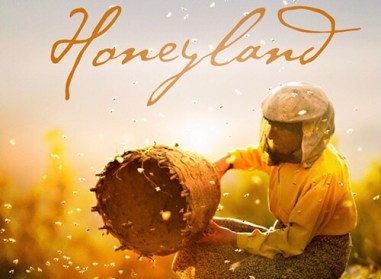
A movie my mind keeps returning to is the new documentary “Honeyland,” which is about a lone female beekeeper in the unforgiving mountains of Macedonia and her struggles with her unruly neighbors, her sick mother and the mere notion of survival. It sounds terrible. It is sublime. I could see it winning an Oscar. See trailer HERE.

maxresdefault.jpg

My brother and I have reservations next month at Alice Waters’ legendary Berkeley, Calif., restaurant Chez Panisse, where we will dine on such succulent fare as, quote, “Sheep’s milk ricotta ravioli with chanterelle mushroom and garlic brodo” and “Sonoma County duck confit with frisée, haricots verts, fig vinaigrette, garlic crouton, and sage.” I don’t know what half that means. I don’t care. I will delight, as my wallet gently weeps.

I promised I would never mention my Sea-Monkeys again. I lied. There are a half-dozen survivors, swirling through the briny tank, each one as big as Moby Dick. I hope the cats are hungry.

Too many critics and other dopes are declaring season two of the amazing Amazon Prime comedy “Fleabag” superior to season one. Wrong. Season one is fresher, funnier, wiggier, better. Season two is splendid, no doubt, and you should watch it, as it’s the best comedy on TV. I’m just saying.

fleabag-crying

Speaking of TV hilarity, the lamest, most overrated “comedy” is “Bojack Horseman,” a Netflix show so consistently and embarrassingly unfunny, such a bizarre misfire, it just makes me tired. (If you find this show amusing, please leave a comment and explain.)

9d6ec2a4dbc9179d270f064178d60ff9e5d0b7a0.jpg

Some years ago, my Dad took us to an incredible slew of jazz and comedy shows. A few luminaries we saw live: Jerry Seinfeld, Bill Cosby, Robin Williams, Miles Davis, Ella Fitzgerald and Dizzy Gillespie, as well as live NBC tapings of “The Tonight Show with Johnny Carson” and, way back, “The Goldie Hawn Special” featuring then-pop idol Shaun Cassidy. The whole thing’s a head rush.

I recently bought a can of sardines. I keep looking at it, baffled and fearful.

Chatting with the makers of one of the year’s best films

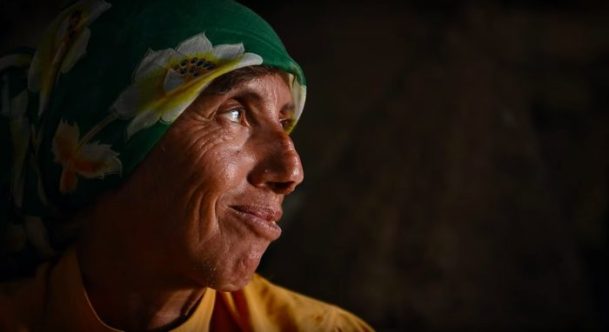
In the remarkably moving, charmingly idiosyncratic documentary “Honeyland,” Hatidze Muratova is a Macedonian mountain woman with the face of a craggy Margaret Hamilton and a spirit of peerless pluck. She harvests honey from beehives as her livelihood, while tending to her blind, ailing mother in a rustic shack. Her new neighbors are more than exasperating, and she views them, and environmental concerns, as threats to her precious beekeeping ways. There is drama, joy, exotic upheaval and heartache. I can’t recommend the picture more, easily one of the year’s best.

The movie has won 11 festival awards, including three this year at Sundance, many of them singling out the stunning cinematography. (The film opens July 26. See the trailer HERE.)

Sundance-honeyland-1100x520.jpg

I recently spoke by phone with directors Tamara Kotevska and Ljubo Stefanov, both from Skopje, Macedonia, and whose English, if broken, is strong. These are edited excerpts of our conversation:

Gnashing: Where in the world did you find your leading lady, Hatidze, and how did you know she would be the one to guide your story?

Ljubo Stefanov: While we were finishing our previous film, we got a tip from our agency for a certain environmental project. We started to do research and our task was to find a subject in this (Macedonia) area for a short documentary. But soon after that we discovered the village with Hatidze inside, and it was clear that she would lead our story, which was supposed to be a couple months of filming and editing. But it turned to one year of filming, then three years of filming. A complicated process, but the result probably justifies it.

Ljubomor_Stefanov
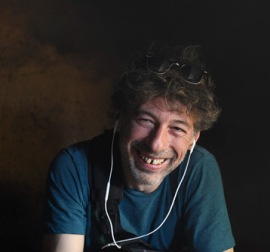
Ljubo Stefanov

How did you locate the film’s story with such wide-open choices?

LS: There are two aspects. One is humanistic, the relations between characters. And the other one is the environmental message of the film. Before Hatidze is going to the city to sell the honey, she is taking the honey and she is talking to the bees, “Help for me, help for you.” We filmed that during the first week of shooting, and it was clear that this very strong motto would underline the film. It’s about users and providers. Users are human in many cases, the bees providers, the natural resources. The environmental message in this very simple story is about overusing natural resources.

How did the narrative evolve? Was it supposed to be a story about this solitary beekeeper and then suddenly this disruptive family moves in next door? Did you expect that to happen?

Tamara Kotevska: This story unfolds much over time. It started as something completely different. When we found her and started working with her we were still wondering if the form of this film should be more just a portrait of her. We realized that this would not be the film we want. We wanted to actually create a stronger story from her, not just a portrait. The nomad family came but we didn’t pay any attention to them, until we found out that they were the crucial part of the conflict in her life. It was crucial for us to find a way to bring them into the film because they make up a huge part of her life.

Tamara_Kotevska
Tamara Kotevska

How would you describe your heroine Hatidze? To me, she is plucky, resourceful, lonely …

TK: She is a miracle. Anybody who’s met her says you’ve never met anyone similar, because going to this place, everything is completely lifeless, time is completely different, everyone walks very slowly. Even when we went there, our energy just went down. It’s shocking to see her, the only person who spent her life there, and she has the most energy, most spirit. She’s completely open to people, she’s an extrovert and loves being seen and to talk to people. She’s a star.

The cinematography has received lavish attention and won many awards. How important was it to have such lush, observant camerawork for a film like this?

LS: We were a filming crew of four — two cinematographers and two directors. We filmed with DSLRs (digital cameras) with simple photographic lenses, no filters or additional light, and cheap microphones mounted on the cameras. There’s nothing spectacular with the equipment. But obviously the skills of the cinematographers (Fejmi Daut and Samir Ljuma) and the will for bringing the goods were crucial parts of such visual quality. Also, we don’t understand Turkish, so we were filming based on the visual activities, so great visuals were important.

honeyland-700x382.jpg
Hatidze Muratova

Killer whales, killer times: San Diego part II

It’s astonishing how pleasant and doable the weather was yesterday in Coronado, San Diego, what with hair-flustering breezes and temps hardly nicking 70. It’s nuts. I mad-love it, especially considering the 100-ish hell-wave I’ll be facing back on the East Coast. That’s nuts, too, but in a whole other way, the kind that makes you cussy and crazed. 

Weather’s the worst. It’s almost never perfect. Climatic sweet spots are as slippery as quicksilver. But these days are pretty swell. I can wear pants. I can wear shorts. I can slip on a light jacket. Or not. Actually, it could be a dash cooler — mid-to-low-60s would be Edenic — but I’m being positive. Sunshiny, if you will. 

SanDiego.jpg

So. San Diego. I haven’t been here since a wild weekend at my brother’s dorm at San Diego State University, where he went for one semester before beating it the hell to Cal Berkeley. Yes, of course he took the 17-year-old me to Tijuana, and, natch, what happens in Tijuana stays in Tijuana. So quit asking. (Frankly, I don’t remember a thing.)

Now, with six other family members, I’m on vacation at a place I would never choose on my own. But majority rules. We did the vaunted San Diego Zoo, a lush green compound where the exhibited animals play a mean game of hide and seek with gullible human visitors craving a glimpse of (and desperate selfies with) those cuddly koalas. Peek-a-boo at the zoo. No one wins.

The other major attraction here is, of course, splashy, clamorous SeaWorld, where yowling seal barks and the wet slap of bellyflops by multi-ton orcas fill the salty air. 

Along with human screams.

That’s because the ocean park has perforce reduced its vulgar killer whale and dolphin shows after cries of demonstrable animal cruelty and have filled the entertainment void with, what else, rollercoasters and marine-themed thrill rides. 

Like the Tentacle Twirl, Tidal Twister, and the fearsome Electric Eel, the “tallest, fastest” rollercoaster in all of — hang on — greater San Diego. It’s a bit like saying a place has the best, zestiest tacos in Des Moines, Iowa. It’s all comically relative.

IMG_1473.jpg
The Electric Eel rollercoaster — a shocking surprise.

But my sarcasm falls flat because the Electric Eel is a stellar coaster. We rode it today, and each herk, jerk, corkscrew, twist, twirl, drop and fling came out of nowhere. Usually you sort of know the layout of a rollercoaster, how many loops it has and such. The Eel was sheer breathtaking surprise, fast, furious fun.

Waddling, nose-diving penguin colonies; bulbous ivory beluga whales; tubby, slothish walruses; greedy, hand-fed manta rays; bullet-like harbor seals; the inevitable killer whale show, which is now solely an educational experience without dopey trainers standing on the animals’ backs like they’re water skiing. Thanks to foot fatigue, missing on our expedition were dolphins, otters, polar bears, sharks and the almost mythical narwhal, the so-called unicorn of the sea that I would like to ride around the Arctic.

Like yesterday, the weather held today at a tolerable 72 degrees, which still staggers. (And still left me sunburned.) This SoCal trip winds down tonight with tacos and tequila at the poolside cantina, called fittingly enough The Cantina.

This was an accomplishment. I survived all the trappings of a semi-swanky beach resort, swaying palm trees, children splashing (and shrieking) in swimming pools, grown men in flip-flops and tank tops, quaint downtowns, extravagantly famous theme parks filled with captive creatures and $10 beers. I spent time with family and realized its uncanny resemblance to the macaque. I pet a dog at a restaurant that growled at me fiercely. I splurged on too many beverages. I didn’t go to the beach. I didn’t fish. I ate scallops. I didn’t eat ice cream. I had a blast.

IMG_1472.jpeg
Nephew Nick, pondering the rays and fishies at SeaWorld.

Sun, sand and a menagerie of bashful animals

I don’t do sun and fun. Yet here I am in breezy, easy San Diego, Calif., for a shortish vacation with the extended family — mother, brother, nephew, et al. Seven of us total. 

Why do I shun the pool and the Pacific? I sure didn’t used to, particularly growing up in oceanside Santa Barbara, Calif. There I was like any splash-happy, wave-plunging kid, giddiest reverting to a primal state of fluidity, getting soaked, sandy and sun-baked.

I think I just grew out of it. By my teens, living in the temperate San Francisco Bay Area, I loathed the heat, anything over 75 degrees was excruciating. And it still is. I’m a 40s and 50s kind of guy. Fall and winter are my homies. Jeans, jacket, scarf — the ideal uniform. Shivering is my version of sweating. (Sweat is my kryptonite.) I aspire to be an Inuit.

Against my nature, but not my will, I’ve been cajoled to one of the beachiest places on the planet. Briny water everywhere. The profusion of palm trees — Christ. Boats and bikinis, flip-flops and fish, pink flesh and pervasive pastels. It’s Coronado Bay, San Diego.

203105671.jpg

I actually sat poolside — in the shade, with shirt and sneakers firmly affixed — this afternoon and survived. I had a book (Peter Orner’s new, remarkable short stories “Maggie Brown & Others”) and the laptop (the resort, yes, resort, has spiffy wifi) and a beer and an al pastor taco, so it worked swimmingly, if you will. Then I repaired to my room for some AC time, even though the temps all week are in the mercifully mid-to-low 70s. 

I begged off the beach. The six of them headed out to sit on sand beneath yawning umbrellas and presumably tiptoe into the chilly sea. I had no business there, as much as I love sharks. But the chances of a shark sighting were as good as those of me not being bored out of my skull plopped on mushy sand under a giant parasol. (Instead, I’m writing this. I bet you wish I went to the beach.) 

When many of us think of San Diego, the mega-famous zoo (known as the world’s best) and SeaWorld spring to mind. In other words: creatures, critters, cetaceans, crustaceans. Now, those I can do. Captive animals crack my heart, but at least the respected zoo sustains “natural” habitats and breeds endangered species. And even the ethically iffy SeaWorld has banished its dubious in-park breeding and tawdry theatrical whale shows. (Shamu — rhymes with boo.)  

Today was San Diego Zoo day, and it was about as thrilling as watching a flock of pink, and a few juvenile gray, flamingos stand on one preternaturally long and spindly leg and snooze, or projectile poop, or, in the case of the gray downy youngsters, stumble and wash and act as adorable as can be. When flamingos are a highlight, well …

27845391521_03f8fb4be8_b.jpgBesides being reminded on a double-decker bus tour around the park that hippos are “the most dangerous animals in the world” (for some reason, I find that exhilarating) and that some wolves smell like seething skunk bud, mostly the day consisted of trying to locate animals in their enclosures. Craned necks and dashed hopes were major exertions. It was the land of the empty habitat. 

There’s one alpha gorilla sitting tall and proud, and there he goes, vanishing behind a rock. There’s a sole polar bear sleeping up on a hill, partially obscured. Ah, I spy a pygmy hippo — 90-percent submerged in a pond. And so on. Zoos might be the most exasperating animal experience available. Go to a mall pet shop to see more furry mammalian action. 

But the weather remained agreeable — low-70s — so things meteorologically were dreamy. And they sell beer all over the place. (Wait, $9 for a can of Corona — where are the hippos when I need them?)

I don’t want to complain. I saw frolicsome monkeys and fat pythons and some Chaplinesque penguins, not to mention a guy dressed in a ragtag rhinoceros costume posing for pictures who made legions of unsuspecting visitors uneasy.

But where, I direly wondered, were the real rhinos? And giraffes? And hyenas. And, come on, the platypuses? We spotted, nestled in thick foliage, a koala. It was like seeing a child’s stuffed animal stuck in a way-up tree. It wanted nothing to do with us, the cranky marsupial. That’s what happens when you sleep 22 hours a day.  

A leopard showed its spots — for about 34 seconds. Then there was the funky smelling wolf — a total no-show, just a nose show. The macaques — same. Empty habitats are like unfulfilled dreams, dollar bills set on fire. Enter the gift shop and suddenly the animals are fluffy, smiling, en masse, thriving. A simple magnet of a magnificent mountain lion or a whimsical t-shirt of a rhinoceros (“Save the Chubby Unicorns”) about makes it all OK.

image.png