Cutting to the core of creativity

I’m reading two books right now: “Kudos,” the mesmerizing new novel by Rachel Cusk, and the non-fiction treatise “The Creative Habit” by celebrated dancer-choreographer Twyla Tharp.

418cPmaavEL

The former is a whole-cloth original, narrative-defying, discursive and brainy, like the two previous books in Cusk’s Outline Trilogy, “Outline” and “Transit,” of which “Kudos” is the ravishing finale. Challenging and unorthodox, the seemingly autobiographical novels crack open your mind in a furiously fresh manner. They evoke Karl Ove Knausgaard’s rambling “My Struggle” series but are more rigorous, compressed, and chewier.

Catching my breath, I’m really here to dwell on Tharp’s self-described “practical guide,” whose full title is “The Creative Habit: Learn It and Use It for Life.” I’m a sucker for eloquent lessons on creativity and the artist’s way, including, yes, “The Artist’s Way” by Julia Cameron, “The Sound on the Page” by Ben Yagoda, “Bird by Bird: Some Instructions on Writing and Life” by Anne Lamott and “The War of Art” by Steven Pressfield. These books possess transformative powers, tweaking your creative habits just so, massaging your brain to look at the blank page or canvas with a kind of nervous optimism instead of paralyzing dread or clogging trepidation. They are weighted with wisdom.

twyla-tharp-the-creative-habit.jpg

Tharp, a paragon of her art form, knows of what she speaks, and she speaks it plainly and persuasively, with little decorative dressing but plenty of panache. She’s a beneficent, caring lecturer, and the book, breezy and empathetic, bulges with sticky, pragmatic advice. Quick: “In order to be creative you have to know how to prepare to be creative.” Or: “There are no ‘natural’ geniuses.” That’s in the first nine pages, and somehow I find these statements awfully encouraging. 

She digs much deeper, with infectious enthusiasm. Using hard-earned lessons from her own work methods and creative processes in ballet and presenting instructive anecdotes about artistic challenge and triumph among such underachievers as Mozart, Beethoven Richard Avedon, Balanchine and Maurice Sendak, Tharp casts a wide net showing how happy accidents, preparation and luck (those are Siamese twins), ritual, archiving and mineable memory are critical components of productive creativity. (She also includes some loopy exercises that I didn’t have much use for. One required a bunch of eggs.)

Flipping through this clean, handsome, none-too-big book I plucked a few quotables:

“The first steps of a creative act are like groping in the dark: random and chaotic, feverish and fearful, a lot of busy-ness with no apparent or definable end in sight. There is nothing yet to research. For me, these moments are not pretty, I look like a desperate woman, tortured by the simple thumping away in my head: ‘You need an idea.'”

“Another trap is the belief that everything has to be perfect before you can take the next step. You won’t move on to that second chapter until the first is written, rewritten, honed, tweaked, examined under a microscope, and buffed to a bright mahogany sheen. You won’t dip a brush in the paint until you’ve assembled all the colors you can possibly imagine using in the course of the project. I know it’s important to be prepared, but at the start of the process this type of perfectionism is more like procrastination. You’ve got to get in there and do.”

“The best writers are well-read people. They have the richest appreciation of words, the biggest vocabularies, the keenest ear for language. They also know their grammar. Words and language are their tools, and they have learned how to use them.”

“There is no one ideal condition for creativity. The only criterion is this: Make it easy on yourself. Find a working environment where the prospect of wrestling with your muse doesn’t scare you, doesn’t shut you down. It should make you want to be there, and once you find it, stick with it. To get the creative habit, you need a working environment that’s habit-forming.”

“Jerome Robbins liked to say that you do your best work after your biggest disasters. For one thing, it’s so painful it almost guarantees that you won’t make those mistakes again. A fiasco compels you to change dramatically. The golfer Buddy Jones said, ‘I never learned anything from a match I won.’ He respected defeat and he profited from it.”

“These mistakes — relying too much on others, waiting for the perfect setup, overthinking structure, feeling obligated to finish what you’ve started, and working with the wrong materials — are deadly. Any one of them will undermine your best efforts.”

“Whom the gods wish to destroy, they give unlimited resources … Limits are a secret blessing, and bounty can be a curse. I’ve been on enough big-budget film sets to appreciate the malignant influence of abundance and bloat.”

“You might not struggle for spine. You might be content to receive any random thought floating through the ether that happens to settle on you that day. You might think you don’t need a supporting mechanism for the art you’re constructing, a controlling image, a collateral idea to guide you. You might think getting lost is a big part of the adventure. You may think that, but you’d be wrong.”

More highly finicky reading

I’m the worst. I’m impatient. I’m mean. I’m discerning. I have taste. When it comes to books, I am ruthless. I’m even worse with movies. Most don’t stand a chance.

I have put down four books, closed them for good well before the 100-page mark, in the past two and a half weeks. Suffused with sorta-guilt — ah, not really — I swan to the next book, hoping for gems and genius. I am an optimist garbed as a very dark pessimist.

Mining this small stack I located gold — the books are by literary heavyweights, after all, and they do often gleam — but I also found fool’s gold, which I will not abide.

41wp7sr5mbl-_sx321_bo1204203200_.jpg

The yeasty comic novel “Less” was the chintziest of the four. It won the Pulitzer Prize this year for fiction. What are you gonna do? I read, I shrugged, I shut. 

With wan humor tangled in wry, hackneyed observations about gays and straights and executed in lite-beer fizzy prose — “a quick, easy summer read,” said one critic, as if that’s a compliment — “Less,” by Andrew Sean Greer, reminded me of a gay-themed comedy series on HBO, one of those middling shows no one watches. The novel, says Greer, is “a love story, a satire of the American abroad, a rumination on time and the human heart.” Thanks, Mr. Greer, for defining “generic.”

I read some 75 pages of “Less” and I must agree with this writer who actually finished the book: It’s “chock-full of gay clichés that feel outdated, and the tone is generally one of superficial, unearned cynicism that sometimes drifts into cattiness.”

Yup. Even The New York Times, in an upbeat review, called it “too sappy by half.”

Zadie Smith writes with a magic wand; her language and storytelling gifts are things celestial (and she makes me gush floridly). I’m an ardent fan of her fiction — “White Teeth” glitters — but her 2012 novel “NW,” a typically vibrant latticework of people and place, didn’t grab me by the lapels, no matter that I don’t have lapels. As exceptional as the writing is, the story has a matte finish when I yearned for glossy. 

Unknown.jpeg

Wade into Rivka Galchen’s hailed stories “American Innovations” and it’s clear why she is one of America’s hottest young fiction writers. She’s crisp, funny and fanciful, with a biting originality and a smidge of the surreal. But as much as I appreciated the collection, I put it down. I almost fell for it, then fashioned a one-word review: meh.

While there’s no shame in not finishing a book — I can’t believe people who feel they have to get to the last page even if it’s a slog — I can’t help but gulp and blush at this failure: Edith Wharton’s 1920 Pulitzer-winning classic “The Age of Innocence.”

I did not get far in the rather slim novel. I found the prose cluttered and perfumey, chokingly Austenian (though without the giggling), and fustily 19th-century for my contemporary palate. (Oddly, I loved Wharton’s 1911 “Ethan Frome.”) Wharton weaves long, highly populated sentences of lace and crushed velvet, many of them woozy and lovely.

Problem: I kept picturing doilies. 

Antidotes to these literary losers are a trio of new fiction by some of the most acclaimed women authors around: “Kudos” by Rachel Cusk, “How Should a Person Be” by Sheila Heti and “Homesick for Another World” by Ottessa Moshfegh. 

51zp1zkt38l-_sx328_bo1204203200_.jpg

I’m knee-deep in that last title, a 2017 collection of stories by the precocious Moshfegh, whose novel “Eileen,” a darkly off-kilter character study, impressed and troubled me — just how I like it.    

Moshfegh’s stories are spare and wicked, laced with a perfect pinch of transgression, enough to fill an eye-dropper. They are comic and you laugh, but there’s dried blood in them. 

Some excerpts:

“He thought that the drugs we bought in the bus-depot restroom were intended to expand his mind, as though some door could be unlocked up there and he would greet his own genius — some glowing alien in glasses and sneakers, spinning planet Earth on its finger. Clark was an idiot.” 

“Our repartee would be rich with subtlety and sarcasm, as smart and funny as mid-career Woody Allen. Our fucking, like Werner Herzog, serious and perplexing.” 

“I hated my boyfriend but I liked the neighborhood.”

To me, that is dreamy writing, all at once blithely sardonic, intelligently aloof and drolly perceptive, attached to the stinger of a scorpion.

Death becomes us

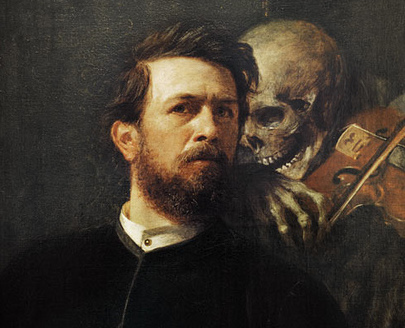
“To live fully is to live with an awareness of the rumble of terror that underlies everything.” 

Ernest Becker, “The Denial of Death”

For some of us, the above “rumble of terror” is a buckling, earth-cracking tremor felt many times each day, a sort of clockwork bell that tolls every hour, on the hour. It is, of course, death, our unavoidable mortality, crooking a finger, baring its teeth and uttering a horror-movie cackle.

Drama aside, what Becker says is that without a sharp recognition of the reality of your own death you paper over a critical dimension of existence. Without death, paradoxically, a major chunk of life is muted. You reside in the dark.
5154120492_e2269336f61.jpg

The existential denial Becker speaks of amounts to an ignorance as willful as it is mystifying. To mention dying has become taboo. How can the most important stage in life, the great closure, the monumental punctuation mark, be off limits? I don’t want to think about it,” goes a common refrain. “It’s just too horrible.” 

But is it? By being aware of your mortality, knowing you will die, that it is an unstoppable event, you can cultivate a richer, more philosophical, existentially awakened life. The aim of this consciousness, as I’ve written before, is to “put you in touch with an untapped aspect of your spirituality, to jolt you out of complacency and into perhaps uncomfortable soulfulness.”

Instead, people distract themselves from the big questions and tough realities. Texting, Facebook and binge TV shows are potent diversions. We think we have control over our lives by doing the right things — exercising, eating healthfully, thinking positive, traveling, communing with art and nature, procreating.

Rubbish.

“Modern man is drinking and drugging himself out of awareness, or he spends his time shopping, which is the same thing,” Becker says.

Death isn’t on my lips — I rarely broach the subject — but it weighs on my mind like an anvil. I’m not talking about the gruesome, corporeal details of death — the corpse, the medical examiner, the venal funeral industry, the land waste of burial — but the chilly philosophical fact of mortality, of dying. Not how we die, but that we die.

Hans Larwin's amazingly evocative 'Soldat und Tod' ('Soldier and Death') from 1917

It’s confounding that people dodder through life without considering death, as though it’s some vague, distant inconvenience that won’t afflict them — not even when they’re crossing a busy street or speeding down the highway or eating a marbled slab of steak or hauling around 100 pounds of extra body weight. The musty cliché “ignorance is bliss” could not be more fitting.

Accepting our fate now, in the present, dulls the fear factor. The idea of dying — Becker’s “rumble of terror” — is inarguably frightening, and that’s certainly why so many of us keep it at bay. But awareness makes you smarter, more prepared. It eases the angst. “The fear of death follows from the fear of life,” Mark Twain said. “A man who lives fully is prepared to die at any time.”

To live fully, says Becker, means to live mindfully, to be cognizant of that lyrical rumble of terror, to embrace one’s fate, or to at least be on cordial terms with it. It is, in fact, consciousness in full bloom.

The dog’s search for meaning

It’s hot outside and the dog gallops up the stairs to the very warm attic, panting with a slashing smile, tongue flapping, teeth bared, eyes wide and wild, tail wagging. He looks “on,” like he’s just hit the stage to burst into a blazing showtune, or just won the lottery. He’s so very jazzed to be here. 

Realizing he’s just exerted that much energy only to run into me at the top, me, ordinary me, who has no food for him, just pets and pats for the good doggie, he quickly calms and collapses on the floor, seals his salivating maw, exhales one huffy breath through his nostrils and resigns himself to the humdruminess of life. Rip-off, he’s certainly thinking.

The dog is not alone in his deflation. The heat rises to the cozy attic and no fan, no matter its wattage, can disperse the vapors. But it’s an existential heat, too, one we all know at some point, here and there. The dog is in the throes of it, stretched out in languid dismay.

IMG_0829
The dog, gazing at me, pondering his existential predicament.

And so am I, to an extent, though I am not physically sprawled out, that would be ridiculous. Still, the dog and I are in moody concert, encased in ennui, a kind of life weariness, if just for this time. Trying to write, I turned to reading my book, “NW” by Zadie Smith, when the dog jogged up to say hello and discovered the groin-punch of nothingness.

Right now, his glass — or his water bowl — is half-empty, to borrow the old metaphorical measure of the optimist vs. the pessimist. He is slowly realizing that life isn’t a continuous (tennis) ball, that letdowns lurk, that existence precedes essence, that not all chew toys are created equal. These are things I learned years ago, that we make our own happiness, shape our own lives, that free will, not divine intervention, reigns, and that disappointments and satisfactions are divvied up about 65/35. The dog doesn’t know all this yet. He is a troubled soul.

In anthropomorphic terms, he’s displaying a glint of neuroses. Somewhere Freud and Jean-Paul Sartre are high-fiving over the notion that psychological and existential angst can be traced in a furry quadruped.

The dog seeks the meaning of life, this is plain from his searching brown eyes, furrowed brows and the alarming way he drags his butt across the carpet. Freud’s pleasure principle manifests itself in his frequent calls for belly rubs. Sartre’s theory, which states that our individual responsibility in defining our own lives is almost debilitating in its enormity, has the dog a little down. Knowledge of his own mortality is something of a buzz kill.

At times like this, a good, jaunty walk won’t cut it. Scooby snacks — nope. A ride in the car? He snickers. But the dog is resilient, and getting his tail wagging is not a demanding task. As with me, these moods of brooding despair and overthinking are intermittent. He’d rather eat a good meal or harass the cats than dwell on the insane, undeniable meaninglessness of his puny little life.

And the next time he does, I plan to start reading to him from Sartre’s daunting opus “Being and Nothingness” or Freud’s “The Future of an Illusion.” And when I myself plummet to pondering the philosophical conundrums, the dog can read to me from — this is an actual book — “Chicken Soup for the Soul: What I Learned from the Dog.”

Life’s too short for sulking. I know this. However, the dog, whose years are on the seven-year scale, meaning he’s about 21 to 28 in human years, resides on a shorter leash. But this canine savant is swiftly learning one of the essentials, no matter how fur-raising:

Self-realization — it’s a bitch.

Writers die. The art doesn’t.

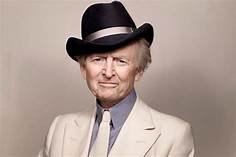
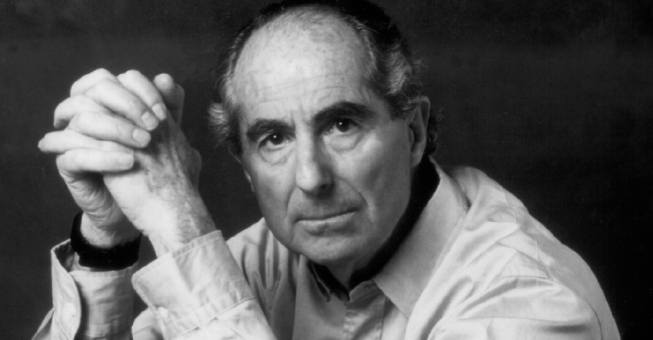
The great authors Tom Wolfe and Philip Roth died eight days apart this month. I heard nothing about the startling proximity of the loss of two of America’s towering writers. And nothing about the theoretical third death of someone else famous when two celebrities die back-to-back. Nothing about that ghoulish trifecta.

th.jpeg
Philip Roth, died May 22.

If that make-believe third fatality does indeed occur soon, and he or she happens to be another English-language writer, which giant will fall? Toni Morrison? Stephen King? Alice Walker? John Irving? Ian McEwan? Cormac McCarthy? None of these literary lions are spring chickens, excuse the mixed animal metaphors.

Such morbid business is the stuff of cocktail party parlor games, slightly sick, if innocuous: King? No way. McCarthy is next, just watch. He’s 84! Or some such scintillating blather.

th-1.jpeg
Tom Wolfe, died May 14.

When a popular artist dies it makes a loud rip and a mighty hole in the cultural fabric. A sometimes-fan of Wolfe — I couldn’t get through much of his work, but “The Right Stuff” and “Bonfire of the Vanities” thrilled with reportorial breadth and linguistic virtuosity — I am a confirmed Roth acolyte. His death briefly shook me and cast me in a blue mood. Celebrity passings rarely have this effect on me. I took it personally.

Yet the sting faded, and I was gladdened to see book shops and libraries erecting proud shrines to the author of “American Pastoral,” “Sabbath’s Theater” and “The Human Stain,” small mountains of hardbacks and paperbacks as monuments to genius.

640_P2010011

I’ll get back around to the books, but for now I’m revisiting the PBS documentary “Philip Roth Unmasked,” an incisive portrait for the budding Rothian, a reminder of what made the novelist a colossus and worthy of the Nobel Prize that so shamefully eluded him.

I should say I was also hit harder than usual by the deaths last year of novelist Denis Johnson and playwright-author-actor Sam Shepard. Johnson was a marvel, his seminal short stories “Jesus’ Son,” the hypnotically chiseled “Train Dreams” and the haunting Vietnam epic “Tree of Smoke” funny, hallucinogenic and wildly transporting.

sam.shepard.true.west.vhs.s.2.JPG

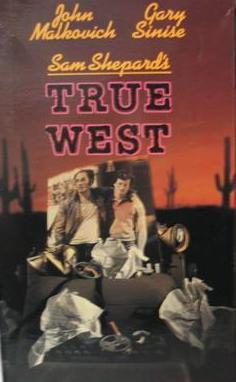
Shepard, who I met and interviewed (see here), was always a personal favorite. An artist disguised as a road-weary bohemian cowboy, his acting was consistently spot-on (he was ace in the 1983 movie adaptation of Wolfe’s “The Right Stuff”) and I’m deeply partial to his 1980 play of fraternal fury “True West,” a raging comic masterstroke about bad blood, beer suds and the prickly craft of screenwriting. 

Watch it on YouTube, starring John Malkovich and Gary Sinise as riotously bickering brothers. It will, like Philip Roth at his best, knock you out. When you come to, the whole world will be a little bit different.

A catty catalog of cultural irritants

So many affronts, so little space. Ergo I will call out only six middle-brow cultural irritants that make me ponder the arc of civilization. Expect a sequel. For now, this:

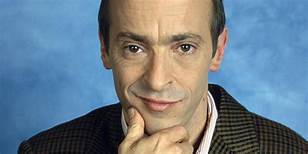
th-2.jpegDavid Sedaris — Snicker-worthy at his very best, Sedaris, an author and humor essayist for The New Yorker, has made a cottage industry out of wan, admittedly embellished autobiography, droll pieces about his family, his lover and his privileged moves to the French and English countrysides. Turning life into literature, he is frank, irreverent, sassy, yet sensitive, as any good writer should be. And he is a good writer, even if his language is surprisingly prosaic, stylistically flat-footed. Overrated, with thousands flocking to theater-sized readings to hear his nasally, high-pitched deadpan, he’s not exceptionally funny or insightful, though he taps a reservoir of honest empathy. He’s a queer, urban Erma Bombeck, flattering a particular strain of hipster and sophisticate with teeny tee-hees.

U2-2014U2 — Because Coldplay is too obvious and Wilco too irrelevant, I’m picking on the most deserving of all bloated, self-important, grandstanding white-people bands. As much as I appreciate the group off-stage — humble, bleeding-heart humanitarians, endlessly concerned with leftie causes and global injustice — as a rock band they represent bombastic blandness. Recycled guitar riffs, repetitive drum beats (if Larry Mullen isn’t rock’s most boring drummer, I don’t know who is), Bono’s predictable pleas for world wonderfulness, and stadium shows of gargantuan gaudiness that exemplify the elephantine excess U2 so vocally rails against. They are an enigma, and forever annoying.

th-1.jpegWes Anderson — Once upon a time the promising filmmaker was so good — inventive, with witty stylistic flourishes and a big, boyish heart: “Bottle Rocket,” “Rushmore,” “Fantastic Mr. Fox.” But amid and after those gems, the dandy-as-director became the worst: a manic, preening showoff. Fussy, hyper-designed, mannered, cloying and overwritten — I’m looking at you, “Grand Budapest Hotel” — his movies are like stuffing fistfuls of pure cane sugar into a mouth filled with painful cavities. Cinematic sadism.

th.jpeg

Jimmy Fallon — Television’s embodiment of cutesy, mugging, please-love-me sycophancy. Dancing, playing charades, lip-syncing, giggling like a tipsy toddler, pitching guests marshmallow questions while fawning over them with googly eyes and panting tongue — “You’re so awesome!” — he’s the only TV personality I know of who looks like he’s going to piss his pants at any moment.

th.jpeg

Outdoor Music FestivalsMy nightmare epitomized. I’ve survived many of these, from Pearl Jam at San Francisco’s Polo Field to numerous Lollapaloozas and Days on the Green, to al fresco jazz festivals. Terrible, all of them. Acoustics meant to reach 100,000 people are stretched to gauzy echoes — bands have never sounded worse. Bare, sweaty, whooping flesh is crammed together in slick seas, unbudging, except for girls wiggling on their boyfriends’ shoulders blocking the view of miniature musicians on stage (thank god for JumboTron). Crushing summer heat. Rip-off food and drink booths. Hemp and beeswax candle vendors. Misting tents. Fragrant porta-potties with show-missing lines. Two more words: tie-dye.

bendahlhausofficial-neat-formal-man-bun-e1491414734529.jpgMan buns — This is simply inexcusable. Enough has been made about how embarrassingly stupid these pseudo-samurai top-knots are and yet men, mostly young, insist on sporting them (invariably with metrosexual beards, no less). Begging, wheedling, outright shaming, nothing can stop them. It’s a mass delusion — they honestly think they look cool and that these baleful hairballs are not the ultimate caricature of hipsterism run amok. I’ve actually seen seemingly sensible women with their arms around man-bunners. Yes! True! I have! Shoot me now.

Unsparing truth, from Philip Roth, 1933-2018

“No one gets through unmarked by brooding, grief, confusion, and loss. Even those who had it all as kids sooner or later get the average share of misery, if not sometimes more. There had to have been consciousness and there had to have been blight.”

— Philip Roth, “American Pastoral”

roth.png


I’ll read this next. Or maybe this. No wait. What about that?

A few posts ago I crowed about the next five books I plan on reading.

Scratch that. 

Things change. Switcheroos occur. Some books work, some don’t. I close and tuck away the latter and embrace and finish the former. There’s been some tucking away going on. 

I announced on the blog that after completing the superb Siamese twins biography “Inseparable” I would take on my Amsterdam holiday Kurt Vonnegut’s darkly comic wartime novel “Mother Night.” All of that happened. 

Except: I didn’t cotton to the Vonnegut book as I was certain I would. Quite early on I found it uninviting, atonal and dry. I shut it. And became desperate. I was still in the States and my sole vacation book was failing me. 

51Ix-oAS0zL._SX319_BO1,204,203,200_

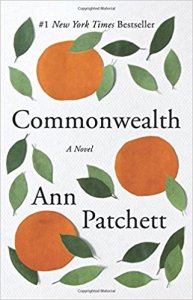
Discouraged yet determined, I marched to an airport bookshop, poked and peeked at a dozen acclaimed books, until I hit the staff picks display, which spotlighted Ann Patchett’s heavily praised novel “Commonwealth.” I’m not used to paying full price for paperbacks, but I popped the almost $20, grimacing and banking on the best — even while recalling that I couldn’t get into Patchett’s previous blockbuster “Bel Canto” the two times I tried.

“Commonwealth” is strong. On the whole trip, though, I read only 47 pages of it — my laptop is a serious distraction. I enjoyed the book’s humor, descriptive muscle and palpable humanity, and I planned on gladly finishing it back home.

41kvpzruegl-_sx329_bo1204203200_85.jpg

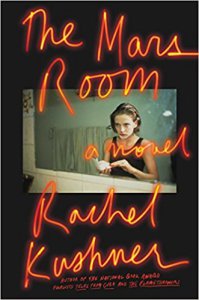
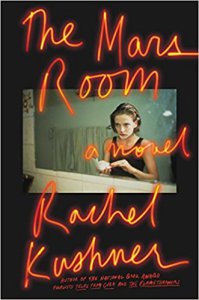
Then this happened: Waiting for me at home was Rachel Kushner’s new, ecstatically reviewed “The Mars Room,” which was on my list of five books to read next. It was, of all things, a library book, with a two-week checkout limit. I pounced. “Commonwealth” would have to wait.  

I just wrapped “The Mars Room,” a very good if never truly great page-turner set largely in a sordid women’s prison, much like “Orange Is the New Black,” with grim and funny detours streaking the story, including a few to the San Francisco strip club of the title. Kushner is good with grit, limning harrowing and humorous situations with a kind of streamlined tough-gal strut. And the final pages seize you hard. 

Before the Amsterdam trip, I borrowed two other titles on my list of five, Zadie Smith’s “NW” and Ottessa Moshfegh’s “Homesick for Another World,” neither of which I got around to thanks to the pleasingly time-consuming “Inseparable.” They remain fast on my reading list. 

61txVZFq-EL._SX331_BO1,204,203,200_

And yet: Dropping off “The Mars Room,” instead of getting the Smith or Moshfegh books, I got distracted and picked up two more books on my extended wishlist, Curtis Sittenfeld’s comic coming-of-age novel “Prep” and Jesmyn Ward’s National Book Award-winner “Salvage the Bones.” 

I get sidetracked in a snap when I’m around piles of books, my head on a pivot, eyes flashing, hands flipping pages, picking up and putting down volumes. So much to read, so many diversions, so many anxious postponements.

Of the two books I grabbed, I chose first to plunge into the poverty-stricken, pre-Katrina, Mississippi-set “Salvage the Bones.” So far, it is rapturously evocative, the prose raw and earthy and exquisite, the narrative quivering and propulsive.

Here is Ward’s description of a pit bull giving birth to puppies:

“Skeetah grabs the puppy’s rear, and his hand covers the entire torso. He pulls. (The mother) growls, and the puppy slides clear. He is pink. When Skeetah lays him on the mat and wipes him off, he is white with tiny black spots like watermelon seeds spit across his fur. His tongue protrudes through the tiny slit that is his mouth, and he looks like a flat cartoon dog. He is dead.”

If “Bones” eventually chokes — that’s far-fetched — I’ll do what I am wont to do: put it down and move on to the next title. But what will that be? “Prep” or

51at-ah4UzL._SX309_BO1,204,203,200_

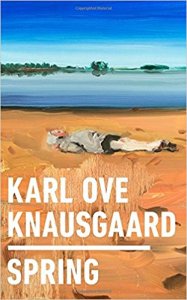
Even with two books before me, I said screw it and ordered Karl Ove Knausgaard’s “Spring,” a slim new memoir arriving in the States bubble-wrapped in effusive plaudits. The book is “poignant and beautiful,” a critic says. “Even if you think you won’t like Knausgaard, try this one and you’ll get why some of us have gone crazy for him.” (I’ve read five of his books and have gone crazy for him.)

“Prep” or “Spring” — I’m betting on the latter. Or will yet another title crash my consciousness and hijack the show? Likely.

Book fiends I know are afflicted with this disease of ravenousness, of greedy insatiability, of jonesing for the next fix. Books as lifeblood. Beats baking. Beats sports.

The saga continues, so much pulped wood before me, no end in sight. It’s an embarrassment of riches — words, language, poetry, morality, mortality, love and loss. And, as that, it’s a crazy blessing.

A darkly delightful book of the dead

For the record, family: Do not donate my body to science when I die. Let them harvest an organ or two, scoop out my eyes like melon balls, carve off a carpet swatch of skin.

Then burn me up good.

Scary to say, but my obsession with death, dying and the post-life has only rocketed since I recently re-read Mary Roach’s weirdly engrossing, and joyously gross, 2003 bestseller “Stiff: The Curious Lives of Human Cadavers.”

51AT2j73sjL._SX331_BO1,204,203,200_

The title nearly says it all: Roach’s beautifully reported book is a blunt, euphemism-free, aggressively lighthearted examination of exactly what happens to cadavers that are donated to science and research. (Cue: barfing emoji.)

Facts, history, grisly details and the author’s vivacious gallows humor make the unutterable utterly readable. Roach is smart; she pauses for philosophical reflection about what’s before her, providing a finish of deep and dignified meditation to what could have been perverted voyeurism catering to “Faces of Death” sickos. 

The breezy read features jarring chapter subtitles — “Human Crash Test Dummies and the Ghastly, Necessary Science of Impact Tolerance”; “On Human Decay and What Can Be Done About It”; “Medicinal Cannibalism and the Case of the Human Dumplings” — that are so graphic, they may be all you need to get it. For example, that first one: Yes, dead bodies are used as crash test dummies in vehicles. Splat.

Plunge into the pages and you’ll get the smells, sights and sounds of expired bodies rotting, ripping, being gutted and even crucified. (Scientists still want to know how Jesus died on the cross. Freshly dead bodies are a prime instructional aid. Pass the nails.)

The doctors and scientists Roach meets are a reticent assortment. But she intrepidly presses on. 

o-SYNTHETIC-CADAVERS-facebookSometimes a source will turn his back on her, suspect of her macabre motives.

“You want a vivid description of what’s going through my brain as I’m cutting through a liver and all these larvae are spilling out all over me and juice pops out of the intestines?” snaps a vexed forensics examiner. 

Roach responds to us, sotto voce: “I kind of did, but I kept quiet.”

“Stiff” rests on my growing, groaning shelf of superlatively morbid but essential books on mortality, like “How We Die,” “Final Exit,” “The Denial of Death” and other festive titles. I recommend them all. They will, while you’re still living, change your life.