A writer’s journey from journalism to fiction to television

One of the best books I read last year was the pungent novel “Fleishman is in Trouble” by Taffy Brodesser-Akner. Studded with surgical social perceptions, mordant laughs and vibrating relevance, it’s dubbed a “timely exploration of marriage, divorce, and the bewildering dynamics of ambition.” If you’re married, or divorced, beware: It has teeth.

d8kg-square-1536

I attended a recent discussion and Q&A with Brodesser-Akner, led by one of her editors at The New York Times Magazine and complemented by a full house of admiring readers. The discursive confab was funny, at times boisterous, always sharp.  

The author is well-known for her smart and sassy celebrity profiles in the NYT Magazine. Among her most famous, and infamous, subjects are Bradley Cooper, Tom Hanks and Gwyneth Paltrow. Some interviewees have not been taken by her resulting articles, but, as a one-time celebrity profiler, I had to applaud when she said that she couldn’t care less what her subjects think of what she’s written about them; she cares only what her editors and her readers think. Truth first, feelings second. Or even sixth. 

Brodesser-Akner’s novel — a smash bestseller, award-winner and named a best book of 2019 by numerous publications — is being turned into a TV series for FX that she is writing with utmost fidelity to the source, she says.

With a showy, dimply smile, big laugh and swift, expansive wit, Brodesser-Akner regaled some 100 fans, chatting about her book’s characters and motivations, responses to the novel, the jump from journalism to fiction, family, parenthood, marriage and TV writing.

Some snippets:

 — “I always just wanted to be a writer. I always wanted to make my money writing. I went to film school because I wanted to be a writer and that program had no math or science requirements, which fit my educational criteria. I fell into journalism when I found out after college that they didn’t just hire you to write screenplays. I looked in The New York Times, which used to have a robust jobs section, and there was a job there for a magazine called Soaps In Depth. And I got a job there. A year later, because of my tremendous productivity and my rapport with my subjects [she laughs], I was approached by a larger soap opera magazine.” [From there, she contracted with GQ and the Times.]

About writing personality and celebrity profiles: “You come in with the stakes being pretty low. Profiles have been so done to death that all you have to do is make sure they’re true, and then you can experiment with them. It’s like what they say about chefs and roast chicken: When chefs all get together they make for each other roast chicken, because that’s the thing you’re supposed to show from this place of plainness what you can do with it. And that’s how I think of profiles: the roast chicken of journalism.” 

go0r7Qfp.png

On midlife, a looming theme in the novel: “Midlife is pretty shocking. I did not know how confusing it would be at this particular age. It’s like a second adolescence. But at least when I was an adolescent I thought I knew what I was doing. Now I know enough to know that I don’t. And there’s the constant strains of contentment and being distraught being in line with each other. It’s the way I feel about the suburbs. I can walk down the block and think, ‘This is beautiful. Wait, what kind of person finds this beautiful?’ That’s middle-age for me.” 

About turning “Fleishman is in Trouble” into a nine-episode TV series: “I am writing it now, and it is very hard to write television. They want it very faithful to the book, at least for the first season. They talk about a second season because that’s all they can do. That’s all TV executives do. They’re sharks; they can only swim forward. They want it to mimic the book as much as possible, which sounds easy and it is not. What’s hard about it is if you think about what my specific skills are — when there is no story, I can still write a story. I came to prominence on a story about Nicki Minaj in which I went to interview her and she remained asleep for the duration. I wrote 6,000 words about it. It was a rollercoaster.”

On going from magazine to fiction writing: “Magazine to fiction writing was amazing. Because the book was like a profile — that’s how I kept it in my head, it’s just a long profile that I’m making up. The hardest part of it was, whereas I think I’m a decent observer of people, to make people up and then have to observe them is to kind of deny what is so amazing about people, which is that they always contradict themselves and they’re unpredictable. Whereas creating something is to make up a series of predictable things.” 

“When I decided to write (the novel), I had this gut feeling of: ‘Oh, this is the one.’”

Brilliant bite-size books

I might be a tad late on this, but I’ve just discovered the marvels that are the mighty, mini hardbacks of the Picador Modern Classics series. I’ll be brief, out of breathless excitement and, well, what can I possibly add to the unadorned fact that these books exist and that, from what I can tell, there are only 12 titles available in this novel (pun, intended) format?

So, like the books themselves, I will be compact. 

But I repeat, with a shill’s enthusiasm, I am enamored of these brilliantly itty-bitty books, which are about the same dimensions of an iPhone 11 — if thicker, more paper-y, less glassy (and, alas, devoid of Siri’s seductive, dulcet tones). 

At less than six inches tall, the books are made for pockets, but they are still chunky, quality hardbacks, running about $16 list. They’re so adorable and beautifully designed, they’re practically edible, or at least highly collectible.

I just finished Christopher Isherwood’s devastating novel “A Single Man” in the Lilliputian edition. (My review: radiant.) Now I’m re-reading Marilynne Robinson’s lyrical 1980 masterwork “Housekeeping.Rarely do I get the urge to make a phone call on it, as mostly I’m wholly aware it is a book.

Other titles in the Picador collection include Denis Johnson’s masterly, evergreen stories “Jesus’ Son”; Joan Didion’s indelible essays “Slouching Toward Bethlehem”; Jeffrey Eugenides’ breakout novel “The Virgin Suicides”; Michael Cunningham’s shrewd reinvention of “Mrs. Dalloway,” “The Hours”; and Susan Sontag’s landmark study “Regarding the Pain of Others.

That means there are five more worthy titles to check out in the series. Do so HERE.

CpRkIYZUAAAeyc7.jpg

Things we used to like

We all have embarrassing lists of things we once thought were beautiful, whatever they are, like Monet haystacks or Kieslowski films.” 

— Megan O’Grady


Confession: Once upon a time, I was entranced by the poetry of Jim Morrison. Well, entranced is pushing it. I was interested in it, I liked it, I thought it was … neat-o.

At 17, I was spongey and vulnerable, easy prey for a bad poet with good hair who’d whisper sweet nothings (and I do mean nothings), like:

Did you have a good world when you died?/Enough to base a movie on?/I’m getting out of here./Where are you going?/To the other side of morning.

Blush.

At a friend’s urging, I had just finished the cathartically lurid biography of Morrison, “No One Here Gets Out Alive” (a sensational read, I’m telling you). It’s a thick mass market paperback and, as a budding rock ’n’ roller (I drummed for years, had hair down to here), I snarfed up Morrison’s simultaneously literary/glittery exploits, his Nietzschean excesses and his laughable self-crowning as the “Lizard King.” And of course his rockstar antics on- and offstage as the Dionysian frontman of The Doors. (Dead at 27. Long live the King!)

31591828846_b36df16120_b-e1551797088469
The “Lizard King”

In retrospect, Jim Morrison was a ridiculous, even dangerous cultural icon, despite that nimbus of curls and his body’s perfect synergy with tight leather pants. He was heedless, abusive, narcissistic, a drug addict, pure outsize ego and unshackled id. I thought he was cool. I hung a poster of him in my college dorm room. Until I put away childish things — in the dumpster.

As journalist Megan O’Grady points out at the top of this post, “We all have embarrassing lists of things we once thought were beautiful, whatever they are.” And what are they? They run from the sentimental and the tacky to the precious and pretentious. It’s stuff we grow out of, intellectually and aesthetically, as we mature or plainly change. 

(Such things are not to be confused with guilty pleasures, those so-bad-they’re-good objects: “a film, a television program or a piece of music, that one enjoys despite understanding that it is not generally held in high regard,” explains Wikipedia, that handy font of clickable sagacity. Did someone mention the 1965 schlockfest “Village of the Giants”? So delectably awful, so crazily unimpeachable.) 

Some other things I’ve changed my mind about or sloughed off like so much dead skin:

— In my late teens and early 20s the paintings of Salvador Dalí mesmerized me — all that trippy dream razzle-dazzle, latticed beauty, gimcrack grandeur and overblown symbolism. Yet Dalí the man, P.T. Barnum with an easel and vaudeville villain’s mustache, was a showoff, charlatan and prankster — not the king of Surrealism, but its preening court jester. With cartoonish Freud-meets-frenzy, he sabotaged his art, which was ultimately hollow and self-aggrandizing and so often silly.

dali.jpg
Dali’s ‘The Temptation of St. Anthony”

— As stated, I fell for Jim Morrison’s sophomoric poetry — and, almost as tragic, his band The Doors, which couldn’t afford a bass player so let Ray Manzarek fill the role with his corny, carnivalesque “keyboard bass.” I wish, like Morrison, I could blame whiskey and psychedelics for this troublesome stretch. Addled adolescence takes the rap.

— Oh, ’80s-era stone-washed jeans (before they inevitably got hip again). Whoever thought these were a good look (um, me) probably digs denim shorts. They scream John Hughes, “Dirty Dancing” and “Beverly Hills, 90210.” More a shriek than a scream really.

— Early in my dubious hard rock heyday, I fell briefly under the spell of metal hair bands Ratt, Mötley Crüe and W.A.S.P. They were loud. They were flamboyant. They were L.A. bad boys. They spritzed gallons of Aqua Net on voluminous tresses. In the case of W.A.S.P., the singer drooled fake blood. (Gene Simmons should sue.) I can only snicker now, with a sour wince. I blush a mean shade of fake blood.   

3d4b6f0aab2448086efd79702227d4ee.jpg

— How this happened, the cosmos will never tell, but during its bestselling peak I actually enjoyed Robert James Waller’s saccharine rural romance “The Bridges of Madison County” (I know). I eagerly recommended it to my mom. I think she finally decided not to strangle me in about 2011.

— It was adorable the first time, candied, cooing and so très French. Jean-Pierre Jeunet’s twee 2001 romantic comic fantasy “Amélie is a juicy smooch of primary-color whimsy, lush style and steroidal art direction. Its star Audrey Tautou is a human gumdrop. When I watched the film again, all of these descriptives became detractions. It grated and cloyed. It was unfunny and charmless, smitten with its own labored cutes. And Tautou’s mincing protagonist was someone to be throttled, not adored. The pixie was now poison.

amelie-movie-strawberries1.png

Random reflections, part V

A freestyle digest of stuff — anecdotes, lists, thoughts, opinions … 

paul-rudd-headed-to-netflix.jpgIn 2007 I interviewed actor Paul Rudd at the South by Southwest Film Festival in Austin, Texas. He was charming, funny and absurdly laidback. As he answered one of my questions he blurted out a lengthy, earth-rattling burp. “Whoa,” I laughed, “what flavor was that?” Rudd replied: “You know what’s weird? It wasn’t a flavor so much as an actual scent, like a potpourri, a mixture of peppermint and brisket. I went to (barbecue joint) The Salt Lick last night, and I ate brisket. I’ll tell you something: It was very different than my Nana’s brisket.”

51Joc3GzvtL._SX331_BO1,204,203,200_Ben Lerner’s “10:04” is a breed of intellectual masterpiece, a novel I’ve praised here before. His 2011 debut “Leaving the Atocha Station” is also remarkable, the work of a poetic brainiac with torrents to say, crackling with life observations. His new novel, “The Topeka School,” is his most acclaimed yet — and I’m not sure why. I read fully half of it, and while the writing is pristine, the thinking impressive, I got lost in the choppy, distracting narrative thread. Unmoored, I put it down, migraine emerging. Yet I’m not through with the scandalously young Lerner. I’m taking “10:04” on my 14-hour flights to and from Japan — my third communion with that radiant auto-fiction.

My list of favorite cities has shifted just-so over time, and will likely keep doing so. For now: 1. Paris (eternally tops);  2. Istanbul;  3. Tokyo (this may change after my upcoming visit); 4. New York;  5. London;  6San Francisco;  7. Sevilla;  8Amsterdam.

paris-shutterstock-1400x500.jpg
Numero Uno

The New York Review of Books is hallowed home to academic think pieces about all things, from politics to poetry, by some of our most prodigious and stylish writers: Zadie Smith, Adam Kirsch, Marilynne Robinson, Jonathan Lethem, Rachel Cusk. Why then do I find the essays gassy, tedious, enervating, as long and dry as the Sahara? Never, not once, have I read more than a third of one. (It’s me, I know.) 246x0w.jpgRightful cult classics, “John Wick” and “John Wick: Chapter 2,” starring a lank-haired, bullet-proof Keanu Reeves, are action-flick orgies, chop-socky pistol poetry of a kind unseen since the heyday of John Woo’s “The Killer” and “Hard-Boiled.” I could barely wait for this summer’s “John Wick: Chapter 3 – Parabellum.” And then, ugh. Grindingly repetitive (though that urban horse chase is nifty), drawn out and mired in its own smug formula — with a wider narrative scope that attenuates rather than expands the affair — this one is all diminishing returns. The film runs 131 minutes. I quit it, bored, fatigued, with 40 minutes left to go. This Wick is no longer lit.

kianu-rivz-keanu-reeves-john-wick-john-wick-chapter-3-parabe.jpg

It’s still hard to reckon, a year after his death, that American novelist Philip Roth never won the Nobel Prize in Literature. Like most awards, it’s a scam, a sham. Roth was one of the greatest, dwarfing most writers who have indeed won the prize. That he received only a single Pulitzer — for 1997’s astonishing “American Pastoral” — is itself a gross dishonor. Every once in a while this pops into my head and I get all rankled. philip-roth-e1545164284312.jpg

Gusty and blustery, a wind storm howls, churning treetops like crumpled paper, flinging acorns that pelt cars and roofs, dropping like small rocks, falling leaves twirling, the house creaking, windows rattling and Cubby the dog, shaking, leaps into my lap, where he curls into a donut, glancing up with fraught brown eyes that say, simply: “Papa.”               This lasts all day. img_0832.jpg

When I wrote about film in Austin, a particular local celebrity didn’t like me. That’s because I didn’t write super stuff about her — one Sandra Bullock. I thought she was a cutesy hack, all dimples and snorts, with dismal taste in roles. Knowing she told a colleague that she wanted my “head on a stick,” I won’t deny a small surge of pride.

rs_1024x759-160707175713-1024.Sandra-Bullock-Miss-Congeniality.tt.070716.jpg
“Ms. Congeniality” —   enough said.

The profundity of art. Or not.

I had long worried that I was incapable of having a profound experience of art and I had trouble believing that anyone had, at least anyone I knew. I was intensely suspicious of people who claimed a poem or painting or piece of music ‘changed their life,’ especially since I had often known these people before and after their experience and could register no change. … The closest I’d come to having a profound experience of art was probably the experience of this distance, a profound experience of the absence of profundity.”

— from the novel “Leaving the Atocha Station” by Ben Lerner

atocha.jpg

Random reflections, part IV

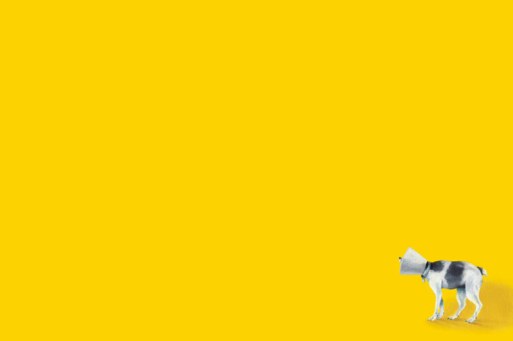
This painting kills me. It’s titled “Brave Cone Dog” and it’s by a wry, puckish character named Brandon Bird, who makes very witty pop art. I don’t have much to say about the minimalist image, because it speaks (morosely, piteously, hilariously) for itself. I own a framed print of it, and everyday it stirs in me an emotional milkshake. 

cone_dog.jpg
“Brave Cone Dog”

This I like, from a recent book review: “Walter Benjamin wrote that a truly great sentence is one that’s been burnished to perfection, then sabotaged in some respect. Wounded or weakened just sufficiently to seduce.”

As a kid, I was a quivering hypochondriac. To wit: At age 7 I had a cramp on the left side of my belly that lasted a couple hours. Convinced it was appendicitis, I curled into a ball in my parents’ empty bed and envisioned horrors of surgery and gloom and, yes, death. The cramp subsided and I proceeded to watch TV, tear-streaked. Around age 9 I had a swollen bruise on my knee that I mistook for a malignant tumor. I crumpled on my bedroom floor in a sleeping bag, too distraught to clamber into bed, and imagined losing my leg to certain amputation. Later, I calmed and accepted that it was just a bruise and I watched TV, tear-streaked. I still often misdiagnose myself, hurling me into fleeting, fluttery hysteria. Then I watch TV, tear-streaked. Reader, WebMD is your foe.

In this week’s “By the Book” column in The New York Times, singer-author-badass Patti Smith is asked “What’s the last great book you read?” She replies:

51hC8kgrS9L._SX308_BO1,204,203,200_

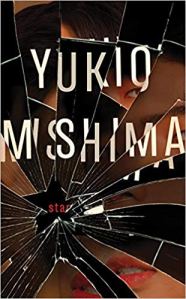
Recently I was captured by two small, addictive works. “Kingdom Cons,” by the Mexican author Yuri Herrera, floored me. … And “Star,” by Yukio Mishima, is a startlingly modern, hypervisual jewel; it could be a really interesting movie. Both books were mesmerizing, seeming to fall in my hands from an alternative sky.

As I’m doing a semi-immersion in Japanese literature and film in preparation for a fall trip to Japan, I picked up “Star,” which is about a hot movie actor in existential distress. From Smith’s zippy description, I expect glitter and diamonds.

At the cafe today, a 30-something hipster in a wool fedora, four-day stubble and ratty Chuck Taylors sans socks sat next to me, slipped on headphones and went on to loudly tap his feet and roll his head, wearing an imbecilic grin, all but dancing in his seat. I wanted to spill his kombucha. Was I wrong? And: He wore a large thumb ring.

ichi_the_killer_poster.jpg.500x715_q85_crop-smart

One of the Japanese movies I’m revisiting before I go to Japan is “Ichi the Killer,” a shock-cinema bloodbath from bad boy auteur Takashi Miike (say: Meek-a). About a kidnapped yakuza boss, his punky minion — a psychopathic sadomasochist whose specialty is baroque disfigurement — and the titular hero, a bullied weakling out for revenge, this notoriously twisted crime comedy was tonic jazz the first time I saw it. Now it mostly plays as an extreme exercise in tedious transgression: How disgusting can we get? Bloated with rape, murder, drugs, gangsters, prostitution, masturbation, self-mutilation, unthinkable torture, disembowelment and ample amputation, the film is set in the sometimes seamy nightlife district of Shinjuku in Tokyo. Which is where I’m staying. 

I‘ve owned pet rats named Phoebe, Becky, Tammy and LaShonda. A friend told me I’d inadvertently given the rats the names of receptionists at construction companies.

The other day I actually saw a guy rollerblading in the neighborhood. That is something you cannot unsee. It’s sort of like seeing someone on a unicycle.

Words I love: blithebloviate, evanescent, loquacious. Let’s add nincompoopery to the list.

Summer’s sweet cessation

When last I checked, the world was in tatters. But that’s a trifle for another day. Thing is, I have a wicked splinter in my finger and a bodacious pimple on my forehead that’s a little too Cyclopsian for shrugging off. Then there’s the boy dog, whose sphincter-sniffing flirtation with the girl cat might soon require rings, roses and rice. We remain calm. 

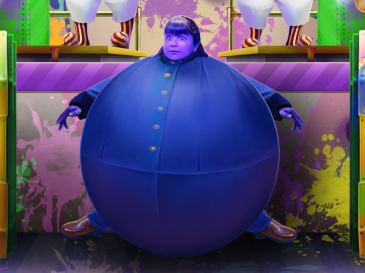
Summer subsides and the late-August slash Labor Day doldrums set in like a hard crust over the celebratory season. Things are dying down. Things are dying. I for one had no idea that Denise Nickerson, who played ravenous gum-chomper Violet Beauregarde in “Willy Wonka & the Chocolate Factory,” died in July at age 62. She and Gene Wilder — gone. Let’s hope Charlie doesn’t kick the bucket. 

db1ckkv-506dd560-6a8d-475e-8135-b8e4554650be

Speaking of blueberries — recall Violet inflates into a gigantic blueberry and must be rolled away by Oompa Loompas — that finger-staining fruit is my single breakfast comestible each day. I gobble them by the handful, a disgusting image but we’re all adults. They’re a summer fruit and so make a timely cameo in this post, which is sort of about the end of summer, the now, but we’ll see where it takes us. Already I’m rather lost.

It was a short summer, merciful, not too warm, and it moved with benign velocity. So glad it’s shuttering, as I look forward to crisp breezes, light coats, brisk walks without drenching humidity, Oscar-caliber movies, my Tokyo sojourn, obscenely short days — it’s 8 p.m. now and almost pitch-dark — and my usual litany of fall and winter joys.

At the cineplex, I dodged the onslaught of summer sequels and superheroes — brain-beating blunderbusses — for “artier” fare like Tarantino’s sophomoric garble “Once Upon a Time … in Hollywood,” a shambolic misfire, and the cathartic Australian horror-thriller “The Nightingale,” a savage, soulful gut-punch of vengeance and violence. For early-summer froth, the delirious comic excess of “Booksmart” can’t be forgotten. Fall brings promise: Joaquin Phoenix as “Joker,” “Little Women” and Scorsese’s “The Irishman.”

818-chEp3WL._SL1500_
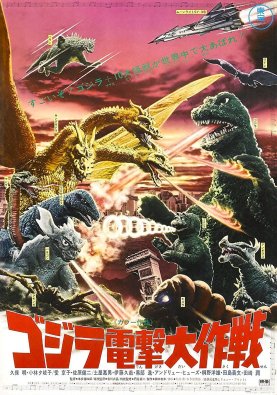
“Destroy All Monsters”

Movie mad, I always watch films from the country I’m going to visit next. So, Japan. I re-watched the 1954 version of the original “Godzilla,” which is startlingly melancholic. (The monster dies a slow, sinking death. Oh: spoiler.) In 1968’s full-color “Destroy All Monsters,” a menagerie of kaiju creatures, from Godzilla and Mothra to Gorosaurus and Rodan, unleash murderous mayhem on the world’s largest cities. Aliens are somehow involved. Silly — and spectacular. (Lest it seems I’m just watching monster movies, I’ve also re-watched Ozu’s “Floating Weeds,” Oshima’s “In the Realm of the Senses,” Kurosawa’s “The Hidden Fortress” and Suzuki’s “Branded to Kill” and “Tokyo Drifter.”) 

As I cut short my late-summer reading of Haruki Murakami’s timid, ultra-bland novel of youthful romance “Norwegian Wood” I picked up Toni Morrison’s “Sula,” which has more literary panache in its first 20 pages than Murakami’s snoozer has in 150.  

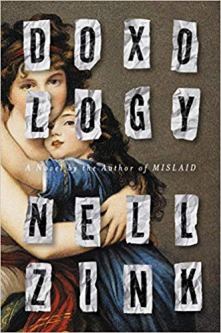
51pY6F589HL._SX329_BO1,204,203,200_.jpgAutumn looms and I have a pair of fall novels picked out: “Doxology” by Nell Zink and “The Topeka School” by virtuosic young writer Ben Lerner, whose “10:04” and “Leaving the Atocha Station” are rhapsodic in their essayistic intelligence and gliding beauty. “10:04” is one of my favorite novels of the past 10 years. I’ve read it twice. So far. 

I admit I struggled with Zink’s acclaimed 2014 fiction debut “The Wallcreeper.” We didn’t jibe. The new book has been called her best and most ambitious, “a ragged chunk of ecstatic cerebral-satirical intellection … bliss.” I am all over that.

But first, after Morrison’s promising “Sula,” it’s back to Japan and Banana Yoshimoto’s international cult hit “Kitchen,” a bittersweet novel whose “whimsy” and “simplicity” are frequently hailed as virtues, making me wary. Those words could be code for “precious.”

Now that I’ve mentioned Japan three hundred times, it might be a good place to state why I’m really exalting summer’s end — my October-November trip to Tokyo and Kyoto. Which, lucky you, you can read more about as plans unfold.

destination_tokyo.jpg
Tokyo

Yet so much is great about fall, not just a fleeting vacation. Autumn is coming fast — the calendar says Sept. 23, but we all know it starts on Labor Day — sucking summer back into the gooey abyss from whence it came. Japan, new books, new movies, new weather — all good and well. But fact is, fall is its own prize. It’s all fine, shimmery sublimity.

Random reflections, part III

“We die — that may be the meaning of life,” said author Toni Morrison, who died Monday. “But we do language. That may be the measure of our lives.”

I‘ve tried many times to watch “The Princess Bride,” “Stand By Me” and “When Harry Met Sally,” but I’ve never been able to get through any of them. They are ham-handed. They aren’t funny. They clunk. That Rob Reiner directed all of them is strictly coincidental.

ht_meg_ryan_billy_crystal_when_harry_met_sally_jc_140711_31x13_992.jpg
The famous “orgasm” scene, which gets more embarrassing with each viewing.

I swear, Cubby the dog has a perverse crush on the female cat Tiger Lily. He gawkily flirts with her, and her eye-rolling indifference is touching. Such inter-species passion is a spectacle. I sure hope I don’t see a newborn kitten that barks.

I jot in my journal pretty much every day with purpose and the fugitive hope of substance. The author Yiyun Li writes, “How did I forget to start each and every page of my journal with the reminder that nothing matters?” My head nods vigorously.

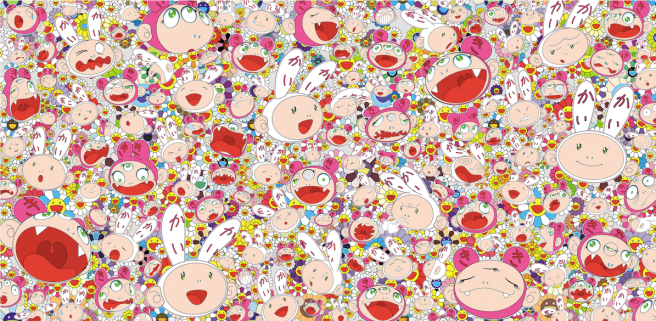
The last time I went to Japan I got hooked on the sizzling pop art of Takashi Murakami, whose work spans painting, sculpture, fashion, merchandise and animation. It’s fun and whimsical and dazzlingly colorful — and not a little geeky. His subject matter is cute (kawaii), psychedelic and satirical, with well-trod motifs: smiling flowers, mushrooms, skulls and manga culture. Murakami could be the Jeff Koons of Japan. I’m going there soon. My goal is to get Murakami’d, big time.

210522_1325221.png
My phone’s current wallpaper.

A few years ago I discovered I had an adult-onset allergy to shrimp and prawns. It’s like the second worst thing that’s ever happened to me.

41cFc108RGL._SX329_BO1,204,203,200_

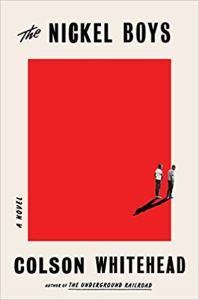
A fan of novelist Colson Whitehead, I’m deflated by his new, lavishly overrated book “The Nickel Boys.” It lacks energy, momentum and finally fizzles at the halfway mark. So I put it down (I also couldn’t get into his early novel “John Henry Days,” though I’m all about “The Intuitionist” and “The Underground Railroad”) and picked up Haruki Murakami’s “Norwegian Wood.” I’ve read one other Murakami novel, “The Wind-Up Bird Chronicle,” and I almost threw it against a wall. The edge is where I live.

Tonight we popped a bottle of Suntory Whisky Toki, “blended Japanese whisky that is both groundbreaking and timeless.” It is silky and smoky with strong, sweet vanilla notes. I think none of us is going to bed.

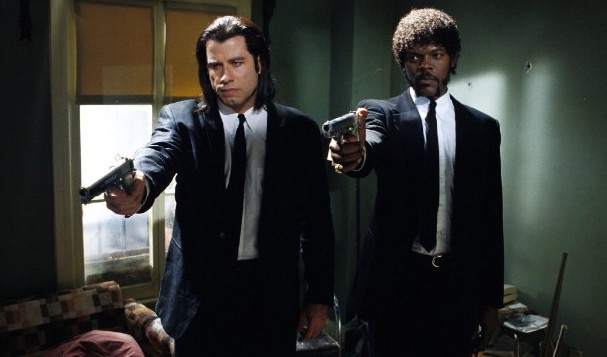
Quentin Tarantino has made movies. He has made only two masterworks, “Reservoir Dogs” and “Pulp Fiction.” That was a very long time ago. The rest of his oeuvre seesaws from juvenilia to junk. As critic David Denby wrote on the release of the imbecilic “Inglourious Basterds”: “Tarantino has become an embarrassment: his virtuosity as a maker of images has been overwhelmed by his inanity as an idiot de la cinémathèque.”

140922202605-08-pulp-fiction-story-top.jpg

Intimacy is scary. Love is scarier. Someone recently dubbed the phenomenon “the terror of loving.” I like that. Its precision is chilling.

I am typing most of this in the air, row 45, seat G, on United flight 497 to San Francisco. You might say I’m skywriting. Forget I just said that.

Random reflections, part II

I wish I played chess, even so-so. At this point, I have zero interest in learning how. 

51KO3uIoSNL._SX329_BO1,204,203,200_

The best book I’ve read this summer is the acrid novel “Fleishman is in Trouble” by the regrettably named Taffy Brodesser-Akner. Terrifically observant, mordant and relevant, it’s dubbed a “timely exploration of marriage, divorce, and the bewildering dynamics of ambition.” I’m too lazy to describe it. But it’s superb, and superbly smart. If you’re married, or divorced, beware. It has teeth.

It’s in the news today. Never in a million years would I want to climb Mount Everest. Or any mountain for that matter. I don’t do tents. Or canteens. Or oxygen tanks. Or death.

I booked a flight to Tokyo for late October. I’m going to eat sushi and more sushi and sip sake and Japanese whiskey and absorb on a granular level Shinjuku nightlife. I may barf.

When I was 8 I saw big white beluga whales at SeaWorld. They made me kind of sick, all bulbous and albino, their big, meaty cow tongues showing when they smiled. Many years later — last week, in fact — I saw the belugas again at SeaWorld. They still make me ill. 

Pregnant Beluga 1_0918

Charismatic badass and “Blade Runner” actor Rutger Hauer has just died. So, alas, has presidential impeachment. R.I.P. 

A movie my mind keeps returning to is the new documentary “Honeyland,” which is about a lone female beekeeper in the unforgiving mountains of Macedonia and her struggles with her unruly neighbors, her sick mother and the mere notion of survival. It sounds terrible. It is sublime. I could see it winning an Oscar. See trailer HERE.

maxresdefault.jpg

My brother and I have reservations next month at Alice Waters’ legendary Berkeley, Calif., restaurant Chez Panisse, where we will dine on such succulent fare as, quote, “Sheep’s milk ricotta ravioli with chanterelle mushroom and garlic brodo” and “Sonoma County duck confit with frisée, haricots verts, fig vinaigrette, garlic crouton, and sage.” I don’t know what half that means. I don’t care. I will delight, as my wallet gently weeps.

I promised I would never mention my Sea-Monkeys again. I lied. There are a half-dozen survivors, swirling through the briny tank, each one as big as Moby Dick. I hope the cats are hungry.

Too many critics and other dopes are declaring season two of the amazing Amazon Prime comedy “Fleabag” superior to season one. Wrong. Season one is fresher, funnier, wiggier, better. Season two is splendid, no doubt, and you should watch it, as it’s the best comedy on TV. I’m just saying.

fleabag-crying

Speaking of TV hilarity, the lamest, most overrated “comedy” is “Bojack Horseman,” a Netflix show so consistently and embarrassingly unfunny, such a bizarre misfire, it just makes me tired. (If you find this show amusing, please leave a comment and explain.)

9d6ec2a4dbc9179d270f064178d60ff9e5d0b7a0.jpg

Some years ago, my Dad took us to an incredible slew of jazz and comedy shows. A few luminaries we saw live: Jerry Seinfeld, Bill Cosby, Robin Williams, Miles Davis, Ella Fitzgerald and Dizzy Gillespie, as well as live NBC tapings of “The Tonight Show with Johnny Carson” and, way back, “The Goldie Hawn Special” featuring then-pop idol Shaun Cassidy. The whole thing’s a head rush.

I recently bought a can of sardines. I keep looking at it, baffled and fearful.

A pungent parting shot for ‘Game of Thrones’

“Game of Thrones” is over — thank god.

And yet the chatter sputters on. Fans can’t clam it. Of all the “GOT” noise — a FOMO racket, a bellyaching din — this might be my favorite snippet, courtesy of clear-eyed Washington Post critic Hank Stuever, whose healthy cynicism is gleefully cathartic:

It’s likely you’re already aware of the dissatisfaction with the conclusion tweeted hither and yon — six weeks of nitpicking complaints, first-class nerd whining and an ungodly amount of postgame analyses. Consider all those hastily posted diatribes or that pointless online petition with a million deluded signatures on it, demanding (demanding!) to have Season 8 scrubbed and remade. In some ways, “Game of Thrones” had grown so popular that it made its viewers look embarrassingly out of touch with life itself.

This can only happen when we love our popular culture a little too hard, crossing some line of personal investment, forgetting when a TV show is only just that. It was our fault for coming to regard the show as the apogee of the medium itself.

It’s also why I’m glad some unnamed, unwitting hero left a coffee cup in the camera shot in the episode that aired May 5. That one coffee cup humanized the whole endeavor. It reminded us that a TV show, no matter how absorbing, is a folly, a fake, a job that someone is hired to do, so that an HBO subscription can be sold to you. The coffee cup will be scrubbed away with a quick flick of magic technology; but before it’s entirely gone, I hope they give it an Emmy.”

p-1-whatand8217s-that-coffee-cup-on-game-of-thrones-worth-to-starbucks.gif.jpeg