Sun, sand and a menagerie of bashful animals

I don’t do sun and fun. Yet here I am in breezy, easy San Diego, Calif., for a shortish vacation with the extended family — mother, brother, nephew, et al. Seven of us total. 
Why do I shun the pool and the Pacific? I sure didn’t used to, particularly growing up in oceanside Santa Barbara, Calif. There I was like any splash-happy, wave-plunging kid, giddiest reverting to a primal state of fluidity, getting soaked, sandy and sun-baked.

I think I just grew out of it. By my teens, living in the temperate San Francisco Bay Area, I loathed the heat, anything over 75 degrees was excruciating. And it still is. I’m a 40s and 50s kind of guy. Fall and winter are my homies. Jeans, jacket, scarf — the ideal uniform. Shivering is my version of sweating. (Sweat is my kryptonite.) I aspire to be an Inuit.

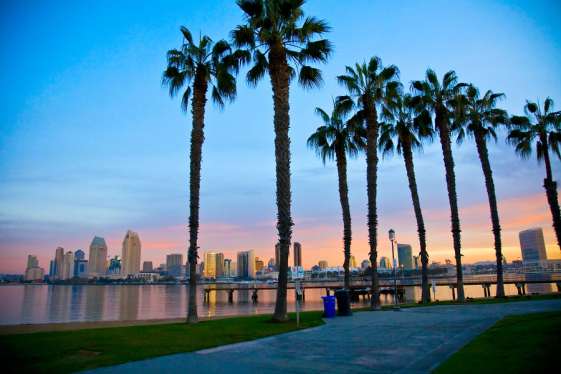
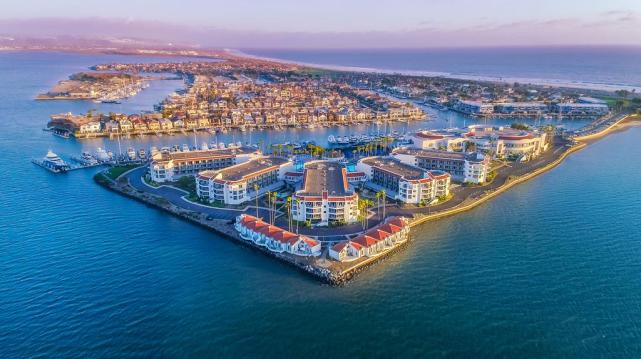
Against my nature, but not my will, I’ve been cajoled to one of the beachiest places on the planet. Briny water everywhere. The profusion of palm trees — Christ. Boats and bikinis, flip-flops and fish, pink flesh and pervasive pastels. It’s Coronado Bay, San Diego.

203105671.jpg

I actually sat poolside — in the shade, with shirt and sneakers firmly affixed — this afternoon and survived. I had a book (Peter Orner’s new, remarkable short stories “Maggie Brown & Others”) and the laptop (the resort, yes, resort, has spiffy wifi) and a beer and an al pastor taco, so it worked swimmingly, if you will. Then I repaired to my room for some AC time, even though the temps all week are in the mercifully mid-to-low 70s. 

I begged off the beach. The six of them headed out to sit on sand beneath yawning umbrellas and presumably tiptoe into the chilly sea. I had no business there, as much as I love sharks. But the chances of a shark sighting were as good as those of me not being bored out of my skull plopped on mushy sand under a giant parasol. (Instead, I’m writing this. I bet you wish I went to the beach.) 

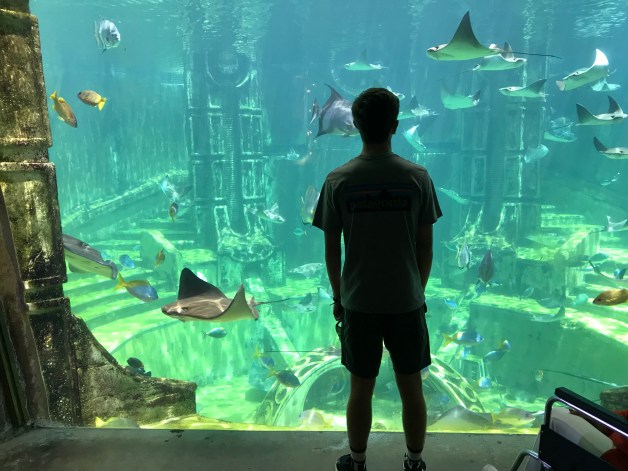
When many of us think of San Diego, the mega-famous zoo (known as the world’s best) and SeaWorld spring to mind. In other words: creatures, critters, cetaceans, crustaceans. Now, those I can do. Captive animals crack my heart, but at least the respected zoo sustains “natural” habitats and breeds endangered species. And even the ethically iffy SeaWorld has banished its dubious in-park breeding and tawdry theatrical whale shows. (Shamu — rhymes with boo.)  

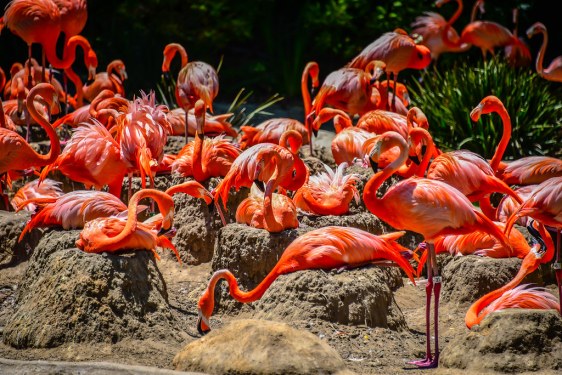
Today was San Diego Zoo day, and it was about as thrilling as watching a flock of pink, and a few juvenile gray, flamingos stand on one preternaturally long and spindly leg and snooze, or projectile poop, or, in the case of the gray downy youngsters, stumble and wash and act as adorable as can be. When flamingos are a highlight, well …

27845391521_03f8fb4be8_b.jpgBesides being reminded on a double-decker bus tour around the park that hippos are “the most dangerous animals in the world” (for some reason, I find that exhilarating) and that some wolves smell like seething skunk bud, mostly the day consisted of trying to locate animals in their enclosures. Craned necks and dashed hopes were major exertions. It was the land of the empty habitat. 

There’s one alpha gorilla sitting tall and proud, and there he goes, vanishing behind a rock. There’s a sole polar bear sleeping up on a hill, partially obscured. Ah, I spy a pygmy hippo — 90-percent submerged in a pond. And so on. Zoos might be the most exasperating animal experience available. Go to a mall pet shop to see more furry mammalian action. 

But the weather remained agreeable — low-70s — so things meteorologically were dreamy. And they sell beer all over the place. (Wait, $9 for a can of Corona — where are the hippos when I need them?)

I don’t want to complain. I saw frolicsome monkeys and fat pythons and some Chaplinesque penguins, not to mention a guy dressed in a ragtag rhinoceros costume posing for pictures who made legions of unsuspecting visitors uneasy.

But where, I direly wondered, were the real rhinos? And giraffes? And hyenas. And, come on, the platypuses? We spotted, nestled in thick foliage, a koala. It was like seeing a child’s stuffed animal stuck in a way-up tree. It wanted nothing to do with us, the cranky marsupial. That’s what happens when you sleep 22 hours a day.  

A leopard showed its spots — for about 34 seconds. Then there was the funky smelling wolf — a total no-show, just a nose show. The macaques — same. Empty habitats are like unfulfilled dreams, dollar bills set on fire. Enter the gift shop and suddenly the animals are fluffy, smiling, en masse, thriving. A simple magnet of a magnificent mountain lion or a whimsical t-shirt of a rhinoceros (“Save the Chubby Unicorns”) about makes it all OK.

image.png

Japan by mouth

There’s a popular documentary from 2011 called “Jiro Dreams of Sushi.” As I plan a trip to Japan, I also dream of sushi. And ramen. And Sapporo. And yakitori. And sake. And squid. And Godzilla. 

If Jiro, a wispy 90-ish sushi master, merely dreams of sushi, I fully rhapsodize about sushi. (OK, I exaggerate. I only think about sushi, mm, twice a week. But it excites in ways other foods do not: Its silken, room-temperature raw-dacity; glistening, quivering slipperiness; palate-dancing umami-ness. Does that make me a sushi master? I think it does.) 

Jiro poster
Sushi swirls around the dreaming Jiro’s head. He dreams of sushi. He swims in it. He wonders: Why so much sushi? He dreams of retirement.

What I’m saying is I will ingest gobs and globs of raw fish during my 12-day fall journey, to the point of possibly getting mercury poisoning, which would be one hell of a souvenir. Sushi, that artisanal seafood delicacy, isn’t cheap, one reason why I eat it sparingly. Another reason is that where I live fine sushi is as rare as Rodan sightings. And mediocre sushi, like a half-ass steak, makes one ponder existence darkly. 

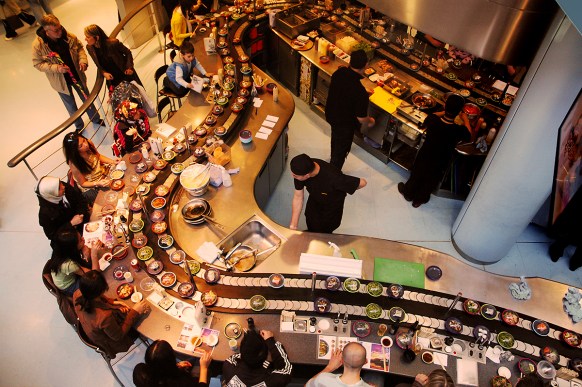
Therein lies the miraculous ingenuity of Japan’s conveyor-belt sushi (kaiten-sushi) — not amazing, not bad, but invariably cheap and gratifying seafood that winds through the restaurant on exactly that, a conveyor belt, like an assembly-line of deliciousness. Its brilliant utility blots out its majestic absurdity.

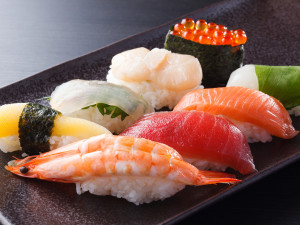
Round and round the little plates go, each saucer’s cargo a slab of prepared-before-your-eyes nigiri, circling a seeming mile on a tiny conveyor belt, waiting for you to snatch it at your desire as it rattles by. Each plate or piece costs about a buck-fifty or less, so a meal, for me at least, ranges a not-bad $10-$15.

Yo-Sushi.jpg
Conveyor-belt sushi, like a buzzing food factory.

But why not try Jiro’s sushi shrine, the tiny 10-seat Sushi Jiro, a Michelin three-star establishment/closet located in Tokyo’s Ginza subway station? For one, it’s $300-plus a meal, no exceptions. Two, it is nigh to impossible to net a reservation, though I did spot the so-called Jiro Dreams of Sushi Jiro Dinner & Luxury Tour at a fee of $1,500 per head. This one’s for Jiro cultists/completists and FOMOs only. Plus, men have to wear a blue or white shirt and a blazer and we know that’s not going to happen.

b4eizl4ezm49wqtayhat.jpg
Edo-style sushi

So I’ll go back to school. Namely Sushi University, a two-hour tutorial pig-out in which you learn while you nosh at a fine Tokyo sushi restaurant. The pitch:

“How would you like to sit at an authentic, Edo-style sushi counter, enjoying sophisticated conversation with the chef? Each excursion includes a skilled interpreter who joins you from start to finish, allowing you to experience the culture and history of sushi as well as learn about the chef’s specialties and style of the restaurant.”

(Smoking and the wearing of perfume are forbidden lest they corrupt the delicate fishy.)

If I’m not a sushi master by now — though I think we’ve established that indeed I am — then surely I will be one after graduating Sushi University. Hai!

On my two prior trips to Japan I was gastronomically rudderless, lost, quite pathetic. I just ambled about, making impromptu eating choices based on whatever looked yummy and inviting in the neon-soaked Shibuya and Shinjuku areas where I stayed. I’d duck into an inevitably minuscule and packed yakitori place or busy conveyor-belt sushi joint, or simply grab some street food. (I ate whale. So sue me.)  I must say, I did eat fine.

Structure is the operative word this time. And learning (see: Sushi University) is part of it. Hence the Sake Tasting and Lecture I’ve enrolled in, aka Signature Sake-Tasting Course, a 10-plus glass sake tasting including sake snacks (or tsunami) and a lecture in English. It’s conducted at one of the most famous members-only sake houses (izakayas) in Tokyo, or so they say. (It could be a bar owned by the instructor’s cousin Rocco.) I don’t even like sake. But I am going for liquid enlightenment, to open my buds and brain. By course end, I will be a sucker for sake, otherwise I will upend the table and demand a refund. And then I’ll probably get roughed up and tossed to the curb.

maxresdefault.jpg

My Tokyo hotel is smack in the thwumping heart of kinetic, cornea-cooking Shinjuku, famous for its oceanic bar scene, insomniac nightlife and seedy red-light district — and for sucking up half the world’s electricity in hyperactive signage. I want to dig in with a little help from my friends, so I’m taking the Tokyo Bar Hopping Tour in Shinjuku — Explore the Hidden Bars in Food Alleys. I beg it’s as bulging as that unwieldy title, as our small group weaves through itty six-seat pubs and sake houses of the Golden Gai for food and drink and, I hope, staggering wisdom. Keep your tawdry Love Hotels. I’m not playing around. I’m here for elucidation and libation. Now where in hell do I get a stiff whisky? 

nightlife-shinjuku-tokyo-japan-one-s-business-districts-many-international-corporate-headquarters-located-here-40973672.jpg
Shinjuku — batshit.

Capping my Tokyo culinary explorations is an obligatory trip to the famed Tsukiji Fish Market for an early morning, 3.5-hour “food and culture” walking tour at the outer part of the massive market. Here’s some copy that’s as canned as Chicken of the Sea:

Rub shoulders with Michelin-starred chefs as they shop for ingredients at this sprawling, 80-year-old market for all things aquatic. Investigate the various stalls selling fish, shellfish, and everything in between, and sample Japanese favorites such as sushi, dried bonito, fresh oysters, and sake. Eat and drink like a Japanese local.”

Exactly. I want to eat and drink like a local, not a western bobble-head boob. That’s the point of this Edo-education and sake schooling — to figure how it’s done and cultivate an experience of maximum authenticity. I’m more about learning the history and culture than the language, though I do know three words in Japanese. Maybe four. No. Three.

shutterstock_1061193218.jpg
Tsukiji Fish Market. Looks disgusting. Tastes great.

At this point, I’ll be full up to the gills in raw fish, sake and sundry seafoods. I will have relished a moveable feast, an embarrassment of fishes. I will have been transported, spirited away. Jiro, that old master chef, will have nothing on me. I will have dreamed of sushi, and worlds more. I will at last be sated, and ready to start all over again. After you …

Seeing SeaWorld with moral clarity

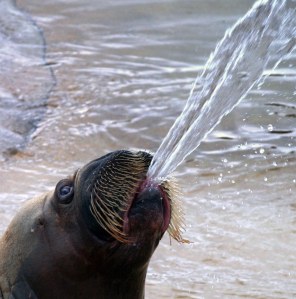
The last time I was at SeaWorld in San Diego, epochs ago, an elephantine walrus sprayed a vast and violent spume of water at my mom, soaking her in spit and salt water and leaving me half aghast, half in giggles. It was a splashy public display — a decent crowd circled the creature’s enclosure — and mom was not overjoyed. Harpoons danced in her head.

This was the revenge of the pinniped, a blubbery brown Jabba the Hutt that seemed to be broadcasting to us all, “Stop taunting, gawking and pointing at me and my helplessly oppressed prison mates. Enough! Sploosh.

3831424696_c9a7ba4813_b

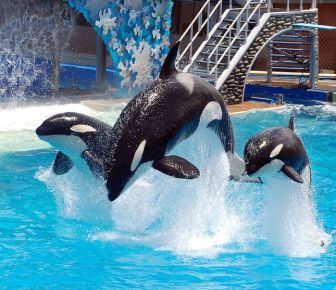
If only all the park’s captive marine animals — penguins, dolphins, seals, sea otters, orcas, sharks, florescent fishies — could speak so eloquently, so mean and to the point. Because these swimming, jumping, barking, glowing creatures are not happy campers. They are abductees, held against their natures, highly evolved wildlife reduced to playthings, ogled objects, effectively slaves. They should hold a hunger strike, or incite a riot, or at least sign petitions.  

I’m returning to SeaWorld this month with a hard gulp of guilt. First, there’s the raping of my wallet: the standard entry fee is a leap-off-a-bridge $92. Surely at that price I can ride a killer whale and feed a Great White and take home a baby otter. (But, uh-uh, I can’t.)

But more importantly I am guilty about all those animals, many of which have heartrending backstories. It mostly plays like this: The animals are snatched from their mothers on the open sea and dropped into a tiny, concrete, chemical-laden pool for a torturous eternity of crowd-pleasing antics, frozen fish food, disease and premature death. Did I note that the mothers from which they are snatched are often slaughtered? There’s that.

D6JAryUUYAExLOo

Despite meager improvements — SeaWorld, under tremendous public pressure, ceased its orca shows in 2017 — the new documentary “Long Gone Wild” reveals a “wildlife trade that includes capturing orcas from the wild and selling them to the exploding marine theme park industry in China, and points to the hardships orcas experience in captivity, such as collapsed fins, broken teeth, and severe boredom and depression.”

I have little doubt the remaining killer whales at SeaWorld are borderline suicidal. 

And why did SeaWorld San Diego halt its theatrical killer whale shows? It’s thanks in large part to powerful agitprop, particularly the 2013 documentary “Blackfish,” which follows a performing killer whale’s cruel treatment in captivity and its resulting swath of destruction, killing several people while in captivity.

(As for swimming with dolphins, that exotic brand of blissful exploitation: also reprehensible. See HERE and HERE.)

So off to SeaWorld I go (it’s a family thing). I can bring money, I can bring empathy and sympathy and an overall spirit of goodwill. I can look a dolphin in the eye and whisper, “Dude, hang in there. You can do this.” I can tell a walrus to chill and enjoy his prison comrades, before he loogies in my face and tells me to go to hell.

I can’t free Willy, but I can instill in him and his sea-park pals dignity and self-worth. It won’t be easy — those flapping, clapping sea lions look thrilled to be there, despite yelping like they’re being run over by a Range Rover. Yet with rectitude, altruism and a soupçon of soul, the animals might know we’re out there, and that we give a damn.

shutterstock_68472997.0.0

  • For more on the ethical iffiness and ickiness of SeaWorld, go HERE and HERE.

Random reflections, wryly

I have never done karaoke, and I never will.

I don’t understand runners. I don’t know what in the world they are doing.

Dancing — a faint memory from my roaring twenties that I hope goes away.

Reggae is the devil’s flatulence.

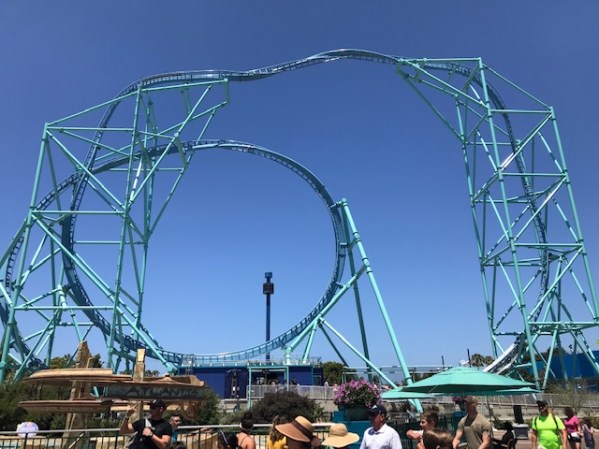
A good, mean rollercoaster mainlines an unparalleled high. 

There is nothing sexier than a comely woman reading a book. 

Cars. I will never get them. They are like refrigerators — necessary appliances.

‘Good dog’ is redundant.

People who purposely don’t travel are unevolved and sad. (And people who say Munich is better than Paris are the most unevolved and most sad.)

Going to the movies alone is the best.

Religion is so radically misunderstood, so repulsively knotted up, we should hit delete and start all over again.

I am constitutionally incapable of playing charades.

Giving money to your alma mater is strictly for suckers.

Unless you’re doing it to a tiny child, the high-five is socially questionable. Fist-bumps — criminal.

There are worse things than tongue piercings. Though I can’t think of anything.

When an adult says they’re “reading” Harry Potter, they’re not really reading at all.

Sushi is sublime. I’ll even eat the grocery store crap.

I‘m thinking of going back to Japan. The more I think about it, the crazier I get.

I have this thing that if someone tells me they don’t read, I want to go back in time to the moment where I hadn’t met them.

Carnivals are disgusting and revolting. I adore everything about them. Even those poor goldfish.

I can’t do the Great Outdoors. It’s the outdoors part that gets me.

I like sharks a lot. If one bit me, it would probably like me too.

Pet rats are like itty-bitty dogs — highly intelligent, funny, trainable, social, responsive. They drink beer and eat anything and, well, everything. Then at about 2-years-old they die and shatter your heart into 10,000 pieces. They’re the best.

If, in a post-apocalyptic world, all sports were wiped out, I wouldn’t care a whit. Take the fans first.

I was thinking of going to a local food festival and parade. Temporary insanity just creeps up on you.

roller-coaster-149508746-57ac7eb45f9b58974ace1b67.jpg
Good.
keep-calm-and-love-reggae-d001012131649.png
Evil.
_105702604_shark976.jpg
Cool.
Tongue-Piercing-Girl_620x349.jpg
Fool.

A sacred place. Even for heathens.

I last visited Notre-Dame just over three years ago, in fall 2015. When in Paris, I invariably duck into the grand Gothic cathedral several times, because it’s there, because it’s beautiful, because its draw is irresistible. It is Paris splendor epitomized.

I’ve been to Paris on five occasions, which means I’ve been to Notre-Dame at least 15 times. It never gets old. Rather, each visit rewards with something new and startling. Sometimes I just hang out on the plaza in front of Our Lady — the sprawling Place Jean-Paul II Square — sipping coffee, people-watching, marveling at the twin bell-tower facade and those maniacal, sniggering gargoyles perched way up high. 

A Catholic apostate and mid-level opponent of organized religion, I don’t worship in Notre-Dame, which went up in flames yesterday, mostly surviving the catastrophic blaze that had the world aghast. (Maybe there is a God.)

merlin_153563949_4a583841-241c-47fd-acff-a7c8dff47f89-superJumbo.jpg
Notre-Dame Cathedral in flames Monday in Paris

I don’t go for the holy experience, but the wholly experience — a soothing spiritual state of serenity and rumination, reflection and introspection, inspired by the vaulting, dimly lit sanctuary’s artwork, architecture, luminescent stained-glass and twinkling constellations of prayer candles. And that’s just the interior. 

Agnostic natives are with me, according to a piece in today’s NY Times: “France is one of the least religious countries in Europe. Urbane, intellectual Parisians often dismiss religion as archaic and unenlightened.”

IMG_0736.jpeg
Notre-Dame facade, fall 2015

But like other transporting religious structures around the world — from the Jama Masjid mosque in Delhi to the Wat Arun Buddhist temple in Bangkok — Notre-Dame is staggering to even this peevish secular humanist, with its gilded grandeur and gravity-defying architecture that toils so magnificently to transcend crude corporeality and reach for the heavens. In all her glory, Our Lady, I think, tickles the firmament.

(This goes for scores of religious sanctums I’ve traveled long and far to be dazzled by: the Blue Mosque in Istanbul, St. Peter’s in Rome, Angkor Wat in Siem Reap, La Sagrada Familia in Barcelona, and on and on. All instill dizzy awe, even if I’m not always buying what they’re peddling.) 

Even without the slightest religious propensity, I bewail the damage to Notre-Dame. Like most, I was sickened watching flames devour the cathedral, my old friend, on the news. More is there than a quaint, history-encrusted, 850-year-old church. It is the ineffable, the mystical, the irrefutably sacred.

img_0690.jpeg
Standing tall, fall 2015.

The cathedral, with a wingspan from Joan of Arc to Victor Hugo to Disney, “is universal, Western, religious, literary and cultural, and that’s what makes it different from any other object,” says a French analyst in the Times. “It’s the whole spectrum from the trivial to the transcendent, the sacred to the profane.”

In other words, it is stubbornly irreplaceable. Its survival, by a hairbreadth, an act of God, divine intervention, is something I am loath to believe in: a naked miracle.

Whatever saved it, I think it was more the skill, action plans and water hoses of the Parisian fire fighters than, say, the conquest of virtue vs. evil. But it doesn’t matter. Notre-Dame didn’t collapse or burn to cinders. It is, they declare, structurally sound. No lives were lost. And for that, all of us should sigh a collective amen.

But do note, those devilish gargoyles survived the flames, and they are still sneering.

gargoylesnotredame.jpg

Tippling Dixie

Sure, I took a nip on my trip this week to Charleston, South Carolina, not on the basis of “When in Rome …,” though there was a bit of that. No, I just like a good cocktail or Scotch or beer, particularly in a nicer establishment, like a fine restaurant or stylish bar/saloon. (Or salon: Where I get my hair cut, they serve free Prosecco, a nice Kardashian flourish.)

And, as part of what became something of a foodie journey (see that part here), I hit a lot of those places. My slogan: No driving, no hangovers, no regrets.

Right before my three-day trip to Charleston, I blogged about the award-winning small-batch boutique distillery I had my sights on, High Wire Distilling Co., on bustling — one might say boozy — King Street.

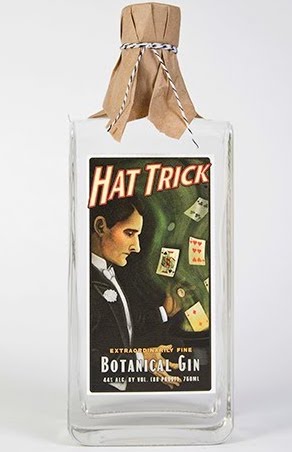
I made it, and took the short tour — the place is fashionably cozy and drips with hip — and partook in the tasting flight. The tour was $5, as was the tasting. (I also bought a bottle of the Hat Trick Extraordinarily Fine Botanical Gin for a reasonable $27.)

IMG_1425.jpg

IMG_1424.jpg

The High Wire tasting flight. Left to right: Hometown VodkaHat Trick Extraordinarily Fine Botanical GinHat Trick Barrel Rested Gin; and New Southern Revival Brand Rye Whiskey. Especially for how early in the day these were imbibed — noon shots on an empty stomach? — each libation exerted kick and fire and were exceptionally complex.

IMG_1423.jpg

At this upscale bistro I sipped the Nordic Witch — “bright and herbal, this witch is ready to head south for spring” — made of Old Tom Gin, Strega, Linie, Aquavit, Lime and Peychaud’s. It was superlative, swirly and tangy, but it was so small, I didn’t even take a picture of it. 

With dinner I had a Classic Whiskey Sour that hit the spot:

IMG_1417.jpg

Husk has one of the coolest, most coveted little bars in the city (big patio for you patio people), with potions to match. Waiting for a dinner table, I ordered a tasty Gin-Based Drink Special, whose name and ingredients I foolishly didn’t commit to memory.

But here it is:

IMG_1389.jpg

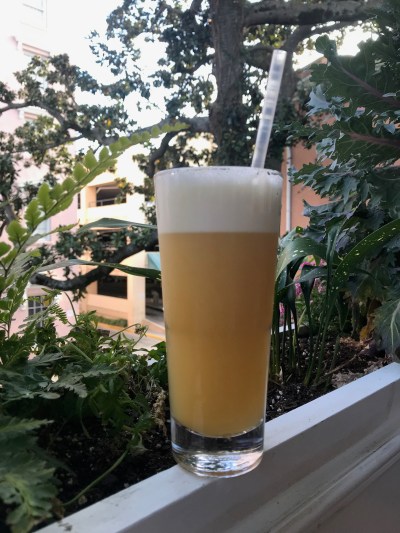
During dinner I got the toothsome and bracing Option Bee: Earl Grey-Infused Local Gin, Yellow Chartreuse, Honey, Lemon and Egg White. Below:

IMG_1397.jpg

My penchant for gin is glaring and at this classy, streamlined drinkery I stuck to my beloved botanicals with the assertive “Clover Club” — Hendrick’s Gin, Raspberry Preserves, Dry Vermouth, Lemon and Egg White — followed by the satisfactorily simple PGT (Proof Gin and Tonic)” — Hendrick’s Gin, Lemon Bitters, Cucumber.

Proof’s a neat place on crawling King Street, and I would have returned with more time.

JS5A9270-1024x683.jpg

Slathered in ersatz grunge and lacking snarly attitude, The Griffon touts itself as the authentic dive bar in Charleston, and apparently a lot of people who haven’t been to Charleston’s The Recovery Room or Dirty Franks in Philly actually believe this. This bar is a poser dive if ever there was one, a faux dump made to look beaten and badass with floor-to-ceiling wallpaper compiled of signed $1 bills. It tries awfully hard, and it made me kind of sad. The Griffon is the Planet Hollywood of dives, a cosplay simulacrum, a movie set. Spotless bathrooms? Yep. Tourists only. I had a $4 bottle of Miller Lite. Then I skedaddled.

IMG_1382.jpg

  • Finally, for non-alcoholic, caffeinated elixirs I spent mornings at the sleek, slightly industrial, mid-century and mini-menu’d Revelator Coffee Company on — where else? — King Street. Fully recommended. Free WiFi, tip-top drinks, cheery baristas.

o-2.jpg

Chewing through Charleston

I did it right, I nailed it. During my quick foodie tour through Charleston, South Carolina, I sidled up to the bars at five restaurants I urgently wanted to hit, the places that songs are written about, that journalists spill fragrant ink over, that Uber drivers gasp in amazement, “You got into (restaurant name here)?”

I researched and read. The internet was my friend. I watched Anthony Bourdain and “Chef’s Table” and “The Mind of a Chef.” I emailed eateries for the tricks and maneuvers that would guarantee I’d get in without a dinner reservation. (Simple: Arrive well before 5 p.m. Wait outside. When the doors open, nab a seat at the bar. Eat. Drink. Rejoice.)

Charleston is a powerhouse food destination, cutting-edge and farm fresh, and not one thing I ate was less than exemplary. Vittles vaulted me to that pleasure zone, a kind of palate paradise, where you sigh and go, Yeah.

Where and what I ate:

(Assume I loved every dish, passionately, and click the restaurant name for more info.)

  • HUSK, 76 Queen Street:

IMG_1393.jpg

Wood Fired White Stone Oysters, Green Garlic Butter, Lemon Vinegar, Fermented Chilies, served on a bed of rock salt

IMG_1394.jpg

Confit Duck “Cassoulet,” Heirloom Peas, Lowland Farms Brassicas, Pot Likker Broth, Pan Fried Farm Egg

IMG_1390.jpg

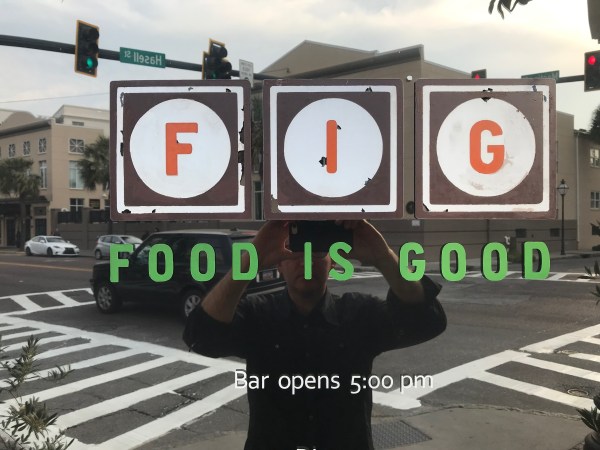
  • FIG, 232 Meeting Street:

IMG_1418.jpg

IMG_1416.jpg

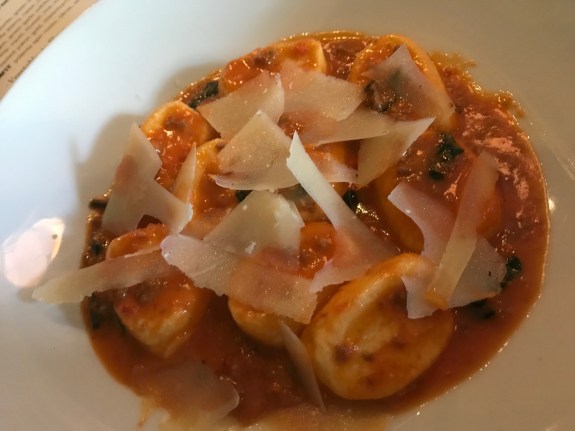
Ricotta Gnocchi alla Bolognese Parmesan, Mint

IMG_1419.jpg

A dazzling Chicken Confit with Brussels Sprouts and Fig (and lots of other complex goodness I can’t remember) over Polenta

A little about FIG: “The name is an acronym for ‘Food Is Good,'” writes Bon Appetite, “a simple epithet that doesn’t do justice to the level of cooking set forth by Mike Lata, the godfather of Charleston restaurants (he also owns The Ordinary).” 

Speaking of The Ordinary …

IMG_1427.jpg

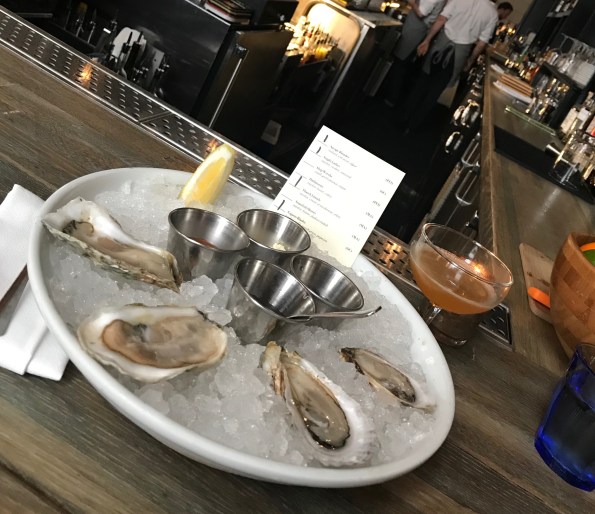
A quartet of immaculate, sweet and salty raw oysters, hand-chosen by the suave server/bartender. The orange beverage to the right is the zesty House Daiquiri: Plantation Old-Fashioned Traditional Dark Rum, Plantation 5-year Rum, Cane, Lime.

IMG_1428.jpg

Crispy Oyster Slider with a whisper of jalapeño (unbelievable)

IMG_1429.jpg

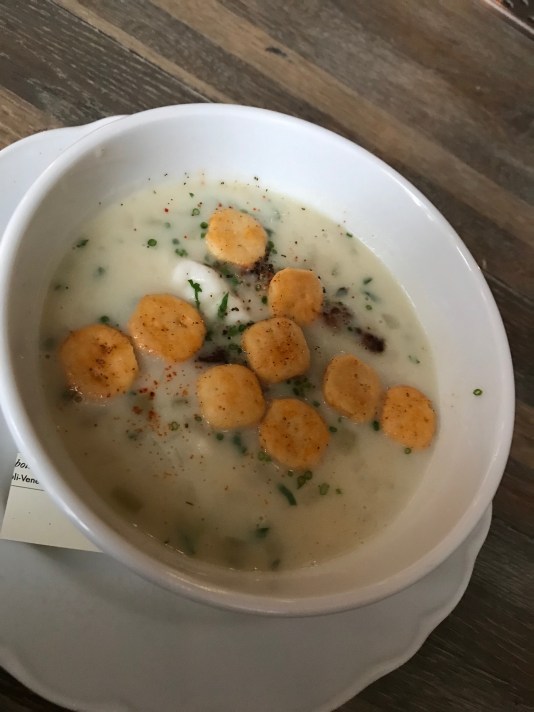
New England Style Fish Chowder with Oyster Crackers — better than you think. A knockout loaded with generous chunks of white fish and potatoes.

img_1370.jpg

IMG_1426.jpg

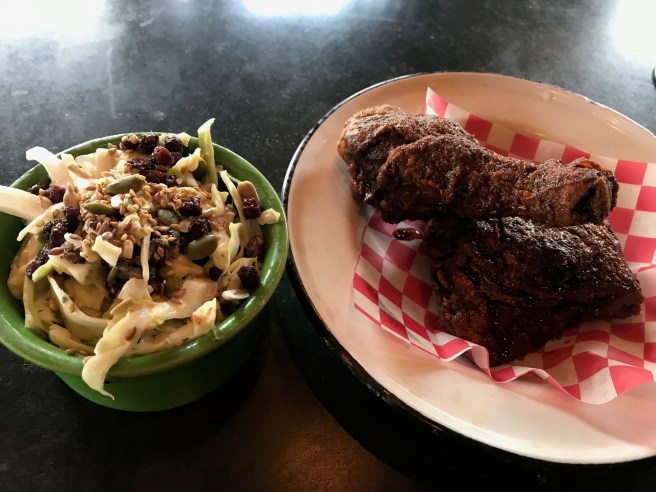
Spicy Two-Piece Dark Meat Fried Chicken with Cole Slaw: Buttermilk Dressing, Currants, Seeds 

IMG_1372.jpg

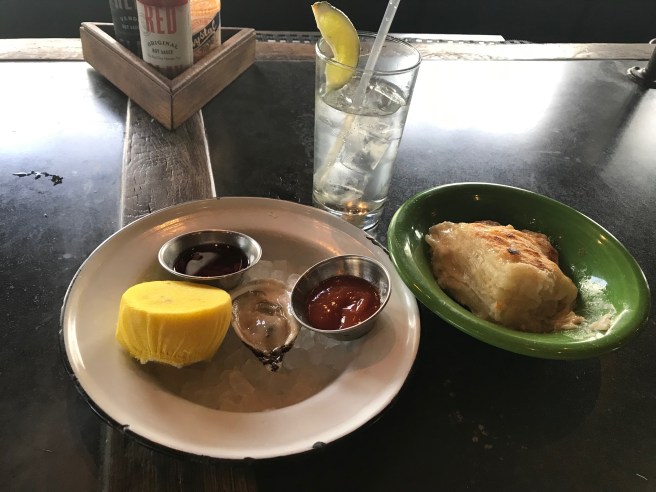
Second visit: Four Raw Oysters (only one shown here), Signature “Old School” Scalloped Potatoes (divine) and a Gin & Tonic

IMG_1401.jpg

IMG_1400.jpg

The famous Tavern Burger, a 4-ounce Patty Topped with American Cheese, Tangy Tavern Sauce, Griddled Onion on a Sesame Bun, with House Salad. This glorious, glorified slider goes for a mean $15, and it’s worth it. So hypnotic I couldn’t even focus the camera. My eyes were crossed. 

Avoiding the gin-eric in South Carolina

I leave Sunday for three days in Charleston, South Carolina, and already I can smell the aromatics and botanicals, those ultra-fragrant plant compounds often used in alcoholic potables, most popularly in gin. Aromatics and botanicals furnish a strong herbal, floral or fruity tang that sets flowery, pungent gin apart from insipid vodka, which tends to smell and taste like undiluted alcohol (and which is why producers are always grossing up their swill with flavors like cherry, vanilla, mango and peppar, whatever that is). 

In Charleston is the award-winning High Wire Distilling Co., which claims to be the city’s first distillery since Prohibition. Like a boozy boutique, the outfit “produces a distinctive line of small batch spirits, including gin, rum, whiskey, and vodka using premium, specialized ingredients.” 

I’m there.

kothe-still.jpg

And I’m taking the $10 tour and tasting, which (more canned copy here) “provide an overview of the distilling process and allow guests an opportunity to see the still, mash tun, fermentation tanks, barrel aging, and bottling operations.” Tour-takers “receive a traditional tasting flight of four High Wire spirits.” (Yes!)

This has got to beat the tragic, gimcrack Heineken Experience brewery tour I signed up for in Amsterdam last year (my head still hurts from the strobes and electronica). And it might just match the exemplary Russia Vodka Museum in St. Petersburg, where the tastings exuded high European class. Or the fine, frothy, free tour of the Sam Adams Brewery in Boston.  

I have my eye on one of High Wire’s specialty gins, which goes for $27 a bottle (I don’t yet know the size), the “Hat Trick Extraordinarily Fine Botanical Gin,” described in detail:

high-wire-distilling-co-hat-trick-extraordinarily-fine-botanical-gin-south-carolina-usa-10709477.jpg

“Made with crushed juniper berries and fresh lemon and orange peel, this bright and flavorful gin is well-balanced and pleasing to the palate. Balancing botanicals include licorice root, angelica root, coriander, and cardamom. From a straight up martini to a more complex Fitzgerald, this gin dazzles even the most discerning gin drinker.”

Proof: 88

Tasting Notes: Floral, licorice, lemon, orange, pine, rounded/full texture, well-balanced, long finish.

Cocktails: Gin & Tonic, Martini, Fitzgerald, Collins, Negroni, Gimlet, Martinez, Gin Gin Mule

I’m sure I don’t know what at least three of those cocktails are, but they sound ravishing with this nifty gin, which, you never know, might suck. I’ll taste it during the tour’s tasting segment. If I like it, I’m buying a bottle. And then, you know, drinks on me.

Doing the Charleston

History throbs and threads through Charleston, South Carolina, a city I haven’t visited for about 16 reasons, the biggest being I just haven’t made it down there yet. Part of that is because I feel I got my Deep South fix some years ago during a greatest-hits southern road trip with my brother in a brazenly purple Saturn sedan rental. It was a blast.

big_image_Dolly_Parton_-_Dollywood_Postcard04

Filled with barbecue, catfish and boiled peanuts, we shoehorned as much as we could into five days, pit-stopping in Nashville; Memphis; Sun Records; Graceland; Asheville, N.C., which is tucked in the Blue Ridge Mountains; Montgomery and Birmingham; the dewey-eyed Dollywood Theme Park in the Smoky Mountains of Tennessee; as well as Thomas Jefferson’s digs at Monticello in Virginia on our way back north to Brooklyn. For much of the journey we listened to the operatically twangy “A Country Boy Can Survive” by Hank Williams Jr., an aching ode to hillbilly pride suddenly apt for these puke-making MAGA days, which dominated the local airwaves. (Listen HERE. It’s impossibly catchy.)  

A native Californian who survived more than a decade in Texas, I’m now an inveterate Yankee. As much as that maiden journey was an eye-opening kick, the South doesn’t come naturally to me. On a later road trip I circumnavigated coastal Florida, from St. Augustine to Miami and the Keys, St. Petersburg to Panama City. (We cut through Alabama and landed in New Orleans, La.) I found Florida gauche, grubby and at times noxiously racist. You couldn’t bribe me back.

Rainbow-Row-charleston-sc-historic-district_.jpg
Enter Charleston, S.C., above, a stately midsize city swathed in Civil War lore and, just as intriguing, boasting gourmet gold. I leave in two weeks for a fast three-day trip. Here’s Lonely Planet on the burg’s historical heft:  

“Cannons, cemeteries and carriage rides conjure an earlier era in this lovely city. Signers of the Declaration of Independence puffed cigars and whispered of revolution in historic homes, and the first shots of the Civil War rang out over Fort Sumter. The city was built on slave labor, and several sights are among the nation’s most important educators on the long-standing oppression of African Americans.”

This is a small jaunt — a two-hour flight (free, thanks to airline credits) and a reasonable if flavorless midrange hotel in the Historic District. I’m taking a walking tour of the cobblestone-paved historic hood, including the French Quarter, but I’m not overly excited about the glut of antebellum mansions — silk sofas don’t thrill me — sprawling parks or even fabled Fort Sumter, surefire soporifics I’d rather read about than actually visit.

In my sights is the Old Slave Mart Museum, which “recounts the story of Charleston’s role in the interstate slave trade by focusing on the history of this particular building and site and the slave sales that occurred here.” And I’ll meander through and photograph the history-rich spreads of St. Philip’s Graveyard and Magnolia Cemetery, morbid musts.

15CHARLESTON1-jumbo.jpg

Called the Holy City for contested and not necessarily pious reasons, Charleston keeps accruing accolades as the “friendliest city” and “best city to visit” and other breathless superlatives glossy magazines can’t help bestowing on every cool town (hello, Austin). 

Part of its cachet derives from its evolution as a culinary epicenter, with drooled-over fine dining spots like Fig and McCrady’s, which offers a rarefied tasting-menu experience — “inventive cuisine fresh from the farm” — with only 22 seats.

sean-brock-lede-3x2
Supreme southern chef Sean Brock

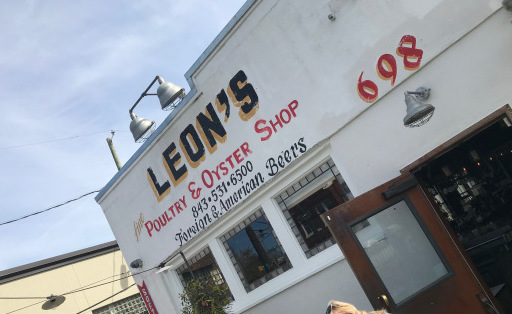
The McCrady’s kitchen is run by award-winning chef Sean Brock, who’s been extensively profiled on “Chef’s Table” and “The Mind of a Chef” on Netflix. Brock also co-owns the more casual Southern food destination Husk, where the crispy fried chicken skins are legend (and not always on the menu, drat). Brock and his famed dishes are a big reason I’m going to Charleston. Oysters are also a pull, with Leon’s Oyster Shop and its exalted shellfish and scalloped potatoes firm on my gastronomic itinerary. 

Call it my foodie expedition, brevity be damned. It’s also my overdue return to the South, a region rather alien to me, a cluster of unvarnished Americana, verdant beauty, rampant Republicanism and Confederate fervor that, if nothing else, will impart salutary exposure to the unusual, surprising and startling — a whole new world, exactly why I pack up and go.

View of the day, wistfully

IMG_1286.jpgMy laptop, a tall drink and a fairy tale vista — about all I need in my travels.

This was the perch on the rooftop terrace of my Istanbul hotel in November. I went up there a lot for the trusty Wi-Fi; cool fall breezes; Efes Pilsener, the cheap local brew that hits the spot despite its unflagging mediocrity; and, of course, the pristine views of the fabled Blue Mosque and yawning Bosphorus strait. 

At night the mosque lights up like a jeweled crown. The water shimmers. I sip my drink and tip-tap on the keyboard, writing nothing of consequence, most of it rot. Istanbul is paradisiacal, keenly removed from normal life, so transporting you sigh with an operatic flutter. It’s Paris of the East, a storybook nirvana.

I miss the mosques, the street food (döner kebabs, simits, etc.), unduly charming people, sweet stray dogs and cats, and ancient rococo scenery. It is where I want to be, right now.

IMG_1196.jpg
Blue Mosque, November 2018