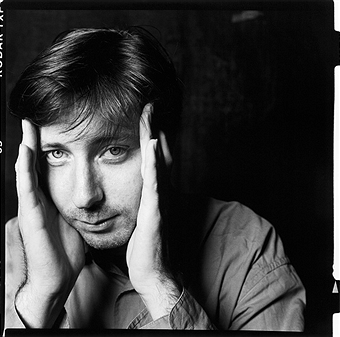
Writers die. The art doesn’t.

The great authors Tom Wolfe and Philip Roth died eight days apart this month. I heard nothing about the startling proximity of the loss of two of America’s towering writers. And nothing about the theoretical third death of someone else famous when two celebrities die back-to-back. Nothing about that ghoulish trifecta.

th.jpeg
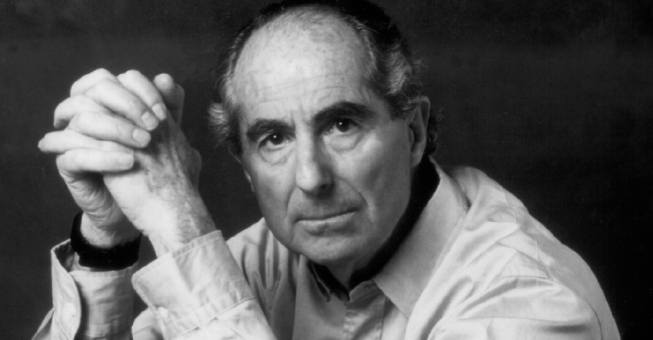
Philip Roth, died May 22.

If that make-believe third fatality does indeed occur soon, and he or she happens to be another English-language writer, which giant will fall? Toni Morrison? Stephen King? Alice Walker? John Irving? Ian McEwan? Cormac McCarthy? None of these literary lions are spring chickens, excuse the mixed animal metaphors.

Such morbid business is the stuff of cocktail party parlor games, slightly sick, if innocuous: King? No way. McCarthy is next, just watch. He’s 84! Or some such scintillating blather.
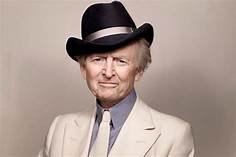
th-1.jpeg
Tom Wolfe, died May 14.

When a popular artist dies it makes a loud rip and a mighty hole in the cultural fabric. A sometimes-fan of Wolfe — I couldn’t get through much of his work, but “The Right Stuff” and “Bonfire of the Vanities” thrilled with reportorial breadth and linguistic virtuosity — I am a confirmed Roth acolyte. His death briefly shook me and cast me in a blue mood. Celebrity passings rarely have this effect on me. I took it personally.

Yet the sting faded, and I was gladdened to see book shops and libraries erecting proud shrines to the author of “American Pastoral,” “Sabbath’s Theater” and “The Human Stain,” small mountains of hardbacks and paperbacks as monuments to genius.

640_P2010011

I’ll get back around to the books, but for now I’m revisiting the PBS documentary “Philip Roth Unmasked,” an incisive portrait for the budding Rothian, a reminder of what made the novelist a colossus and worthy of the Nobel Prize that so shamefully eluded him.

I should say I was also hit harder than usual by the deaths last year of novelist Denis Johnson and playwright-author-actor Sam Shepard. Johnson was a marvel, his seminal short stories “Jesus’ Son,” the hypnotically chiseled “Train Dreams” and the haunting Vietnam epic “Tree of Smoke” funny, hallucinogenic and wildly transporting.
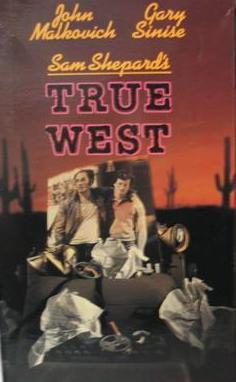
sam.shepard.true.west.vhs.s.2.JPG

Shepard, who I met and interviewed (see here), was always a personal favorite. An artist disguised as a road-weary bohemian cowboy, his acting was consistently spot-on (he was ace in the 1983 movie adaptation of Wolfe’s “The Right Stuff”) and I’m deeply partial to his 1980 play of fraternal fury “True West,” a raging comic masterstroke about bad blood, beer suds and the prickly craft of screenwriting. 

Watch it on YouTube, starring John Malkovich and Gary Sinise as riotously bickering brothers. It will, like Philip Roth at his best, knock you out. When you come to, the whole world will be a little bit different.

A catty catalog of cultural irritants

So many affronts, so little space. Ergo I will call out only six middle-brow cultural irritants that make me ponder the arc of civilization. Expect a sequel. For now, this:

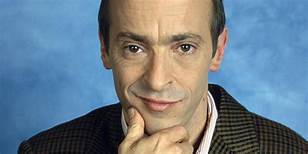
th-2.jpegDavid Sedaris — Snicker-worthy at his very best, Sedaris, an author and humor essayist for The New Yorker, has made a cottage industry out of wan, admittedly embellished autobiography, droll pieces about his family, his lover and his privileged moves to the French and English countrysides. Turning life into literature, he is frank, irreverent, sassy, yet sensitive, as any good writer should be. And he is a good writer, even if his language is surprisingly prosaic, stylistically flat-footed. Overrated, with thousands flocking to theater-sized readings to hear his nasally, high-pitched deadpan, he’s not exceptionally funny or insightful, though he taps a reservoir of honest empathy. He’s a queer, urban Erma Bombeck, flattering a particular strain of hipster and sophisticate with teeny tee-hees.

U2-2014U2 — Because Coldplay is too obvious and Wilco too irrelevant, I’m picking on the most deserving of all bloated, self-important, grandstanding white-people bands. As much as I appreciate the group off-stage — humble, bleeding-heart humanitarians, endlessly concerned with leftie causes and global injustice — as a rock band they represent bombastic blandness. Recycled guitar riffs, repetitive drum beats (if Larry Mullen isn’t rock’s most boring drummer, I don’t know who is), Bono’s predictable pleas for world wonderfulness, and stadium shows of gargantuan gaudiness that exemplify the elephantine excess U2 so vocally rails against. They are an enigma, and forever annoying.

th-1.jpegWes Anderson — Once upon a time the promising filmmaker was so good — inventive, with witty stylistic flourishes and a big, boyish heart: “Bottle Rocket,” “Rushmore,” “Fantastic Mr. Fox.” But amid and after those gems, the dandy-as-director became the worst: a manic, preening showoff. Fussy, hyper-designed, mannered, cloying and overwritten — I’m looking at you, “Grand Budapest Hotel” — his movies are like stuffing fistfuls of pure cane sugar into a mouth filled with painful cavities. Cinematic sadism.

th.jpeg

Jimmy Fallon — Television’s embodiment of cutesy, mugging, please-love-me sycophancy. Dancing, playing charades, lip-syncing, giggling like a tipsy toddler, pitching guests marshmallow questions while fawning over them with googly eyes and panting tongue — “You’re so awesome!” — he’s the only TV personality I know of who looks like he’s going to piss his pants at any moment.

th.jpeg

Outdoor Music FestivalsMy nightmare epitomized. I’ve survived many of these, from Pearl Jam at San Francisco’s Polo Field to numerous Lollapaloozas and Days on the Green, to al fresco jazz festivals. Terrible, all of them. Acoustics meant to reach 100,000 people are stretched to gauzy echoes — bands have never sounded worse. Bare, sweaty, whooping flesh is crammed together in slick seas, unbudging, except for girls wiggling on their boyfriends’ shoulders blocking the view of miniature musicians on stage (thank god for JumboTron). Crushing summer heat. Rip-off food and drink booths. Hemp and beeswax candle vendors. Misting tents. Fragrant porta-potties with show-missing lines. Two more words: tie-dye.

bendahlhausofficial-neat-formal-man-bun-e1491414734529.jpgMan buns — This is simply inexcusable. Enough has been made about how embarrassingly stupid these pseudo-samurai top-knots are and yet men, mostly young, insist on sporting them (invariably with metrosexual beards, no less). Begging, wheedling, outright shaming, nothing can stop them. It’s a mass delusion — they honestly think they look cool and that these baleful hairballs are not the ultimate caricature of hipsterism run amok. I’ve actually seen seemingly sensible women with their arms around man-bunners. Yes! True! I have! Shoot me now.

Unsparing truth, from Philip Roth, 1933-2018

“No one gets through unmarked by brooding, grief, confusion, and loss. Even those who had it all as kids sooner or later get the average share of misery, if not sometimes more. There had to have been consciousness and there had to have been blight.”

— Philip Roth, “American Pastoral”

roth.png


I’ll read this next. Or maybe this. No wait. What about that?

A few posts ago I crowed about the next five books I plan on reading.

Scratch that. 

Things change. Switcheroos occur. Some books work, some don’t. I close and tuck away the latter and embrace and finish the former. There’s been some tucking away going on. 

I announced on the blog that after completing the superb Siamese twins biography “Inseparable” I would take on my Amsterdam holiday Kurt Vonnegut’s darkly comic wartime novel “Mother Night.” All of that happened. 

Except: I didn’t cotton to the Vonnegut book as I was certain I would. Quite early on I found it uninviting, atonal and dry. I shut it. And became desperate. I was still in the States and my sole vacation book was failing me. 

51Ix-oAS0zL._SX319_BO1,204,203,200_

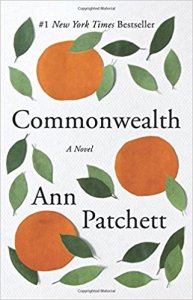
Discouraged yet determined, I marched to an airport bookshop, poked and peeked at a dozen acclaimed books, until I hit the staff picks display, which spotlighted Ann Patchett’s heavily praised novel “Commonwealth.” I’m not used to paying full price for paperbacks, but I popped the almost $20, grimacing and banking on the best — even while recalling that I couldn’t get into Patchett’s previous blockbuster “Bel Canto” the two times I tried.

“Commonwealth” is strong. On the whole trip, though, I read only 47 pages of it — my laptop is a serious distraction. I enjoyed the book’s humor, descriptive muscle and palpable humanity, and I planned on gladly finishing it back home.

41kvpzruegl-_sx329_bo1204203200_85.jpg

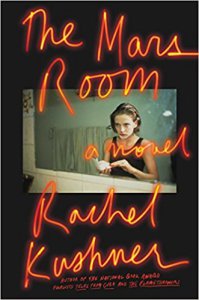
Then this happened: Waiting for me at home was Rachel Kushner’s new, ecstatically reviewed “The Mars Room,” which was on my list of five books to read next. It was, of all things, a library book, with a two-week checkout limit. I pounced. “Commonwealth” would have to wait.  

I just wrapped “The Mars Room,” a very good if never truly great page-turner set largely in a sordid women’s prison, much like “Orange Is the New Black,” with grim and funny detours streaking the story, including a few to the San Francisco strip club of the title. Kushner is good with grit, limning harrowing and humorous situations with a kind of streamlined tough-gal strut. And the final pages seize you hard. 

Before the Amsterdam trip, I borrowed two other titles on my list of five, Zadie Smith’s “NW” and Ottessa Moshfegh’s “Homesick for Another World,” neither of which I got around to thanks to the pleasingly time-consuming “Inseparable.” They remain fast on my reading list. 

61txVZFq-EL._SX331_BO1,204,203,200_

And yet: Dropping off “The Mars Room,” instead of getting the Smith or Moshfegh books, I got distracted and picked up two more books on my extended wishlist, Curtis Sittenfeld’s comic coming-of-age novel “Prep” and Jesmyn Ward’s National Book Award-winner “Salvage the Bones.” 

I get sidetracked in a snap when I’m around piles of books, my head on a pivot, eyes flashing, hands flipping pages, picking up and putting down volumes. So much to read, so many diversions, so many anxious postponements.

Of the two books I grabbed, I chose first to plunge into the poverty-stricken, pre-Katrina, Mississippi-set “Salvage the Bones.” So far, it is rapturously evocative, the prose raw and earthy and exquisite, the narrative quivering and propulsive.

Here is Ward’s description of a pit bull giving birth to puppies:

“Skeetah grabs the puppy’s rear, and his hand covers the entire torso. He pulls. (The mother) growls, and the puppy slides clear. He is pink. When Skeetah lays him on the mat and wipes him off, he is white with tiny black spots like watermelon seeds spit across his fur. His tongue protrudes through the tiny slit that is his mouth, and he looks like a flat cartoon dog. He is dead.”

If “Bones” eventually chokes — that’s far-fetched — I’ll do what I am wont to do: put it down and move on to the next title. But what will that be? “Prep” or

51at-ah4UzL._SX309_BO1,204,203,200_

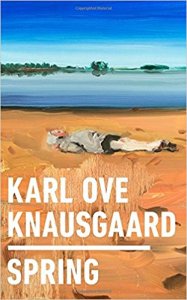
Even with two books before me, I said screw it and ordered Karl Ove Knausgaard’s “Spring,” a slim new memoir arriving in the States bubble-wrapped in effusive plaudits. The book is “poignant and beautiful,” a critic says. “Even if you think you won’t like Knausgaard, try this one and you’ll get why some of us have gone crazy for him.” (I’ve read five of his books and have gone crazy for him.)

“Prep” or “Spring” — I’m betting on the latter. Or will yet another title crash my consciousness and hijack the show? Likely.

Book fiends I know are afflicted with this disease of ravenousness, of greedy insatiability, of jonesing for the next fix. Books as lifeblood. Beats baking. Beats sports.

The saga continues, so much pulped wood before me, no end in sight. It’s an embarrassment of riches — words, language, poetry, morality, mortality, love and loss. And, as that, it’s a crazy blessing.

Never done with Stephen Dunn

As sort of a literary snack, some lyrical Cheetos, I recently dipped into one of my favorite poetry books, Stephen Dunn’s “Different Hours.” It’s magnificent; so many fine poems, so many lines that quietly slash. The poems are all about wisdom and honesty and breakage, lovers and loss and burying a cat.

Stephen-Dunn
Dunn

I don’t care so much that the book won the 2000 Pulitzer Prize, though it surely deserved it. I do care that it contains this stanza:

I was burned by books early/and kept sidling up to the flame.

And I care even more that it has this bracing verse, from the final poem in the collection, “A Postmortem Guide (For my eulogist, in advance)”:

Tell them that at the end I had no need

for God, who’d become just a story

I once loved, one of many

with concealments and late-night rescues,

high sentence and pomp. The truth is

I learned to live without hope

as well as I could, almost happily,

in the despoiled and radiant now.

Those shimmering words shatter me, in a most positive fashion. (“In the despoiled and radiant now”!) The verse is frank but droll, vulnerable and confessional. It’s written with the points of melancholy stars.

Dunn, like his comrade in wry minimalism, Billy Collins, wields an unabashed colloquial touch, his plain-spokenness littered (glittered?) with joyous turns of phrase and often mischievous, tip-toeing humor.

He’s a master of subtlety, but any perceived simplicity is thoroughly deceptive. If you think Dunn’s poems are simple-minded, even pablum, you are sorely mistaken. You haven’t done the work.

The next 5 books I’ll be cracking open

Far before I’m done reading a book, I know firmly what volume I’ll be cracking next. I keep an ever-replenished list of titles. Something is always ready, waiting, like the upcoming course at dim sum. 

As I wrap up “Inseperable,” the excellent new biography of Chang and Eng, the original Siamese twins, I know what’s next. I’m taking a worn paperback of Kurt Vonnegut’s archly prophetic classic “Mother Night” (1962) on my trip to Amsterdam next week. Vonnegut’s breezy cynicism, swirled with empathy, a hesitant optimism and measured absurdism, feels just right for airplane reading.

After that, 10 books weigh down my list. But half of them get to jump the line. These are the next five books I’m plunging into:

516B2M5L8XL._SX324_BO1,204,203,200_I’ve read three of Zadie Smith’s fine novels — “Swing Time,” “On Beauty” and, the best of the bunch, “White Teeth” — so I’m revved for “NW, her acclaimed 2012 tragicomedy about a slice of London and how its human patchwork intersects and interacts. The intellectually rangy Smith has a sorcerer’s touch, conjuring crowded, complex stories that can be mesmerizing jumbles: granular, moving, funny and expansively human.
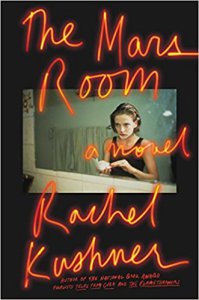
If Rachel Kushner’s wildly hailed fiction “The Flamethrowers” didn’t blow me away, it was still a fresh, propulsively entertaining epic about a young woman whose love of motorcycles, art and action hurl her on a picaresque through boho New York and radicalized Italy. In her new novel, the hotly awaited “The Mars Room, Kushner pinballs from the pitiless realities of a women’s prison to those in a San Francisco strip joint and beyond for a seedy and violent, harrowing but humorous skip through sordid demimondes. Raves wreathe the book already. “Heartbreaking and unforgettable … it deserves to be read with the same level of pathos, love and humanity with which it clearly was written,” gushes one reviewer.

41kvpzruegl-_sx329_bo1204203200_8.jpg

Our Shakespearean laureate, that lord of the Bard, Harold Bloom lasers in on one of the canon’s preeminent tragic figures in “Lear: The Great Image of Authority, a thin but typically volcanic volume that’s part of a series of portraits, including Iago, Falstaff and Cleopatra, titans all. Lear, fallen monarch, disgraced father, receives the full Bloomian treatment, a richly personal, prickly and cerebral exploration of the character and his enduring mythic stature.

Andrew Sean Greer’s “Less, winner of this year’s Pulitzer Prize for fiction, totally evaded my radar. I’m not even sure I’d heard of the novel until it cinched the award this month. I know so little about the bounding satire that I quote here from the dust jacket:

41wP7sR5mBL._SX321_BO1,204,203,200_

“Arthur Less will almost fall in love in Paris, almost fall to his death in Berlin, barely escape to a Moroccan ski chalet from a Saharan sandstorm, accidentally book himself as the (only) writer-in-residence at a Christian Retreat Center in Southern India, and encounter, on a desert island in the Arabian Sea, the last person on Earth he wants to face. Somewhere in there: he will turn fifty. Through it all, there is his first love. And there is his last.”

OK, I’m hooked.

A writer friend of mine won’t read Ottessa Moshfegh’s fiction, citing a gruesome quotient of blood and bodily fluids. I don’t know what she’s talking about because I’ve never read Moshfegh. Her stories “Homesick for Another World” have been called “eerily unsettling … almost dangerous, while also being delightful, even laugh-out-loud funny.” Characters are “unsteady” and the “grotesque and the outrageous,” a la Flannery O’Connor, “are infused with tenderness and compassion.”

51zp1zKT38L._SX328_BO1,204,203,200_

She has “a big mind, a big heart, blazing chops, and a political acuity that is needle-sharp,” crows the publisher. “The needle hits the vein before we even feel the prick.”

I think my friend is crazy. This sounds amazing.

And on things bookish, I finally discovered a well-tread site fully worth your while: Literary Hub. Brain-cracking interviews, essays, reviews, profiles — I won’t go on about it; just check it out.