A brief encounter with the late, mighty, forever-old Harry Dean Stanton

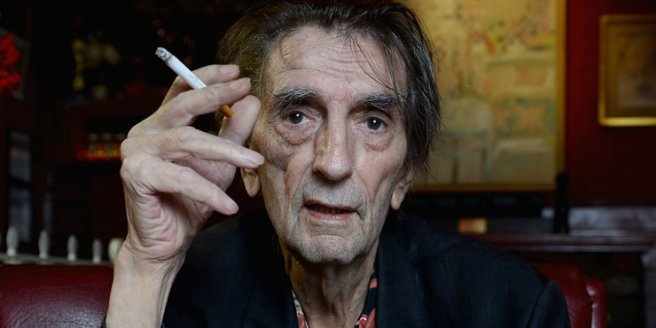
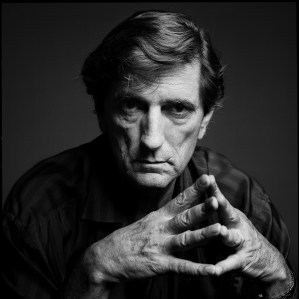
A slight, gaunt man, with a mummy’s sunken eyes, Harry Dean Stanton seemed eternally haggard and, in his later days, alarmingly cadaverous. He finally gave way to his looks: Stanton, a reticent, lived-in character actor with a gentle heart beating beneath a leather exterior, died yesterday. He was 91.

why-did-actor-harry-dean-stanton-age-89-never-get-married-to-any-of-his-girlfriends.jpg

Stanton’s best-known work includes “Paris, Texas,” “Wise Blood,” “Repo Man,” “The Rose,” “Pretty in Pink” and HBO’s “Big Love.” I don’t have much to say about his passing, except that it’s sad and that I have potent memories of his performances, especially his role as doomed Brett in 1979’s unshakable “Alien.” Even then he had a Keith Richards mien going on.

I met Stanton briefly in 2003 at a club concert in Austin, Texas, that Stanton, in town shooting a film, reluctantly attended. This is what I blogged then about the special, if tentative, encounter:

One night at Antone’s nightclub, actress Gina Gershon was rocking and Harry Dean Stanton was frowning. “It’s loud, strident and violent,” Stanton said of the three-chord crunch Gershon and her backup group Girls Against Boys were discharging like the solid bar band they were pretending to be. “It’s an assault on the senses.” (It’s rock ‘n’ roll, Harry.)
Hanging out alone at the end of the bar next to the candy machines, Stanton appeared slightly forlorn during the show, nursing what looked like a whisky sour but might have been ginger ale, skittishly glancing around, producing sweet but wavering smiles when approached by pretty women who would wrap an arm around the black blazer that hung on his slight frame with a vaudevillian droop.
Gershon was on a short club tour, living out her long-held musician’s fantasy, putting down the air-guitar for a Gibson SG. She drew about 400 people to Antone’s, about half appearing to be guest-list rubber-neckers. Including Stanton.

19be0cc37545f38679bfbfc7981a48ba

Stanton, 77, has 100 films to his credit, some of the best being “Cool Hand Luke,” “Paris, Texas” and “Alien.” He was in Austin shooting the Luke Wilson-directed “Wendell Baker Story” and has been spotted at unlikely places like Club Deville, where friends tell me Luke and Owen Wilson enjoy tearing it up. Not sure why Stanton was here, but his “Baker” co-star Seymour Cassel dropped in late during the show, said something to Stanton and waded into the crowd of mostly thirtysomethings.

As the show wound down with a tight cover of The Stooges’ “I Wanna Be Your Dog,” my girlfriend offered Stanton some Reese’s Pieces bought for a quarter from one of the candy machines. He looked into her open palm and asked, “What are those — M&M’s?” He puzzled over the morsels as if studying Martian soil. Then a trio of pretty girls enfolded him in their attentions, and he was gone.

How to drink vodka (or not) with that Russian swagger

russian-vodka-580x300.jpg

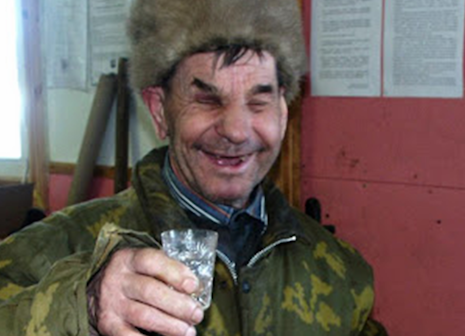
It sounds like the most rancid cultural cliche, but I keep hearing that vodka shots are a compulsory part of visiting Russia if you go to local bars, which I most surely am. Ritual reigns. Toasts, garrulous and heartfelt, are mandatory. Friendships are forged over the clear, biting liquid. Backslaps, perhaps high-fives (please no), succeed the flaming gulps. Vodka is a social lube, a social glue. After a week in St. Petersburg next month, I fear that I’m going to have made dozens of new (bibulous) friends and wind up with the squinchy elfin aspect of this fellow:

man_file_1064384_1.png

“The national drink is an inseparable part of Russian social life. Vodka is drunk everywhere, with the intention of breaking down inhibitions and producing a state of conviviality Russians refer to as dusha-dushe (soul-to-soul). When a Russian taps his throat, beware: it’s impossible to refuse this invitation to friendship.”

So writes The New York Times. “Impossible to refuse this invitation to friendship”? I will find ways. I can be terrifically anti-social. I don’t want to be around too many guys who “taps his throat” as an alarm bell to guzzle a shot I might not want. I get more than two shots from these tipplers, well, then, comrade, my nice relaxing night at the bar may quite be over. I’ll take a beer, sir, and the check, and … who in hell pays for those shots? I have a stinky feeling I’m getting stuck with the bill.

vodka_shot

I hate Russia. I hate vodka.

Not really. Indeed, I have firm, jazzed plans to visit St. Petersburg’s newish Russia Vodka Museum, dubbed “excellent” by Lonely Planet, a glassy, liquidy historical survey of the beverage through storied, stumbling Russian yore. A 30-minute guided tour in English and sizable samples of three vodkas with traditional Russian snacks — pickles! herring! — is about $10, and I’m dimly gobsmacked. That sounds pretty fine.

I love Russia. I love vodka.

russian-vodka-museum.jpg
Russia Vodka Museum. Looks like a well-stocked vodka bar. As it should.

Vodka in Slavic means “little water,” but it seems more like big water in Russia. Supposedly invented in Poland, the drink’s name was first recorded in Russia in the late 1700s. Today there are hundreds of brands of vodka available there, though I doubt my go-to, Tito’s Handmade Vodka, a Texas upstart, moves many units.

Imbibing the spirit, as I said, is a ritualized affair, almost a drinking game, freckled with frat boy machismo and cornball sacraments. The Times notes the dubious “vodka procedure,” which entails guzzling a nice big shot, neat, of course. It continues: “Prepare a forkful of food or chunk of bread. Inhale and exhale quickly, bringing the food to your nose. Breathe in and tip the vodka down your throat. Now breathe out again, and eat your food.”

Drinks2

I don’t think so. That sounds a bit like yoga for alkies. Can’t I just order a vodka tonic, a Cape Cod, a, huh-hum, White Russian, vodka martini, or something divine and aquamarine, conjured magic-potion-like by a multi-tentacled mixologist? Of course I can. And I will.

But I also want Russia’s traditional, unalloyed vodka experience. I’ll do a shot or two, hopefully with guys who don’t whoop a lot or slam their glasses down on the table and beat their chests. I can’t speak a lick of Russian, so who knows what kind of rigamarole I might find myself.

I’ll just say this: Temperance is golden, abstinence is mournful, more than five shots is suicidal, and eating herring with your vodka is, plain and simple, foolhardy. Na zdorovie!

Beirut: beauty, bowed, but not broken

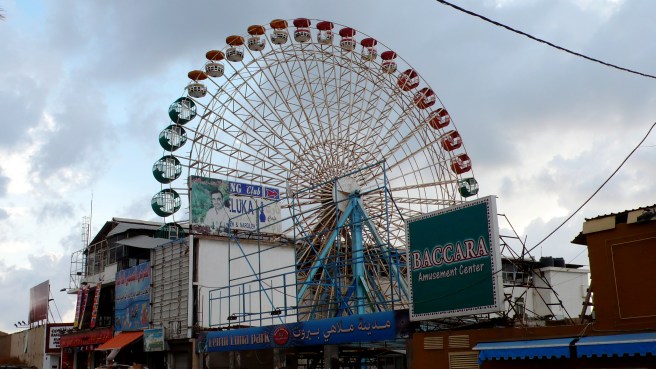
Luna Park
Luna Park, a tumbledown amusement park along Beirut’s Corniche seaside promenade. It appeared shuttered and cobwebbed, far from its heyday as a respite from the country’s civil war in the 1970s.

Beautiful but battered, regal but raw, Beirut is like a patient in recovery, with ample physical therapy ahead of it. No longer crowned the “Paris of the Middle East,” the Levantine Mediterranean city, one of the world’s oldest and a beguiling twinning of East and West, remains a tourist draw of exotic splendors and fragrant pleasures. If it bears unconcealed bruises, Beirut still, with its lush, war-torn history and an exuberant cafe and bar life, is a multilevel dazzler.

I can’t say my weeklong visit some years ago went as planned. Trouble was had. After I took a photo in a neighborhood where I was told explicitly not to take a photo, I was detained by Hezbollah goons who roughed me up a little, rifled through my bag, flipped through my books and demanded to see my “papers.” I felt like I was in East Berlin, circa 1960. I felt like I might be tortured, disappeared or beheaded. It was no joke. I came out alive, shaken and shaky for the rest of the day and night, but not enough to deter me from haunting a choice bar in one of the city’s crackling nightlife districts. Beirut knows how to party.

Would I go back? Probably not. But I’m glad I went. It’s a lovely, melancholy place, at once desolate and disarming, friendly and not a little forlorn.

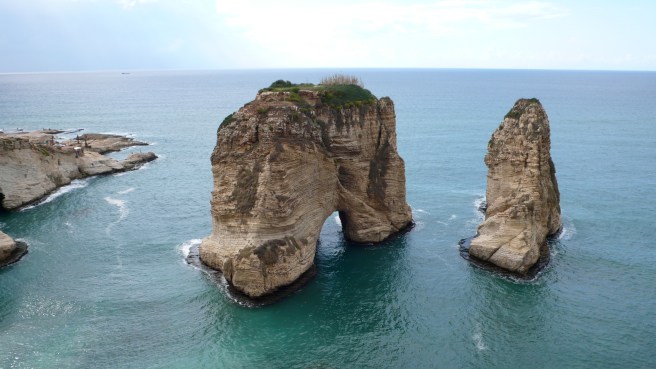
Pigeon Rock, Raouche
Pigeons’ Rock, or Sabah Nassar’s Rock, in the Raouche area along the Corniche.
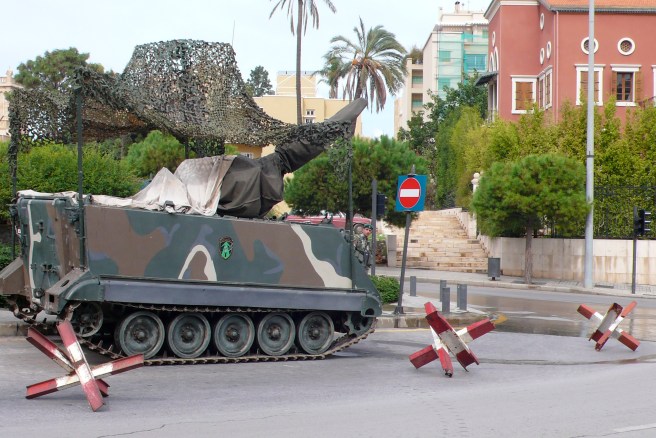
Lebanese Army tank, Beirut
Lebanese Army vehicle, downtown Beirut. Its presence, imposing and unsettling, wasn’t unlike those of the grim-faced armed soldiers patrolling malls and mosques.
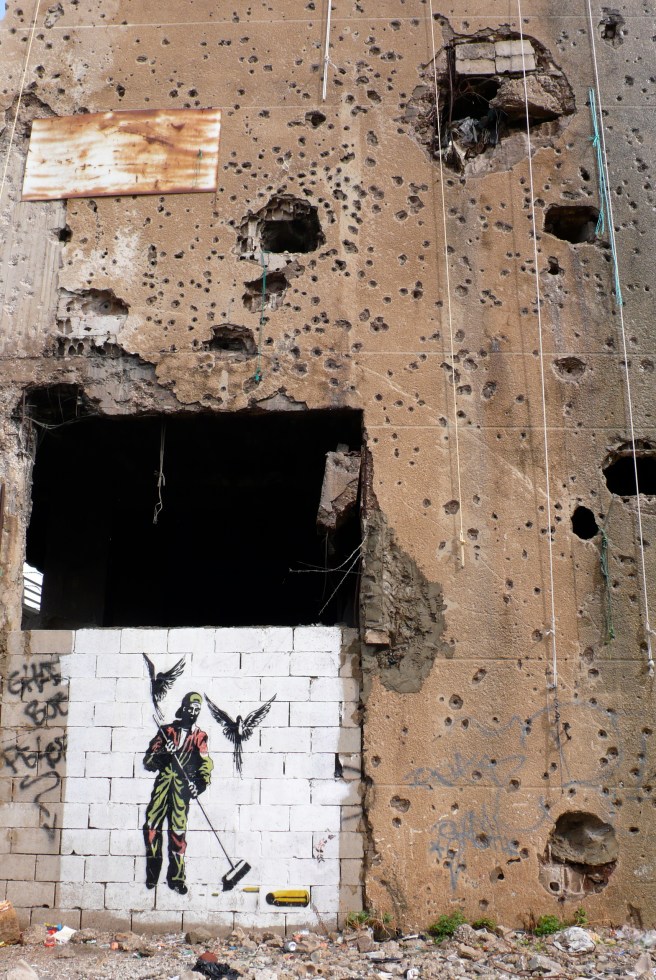
P1030336
One of countless bullet- and shell-riddled buildings all about the city.
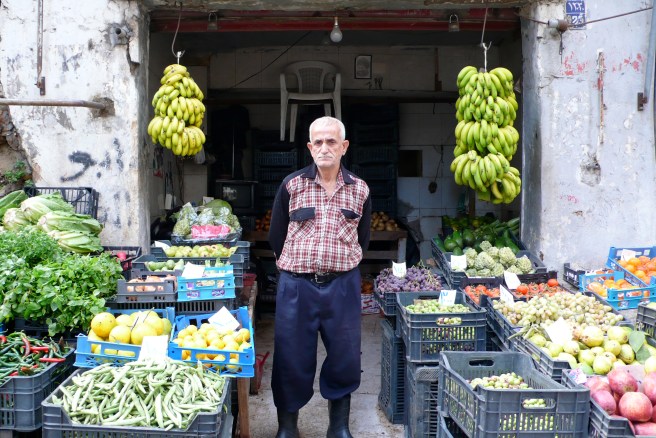
Produce merchant.JPG
Proud produce merchant.
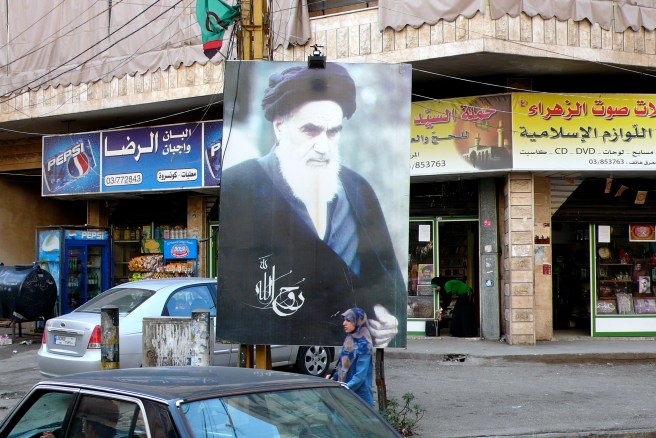
P1030372_1.JPG
Iranian religious leader Ayatollah Khomeini, who died in 1989, remains an icon in Hezbollah-controlled south Beirut. Taking this photo got me into a world of trouble with local authorities who were convinced I was a western spy.
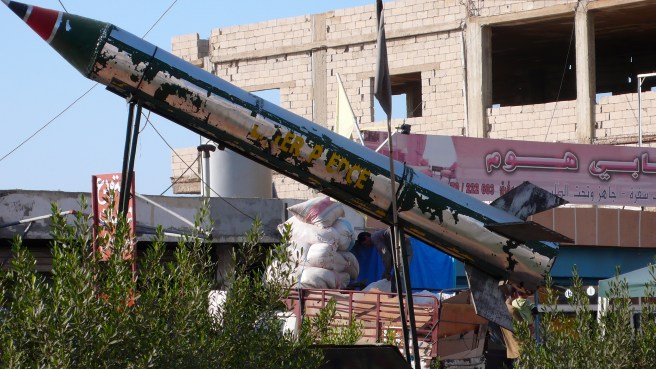
Rocket display, south Beirut.JPG
Hezbollah rocket on display in the middle of a south Beirut street.
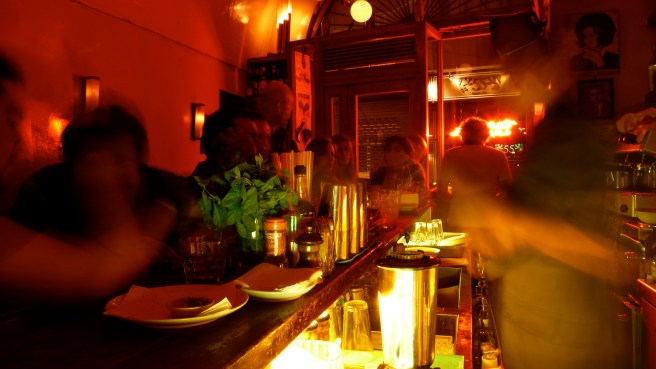
Gemmayze district, lined with bars and clubs.JPG
My (tiny) bar of choice in the ever-hopping Gemmayze district, which throbs with bars and clubs and revelers. That guy in the neon-ablaze storefront window on the far right is a DJ.
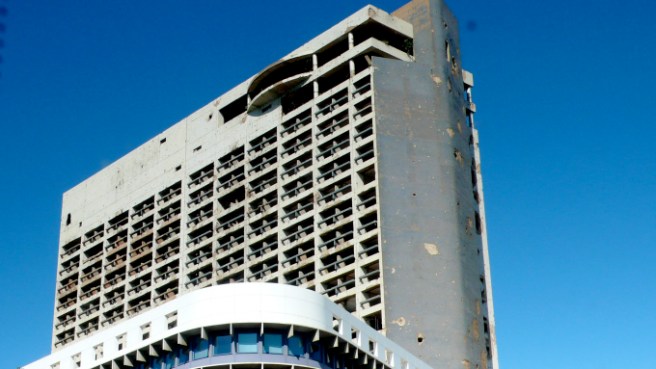
holiday-inn-1975.jpg
Blasted shell of the infamous Beirut Holiday Inn. During the Lebanese Civil War of 1975-76, the hotel became a war zone in the Battle of the Hotels.
girl-texting.jpg
Girl in taxi, texting.
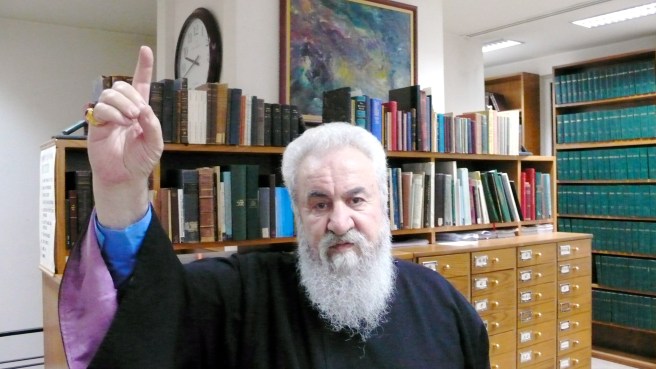
P1030367_1.JPG
Delightful if pontifical Orthodox priest who gave me an earful about God, history, life.
P1030349.JPG
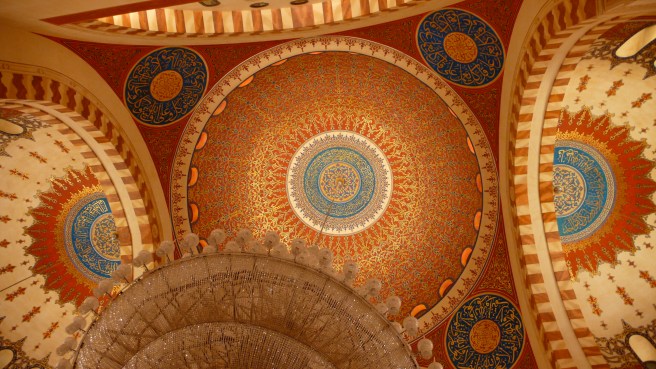
Ceiling of the Mohammed Al-Amin mosque in downtown Beirut.
p1030285_1.jpg
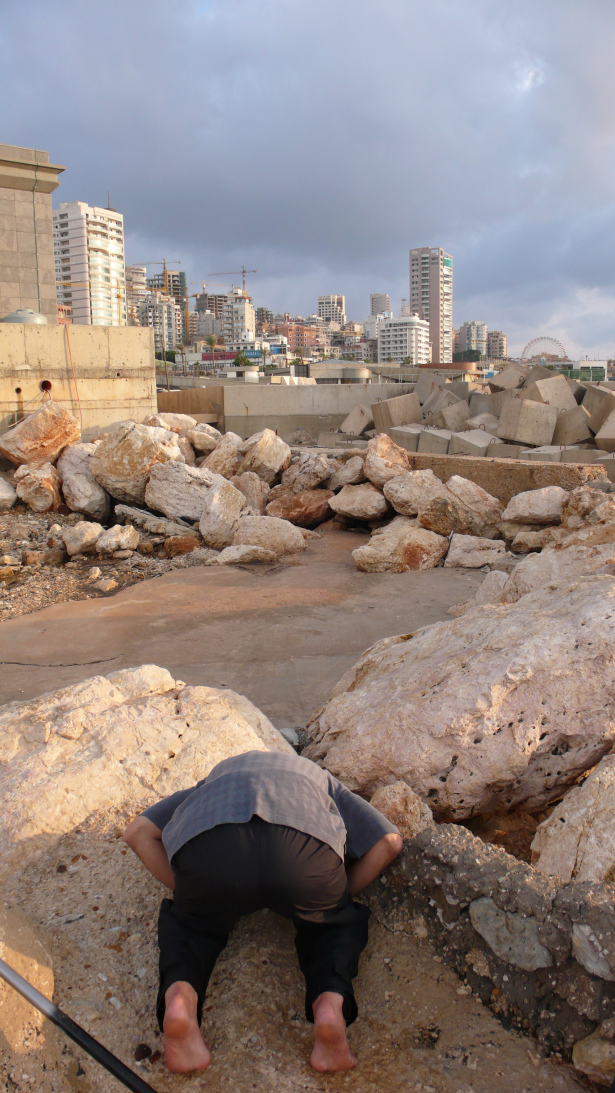
Prayer on the Corniche. (Luna Park Ferris wheel in far distance.)

Ballet in Russia, a quintessential splurge

Even though my Russian visa still hasn’t been officially issued — it’s in the tortured, Kafkaesque pipeline, though they have said (brusquely) that it should ship in two days — I went ahead and bought a ticket for the ballet at the famous, chandelier-encrusted Mariinsky Theatre in St. Petersburg.

mar3.jpg
Mariinsky Theatre, St. Petersburg

I’ve been to the ballet once in my life — Nijinsky and Stravinsky’s clashing “Rite of Spring” in San Francisco, eons ago. Granularly, I know next to nothing about the art form, though my appreciation for it is lavish. I think Misty Copeland is recklessly awesome. (I think the Natalie Portman movie “Black Swan” is curdlingly rotten.)

Misty Copeland in the title role, American Ballet Theatre
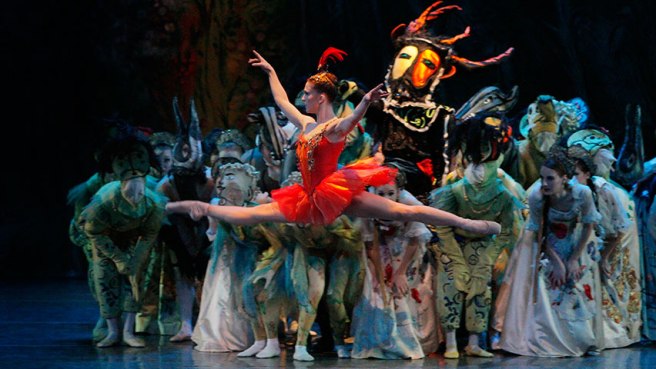
Misty Copeland in the title role of “The Firebird,” American Ballet Theatre

The mid-October matinee is for Stravinsky’s 1910 “The Firebird,” a Technicolor Russian fairytale told in two “scenes,” which runs a zippy 50 minutes. The ballet, with choreography by Michel Fokine, was Stravinsky’s breakthrough as a composer, followed famously by “Petrushka” and the “Rite of Spring.” My ticket in the Dress Circle was a doable $48.

I’ve been reading up on the performance, and came across choreographer Fokine’s fascinating notes:

“When staging the dances I used three principles that are utterly different in terms of character and technique in this ballet.

“I created the evil kingdom using grotesque, angular and sometimes freakish and sometimes amusing movements. The monsters moved on all fours, jumped like frogs, did different ‘tricks’ with their legs, sitting and lying on the stage, their hands like fish fins, at times under the elbows, at times under the ears, the arms were entwined, they moved from one side to the other, squatting and so on, in a word they did everything that twenty years later began to be known as modern dance and what at the time seemed to me to be the most suitable means of expressing a nightmare, horror and ugliness. Virtuoso leaps and frivolity were also used.”

This sounds splendidly transporting. Which is precisely why I travel. Expect a vivid report next month. And if anyone has opinions or comments about this ballet or St. Petersburg or what have you, please share. Thanks.

firebird2.jpg

Firebird3-BouderSlideShowGallery.jpg


Life, death, brevity — quote of the day

“The world’s small, breathing denizens, its quaking congregations and its stargazers, were fools to sacrifice the flaring briefness of their lives in hopes of paradise or fears of hell. No one transcends. There is no future and no past. There is no remedy for death — or birth — except to hug the spaces in between. Live loud. Live wide. Live tall.’’

Jim Crace, “Being Dead”

41RCP79053L._SX316_BO1,204,203,200_.jpg

A grave interest in cemeteries

Considering my voluptuous fascination with death and dying, I’ve become quite the habitué of graveyards and cemeteries, be they local, regional or far-flung amid my world journeys. I dig graves. And I go out of my way to find them, stroll them, contemplate and photograph them, from Boston to Brooklyn to my personal cemetery capital of the world Paris.

My favorite cemetery is, no surprise, Père Lachaise in Paris, a dense, lush, almost medieval necropolis of winding paths and boulevards, overgrown ivy and shady groves — a crepuscular cosmos unto itself whose edifices just happen to be ornate, angel-crested crypts and poetry-carved tombstones. Famous artists, actors, writers, politicians — Jim Morrison to Oscar Wilde, Proust to Edith Piaf — slumber here. Locating their graves is part of the game at the labyrinthine, 110-acre Père Lachaise, which contains over a million graves. (Cimetiere du Montparnasse is another must-see, star-studded burial spread in Paris.)

tchaikovsky
Tchaikovsky’s grave

Researching my nearing trip to St. Petersburg, Russia, I was thrilled to find a whole page about local cemeteries. The most popular and famous is the Tikhvin Cemetery at the Alexander Nevsky Monastery, where Dostoyevsky, Tchaikovsky, Mussorgsky, Rimsky-Korsakov and other luminaries rest. Expect travelogue-y descriptions of my visits to the Russia repositories.

Meanwhile, this is a catalog of recent cemetery jaunts — and more. All the images have to do with death, dying, the great beyond.

Brompton Cemetery.jpg
Brompton Cemetery, London.
IMG_0593.JPG
Westminster Abbey, London. (How I face the world each morning.)
P1030498_1.JPG
Istanbul Islamic cemetery.  
FA16FA9E-06A8-40F1-9C54-3E22B87389C1-1.JPG
Serge Gainsbourg, Cimetiere du Montparnasse, Paris.
IMG_0625.JPG.jpeg
Karl Marx, Highgate Cemetery, London.
IMG_0621.JPG.jpeg
Highgate Cemetery, London.
ABEFB758-EE5D-43B2-A61C-4D50BB0EC1D5-1.JPG
Cimetiere du Montparnasse, Paris.
P1000772.JPG
Paris Catacombs. (Alas, poor Yorick!)
DC6723B0-A939-4842-89D0-D0A700999977-1.JPG
Cimetiere du Montparnasse, Paris.
IMG_0581.JPG
Cast of Joseph Merrick skeleton, aka The Elephant Man, Royal London Hospital.
EBEC8464-28D8-4F9B-9E68-D7EA7DD3AA53-1.JPG
Pere Lachaise Cemetery, Paris.
IMG_0614.JPG.jpeg
Highgate Cemetery, London.
80725826-6856-4B2E-827F-64482FB2D639-1.JPG
Cimetiere du Montparnasse, Paris.
P1010633.JPG
Funeral pyre of old woman, Kathmandu, Nepal.
IMG_0601.JPG.jpeg
London.

Tongue-tied in Russia? Nyet! (Maybe da.)

quote-russian-is-a-very-deceptive-language-because-it-looks-easy-at-first-it-s-like-setting-out-for-a-armand-hammer-317087.jpg

This is going to end in tears. I plan to go to Russia soon. I know only a single word in Russian, nyet, which of course means “no,” my favorite word in the English language. Actually, I also know vodka and borscht. I know what the first is. The second is a little hazy. Is it a type of sports car?

I’m always a bit insecure visiting foreign countries never knowing the host language. Because I never know it. Even in Spain, France and Germany, I go equipped with maybe four words and phrases — yes, no, please, thank you, do you speak English? — and that’s it. I’m terrible that way, afraid to fumble and bumble the sacred words of another place. I do my best, and thankfully English is such a dependable lingua franca. Even Turkey was a breeze, and I did miraculously all right in Japan and China. Vietnam teemed with English, so that was swell.

1_123125_123050_2111751_2120150_050609_cb_arabic_tn.jpg.CROP.original-original.jpg

But Russia, oy. (Yiddish, that.) Those words are long, even the short ones are long. And they’re in Cyrillic, not Latin. I searched “most difficult languages to learn” and Russian ties with Ukrainian as, get this, “Simply Arduous.” They come in third place. At number one is Polish, named “Extremely Hard.” Number two is “Very Hard,” with Finnish, Hungarian and Estonian tying. (English, incidentally, is number eight at “Basic to hard.”)

“Simply Arduous” is right. I scroll the travel guide’s little baby glossary in the back of the book and my stomach knots. I’m going to have to carry around a small slip of paper as a cheat sheet just for “hello,” “yes,” “thank you” and “please.” See this for greetings:

Screen-Shot-2015-10-09-at-18.54.45.png

How do you memorize all this? I’m sticking with Preevyet — “Hi!” — over the tongue-tangling Zdrastvooyte for “Hello.” There’s just no way. I’ll probably only wave, pretend I’m mute. “Yes” is a thank-god simple da. I can do that. And “thank you” is spa-see-ba — that looks manageable. “Goodbye” is Da sveedaneeya — not going to happen. Instead I will smile, shake hands and say, Paka, which is “Bye-bye.”

_66032538_144342017.jpgCall me a language wuss. I’m over it. I bone up, some, and I always do fine. I’m obviously not a big talker abroad, unless my interlocutor speaks English, then we have a fine old time. Russia just seems different. I’ve read repeatedly that you’ll have the best luck with English-speakers among millennials, students and the like, which makes sense. That’s how it was in Japan and China. Young people are learning the language and they absolutely love to practice with native speakers. I’ll be avoiding all locals with wrinkles, paunches and tweed berets.

learn-russian-cyrillic-alphabet

When the language barrier is too great to bridge, I have on my trips resorted to producing my Moleskin journal and, I swear, taken turns drawing pictures with my new friend. I recall a woman in Lyon, France, trying to explain to me that gas, or petrol, was very expensive. She drew a car and a gas station pump and added exclamation points around the tableau. I got it. Other times, as in Tokyo, we’d write down words in the most elemental English, from movie titles we should see to places we should go. I tried to explain Woody Allen to someone, so I drew his iconic, bespectacled head. It worked. It’s a blast, these exercises in primal communication.

Russia, I hope, is no different. I look ahead to the awkward pauses of miscommunication, the stammers and even the throwing up of hands and parting ways amicably. I hope there are more da‘s than nyet’s, but even so I’ll have my notebook at the ready for my own version of Pictionary.


Bound for St. Petersburg, Russia. Any tips?

image13.jpg

After some squinched-eyed consideration, I’ve elected St. Petersburg, Russia, for my annual fall journey.

Wise? A gaffe? Anyone?

It will be short — six days — but, from what I’ve gathered through meticulous research, that seems about right. The Hermitage Museum, the State Russian Museum, St. Isaac’s Cathedral, canal boat tours, the Peter and Paul Fortress and, naturally, the Russian Vodka Museum, to name a few must-dos. Plus the farm-to-table Cococo (anointed by Bourdain) and obligatory Mishka bar, among other hot spots for noshing and tippling.

My target dates are in mid-October, when the temps vary between the high-40s and low-50s F, my kind of climes (so long summer!). Eyeballing the way-off forecast, rain and snow aren’t slated to dampen things.

Has anybody been to St. Petersburg? Tips? Cautions? (Please tell me no more about obtaining an entry visa. So far it has been a nervous, expensive, off-putting ordeal.) Know any good cemeteries? Where to get a fine vodka tonic? Drop a line if you will, thanks! (Go to “Contact” at the top of page.)

Unknown-3.jpeg    images.jpeg  Unknown.jpeg
Unknown-2.jpeg

Dying is easy, writing is hard.

enhanced-buzz-orig-5873-1383088140-8.jpg

The quote about writing from “Death in Venice” novelist Mann has for decades been my favorite assessment of the craft, even, if you will, my mantra. I present it because just days ago in The New York Times an op-ed writer echoed it crisply: “If you find writing easy, you’re doing it wrong.” This is something I have staunchly believed, and still do. Writing’s a bitch.

I’ve written so long and hard that my head hurt, that I’ve become physically wobbly, a wet noodle. And compounding the physical complaints was the inexorably depressing notion that what I just spent hours extracting, exhuming, molding and crafting was irrefutable crap.

“There is nothing to writing. All you do is sit down at a typewriter and bleed.” — Ernest Hemingway

A journalist colleague once called me a bleeder, because I am so slow and painstaking a writer. I’ve spent six hours on a 700-word article, I’m ashamed to admit. That isn’t the norm, but it also isn’t uncommon. Every word — no: every syllable — counts.

My best friend as a writer is so rudimentary I shouldn’t even have to mention it, and that’s reading. Yet I know many writers who don’t get this. What reliably dumbfounds me is how little so many of them actually, actively read. Television has usurped reading as a cultural pastime, confused as literature as it is. I guarantee watching TV is not going to improve one’s prose skills (teleplay-writing skills, maybe). Too many would-be writers are aspiring illiterates. A fact.

As the greats have harrumphed :

“The greatest part of a writer’s time is spent in reading, in order to write; a man will turn over half a library to make one book.” — Samuel Johnson

“Write. Rewrite. When not writing or rewriting, read. I know of no shortcuts.” — Larry L. King

If you don’t have time to read, you don’t have the time (or the tools) to write. Simple as that.” —  Stephen King

26stephens-web-blog4277Done correctly, writing is work, grueling toil. It’s fun (when it’s going well), but not that much fun. Still, creating and thinking are so gratifying that it’s worth it. It takes time, hours and hours. Listen to Louis Menand of The New Yorker:

“Writing, for 99-percent of people who do it, is the opposite of spontaneous. Chattiness, slanginess, in-your-face-ness, and any other features of writing that are conventionally characterized as ‘like speech’ are usually the results of laborious experimentation, revision, calibration, walks around the block, and recalibration. … Writers are not mere copyists of language; they are polishers, embellishers, perfecters. They spend hours getting the timing right so that what they write sounds completely unrehearsed.”

That’s as hard as it sounds, and, without the most gimlet-eyed editor, failure is inevitable. But we try. We do the work. We grind, grope for the felicitous simile and metaphor, strive for the perfect punctuation, the poetic stroke, the tickling aside. We do, yes, bleed. Sympathy is unfitting for such a self-involved venture. The only reward is to be read.