I’ll read this next. Or maybe this. No wait. What about that?

A few posts ago I crowed about the next five books I plan on reading.

Scratch that. 

Things change. Switcheroos occur. Some books work, some don’t. I close and tuck away the latter and embrace and finish the former. There’s been some tucking away going on. 

I announced on the blog that after completing the superb Siamese twins biography “Inseparable” I would take on my Amsterdam holiday Kurt Vonnegut’s darkly comic wartime novel “Mother Night.” All of that happened. 

Except: I didn’t cotton to the Vonnegut book as I was certain I would. Quite early on I found it uninviting, atonal and dry. I shut it. And became desperate. I was still in the States and my sole vacation book was failing me. 
51Ix-oAS0zL._SX319_BO1,204,203,200_

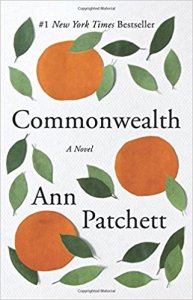
Discouraged yet determined, I marched to an airport bookshop, poked and peeked at a dozen acclaimed books, until I hit the staff picks display, which spotlighted Ann Patchett’s heavily praised novel “Commonwealth.” I’m not used to paying full price for paperbacks, but I popped the almost $20, grimacing and banking on the best — even while recalling that I couldn’t get into Patchett’s previous blockbuster “Bel Canto” the two times I tried.

“Commonwealth” is strong. On the whole trip, though, I read only 47 pages of it — my laptop is a serious distraction. I enjoyed the book’s humor, descriptive muscle and palpable humanity, and I planned on gladly finishing it back home.
41kvpzruegl-_sx329_bo1204203200_85.jpg

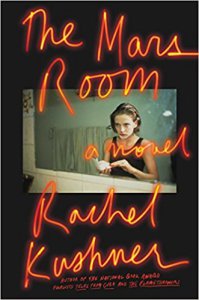
Then this happened: Waiting for me at home was Rachel Kushner’s new, ecstatically reviewed “The Mars Room,” which was on my list of five books to read next. It was, of all things, a library book, with a two-week checkout limit. I pounced. “Commonwealth” would have to wait.  

I just wrapped “The Mars Room,” a very good if never truly great page-turner set largely in a sordid women’s prison, much like “Orange Is the New Black,” with grim and funny detours streaking the story, including a few to the San Francisco strip club of the title. Kushner is good with grit, limning harrowing and humorous situations with a kind of streamlined tough-gal strut. And the final pages seize you hard. 

Before the Amsterdam trip, I borrowed two other titles on my list of five, Zadie Smith’s “NW” and Ottessa Moshfegh’s “Homesick for Another World,” neither of which I got around to thanks to the pleasingly time-consuming “Inseparable.” They remain fast on my reading list. 

61txVZFq-EL._SX331_BO1,204,203,200_

And yet: Dropping off “The Mars Room,” instead of getting the Smith or Moshfegh books, I got distracted and picked up two more books on my extended wishlist, Curtis Sittenfeld’s comic coming-of-age novel “Prep” and Jesmyn Ward’s National Book Award-winner “Salvage the Bones.” 

I get sidetracked in a snap when I’m around piles of books, my head on a pivot, eyes flashing, hands flipping pages, picking up and putting down volumes. So much to read, so many diversions, so many anxious postponements.

Of the two books I grabbed, I chose first to plunge into the poverty-stricken, pre-Katrina, Mississippi-set “Salvage the Bones.” So far, it is rapturously evocative, the prose raw and earthy and exquisite, the narrative quivering and propulsive.

Here is Ward’s description of a pit bull giving birth to puppies:

“Skeetah grabs the puppy’s rear, and his hand covers the entire torso. He pulls. (The mother) growls, and the puppy slides clear. He is pink. When Skeetah lays him on the mat and wipes him off, he is white with tiny black spots like watermelon seeds spit across his fur. His tongue protrudes through the tiny slit that is his mouth, and he looks like a flat cartoon dog. He is dead.”

If “Bones” eventually chokes — that’s far-fetched — I’ll do what I am wont to do: put it down and move on to the next title. But what will that be? “Prep” or

51at-ah4UzL._SX309_BO1,204,203,200_

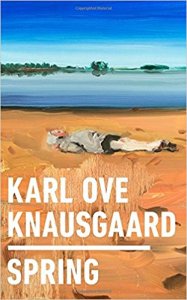
Even with two books before me, I said screw it and ordered Karl Ove Knausgaard’s “Spring,” a slim new memoir arriving in the States bubble-wrapped in effusive plaudits. The book is “poignant and beautiful,” a critic says. “Even if you think you won’t like Knausgaard, try this one and you’ll get why some of us have gone crazy for him.” (I’ve read five of his books and have gone crazy for him.)

“Prep” or “Spring” — I’m betting on the latter. Or will yet another title crash my consciousness and hijack the show? Likely.

Book fiends I know are afflicted with this disease of ravenousness, of greedy insatiability, of jonesing for the next fix. Books as lifeblood. Beats baking. Beats sports.

The saga continues, so much pulped wood before me, no end in sight. It’s an embarrassment of riches — words, language, poetry, morality, mortality, love and loss. And, as that, it’s a crazy blessing.

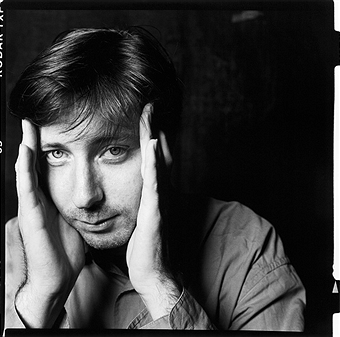
Never done with Stephen Dunn

As sort of a literary snack, some lyrical Cheetos, I recently dipped into one of my favorite poetry books, Stephen Dunn’s “Different Hours.” It’s magnificent; so many fine poems, so many lines that quietly slash. The poems are all about wisdom and honesty and breakage, lovers and loss and burying a cat.

Stephen-Dunn
Dunn

I don’t care so much that the book won the 2000 Pulitzer Prize, though it surely deserved it. I do care that it contains this stanza:

I was burned by books early/and kept sidling up to the flame.

And I care even more that it has this bracing verse, from the final poem in the collection, “A Postmortem Guide (For my eulogist, in advance)”:

Tell them that at the end I had no need

for God, who’d become just a story

I once loved, one of many

with concealments and late-night rescues,

high sentence and pomp. The truth is

I learned to live without hope

as well as I could, almost happily,

in the despoiled and radiant now.

Those shimmering words shatter me, in a most positive fashion. (“In the despoiled and radiant now”!) The verse is frank but droll, vulnerable and confessional. It’s written with the points of melancholy stars.

Dunn, like his comrade in wry minimalism, Billy Collins, wields an unabashed colloquial touch, his plain-spokenness littered (glittered?) with joyous turns of phrase and often mischievous, tip-toeing humor.

He’s a master of subtlety, but any perceived simplicity is thoroughly deceptive. If you think Dunn’s poems are simple-minded, even pablum, you are sorely mistaken. You haven’t done the work.

The next 5 books I’ll be cracking open

Far before I’m done reading a book, I know firmly what volume I’ll be cracking next. I keep an ever-replenished list of titles. Something is always ready, waiting, like the upcoming course at dim sum. 

As I wrap up “Inseperable,” the excellent new biography of Chang and Eng, the original Siamese twins, I know what’s next. I’m taking a worn paperback of Kurt Vonnegut’s archly prophetic classic “Mother Night” (1962) on my trip to Amsterdam next week. Vonnegut’s breezy cynicism, swirled with empathy, a hesitant optimism and measured absurdism, feels just right for airplane reading.

After that, 10 books weigh down my list. But half of them get to jump the line. These are the next five books I’m plunging into:

516B2M5L8XL._SX324_BO1,204,203,200_I’ve read three of Zadie Smith’s fine novels — “Swing Time,” “On Beauty” and, the best of the bunch, “White Teeth” — so I’m revved for “NW, her acclaimed 2012 tragicomedy about a slice of London and how its human patchwork intersects and interacts. The intellectually rangy Smith has a sorcerer’s touch, conjuring crowded, complex stories that can be mesmerizing jumbles: granular, moving, funny and expansively human.
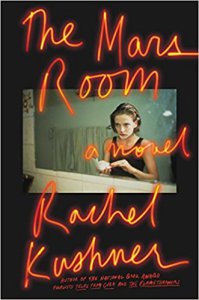
If Rachel Kushner’s wildly hailed fiction “The Flamethrowers” didn’t blow me away, it was still a fresh, propulsively entertaining epic about a young woman whose love of motorcycles, art and action hurl her on a picaresque through boho New York and radicalized Italy. In her new novel, the hotly awaited “The Mars Room, Kushner pinballs from the pitiless realities of a women’s prison to those in a San Francisco strip joint and beyond for a seedy and violent, harrowing but humorous skip through sordid demimondes. Raves wreathe the book already. “Heartbreaking and unforgettable … it deserves to be read with the same level of pathos, love and humanity with which it clearly was written,” gushes one reviewer.

41kvpzruegl-_sx329_bo1204203200_8.jpg

Our Shakespearean laureate, that lord of the Bard, Harold Bloom lasers in on one of the canon’s preeminent tragic figures in “Lear: The Great Image of Authority, a thin but typically volcanic volume that’s part of a series of portraits, including Iago, Falstaff and Cleopatra, titans all. Lear, fallen monarch, disgraced father, receives the full Bloomian treatment, a richly personal, prickly and cerebral exploration of the character and his enduring mythic stature.

Andrew Sean Greer’s “Less, winner of this year’s Pulitzer Prize for fiction, totally evaded my radar. I’m not even sure I’d heard of the novel until it cinched the award this month. I know so little about the bounding satire that I quote here from the dust jacket:

41wP7sR5mBL._SX321_BO1,204,203,200_

“Arthur Less will almost fall in love in Paris, almost fall to his death in Berlin, barely escape to a Moroccan ski chalet from a Saharan sandstorm, accidentally book himself as the (only) writer-in-residence at a Christian Retreat Center in Southern India, and encounter, on a desert island in the Arabian Sea, the last person on Earth he wants to face. Somewhere in there: he will turn fifty. Through it all, there is his first love. And there is his last.”

OK, I’m hooked.

A writer friend of mine won’t read Ottessa Moshfegh’s fiction, citing a gruesome quotient of blood and bodily fluids. I don’t know what she’s talking about because I’ve never read Moshfegh. Her stories “Homesick for Another World” have been called “eerily unsettling … almost dangerous, while also being delightful, even laugh-out-loud funny.” Characters are “unsteady” and the “grotesque and the outrageous,” a la Flannery O’Connor, “are infused with tenderness and compassion.”

51zp1zKT38L._SX328_BO1,204,203,200_

She has “a big mind, a big heart, blazing chops, and a political acuity that is needle-sharp,” crows the publisher. “The needle hits the vein before we even feel the prick.”

I think my friend is crazy. This sounds amazing.

And on things bookish, I finally discovered a well-tread site fully worth your while: Literary Hub. Brain-cracking interviews, essays, reviews, profiles — I won’t go on about it; just check it out.

#DeleteFacebook? You bet.

A few years ago, I did something harebrained: I joined Facebook.

Mere hours later, I quit the network, deleting my profile in its gurgling infancy. I joined right around midnight. I hit delete early the next morning. I did so with a massive sigh of relief: What was I thinking?

th.jpeg

What was I thinking?

I was thinking, gee, maybe, as all my friends tell me, I’m missing out on some electronic fun, unfettered 24-hour socializing, photo and content sharing. I could post my marvelous travel pictures. I could see what long-lost pals are up to. I could crow about my fabulous life, crack wise and click the “like” icon with fulsome abandon. I was feeling adventurous.

Before, none of that had sounded attractive in the least. For some reason, in a momentary lapse of sanity (was it the pinot noir?), it did. And then it didn’t again. Cue the cold sweat the next morning. Cue the get me the hell off this thing panic.

During my rash registration I invited several friends to “friend” me, or whatever it is one does to connect on Facebook. By the morning I had a small tribe of friends, cyber-pals, some of whom, to my horror, had posted pictures of me on my page. I felt exposed and mortified. My instincts were spot-on: Facebook wasn’t my bag.

It’s all about sharing, and I’m not a big sharer. I don’t really want oodles of people to know what I’m up to. I certainly don’t want to see someone’s family photos snapped at Disneyland. I also don’t want to hear about so-and-so’s chronic illness. And that endless stream of (totally unreliable) information trickling down the page smacks of so much irksome spam.

Facebook and its ilk, from Twitter to Instagram, I think, are for people who like to share, show and showoff. They must be connected to feel alive, validated. There’s a boastful, presumptuous strain at work. Obsessively scanning their phones, staring in a locked zombie state, I see inborn extroverts, the gabbers, those tautly comfortable in their skins, the socially amenable and acutely people-ly. I see the FOMO syndrome. I see neediness.

What is this blog if not a way to connect? you might ask. It’s really just a billboard on which to write stuff. It’s far from a network. Any connections are stubbornly vague and mostly through distant “likes” and the rare comment. It’s written largely behind a scrim of anonymity. My last name is nowhere to be found and, save for the picture of me as a kid on the “About” page, there are no photos of me. I can be irrationally shy.

th-3Facebook is even less alluring amid current reports of vast security breaches plaguing the network. The data and privacy of 50 million Facebook users have been compromised, prompting a social media backlash, a call to #DeleteFacebook. People from all walks (even Cher!) are deleting their profiles with great, groaning exertion, extracting themselves from what is arguably an addiction for many. (Unfortunately, some Facebook accounts represent charities and small businesses that can’t afford to nix their profiles.)

Party-pooper, anti-social, misanthrope, grandpa-grumpus — call me what you will. I connect in my own ways — email, texts and calls: perfectly efficient — without waving my arms in the air to get attention and unloading my life on fellow Facebookers. I share things on this blog, of course — it sometimes reads like a journal — but reading an entry is not a social transaction. It’s smaller than that.

We’re told to live out loud. Some of us prefer to turn it down a notch. Not to put it on mute — where’s the fun in that? — but at a setting more like a conversational nudge, not a bullhorn.

Quote of the day, via Philip Roth

“He had learned the worst lesson that life can teach — that it makes no sense. And when that happens the happiness is never spontaneous again. It is artificial and, even then, bought at the price of an obstinate estrangement from oneself and one’s history.”  

— Philip Roth, “American Pastoral”

d4b60-philip2broth.jpg

On readers: quote of the day

I know a handful of adult humans who, without a whiff of shame or embarrassment, blithely admit they don’t read. This is not only startling to me, it’s seismically appalling.

They (our president included) don’t get the appeal, they have no use for words or language or a particular type of storytelling that is expressly non-passive, that’s indeed near-immersive. I’m trying hard not to sound snobbish about this. It’s like the sports fan whose passion eludes the non-sports fan or the punker who has no interest in Bach or Bartok. We are who we are.

This bibliophile will never understand, and trying to understand the bookless simply exhausts me.

What I am — and here I quote one of the most apt descriptions I’ve seen — is “a person who considers reading an emotionally instructive and intellectually legitimate form of lived experience.”

That’s Alice Gregory reviewing Lisa Halliday’s new fiction “Asymmetry,” which I plan to grab once I finish Evan S. Connell’s smashing 1959 novel “Mrs. Bridge.” Gregory’s account of the serious reader made me even gladder to be one and sadder for those who are not.

What they are missing is incalculable.

shutterstock_112499642.jpg