The story behind my blog photo

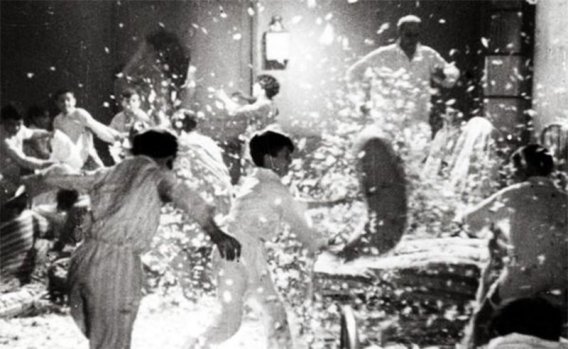
People have asked me if the photograph above this blog is is a screen-shot from Francois Truffaut’s “The 400 Blows,” as it resembles a scene from that classic 1959 film. It is not.
It is Alfred Eisenstaedt‘s ecstatic picture of kids at a Parisian puppet show, “Saint George and the Dragon,” at an outdoor theater in 1963.
01_00760343.jpg

Time magazine recently wrote about this enchanting photo:

Capturing the thrill, the shock, the shared triumph-over-evil that the children feel at the very moment when St. George slays the mythical beast, Eisenstaedt’s picture feels as fresh as when it was made, more than 50 years ago.

Here, the picture tells us, is an innocence that can remind even the most jaded of what it was once like to believe, to really believe, in the stories that unfold before our eyes onstage, or onscreen.

The master photographer himself said of this very picture:

“It took a long time to get the angle I liked. But the best picture is the one I took at the climax of the action. It carries all the excitement of the children screaming, The dragon is slain! Very often this sort of thing is only a momentary vision. My brain does not register, only my eyes and finger react. Click.”

Want to know if the dog dies? Go here first

In the bullet-peppered, body-slamming thriller “John Wick,” innumerable bad guys die stylishly gruesome deaths.

So, alas, does the dog.

The blameless Beagle puppy named Daisy is mercilessly killed before our hero’s eyes, which squint with vengeance instead of squinch with tears. John Wick (Keanu Reeves) isn’t taking this outrage sitting down — he’s not letting dead dogs lie — in the 2014 cult classic. He’s about to unleash a two-hour massacre.

john-wick-dog-e1533830984142-625x352.jpg
Play dead. For good.

Spoiler? You bet. That’s exactly what the fine, sometimes funny and oddly practical movie- and animal-lover site Does the Dog Die? is here for — to tell you ahead of time if the damn dog dies. You want to know. I definitely want to know.

Anytime a dog, or any animal for that matter, appears on screen I tense up and just hope the creature doesn’t get shot, run over by an SUV or mauled by a demon (or, if you’re the rabbit in “Fatal Attraction,” boiled alive). Animals in movies are too often sacrificial lambs, beelines to our heartstrings or, as in Wick’s case, catalysts for revenge. (Or just workaday roadkill. Shrug.)

The website covers all manner of movie, TV and book animal deaths. Fed by visitor input, it’s a spoiler sanctuary revealing what animals perish or get injured and how, in often graphic terms. (Sample: “A cat accidentally gets smashed by a book. A half-human, half-dog gets his arm chopped off and punched into the ground.”) Ha, ha.

It’s humorous. It’s helpful. It’s horrific. Here’s a short screen grab to show you what entries looks like (note, it’s not the prettiest web design):

3fa53c75-9daf-41aa-b438-3b09f616fa24-screen-shot-2019-03-21-at-105648-am.png

Some more reader reports about dogs dying onscreen at Does the Dog Die:

  • “The Babadook” — “For anyone who DOESN’T WANT TO WATCH THE DEATH OF THE DOG, don’t watch from 1:09:20 to 1:11:20.”
  • “I Am Legend” — “Dog is infected by a zombie-esque virus and is killed by her owner.”
  • “The Witch” — “Dog disemboweled in the woods.”
  • “The Good Place” (TV) — “A dog is kicked into the sun.”
  • “The Thing” — “Many dogs die on and off camera. One looks like it got doused in acid and is still moving around.”
  • “John Wick” — “Yes, and it’s terrible, BUT John Wick spends the rest of the movie deliberately, gloriously, and violently avenging the dog, so it feels really pro-dog overall.”
  • “Old Yeller” — “Yes the dog dies. He’s shot by his owner after contracting rabies.”
Old Yeller. You bet your life the dog dies..jpg
“Old Yeller” — he’s either shaving or he has rabies. Yep: He dies.

Does the Dog Die goes well beyond dog deaths, featuring 50 queasy-making topics, things you might want to know before flipping on the TV or entering the multiplex. Some topics and contributor comments:

Does a kid die?

  • “Game of Thrones” (TV) — “Season 2, Episode 1: For goodness’ sake, don’t watch this episode if you can’t stand a child being hurt. A baby is murdered.”

Is someone burned alive?

  • “Thor Ragnarok” — “Someone is literally melted.”

Are there clowns?

  • “It” — “Shockingly, there are clowns.”

Does a head get squashed?

  • “Venom” — “Does a head getting eaten count as squashed? I’d say yeah, but some may disagree.”

Is Santa spoiled?

  • “Bojack Horseman” (TV) — “In the Christmas special, Bojack’s character admits that Santa is a lie in a way that is phrased to deny the existence of God.”

Are any teeth damaged?

  • “Room” — “Ma has a ‘bad tooth’ which hurts her when she eats. It eventually falls out and she gives it to her son.”

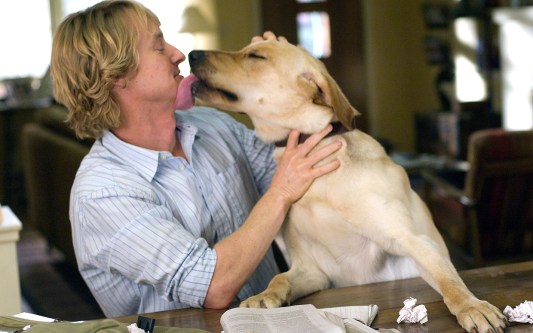
I can handle clowns, squashed heads and rotten teeth, but I hate it when the dog dies. Hate it. It’s one reason I call canine-killing movies like “Where the Red Fern Grows” and “Marley & Me” doggie-death porn. They all but fetishize the dog’s demise, milking the moment as they twist a knife in your heart, probably snickering as they do it. Sadists.

And so we have this neat site to tell us when to cover our eyes, leave the room, or skip a movie, show or book altogether. It’s not just a clever concept, it’s a public service.

Marley-and-Me-FTR.jpg
Sorry, Marley — you’re doomed.

Good movies right now

Before summer’s prequels, sequels and tweak-quels bombard us, I offer this eclectic spread of late-spring cinema surprises, all worth a look:

booksmart.jpg

 “Booksmart”

Barreling forth with raunchy vigor and unbridled zest, this breakneck coming-of-age comedy, actress Olivia Wilde’s impressive directorial debut, screams fun. Almost literally: There’s a lot of screaming — in surprise, horror and explosive joy. It’s damn near contagious.

An amplified spin on school-days greats — “Dazed and Confused,” John Hughes’ oeuvre and last year’s “Lady Bird” and “Eighth Grade” — “Booksmart” piles on twists and layers with a sharp, knowing eye that zooms in on the timely and topical, from female power and LGBTs, to bullying and the corrosive effects of cliques — and of course the liberating if daunting pull of sexual exploration.

Beanie Feldstein and Kaitlyn Dever play best friends Molly and Amy, super-nerds at their high school who are maligned for their almost pathological goodie-goodie-ism. They’re all books and no bacchanal and are certain that’s the only way to make it through college and life.

Molly, who has a crush on an unattainable pretty boy, and Amy, who has a crush on a scrappy skate-girl — sort of the story’s dual heroes’ journey — recklessly decide to shed their image and go all out on the night before graduation. The upshot is an epic party-hopping misadventure festooned with the silly, surreal and psychedelic, aided by riotously inspired side players who should get their own movies (including Carrie Fisher’s daughter, the scene-stealing Billie Lourd).

“Booksmart” radiates the crazy anarchic spirit of party-hearty teen classics like “Superbad,” and indeed “crazy” might be the movie’s one-word elevator pitch. Hang on for the insta-classic “doll scene.” It’s a little bit Barbie, a little bit “Team America,” and all warped genius.

In theaters. Watch the trailer HERE.

*nonfiction-actual-final-poster.pngNon-Fiction”

French writer-director Olivier Assayas‘ new dramedy is a tireless, tonic gabfest that had me speed-reading the flurry of subtitles more than drinking in the warm faces and colors of the bustling scenes.

That’s no complaint. The profusion of words — intelligent, eloquent, biting — brim with ideas, humor, pain and pathos, for an enveloping artful experience. You want to know the fork-tongued characters, led by a ravishing Juliette Binoche, because of the literary, arty cosmos in which these writers, editors and actors orbit. It’s intoxicating and deeply human: They’re just people, with all of our people-ly problems, and it’s more exciting than you think.

Part tart publishing-world satire, part feast of infidelity, part anatomy of midlife crises, “Non-Fiction” is light on plot, more enmeshed in ideas about love and life, loyalty between friends and lovers, and, in a topical concession, a pointed conversation about new media vs. the printed word. It’s like a Gallic Woody Allen comedy, without the tootling clarinet and stammering, gesticulating neuroses (though there’s plenty of neuroses to go around). 

Assayas, one of our most talented and inventive living filmmakers — like Michael Winterbottom and the late Kubrick, he’s a virtuoso of versatility — has made a comedy of manners that has more in common with his wonderful, verbose family drama “Summer Hours” than his masterly supernatural genre-buster “Personal Shopper.” Like the best of his movies, it’s brightly observant and conspicuously literate — as rich as a great novel, kind of ironic for a picture titled “Non-Fiction.”

In theaters. Watch the trailer HERE.

*

p16607639_v_v8_aa.jpg

“The Souvenir”

Not an easy film, Joanna Hogg‘s elusive, divisive relationship drama is boobytrapped with qualities that repel people away from the arthouse. It’s glacial, elliptical, remote, woolly. It makes you work with loosely hanging scenes, a jagged structure and oblique characterizations. I broke a small sweat trying to solder the plot together, identify with the actors and figure out where Hogg was taking me. (“Hogg,” writes one critic, “has the courage of her incoherence.”) Mostly I succeeded, finally granting this vaguely experimental flick a shaky B+.

The main entry point is young film student Julie, played with winsome diffidence by Honor Swinton Byrne, daughter of indie eminence Tilda Swinton, who has a small role as, who else, Julie’s flittering mother, her face a pinched mask of imperious disquiet.

Julie’s lover Anthony (Tom Burke) is a heroin addict, a secret until it’s not, which inevitably tangles their relationship. The story is mostly scenes of the couple muddling through their unconventional, occasionally off-putting upper-middle-class affair. With drugs. And spats. And sex. And dinner parties. And the making of a student film. And an IRA bombing. Hogg’s disparate elements somehow fall together.

There were two huffy walkouts at my recent screening, and online reviews are tetchy. “I found this film to be tedious and unrewarding,” one gripes. “I want my money back,” harrumphs another. And this: “The only movie I’ve ever walked out of in my life. I’m amazed I stayed awake and endured it for over an hour.”

With a giggle, I take those as good signs — chance-taking auteurism is always encouraging — more reasons to stick with this exacting film and reap its chilly virtues.

In theaters. Watch the trailer HERE.

*
WhatsMyName_Ali_KeyArt_lreb.jpeg

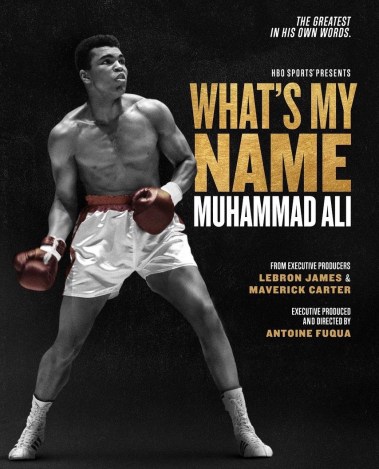
 “What’s My Name: Muhammad Ali”

Eyes wide, mouth agape, a fist pounding the table, Muhammad Ali is unleashed, free-associative verse tumbling from his unstoppable maw. Harnessing vainglory and the gift of gab, Ali is showboating, again, his audience of press and promoters rapt and laughing. And then he winds down, admitting exhaustion, the pugilist at rest.

The sudden calm is a rare state for the heavyweight champ, self-anointed The Greatest, whose taunting poetic prattle — “I’m so bad, I make medicine sick!” — earned him both infamy and adulation. “He talks too damn much! Put your fist in his mouth!” Ali recalls a ringside heckler shouting in this HBO documentary, a transfixing, rap-rattling trip through the fighter’s professional life told almost exclusively in his own words. It’s a beautifully edited stream of vintage press conferences, TV and radio interviews, with ribbons of color from managers and trainers, magazine covers and newspaper headlines.  (“He could never keep his big mouth shut,” reads one.)

The two-part, near-three-hour film, directed by Antoine Fuqua (“Training Day,” “Southpaw”) and co-produced by LeBron James, whomps with exhilarating fight footage, and so much more. If Ali was a raving icon in the ring, he was perhaps more of one outside it. He used his supersize personality and cascading eloquence to speak out for civil rights and Islam and against segregation and the Vietnam War. This keen portrait of social decency and athletic supremacy is also a voyage through late 20th-century history and culture, in which an African-American became an international hero.

On HBO and HBO GO. Watch the trailer: HERE. 

*

8f516a76-5047-42a5-9337-be30f22332c4.jpg

“The Biggest Little Farm”

If John and Molly Chester learn a few things while building their farm from the sun-baked dirt up, it’s that birds decimate crops, pigs get sick, coyotes feast on chickens, organic eggs sell crazy-fast and manure is magic.

Stars of this inspiring, sometimes harrowing auto-doc, thirty-something couple John and Molly chronicle what happens over seven years when they ditch their tiny Santa Monica apartment for 200 neglected acres an hour outside L.A. to miraculously conjure a working, biodiverse farm. It’s a quixotic, back-to-the-land quest made of heedless ambition and fashionable enlightenment.

“Everyone told us that attempting to farm in harmony with nature would be reckless if not impossible,” says John, this enchanting film’s director and narrator.

Well, almost impossible. John, a wildlife cinematographer — blame him for the movie’s plush nature imagery — and Molly, a chef and food blogger, seek purpose via this sustainable farm. Molly yearns to grow everything she cooks in conservational fashion, as if from a “traditional farm from the past,” dutifully echoing the Earth-friendly ethos of the likes of chef Alice Waters and responsible-foodie manifesto-writer Michael Pollan.

Over years battling pests, drought and the elements, the Chesters’ apparent folly assumes the mantle of glorious accomplishment. (How they pay for it is another question entirely.) Through toil and struggle, heartache and heartbreak, they cultivate a luminous idyll, a practically paradisiacal spread bounding with life, joy and abundance. You almost can’t believe your eyes.

In theaters. Watch the trailer HERE.

*

0a78b0b4cb26ac831ac16ac5d7e6cceada6c69ee.jpg

  • Bonus pre-summer movie: I haven’t seen it yet, but I know a masterpiece when it has a barrel pressed against my head: “John Wick: Chapter 3 — Parabellum. Taciturn and hitman-cool, the Keanu Reeves vehicle has been called bloody, balletic, exhilarating and “a refresher course, and a liberating one, in the nature of escapist entertainment.” If you haven’t caught the first two John Wick flicks, you have my sympathy. The trailer’s HERE.

Looking back at Chewbacca

This is the very first image I ever saw of Chewbacca:

photo-SW-K-15.jpg

It was spring 1977 and I was young. I had hair like a mid-career Beatle. Movie-wise, I was obsessed with “Jaws” from two years prior. And, even at that early grade-school age, I thought “Dog Day Afternoon,” watched repeatedly on cable, was the dope. (Later movie manias would include “Close Encounters,” “Alien” and “The Elephant Man.”)

My dad came home with a thick press kit for the summer movie roster from 20th Century-Fox. (A journalist, he often arrived from the office with public relations goodies from movie studios and, maybe coolest, the Mattel toy company. We were the first kids in town to have Slime and Shogun Warriors.)

I don’t recall any of the movies in the 20th Century-Fox press kit but one, a mysterious little picture called “Star Wars” that was slated to hit theaters May 25. My immediate fascination with the movie, well before I saw it, is so clichéd that I will keep the recollection trimmed and distilled. 

Amid a sheaf of black and white stills of characters from the film, bound in a colorful folder emblazoned with the now-iconic “Star Wars” logo, my attention zeroed in on one particular photo. The caption read: “Chewbacca, the hundred year old Wookiee, co-pilots the Millennium Falcon, a Carnelian pirate starship.”

Chewbacca? Wookiee? Yes! This was the baddest movie character I’d ever seen, a hair-covered giant holding an automatic weapon in what appeared to be the desert with a Clint Eastwood, “Go ahead, make my day” expression on his Sasquatchian puss. The pure, scorching exoticism of it blew my little mind. I immediately stuck on my wall the 8-x-10 with four silver tacks. Anticipating the day I could see this creature move and (not quite) speak on the big screen became a pastime of electric excitement. 

The man I would soon learn filled the Chewbacca fur-fest was Peter Mayhew, a 7-foot-3 Briton who died of a heart attack at 74 yesterday at his North Texas home. (Check out his personal site Chewbacca.com.) The galaxy weeps. 

chewbacca.jpg
Mayhew and Chewbacca. Similarities abound.

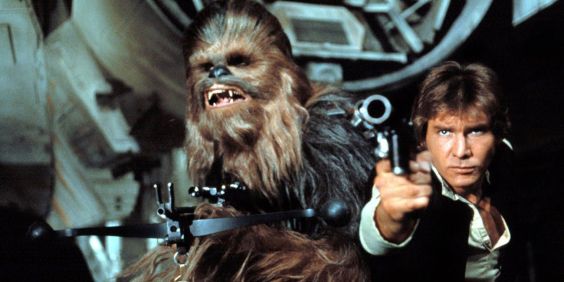
As Chewie, Mayhew growled and laser-gunned his way through five “Star Wars” features as sidekick and co-pilot to Harrison Ford’s swashbuckling Han Solo. They were a dynamic duo, BFFs who fought together, cried together, drank together and probably had a secret handshake. That’s all the speculation I will pursue.

Chewbacca wasn’t the most complex character. He had moist, soulful animal eyes and teeth like a German shepherd’s. The mournful, bestial yowls he had to rely on for vocal communication without the gift of speech could shred your ears, and rend your heart. (His voice was created with recorded animal sounds.)

“He put his heart and soul into the role of Chewbacca and it showed in every frame of the films, from his knock-kneed running, firing his bowcaster from the hip, his bright blue eyes, down to each subtle movement of his head and mouth,” Mayhew’s family said in a statement.

han_and_chewbacca.jpg
Chewie and Solo — one of the great action duos in movie history

Valiant, righteous, a fighter, friend and even funny, Chewbacca as portrayed by Mayhew was more than a guy pantomiming in a gorilla suit. He lent the Wookiee spirit, spunk and purpose. I absorbed all of this when I finally, in a one-screen art-deco movie theater in the summer of ’77, saw my hero in action, this towering benevolent beast, who fleetly dispensed with Imperial baddies and didn’t complain when saucy Princess Leia dismissed him as a “walking carpet.”

It’s why as a kid I was so crestfallen when, at the end of the film, everybody got a Medal of Bravery for saving the galaxy and blowing up the Death Star except Chewie, who just stands there during the ceremony, tall and noble, nothing dangling around his neck. Only his mighty ammo-filled bandolier, worn like a sash on his left shoulder, bedecks him.

But that’s Chewbacca — humble, honorable, tough and self-effacing. He deserves a medal. If not for assisting in nearly killing Darth Vader, then for being both a literal and figurative colossus.

final-29.jpg

Pop culture docs that pop

A pair of new documentaries — one about a famous disco club, one about an infamous/classic comic book flick — caught my eye and my fancy. They’re both worth checking out.

  •  “Studio 54″

In Matt Tyrnaue’s sparkly “Studio 54,” the supreme disco saturnalia of ‘70s New York is enshrined as a Felliniesque funhouse of fame, freaks and fortune, a shaken snow-globe of gilded sin and glittered celebrity: Andy Warhol, Truman Capote, Michael Jackson, Liza Minnelli, Mick and Bianca Jagger, Cher, to name-drop a few pampered regulars.

maxresdefault.jpeg

Though notorious for its ruthless, velvet-rope exclusivity, the cavernous club was a haven for LGBTs where sex, drugs and romp ’n’ roll played out among gyrating bodies and unrepentant theatrics: fog, snow and wind machines; glitter, confetti and balloon drops. For 33 publicity-pumped months, 54 was the hottest ticket in town, perhaps the world.

With input from club patrons and associates, and miles of bracing archival footage, Tyrnaue first makes a case for 54’s throbbing fabulousness — well-trod glitzstory — and how it sprang from disco’s post-Vietnam, post-Watergate, let’s-party zeitgeist.

Attention then pivots to 54’s founders, best friends from Brooklyn, Ian Schrager and Steve Rubell, regular guys who wanted to “change the universe, invent the world,” recalls Schrager. (Though Rubell died at 45 from complications of AIDS, in 1989, the doc is rife with vintage footage of the impish, devil-may-care co-founder.)

In this parable of excess, hubris and the perils of having a ball, antiheroes Schrager and Rubell play hard and fall hard, taking their precious property with them. “They thought they were so important that they could do anything,” says author Steven Gaines.

An arrest for selling alcohol without a liquor license leads to raids on the club, uncovering drug possession and skimmed cash. With legendary pit bull Roy Cohn as their lawyer, the duo pleads guilty to a gasping $2.5 million in tax evasion. They each get three and a half years in prison. They sell Studio 54 from the pen and, by aiding feds with other tax-evasion cases, reduce their sentences. 

Anatomizing the implosion of an empire, “Studio 54” lends enlightening texture to an oft-sensationalized cultural moment. “When I look back on it now, it was so preposterous,” says Schrager, today a successful hotelier. “What were we thinking?” 

Streaming on Netflix. Trailer here.

  • “Life After Flash”

Screen Shot 2019-02-20 at 19.27.52

It’s hard to recall that before he was a fair-haired galactic god the character Flash Gordon, in 1980’s kitschy cult movie of the same name, was a star quarterback for the New York Jets. And that was the quasi-superhero’s so-called superpower that would save the world — his football-chucking athleticism. Odd, yet so righteously all-American. 

Exalted in Lisa Downs’ adoring doc “Life After Flash,” Flash (played by young, ripped ex-Marine Sam J. Jones) finds himself accidentally rocketed into space to a cornea-curdling cuckoo land of soaring hawkmen, green-faced midgets and the estimable Max von Sydow bedecked in flummoxing Fu Manchu facial hair and a flowing red silk cloak.

flash-gordon-blu-ray.jpg

This is the planet Mongo and von Sydow, clinging to his dignity, is nefarious, wizardly Emperor Ming the Merciless. You either accept this or stroll over to “The Goonies” booth.

A film-nerd’s dream, the doc embraces, nay, bearhugs, Flash and his jut-jawed mythology, enlisting a galaxy of voices — Stan Lee, director Robert Rodriguez and a passel of genre performers — to lionize the film in a richly informative orgy of nostalgia. (Natch, most of the interviews happen at Comic Con and similar geekoid jamborees.) The movie’s actors and director Mike Hodges delightfully chime in.

Bluff but affable, blocky and bulked-out as if made of Legos, Jones, 64, is the cynosure of the doc, except when he’s not. His life is mildly interesting: Hollywood, surprise, proved a rocky road, and his personal travails are par for the course.

But it’s the backstage drama of making “Flash Gordon” that grips. From legendary producer Dino De Laurentiis’ run-ins with Jones and the pre-CGI effects out of an Atari game gone berserk; to Queen’s gloriously operatic theme song, which co-star Topol calls “the best thing in the movie,” and the running squabble about the film as a straight-faced epic or comic-book send-up.

In this classic pop-culture resurrection narrative — as middle-aged fans crave a nostalgia fix, Jones is cool again — there is good news. Jones lands a self-parodying role in the hit Seth McFarland comedies “Ted” and “Ted 2” and revels in signing autographs and posing for selfies — no Flash in the pan. “Did I ever want to step away from being the image of Flash Gordon?” Jones asks. This rollicking portrait provides the answer: not in a million light years.

On iTunes, Google Play and Hulu; on Blu-ray and DVD on March 26. Trailer here.

LifeAfterFlash_StillFrame_022.jpeg
Sam J. Jones — Flash himself — today at a nerd convention with a hirsute hawkman.

Defending the unsung thrill of ‘Miami Vice’

It came on TV, caught my eye, and had me entranced all over again. 

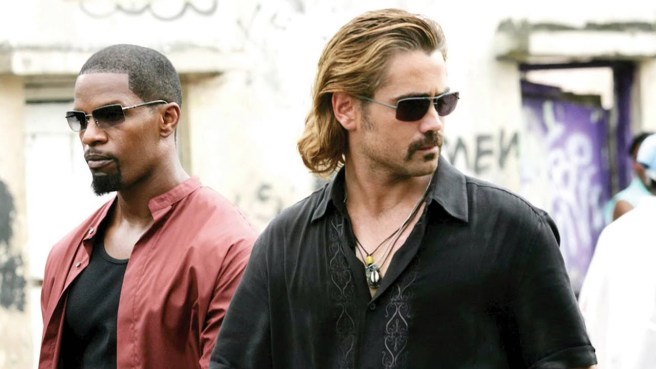
Michael Mann’s virtuoso 2006 crime drama “Miami Vice,” streaming on Netflix, will hook you hard — that is, if you connect with the under-appreciated film. I do — I gave it four stars in my original review in a large daily newspaper — and I stand by it, despite a host of haters who can’t see masterly filmmaking for Colin Farrell’s facial stubble.

So I come to defend “Miami Vice.” Major publications — Rolling Stone, Entertainment Weekly, The Boston Globe, Variety — praised the film, with New York Times critic Manohla Dargis calling it “glorious entertainment” and extolling its cutting-edge digital camerawork. Still, unaccountably, the movie holds only a 45% rating at Rotten Tomatoes. Insanity.

At the end of 2009, the critics of Time Out New York chose “Miami Vice” as #35 of the 50 best films of the decade. That’s great, but I would place it higher than that. 

miami-vice-featured.jpg

It’s now something of a cult film, especially among younger critics and filmmakers. Harmony Korine notes how much it influenced his riotously outré “Spring Breakers.” One critic wisely said the film is a visual meditation on “failure and futility” and — I love this — “one of the most expensive art films ever made.”

Another critic, perhaps more to the point, wrote that the movie “has just laid the foundations for a new order of action films.” Indeed. 

This is my rave review from July 2006, a rebuke to the benighted:

Awash in the blacks and blues of a fresh bruise, Michael Mann’s “Miami Vice” plays hard and mean to thrilling, often harrowing effect. Mann, who was an executive producer of the influential 1980s television series on which the movie is ever-so-loosely based, obliterates the glib sunshine and pastel glamour of the show to forge a dark, frighteningly real universe of undercover law enforcement and globalized crime. 

It delivers what no other movie this summer has or likely will: the pure pleasure of watching an intricate, perfectly calibrated machine kick, shoot and crank with dazzling power and efficiency.

That might sound heady for a movie called “Miami Vice,” a title that instantly evokes Reagan-era gilt and South Beach deco. Don Johnson in a white linen blazer/pink T-shirt ensemble and an equally suave Philip Michael Thomas amid a backdrop of neon, glass bricks and palm trees — those soft-rock memories should be dispensed with. Instead, brace for an unflinching contemporary crime drama that makes no concessions to pop nostalgia or mocking remakes such as the no-brow “Starsky and Hutch.”

People forget that TV’s “Miami Vice” was more than its stylish, trend-making veneer, but a crack cop drama presenting sophisticated criminal situations through intelligent, movie-worthy writing that delved deep into character and emotion. Mann takes that as his springboard for a surprisingly emotional character-driven thriller that takes itself so seriously, there’s hardly a smile in the two-hour-plus epic.

51BH2nHmp+L._SX355_.jpg

While the plot is as rudimentary as a “Miami Vice” TV episode — vice cops Sonny Crockett (Colin Farrell) and Ricardo Tubbs (Jamie Foxx) go undercover for the FBI to unravel a multi-tentacled, international drug ring — Mann laces it with the themes and macho philosophy he’s so obsessively explored in similarly expert crime pictures “Manhunter,” “Thief,” “Heat” and “Collateral.” 

His heroes are really antiheroes who dwell in the shadows of film noir, be it James Caan’s riven criminal in “Thief,” Tom Cruise’s solitary hitman in “Collateral” or a superb Farrell as an undercover agent who drifts dangerously over the line.

The complicated loner wavering between right and wrong — the blurring of human duality — fascinates Mann and has always been his subject. These men (Mann’s is a fiercely male-centric universe) are vessels for ideas and themes about choosing a way of life and pursuing it with as much iron-willed integrity the world will allow.

This is the loner’s existential struggle, which he carries out with a heavy heart and pensive mind. Working in either crime or law, he’s acutely aware of his mortality and life’s cruel vagaries. “Time is luck,” Farrell tells the woman (Gong Li) he falls in love with, as her life skids out. The same line is said in “Manhunter” — “Time is luck. I know the value of our days” — as well as “Heat,” when Robert De Niro’s career thief muses, “I know life is short, whatever time you get is luck.” (Sharp-eared Mann fans might also notice the reuse in “Vice” of the nicknames “sport,” from “Manhunter,” and “slick,” from “Heat.”)

Helicopters slash the skyline and power boats knife the ocean. High-tech surveillance gadgets crackle and heavy artillery blasts. Within the dizzying action and disorienting nation-hopping, a whip-fast Foxx and a brooding Farrell, who smolders with long, Johnsonesque hair and unchecked stubble, stand sturdy.

The actors’ chemistry is sufficient and both men cut intense, sympathetic figures, whether they are taking down scum — the movie crawls with furry creeps and bald thugs — or making passionate love to their women. Mann’s lingering depictions of sex are the epitome of adult intimacy rarely seen in a Hollywood film.

maxresdefault.jpg

There’s not a dud in the superlative cast: Li’s flinty fatale, Naomie Harris as Foxx’s cop girlfriend, John Ortiz as the drug middleman and Luis Tosar as the drug kingpin. Mann’s dialogue, funny and profane, has a hard, urban pop, and the soundtrack ripples with interesting choices, from spare electric guitar and moody synthesizers to songs by Moby and Audioslave.

How “Miami Vice” is put together is as compelling as the story and characters. A notorious perfectionist, Mann demands technical verisimilitude, nailing the intricacies of how criminals and cops think and operate, down to their clothes, words and twitches.

He and cinematographer Dion Beebe return to the handheld high-definition video they used in “Collateral,” bringing a grainy, documentary vibe to the action that’s unnerving. It’s non-style taken to high style, soaked in ocean blues and inky nocturnal blacks. There’s not a wasted shot.

Since 1995’s “Heat,” Mann has been our greatest living action-crime director, edging ahead of past giants Sidney Lumet, William Friedkin and John Frankenheimer. The technical bravura and artistic depth Mann brings to his films staggers. He respects his craft and his audience. “I ain’t playin’!” blurts a character in “Vice.” Neither is Mann.

Snow job

image.png

It looked like a pillow fight in a movie: downy feathers of snow twisting and drifting through the air, with little space between the fluttering flakes. A midday flurry making landfall in heaps and mounds. 

Yet it wasn’t too voluminous, this late-winter coating, and instead of pillowy tufts, the following day offers equal parts splash and crunch. Anything beautiful about the snow has thawed into a slurry swamp. Walking the dog, we slalomed around slush and brown puddles resembling polluted ponds. My sneakers got wet. 

Slush, rivers of slush.

I love winter. I like the cold. But I can do without snow, which wasn’t true during my salad days of skiing down vertiginous slopes, laughing all the way. Nowadays I’m too reserved to even toboggan, and I am not squatting in one of those saucer sleds for the certainty that I will break my collar bone in a spectacular face plant. 

Snow now means shoveling, one of the lowest forms of drudgery, right there with prisoners smashing quarry rocks in old-timey pictures like “I Am a Fugitive from a Chain Gang.” No matter how frigid it is, I sweat piggishly when shoveling snow. I hate sweating. I hate heat. Did I mention I like winter?

But the season will soon cruelly vanish and shorts, a sartorial scandal, will be all the rage. It’s probable more snow will fall before that; March often gets dumped on without mercy. If there was a hill around here, I’d rent some skis. (And probably snap a femur.) 

So this is a premature farewell to the fair season, when we abide icy irritants for the relievedly short days, chilly breezes, hot toddies, fashionable outerwear (is anything hipper than a natty scarf?) and indiscriminate cuddling. (About outerwear: I never don gloves or hats in winter. My mammalian blood takes care of the extremities, ears too.)

When another snow day comes this season, I will gripe and groan. But I will also be grateful that it’s still winter. That I can wear a parka with impunity. That I don’t have to attend barbecues and eat outdoors. That bugs and sunshine won’t assail me. And that I can, joyfully, unabashedly, freeze my ass off.

zero-for-conduct_f

A few things revving me up

I’m having a tricky time getting jazzed about too much lately — only Socrates rivals my sage discernment and penetrating taste — yet I am alive, blood sluices through my veins. Some things I’m digging:

dia-beacon
Richard Serra sculptures at Dia: Beacon, New York

Caustically hilarious British TV series “Fleabag”; Sigrid Nunez’s quietly affecting novel “The Friend”; the reliably stirring Dia: Beacon museum, so serenely cluttered with minimalist and sculptural masterworks; poetic Polish romance (and Oscar nominee) “Cold War”; and Weezer’s “Teal Album,” featuring frighteningly faithful covers of Toto’s “Africa” to Black Sabbath’s “Paranoid” and Michael Jackson’s “Beat It.” It’s a gas.

Mostly this entry is a sequel to my December year-end inventory of now-time enthusiasms, stuff getting my juices flowing. These are the current tops:

  • Jade Bird

Strumming an acoustic guitar, her long hair swinging, she sings in a hushed girlish voice before belting like a banshee, loosing a squall of blazing catharsis. She has pipes that purr, then roar, then come back. You sway to twangy folk, then rock with giddy fury. 

Intimate and Velcro-sticky, Bird’s music, performed acoustically or with a small band, circles Americana, punk and soulful indie pop. Country fans are drawn by her evocations of rocky, star-crossed relationships, and there’s country crunch in those folk-rock vocals. Her galloping cover of Johnny Cash’s “I’ve Been Everywhere” is a jam-session joy.

hbz-jade-bird-index-1535023013.png

In this 21-year-old Brit, the Dixie Chicks are at their fiercest, alongside a banging Liz Phair, Courtney Barnett, PJ Harvey and other steely indie royalty. Bird’s lyrics pop and sear. In the unreasonably rousing “I Get No Joy,” Bird sings with such speedy agility, she’s almost rapping:

“Psychotic, hypnotic, erotic, which box is your thing?/How many days a week, do you feel/Electric, connected, unexpectedly/Affected, what do you need?”

It’s a kind of sublime whiplash.

(Watch her HERE.)


  • “Capernaum”

His hair is a fluffy fiasco, a brown brushfire, his splotched face the seasoned mug of a gang member. He’s filthy and swears like a sailor. He’s homeless. He’s 12. 

In Nadine Labaki’s Beirut-set stunner, a nominee for the best foreign language Oscar, the boy, Zain, is a resourceful renegade in the scrappy mold of Huck Finn and Antoine Doinel in “The 400 Blows.” Fed up with his struggling parents and their feckless care of their many children, Zain takes them to court, accusing them of the crime of giving him life. It’s a preposterous idea, a satirical glance at the Lebanese judicial system.

181210-winkelman-capernaum-review-tease_exy4at.jpeg

Zain (the extraordinary Zain al Rafeea) fast becomes a tough street urchin who finds a gig babysitting the gurgling infant of an illegal Ethiopian refugee, played by Yordanos Shiferaw. (The film’s devastating cast of non-professionals play versions of themselves.) When the young mother is arrested, Zain is stuck taking care of the baby on his own. In this harrowing situation — the movie is a tart indictment of Beirut’s corrupt state of child welfare — the fathomless despair can be unbearable to watch.

“Capernaum” — the title means “chaos” — owes much to the children-centric neorealism of ‘80s and ‘90s Iranian cinema, from “The White Balloon” to “The Color of Paradise” — heart-renders told in raw, wrenching lyricism that aren’t without political undercurrents. It’s a street tale alive with miscreants and thieves and few kind gestures. It’s so gritty and grubby the camera lens almost seems smudged. Redemption, however, is in the air.

(Trailer HERE.)


  •  “Asymmetry”

Beautifully written, radiantly spun and shot through with smashing intelligence, Lisa Halliday’s first novel “Asymmetry” bristles with humanity as it mingles conventional and unorthodox structures. It’s a literary feat kneading the fictional form like Play-Doh.

I’m only a third of the way through its brisk 271 pages, but I’m sold. (Being part-way in a book you’re relishing is where you want to be; there’s more on the way to savor.)

07bookhalliday2-superjumbo.jpg

The novel is chopped into three sections. I finished the first section, “Folly,” which traces the May-December romance between Alice, a 25-year-old aspiring writer, and Ezra Blazer, a famous author 40 years her senior. (If he rather resembles Philip Roth, it’s not chance: Halliday had a relationship with Roth while in her twenties.)

And so we get an old-fashioned affair of unpushy comedy and sweet asides set amidst Upper West Side means, with tender banter and the not uncomplicated theme of apprenticeship, much like a Woody Allen movie, without the deep-dish neuroses.

Alice has career issues, Ezra has health issues, and brewing in the background is the launch of the Iraq War. (The war plays a prominent role in the next section, “Madness.”) In this, one of The New York Times’ 10 best books of 2018 (and a favorite of Barack Obama), Halliday doesn’t flinch from the vagaries of love, including the sort, like Woody’s, peppered with literary chatter and throbbing with aching uncertainty.

The dialogue is unfailingly smart, wry, just right. Alice and Ezra conduct short, gem-cut conversations that bring a knowing grin:

“Is this relationship a little bit heartbreaking?” he said.

The glare off the harbor hurt her eyes. “I don’t think so. Maybe around the edges.”


  • “United Skates” 

In urban roller rinks across the country thousands of African-American roller-skaters are lacing up and getting down. Beneath rays of twirling disco balls an underground roller renaissance thrives among a force of skate buffs who throw after-dark rink parties and commit kinetic art on waxed wood floors: backflips and break-dances, tag-team acrobatics, backwards trains and other daredevilry. Many revelers simply trace ovoid loops in a kind of roller-boogie bliss.

With new and archival footage, much of it contagiously groovy, “United Skates” directors Dyana Winkler and Tina Brown chronicle the hip-hop-fueled scene with at once bracing and brooding electricity. They hopscotch the nation — Los Angeles to Baltimore — and capture the community-building soul of skating as well as the heartrending gentrification that’s swiftly shutting down classic rinks, dinosaurs of the ‘70s and ‘80s. Few will survive.

merlin_147232281_f4784760-d08e-4e67-b827-dda2964987c2-jumbo.jpg

Next to dwindling skate spaces, the film locates other troubles: the apparent profiling of black skaters at certain rinks that ban rap and the skinny wheels many black skaters prefer. When skaters organize “adult nights” — “Code for ‘black night,’” says one — police fill the parking lots and security is thick. No such hysterics are apparent on a typical “white” night. It’s a familiar microcosm of current race relations.

Yet the party rolls on. The subculture retains a die-hard exuberance not easily snuffed. The film’s final scenes are far from elegiac; against all odds they are tonically celebratory.

(Starting Feb. 18 on HBOTrailer HERE.)

McConaughey, the mensch

Meeting celebrities is easy. Interviewing them is a breeze. They are generally polished to a professional sheen. They know how to play the game, which is patently transactional. Some are harder than others (I’m squinting at you, Paul Thomas Anderson). Matthew McConaughey? He’s a cinch.

A good ol’ boy from East Texas, with a boingy twang, squinchy blue eyes, and bounding with bonhomie, McConaughey is much like what he seems: a smart, friendly dude you might want to shoot a shot with. He’s a charismatic lava lamp, alive and aglow.

To a journalist like me in 1998 — young, a smidge green — he was the most caring, amicable guy around. I was having a face-to-face interview with the actor in a Beverly Hills hotel room during a junket for “The Newton Boys,” Richard Linkater’s ill-fated western-comedy. A Texas guy, McConaughey was fascinated that I’d recently relocated from California to Austin for a newspaper job as a film critic. 

MM-e1521147029111.jpg

He seemed genuinely interested, and we talked all things Austin and Texas, acting and movies. And from the room balcony he pointed out the groovy ‘70s-style van in the parking lot that he was driving cross-country for the hell of it. He was 27. We bonded enough that he’d remember me for years afterward. 

Like when he was walking the red carpet at the premiere of his 1999 comedy “Edtv” and he spotted me, grabbed my hand, pulled me aside and asked me how I was enjoying my new Texas hometown. He was sincere and serious, with laser eye-contact, shutting out the bustle around him. Then he smiled wide, cheeks caving into dimples, before moving on down the line. 

He didn’t have to do that. He could have said hi, answered my softball questions and walked on. But he was cool, concerned, a gentleman. He had class. 

Months later, when I ran into him at a Wendy’s on the University of Texas campus before a rare screening of Vincente Minnelli’s 1958 “Some Came Running,” McConaughey seemed a little out of his element, a tad awkward, though he still made a point of making me feel welcome and an equal. He spoke in a hushed drawl. He barely smiled. He kept things low-key. I introduced him to my girlfriend. He bought a large Coke. He sat in the middle row, we sat in the back.

The relationship between journalist and subject/source is a dicey one. They are rarely seamless. There’s a give and take, a perilous reciprocity that often leaves one party feeling burned. And so there’s this:

McConaughey was working the red carpet for the local premiere of Kevin Costner’s 1999 baseball melodrama “For the Love of the Game” at UT. He was beaming, strutting out of a black limo, in all white and all alone.  

He isn’t in the movie, he was just a celeb guest at the gala. And he was chomping a hunk of gum like cud. He approached me affably, answered two questions, then sauntered into the auditorium, chased by hearty cheers. 

I report details. I like what’s called “color” in my stories. So in my piece about the screening I prefaced McConaughey’s quotes with: “He was conspicuously chewing a huge wad of gum.” Readers want to know each iota of their beloved celebrities’ behavior. This, I thought, was a telling detail — innocuous but revealing. Or so I thought.

TightInfantileBalloonfish-poster
Matthew, gum, chew.

In 2003, four years after this gum-chewing reportage, the Austin Film Society threw a 10-year anniversary bash for the release of Richard Linklater’s coming-of-age masterwork “Dazed and Confused,” which was made in Austin and co-starred a cocky, hilarious young newcomer named Matthew McConaughey. 

A red carpet press-line was formed. Here comes McConaughey, who I haven’t seen in four years. He is arm-in-arm with two young women, and chewing gum. I hurl him a question. He stops on a dime before me, and says, pointing to his mouth, “Tell them that I was ‘conspicuously chewing a huge wad of gum,’ you got that?” Dimples flashed, this time with a shit-eating grin, and he brusquely walked away with an up-yours swagger. 

Perhaps, just maybe, I had pissed him off.

Forward five years, to 2008. I hadn’t seen People Magazine’s Sexiest Man Alive (2005) since the “Dazed and Confused” screening and I was a little nervous as I was scheduled to interview him for the micro-indie comedy “Surfer, Dude” in Austin.  

He was there, in shorts and sandals, hair mussed and shaggy, mood ebullient. He greeted me with glowing teeth and cavernous dimples. He was almost ecstatic. He loved this movie. He was back. 

rgz chris sufer dude08.jpg
McConaughey during our “Surfer, Dude” interview

At the end of a very friendly chat, I screwed up the nerve to ask him about that day when he repeated back to me, “Tell them that I was ‘conspicuously chewing a huge wad of gum,’ you got that?”

He laughed heartily. “I didn’t like the use of the adverb ‘conspicuously,’” he told me, practically slapping my knee. “If you hadn’t used that word I wouldn’t have cared!” He was over it. We cracked up.

The intricate dance of writer and subject is a fragile one. Like that, it can topple in misunderstanding. It can snap on the perceived power of one simple word. But people, even movie stars with eggshell egos, are resilient, forgiving and, sometimes, like McConaughey, true mensches.

The 5 most overrated movies of the year (so far)

Critics and crowds made big stinks over these movies this year. I didn’t.

1. “Roma” — Topping many “bests of” lists, Alfonso Cuarón’s meandering memory drama, based on his early-‘70s childhood in Mexico City, was the biggest disappointment of the year. Flaccid and unfocused, this pretty black and white picture is about Cuarón’s middle-class family just as their father leaves it. Fatally, the film’s nominal main character is the live-in housekeeper, who, perplexingly, is a narcotized, non-verbal cipher. Her reaction when she discovers she is pregnant rivals Buster Keaton’s stone face matched with Harpo Marx. Some critics have tried to pass off “Roma’s” absence of structure as a “meditation.” It is not. Rather it’s a story-free stream-of-consciousness that leaves little to grab onto and be affected by. Dog poop, believe it or not, plays one of the liveliest roles. For all of Cuarón’s lush, gliding camerawork, swooshing this way and that, capturing rambling life as it happens, the affair is implacably inert.  

Roma-Movie-Review-Alfonso-Cuaron.jpg

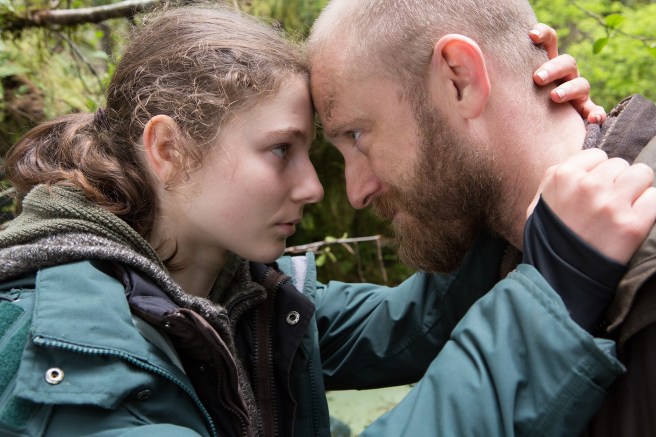
2.“Leave No Trace” — A film that leaves no trace, emotionally or otherwise, this achingly static homeless drama about a father (Ben Foster) and his teenage daughter (Thomasin McKenzie — both shine) living off the grid in an Oregon forest suffocates on its own aridity. Scant happens when they’re hauled into social services, or when they attempt a run for the wild. For so much heart, little resonates.

leave-no-trace-movie.jpg

3. “The Ballad of Buster Scruggs” — In this six-chapter Western anthology, the Coen brothers hew tightly to time-honored oater conventions while spinning them on their dusty Stetsons for typical tonal whiplash. Zigging from bloody to farcical at the speed of a bullet, with a game all-star cast, it’s handsome, violent, intriguing, and tediously quirky. (Earmark the episode with Zoe Kazan. She’s fantastic, and she’ll shatter your heart.)

image.jpeg

4. “Shoplifters” — This sometimes playful Japanese social drama by the accomplished Hirokazu Kore-eda sporadically springs to life with small jolts that only make you hunger for more. The award-sprinkled film is about a family that relies on shoplifting to ease its poverty. Naturalistic and deeply humanistic, it suffers from a lack of movement, and the modest emotional punch comes too late. 

npzqw0jyoi31pfi0m8dd.jpg

5. “Private Life” — A hackneyed bourgeois dramedy about, sigh, a middle-aged couple that can’t have children in the traditional fashion, so try all manner of misadventure to conceive. The couple, played by Paul Giamatti and Kathryn Hahn, great comic actors brought down by middling material, are New York writers (really?) surrounded by brainy friends (really?) who try and help. Marital friction erupts (really?) until a secret weapon appears. Hope abounds. This is slushy, sitcomy stuff that writer-director Tamara Jenkins (“The Savages”) is above.

gn-gift_guide_variable_c.jpg

6 more: an honor-roll of the overpraised, in no order

“Isle of Dogs” — Wes Anderson, that leaping leprechaun of willed whimsy, presents a fun, funny premise about stray animated dogs sloughed off to a trash-heap island in Japan, until he, reliably, clutters things up with over-plotting and mirthless mayhem.

3-28_movies1_-_isle_of_dogs.jpg

“You Were Never Really Here” — I wish someone could’ve said that to me after watching this turgid hitman character study, starring a grody Joaquin Phoenix and directed by the grit-addicted Lynne Ramsay (“Ratcatcher,” “Morvern Callar”).  

“Hereditary” — Toni Collette’s lashing performance as a beleaguered mother can’t salvage this confused supernatural horror tale that careers from realistic, upsetting family drama to near-laughable nonsense replete with séances, demons and covens.

 “Mandy” — A full-on bonkers genre goulash of volcanic incoherence that, despite the presence of a teeth-gritting, eye-popping Nic Cage caked in baddies’ blood — just the way we like him — isn’t half as fun as it thinks it is.

mandy-box-office.jpg

“Black Panther” — As I wrote in June, I found this mega-hit a “slick, savvy vehicle that gets predictably bogged down in mythical mumbo-jumbo, comic-book convolutions and contrivances that I haven’t the energy to follow or care about.”

avengers-infinity-war-wakanda.jpg

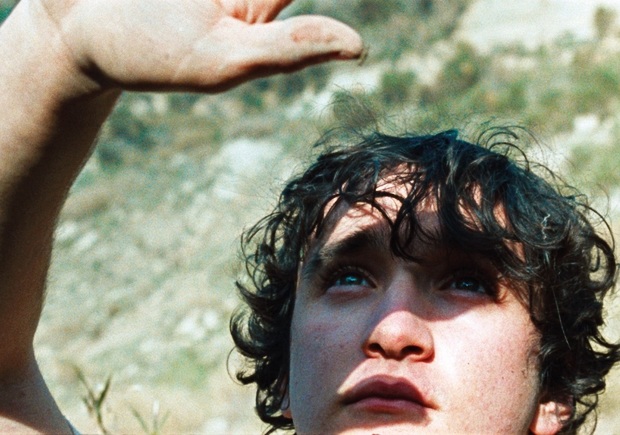
“Happy as Lazzaro” — Watching this coy Italian flirtation with magical-realism, I felt I was dying a slow, awkward death.

1534850041653_0620x0435_1534851432553.jpg